

P2138 on 2011-2014 Hyundai Sonata: Accelerator Pedal Sensor Failure, Causes, and Fixes
On a 2011-2014 Sonata, code P2138 is almost always caused by a failing accelerator pedal position (APP) sensor. This triggers a dangerous 'limp mode' with sudden power loss. The fix is replacing the entire accelerator pedal assembly, a simple DIY job costing between $70 and $220 for the part.
- P2138 on a 2011-2014 Sonata almost always means you need a new accelerator pedal assembly.
- This code triggers a dangerous 'limp mode' where the car loses power. Do not drive the vehicle until it is fixed.
- The repair is very simple and DIY-friendly, typically requiring only basic tools to unbolt the old pedal and plug in the new one.
- Do not replace the throttle body; the fault is with the pedal sensors, not the throttle itself.
- Confirm the failure by watching the two pedal sensor voltages on a scan tool; one should be exactly half of the other.
What's Unique About the 2011-2014 Hyundai Sonata
The 2011-2014 (YF generation) Sonata uses a drive-by-wire system where this specific correlation fault between the dual pedal sensors is a well-documented failure point. Unlike some vehicles where wiring or the throttle body are common culprits for this code, on this Sonata, the pedal assembly itself is the most frequent point of failure. The repair is straightforward, as the sensor is integrated directly into the bolt-on pedal assembly.
Symptoms You May Notice
- Sudden and severe loss of engine power (Limp Mode / Reduced Power Mode)
- Check Engine Light is on
- Electronic Stability Control (ESC) light may also be on
- Hesitation or lack of response when pressing the accelerator pedal
- Erratic or jerky acceleration
- Engine RPM may be limited to a fixed value, such as 1200 RPM
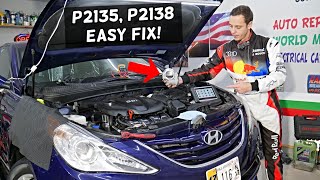
- Replacing the throttle body. The P2138 code specifically points to a correlation error between the two sensors in the *accelerator pedal*, not the throttle position sensors on the throttle body. Unless you have other codes like P2135 (Throttle Position Sensor Correlation), the throttle body is not the likely cause. 🎬 Watch: A breakdown of common causes and fixes for P2138.
Most Likely Causes
- Faulty Accelerator Pedal Position (APP) Sensor Assembly 🔴 High Probability → Shop Accelerator Pedal Assembly The internal potentiometers or Hall effect sensors wear out over time, causing their signals to drift and no longer correlate correctly. This is a very common failure point on this platform.
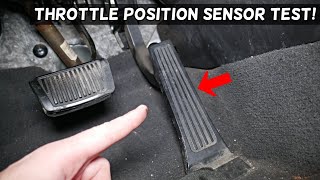
How to confirm: Using a scan tool with live data, graph the voltage of 'APP Sensor 1' and 'APP Sensor 2'. As you slowly press and release the pedal, the voltage for Sensor 2 should be exactly half of Sensor 1. For example, at idle, APS1 might be ~0.7V and APS2 ~0.35V. At wide-open throttle, APS1 might be ~4.3V and APS2 ~2.15V. Any spikes, drops, or deviations in this 2:1 ratio confirm the pedal assembly is faulty. 🎬 Watch: How to test the gas pedal sensor with a multimeter.
Typical fix: Replace the entire accelerator pedal assembly. It is a single unit that includes the integrated sensors.
Est. part cost: $70-$220 - Wiring Harness or Connector Issue ⚪ Low Probability A General Motors TSB for the same code notes that water intrusion into an instrument panel-to-body harness connector can cause this fault, a plausible scenario for any vehicle. Wires can also chafe or corrode over time, especially at the connector to the pedal assembly.
How to confirm: Visually inspect the wiring and connector at the accelerator pedal for any signs of damage, corrosion, or loose pins. Perform a 'wiggle test' by gently moving the connector and harness while watching the live sensor data on a scan tool. If the voltage readings jump or drop out, a wiring or connection fault is present.
Typical fix: Clean corroded terminals with an electrical contact cleaner and apply dielectric grease. Repair or replace any damaged sections of the wiring harness.
Est. part cost: $5-$50
Rare But Worth Checking
- Engine Control Module (ECM) Fault: → Shop Engine Control Module (ECM) This is extremely rare. Before condemning the ECM, all other possibilities, especially the APP sensor and wiring, must be exhaustively ruled out. An ECM failure can sometimes be caused by voltage spikes or internal component failure.
Diagnosis Steps
- Scan for Codes: Use an OBD-II scanner to confirm P2138 is the primary code. Note any other codes present, like P2110.
- Analyze Live Data: Access the live data stream on your scanner. Monitor the PIDs for 'APP Sensor 1' and 'APP Sensor 2'.
- Test the APP Sensor: With the car in park (engine on or off, key in 'ON' position), slowly press the accelerator pedal to the floor and release it. Watch the voltage readings. The voltage for APP2 should be consistently half of APP1 throughout the pedal's travel. If you see any jumps, drops, or a deviation from the 2:1 ratio, the pedal assembly is bad.
- Inspect Wiring: If the live data is inconclusive, perform a visual inspection of the wiring and connector at the accelerator pedal. Ensure it's securely connected and free of damage or corrosion. Perform a 'wiggle test' on the harness while observing live data.
- Check for Water Intrusion: Inspect the driver-side kick panel and floor for dampness. Locate the main body harness connector in that area and check for any signs of corrosion from water leaks.
- Rule out Other Causes: If the pedal and wiring check out perfectly, the issue could be a very rare ECM fault, which typically requires professional diagnosis.
Parts You'll Likely Need
- Accelerator Pedal Assembly
(OEM #32700-3S100, 32700-3Q110)— This is the most common failure for code P2138 on this vehicle. The sensors are integrated into the assembly and are not sold separately. Part 32700-3S100 is listed for the Sonata Hybrid, while 32700-3Q110 is listed for non-hybrid GDI/TCI-GDI models. Verify the correct part for your specific VIN.
Trusted brands: Hyundai (OEM), Standard Motor Products, Duralast
OEM price range: $100-$220
Aftermarket price range: $70-$150
Related Codes That Often Appear With This One
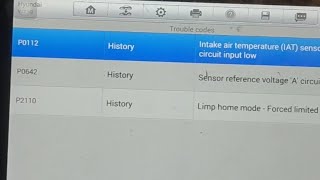
- P2110 — P2110 ('Throttle Actuator Control System - Forced Limited RPM') is a common companion code. It doesn't indicate a separate fault but is triggered by the ECM as a direct result of the P2138 fault, forcing the engine into 'limp mode' for safety.
Technical Service Bulletins (TSBs) & Recalls
- While no specific TSB for P2138 on the Sonata was found, Hyundai has issued numerous TSBs for ECM updates on this platform, such as 10-FL-004 and 13-FL-012, to address other DTCs. This indicates that software logic is a factor the manufacturer addresses, though P2138 is overwhelmingly a hardware failure of the pedal.
Platform-Specific Known Issues
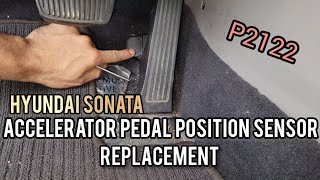
- A 2011 Sonata owner on hyundai-forums.com (thread 'Limp Mode, P2138, P2110, P0638') experienced the classic symptoms of sudden limp mode on the highway. After confirming the P2138 code, they replaced the accelerator pedal assembly (part #32700-3Q100 for their 2.4L GDI) themselves in under 30 minutes for around $140, which completely resolved the issue. 🎬 See this walkthrough on replacing the accelerator pedal assembly.
Mechanic-Grade Diagnostic Values
- APP Sensor 1 (APS1) Voltage — expected: Approx. 0.7V - 0.8V at closed throttle (pedal released) and approx. 3.85V - 4.35V at wide-open throttle (pedal fully depressed).. Failure: Voltage is erratic, does not change smoothly with pedal movement, or deviates from the expected 2:1 ratio with APS2.
- APP Sensor 2 (APS2) Voltage — expected: Approx. 0.29V - 0.46V at closed throttle and approx. 1.93V - 2.18V at wide-open throttle. The voltage should always be half of the APS1 voltage.. Failure: Voltage does not maintain a 1:2 ratio with APS1. The PCM sets P2138 if the calculated difference |(APS1)/2 – APS2| is greater than 4.5%.
- Wiring Harness Resistance — expected: Less than 20 Ω on the signal wires from the pedal connector to the ECM.. Failure: Resistance greater than 20 Ω, or an open circuit/short to ground indicates a wiring problem.
Scan Tool Commands That Help
- Hyundai GDS (Global Diagnostic System): Reset Adaptive Values — After replacing the accelerator pedal assembly, this function should be used to clear the old learned values from the engine control module to prevent the code from returning.
- Manual Procedure (No Tool): Throttle Position Sensor Relearn/Reset — After replacing the accelerator pedal assembly, a manual reset can be attempted. Turn the ignition ON (engine off), wait 15 seconds, slowly press the pedal to the floor, slowly release it, then turn the ignition OFF. Repeat the process 5 times to allow the ECM to relearn the new sensor's limits.
Wiring & Ground Locations
- Accelerator Pedal Assembly Connector — At the top of the accelerator pedal assembly in the driver's side footwell, mounted to the firewall.. This is the primary connection point for the APP sensors. It should be inspected for pushed-out pins, corrosion, or harness damage before replacing the pedal assembly.
- GM01 — Center of the dash.. This is a primary dash ground point. A loose or corroded connection here could potentially affect the reference voltage or signal integrity for dash-mounted components like the APP sensor.
- GM02 — Right end of the dash.. Another key dash ground point. Verifying major grounds are clean and tight is a good practice when chasing intermittent electrical faults.
OEM Part Supersession History
32700-3Q100→32700-3Q110— Part revision or manufacturer change.
Heads up: The part mentioned in the Pass 2 forum citation (32700-3Q100) has been superseded. 32700-3Q110 is the current replacement for non-hybrid models. Always verify with VIN.32700-3S100→32700-3S110— Part revision or manufacturer change.
Heads up: The original part for some hybrid models (32700-3S100) may be superseded by 32700-3S110. It is critical to check compatibility by VIN as pedal assemblies can have minor but critical differences.
Diagnostic Flowchart
Other Known Issues on This Vehicle
Issues unrelated to this code that are worth knowing about as an owner of this generation:
- Theta II Engine Failure (Connecting Rod Bearings) 🔴 High — Widespread across 2011-2014 models with 2.0L and 2.4L GDI engines. Manufacturing debris could block oil passages, leading to bearing wear, engine knocking, and eventual seizure. (Ref: Multiple recalls (e.g., September 2015, March 2017) and a major class-action lawsuit settlement providing extended warranties and potential reimbursements.)
- Timing Chain Tensioner Failure 🟠 Medium — Common enough to be noted by repair professionals. Owners may hear a rattling noise on startup, which indicates a failing tensioner. (Ref: Hyundai released an updated part to address the issue.)
- Malfunctioning Cabin Fuse Box 🟡 Low — A peculiar but documented issue where an internal fuse box malfunction causes the parking lights to stay on, draining the battery.
- Vehicle Speed Sensor Failure 🟠 Medium — Can cause erratic shifting, jerking, or hard shifts in the automatic transmission. Often mistaken for a transmission failure.
- No Sound from Speakers 🟡 Low — A glitch in the non-hybrid stereo system can cause a total loss of audio. A simple fix is often to disconnect the battery for 15 minutes to reset the system.
Used vs. New Parts: Buying Guide for This Vehicle
When a used part is the smart pick: A used accelerator pedal assembly is a very smart choice for this repair. The part is a simple electronic component, not a high-wear mechanical item. A used OEM unit from a low-mileage donor vehicle is often just as reliable as a new one at a fraction of the price.
Donor-vehicle mileage cap: roughly under 80000 miles for the part to have meaningful remaining life.
What to inspect on the donor part:
- Verify the part number stamped on the unit matches the required OEM number for your vehicle's VIN.
- Inspect the connector for any bent pins, corrosion, or signs of water damage.
- Ensure the pedal arm moves smoothly without binding or excessive play.
Aftermarket brands forum-validated for this vehicle:
- Standard Motor Products
- Duralast
Real Owner Stories
Aggregated from forums and TSBs cited above. Mileages and costs reflect what owners reported in those sources.
2011 Hyundai Sonata 2.4L GDI
Symptoms: Sudden limp mode on the highway with codes P2138, P2110, and P0638.
What fixed it: Replaced the accelerator pedal assembly (part #32700-3Q100).
Cost: $140-$140
Source hint: hyundai-forums.com: 'Limp Mode, P2138, P2110, P0638'
2013 Hyundai Sonata
Symptoms: Engine light on with codes P2135 and P2138.
What fixed it: Malfunctioning accelerator pedal replacement was identified as the primary fix, though wiring and throttle body were also noted as potential concerns.
Source hint: YouTube: HYUNDAI SONATA CODE P2135 P2138 ENGINE LIGHT ON FIX
2006 Hyundai Sonata
Symptoms: Vehicle entered limp mode with codes P2138 and P2110.
What fixed it: Diagnosis confirmed an Accelerator Position Sensor correlation issue.
Source hint: iATN (International Automotive Technicians Network)
Related OBD-II Codes
Frequently Asked Questions
What is the specific part number for the accelerator pedal on a 2011 Sonata 2.4L GDI?
Are there any Hyundai TSBs for software updates that might relate to my Sonata's limp mode?
Can I use an aftermarket accelerator pedal, or should I stick with OEM?
Is it worth buying a used pedal assembly for my 2011-2014 Sonata?
Why is my Electronic Stability Control (ESC) light on along with the P2138 code?
How can I verify if the pedal is actually bad using a scan tool?
Helpful Videos

The information in this article is provided for general reference and educational purposes only. Vehicle specifications, procedures, and part compatibility can vary by production date, trim level, and region. Always consult your vehicle's factory service manual and verify part numbers before purchasing or performing repairs. Safety-critical components such as airbags, seat belts, and braking systems should be installed by a qualified professional.
- Hyundai Sonata:
- 🧭 Diagnostic Flowchart
- 🎬 Helpful Videos
- What's Unique About the 2011-2014 Hyundai Sonata
- Symptoms You May Notice
- Most Likely Causes
- Rare But Worth Checking
- Diagnosis Steps
- Parts You'll Likely Need
- Related Codes That Often Appear With This One
- Technical Service Bulletins (TSBs) & Recalls
- Platform-Specific Known Issues
- Mechanic-Grade Diagnostic Values
- Scan Tool Commands That Help
- Wiring & Ground Locations
- OEM Part Supersession History
- Other Known Issues on This Vehicle
- Used vs. New Parts: Buying Guide for This Vehicle
- Real Owner Stories
- 2011 Hyundai Sonata 2.4L GDI
- 2013 Hyundai Sonata
- 2006 Hyundai Sonata
- Related OBD-II Codes
- Frequently Asked Questions
- 🎟️ Get 5% Off