

P2507 on 2008-2017 Honda Civic: ECM/PCM Power Input Signal Low Causes and Fixes
On a 2008-2017 Honda Civic, code P2507 is most often caused by a weak or failing battery, corroded battery terminals, or a poor ground connection. Before replacing any parts, fully charge and test the battery and clean all power and ground connections. The PCM requires a stable voltage (typically above 9-10V) to operate, and this code sets when the supply drops below that threshold.
- P2507 means the engine computer is not getting enough power.
- The most likely cause on a Honda Civic is a weak battery, a bad alternator, or corroded/loose battery cables and grounds.
- Do not drive the vehicle, as the engine could stall at any time.
- Always start diagnosis with the simplest and most likely solutions: test the battery and clean all power and ground connections before replacing more expensive parts.
What's Unique About the 2008-2017 Honda Civic
While P2507 is a generic code, on Honda platforms like the Civic, Accord, and CR-V from this era, the issue frequently points directly to a failing battery or a faulty alternator. Honda is also known for using smaller batteries to save weight and space, which may have a shorter service life. Another common point of failure is internal corrosion on the main power and ground cables, which isn't always visible from the outside. A simple visual check might miss it; a voltage drop test is often required to find the high resistance in the cable. The main ground strap from the battery to the chassis is a frequent culprit.
Generation note: The 2008-2017 year range covers the end of the 8th generation (2008-2011), the full 9th generation (2012-2015), and the beginning of the 10th generation (2016-2017). The causes for P2507 are related to the fundamental electrical system and are generally consistent across these generations, as they all rely on a similar 12V architecture.
Symptoms You May Notice
- Check Engine Light is on
- Engine stalls intermittently while driving or at idle
- Engine may not start or is difficult to start
- Battery or charging system warning light may be illuminated
- Erratic engine behavior or reduced power
- Inability to communicate with the vehicle's OBD-II port if system voltage is too low
- Flickering dash lights or gauges acting erratically
- Transmission may have harsh or delayed engagement
- Replacing the PCM first. The PCM is rarely the cause of the problem and is an expensive part to replace. The issue is almost always in the power supply TO the PCM.
- Clearing the code without fixing the underlying voltage issue. The code will simply return when the voltage drops again.
- Replacing the battery without testing the alternator. If the alternator is bad, it will quickly drain the new battery and the problem will persist.
Most Likely Causes
- Weak or Failing Battery 🔴 High Probability → Shop Vehicle Battery Batteries are a common failure item on all vehicles. Honda Civics are noted for having relatively small batteries that can fail with little warning. A battery may have enough charge to start the car but can drop voltage significantly under electrical load, triggering the code.
How to confirm: Test the battery voltage with a multimeter. A healthy battery should read at least 12.4V with the engine off. Perform a load test to check its true health. Many auto parts stores offer free battery testing.
Typical fix: Replace the vehicle's 12V battery.
Est. part cost: $120-$250 - Corroded or Loose Battery Terminals / Ground Straps 🔴 High Probability → Shop Engine Ground Strap Battery terminals and ground connections can develop corrosion or become loose over time, creating high resistance in the circuit that supplies power to the PCM. The main ground strap from the battery to the chassis is a common point of failure due to moisture and road salt.
How to confirm: Visually inspect the battery terminals, main power cables, and the ground straps connecting the battery to the chassis and the engine block. Clean any corrosion and tighten all connections. Perform a voltage drop test on the main power and ground cables to find hidden resistance; the voltage drop should be less than 0.2V.
Typical fix: Thoroughly clean the battery terminals and cable ends with a wire brush. Replace corroded cables if necessary. The ground strap is a common replacement part.
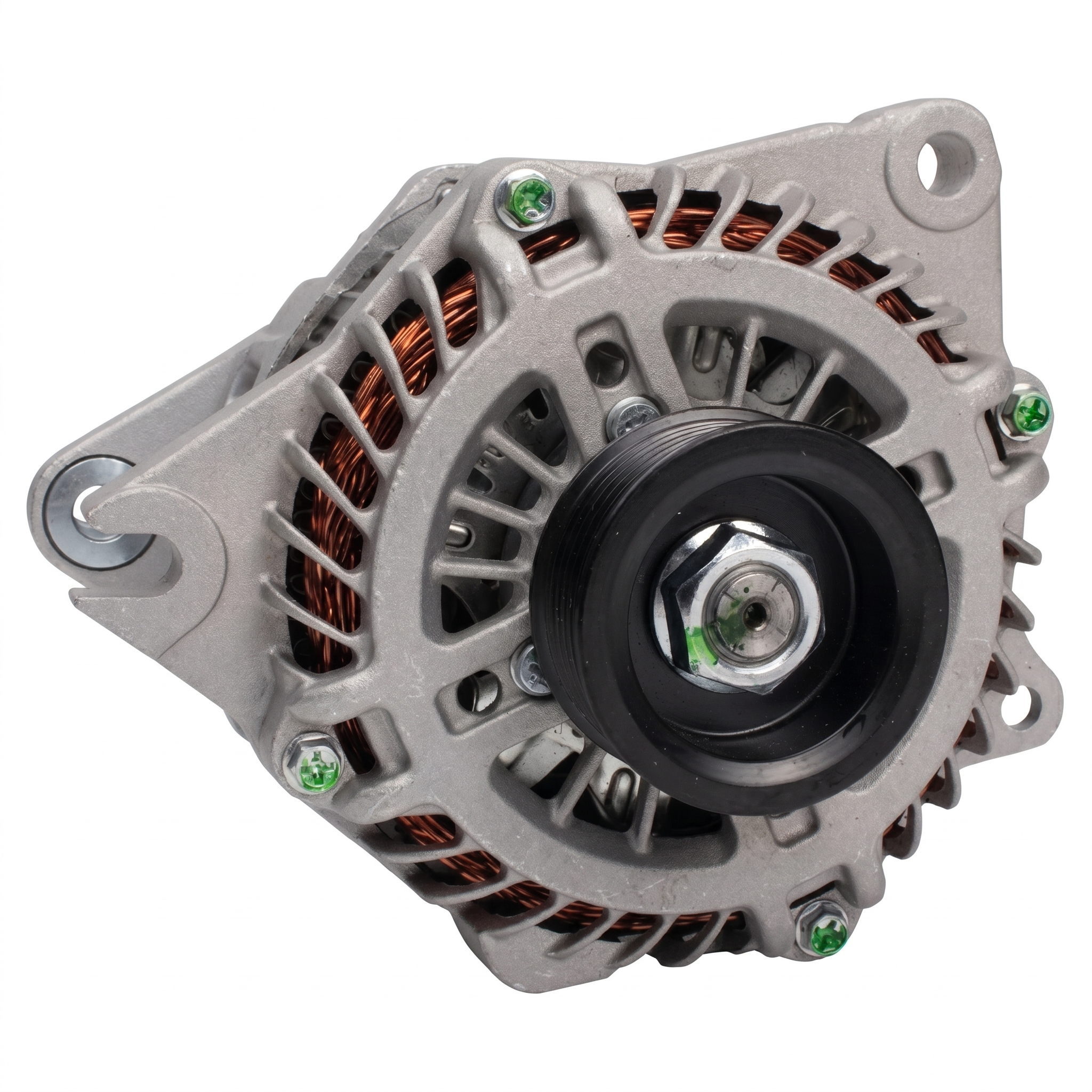
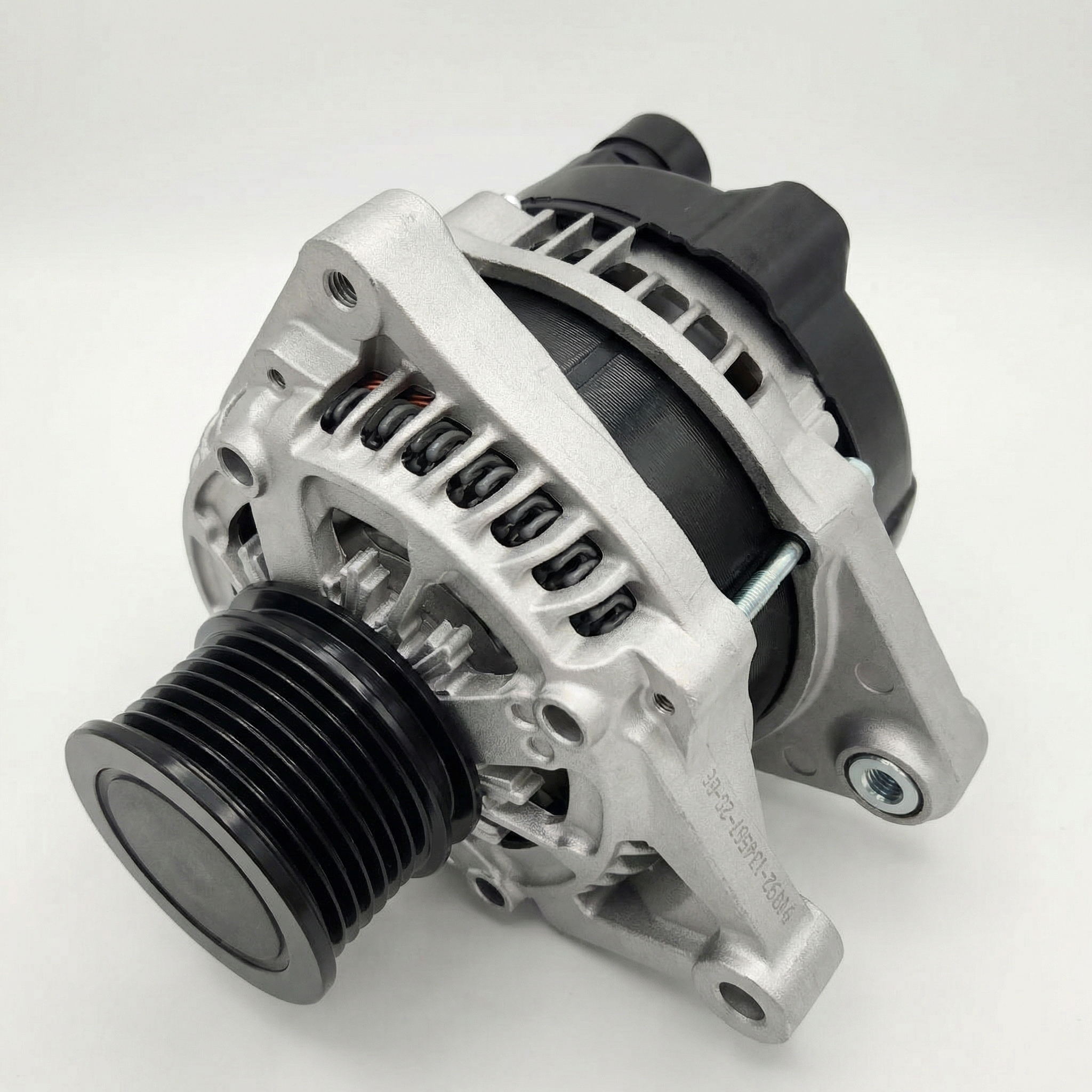
Est. part cost: $5-$50 - Failing Alternator 🟡 Medium Probability → Shop Alternator If the alternator is not recharging the battery correctly, the overall system voltage will drop while the engine is running, causing this code.
How to confirm: With the engine running, test the voltage at the battery terminals. It should be between 13.5V and 14.5V. If the voltage is low or not increasing with the engine on, the alternator is likely faulty.
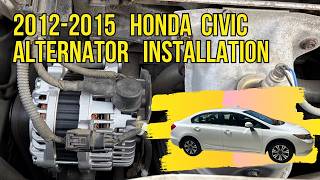
Typical fix: Replace the alternator. 🎬 See this step-by-step alternator replacement walkthrough
Est. part cost: $200-$450 - Faulty PCM Power Relay (Main Relay) ⚪ Low Probability The main relay that powers the PCM (often labeled PGM-FI) can fail due to internal solder joint cracks or contact wear, leading to an intermittent or complete loss of power to the computer.
How to confirm: Locate the PGM-FI main relay in the under-hood or interior fuse box. You can test it by swapping it with an identical relay from a non-critical circuit (like the horn or headlights) and seeing if the problem resolves. A more definitive test involves checking for voltage at the PCM power input pin with the key on. 🎬 Watch: How to diagnose a faulty PGM-FI main relay
Typical fix: Replace the PGM-FI main relay.
Est. part cost: $15-$60
Rare But Worth Checking
- Faulty Powertrain Control Module (PCM): → Shop Engine Control Module (ECM) This is the least likely cause. The PCM is a robust component. All other possibilities, including wiring, fuses, and grounds, must be exhaustively checked before condemning the PCM.
- Damaged Wiring Harness: A wire in the harness that provides power to the PCM could be frayed, shorted, or damaged. This can be difficult to find and often requires tracing the circuit from the fuse box to the PCM. Rodent damage is a possible cause.
- Parasitic Drain: A faulty component or aftermarket accessory can draw power when the car is off, slowly draining the battery. This leads to a low voltage condition on startup, triggering P2507. Diagnosing this requires an ammeter and systematically pulling fuses to isolate the draining circuit.
Diagnosis Steps
- Check Battery Health: Use a multimeter to check the battery voltage with the engine off (should be >12.4V). Perform a load test on the battery. A weak battery is the most common culprit.
- Inspect Connections: Visually inspect and clean the battery terminals, cable ends, and main chassis/engine ground points. Pay special attention to the main ground strap from the negative terminal to the chassis. Ensure all connections are tight.
- Test the Charging System: Start the engine and measure the voltage at the battery. It should be between 13.5V and 14.5V. If not, the alternator is suspect.
- Check Fuses and Relays: Inspect the fuses related to the PCM (often labeled PGM-FI or ECU). Locate the PGM-FI main relay and consider swapping it with a known good, identical relay to test.
- Perform a Voltage Drop Test: If the battery and alternator test good, perform a voltage drop test on the main power and ground cables. Place one multimeter lead on the battery post and the other on the cable end (e.g., starter terminal or chassis ground point). A reading above 0.2V indicates high resistance from internal corrosion that isn't visible.
- Check for Parasitic Drain: If the battery dies overnight, perform a parasitic draw test using a multimeter in ammeter mode to find the circuit causing the drain.
- Inspect Wiring: If all else fails, carefully inspect the wiring harness leading to the PCM for any signs of damage, corrosion, or loose pins at the connector.
- Consider the PCM: Only after all the above steps have been completed and the issue persists should a faulty PCM be considered.
Parts You'll Likely Need
- 12V Battery — A weak or failing battery is the most common cause for the PCM's input voltage to drop below the required threshold.
Trusted brands: Interstate, DieHard, Duralast, ACDelco
OEM price range: $180-$250
Aftermarket price range: $120-$200 - PGM-FI Main Relay
(OEM #39400-S10-003)— This relay supplies power to the engine computer. If it fails or has high internal resistance due to cracked solder joints, it can cause a low voltage condition.
Trusted brands: Honda (Genuine), Denso, Bosch, Standard Motor Products
OEM price range: $40-$70
Aftermarket price range: $15-$40 - Alternator — A failing alternator will not properly charge the battery, leading to low system voltage and triggering code P2507.
Trusted brands: Denso, Bosch, Remy
OEM price range: $400-$600
Aftermarket price range: $200-$450 - Battery Ground Cable — The ground cable can corrode internally, especially at the chassis connection point, creating high resistance that causes voltage drop issues.
Trusted brands: Honda (Genuine), Standard Motor Products
OEM price range: $30-$60
Aftermarket price range: $15-$40
Platform-Specific Known Issues
- Internal Corrosion of Ground Cable: On 8th and 9th generation Civics, the factory ground cable from the battery to the chassis is a known weak point. It can corrode internally, often near the chassis-side crimp, which is not visible. This creates high resistance and can cause a host of electrical issues, including P2507, even if the battery and alternator are good.
Mechanic-Grade Diagnostic Values
- Battery Voltage (Engine Off, Resting) — expected: 12.4V - 12.8V. Failure: Below 12.4V indicates a discharged or failing battery.
- Charging System Voltage (Engine Running) — expected: 13.5V - 14.5V. Failure: Below 13.5V indicates a faulty alternator or charging system issue.
- System Voltage While Cranking — expected: Should remain above 9.0V - 10.0V. Failure: A sustained drop below 9.0V can trigger P2507 and indicates a weak battery.
- Voltage Drop (Power or Ground Cable) — expected: < 0.2V. Failure: A reading > 0.2V between the battery post and the cable end (e.g., starter or chassis ground) indicates high resistance from internal corrosion.
- Parasitic Draw (After Sleep Mode) — expected: < 50 mA (milliamps). Failure: A consistent draw over 50 mA will drain the battery over time. Some 9th gen Civics specify a normal draw as low as 27 mA.
- PGM-FI Main Relay Constant Power (Pin 1) — expected: 10V - 12V at all times (key off). Failure: No voltage indicates a blown fuse or a break in the wire from the battery.
- PGM-FI Main Relay Ignition Power (Pin 5) — expected: 10V - 12V with key in 'ON' position. Failure: No voltage indicates an issue with the ignition switch circuit or related fuse.
Scan Tool Commands That Help
- Honda Diagnostic System (HDS): DTC Reading & Clearing — To read the P2507 code and any other manufacturer-specific codes that a generic OBD-II scanner might miss.
- Honda Diagnostic System (HDS): Data List Display — To monitor real-time ECU parameters, including the specific PCM input voltage. This allows a technician to watch the voltage live while wiggling harnesses to find intermittent connection problems.
- Honda Diagnostic System (HDS): Snapshot Function — To capture a freeze-frame of all sensor and parameter data at the exact moment the P2507 code was triggered. This can provide crucial context, like engine RPM and load at the time of the fault.
Wiring & Ground Locations
- G101 — On the engine or transmission housing. For 8th gen (Si), it's on the left rear of the engine. For other 8th gen models, it's on the right rear of the engine. It is a primary ground point for the engine and PCM.. This is a main engine and PCM ground. A loose or corroded G101 connection can cause a voltage differential and trigger P2507 and other electrical faults.
- G504 — Located under the left side of the dashboard on some 8th gen models.. This is an interior ground point. While less likely to be the primary cause than engine bay grounds, a fault here can contribute to intermittent electrical issues.
- PGM-FI Main Relay — Typically located in the under-dash fuse/relay box on the driver's side, though some older models had it elsewhere.. This relay directly supplies switched power to the PCM. Its failure is a direct cause of low power input to the computer.
- Battery-to-Chassis Ground — The main black cable from the negative battery terminal connecting to the vehicle's sheet metal frame, often near the battery tray or strut tower.. This is the primary return path for the entire vehicle's electrical system. Corrosion or looseness here creates high resistance, causing system-wide low voltage problems.
Real Owner Repair Stories
- Honda-Tech forum user (2009 Honda Civic Coupe LX) — Battery drains every couple of days, requiring a jump start.
❌ Tried (didn't work) Took car to several shops who could not find the source of the draw., Removed the starter relay, but the draw persisted.
✅ What actually fixed it The owner discovered a parasitic draw of 150mA on the ignition circuit (fuse #2). The ultimate cause was a hidden GPS tracking device, likely installed by the dealer, that was drawing power continuously. Removing the tracker resolved the battery drain. - Reddit r/AskMechanics user (2015 Honda Civic EX, 160,000 kms) — Parasitic battery drain, car dies after 3-5 days of not being driven. Already on the third battery.
❌ Tried (didn't work) General mechanic confirmed a draw but couldn't find it., Honda dealership claimed there was no drain., Electrical specialist claimed there was no drain., Owner and brother measured a 0.15 to 0.3 amp draw but pulling every fuse did not stop it.
✅ What actually fixed it The issue was unresolved in the thread, but the symptoms strongly point to a parasitic draw on a circuit that is not protected by the main fuse boxes being pulled (e.g., a direct connection to the battery or starter, such as an aftermarket accessory or a faulty alternator diode). The user planned to install a battery kill switch as a temporary solution.
OEM Part Supersession History
39400-SR3-003, 39400-S01-A01→39400-S10-003— Component consolidation and design updates over various Honda models.
Heads up: The part 39400-S10-003 is the common service replacement for a wide range of Honda/Acura vehicles from the 1990s through the mid-2000s, including some Civics in the specified range. Always verify fitment with the vehicle's VIN, as relay designs can vary.
Model Year Variations Within This Range
- 2008-2011 (8th Gen) vs 2012-2015 (9th Gen): The 8th generation Si used the high-revving 2.0L K20Z3 engine, while the 9th generation Si switched to the 2.4L K24Z7 engine, which offered more torque but a lower redline. The 9th generation also introduced features like the 'ECON' button, which alters throttle response and A/C performance for better fuel economy, and generally had a quieter cabin. These changes do not significantly alter the diagnosis for P2507, but the engine bay layout and some ground points may differ slightly.
- 2016-2017 (10th Gen): The 10th generation marked a major redesign with new turbocharged engines (1.5T and 2.0T). While the fundamental 12V electrical architecture is similar, wiring diagrams, ground locations, and module locations are completely different from the 8th and 9th generations.
Diagnostic Flowchart
Other Known Issues on This Vehicle
Issues unrelated to this code that are worth knowing about as an owner of this generation:
- Cracked Engine Block (R18A1 Engine) 🔴 High — Common on 2006-2008 models and some early 2009s. Tends to appear as a coolant leak from the front or back of the block. (Ref: Honda issued a warranty extension (10 years/unlimited miles), but it has since expired for all affected vehicles. TSB 10-048.)
- Failing Clear Coat / Peeling Paint 🟡 Low — Widespread across 8th and 9th generation Civics, particularly on dark colors. The clear coat fails, leading to a hazy appearance and eventual peeling. (Ref: Honda extended the paint warranty for some colors/years, but this has largely expired.)
- VTC Actuator Rattle on Cold Start (K-series engines) 🟠 Medium — Affects Si models with the K20/K24 engine and later 1.5T engines. A brief, loud rattle for 1-2 seconds upon cold startup. (Ref: Multiple TSBs exist, including 09-010, 16-012, and 16-088, which call for replacing the VTC actuator with an updated part.)
- Uneven Rear Tire Wear / Defective Rear Upper Control Arms 🟠 Medium — Common on 8th generation Civics (2006-2011). The factory rear upper control arms do not allow for sufficient camber adjustment, causing the inside edge of the rear tires to wear out prematurely ('cupping'). (Ref: Honda TSB 13-047 recommends installing a new, redesigned control arm kit. Most owners now use aftermarket adjustable control arms.)
- AC System Failures (10th Gen) 🟠 Medium — Very common on 2016-2019 Civics. The AC condenser is prone to leaks, and compressors also fail frequently. (Ref: Honda extended the warranty on the AC condenser for many 10th gen vehicles.)
- Oil Dilution (1.5L Turbo Engine) 🔴 High — Affects 2016+ Civics with the 1.5T engine, especially in cold climates with frequent short trips. Gasoline mixes with the engine oil, raising the oil level and reducing lubrication. (Ref: Honda issued software updates and extended warranties (TSB 18-114) to help mitigate the issue, but it remains a concern for many owners.)
Used vs. New Parts: Buying Guide for This Vehicle
When a used part is the smart pick: Used parts like the PGM-FI Main Relay, fuse boxes, and battery cables/ground straps are generally safe and cost-effective choices from a junkyard or reputable online seller. These components have low failure rates outside of specific known issues (like relay solder joints) and are easy to inspect.
Donor-vehicle mileage cap: roughly under 120000 miles for the part to have meaningful remaining life.
What to inspect on the donor part:
- For relays and fuse boxes, check for any signs of water intrusion, heavy corrosion on pins, or melted plastic.
- For cables, inspect the entire length for cuts or abrasions in the insulation.
- Check cable ends for excessive corrosion or fraying; ensure the crimps connecting the terminal to the wire are tight and clean.
OEM-only on this vehicle (don't cheap out):
- Powertrain Control Module (PCM): While the PCM is rarely the fault, if it must be replaced, using a new or professionally remanufactured OEM unit programmed to your vehicle's VIN is critical. Used PCMs can have immobilizer conflicts and may not be compatible.
Aftermarket brands forum-validated for this vehicle:
- Alternator: Denso (often the OEM supplier), Bosch.
- Battery: Interstate, DieHard, Duralast Gold/Platinum.
- PGM-FI Main Relay: Standard Motor Products (SMP), Denso.
Brands owners have reported issues with on this vehicle:
- Ultra-cheap, unbranded alternators and starters from online marketplaces often have high premature failure rates. It is better to buy a quality remanufactured unit than a cheap new one.
Real Owner Stories
Aggregated from forums and TSBs cited above. Mileages and costs reflect what owners reported in those sources.
2006-2011 Honda Civic (8th Gen)
Symptoms: The car stalled while driving and threw the P2507 code for ECM/PCM Power Input Signal Low.
What fixed it: The community recommended checking the battery and alternator as the standard diagnostic path for this code.
Source hint: https://www.8thcivic.com/threads/p2507-ecm-pcm-power-input-signal-low.593385/
2012-2015 Honda Civic (9th Gen)
Symptoms: The car stalled while driving and then experienced a no-start condition.
What fixed it: The issue was diagnosed as a bad battery.
Source hint: https://www.9thgencivic.com/threads/car-stalled-while-driving-and-now-it-wont-start.198929/
Related OBD-II Codes
Frequently Asked Questions
My 8th generation Civic has a P2507 code but the battery and alternator tested fine. What else could it be?
Could a problem with the PGM-FI relay cause the P2507 code on my Honda?
Is there a TSB for the engine rattle I hear on my Civic Si along with these electrical symptoms?
I have a 2008 Civic with a coolant leak; is this related to the P2507 code?
How much does it cost to fix the most common cause of P2507 on a Honda Civic?
Helpful Videos
Used OEM Parts in Stock
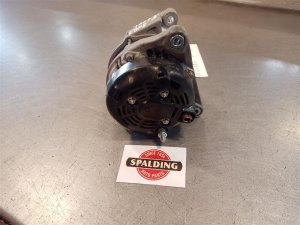
New Aftermarket Parts Available

The information in this article is provided for general reference and educational purposes only. Vehicle specifications, procedures, and part compatibility can vary by production date, trim level, and region. Always consult your vehicle's factory service manual and verify part numbers before purchasing or performing repairs. Safety-critical components such as airbags, seat belts, and braking systems should be installed by a qualified professional.
- Honda Civic:
- 🧭 Diagnostic Flowchart
- 🎬 Helpful Videos
- 🛍️ Shop This Part
- What's Unique About the 2008-2017 Honda Civic
- Symptoms You May Notice
- Most Likely Causes
- Rare But Worth Checking
- Diagnosis Steps
- Parts You'll Likely Need
- Platform-Specific Known Issues
- Mechanic-Grade Diagnostic Values
- Scan Tool Commands That Help
- Wiring & Ground Locations
- Real Owner Repair Stories
- OEM Part Supersession History
- Model Year Variations Within This Range
- Other Known Issues on This Vehicle
- Used vs. New Parts: Buying Guide for This Vehicle
- Real Owner Stories
- 2006-2011 Honda Civic (8th Gen)
- 2012-2015 Honda Civic (9th Gen)
- Related OBD-II Codes
- Frequently Asked Questions
- 🎟️ Get 5% Off