

P2535 on 2020-2023 Chevrolet Silverado 2500: Ignition Circuit High Causes and Fixes
On a 2020-2023 Silverado 2500, code P2535 often points to complex electrical issues beyond a simple bad ignition switch. Common causes include a faulty Body Control Module (BCM), a corroded main ground strap, water leaking into headlamp connectors, or a software issue after replacing the fuel pump driver module. Diagnosis is complex and professional service is recommended.
- P2535 on a 2020-2023 Silverado 2500 is a serious electrical fault that can cause stalling or a no-start condition.
- Do not immediately assume the ignition switch is bad. The root cause is often a faulty Body Control Module (BCM) or water leaking into the headlamp connectors.
- If the code appeared directly after replacing the fuel pump driver module, it is likely related to a known software/module issue described in TSB #PIT6396A.
- Diagnosis is complex and should be performed by a professional with access to GM service bulletins and advanced diagnostic tools.
What's Unique About the 2020-2023 Chevrolet SILVERADO 2500
While P2535 can mean a bad ignition switch on many vehicles, on modern GM trucks like the 2020-2023 Silverado, the root cause is often more complex. Documented issues point towards problems with the Body Control Module (BCM) failing internally, water intrusion in seemingly unrelated areas like headlamp connectors causing electrical shorts, corroded ground straps, and even software glitches that can trigger this code after other components, like the fuel pump driver module, are replaced. These platform-specific quirks mean that simply replacing the ignition switch is often not the correct fix.
Diagnostic Flowchart
Tap your situation to follow the diagnostic path that matches what you're seeing on this vehicle.
Symptoms You May Notice
- Check Engine Light (MIL) is on
- Engine will not crank or start
- Engine stalls intermittently while driving
- Dead battery, especially after sitting overnight
- Accessories like radio, windows, or climate control do not work or work erratically
- Engine continues to run even after the ignition is turned off
- Security or other warning lights may illuminate on the dash
- Replacing the battery without diagnosing the source of the parasitic drain.
- Replacing the starter motor when the issue is a no-crank signal from the PCM/BCM or a bad ground.
- Replacing the ignition switch when the actual cause is the BCM, a water leak, or a corroded ground strap.
Most Likely Causes
- Faulty Body Control Module (BCM) 🔴 High Probability → Shop Body Control Module A GM Technical Service Bulletin (PIT5817A) for 2020-2021 GM trucks and SUVs confirms the BCM can fail internally. This causes the ignition 1 relay (KR73) driver to remain energized even when the truck is off, applying power to circuit 5199, which keeps other modules awake, drains the battery, and sets P2535.
How to confirm: A technician with a capable scan tool must monitor the ignition relay command from the BCM. The key step is to check for voltage on the BCM's ignition relay control circuit (specifically circuit 5199) after the ignition has been turned off. If voltage persists, the BCM is faulty and needs replacement.
Typical fix: Replace the Body Control Module and program the new unit to the vehicle. This requires specialized tools.
Est. part cost: $300-$500 - Corroded/Failed Main Ground Strap 🟡 Medium Probability → Shop Engine Ground Strap The main braided ground strap, often located between the frame and the engine block or starter, is exposed to the elements and can deteriorate. A poor ground can cause voltage to back-feed through circuits, leading to a variety of electrical codes, including P2535, and a no-crank condition.
How to confirm: Visually inspect the main ground straps for corrosion, fraying, or breakage. A mechanic found 6.5 volts on the starter motor case of a 2020 Silverado, indicating a bad ground. Use a multimeter to check for voltage drop between the engine block and the negative battery terminal; it should be very close to zero.
Typical fix: Replace the corroded ground strap. 🎬 Watch: How to identify and fix a bad ground wire. In one documented case, a new cable resolved the no-crank and P2535 code.
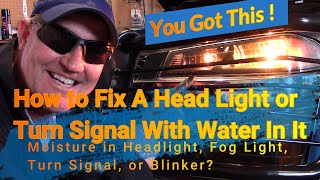
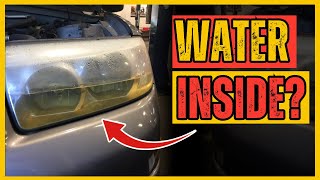
Est. part cost: $20-$60 - Water Intrusion into Headlamp Assembly or Connectors 🟡 Medium Probability → Shop Headlight Assembly While TSB PIT5546G specifically covers 2016-2019 trucks, the issue of water leaking into headlamp connectors and shorting circuits remains a known GM problem. This can back-feed voltage onto switched ignition fuses, keeping modules powered on, causing P2535 and a dead battery. GM considers condensation that covers more than half the lens or leaves an accumulation of water to be a warrantable leak.
How to confirm: Inspect headlamp assemblies for moisture, fogging, or standing water. Disconnect the main headlamp electrical connectors and check for corrosion. A technician can check for voltage on ignition-switched fuses (like F26UA, F31UA, F34UA per the older TSB) in the underhood fuse block with the ignition completely off.
Typical fix: Replace the leaking headlamp assembly and repair or replace the corroded electrical connector. Drying the assembly and applying dielectric grease may be a temporary fix. 🎬 Watch: How to remove moisture and water from your headlights.
Est. part cost: $400-$800 per headlamp assembly - Faulty Ignition Switch ⚪ Low Probability → Shop Ignition Switch While less common on this platform compared to module and wiring issues, the ignition switch itself can fail internally, causing a short that sends continuous high voltage to the PCM.
How to confirm: Using a multimeter, test the voltage output at the ignition switch connector in all key positions (Off, Accessory, Run, Start). Compare the readings to the manufacturer's specifications. A voltage reading higher than specified confirms the fault.
Typical fix: Replace the ignition switch.
Est. part cost: $50-$150
Rare But Worth Checking
- Software Issue After Fuel Pump Driver Module (FPDM) Replacement: According to TSB #PIT6396A, this code can be set immediately after replacing the FPDM. This is not a part failure, but a known issue. The official interim repair is to install a diode in line with the water-in-fuel sensor circuit (circuit 6862) to correct the issue.
- Shorted Wiring Harness: Wires in the ignition or related module circuits can become chafed, pinched, or melted. A documented case on a 2019 Silverado showed the harness rubbing through where it passes a frame crossmember near the spare tire or where the cab and bed meet, causing a blown fuse and P2535. Inspecting these areas is critical if a fuse is repeatedly blowing.
Diagnosis Steps
- Scan the vehicle for all stored trouble codes in all modules (PCM, BCM, etc.). Note any other codes that are present.
- Question the driver about recent repairs. Specifically ask if the Fuel Pump Driver Module has been replaced recently, which points to TSB PIT6396A.
- Perform a parasitic draw test. With the ignition OFF and all doors closed, wait at least 15-20 minutes for modules to sleep. Use a DC clamp ammeter on the negative battery cable to measure current. If the draw is excessive (typically >50mA), start pulling fuses to isolate the circuit. A thermal camera can also quickly identify relays or fuses that are hot, 🎬 See this walkthrough on how to perform a parasitic draw test. indicating a circuit that has not shut down.
- Inspect main ground connections. Visually inspect the braided ground strap from the frame to the engine/starter for any signs of green or white corrosion, or fraying. Perform a voltage drop test from the engine block to the negative battery post while cranking (or attempting to crank); the reading should be under 0.5V.
- Inspect for water intrusion. Check both headlamp assemblies for signs of moisture or fogging. Disconnect the headlamp electrical connectors and check for corrosion. If moisture is suspected as the cause, check for voltage at switched ignition fuses in the underhood fuse block with the ignition OFF.
- Verify BCM operation. If a parasitic draw is confirmed and other causes are ruled out, follow the diagnostic procedure from TSB PIT5817A. Use a scan tool to check BCM commands and test for voltage on circuit 5199 with the ignition off. If voltage is present, the BCM is the likely culprit.
- Inspect wiring harnesses. If a specific fuse is blowing, inspect the harness for chafing, especially near the spare tire crossmember and where the cab meets the bed.
Parts You'll Likely Need
- Body Control Module (BCM)
(OEM #13531840, 13529041, 13547771 (Examples, must verify by VIN))— A primary cause for this code on modern GM trucks, where an internal BCM fault keeps ignition circuits powered on.
Trusted brands: ACDelco (GM Genuine)
OEM price range: $300-$500
Aftermarket price range: $200-$400 - Headlamp Assembly — If the seal fails, water intrusion can short out circuits, causing the P2535 code. The entire assembly must be replaced to fix the leak.
Trusted brands: ACDelco, TYC, Depo
OEM price range: $400-$800
Aftermarket price range: $250-$500 - Braided Ground Strap/Cable — Corrosion or failure of this critical ground can cause numerous electrical faults, including P2535 and a no-start condition.
Trusted brands: ACDelco, Standard Motor Products
OEM price range: $30-$60
Aftermarket price range: $20-$40 - Ignition Switch — A possible but less common cause on this platform; the switch itself can fail and send continuous high voltage.
Trusted brands: ACDelco, Standard Motor Products
OEM price range: $50-$150
Aftermarket price range: $30-$100
Related Codes That Often Appear With This One
- P12A6, P10DA, C111B — These codes may appear with P2535 after a fuel pump driver module replacement, as noted in TSB #PIT6396A.
- P0700, U300D — These codes can accompany P2535 when the BCM is faulty and keeping ignition circuits powered on, as seen in TSB #PIT5817A.
- P1682, P129D, P10E4 — These codes are associated with P2535 when the cause is water intrusion into headlamp circuits on previous generation GM trucks, per TSB #PIT5546G.
Technical Service Bulletins (TSBs) & Recalls
- PIT6396A: Communicates an issue with DTC P2535 setting after replacing the fuel pump driver module.
- PIT5817A: SES MIL / Dead Battery / DTC P0700 P2535 U300D, points to faulty BCM.
- PIT5546G: Dead Battery / P1682 P129D P10E4 P2535 / Crank No Start, points to water intrusion in headlamps.
Platform-Specific Known Issues
- TSB #PIT6396A: Notes that DTC P2535 may set after replacing the fuel pump driver module. This indicates a software/communication issue, not a hardware fault. The interim fix is to install a diode on the water-in-fuel sensor circuit.
- TSB #PIT5817A: Confirms that an internal BCM failure can keep the ignition relay energized after shutdown, causing a parasitic draw, dead battery, and P2535. This is a primary suspect on these vehicles.
- TSB #PIT5546G: While for the prior generation (2016-19), this bulletin details the well-known GM issue of water in headlamp connectors causing electrical shorts that back-feed voltage to ignition fuses, leading to P2535 and a dead battery. The principle remains relevant.
Mechanic-Grade Diagnostic Values
- Ignition Switch Run/Start Circuit Voltage — expected: Approximately 12.6V (Battery Voltage) when the key is in the ON or START position.. Failure: The P2535 code triggers when the PCM sees voltage that is abnormally high, sometimes cited as exceeding 12.5V or 16V, or a constant battery-positive signal when the key is off.
- Voltage Drop Test on Main Ground Strap — expected: Under 0.5V while cranking or attempting to crank.. Failure: A reading significantly higher than 0.5V, such as the 6.5V found on one Silverado's starter case, indicates a bad ground connection.
Scan Tool Commands That Help
- GDS2 (GM Global Diagnostic System 2): Data Bus Diagnostic Tool > Message Monitor — This function is crucial when a parasitic battery drain is suspected. It passively monitors the vehicle's data networks with the key off to show which specific control modules are remaining 'awake' and causing the drain.
- GDS2 (GM Global Diagnostic System 2): Module Diagnostics > BCM > Data Display — To monitor the live status of ignition switch inputs as seen by the Body Control Module. This allows a technician to see if the BCM is receiving an incorrect 'high' signal that doesn't match the physical key position.
- GDS2 (GM Global Diagnostic System 2): BCM > Control Functions — To perform bidirectional tests by commanding outputs (like lights, relays, etc.) on and off. This helps verify if the BCM itself and the circuits it controls are functioning correctly, helping to isolate the fault.
Wiring & Ground Locations
- Circuit 5199 — Can be inspected under the driver's side sill plate.. TSB PIT5391F specifically calls out this circuit for potential damage or corrosion, which can cause a no-crank or stall condition associated with P2535. This is the ignition 1 relay control circuit from the BCM.
- X50A Connector — Located at the Underhood Fuse Block.. TSB PIT5391F recommends inspecting all X50A connectors for backed-out, corroded, or damaged terminals as a primary diagnostic step for P2535 and related symptoms.
- Main Body/Frame Ground Strap — Typically a braided strap connecting the engine block to the frame, or the body to the frame. On 2019+ trucks, a common failure point is a strap from the body to the frame.. This is a critical ground path. Corrosion and failure of this strap are documented to cause widespread, random electrical issues, including P2535, on these trucks.
- G103 / G104 — Common GM engine grounds. G103 is often on the front of the passenger side cylinder head. G104 is often on the rear of the driver's side cylinder head.. These are primary engine-to-chassis grounds. While locations are from slightly older models, they are common grounding points for the ECM and other critical sensors. A poor connection here can cause unpredictable voltage readings.
- X110 / X120 Connectors — Main body harness connectors, often located near the headlamp assemblies.. TSB PIT5546G (for 2016-2019 models) identifies these connectors as potential points for water intrusion from leaking headlamps, which can short ignition circuits and cause P2535. This issue may persist on newer models.
Real Owner Repair Stories
- Reddit user One-Current-4972 in r/Silverado (2020 Silverado 1500 LT) — Was having very random code issues.
❌ Tried (didn't work) The user went straight to inspecting the ground strap after experiencing issues.
✅ What actually fixed it The user found the body-to-frame ground strap was so corroded that it 'crumbled into dust' when wiggled. Replacing the strap and cleaning the connection points resolved the issues.
OEM Part Supersession History
13531840→N/A— This is a commonly cited part number for the BCM in 2021-2023 models.
Heads up: No supersession history was found in public sources. Always verify the correct part number by VIN before ordering.
Helpful Videos

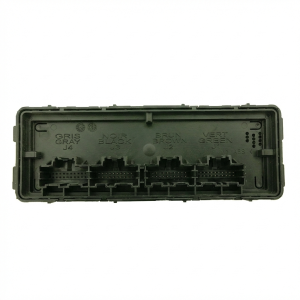
Used OEM Parts in Stock
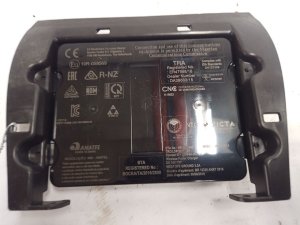
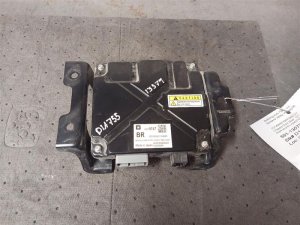
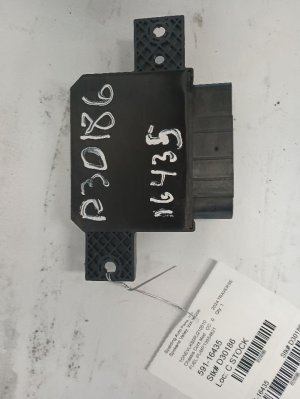
New Aftermarket Parts Available


The information in this article is provided for general reference and educational purposes only. Vehicle specifications, procedures, and part compatibility can vary by production date, trim level, and region. Always consult your vehicle's factory service manual and verify part numbers before purchasing or performing repairs. Safety-critical components such as airbags, seat belts, and braking systems should be installed by a qualified professional.
- Chevrolet SILVERADO 2500:
- 🧭 Diagnostic Flowchart
- 🎬 Helpful Videos
- 🛍️ Shop This Part
- What's Unique About the 2020-2023 Chevrolet SILVERADO 2500
- Symptoms You May Notice
- Most Likely Causes
- Rare But Worth Checking
- Diagnosis Steps
- Parts You'll Likely Need
- Related Codes That Often Appear With This One
- Technical Service Bulletins (TSBs) & Recalls
- Platform-Specific Known Issues
- Mechanic-Grade Diagnostic Values
- Scan Tool Commands That Help
- Wiring & Ground Locations
- Real Owner Repair Stories
- OEM Part Supersession History
- 🎟️ Get 5% Off