

P2764 on 2009-2016 Hyundai Sonata: Torque Converter Solenoid Circuit Low Causes and Fixes
This code indicates a problem with the torque converter lock-up solenoid in the transmission. On 2011-2016 Sonatas with the 6-speed automatic, the most likely cause is a failed TCC solenoid inside the transmission. Replacing the solenoid is the typical fix, which is a moderately difficult DIY job.
- P2764 on a 2011-2016 Sonata almost always points to a bad Torque Converter Clutch (TCC) solenoid.
- The key diagnostic step is to measure the solenoid's resistance; it should be ~5.1 Ohms. A much lower reading confirms failure.
- The repair requires dropping the transmission pan and valve body, making it a complex job for a beginner.
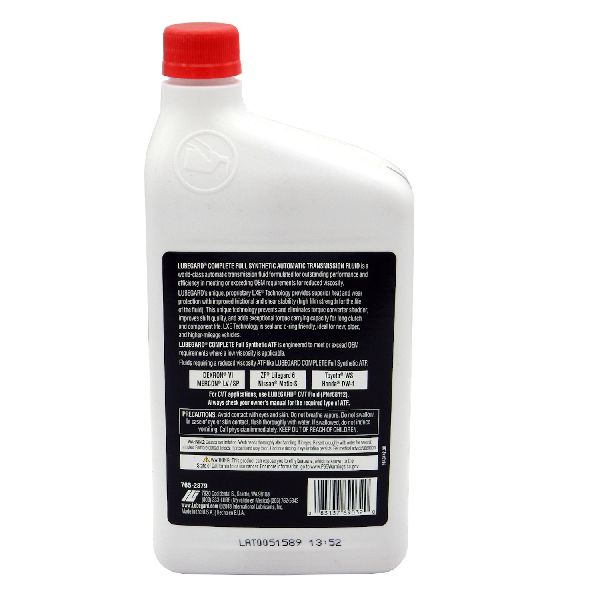
- Always use Hyundai-specific SP-IV transmission fluid when refilling.
- Consider replacing the full set of 8 solenoids while the valve body is removed to prevent future issues.
What's Unique About the 2009-2016 Hyundai Sonata
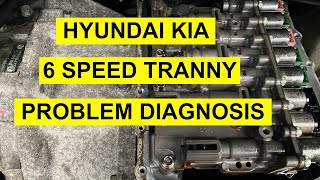
For the 2011-2016 Sonata (YF and LF generations) equipped with the common A6MF-series 6-speed automatic transmission, this code frequently points directly to a failed TCC solenoid. While generic causes like wiring damage are possible, these transmissions have a known history of solenoid failures. Technicians often confirm the failure by measuring the solenoid's resistance; a healthy linear solenoid in this transmission should read approximately 5.1 to 5.3 ohms. A significantly lower reading indicates an internal short, confirming the need for replacement.
Generation note: The 2009-2016 year range covers three Sonata generations: the NF (2009-2010), YF (2011-2014), and LF (2015-2016). The NF generation used a different (5-speed) transmission, while the YF and LF generations primarily used a 6-speed automatic (A6MF1/A6MF2), which this guide focuses on. The Eco model from 2015-2016 used a 7-speed DCT, which is a different system.
Symptoms You May Notice
- Check Engine Light is on
- Transmission shifts harshly or erratically
- Vehicle may stall when braking to a complete stop
- Noticeable decrease in fuel economy
- Transmission may feel like it's slipping, or engine RPMs are higher than usual at highway speeds
- Transmission may overheat, potentially causing a burning smell
- In some cases, the transmission may enter 'limp mode', stuck in a single gear
- Replacing the entire torque converter when only the control solenoid has failed.
- Replacing the entire transmission without first diagnosing the individual electrical components.
- Assuming the TCM is bad before testing the solenoid and wiring.
Most Likely Causes
- Faulty Torque Converter Clutch (TCC) Solenoid 🔴 High Probability → Shop Automatic Transmission Torque Converter The A6MF-series transmissions used in these Sonatas have documented instances of solenoid failure. The solenoid can short-circuit internally, causing the 'circuit low' condition.
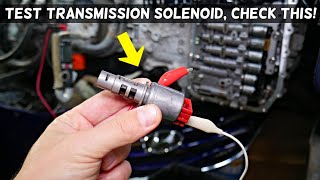
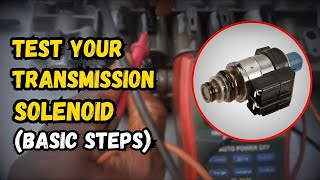
How to confirm: After removing the transmission valve body, identify the TCC solenoid. Using a multimeter, measure the resistance across its two pins. 🎬 Watch: How to test and diagnose Hyundai transmission solenoids. A healthy solenoid should measure approximately 5.0-5.6 Ohms. A reading significantly lower than this (e.g., 0-3 Ohms) confirms an internal short.
Typical fix: Replace the faulty TCC solenoid. It is often recommended to replace the entire set of 8 solenoids on the valve body at the same time, as they are of the same age and have experienced the same conditions.
Est. part cost: $40-$70 for a single solenoid, $90-$170 for a full kit of 8. - Damaged Internal Transmission Wiring Harness 🟡 Medium Probability → Shop Transmission Assembly The internal harness is submerged in hot transmission fluid, and over time the wire insulation can become brittle, crack, and cause shorts. The transmission temperature sensor is also integrated into this harness and is a common failure point, making harness replacement a frequent 'while you're in there' job.
How to confirm: With the valve body removed, visually inspect the wiring harness (Part No. 46307-3B650 or similar) for any signs of chafing, brittle insulation, or broken wires. Check for continuity from the main transmission connector to the individual solenoid connectors.
Typical fix: Replace the internal transmission wiring harness. This is often done concurrently with solenoid replacement.
Est. part cost: $100-$150 for a new OEM internal harness. - Low or Contaminated Transmission Fluid ⚪ Low Probability → Shop Transmission Assembly Hyundai transmissions of this era are specified for SP-IV fluid. Using the wrong fluid or operating with low or degraded fluid can cause overheating and stress on components like solenoids. While this won't directly cause a 'circuit low' fault, it can contribute to solenoid failure by causing debris to clog the valve.
How to confirm: Check the transmission fluid level and condition. The fluid should be at the correct level, bright red, and not have a burnt smell. Dark, brown, or metallic-flecked fluid indicates a problem.
Typical fix: Perform a transmission fluid drain and fill using Hyundai-specific SP-IV fluid. This is done as part of the solenoid replacement and is not a standalone fix for an electrical code like P2764.
Est. part cost: $80-$150 for fluid.
Rare But Worth Checking
- Faulty Transmission Control Module (TCM): → Shop Transmission Assembly This is very rare. The TCM should only be considered after all other possibilities (solenoid, wiring, fluid) have been definitively ruled out by testing voltages and continuity directly at the transmission connector.
Diagnosis Steps
- Scan the vehicle for any other transmission-related codes to get a full picture of the issue.
- Check the transmission fluid level and condition. Ensure it is full and does not appear burnt or contaminated.
- Safely raise the vehicle and support it on jack stands.
- Drain the transmission fluid and remove the transmission oil pan.
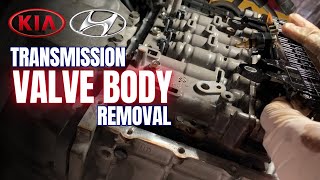
- Unbolt and carefully lower the valve body from the transmission.
- Identify the TCC solenoid on the valve body. It is a variable force solenoid, often a specific color (e.g., grey or black).
- Disconnect the solenoid and measure its resistance with a multimeter. Compare the reading to the specification of approximately 5.0-5.6 Ohms.
- If the resistance is significantly low, the solenoid is shorted and must be replaced.
- While the valve body is out, inspect the internal wiring harness (OEM P/N 46307-3B650) for any signs of damage, such as brittle or cracked insulation.
- Replace the faulty part(s), reinstall the valve body to the correct torque specifications (typically 7.2-8.7 lb-ft), and replace the transmission pan gasket.
- Refill the transmission with the correct type and amount of Hyundai SP-IV fluid.
- Clear the trouble codes and perform a test drive to ensure the issue is resolved.
Parts You'll Likely Need
- Torque Converter Clutch (TCC) Solenoid
(OEM #46313-3B073)— This specific solenoid is the most common failure point for a P2764 code on the A6MF transmission due to internal electrical shorts.
Trusted brands: Hyundai (Mobis), Rostra
OEM price range: $60-$90
Aftermarket price range: $40-$60 - Internal Transmission Wiring Harness
(OEM #46307-3B650)— The harness insulation degrades from heat, causing shorts. It also contains the transmission temp sensor. It's often replaced with the solenoids as a preventative measure.
Trusted brands: Hyundai (Mobis)
OEM price range: $100-$150
Aftermarket price range: $70-$100 - Transmission Solenoid Kit (8-piece) — Since all solenoids are the same age, it is common practice to replace all of them at once to prevent future failures of other solenoids.
Trusted brands: Hyundai (Mobis)
OEM price range: $200-$300
Aftermarket price range: $90-$170 - Transmission Pan Gasket
(OEM #45285-3B010)— The gasket must be replaced any time the transmission pan is removed to prevent leaks.
Trusted brands: Hyundai (Mobis), Fel-Pro
OEM price range: $20-$30
Aftermarket price range: $10-$20
Related Codes That Often Appear With This One
- P0741 — P0741 indicates 'TCC Circuit Performance or Stuck Off'. While P2764 is a specific electrical fault (low voltage), P0741 is a performance code that can be triggered by the same underlying electrical issue, or by a related mechanical/hydraulic problem.
- P0711, P0712, P0713 — These codes relate to the Transmission Fluid Temperature Sensor. Since this sensor is integrated into the internal wiring harness on the A6MF transmission, a failing harness can trigger both a P2764 and a temperature sensor code simultaneously.
Technical Service Bulletins (TSBs) & Recalls
- TSB 17-ST-002: Details the warranty extension for the MDPS (Motor-Driven Power Steering) flexible coupler, a common non-engine-related issue on these vehicles.
- NHTSA Campaign 13V-354: Recall for rear crossmember corrosion on 2006-2010 Sonatas in salt-belt states, relevant to the platform's history with rust issues.
- TSB 11-01-016-1: Provides a procedure to update the TCM software on 2011 Sonatas with revised logic for the related DTC P0748 (Pressure Control Solenoid Valve Circuit), indicating a potential software element to TCC issues on early YF models.
Platform-Specific Known Issues
- A notable aspect of the A6MF transmission is that the Transmission Fluid Temperature (TFT) sensor is integrated directly into the internal wiring harness. A failure in this sensor (codes P0711, P0712, P0713) necessitates the replacement of the entire harness (P/N 46307-3B650). Because of this, many technicians recommend replacing the harness as a matter of course whenever the valve body is removed for solenoid service, as it addresses two common failure points at once.
Mechanic-Grade Diagnostic Values
- TCC Solenoid Feedback Current (TCM Trigger) — expected: 200mA (unlocked) to 1000mA (locked). Failure: TCM sets P2764 if current is below 0.92mA for more than 0.5 seconds.
- TCC Solenoid Circuit Voltage (at connector) — expected: Approx. 12V (+/- 0.5V) with Key On, Engine Off. Failure: A reading below 9V indicates a low voltage condition in the circuit.
- Ground Path Resistance — expected: Less than 0.1 Ω. Failure: Resistance above 0.1 Ω between the transmission ground strap and the chassis indicates a poor ground, which can cause a voltage offset.
- Valve Body Bolt Torque — expected: 7.2-8.7 lb-ft. Failure: Incorrect torque can lead to leaks or valve body distortion.
Scan Tool Commands That Help
- Hyundai GDS (Global Diagnostic System): Actuation Test for Torque Converter Clutch Solenoid Valve — Use this bidirectional command to force the TCM to activate the TCC solenoid. The GDS should report 'Success' after the 4-second test. A failure indicates a problem in the control circuit or the solenoid itself, helping to isolate the fault without disassembly.
Wiring & Ground Locations
- Main Chassis Ground — On the frame rail where the main ground cable from the battery attaches.. On some 2011 Sonatas, the ground cable is bolted directly to a painted surface, creating a poor connection over time due to rust and resistance. This can cause various electrical faults, including low voltage codes. The factory-suggested repair is to drill out the 6mm hole, tap it for a larger 8mm bolt, and use a star washer to ensure a solid metal-to-metal connection.
OEM Part Supersession History
46313-3B071→46313-3B073— Revision for improved reliability or manufacturing process change.46307-3B610, 46307-3B620→46307-3B650— Revision to wiring insulation or connector design to improve durability against heat and fluid exposure.
Model Year Variations Within This Range
- 2011: A Technical Service Bulletin (TSB 11-01-016-1) was issued for 2011 Sonatas to update the Transmission Control Module (TCM) software. The update revised the diagnostic logic for code P0748 (Pressure Control Solenoid 'A' Electrical), which is closely related to P2764. This suggests that some TCC-related issues on early YF models may have a software component.
Diagnostic Flowchart
Other Known Issues on This Vehicle
Issues unrelated to this code that are worth knowing about as an owner of this generation:
- Theta II GDI Engine Seizure/Failure 🔴 High — Extremely widespread in 2011-2014 models with the 2.0L Turbo and 2.4L GDI engines. Can occur at any mileage, often preceded by a knocking sound. (Ref: Multiple recalls (e.g., NHTSA 15V-568) and a major class-action lawsuit settlement led to lifetime warranties and reimbursements for many owners.)
- Steering Column Coupler Wear 🟠 Medium — Very common on 2011-2014 (YF) Sonatas. Owners report a distinct clicking or 'thud' noise from the steering column when turning the wheel. The flexible rubber coupler disintegrates over time. (Ref: Hyundai issued TSB 17-ST-002 extending the warranty for this part to 10 years/100,000 miles. The part itself is inexpensive, but labor can be significant.)
- Subframe Corrosion (Rust Belt) 🔴 High — Affects vehicles operated in 'salt belt' states. Severe rust can perforate the front or rear subframes, potentially leading to suspension component detachment. (Ref: NHTSA Campaign 13V-354 (Recall 113) was issued for the rear crossmember on 2006-2010 Sonatas. Earlier recalls (NHTSA 09V124000) covered front subframes on older models, establishing a pattern of this issue.)
- No Sound from Audio System 🟡 Low — A common complaint where the radio/head unit powers on but no sound comes from any speaker. It is often caused by a software glitch in the factory amplifier. (Ref: No official recall, but a widely documented owner fix is to disconnect the car's negative battery terminal for 15-30 minutes to reset the amplifier.)
Used vs. New Parts: Buying Guide for This Vehicle
When a used part is the smart pick: A complete, used valve body assembly from a verified low-mileage donor vehicle (<60,000 miles) can be a cost-effective alternative to buying all new solenoids individually. However, the solenoids on the used unit should still be resistance-tested before installation.
Donor-vehicle mileage cap: roughly under 60000 miles for the part to have meaningful remaining life.
What to inspect on the donor part:
- Verify the donor vehicle's mileage.
- Ask for the VIN to check the vehicle's history for accidents or flood damage.
- Inspect the internal wiring harness connector on the valve body for any signs of brittle plastic or corrosion.
- If possible, check the color and smell of the transmission fluid from the donor car; dark, burnt fluid is a red flag.
OEM-only on this vehicle (don't cheap out):
- Internal Transmission Wiring Harness (P/N 46307-3B650): Due to the critical function of the integrated temperature sensor and the harsh environment, using a new OEM harness is strongly recommended to prevent premature failure.
Aftermarket brands forum-validated for this vehicle:
- Rostra (for solenoids)
Brands owners have reported issues with on this vehicle:
- Unbranded, no-name solenoid kits from online marketplaces are a gamble and often have high failure rates.
Related OBD-II Codes
Frequently Asked Questions
My mechanic says I should replace all 8 solenoids to fix the P2764 code on my Sonata. Is this necessary?
While fixing the P2764 solenoid, the shop also wants to replace the internal wiring harness (part 46307-3B650). Why?
What is the correct transmission fluid to use for my 2009-2016 Sonata after this repair?
How can I test the Torque Converter Clutch (TCC) solenoid myself to confirm it's bad?
I have a 2015 Kia Optima with code P2764. Does this article apply to my car?
Does TSB 11-01-016-1 provide a software fix for the P2764 code?
Helpful Videos




We Have This Part in Stock


The information in this article is provided for general reference and educational purposes only. Vehicle specifications, procedures, and part compatibility can vary by production date, trim level, and region. Always consult your vehicle's factory service manual and verify part numbers before purchasing or performing repairs. Safety-critical components such as airbags, seat belts, and braking systems should be installed by a qualified professional.
- Hyundai Sonata:
- 🧭 Diagnostic Flowchart
- 🎬 Helpful Videos
- 🛍️ Shop This Part
- What's Unique About the 2009-2016 Hyundai Sonata
- Symptoms You May Notice
- Most Likely Causes
- Rare But Worth Checking
- Diagnosis Steps
- Parts You'll Likely Need
- Related Codes That Often Appear With This One
- Technical Service Bulletins (TSBs) & Recalls
- Platform-Specific Known Issues
- Mechanic-Grade Diagnostic Values
- Scan Tool Commands That Help
- Wiring & Ground Locations
- OEM Part Supersession History
- Model Year Variations Within This Range
- Other Known Issues on This Vehicle
- Used vs. New Parts: Buying Guide for This Vehicle
- Related OBD-II Codes
- Frequently Asked Questions
- 🎟️ Get 5% Off