

P2800 on 2012-2018 Ford Focus: Transmission Range Sensor 'B' Circuit Causes and Fixes
On a 2012-2018 Ford Focus, code P2800 usually indicates a problem with the Transmission Range Sensor circuit, often caused by a failing Transmission Control Module (TCM). Check if your vehicle is covered by Ford's TCM warranty extension (14M02) before paying for repairs, which can cost over $1,000. The TCM is the most common failure point for this code on this specific vehicle.
- P2800 on a 2012-2018 Focus is a serious code that can prevent your car from starting.
- The most likely cause is a failed Transmission Control Module (TCM), a well-known weak point on this car.
- Before paying for any repairs, contact a Ford dealer with your VIN to check if you are covered by the TCM extended warranty (program 14M02).
- If the TCM is not the cause, the issue is likely the much cheaper Transmission Range Sensor or its wiring.
- Do not drive the vehicle with this code, as it can stall or get stuck in gear, posing a safety risk.
What's Unique About the 2012-2018 Ford Focus
The 2012-2018 Ford Focus uses the DPS6 'PowerShift' dual-clutch automatic transmission, which is known for widespread issues, particularly with its Transmission Control Module (TCM). Unlike many cars where a range sensor code points directly to the sensor, on the Focus, code P2800 is very frequently a symptom of a failing TCM that is no longer providing the correct voltage to the sensor or has failed internally. Ford has acknowledged these TCM problems with extended warranty programs (like 14M02), making it critical to investigate this before replacing other parts.
Symptoms You May Notice
- Engine will not crank or start.
- "Transmission Malfunction Service Now" warning light is on.
- Gear position indicator on the dashboard is blank or incorrect.
- Vehicle enters 'limp mode' with limited power and shifting.
- Car may only start in Neutral, not Park.
- Reverse lights do not work correctly.
- Check Engine Light is illuminated.
- Flashing PRNDL/S indicator on the instrument cluster.
- Replacing the battery or starter motor due to the no-start symptom without first checking for transmission codes. The no-start is often because the TCM cannot confirm the car is in Park or Neutral.
- Replacing the Transmission Range Sensor (TRS) when the root cause is a failed TCM not providing power to the sensor. Proper diagnosis requires checking for 5V reference at the sensor connector first.
Most Likely Causes
- Failed Transmission Control Module (TCM) 🔴 High Probability → Shop Transmission Assembly The DPS6 TCM is notoriously unreliable due to poor internal solder joints and electrical circuit failures that are sensitive to heat and vibration. Ford issued customer satisfaction program 14M02, extending the warranty to 10 years/150,000 miles for this part due to the high failure rate.
How to confirm: A professional technician can check if the TCM is sending the required 5-volt reference signal to the range sensor. If there is no voltage, and the grounds are good, the TCM is the likely culprit. Scanning for other TCM-specific codes (like U0100, U0101, P0606) is also a strong indicator of TCM failure. Dealers must diagnose the issue and find specific codes to justify a warranty replacement.
Typical fix: Replace the Transmission Control Module. The new module must be programmed to the vehicle using Ford's specific diagnostic software (IDS) and then undergo a clutch adaptive learning procedure.
Est. part cost: $600-$900 - Faulty Transmission Range Sensor (TRS) 🟡 Medium Probability → Shop Transmission Assembly The sensor is an external electronic component that can fail over time due to heat, vibration, and exposure to the elements under the car.
How to confirm: If the 5-volt reference and ground signals from the TCM are present at the sensor's connector, but the sensor's output signal is missing or incorrect when the shifter is moved, the sensor itself has failed. This can be checked with a multimeter or a capable scan tool by monitoring the sensor's live data.
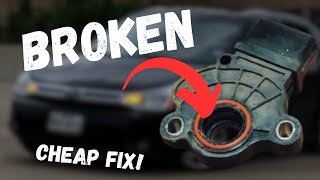
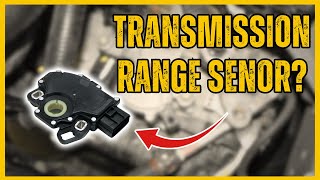
Typical fix: Replace the Transmission Range Sensor. It is located on the driver's side of the transmission housing and is held on by two bolts. Access is typically through the driver's side wheel well.
Est. part cost: $40-$120 - Damaged Wiring or Corroded Connector/Grounds ⚪ Low Probability The wiring harness to the sensor can chafe against the chassis or other components, and poor body grounds are a known issue on the Focus platform. The main battery ground connection point on the chassis is often painted, leading to poor conductivity over time. The sensor connector is also exposed to the elements under the car. A manufacturer service bulletin for other Ford models, TSB Bulletin #SSM 47790, notes that P2800 can be triggered by water entry or corrosion in specific electrical connectors.
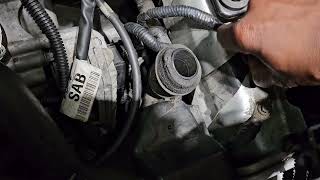
How to confirm: Visually inspect the wiring harness leading to the range sensor for any signs of chafing, melting, or rodent damage. Unplug the connector and check for green or white corrosion on the pins. A 'wiggle test' on the harness while monitoring sensor data can reveal an intermittent connection. Specifically check the main ground straps under the airbox for corrosion and tightness. 🎬 See how to clean the TCM ground connection
Typical fix: Clean the ground connection points on the chassis with a wire brush and re-secure them. Clean the sensor connector pins with electrical contact cleaner and apply dielectric grease. If the wiring is damaged, the affected section will need to be repaired or the connector pigtail replaced.
Est. part cost: $10-$50
Rare But Worth Checking
- Failing Alternator or weak battery. Low system voltage can cause the TCM to behave erratically and drop communication, mimicking an internal TCM failure. A user on a Ford Focus Forum noted that after a TCM replacement, similar issues returned until a failing alternator was also replaced.
Diagnosis Steps
- Scan the vehicle for all diagnostic trouble codes. Note any codes that accompany P2800, especially TCM communication codes like U0100, U0101, or P0606.
- Check with a Ford dealer to see if your vehicle's VIN is covered under the Transmission Control Module extended warranty (Customer Satisfaction Program 14M02). If it is, the diagnosis and repair may be covered. For vehicles that have exceeded the time/mileage limits, Ford offered a one-time replacement through June 30, 2025. 🎬 Watch: Learn about the critical TCM software update
- If not covered by warranty, locate the main battery ground straps under the airbox. Disconnect them, clean the contact surfaces on the chassis and terminals with a wire brush, and re-tighten securely. Poor grounds are a known cause of intermittent electrical issues on this platform.
- Locate the Transmission Range Sensor on the driver's side of the transmission. Inspect the sensor's electrical connector for corrosion or damage. Inspect the visible wiring harness for chafing or melting.
- Using a multimeter, disconnect the sensor and check for a 5-volt reference signal from the TCM on the correct pin of the connector (with the key on).
- If 5 volts are present, the TCM is likely okay. The problem is likely the sensor itself or the signal wire. Replace the Transmission Range Sensor.
- If 5 volts are NOT present, the problem is most likely a failed TCM or a break in the power wire from the TCM. Given the high failure rate of the TCM, it is the primary suspect.
- After any repair, clear all codes and perform the transmission adaptive learning procedure with a capable scan tool.
Parts You'll Likely Need
- Transmission Control Module (TCM)
(OEM #AE8Z-7Z369-F)— This is the most frequent cause of P2800 and other electrical faults on the DPS6 transmission due to a high rate of internal failure. Many owners report waiting months for this part due to supply chain issues.
Trusted brands: Motorcraft, Dorman (Remanufactured), Cardone (Remanufactured)
OEM price range: $600-$900
Aftermarket price range: $400-$700 (Remanufactured) - Transmission Range Sensor (TRS)
(OEM #AE8Z-7F293-A)— If the TCM is confirmed to be working correctly, the sensor itself is the next most likely part to have failed.
Trusted brands: Motorcraft, Dorman, Standard Motor Products (SMP)
OEM price range: $80-$120
Aftermarket price range: $40-$70
Related Codes That Often Appear With This One
- U0100 — This code means 'Lost Communication With ECM/PCM'. It often appears when the TCM fails, as the entire module goes offline and stops communicating on the CAN bus.
- P0606 — This code indicates an internal processor fault within a control module. On the DPS6, it almost always points to a failed TCM, and TSB 16-0129 specifically calls out this code as a reason for TCM replacement.
- P2802 — This code for 'Transmission Range Sensor 'B' Circuit Low' is a related fault. Seeing both P2800 and P2802 together strongly suggests a problem in the range sensor circuit, but does not rule out the TCM as the root cause. TSB Bulletin #SSM 47790 also lists P2802 as a common companion code to P2800 in cases of electrical connector corrosion.
- U0101 — This code means 'Lost Communication with TCM'. It is a very specific indicator that the TCM has stopped communicating and is a primary code listed in TSB 16-0129 for TCM failure.
Technical Service Bulletins (TSBs) & Recalls
- TSB 16-0129: Addresses intermittent no-start and loss of power with codes like U0100, U0101, U1013 and/or P0606, instructing technicians to replace the TCM. It also notes symptoms like a flashing PRNDL display.
- Customer Satisfaction Program 14M02: This is not a TSB but a warranty extension for the TCM to 10 years/150,000 miles for specific symptoms including no-start and loss of power. For vehicles outside the original limits, a one-time replacement was offered through June 30, 2025.
- TSB Bulletin #SSM 47790: While written for the Fusion/MKZ, this bulletin highlights that P2800 can be caused by water entry or corrosion in electrical connectors, leading to multiple drivability or electrical concerns.
Platform-Specific Known Issues
- The DPS6 transmission is subject to multiple recalls and warranty extensions. The most relevant for this code is Customer Satisfaction Program 14M02, which extends the warranty on the TCM to 10 years or 150,000 miles. Owners should always check the status of this warranty with a Ford dealer before paying for a TCM replacement. Even salvaged vehicles are eligible for this service action.
Mechanic-Grade Diagnostic Values
- TCM to Transmission Range Sensor (TRS) Reference Voltage — expected: 5 Volts DC at the sensor connector with key on, engine off.. Failure: 0 volts or significantly less than 5 volts indicates a faulty TCM or a break in the power wire.
- TCM Mounting Bolt Torque — expected: 10 ft-lbs (13.5 Nm). Failure: N/A. This is an installation specification to prevent damage.
Scan Tool Commands That Help
- Ford IDS (Integrated Diagnostic System): TCM Adaptive Learning — This must be performed after replacing the TCM or the Transmission Range Sensor (TRS). The procedure allows the TCM to learn the positions of the sensor, shift drums, and clutch touchpoints. The process involves several sub-functions: TR Sensor learn, Shift Drum learn, and Clutch learn, each requiring the user to follow on-screen prompts.
- Ford IDS (Integrated Diagnostic System): Module Programming — Required when installing a new or non-cloned used TCM. This function flashes the module with the correct calibration file for the specific vehicle before the adaptive learning can be performed.
- FORScan: TCM Adaptive Learning Procedure — A popular and more accessible alternative to Ford's IDS for DIY users. It can perform the necessary relearn procedures after a TCM or clutch replacement.
Wiring & Ground Locations
- Main Chassis Grounds — Located under the air filter box in the engine bay. There are typically two ground wires bolted to the painted chassis.. These grounds are critical for the TCM and other modules. Ford's practice of bolting the ground lugs directly to a painted surface can cause poor conductivity over time, leading to intermittent electrical faults, communication codes, and symptoms that mimic a failed TCM.
- Battery-to-Transmission Ground — A heavy gauge cable that runs from the negative battery terminal down to a stud on the transmission bell housing, near the starter.. This is the primary ground path for the transmission assembly. Corrosion or looseness at the transmission-side connection (a 13mm nut on a stud) can cause a wide range of electrical and starting issues.
- TCM Connectors — Two large, lever-lock connectors that plug into the front of the TCM, which is mounted on the driver's side of the transmission.. These are the main interface for all power, ground, and sensor signals to the TCM. The pins for the range sensor circuit are located here. A poor connection or corrosion within these connectors can directly cause P2800.
Real Owner Repair Stories
- YouTube user comment on Big Ben's Cars & Cycles video (2014 Ford Focus) — Shuddering, skipping gears, and occasionally would not go into reverse.
❌ Tried (didn't work) Took car to Ford dealership. Dealer diagnosed a completely shot clutch and quoted $4,000 for repair. The vehicle had previously received a new TCM and clutch assembly in 2016.
✅ What actually fixed it The owner watched a video about cleaning the main ground points, performed the ground cleaning procedure himself, and reported that the transmission now "works better than ever" and "shifts beautifully." - Reddit user u/Extension-Cake-8253 (2014 Ford Focus Titanium, 54,414 miles) — Check engine light, hard shifting, transmission acts up after 10 minutes of driving. Codes P2832, P285D, P072e.
❌ Tried (didn't work) Took car to an independent transmission shop, who diagnosed a clutch problem and quoted $3,500.
✅ What actually fixed it A Ford transmission technician on Reddit advised that codes P2832 and P285E are related to the TCM and covered under warranty extension 14M02 until June 30, 2025. The advice was to take it to a Ford dealer for a proper diagnosis, as it was likely a TCM issue, not a clutch failure. - NHTSA ODI #10845590 — An owner reported that both P2803 and P2800 sensors were defective, noting that the cost to repair was far above fair pricing for the hydraulic control.
OEM Part Supersession History
AE8Z-7Z369-B, AE8Z-7Z369-D, AE8Z-7Z369-E→AE8Z-7Z369-F— Internal revisions to improve reliability and address the high failure rate of earlier versions.
Heads up: While all are for the DPS6, using the latest 'F' revision is highly recommended for longevity. TSB 16-0129 specifies using part number AE8Z-7Z369-F for replacements.
Model Year Variations Within This Range
- 2012-2014 vs. 2015-2018: The TCM calibration differs between early (2012-2014) and late (2015-2018) models. This is physically indicated by the thickness of the shims on the input shaft speed sensors. If swapping a complete transmission between these year ranges, the TCM must have the correct calibration for the transmission it is paired with. The easiest way to ensure this is to use the TCM that came with the donor transmission.
Diagnostic Flowchart
Other Known Issues on This Vehicle
Issues unrelated to this code that are worth knowing about as an owner of this generation:
- DPS6 Clutch Shudder and Hesitation 🔴 High — Extremely widespread, often starting at low mileage (10k-30k miles). It is the most notorious issue with this platform. (Ref: Multiple programs, including 14M01 (Clutch/Seal Warranty Extension) and TSB 16-0109.)
- Faulty Canister Purge Valve 🟠 Medium — Very common. Can cause stalling after refueling, rough idle, and difficulty starting. (Ref: Recall 18S32 was issued for over a million vehicles, including the 2012-2018 Focus, for this issue.)
- Loss of Power Steering Assist 🔴 High — Common, particularly in earlier models (2012-2014). The failure is often sudden and can occur while driving. (Ref: NHTSA Campaign Number 14V284000 was a recall for this issue, but complaints persist outside the recall scope.)
- Poor Body/Engine Ground Connections 🟠 Medium — Widespread. The factory ground points are often on painted surfaces, leading to corrosion and a wide range of intermittent electrical and transmission-related symptoms over time.
- Engine Mount Failure 🟠 Medium — The passenger-side hydraulic engine mount is prone to leaking and collapsing, causing excessive engine vibration to be felt in the cabin.
Used vs. New Parts: Buying Guide for This Vehicle
When a used part is the smart pick: A used Transmission Range Sensor (TRS) is a reasonable choice as it is a simple external electronic component. For the Transmission Control Module (TCM), a used part is only a viable option if you use a cloning service to copy the data from your original module to the donor module. This makes the used part plug-and-play and avoids expensive dealer programming. Due to high prices and backorders for new TCMs, Ford has even authorized dealers to use used or refurbished TCMs for warranty repairs on vehicles outside the emissions warranty period.
Donor-vehicle mileage cap: roughly under 80000 miles for the part to have meaningful remaining life.
What to inspect on the donor part:
- For a TCM, verify the part number is an exact match to your original module.
- Inspect connectors for any signs of corrosion, bent pins, or physical damage.
- Ask for the VIN of the donor car to check its history if possible.
- For a TRS, ensure the plastic housing is not cracked and the connector pins are clean and straight.
OEM-only on this vehicle (don't cheap out):
- Transmission Control Module (TCM) - While some aftermarket companies remanufacture them, the safest bet is a new Motorcraft part or a cloned used OEM part due to the complex programming and high failure rate of non-OEM electronics in this application.
Aftermarket brands forum-validated for this vehicle:
- Dorman (Remanufactured TCM)
- Cardone (Remanufactured TCM)
- Standard Motor Products (TRS)
Brands owners have reported issues with on this vehicle:
- Unknown, no-name TCMs from online marketplaces without a warranty or a clear return policy should be avoided due to the critical function and programming requirements of this module.
Real Owner Stories
Aggregated from forums and TSBs cited above. Mileages and costs reflect what owners reported in those sources.
2012-2018 Ford Focus
Symptoms: Owner had the 14M02 warranty letter but the dealer's diagnostic scan pulled codes for a clutch/fork issue (P07A5, P287A) rather than the specific communication codes required for a free replacement.
What fixed it: The dealer refused a free TCM replacement because the specific required codes were not present, highlighting that the warranty is not a blanket guarantee.
Source hint: Reddit (r/FordFocus) - Dealer Refuses Warranty TCM Replacement
2012-2018 Ford Focus
Symptoms: Transmission issues that a dealer quoted $4000 to repair.
What fixed it: Accessing and cleaning the critical ground points under the airbox.
Source hint: YouTube (Big Ben's Cars & Cycles) - TCM Ground Cleaning
2012-2018 Ford Focus
Symptoms: Transmission popping out of gear even after the TCM was replaced.
What fixed it: Investigating the alternator, as its failure can cause voltage drops that mimic a bad TCM.
Source hint: Ford Focus Forum - Post-TCM Replacement Issues
2012-2018 Ford Focus — ~150000 miles
Symptoms: Owner waited since November 2021 for a replacement part; noted that the underlying transmission design is flawed.
What fixed it: Replacement of the TCM module, though the owner noted it may only be a temporary fix.
Source hint: Reddit (r/FordFocus) - TCM Replacement Experience
2012-2018 Ford Focus
Symptoms: An owner reported that both P2803 and P2800 sensors were defective, causing repair costs to exceed fair pricing.
What fixed it: Replacement of the hydraulic control and sensors.
Source hint: NHTSA ODI #10845590
Related OBD-II Codes
Frequently Asked Questions
Is my 2012-2018 Ford Focus covered under a warranty extension for the P2800 code?
Why is my dashboard gear indicator blank and the car won't start?
Does TSB 16-0129 apply to my Ford Focus if I have a flashing PRNDL display?
Can I get the TCM replaced for free if I have codes P07A5 or P287A?
Is there a simple fix for transmission malfunctions before replacing expensive parts?
Does the Ford Fiesta share this same P2800/TCM issue?
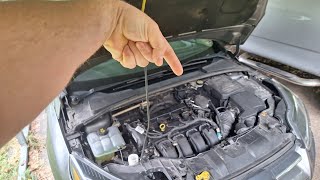
Helpful Videos


We Have This Part in Stock


The information in this article is provided for general reference and educational purposes only. Vehicle specifications, procedures, and part compatibility can vary by production date, trim level, and region. Always consult your vehicle's factory service manual and verify part numbers before purchasing or performing repairs. Safety-critical components such as airbags, seat belts, and braking systems should be installed by a qualified professional.
- Ford Focus:
- 🧭 Diagnostic Flowchart
- 🎬 Helpful Videos
- 🛍️ Shop This Part
- What's Unique About the 2012-2018 Ford Focus
- Symptoms You May Notice
- Most Likely Causes
- Rare But Worth Checking
- Diagnosis Steps
- Parts You'll Likely Need
- Related Codes That Often Appear With This One
- Technical Service Bulletins (TSBs) & Recalls
- Platform-Specific Known Issues
- Mechanic-Grade Diagnostic Values
- Scan Tool Commands That Help
- Wiring & Ground Locations
- Real Owner Repair Stories
- OEM Part Supersession History
- Model Year Variations Within This Range
- Other Known Issues on This Vehicle
- Used vs. New Parts: Buying Guide for This Vehicle
- Real Owner Stories
- 2012-2018 Ford Focus
- 2012-2018 Ford Focus
- 2012-2018 Ford Focus
- 2012-2018 Ford Focus — ~150000 miles
- 2012-2018 Ford Focus
- Related OBD-II Codes
- Frequently Asked Questions
- 🎟️ Get 5% Off