

U0001 on 2011-2016 Hyundai Elantra: Causes and Fixes for CAN Bus Failure
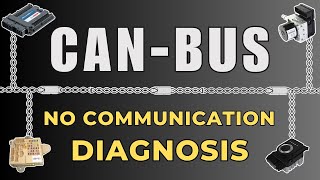
U0001 on a 2011-2016 Elantra means a total network communication failure. This often causes stalling, a no-start condition, and multiple warning lights. The most common causes are wiring issues, a bad ground, or a failed control module. Diagnosis is complex and usually requires professional help.
- U0001 is a critical fault that makes the vehicle unsafe and unreliable to drive.
- Do not start replacing expensive modules like the ECU without a complete diagnosis. The problem is often a much cheaper wiring or grounding issue.
- Always start diagnosis by checking the simplest things first: battery health and clean, tight ground connections.
- Due to the complexity of network diagnostics, this code is best left to a professional technician with the right tools and experience.
- If you have recently
What's Unique About the 2011-2016 Hyundai Elantra
The 2011-2016 Hyundai Elantra (fifth generation, MD/UD) does not have a single, widely documented design flaw that is known to cause the U0001 code, unlike some vehicles that have specific, well-known wiring or module failure points. The causes are typically one of the general CAN bus failure types, such as wiring damage, a faulty module, or a bad ground connection. Diagnosis requires a systematic approach rather than targeting a known weak spot.
Symptoms You May Notice
- Engine may crank but will not start
- Sudden engine stalling while driving
- Multiple warning lights on the dashboard at once (Check Engine, ABS, EPS, Airbag, etc.)
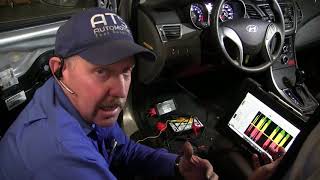
- Loss of power steering (EPS light on) 🎬 Watch: Diagnosing multiple warning lights and communication faults on an Elantra
- Tachometer and/or speedometer not working
- Transmission may be stuck in one gear (limp mode)
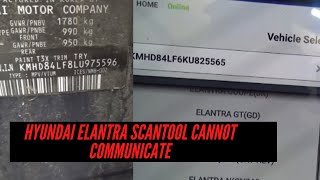
- Inability for a standard OBD-II scanner to communicate with the vehicle's modules
- Replacing the ECU without proper diagnosis. The ECU is often blamed, but a wiring problem or another faulty module on the network is just as likely to be the cause.
- Replacing multiple parts without a systematic diagnostic approach. Because so many systems are affected, it's easy to start replacing parts related to the symptoms instead of finding the root network failure.
Most Likely Causes
- Wiring Harness or Connector Fault 🔴 High Probability Wiring can be damaged by vibration, chafing against metal parts, improper repairs from previous work, or rodent damage. Connectors can also become corroded from moisture.
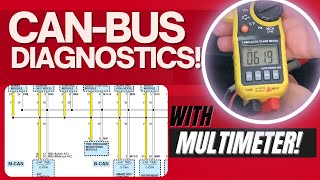
How to confirm: A technician will perform a visual inspection of all major wiring harnesses. They will then use a multimeter to check for continuity and resistance on the CAN High and CAN Low wires (Pins 6 and 14 of the OBD-II port). The bus should have a resistance of approximately 60 ohms when the battery is disconnected. 🎬 See how to test CAN bus resistance and voltage with a multimeter
Typical fix: Repairing the specific broken or shorted wire, or cleaning/replacing a corroded connector.
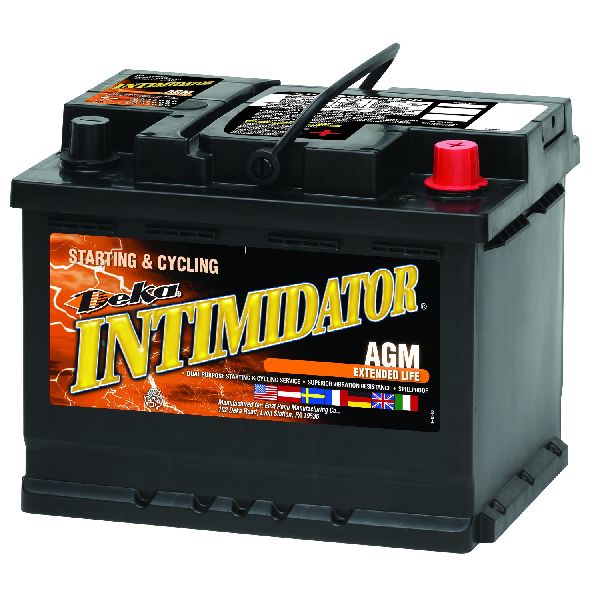
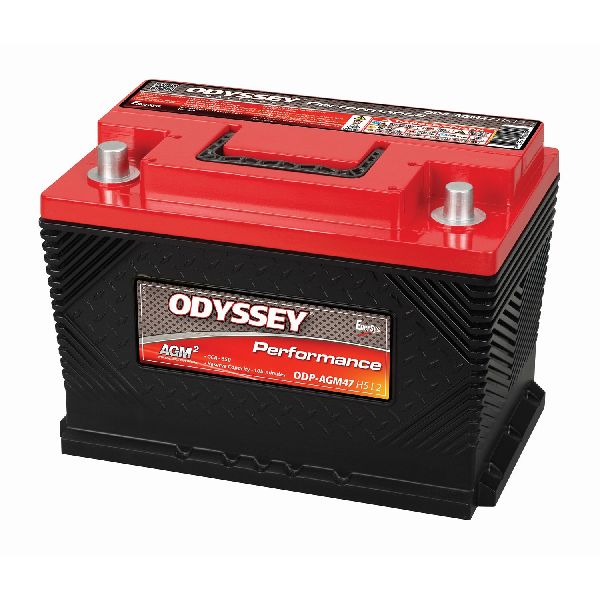
Est. part cost: $5-$50 for wiring supplies - Poor Ground or Weak Battery 🟡 Medium Probability → Shop Vehicle Battery Vehicle grounds can corrode over time, creating resistance. A weak or failing battery can provide unstable voltage, which is enough to disrupt sensitive network communications.
How to confirm: Test the battery voltage (should be above 12.4V with engine off). Load test the battery to check its health. Inspect and test the main engine and chassis ground connections for corrosion and tightness.
Typical fix: Clean or replace corroded ground straps. Replace the vehicle battery if it fails a load test.
Est. part cost: $15-$250 - Failed Control Module 🟡 Medium Probability Any module on the CAN network (ECU, ABS, Instrument Cluster, etc.) can fail internally. When it fails, it can send out corrupt data or short the entire network, preventing other modules from communicating.
How to confirm: This is an advanced diagnostic step. A technician will use a scan tool to see which modules are not communicating. They will then disconnect modules one by one to see if communication is restored to the rest of the network. This process isolates the faulty module.
Typical fix: Replacing the failed module and programming the new one to the vehicle.
Est. part cost: $200-$1200 depending on the module
Rare But Worth Checking
- Aftermarket Electronics: A poorly installed aftermarket stereo, alarm system, or remote starter can interfere with the CAN bus network by being improperly tapped into the vehicle's wiring, causing communication errors.
Diagnosis Steps
- Verify the battery is fully charged and the terminals are clean and tight.
- Attempt to communicate with all onboard modules using a professional scan tool. Note which modules are offline.
- Perform a thorough visual inspection of the main wiring harnesses in the engine bay and under the dashboard for any signs of damage, chafing, or corrosion.
- Inspect major ground connections from the battery to the chassis and from the chassis to the engine.
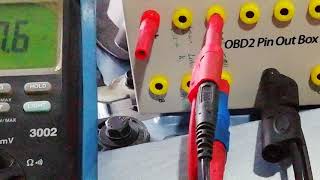
- With the battery disconnected, measure the resistance between Pin 6 (CAN High) and Pin 14 (CAN Low) on the OBD-II port. A healthy network should read approximately 60 Ohms.
- If resistance is incorrect (e.g., 120 Ohms or an open circuit), begin disconnecting modules one at a time to isolate the source of the fault.
- If a specific module is suspected, use an oscilloscope to check for a valid CAN signal at that module's connector.
- If all wiring and modules seem okay, investigate any aftermarket electronic devices for improper installation.
Parts You'll Likely Need
- Battery Ground Cable — The main ground cable can corrode, causing unstable voltage and network communication failures.
Trusted brands: Hyundai OE
OEM price range: $40-$70
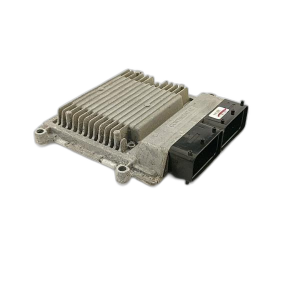
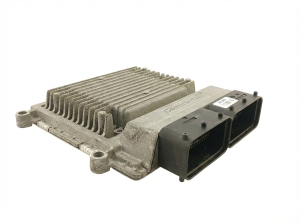
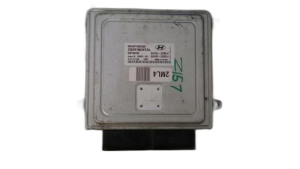
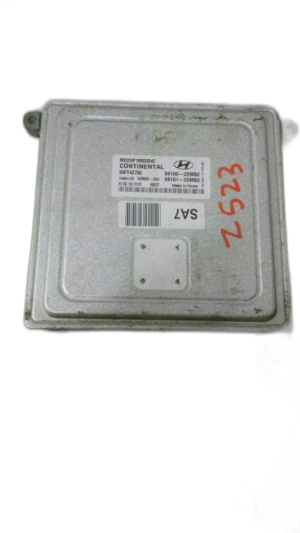
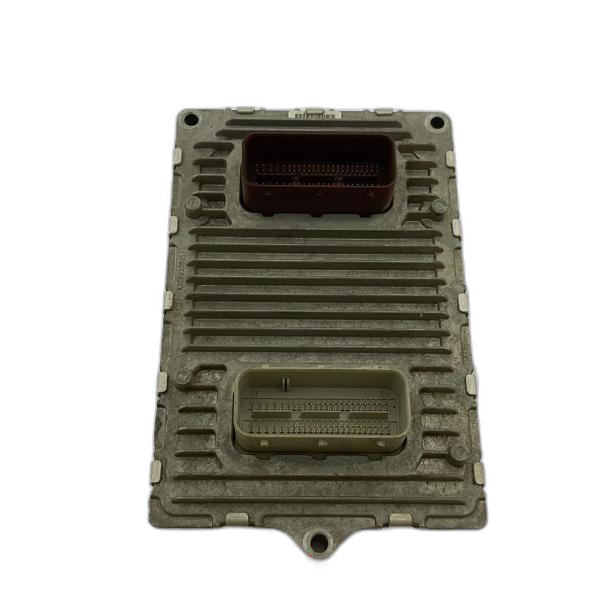
Aftermarket price range: $25-$50 - Engine Control Module (ECM/ECU) — If the ECU itself fails internally, it can bring down the entire CAN network. This should only be replaced after confirming it is the faulty part through systematic diagnosis.
Trusted brands: Hyundai OE, Bosch
OEM price range: $800-$1200
Aftermarket price range: $300-$600 (Remanufactured) - ABS Control Module — Like the ECU, the ABS module is a critical node on the high-speed CAN bus. An internal failure can cause a U0001 code.
Trusted brands: Hyundai OE, Mando
OEM price range: $700-$1000
Aftermarket price range: $250-$500 (Remanufactured)
Related Codes That Often Appear With This One
- C1611 — This code means 'CAN Timeout' and is often logged by modules like the ABS or Power Steering when they stop receiving messages from the engine control module due to the U0001 fault.
- C1616 — This code means 'CAN Bus Off' and indicates that a specific module has detected so many errors on the network that it has shut down its own communication to prevent further disruption.
Platform-Specific Known Issues
- Recall 15V-871 was issued for 2011-2012 Elantra models for an Electronic Stability Control (ESC) issue where the system could inadvertently activate. The fix involved a software update to the module. While not directly for U0001, it shows the importance of module software in vehicle stability systems.
Mechanic-Grade Diagnostic Values
- CAN Bus Network Resistance — expected: Approximately 60 Ω. Failure: 120 Ω indicates a break in the circuit or a missing terminating resistor. Readings below 50 Ω may indicate a shorted module or added resistance from a third, improper resistor on the network.
- CAN Bus Voltage (Key On, Engine Off) — expected: CAN-H (Pin 6): ~2.6V to 3.5V. CAN-L (Pin 14): ~2.4V to 1.5V. The sum of both voltages should be approximately 5V.. Failure: Voltages that are stuck high or low, or a CAN-H voltage that is lower than CAN-L, indicate a short or open in the wiring. For example, if both lines read 2.5V, the bus is idle. If one line is at 0V, it may be shorted to ground.
- Module Ground Resistance — expected: ≤ 0.1 Ω. Failure: Any reading higher than 0.1 Ω indicates a poor ground connection, which can cause intermittent communication failures.
Scan Tool Commands That Help
- Hyundai GDS (Global Diagnostic System) or equivalent professional scanner: Network Scan / Module Status Check — This is a primary step to get a map of the entire CAN network and see which modules are online ('OK') and which are offline ('Not Responding'). This helps narrow the search for the fault. A U0001 code often means multiple, if not all, modules are offline.
- Hyundai GDS or equivalent: View Live Data from individual modules — If some modules are online, a technician can try to access their live data streams. If a module is online but providing nonsensical data, it could be the source of the network flood or corruption causing the U0001.
Wiring & Ground Locations
- CAN Bus Junction Block — Integrated into the main interior fuse panel (Smart Junction Box) located under the driver's side of the dashboard.. This is the central hub where many CAN communication wires meet. A poor connection, corrosion from a water leak, or an internal fault in the junction block itself can take down the entire network.
- GE02 — Left front corner of the vehicle, near the battery tray and headlight assembly.. This is a primary chassis ground point. Corrosion or looseness here can cause unstable voltage for multiple modules, including the ECM and TCM, leading to communication codes.
- GM01 / GM02 — GM01 is on the left top of the dash panel; GM02 is on the right center of the dash.. These are key interior ground points for components like the instrument cluster and Body Control Module (BCM). A failure at these points can disrupt the gateway function of the cluster or BCM.
- Gng03 — Top rear of the engine.. This is a main engine ground. A poor connection here can cause a voltage differential between the engine-mounted sensors/modules and the chassis-mounted modules, disrupting CAN communication.
- Common Harness Chafe Point — Inspect the main engine harness where it routes near the battery tray, behind the engine against the firewall, and around the strut towers.. Engine vibration can cause the harness to rub against sharp metal edges, eventually wearing through the insulation of the twisted CAN wires (often green/orange or a similar pair) and causing them to short to each other or to ground.
Real Owner Repair Stories
- YouTube video by 'a tech' (2019 Hyundai Elantra (newer model, but highly relevant diagnostic process)) — Dashboard lit up with multiple warnings ('Christmas tree'), nine total trouble codes, and the scan tool was unable to communicate with the ABS module.
❌ Tried (didn't work) Initial scan showed multiple CAN communication errors pointing to a network failure.
✅ What actually fixed it The technician found a single blown 10-amp fuse for the ABS module in the engine bay fuse box. Replacing the fuse restored communication and cleared all the network-related codes. - AliExpress Blog/User Story (2018 Hyundai Elantra SEL with 7-speed DCT (newer model, but highlights a non-obvious cause)) — Recurring U0001 code, erratic shifting. Dealer was unable to fix after multiple visits.
❌ Tried (didn't work) Dealer likely focused on CAN bus wiring and module communication, costing the owner over $600 without a fix.
✅ What actually fixed it The owner traced the fault to the Dual Clutch Transmission (DCT) actuator. The internal position sensors were wearing out, causing the actuator to fail to report its position accurately to the TCU. This data mismatch on the network was severe enough to be flagged as a U0001 bus failure. The fix involved using a special tool to adjust or replace the actuator.
"I Checked Everything" — The Actual Cause
- The electrical equivalent of a 'smoke test clean' scenario is when all wiring continuity and resistance tests pass, yet the problem persists. The most common cause in this situation is a single module failing internally and flooding the network with corrupt data or creating a short only when powered on. The 2018 Elantra story, where an internal sensor in the DCT actuator was failing, is a perfect example. The CAN wiring was fine, but the data from the module was bad, triggering the U0001 code.
Model Year Variations Within This Range
- 2011-2016: While the fundamental CAN bus architecture is similar, wiring harness part numbers and routing may differ based on build location (US-built vs. Korean-built) and options like manual/auto transmission and presence of a smart key. This is critical if ordering a replacement harness.
Diagnostic Flowchart
Used vs. New Parts: Buying Guide for This Vehicle
When a used part is the smart pick: A used wiring harness from a reputable salvage yard can be a cost-effective solution if the original is extensively damaged by fire, rodents, or a collision. Simple mechanical components are also good candidates for used parts. However, for electronic modules, used parts are a significant gamble.
Donor-vehicle mileage cap: roughly under 100000 miles for the part to have meaningful remaining life.
What to inspect on the donor part:
- For a wiring harness, ensure there are no cut connectors, frayed wires, or signs of heat damage/melting.
- Verify the donor vehicle was not in a flood; look for silt or corrosion inside connectors.
- Match part numbers exactly, paying attention to notes about transmission type or options (e.g., 'with smart key').
OEM-only on this vehicle (don't cheap out):
- Engine Control Module (ECM)
- Transmission Control Module (TCM)
- Body Control Module (BCM)
- Smart Junction Box (Interior Fuse Panel)
Aftermarket brands forum-validated for this vehicle:
- For module replacement, services like Flagship One that provide pre-programmed OEM or remanufactured modules are a viable alternative to the dealership.
Brands owners have reported issues with on this vehicle:
- Avoid generic, unbranded electronic modules from online marketplaces. These often lack the correct software or quality control and may not communicate with the vehicle, or could fail prematurely.
Real Owner Stories
Aggregated from forums and TSBs cited above. Mileages and costs reflect what owners reported in those sources.
2011-2016 Hyundai (Accent/Elantra platform)
Symptoms: The vehicle experienced communication issues and triggered a U0001 code.
What fixed it: The issue was traced to a corroded negative battery cable, which was causing power supply instability.
Source hint: Reddit r/MechanicAdvice
Related OBD-II Codes
Frequently Asked Questions
Is there a recall for my 2011-2012 Hyundai Elantra that could be related to communication or module issues?
My Elantra's EPS light is on and I lost power steering; could this be U0001?
Can a bad battery cause a U0001 code on a 2011-2016 Elantra?
Where should I check for wiring issues if my Elantra has a U0001 code?
What resistance should I see when testing the OBD-II port on my Elantra?
Can I use a used Engine Control Module (ECM) to fix this code?
Helpful Videos
Used OEM Parts in Stock
New Aftermarket Parts Available


The information in this article is provided for general reference and educational purposes only. Vehicle specifications, procedures, and part compatibility can vary by production date, trim level, and region. Always consult your vehicle's factory service manual and verify part numbers before purchasing or performing repairs. Safety-critical components such as airbags, seat belts, and braking systems should be installed by a qualified professional.
- Hyundai Elantra:
- 🧭 Diagnostic Flowchart
- 🎬 Helpful Videos
- 🛍️ Shop This Part
- What's Unique About the 2011-2016 Hyundai Elantra
- Symptoms You May Notice
- Most Likely Causes
- Rare But Worth Checking
- Diagnosis Steps
- Parts You'll Likely Need
- Related Codes That Often Appear With This One
- Platform-Specific Known Issues
- Mechanic-Grade Diagnostic Values
- Scan Tool Commands That Help
- Wiring & Ground Locations
- Real Owner Repair Stories
- "I Checked Everything" — The Actual Cause
- Model Year Variations Within This Range
- Used vs. New Parts: Buying Guide for This Vehicle
- Real Owner Stories
- 2011-2016 Hyundai (Accent/Elantra platform)
- Related OBD-II Codes
- Frequently Asked Questions
- 🎟️ Get 5% Off