

U0001 on 2005-2010 Hyundai Sonata: High-Speed CAN Bus Failure Diagnosis and Fixes
This code indicates a complete breakdown of the vehicle's main communication network. The most common causes are wiring issues like corrosion or damage, a weak battery, or a single faulty control module pulling the entire network down. On this Sonata, pay special attention to wiring near the rear subframe due to a known corrosion issue. Diagnosis is complex and often requires professional tools.
- U0001 is a critical network failure code, not a single part failure. Do not replace expensive computers without a thorough diagnosis.
- Always start with the simplest checks: test the battery's health and ensure the terminals are clean and tight.
- A visual inspection of the wiring harness for damage, especially in the engine bay, can often reveal the cause.
- This is a difficult code for a DIYer to solve. Due to the need for specialized tools and knowledge, professional diagnosis is strongly recommended to avoid costly mistakes.
What's Unique About the 2005-2010 Hyundai Sonata
The 2005-2010 (NF generation) Sonata does not have widespread, documented pattern failures of a specific module causing the U0001 code. However, this generation is known for a severe rear subframe corrosion issue, particularly in 'salt belt' states (Recall 113). This makes a thorough inspection of wiring harnesses routed near the rear crossmember critical, as corrosion damage could easily compromise the CAN bus wiring. Diagnosis should start with the basics like battery health and a targeted visual inspection of harnesses in the engine bay, under the dash, and especially near the rear suspension and subframe before suspecting a specific control module.
Symptoms You May Notice
- Multiple warning lights on the instrument cluster (Check Engine, ABS, Airbag, ESP, etc.)
- Engine may not start or may stall while driving
- Transmission may get stuck in one gear or shift erratically ('limp mode')
- Gauges on the instrument cluster may stop working or behave erratically
- Loss of power features like windows, locks, or climate control
- Scan tool shows 'no communication' with multiple control modules
- Replacing the ECM or TCM without confirming the fault. The U0001 code indicates a network problem, 🎬 Watch: Causes and fixes for the U0001 code not necessarily a failure of the module that stored the code. The issue is often external to the module, such as in the wiring or power supply.
Most Likely Causes
- Damaged or Corroded Wiring Harness 🔴 High Probability Over time, wiring harnesses in the engine bay can be exposed to heat, moisture, and vibration. More specifically for this Sonata, the rear subframe is subject to a recall for severe corrosion, which can damage adjacent wiring harnesses for the ABS and other rear-mounted components.
How to confirm: Perform a thorough visual inspection of the main wiring harnesses, paying close attention to where they pass through the firewall, bend around engine components, and run along the frame to the rear of the vehicle. Check for chafing, rodent damage, or signs of previous collision repair. Disconnect major module connectors to check for green or white corrosion on the pins.
Typical fix: Repair the specific section of damaged wire or clean/replace the corroded connector. If corrosion is found near the rear subframe, that area must be treated to prevent future damage.
Est. part cost: $5-$50 for wiring repair supplies - Weak or Failing Battery / Poor Connections 🟡 Medium Probability → Shop Vehicle Battery Low system voltage is a common cause of communication codes on many vehicles. If the battery voltage drops too low during startup, control modules can fail to initialize properly, leading to a network shutdown.
How to confirm: Test the battery voltage with a multimeter; it should be above 12.4V with the engine off. Perform a load test to check the battery's health. Ensure battery terminals are clean and tight, as corrosion can mimic a failed battery.
Typical fix: Clean the battery terminals and cable ends or replace the battery if it fails a load test.
Est. part cost: $150-$250 for a new battery - Faulty Control Module ⚪ Low Probability Any single control module (e.g., ECM, TCM, ABS, BCM) can fail internally and broadcast junk data or go silent, disrupting the entire network. This is less common than wiring or power issues.
How to confirm: This is an advanced diagnostic step. With the battery disconnected, check for 60 ohms of resistance between pins 6 and 14 of the OBD-II port. If the reading is correct, a technician may need to unplug modules one by one while monitoring the network with a scan tool to see if communication is restored.
Typical fix: Replace the faulty control module. Note that new modules often require programming by a dealer or qualified shop.
Est. part cost: $200-$1000+ depending on the module
Rare But Worth Checking
- Poorly Installed Aftermarket Electronics: If a remote starter, alarm, or stereo was recently installed, check where it was connected. If it was improperly tapped into the CAN bus wires (a twisted pair of wires), it can introduce electrical noise and cause the U0001 code.
Diagnosis Steps
- Check the battery. Ensure it is fully charged (12.4V+) and that the terminals are clean and tight. A weak battery is a common cause of network faults.
- Scan for all codes. Note all 'U' codes from all available modules. This can help pinpoint which system may have initiated the fault.
- Perform a thorough visual inspection. Look for any obvious damage to wiring harnesses in the engine bay, under the dashboard, and especially along the frame rails leading to the rear wheels. Pay special attention to the area around the rear subframe for signs of corrosion or physical damage to the harness.
- Inspect major connectors. Disconnect connectors at the ECM, TCM, and ABS module to check for any bent, loose, or corroded pins.
- Check CAN bus resistance. With the battery disconnected, use a multimeter to measure the resistance between Pin 6 (CAN High) and Pin 14 (CAN Low) at the OBD-II diagnostic port. A healthy network should read approximately 60 ohms. A reading of 120 ohms indicates an open circuit (like a broken wire or unplugged module), while a reading near 0 ohms indicates a short between the CAN High and Low wires.
- If resistance is incorrect, consult a vehicle wiring diagram and begin disconnecting modules one by one from the network, re-testing resistance after each one. When the resistance returns to a normal value (e.g., goes from 120 to 60 ohms after plugging a module back in), you have likely isolated the faulty branch or module.
- If all else fails, seek professional help. Advanced diagnosis may require an oscilloscope to analyze the data signals on the CAN bus to find the source of the disruption.
Parts You'll Likely Need
- Battery — A weak or failing battery is a frequent cause of network communication errors due to low system voltage.
Trusted brands: Interstate, DieHard, Duralast
OEM price range: $200-$300
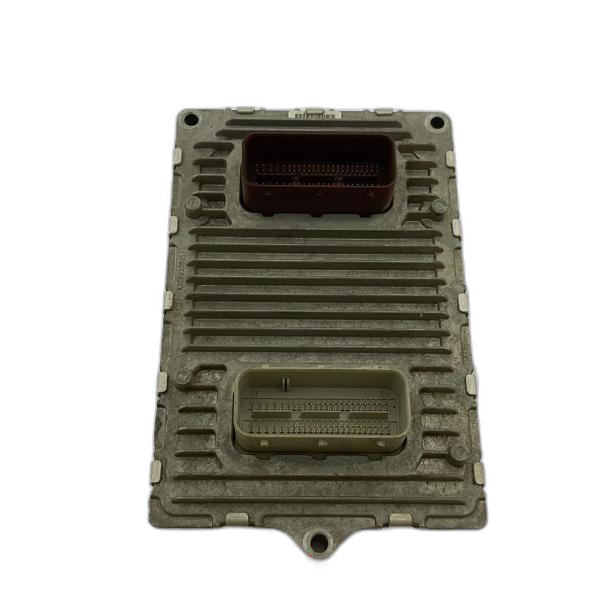
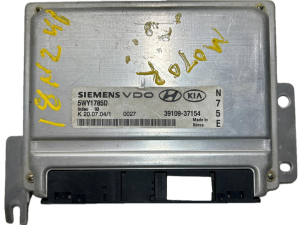
Aftermarket price range: $150-$250 - Engine Control Module (ECM) — If the ECM itself fails, it can bring down the entire communication network. This should only be replaced after all wiring and power supply issues have been ruled out.
Trusted brands: Hyundai (OEM)
OEM price range: $800-$1200
Aftermarket price range: $300-$600 (Remanufactured)
Related Codes That Often Appear With This One
- U0100 — Lost Communication With ECM/PCM. This often appears with U0001 as it specifies that one of the key modules is offline.
- U0101 — Lost Communication with TCM. This indicates 🎬 See: Kia and Hyundai CAN High & Low diagnostics the transmission module is offline, often leading to shifting problems.
- U0121 — Lost Communication With ABS Control Module. This will typically be accompanied by ABS and traction control warning lights.
Technical Service Bulletins (TSBs) & Recalls
- Hyundai Recall 113 / NHTSA Campaign 13V-354: This recall addresses premature and severe corrosion of the rear crossmember. The repair procedure involves inspecting the crossmember, applying rust-proofing material, or replacing it entirely if the corrosion is too advanced. This is relevant to a U0001 diagnosis because the corrosion can compromise the integrity of nearby CAN bus wiring.
Platform-Specific Known Issues
- Rear Subframe Corrosion: This generation of Sonata was subject to recall number 113 (NHTSA 13V-354) for severe corrosion of the rear crossmember/subframe in states that use road salt. While not a direct cause of U0001, the corrosion can easily damage nearby wiring for the ABS wheel speed sensors and other components on the CAN bus, creating an open or short. A thorough inspection of this area is critical when diagnosing this code.
Mechanic-Grade Diagnostic Values
- CAN Bus Resistance — expected: Approximately 60 Ω. Failure: 120 Ω indicates an open circuit or a missing terminating resistor. ~0 Ω indicates a short between CAN High and CAN Low wires.
- CAN High (CAN-H) Voltage — expected: ~2.6V - 2.7V (Key On, Engine Off). Failure: Voltage significantly lower or higher suggests a short to ground or power. No voltage indicates an open circuit.
- CAN Low (CAN-L) Voltage — expected: ~2.3V - 2.4V (Key On, Engine Off). Failure: Voltage significantly lower or higher suggests a short to ground or power. No voltage indicates an open circuit.
Scan Tool Commands That Help
- Hyundai GDS (Global Diagnostic System): Network Topology / CAN Line Status Check — This is a primary diagnostic step when a U0001 code is present. The tool visually maps the CAN network and shows which modules are actively communicating and which are offline. This is far more efficient than manually unplugging modules to isolate the fault.
- Hyundai GDS (Global Diagnostic System): Reset Adaptive Values / Module Initialization — After replacing a major control module (like the ECM or TCM), this function is required to initialize the new module and ensure it communicates correctly with the rest of the vehicle's network.
Wiring & Ground Locations
- CAN Bus Junction — Often integrated into the passenger compartment fuse box, located behind the left side of the dash.. This is a central hub where many CAN bus wires meet. A poor connection or corrosion within this junction block can cause a total network failure.
- G19 — Under the right side of the dashboard.. This is a common grounding point for several interior modules. A loose or corroded G19 ground can cause intermittent communication issues for modules connected to it.
- G24 — Located at the right front of the center console.. Provides the ground path for components in the center console area, which can include the Yaw Rate Sensor or climate control module. A fault here can disrupt the CAN bus.
Real Owner Repair Stories
- Hyundai-Forums user report (2009 Hyundai Sonata) — Multiple warning lights (ABS, ESC, Airbag), no communication with several modules, U0001 code stored.
❌ Tried (didn't work) Checking battery and alternator, Inspecting visible wiring in the engine bay, Testing CAN bus resistance (which was erratic)
✅ What actually fixed it The instrument cluster itself had an internal failure, causing it to short out the CAN bus. The cluster in this vehicle acts as a gateway module. Replacing the instrument cluster and having it programmed resolved the U0001 code and restored communication. - Various forum reports (2006-2008 Hyundai Sonata) — U0001 accompanied by U0121 (Lost Communication with ABS), ABS and ESC lights on.
❌ Tried (didn't work) Replacing the battery, Checking fuses
✅ What actually fixed it The wiring harness connector at the ABS module had become corroded, often due to moisture intrusion or proximity to the subframe corrosion issue. Cleaning the connector pins and applying dielectric grease, or in severe cases, replacing the connector pigtail, restored communication with the ABS module and cleared the network fault.
Model Year Variations Within This Range
- 2008-2010 (Facelift models): The 2008 facelift (often sold as the 2009 model year) introduced a completely redesigned dashboard and center console, including new audio and climate control systems. This changes the wiring behind the dash. When diagnosing issues related to aftermarket stereo installations or problems with the climate control module bringing down the network, it is critical to use the correct wiring diagram for the post-facelift models.
Diagnostic Flowchart
Other Known Issues on This Vehicle
Issues unrelated to this code that are worth knowing about as an owner of this generation:
- Rear Subframe/Crossmember Corrosion 🔴 High — Very common in 'salt belt' regions, leading to a recall. Can occur at any mileage with sufficient exposure to road salt. (Ref: Hyundai Recall 113 / NHTSA Campaign 13V-354)
- 2.4L Theta II Engine Failure 🔴 High — A significant number of 2009-2010 models with the Theta II engine were affected by manufacturing debris causing premature bearing wear and engine seizure. This led to recalls and class-action lawsuits. (Ref: Multiple recalls and warranty extensions were issued for later model years, but the issue originated in this generation.)
- Failing Transmission Speed Sensors 🟠 Medium → Shop Transmission Assembly — A commonly reported issue causing erratic shifting, getting stuck in one gear, and a Check Engine Light.
- Faulty Stop Lamp Switch 🟠 Medium — Widespread enough to cause multiple recalls. Failure can cause brake lights to not illuminate and may prevent shifting out of Park. (Ref: Multiple NHTSA recalls (e.g., for 2007 models))
- Airbag Occupant Classification System (OCS) Failure 🔴 High — A recall was issued because the passenger seat sensor could fail to detect a small-statured adult, preventing the airbag from deploying in a crash. (Ref: NHTSA recall for 2006-2008 models)
- 3.3L Lambda V6 Oil Consumption 🟡 Low — The 3.3L MPI V6 engine in this generation is generally reliable but can consume oil as it ages, a common issue being stuck or seized piston rings.
Used vs. New Parts: Buying Guide for This Vehicle
When a used part is the smart pick: Used parts can be a cost-effective option for wiring harness sections (if undamaged and from a non-corroded vehicle), ABS modules, and instrument clusters. Always match part numbers exactly.
Donor-vehicle mileage cap: roughly under 120000 miles for the part to have meaningful remaining life.
What to inspect on the donor part:
- Check for any signs of water intrusion or corrosion on connectors and pins.
- Inspect wiring harnesses for any cuts, abrasions, or brittle insulation.
- For electronic modules, ensure the donor vehicle did not have extensive electrical problems or warning lights.
- Prefer donors from dry, non-salt-belt regions to minimize corrosion risk.
OEM-only on this vehicle (don't cheap out):
- Engine Control Module (ECM/PCM)
Aftermarket brands forum-validated for this vehicle:
- For batteries: Interstate, DieHard, Duralast, Bosch
Brands owners have reported issues with on this vehicle:
- Be cautious with unbranded, remanufactured electronic modules from online marketplaces. They often have a high failure rate. It's better to use a known good used OEM part or a professionally remanufactured unit from a reputable supplier.
Real Owner Stories
Aggregated from forums and TSBs cited above. Mileages and costs reflect what owners reported in those sources.
2005-2010 Hyundai Sonata
Symptoms: The owner noted wiring shorts, corroded connectors, and faulty modules leading to communication issues. They specifically highlighted that previous collision damage that wasn't repaired correctly led to these CAN bus problems.
What fixed it: Repairing damaged wiring and addressing corroded connectors.
Source hint: Reddit r/DFWSafetyRestore - 'Understanding DTC U0001 in Hyundai Vehicles'
2005-2010 Hyundai Sonata
Symptoms: Severe corrosion of the rear crossmember/subframe which can compromise the integrity of nearby CAN bus wiring for the ABS wheel speed sensors.
What fixed it: Inspecting the crossmember and applying rust-proofing material or replacing the subframe entirely as per the recall procedure.
Source hint: Hyundai Recall 113 / NHTSA Campaign 13V-354
Related OBD-II Codes
Frequently Asked Questions
Could the recall for the rear subframe on my 2005-2010 Sonata be related to the U0001 code?
I have a 2009 Sonata with the 2.4L Theta II engine; could an engine issue cause these network lights?
My Sonata is stuck in one gear and showing U0001; is the transmission failing?
Can a weak battery really trigger a U0001 code on a 2006 Sonata?
What resistance should I see at the OBD-II port if the CAN bus is healthy?
Is it true that collision repairs can cause this communication error?
Helpful Videos
Used OEM Parts in Stock
New Aftermarket Parts Available


The information in this article is provided for general reference and educational purposes only. Vehicle specifications, procedures, and part compatibility can vary by production date, trim level, and region. Always consult your vehicle's factory service manual and verify part numbers before purchasing or performing repairs. Safety-critical components such as airbags, seat belts, and braking systems should be installed by a qualified professional.
- Hyundai Sonata:
- 🧭 Diagnostic Flowchart
- 🎬 Helpful Videos
- 🛍️ Shop This Part
- What's Unique About the 2005-2010 Hyundai Sonata
- Symptoms You May Notice
- Most Likely Causes
- Rare But Worth Checking
- Diagnosis Steps
- Parts You'll Likely Need
- Related Codes That Often Appear With This One
- Technical Service Bulletins (TSBs) & Recalls
- Platform-Specific Known Issues
- Mechanic-Grade Diagnostic Values
- Scan Tool Commands That Help
- Wiring & Ground Locations
- Real Owner Repair Stories
- Model Year Variations Within This Range
- Other Known Issues on This Vehicle
- Used vs. New Parts: Buying Guide for This Vehicle
- Real Owner Stories
- 2005-2010 Hyundai Sonata
- 2005-2010 Hyundai Sonata
- Related OBD-II Codes
- Frequently Asked Questions
- 🎟️ Get 5% Off