

U0001 on 2016-2021 Hyundai Tucson: High-Speed CAN Bus Failure Causes and Fixes
The U0001 code on a 2016-2021 Hyundai Tucson signifies a complete breakdown of the vehicle's main computer network. This is a serious fault, often caused by a faulty ABS module (HECU), wiring issues, or poor battery connections. A widespread recall for the ABS module makes it a primary suspect. Diagnosis is complex and professional service is strongly recommended.
- U0001 is a critical network failure code that makes the 2016-2021 Tucson unsafe to drive.
- Do not assume an expensive computer like the ECM is the cause. The problem is more likely in the wiring, a bad ground, a poor battery connection, or a different module like the ABS unit.
- Diagnosis is complex and requires professional tools and expertise. This is not a recommended DIY repair.
- Always start diagnosis with the simplest checks: battery health, terminal connections, and a visual inspection of wiring harnesses.
- If your Tucson has a 7-speed DCT, be aware that a failing transmission actuator is a possible, though less common, cause of this code.
What's Unique About the 2016-2021 Hyundai Tucson
For the 2016-2021 Tucson (third generation), a U0001 code has a very high probability of being related to the ABS module, also known as the Hydraulic Electronic Control Unit (HECU). This component was subject to a major safety recall (Hyundai Recall 195) because it could corrode internally, cause an electrical short, and in some cases, lead to an engine compartment fire even with the vehicle turned off. This internal short circuit is a common cause for the entire CAN bus network to crash, triggering the U0001 code. Additionally, models equipped with the 7-speed Dual Clutch Transmission (DCT) have known drivability issues that can sometimes manifest as network codes if the electronic actuator fails.
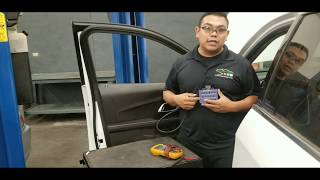
🎬 Watch a real-world CAN diagnosis on a 2017 TucsonSymptoms You May Notice
- Multiple warning lights on the dashboard (Check Engine, ABS, Airbag, etc.)
- Vehicle may not start or may stall while driving
- Transmission may not shift correctly or get stuck in one gear ('limp mode')
- Loss of power steering
- Speedometer and other gauges may stop working
- Malfunctioning electronics like power windows, locks, or the infotainment system
- Scan tool cannot communicate with one or more control modules
- Smell of burning or melting plastic from the engine bay
- Replacing the ECM or TCM without proper diagnosis. The U0001 code indicates a network problem; the module that stores the code is not necessarily the one that is faulty. The issue is often in the wiring or a different module on the bus, especially the ABS module in this vehicle.
Most Likely Causes
- Faulty ABS Control Module (HECU) Very-High Probability → Shop ABS Control Module This is the most likely cause. A widespread safety recall (NHTSA 20V-543, Hyundai Recall 195) was issued for 2019-2021 models, and the recall was expanded to include 2016-2018 models, for an ABS module that can corrode internally, causing an electrical short. This short circuit can bring down the entire CAN network, triggering U0001 and posing a significant fire risk.
How to confirm: Check your vehicle's VIN on the NHTSA or Hyundai recall website to see if the recall is open for your specific Tucson. A technician will diagnose by attempting to communicate with all modules on the network. If the ABS module is the only one offline or if disconnecting it restores communication to other modules, it is confirmed as the fault.
Typical fix: The recall remedy involves dealers installing a new fuse kit in the main junction box and, for some model years, updating the ESC software. In cases where the module has already failed or is leaking, the entire HECU assembly is replaced, free of charge under the recall campaign.
Est. part cost: $0 (if covered by recall) - Damaged or Corroded Wiring/Connectors 🟡 Medium Probability Wiring harnesses can be susceptible to damage from vibrations, chafing against other components, or corrosion in wet climates. A short or open in the CAN High or CAN Low wires will disrupt all communication. Improperly repaired collision damage is also a common source of hidden wiring issues.
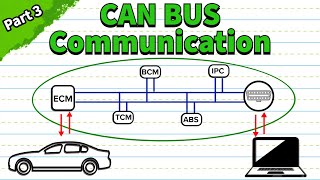
How to confirm: A thorough visual inspection of the main wiring harnesses in the engine bay and under the dashboard is the first step. A technician will use a multimeter to check for continuity and resistance between pins 6 (CAN-H) and 14 (CAN-L) at the OBD-II port. A reading of approximately 60 ohms is expected; 120 ohms or 0 ohms indicates a wiring problem. 🎬 Watch how to test a CAN bus network with a multimeter
Typical fix: Repairing the damaged section of wire or cleaning/replacing the corroded connector.
Est. part cost: $10-$100 - Poor Battery Connection or Failing Battery 🟡 Medium Probability → Shop Vehicle Battery Low or unstable system voltage is a common cause of network communication errors on all modern vehicles. Control modules require a steady power supply to function and communicate properly. A weak battery can cause sporadic communication glitches that can trigger a U0001 code.
How to confirm: Test the battery voltage with a multimeter; it should be above 12.4V with the engine off. Check that the battery terminals are clean and tight. With the engine running, the charging system should produce between 13.5V and 14.5V.
Typical fix: Clean the battery terminals and cable ends, or replace the battery if it fails a load test.
Est. part cost: $150-$300 - Failing DCT Clutch Actuator (7-Speed DCT Models) ⚪ Low Probability On models with the 7-speed Dual Clutch Transmission, the electronic actuator's internal position sensors can degrade over time, causing it to send corrupt data that disrupts the CAN network. These transmissions are known for hesitation and rough shifting issues.
How to confirm: A professional scan tool is needed to monitor live data from the Transmission Control Module (TCM). If the actuator's position data is erratic or missing, or if specific transmission codes like P073F are present, it points to a failure.
Typical fix: Replace the dual-clutch transmission actuator assembly.
Est. part cost: $200-$500
Rare But Worth Checking
- Poor Ground Connection: A loose or corroded main ground for the engine or chassis can cause fluctuating voltages that disrupt module communication. Always check the primary ground straps to ensure they are clean and tight.
- Aftermarket Electronics: A poorly installed remote starter, alarm system, or stereo tapped into the CAN bus wiring can introduce electrical noise or shorts, causing a U0001 code.
- Faulty Gateway Module (BCM): The Body Control Module (BCM) often acts as the gateway, routing messages between different vehicle networks. A failure within the BCM can cause a total communication breakdown similar to a wiring fault.
Diagnosis Steps
- Check for Recalls. Before any other step, enter your vehicle's VIN into the NHTSA or Hyundai recall database to check for open campaigns, specifically Recall 195 related to the ABS module.
- Check the battery. Ensure it is fully charged and the terminals are clean and tight.
- Connect a professional-grade scan tool. Perform a full network scan to see which modules are online and which are not communicating.
- Record and clear all fault codes. See which codes return immediately, indicating a hard fault.
- Perform a visual inspection. Carefully check the main wiring harnesses, connectors, and ground points for any signs of damage, corrosion, or looseness, paying close attention to the wiring near the ABS module.
- Measure CAN bus resistance. With the battery disconnected, use a multimeter to measure the resistance between Pin 6 (CAN-H) and Pin 14 (CAN-L) at the OBD-II port. The reading should be approximately 60 ohms. A reading of 120 ohms suggests an open circuit or a faulty terminating resistor in a module. A reading near 0 ohms indicates a short circuit between the CAN wires.
- Isolate the faulty module. If the ABS recall has not been performed, start by disconnecting the ABS module. After disconnecting it, re-check if communication is restored to the other modules. If it is, the ABS module is the confirmed cause. If not, continue disconnecting other modules one by one to isolate the source of the network disruption.
Parts You'll Likely Need
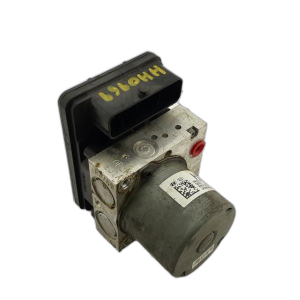
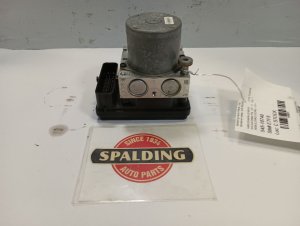
- ABS Control Module (HECU)
(OEM #58920-D3500 (example, verify by VIN))— This module is the subject of a major safety recall and is the most common cause of a U0001 code on this generation of Tucson due to internal short-circuiting.
Trusted brands: Hyundai (OEM), Mando
OEM price range: $800-$1200 (Free if covered by recall)
Aftermarket price range: $500-$800 - Wiring Harness Connector/Pigtail — Corrosion or damage at a key network junction connector is a common cause of communication failure.
Trusted brands: Hyundai (OEM)
OEM price range: $30-$100
Aftermarket price range: $15-$50 - Dual Clutch Transmission Actuator — On 7-speed DCT models, the actuator can fail electronically and disrupt the CAN bus, leading to communication codes.
Trusted brands: Hyundai (OEM), Valeo
OEM price range: $400-$600
Aftermarket price range: $250-$450
Related Codes That Often Appear With This One
- U0121 — Lost Communication With Anti-Lock Brake System (ABS) Control Module. This code is extremely common with U0001 on this Tucson, as the ABS module (HECU) is the most frequent point of failure.
- U0100 — Lost Communication With ECM/PCM. This often appears with U0001 as it specifies that other modules cannot hear from the main engine computer.
- U0101 — Lost Communication with TCM. This is common if the fault is related to the transmission wiring or the TCM/actuator itself.
Technical Service Bulletins (TSBs) & Recalls
- NHTSA Recall 20V-543 / Hyundai Recall 195: Addresses the potential for an electrical short inside the HECU (ABS Module) which can lead to an engine compartment fire. This is a primary diagnostic lead for a U0001 code.
- TSB 16-01-057: Service campaign to update ECM and TCM software on 2016-2017 models to address hesitation at low speeds on DCT models.
Platform-Specific Known Issues
- ABS Module (HECU) Fire Risk Recall: → Shop ABS Control Module The most critical issue for this platform. The ABS module can short-circuit internally, causing a total CAN bus failure (U0001) and, more importantly, a risk of fire even when the vehicle is parked and off. Hyundai's remedy is a new fuse and sometimes a software update. Owners were advised to park outside until the fix was performed.
Mechanic-Grade Diagnostic Values
- CAN Bus Resistance (Battery Disconnected) — expected: ~60 Ω between Pin 6 (CAN-H) and Pin 14 (CAN-L) at the OBD-II port.. Failure: A reading of ~120 Ω indicates an open circuit or a missing terminating resistor (faulty module). A reading near 0 Ω indicates a short between the CAN-H and CAN-L wires.
- CAN Bus Voltage (Key On, Engine Off) — expected: CAN-H and CAN-L should both show a bias voltage of ~2.5V relative to ground when idle.. Failure: During communication, an oscilloscope should show CAN-H swinging up to ~3.5V and CAN-L swinging down to ~1.5V. A flat line at 2.5V on a scope, or voltages stuck high or low, indicates a network fault or a failed module transceiver.
Scan Tool Commands That Help
- Hyundai GDS-Mobile: ECU Upgrade > ABS/ESC — This function is required to perform the software update portion of Recall 195, specifically for vehicles equipped with HECU part number 58920-D3530. It is also used for 'Variant Coding' when a new ABS module is installed to configure it to the vehicle's specific options.
- Professional Scan Tool (e.g., Autel, Snap-on): Network Test / Roll Call — This is a primary diagnostic step to identify which control modules are not responding on the CAN bus. For a U0001 code, this test will show a list of all expected modules and which ones are 'offline', helping to isolate the source of the communication breakdown.
Wiring & Ground Locations
- Engine Bay Fuse Box (E/R Junction Block) — Located in the engine compartment, typically near the battery.. This is the central location for the ABS1 and ABS2 fuses that are the subject of Recall 195. The recall procedure involves modifying the wiring on the underside of this fuse box to install a new fuse kit.
- Body Control Module (BCM) / Smart Junction Box — Located inside the cabin, on the left side of the dash, often integrated with the interior fuse panel.. The BCM acts as the gateway module, controlling communication between the high-speed (C-CAN) and other vehicle networks. A failure in the BCM can bring down the entire network, mimicking a wiring fault.
- OBD-II Diagnostic Link Connector (DLC) — Located in the driver's side footwell, under the dashboard.. This is the primary access point for diagnostics. Pins 6 (CAN-H) and 14 (CAN-L) are used for all high-speed network communication and testing.
OEM Part Supersession History
58920-D3100→N/A— Original part number for 2016-2018 models, specifically mentioned in recall TSB 21-01-010H.
Heads up: This part is specific to early-generation models and is not interchangeable with later part numbers.58920-D3530→N/A— Original part number for 2019-2021 models. This specific part number requires an ESC software update as part of the Recall 195 procedure.
Heads up: Requires software update upon installation. Failure to perform the update will result in warning lights and improper function.58920-D3550→N/A— Original part number for 2019-2021 models, also part of Recall 195. Unlike the D3530, this version does not require a software update during the recall fix.
Heads up: Fitment is highly specific to vehicle options like Smart Cruise Control. Always verify the correct part number by VIN.
Model Year Variations Within This Range
- 2016-2018: The initial phase of Recall 195 focused on 2019-2021 models. The recall was later expanded to include 2016-2018 models. The HECU part numbers differ for these earlier years (e.g., 58920-D3100).
- 2019-2021: The recall remedy for these model years may include an Electronic Stability Control (ESC) software update in addition to the fuse kit installation, depending on the specific HECU part number installed (e.g., 58920-D3530 requires the update).
Diagnostic Flowchart
Other Known Issues on This Vehicle
Issues unrelated to this code that are worth knowing about as an owner of this generation:
- Theta II Engine Failure 🔴 High — Widespread across multiple Hyundai/Kia models, particularly 2.0L and 2.4L GDI engines. Failures can occur under 100,000 miles due to connecting rod bearing wear from manufacturing debris. (Ref: Multiple recalls (e.g., Recall 162) and a major class-action lawsuit settlement provide extended warranties and potential engine replacements.)
- Excessive Oil Consumption 🟠 Medium — Common on GDI engines as they age, often starting after 60,000-80,000 miles. Can be as high as 1 quart per 1,000 miles. (Ref: TSB 23-EM-008H outlines a multi-step oil consumption test and combustion chamber cleaning procedure.)
- 7-Speed Dual-Clutch Transmission (DCT) Drivability Problems 🟠 Medium → Shop Transmission Assembly — Affects models with the 1.6L Turbo engine. Symptoms include hesitation from a stop, jerky/lurching shifts in traffic, and shuddering. (Ref: Several TSBs (e.g., 16-01-057, 16-01-058) were released to update TCM and ECM software to improve logic.)
- ABS Module (HECU) Internal Short / Fire Risk 🔴 High → Shop ABS Control Module — Affects the entire 2016-2021 model year range. The module can corrode internally, leading to a short circuit and potential fire, even when the vehicle is off. (Ref: NHTSA Recall 20V-543 (Hyundai Recall 195) was issued to install a new fuse kit and update software.)
Used vs. New Parts: Buying Guide for This Vehicle
When a used part is the smart pick: For a U0001 code on this vehicle, a used part is almost never a smart choice. The primary cause is a defective ABS module with a safety recall. Installing a used, un-remedied ABS module from a junkyard reintroduces a significant fire risk and is strongly discouraged. For other potential causes like a BCM or TCM, a used part might be considered, but will require professional programming to the vehicle's VIN.
Donor-vehicle mileage cap: roughly under 50000 miles for the part to have meaningful remaining life.
What to inspect on the donor part:
- Verify the donor vehicle's VIN to ensure all safety recalls (especially Recall 195) have been completed.
- Inspect connectors for any signs of corrosion, bent pins, or heat damage.
- Avoid parts from vehicles with flood or fire damage.
- If possible, obtain the part from a vehicle that was running and driving without ABS or communication-related fault codes.
OEM-only on this vehicle (don't cheap out):
- ABS Control Module (HECU): Due to the critical safety recall for fire risk, only a new OEM part installed by a dealer is recommended to ensure the latest design and proper recall procedure (fuse kit, software update) is completed.
Aftermarket brands forum-validated for this vehicle:
- For the HECU/ABS module, no aftermarket brands are recommended. The repair should be done with a new OEM part, preferably through the Hyundai recall campaign.
Brands owners have reported issues with on this vehicle:
- Any used or remanufactured ABS modules that have not had the official Hyundai Recall 195 remedy performed.
Real Owner Stories
Aggregated from forums and TSBs cited above. Mileages and costs reflect what owners reported in those sources.
2017 Hyundai Tucson
Symptoms: Acceleration hesitation from a stop.
What fixed it: TSB 16-01-057 software update for the ECM and TCM.
Source hint: CarTalk Community - '2017 Hyundai Tucson - DCT issue?'
2017 Hyundai Tucson 1.6T
Symptoms: Harsh, jolting clutch engagement.
What fixed it: Addressing DCT actuator or control module issues (related to TSB 16-01-057/058).
Source hint: Reddit r/Hyundai - 'Hyundai Tucson DCT problem'
Related OBD-II Codes
Frequently Asked Questions
Is there a recall for the ABS module on my 2019-2021 Hyundai Tucson that causes the U0001 code?
Does the ABS fire risk recall apply to older 2016-2018 Tucson models as well?
My 2017 Tucson with the DCT is hesitating at low speeds; is there a software update for this?
What should the resistance be when testing the CAN bus at the OBD-II port for a U0001 code?
Can a weak battery cause a U0001 communication code on the Tucson?
If my HECU has already failed due to the recall issue, will Hyundai replace it for free?
Helpful Videos
Used OEM Parts in Stock
New Aftermarket Parts Available





The information in this article is provided for general reference and educational purposes only. Vehicle specifications, procedures, and part compatibility can vary by production date, trim level, and region. Always consult your vehicle's factory service manual and verify part numbers before purchasing or performing repairs. Safety-critical components such as airbags, seat belts, and braking systems should be installed by a qualified professional.
- Hyundai Tucson:
- 🧭 Diagnostic Flowchart
- 🎬 Helpful Videos
- 🛍️ Shop This Part
- What's Unique About the 2016-2021 Hyundai Tucson
- Symptoms You May Notice
- Most Likely Causes
- Rare But Worth Checking
- Diagnosis Steps
- Parts You'll Likely Need
- Related Codes That Often Appear With This One
- Technical Service Bulletins (TSBs) & Recalls
- Platform-Specific Known Issues
- Mechanic-Grade Diagnostic Values
- Scan Tool Commands That Help
- Wiring & Ground Locations
- OEM Part Supersession History
- Model Year Variations Within This Range
- Other Known Issues on This Vehicle
- Used vs. New Parts: Buying Guide for This Vehicle
- Real Owner Stories
- 2017 Hyundai Tucson
- 2017 Hyundai Tucson 1.6T
- Related OBD-II Codes
- Frequently Asked Questions
- 🎟️ Get 5% Off