

U0001 on 2016-2022 Toyota Prius: High-Speed CAN Bus Communication Failure Causes and Fixes
This code indicates a serious communication failure on the vehicle's main data network. The most common causes are a weak 12V auxiliary battery, a faulty electronic module (like the instrument cluster or ABS module) shorting the network, or damaged wiring. Diagnosis is complex and often requires professional tools.
- U0001 is a critical network failure, not a simple sensor issue. Do not drive the vehicle.
- Always start by testing and, if necessary, replacing the 12V auxiliary battery. This is the simplest and a very common fix.
- If you have any aftermarket stereo or remote start systems, suspect them immediately and disconnect them.
- True diagnosis of this code almost always requires professional-level tools to identify which electronic module or wire is causing the network to crash.
- On this Prius generation, the instrument cluster is a known potential cause of a total network failure.
What's Unique About the 2016-2022 Toyota Prius
On the fourth-generation Prius, the U0001 code doesn't point to one single, common part failure. Instead, it signals a total network collapse that requires methodical diagnosis. Owners and technicians have traced the root cause to surprising sources, including an internally shorted instrument cluster which brought the entire car down. Because so many systems are interconnected, a failure in one area can create a cascade of seemingly unrelated warning lights and symptoms. A recall was also issued for 2016-2018 models where the engine wiring harness could chafe and short to ground, causing a fire risk and potentially leading to network communication codes.
Symptoms You May Notice
- Vehicle is completely dead or will not power on ('bricked')
- Multiple warning lights on the dashboard (Check Engine, ABS, VSC, Hybrid System Warning)
- Loss of power steering or braking assist
- Engine may stall or fail to start
- Inability to communicate with the vehicle using a standard OBD-II scanner
- Loss of features like air conditioning, power windows, or radio
- Instrument cluster display is blank or flashing erratically
- Key fob may not be recognized or car won't unlock
- Replacing the main hybrid battery. The U0001 code is related to the 12V electrical system and data network, not the high-voltage hybrid battery itself.
- Replacing the wrong electronic module. Without proper network diagnostics, it's easy to replace a module that is simply not responding due to the network being down, rather than being the cause of the problem. This is why disconnecting modules one-by-one is a critical step.
Most Likely Causes
- Weak or Failing 12V Auxiliary Battery 🔴 High Probability → Shop Vehicle Battery The Prius relies on a stable 12V supply to initialize its complex electronic systems. Unlike a conventional car, a Prius doesn't give an audible slow-crank warning of a dying battery; it will work until it suddenly doesn't provide enough voltage to power up all the modules, leading to communication dropouts. Low voltage during startup is a very common cause for a flood of network codes.
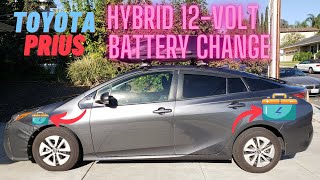
How to confirm: Test the 12V auxiliary battery (located in the engine bay on the passenger side for 2016+ models) with a multimeter or electronic battery tester. A healthy AGM battery should read approximately 12.6V-12.8V with the car off. When the car is in 'READY' mode, voltage should be above 13.5V. A reading below 12.4V at rest indicates a discharged state, and it should be load-tested.
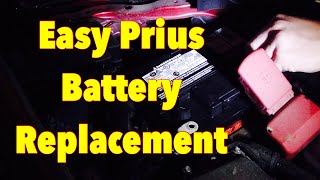
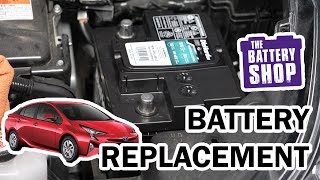
Typical fix: Replace the 12V AGM auxiliary battery. 🎬 Watch: Step-by-step 12V battery replacement guide
Est. part cost: $200-$350 - Faulty Instrument Cluster (Combination Meter) 🟡 Medium Probability → Shop Instrument Cluster The instrument cluster is a critical node (or junction) on the CAN network. An internal short circuit within the cluster, sometimes due to a failed capacitor or other board-level component, can corrupt the entire network, preventing any communication. This issue was more common on previous generations but still occurs.
How to confirm: This requires advanced diagnostics. A technician would use an oscilloscope to observe the CAN bus signals at the OBD-II port. If the signal is corrupted, they would disconnect modules one by one. If disconnecting the instrument cluster restores a clean signal, it is the source of the fault.
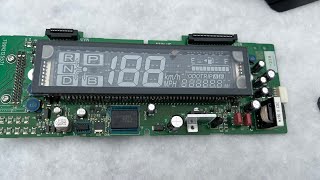
Typical fix: Replace the instrument cluster. 🎬 See how to diagnose and repair the combination meter The new unit must be programmed with the vehicle's correct mileage, which is often done by the supplier before shipping to the dealer or repair shop.
Est. part cost: $500-$1000 - Damaged Wiring Harness or Connectors 🟡 Medium Probability A recall (Toyota recall J0T / NHTSA 18V-684) was issued for 2016-2018 Prius models for a wiring harness that could chafe against a cover, causing a short circuit. Additionally, wiring can be damaged from accidents, rodent intrusion, or corrosion, causing a short or open circuit in the CAN bus wiring (a twisted pair of wires).
How to confirm: Visually inspect all visible wiring harnesses for damage, particularly in the engine bay near the Power Control Unit (PCU) and behind the dashboard. A multimeter can be used to check for continuity and resistance between CAN lines (typically pins 6 and 14 on the OBD-II port), which should be around 60 ohms with the battery disconnected.
Typical fix: Repair the damaged section of the wiring harness. For the recall issue, dealers inspect and, if necessary, replace the harness and add protective material.
Est. part cost: $5-$50 for wiring repair supplies - Faulty ABS Module ⚪ Low Probability → Shop ABS Control Module Like the instrument cluster, the ABS module is another critical node. An internal electronic failure can cause it to broadcast corrupt data or short the CAN bus lines, bringing down the entire network.
How to confirm: Similar to the instrument cluster, this is confirmed by disconnecting the ABS module while monitoring the CAN bus signal with an oscilloscope or advanced scan tool to see if communication is restored.
Typical fix: Replace the ABS module and perform the necessary calibration.
Est. part cost: $800-$2000
Rare But Worth Checking
- Aftermarket Electronics Interference: Poorly designed CAN bus adapters for aftermarket stereos, remote starters, or tracking devices can broadcast garbage data onto the network, causing widespread communication failures. If you have any aftermarket electronics installed, disconnecting them should be an early diagnostic step.
- Failed Hybrid Control or Power Management ECU: While less common than other causes, a failure of one of the main control units can also be the source of the network crash. This is typically the last item to be suspected after wiring and other modules have been ruled out.
- Water Intrusion: Leaks from a clogged sunroof drain, poorly sealed windshield, or damaged door seals can allow water to reach connectors or modules located under the dashboard or in the kick panels, leading to corrosion and network faults.
Diagnosis Steps
- Check the 12V auxiliary battery first. Ensure it is fully charged and passes a load test. A weak battery is a very common cause of network issues.
- If a new battery doesn't solve the issue, scan for all codes in all modules with a professional-grade scan tool. Note which modules are not responding.
- Disconnect any aftermarket electronic devices (head units, remote starters, etc.) that tap into the vehicle's wiring.
- Perform a visual inspection of the main wiring harnesses, especially around the engine bay, under the dashboard, and in areas that may have been affected by a previous accident or rodent damage. Check for the wiring harness recall (J0T) on 2016-2018 models.
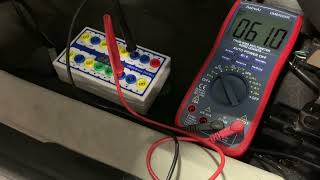
- Measure the resistance across pins 6 (CAN High) and 14 (CAN Low) of the OBD-II port with the 12V battery disconnected. The reading should be approximately 60 ohms. A reading of 120 ohms indicates an open circuit or a missing terminating resistor. A reading near 0 ohms indicates a short circuit between the CAN lines. 🎬 Watch: How to test CAN bus resistance with a multimeter
- If resistance is incorrect or a scanner cannot communicate, the fault must be isolated. This involves disconnecting modules one by one from the CAN bus and re-checking the network status. Start with easily accessible modules like the ABS module or instrument cluster. When the faulty module is disconnected, network communication should be restored.
- If a specific module is identified as the cause, inspect its power, ground, and connector pins for corrosion or damage before condemning the module itself.
Parts You'll Likely Need
- 12V AGM Auxiliary Battery
(OEM #28800-21181 (Varies by model/year, confirm with VIN))— A weak 12V battery is the most frequent and simplest cause of network communication faults on a Prius.
Trusted brands: Toyota TrueStart, Optima (YellowTop), NorthStar
OEM price range: $250-$400
Aftermarket price range: $200-$350 - Instrument Cluster (Combination Meter)
(OEM #83800-47X20 (Example for 2019, varies significantly by trim/year, confirm with VIN))— Has been documented as a source of a total network failure on the 2016 Prius due to an internal short.
Trusted brands: Toyota (OEM)
OEM price range: $500-$1000
Aftermarket price range: Used units available from ~$125, but require mileage programming.
Related Codes That Often Appear With This One
- U01xx (e.g., U0100, U0129, U0140) — These codes indicate 'Lost Communication' with a specific module (ECM, ABS, BCM, etc.). When the entire network is down due to U0001, every module will log lost communication codes with every other module, creating a flood of U-codes.
Platform-Specific Known Issues
- Engine Wiring Harness Chafing Recall: A recall (NHTSA Campaign 18V684000, Toyota J0T) was issued for 2016-2018 models where the engine harness could rub against the hybrid power control unit cover, causing a short circuit. This could potentially cause a fire or trigger various electrical faults, including communication codes like U0001.
Mechanic-Grade Diagnostic Values
- CAN Bus Resistance (12V Battery Disconnected) — expected: ~60 Ω (Ohms). Failure: A reading of ~120 Ω indicates an open circuit or a missing terminating resistor. A reading near 0 Ω indicates a short between the CAN High and CAN Low wires.
- CAN Bus Voltage (Key On, Engine Off, measured at OBD-II port to chassis ground) — expected: CAN High (Pin 6): ~2.6V to ~3.5V during communication. CAN Low (Pin 14): ~2.4V to ~1.5V during communication. Both lines should idle around 2.5V.. Failure: A line stuck near 0V or 5V indicates a short to ground or power, respectively. If both lines show the same voltage and do not change, the bus is inactive or shorted together.
Scan Tool Commands That Help
- Toyota Techstream: Bus Check — This is a primary diagnostic step for a U0001 code. The function performs a 'roll call' of all ECUs on the network and displays which ones are communicating and which are not. This helps identify if the entire network is down or if only specific modules are offline, narrowing the search for the fault.
- Toyota Techstream: ABS/VSC System Calibration and Brake Bleeding — This is a required procedure after replacing the ABS module, which is a potential cause of the U0001 code. Failure to perform this calibration will result in warning lights and improper ABS/VSC system function, even if the U0001 code is resolved.
Wiring & Ground Locations
- DLC3 (OBD-II Port) — Under the driver's side dashboard, to the left of the steering column.. This is the primary access point for the entire CAN network. Pin 6 is CAN High and Pin 14 is CAN Low. All initial network resistance and voltage checks are performed here to assess the overall health of the bus before tracing wires to individual modules.
"I Checked Everything" — The Actual Cause
- A common scenario analogous to a 'smoke test clean' for a network code is when the CAN bus resistance measures a perfect 60 ohms, yet no communication is possible. This often points to a faulty module that isn't creating a direct short or open circuit, but is instead 'babbling' or broadcasting corrupt data, causing the entire network to crash. This fault can only be found by systematically disconnecting modules one by one (starting with the instrument cluster and ABS module) until communication is restored to the remaining modules.
Model Year Variations Within This Range
- 2016-2018: These pre-facelift models are subject to NHTSA recall 18V684000 for an engine wiring harness that can chafe and short out. This is a known cause of electrical issues, including network communication failures. Models from 2019-2022 are not included in this specific recall.
- 2019-2022: The 2019 facelift introduced a redesigned center console and infotainment system, moving from a fully touch-sensitive panel to one with physical buttons. In 2020, Apple CarPlay and Android Auto were added. While not a common cause, a failure within these different head units can potentially disrupt the CAN bus, presenting a different diagnostic path than on earlier models.
Diagnostic Flowchart
Other Known Issues on This Vehicle
Issues unrelated to this code that are worth knowing about as an owner of this generation:
- Spontaneously Cracking Windshields 🟠 Medium — Commonly reported on 2016-2018 models. A class-action lawsuit was filed alleging a design defect causing windshields to crack easily without significant impact.
- Brake Booster / Actuator Assembly Failure 🔴 High — Can occur at higher mileages. Symptoms include a combination of brake, ABS, and VSC warning lights, a hard brake pedal, and a pump motor that runs frequently. A recall was issued for some 2019 models for a faulty brake booster pump. (Ref: NHTSA Campaign 19V544000 (some 2019 models))
- EGR System Clogging 🟠 Medium — While a more notorious issue on the previous generation, the Gen 4 Prius can still experience carbon buildup in the EGR valve and cooler over time (typically 100,000+ miles), potentially leading to rough running or misfires if not cleaned periodically. (Ref: T-SB-0135-19 (Covers related exhaust heat exchanger issue))
- Engine Wiring Harness Chafing 🔴 High — Affects 2016-2018 models. The harness can rub against a cover and short circuit, posing a fire risk. (Ref: Recall J0T / NHTSA 18V-684)
- Hybrid Battery Failure 🟠 Medium → Shop Vehicle Battery — Typically occurs at high mileage, often between 150,000 and 200,000 miles. Symptoms include 'Check Hybrid System' warnings and reduced fuel economy.
Used vs. New Parts: Buying Guide for This Vehicle
When a used part is the smart pick: For expensive electronic modules like the Instrument Cluster (Combination Meter) or the ABS module, a used part from a reputable salvage yard can offer significant cost savings.
Donor-vehicle mileage cap: roughly under 80000 miles for the part to have meaningful remaining life.
What to inspect on the donor part:
- Verify the part number on the used module matches the original part exactly.
- Inspect connectors for any signs of corrosion, moisture, or bent pins.
- Choose a donor vehicle that shows no signs of flood damage or major collision in the area of the module.
- Obtain the VIN of the donor car to cross-reference its specific trim and options.
OEM-only on this vehicle (don't cheap out):
- Main ECUs (Hybrid Control, Power Management): Due to complex software and VIN-locking, using anything other than a new or professionally remanufactured OEM unit is highly risky and likely to cause compatibility issues.
Aftermarket brands forum-validated for this vehicle:
- For complex electronic modules like the instrument cluster or ABS module, there are no widely recognized aftermarket brands that are considered as reliable as OEM parts. Sticking with OEM new or used is the recommended path.
Brands owners have reported issues with on this vehicle:
- Generic, unbranded modules sold on online marketplaces should be avoided due to high failure rates and potential software incompatibility.
Real Owner Stories
Aggregated from forums and TSBs cited above. Mileages and costs reflect what owners reported in those sources.
2017 Toyota Prius
Symptoms: Multiple warning lights on the dashboard including Check Engine, ABS, and VSC; vehicle eventually became completely dead or 'bricked'.
What fixed it: Replacement of the 12V AGM auxiliary battery, as the original was no longer providing stable voltage to initialize the electronic modules.
Cost: $200-$350
Source hint: PriusChat (priuschat.com)
2016 Toyota Prius
Symptoms: Instrument cluster display flashing erratically and loss of communication with the vehicle using a standard OBD-II scanner.
What fixed it: Replacement of the instrument cluster (Combination Meter) after it was identified as the source of CAN bus signal corruption.
Cost: $500-$1000
Source hint: PriusChat (priuschat.com)
Documented NHTSA Reports
Toyota Network Communication Issues
Symptoms: An owner reported issues while using the accelerator where the vehicle would trigger network codes. In one instance, the technician was able to pull codes U0001 and U0100 from the code reader, though in subsequent occurrences, no codes were displayed (NHTSA ODI #11376111).
Related OBD-II Codes
Frequently Asked Questions
My 2017 Prius is completely dead and won't power on. Could this be related to a recall?
Why didn't I hear a slow-crank warning before my Prius 'bricked' with U0001?
Where is the 12V battery located on my 2016+ Prius to check for U0001 triggers?
Can a faulty instrument cluster really cause a total vehicle communication failure?
Does the wiring harness recall for the standard Prius also apply to my Prius Prime?
What should the resistance be at the OBD-II port if the CAN bus is healthy?
Helpful Videos
We Have This Part in Stock


The information in this article is provided for general reference and educational purposes only. Vehicle specifications, procedures, and part compatibility can vary by production date, trim level, and region. Always consult your vehicle's factory service manual and verify part numbers before purchasing or performing repairs. Safety-critical components such as airbags, seat belts, and braking systems should be installed by a qualified professional.
- Toyota Prius:
- 🧭 Diagnostic Flowchart
- 🎬 Helpful Videos
- 🛍️ Shop This Part
- What's Unique About the 2016-2022 Toyota Prius
- Symptoms You May Notice
- Most Likely Causes
- Rare But Worth Checking
- Diagnosis Steps
- Parts You'll Likely Need
- Related Codes That Often Appear With This One
- Platform-Specific Known Issues
- Mechanic-Grade Diagnostic Values
- Scan Tool Commands That Help
- Wiring & Ground Locations
- "I Checked Everything" — The Actual Cause
- Model Year Variations Within This Range
- Other Known Issues on This Vehicle
- Used vs. New Parts: Buying Guide for This Vehicle
- Real Owner Stories
- 2017 Toyota Prius
- 2016 Toyota Prius
- Documented NHTSA Reports
- Toyota Network Communication Issues
- Related OBD-II Codes
- Frequently Asked Questions
- 🎟️ Get 5% Off