

U0073 on 2008-2012 Ford Escape: Causes and Fixes for Communication Bus Failure
On a 2008-2012 Ford Escape, code U0073 is most often caused by a faulty instrument panel cluster (IPC), which acts as a key communication hub. Internal solder joint failures are common, causing a no-start, dead gauges, and multiple warning lights. A repair service for the cluster is a common fix, costing around $150-$400, while a new OEM part can be over $500 plus programming.
- Code U0073 on a 2008-2012 Escape is a critical fault that makes the vehicle unsafe to drive.
- The most likely culprit is a known issue with the instrument panel cluster failing internally.
- Symptoms often include a no-start condition, dead gauges, and multiple warning lights.
- Do not immediately assume the PCM is bad; the instrument cluster, wiring, and ABS module are more probable causes.
- Diagnosis is complex and best left to a professional with network diagnostic tools.
What's Unique About the 2008-2012 Ford Escape
The second-generation Ford Escape (2008-2012) and its platform mates are well-documented for having issues with the Instrument Panel Cluster (IPC). The IPC isn't just for displaying speed; it's an active computer module on the communication network and contains one of the network's two critical 120-ohm terminating resistors. Internal failures, often cracked solder joints on the main connector pins, are a very common cause of network-wide communication failures, often presenting as code U0073 or U0155. This makes the cluster a primary suspect on this vehicle, more so than on many other cars where wiring is the more typical culprit.
Symptoms You May Notice
- Vehicle will not start or crank, or starts intermittently.
- Engine stalls while driving.
- Multiple warning lights illuminated simultaneously (Check Engine, ABS, Traction Control, Wrench light, PATS/security light).
- Instrument cluster gauges (speedometer, tachometer) drop to zero or behave erratically.
- Odometer and information display are blank, show dashes, or flicker.
- Scan tool cannot communicate with the PCM, ABS, or other major modules, often only connecting to the BCM.
- Loss of power steering assist may occur simultaneously.
- Replacing the PCM when the Instrument Cluster is the actual cause.
- Replacing the battery without load testing it first.
- Replacing the ABS module without first checking wiring and the instrument cluster.
Most Likely Causes
- Faulty Instrument Panel Cluster (IPC) 🔴 High Probability → Shop Instrument Cluster This is a widely documented failure point on the 2008-2012 Escape. The cluster contains a critical network terminating resistor and acts as a gateway. Internal solder joint failures on the main connector or component degradation are common due to vibration and thermal cycles.
How to confirm: If U0073 is accompanied by a dead or flickering instrument cluster and a no-start condition, the IPC is the most likely cause. A 'tap test' (tapping firmly on the top of the dash above the cluster) may cause the gauges to flicker or temporarily work, strongly indicating a bad connection inside. A technician can confirm by disconnecting the IPC and checking if the CAN bus resistance at the OBD-II port changes from an incorrect reading to ~120 ohms.
Typical fix: The cluster must be removed and sent to a specialized electronics repair service for rebuilding (re-soldering the connector pins), or replaced with a new/remanufactured unit that will require programming to the vehicle.
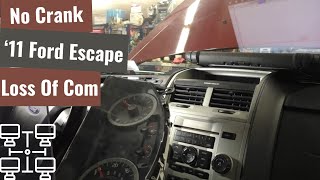
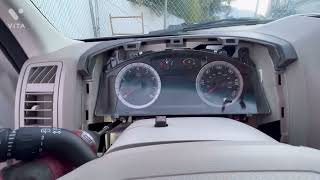
Est. part cost: $150-$400 for a rebuild service; $500+ for a new unit plus a core charge. 🎬 See this step-by-step guide to removing your instrument cluster.
- Damaged or Corroded Wiring 🟡 Medium Probability Wiring harnesses in the engine bay are exposed to heat, vibration, and moisture. Common chafe points include the harness near the battery tray, the firewall pass-through, and around the ABS module. Rodent damage is also a possibility.
How to confirm: Visually inspect the wiring harness leading to the PCM and ABS module. Check for corrosion inside the main connectors. A technician will use a multimeter to check for continuity, shorts to power, or shorts to ground on the CAN bus wires (Pins 6 and 14 at the OBD-II port).
Typical fix: Repair the broken or shorted section of wire. Clean or replace corroded connectors. Ensure the twisted-pair nature of the CAN wires is maintained during repair.
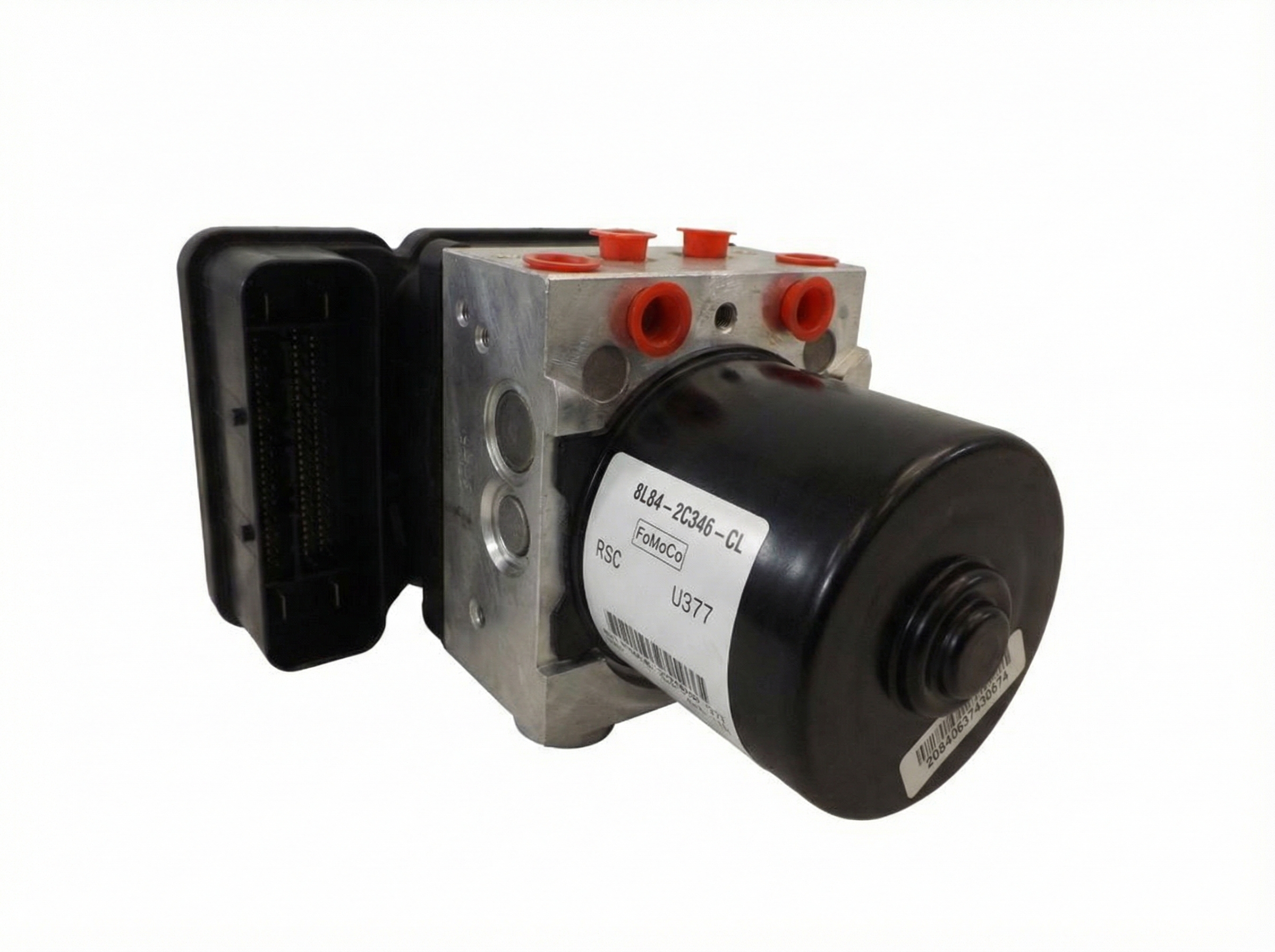
Est. part cost: $10-$100 for wiring repair supplies. - Faulty ABS Module ⚪ Low Probability → Shop ABS Control Module The module is located in the engine bay where it is exposed to heat and moisture, which can lead to internal electronic failure or corrosion at the connector.
How to confirm: If the ABS light is on and the module is unresponsive to a scan tool, it may be the cause. A technician can disconnect the ABS module and see if communication is restored to the rest of the network. A burnt electronic smell near the module can also be an indicator.
Typical fix: Replace the ABS module and have it programmed and configured for the vehicle.
Est. part cost: $300-$800 - Weak or Failing Battery ⚪ Low Probability → Shop Vehicle Battery
How to confirm: Test the battery with a multimeter and a load tester. Voltage below 12.2V with the engine off indicates a weak battery. Unstable voltage during cranking can cause modules to drop off the network and set communication codes.
Typical fix: Recharge or replace the vehicle's battery.
Est. part cost: $150-$250
Rare But Worth Checking
- Faulty Powertrain Control Module (PCM): → Shop Engine Control Module (ECM) While possible, the PCM is rarely the true cause. It is often replaced unnecessarily. All other possibilities, especially the Instrument Cluster and wiring, should be thoroughly ruled out before condemning the PCM.
Diagnosis Steps
- Check the Battery: Ensure the battery has at least 12.4 volts and passes a load test. Clean any corrosion from the terminals. Low system voltage is a common cause of network codes.
- Scan for All Codes: Use a professional scan tool to check for codes in ALL available modules (BCM, ABS, IPC, etc.). Note which modules are not responding, as this can point to the source of the break in the network.
- Perform a 'Tap Test': With the key on, firmly tap the top of the dashboard over the instrument cluster. If the gauges flicker, warning lights change, or the car suddenly starts, it strongly suggests an internal fault (bad solder joints) in the cluster.
- Check CAN Bus Resistance: With the battery disconnected, use a multimeter to measure the resistance between Pin 6 (CAN-H) and Pin 14 (CAN-L) of the OBD-II port. A healthy network should read approximately 60 Ω. A reading of 120 Ω suggests one of the two terminating resistors is offline (highly likely a faulty cluster or, less commonly, the PCM). A reading of 0 Ω indicates a short circuit between the two CAN wires.
- Isolate Modules: If resistance is 120 Ω, disconnect the Instrument Cluster connector. If the resistance at the OBD-II port remains 120 Ω, the cluster's terminating resistor is likely bad. If the resistance is 0 Ω, begin disconnecting modules (start with the ABS module, then the IPC) one at a time and re-check resistance. When the reading jumps back to 60 Ω or 120 Ω, the last module disconnected is the one with the internal short.
- Visual Wiring Inspection: Thoroughly inspect the wiring harnesses in the engine bay, especially near the PCM, ABS module, battery tray, and where the harness passes through the firewall. Look for any signs of chafing, melting, or corrosion.
- Professional Diagnosis: If the cause is not obvious, seek a professional mechanic with network diagnostic experience. They can use an oscilloscope to analyze the data signals on the CAN bus to pinpoint the fault, such as a module that is 'chattering' or pulling the network voltage down.
Parts You'll Likely Need
- Instrument Panel Cluster (IPC) Repair Service
(OEM #8L8T-10849-xx, AL8T-10849-xx)— This is the most frequent cause of network failure on this platform. A repair service fixes the internal cracked solder joints that cause the communication breakdown.
Trusted brands: Automotive Circuit Solutions, Circuit Board Medics
OEM price range: $500+ for new part, plus $300 core charge.
Aftermarket price range: $150-$400 for repair service - ABS Control Module — A less common but possible cause. An internal failure in the ABS module can bring down the entire CAN bus.
Trusted brands: Motorcraft, Bosch
OEM price range: $600-$800
Aftermarket price range: $300-$500
Related Codes That Often Appear With This One
- U0100 — U0100 means 'Lost Communication with PCM'. It is often set alongside U0073 because if the entire communication bus is down, no modules can talk to the PCM.
- U0121 — U0121 means 'Lost Communication with ABS Control Module'. This will appear if the bus is down or if the ABS module itself has failed and caused the bus to go down.
- U0155 — U0155 means 'Lost Communication With Instrument Panel Cluster Control Module'. This is a strong indicator that the cluster itself is the source of the network problem.
Platform-Specific Known Issues
- The Passive Anti-Theft System (PATS) runs through the instrument cluster. When the cluster fails, it can prevent the car from recognizing the key, resulting in a no-start condition with a rapidly flashing theft light.
- A 'tap test' on the dashboard above the cluster is a surprisingly effective diagnostic tool for this specific vehicle. If tapping the dash causes the gauges to come back to life, even momentarily, it's almost certainly a bad instrument cluster.
Mechanic-Grade Diagnostic Values
- HS-CAN Bus Resistance at OBD-II Port (Pins 6 & 14) — expected: ~60 Ω. Failure: A reading of ~120 Ω indicates one terminating resistor is offline (likely the IPC or PCM). A reading near 0 Ω indicates a short between the CAN High and CAN Low wires.
- HS-CAN High Voltage (Pin 6 at OBD-II Port, Key On Engine Off) — expected: 2.5V to 3.5V. Failure: A flat 0V suggests a short to ground. A static voltage (e.g., 5V or 12V) suggests a short to power.
- HS-CAN Low Voltage (Pin 14 at OBD-II Port, Key On Engine Off) — expected: 1.5V to 2.5V. Failure: A flat 0V suggests a short to ground. A static voltage suggests a short to power. The voltage should be a mirror image of the CAN High line.
Hidden / Shadow Codes Worth Checking
- Instrument Cluster Self-Diagnostic DTCs: → Shop Instrument Cluster The cluster has a built-in test mode that can display its own internal fault codes, which may not be visible to a standard OBD-II scanner. These can confirm if the cluster itself is logging communication errors. (see via With the ignition off, press and hold the tripmeter reset button. While holding the button, turn the ignition key to the 'ON' position (position II). Continue holding the button until 'tESt' appears on the odometer display. Release the button and press it repeatedly to cycle through various data points until you reach the DTC screen.)
Scan Tool Commands That Help
- Ford IDS (or FORScan): Programmable Module Installation (PMI) — This is mandatory when installing a new or used instrument cluster. It copies the vehicle's 'as-built' data, security information (PATS), and configuration from the old cluster to the new one. Skipping this will result in a no-start condition.
- Ford IDS (or FORScan): Parameter Reset — This function is required to sync the security components (PATS keys, PCM, and IPC) after a new instrument cluster is installed. It must be performed for the engine to start. You must have at least two programmed keys to complete this procedure.
- Ford IDS (or FORScan): Network Test — This automated test pings all modules on the network and creates a map of which ones are communicating and which are not. It is the fastest way to confirm that the Instrument Cluster (or another module) is the one dropping off the network and causing the U0073 code.
Wiring & Ground Locations
- Instrument Cluster Connector (C2280A) — The main 32-pin connector on the back of the instrument panel cluster.. This is the most common failure point. The HS-CAN wires pass through this connector. On the similar Ford Focus platform, these are pins 17 (CAN+) and 18 (CAN-). Cracked solder joints on these specific pins are the primary cause of U0073 on these vehicles.
- ABS Module Connector (C135) — The main electrical connector on the ABS module, located in the left rear of the engine compartment.. The HS-CAN wires connect here. Pin 26 is CAN High (GN-OG wire) and Pin 14 is CAN Low (GY-BU wire). Corrosion or damage in this connector can take the ABS module offline and disrupt the network.
- Ground G301 — Under the driver's seat, bolted to the floor pan.. This is a major body ground point. While not directly for the IPC, poor grounding here can introduce electrical noise and unstable voltages to various modules, potentially causing communication codes.
- Main Battery Ground — On the driver's side inner fender/chassis rail, often under the airbox assembly.. This is the primary ground for the entire vehicle. Corrosion or looseness here is a common cause of widespread, difficult-to-diagnose electrical issues, including module communication failures.
Real Owner Repair Stories
- Escape-City.com forum user (2008 Ford Escape) — No crank, no start, multiple warning lights on the dash, odometer shows dashes, theft light flashing rapidly. Scan tool shows U0073 and cannot communicate with PCM.
❌ Tried (didn't work) Replacing the battery, Checking all fuses
✅ What actually fixed it The user removed the instrument cluster and sent it to a repair service (Circuit Board Medics was mentioned). The service re-soldered the main connector pins on the cluster's circuit board. After reinstalling the repaired cluster, the vehicle started and all symptoms were resolved. - NHTSA ODI #11549596 — In a related case involving the same manufacturer, a diagnostic report for code U0073 described the failure as "Control module communication bus A off" with a "Bus off" failure type, highlighting how this code indicates a total communication shutdown on the network.
OEM Part Supersession History
8L8T-10849-xx→8L8Z-10849-A, AL8Z-10849-A (example service parts)— Part revisions to address component or manufacturing issues.
Heads up: You must match the part number exactly when replacing. Clusters for vehicles with/without a message center or for Hybrid vs. non-Hybrid models are not interchangeable. A replacement, even with the correct part number, will require programming (PMI and Parameter Reset) to function and allow the vehicle to start.
Diagnostic Flowchart
Other Known Issues on This Vehicle
Issues unrelated to this code that are worth knowing about as an owner of this generation:
- Electric Power Steering (EPAS) Failure 🔴 High — Very common. Can occur at any mileage, leading to a sudden loss of power assist. (Ref: Recall 14S05 was issued to update software and, in some cases, replace the torque sensor or steering column.)
- 6F35 Transmission Failure 🔴 High → Shop Transmission Assembly — Common, particularly in 2008-2009 models. Failures can occur under 100,000 miles, presenting as harsh shifting, slipping, or complete failure.
- Rear Shock Tower Rust 🔴 High — Extremely common in rust belt states. The upper shock mount rusts through, allowing the shock to detach and punch through the vehicle's interior. (Ref: Aftermarket repair kits (e.g., from Dorman) are widely available.)
- Leaking Axle Shaft Seal 🟠 Medium — Frequently mentioned for 2009-2012 models, causing transmission fluid leaks from the driver's side. (Ref: Ford offers a repair kit for this issue.)
- Broken ABS Tone Ring 🟡 Low — A common issue where the front ABS tone ring cracks, causing the ABS and traction control lights to illuminate and the system to activate erratically at low speeds.
Used vs. New Parts: Buying Guide for This Vehicle
When a used part is the smart pick: A used instrument cluster from a junkyard can be a cost-effective option IF you have access to a Ford IDS or FORScan scan tool and are comfortable with the required programming. Otherwise, sending your original cluster for repair is often a better choice as it requires no programming upon reinstallation.
Donor-vehicle mileage cap: roughly under 150000 miles for the part to have meaningful remaining life.
What to inspect on the donor part:
- Verify the part number on the used cluster EXACTLY matches your original.
- Ensure the donor vehicle has the same options (e.g., with or without message center, AWD vs FWD).
- Inspect the clear plastic lens for deep scratches or hazing.
- Ask the seller if the donor vehicle had a running engine before being dismantled to reduce the risk of buying a faulty part.
OEM-only on this vehicle (don't cheap out):
- Instrument Panel Cluster (IPC) - While repair services are excellent, if you must replace the entire unit, a new OEM part or a quality remanufactured OEM unit is the most reliable choice. Aftermarket clones are not available or recommended.
Aftermarket brands forum-validated for this vehicle:
- For Repair Services: Circuit Board Medics, Automotive Circuit Solutions
Brands owners have reported issues with on this vehicle:
- No-name, unbranded repair services on platforms like eBay without significant positive feedback.
Real Owner Stories
Aggregated from forums and TSBs cited above. Mileages and costs reflect what owners reported in those sources.
2008-2012 Ford Escape
Symptoms: The vehicle experienced a no-start condition and communication issues where the scan tool could not talk to the PCM or ABS, only the BCM.
What fixed it: The instrument cluster was identified as the failure point because it contains a critical network terminating resistor. The cluster was sent to a specialized electronics repair service for rebuilding (re-soldering the connector pins).
Cost: $150-$400
Source hint: Circuit Board Medics - Corroborated that a faulty instrument cluster is a primary cause of no-start and communication issues
Related OBD-II Codes
Frequently Asked Questions
Why does my 2008-2012 Ford Escape fail to start and show a rapidly flashing theft light?
Is there a quick way to check if my Ford Escape's instrument cluster is causing the U0073 code?
Does the U0073 code on my Ford Escape mean I need a new ABS module?
Can a weak battery cause communication codes like U0073 in this vehicle?
Are there any recalls for steering issues that might happen at the same time as these electrical problems?
My Mercury Mariner is showing U0073; is the fix the same as the Ford Escape?
Helpful Videos
We Have This Part in Stock

The information in this article is provided for general reference and educational purposes only. Vehicle specifications, procedures, and part compatibility can vary by production date, trim level, and region. Always consult your vehicle's factory service manual and verify part numbers before purchasing or performing repairs. Safety-critical components such as airbags, seat belts, and braking systems should be installed by a qualified professional.
- Ford Escape:
- 🧭 Diagnostic Flowchart
- 🎬 Helpful Videos
- 🛍️ Shop This Part
- What's Unique About the 2008-2012 Ford Escape
- Symptoms You May Notice
- Most Likely Causes
- Rare But Worth Checking
- Diagnosis Steps
- Parts You'll Likely Need
- Related Codes That Often Appear With This One
- Platform-Specific Known Issues
- Mechanic-Grade Diagnostic Values
- Hidden / Shadow Codes Worth Checking
- Scan Tool Commands That Help
- Wiring & Ground Locations
- Real Owner Repair Stories
- OEM Part Supersession History
- Other Known Issues on This Vehicle
- Used vs. New Parts: Buying Guide for This Vehicle
- Real Owner Stories
- 2008-2012 Ford Escape
- Related OBD-II Codes
- Frequently Asked Questions
- 🎟️ Get 5% Off