

U0073 on 2018-2023 Kia Stinger: Control Module Communication Failure Causes and Fixes
This is a network communication code. On a Kia Stinger, check immediately if your vehicle is affected by recall SC196/SC196A for a potential short in the ABS module (HECU), as this is a known cause. Otherwise, the issue is likely a weak battery, a poor ground connection, or a wiring problem. A 'Christmas tree' of warning lights on the dash is a key symptom.
- For a U0073 code on a 2018-2023 Kia Stinger, the **first step** is to check for the SC196/SC196A recall related to the ABS module (HECU).
- This is a serious code; do not continue to drive the vehicle, as critical safety systems may be offline.
- If the recall does not apply or has been completed, the next most likely causes are a weak battery or a bad ground connection.
- Diagnosing this code beyond the basics is complex and usually requires professional-grade scan tools and experience with network diagnostics.
- Do not replace any expensive control modules until the recall status, battery, and grounds have been thoroughly checked.
What's Unique About the 2018-2023 Kia Stinger
While U0073 is a generic communication code, the Kia Stinger has a specific, documented issue that can cause it. Recall SC196/SC196A addresses a potential internal short circuit in the Hydraulic Electronic Control Unit (HECU), which controls the ABS. This short can disrupt the entire vehicle network, triggering U0073 along with multiple other warning lights. This makes checking for this recall the most important first step for any Stinger owner seeing this code. The Stinger's platform mate, the Genesis G70, has a similar recall (NHTSA 21V-016).
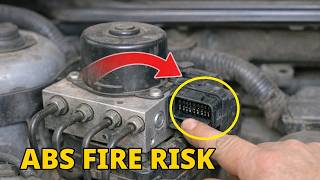
🎬 See this breakdown of the Genesis G70 ABS fire risk.Symptoms You May Notice
- Check Engine Light is on
- ABS and/or Traction Control warning lights are on
- Multiple unrelated warning lights illuminating at once, often described as a 'Christmas tree' dash
- Vehicle may enter 'limp mode' with reduced power or no throttle response
- Transmission may shift erratically or feel stuck in one gear
- Loss of features like cruise control, blind-spot monitoring, and lane assist
- In severe cases, a no-start or no-crank condition
- Burning or melting smell from the engine bay if caused by HECU short
- Replacing the ECU or another expensive module without first checking for the HECU recall, testing the battery, and inspecting all ground connections.
Most Likely Causes
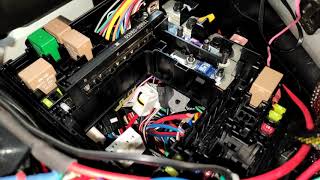
- HECU (ABS Module) Internal Short Circuit 🔴 High Probability A known issue addressed by Kia Safety Recall Campaign SC196/SC196A affects 2018-2021 Stingers. An electrical short inside the HECU can occur, disrupting network communication and posing a fire risk. The original scope (SC196) covered 2019 3.3L models, but was expanded (SC196A) to cover 2018-2021 models without Smart Cruise Control. 🎬 Watch: A quick overview of the Kia HECU recall details.
How to confirm: Check your vehicle's VIN against the Kia recall database on the NHTSA website or by contacting a Kia dealer. A dealer can also see if the recall has already been performed.
Typical fix: Kia dealers will install a new multi-fuse kit in the junction box to prevent excessive current from damaging the module. This fix prevents a fire but does not fix an already-failed HECU. If the module has already failed, it will require replacement.
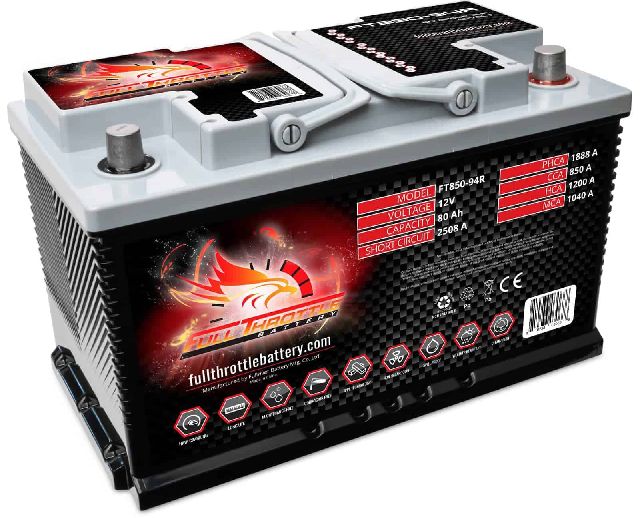
Est. part cost: $0 (if covered by recall) - Weak or Failing Battery 🟡 Medium Probability → Shop Vehicle Battery Modern cars like the Stinger are packed with electronics that are very sensitive to voltage. A weak battery can cause modules to fail to initialize correctly on startup, leading to communication errors. The battery is located in the trunk, but jump start posts are provided in the engine bay.
How to confirm: Test the battery voltage with a multimeter. It should be approximately 12.4-12.6V with the engine off and 13.7-14.7V with the engine running. A load test at an auto parts store is the most definitive way to confirm battery health. Some owners report that even a seemingly good battery can cause issues and replacement is the only fix.
Typical fix: Replace the vehicle's AGM battery. The correct size is H8.
Est. part cost: $180-$350 - Poor Ground Connection ⚪ Low Probability
How to confirm: Inspect the main battery ground strap (in the trunk), engine-to-chassis grounds, and smaller ground points for individual modules. Look for looseness, corrosion, or damage. A critical ground point to check is the dedicated negative jump-start post on the passenger side shock tower in the engine bay. Clean and tighten as necessary.
Typical fix: Clean the contact surfaces of the ground wire and chassis with a wire brush and re-secure the connection tightly.
Est. part cost: $0-$10 - Damaged CAN Bus Wiring or Connectors ⚪ Low Probability
How to confirm: This requires a visual inspection of wiring harnesses for chafing, rodent damage, or corrosion, particularly at connectors for the ECU, TCU, and ABS module. Advanced diagnostics involve using a multimeter to check for 60 ohms of resistance across the CAN High and CAN Low pins at the OBD-II port (with the battery disconnected).
Typical fix: Repair or replace the damaged section of the wiring harness. Clean or replace corroded connectors.
Est. part cost: $10-$500 depending on the extent of damage
Rare But Worth Checking
- Faulty Control Module (Other than HECU): While the HECU is a known issue, any module on the CAN bus (like the ECU, TCU, or a body control module) can fail and take down the network. The Instrument Cluster is a key suspect as it often acts as the gateway between different CAN networks (C-CAN, B-CAN, etc.). This is usually diagnosed by a process of elimination, unplugging one module at a time to see if communication is restored.
- Aftermarket Electronics Interference: A poorly installed remote starter, alarm system, dash cam, or even a cheap OBD-II dongle can broadcast noise onto the CAN bus, disrupting communication and triggering a U0073 code. Some of these devices may add an incorrect termination resistor, causing resistance readings to be off (e.g., 40-45 Ohms instead of 60).
- Water Intrusion: Water leaking into the cabin or engine bay can corrode connectors or short out control modules. Check for damp carpets or signs of water entry near the main fuse box (A-pillar area) or around control modules. The passenger footwell is a common area for wiring junctions.
Diagnosis Steps
- Check for Recalls: The first and most important step. Use your VIN to check for open recalls on the NHTSA website, specifically looking for SC196/SC196A. If the recall is open, schedule a service with a Kia dealer and park the vehicle outdoors away from structures until repaired.
- Scan for All Codes: Use a high-quality OBD-II scanner that can read codes from all modules (Engine, ABS, Body, etc.). Note all 'U' codes and which modules are reporting them. A flurry of 'U' codes points to a network-wide failure.
- Test Battery and Charging System: Ensure the battery has a full charge (at least 12.4V) and that the alternator is charging correctly (13.7-14.7V when running). Low voltage is a common cause of network errors.
- Inspect Grounds: Visually inspect and tighten the main battery ground cable (in the trunk) and any visible chassis or engine block ground straps. Pay close attention to the main ground points in the engine bay, especially the dedicated ground post on the passenger shock tower.
- Check Fuses: Inspect fuses related to the ECU, TCU, and ABS/ESC systems in the engine bay and interior fuse panels. The HECU recall itself involves modifying the fuse setup.
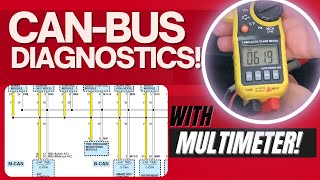
- CAN Bus Resistance Test (Advanced): With the battery disconnected, measure the resistance between Pin 6 (CAN High) and Pin 14 (CAN Low) on the OBD-II port. A healthy network should read approximately 60 Ohms. A reading of 120 Ohms suggests a break in the circuit or a single terminating resistor is offline. A reading near 0 Ohms indicates a short circuit between the two lines. 🎬 Watch: How to test CAN bus resistance with a multimeter. A reading of ~40 Ohms may indicate a third, improper terminating resistor has been added by an aftermarket device.
- Isolate Modules (Professional Level): If the bus is down, a technician will disconnect modules one by one to see if one is causing the fault and pulling the network down. This requires access to wiring diagrams and module locations.
Parts You'll Likely Need
- Multi-Fuse (for SC196/SC196A Recall)
(OEM #1898005510AS)— This is the specific part installed by Kia to remedy the HECU short circuit risk.
Trusted brands: Kia Genuine
OEM price range: $20-$40
Aftermarket price range: N/A - AGM Battery — A weak battery is a frequent cause of network communication codes on modern vehicles.
Trusted brands: Bosch, Interstate, DieHard
OEM price range: $300-$450
Aftermarket price range: $180-$350 - Hydraulic Electronic Control Unit (HECU) — If the module has failed due to the short circuit issue and the recall was not performed in time, the entire unit may need replacement. This is the worst-case scenario. Part numbers are highly specific to vehicle options (AWD/RWD, ACC, etc.).
Trusted brands: Kia Genuine
OEM price range: $1000-$1800
Aftermarket price range: N/A
Related Codes That Often Appear With This One
- U0121 — Lost Communication with Anti-Lock Brake System (ABS) Control Module. This code is highly likely to appear with U0073 if the HECU is the root cause.
- U0100 — Lost Communication With ECM/PCM 'A'. This indicates the main engine computer is offline, often a result of the network bus being down.
- U0101 — Lost Communication with TCM. This indicates the transmission control module is offline, which can cause shifting problems or limp mode.
Technical Service Bulletins (TSBs) & Recalls
- SC196/SC196A - NEW MULTI-FUSE AND JUNCTION BOX COVER INSTALLATION
Platform-Specific Known Issues
- Recall SC196/SC196A: Affects certain 2018-2021 Kia Stingers. A potential short circuit in the HECU (ABS module) can cause network communication failures and, in rare cases, an engine compartment fire. The fix is a new multi-fuse installed at a dealership.
Mechanic-Grade Diagnostic Values
- CAN Bus Resistance — expected: ~60 Ohms. Failure: A reading of ~120 Ohms indicates an open circuit or missing terminating resistor. A reading near 0 Ohms indicates a short. A reading of ~40 Ohms may indicate an improperly added third resistor.
- CAN-High Voltage (Key On, Engine Off) — expected: ~2.7V average, fluctuating between 2.5V and 3.5V. Failure: Voltage that is stuck high, stuck low, or does not mirror the CAN-Low signal indicates a fault.
- CAN-Low Voltage (Key On, Engine Off) — expected: ~2.2V average, fluctuating between 2.5V and 1.5V. Failure: Voltage that is stuck high, stuck low, or does not mirror the CAN-High signal indicates a fault.
Scan Tool Commands That Help
- Kia GDS (Global Diagnostic System): Network Communication Status — To get a live topology map of the CAN bus and see which specific modules are not responding or are reporting errors. This is the primary professional step to isolate the fault.
- Kia GDS (Global Diagnostic System): Erase Expected Network Config — This service function is required after replacing a major control module. If not performed, the gateway may continue to look for the old module, causing persistent 'No CAN Signal' DTCs even with a new, functioning part installed.
Wiring & Ground Locations
- CAN Gateway — Integrated into the ICU (Integrated Central Control Unit), which is part of the smart junction block/interior fuse panel assembly, typically behind the driver's side lower dash.. The gateway is the central hub for all network communication. A failure here can bring down the entire network. It connects the C-CAN, B-CAN, M-CAN, and diagnostic CAN networks.
- Engine Bay Ground Point — A dedicated ground stud on the passenger side shock tower, used as the negative connection point for jump-starting.. This is a primary chassis ground in the engine bay. Corrosion or looseness here can cause unstable voltage for multiple modules located in the engine compartment, including the ECU and HECU.
- Battery Ground — In the trunk, under the floor panel, connected to the negative terminal of the battery.. This is the main ground for the entire vehicle's electrical system. A fault here will cause widespread and severe electrical issues.
- Passenger Footwell — The area under the carpet and behind the kick panel on the passenger side.. This area is a common location for major wiring harness connectors and junctions. It is also a known tap-in point for aftermarket CAN devices, making it a prime location to inspect for wiring damage or faulty aftermarket installations.
OEM Part Supersession History
Multiple Variants→Multiple Variants— The HECU (ABS Module) has numerous part numbers depending on the vehicle's specific configuration.
Heads up: CRITICAL: Part numbers for the HECU must be matched exactly. Variants depend on AWD vs. RWD, presence of Adaptive Cruise Control (ACC), Electronic Parking Brake (EPB), and Electronic Controlled Suspension (ECS). A part from a car with different options will not work and may cause further network faults. Examples of different part numbers include 58920J5KE0, 58920J5LC0, and 58920J5170.
Model Year Variations Within This Range
- 2018-2021: These model years are the primary focus of the HECU fire risk recall (SC196/SC196A). While a U0073 code can occur on any year, this specific, high-probability cause is linked to the pre-facelift models.
- 2022-2023: These facelift models are not included in the HECU recall. While they can still suffer from network faults, the most well-known cause is not applicable. They also feature different HECU/ABS module part numbers than the earlier models.
Diagnostic Flowchart
Other Known Issues on This Vehicle
Issues unrelated to this code that are worth knowing about as an owner of this generation:
- Poor Paint Quality / Chipping 🟠 Medium — Widespread complaints across many model years, particularly early models. Owners report thin paint that chips easily. The 'Sunset Yellow' and 'Micro Blue' colors on 2018 models were particularly problematic, leading to some repaints/buybacks by Kia.
- Hatch/Trunk Rattle 🟡 Low — A very common complaint. The noise often comes from the hatch bump stops or latch mechanism needing adjustment or added washers/bushings. (Ref: Part number 81738-J5010qqk is an OEM washer pad kit to address the rattle.)
- High-Pressure Fuel Pump (HPFP) Failure 🔴 High — Affects 2018-2021 models with both 2.0T and 3.3T engines, leading to potential stalling and loss of power. (Ref: Recall SC281 (NHTSA 23V-634) for 2.0T engines and Recall SC198 for 2020-2021 models.)
- Interior Rattles (Door Panels, Dash) 🟡 Low — Commonly reported from door panels, dashboard, and center console areas due to plastic trim pieces and clips. (Ref: TSB SA483 addresses detached front door grip handles on some 2022 models.)
- Premature Brake Rotor Warping 🟠 Medium — Frequently reported by owners, leading to steering wheel vibration under braking. Often attributed to the OEM brake pads and rotors.
- Electronic Wastegate Actuator (EWGA) Rattle (3.3T) 🟠 Medium — A distinct squeak or rattle from the engine bay when the car is shut off is a common indicator of a failing wastegate actuator, which can lead to underboost code P0299.
Used vs. New Parts: Buying Guide for This Vehicle
When a used part is the smart pick: For a U0073 code, using used parts is highly discouraged for control modules. The only scenario where it might be viable is for replacing a damaged wiring harness connector or pigtail, provided it's an exact match.
Donor-vehicle mileage cap: roughly under 50000 miles for the part to have meaningful remaining life.
What to inspect on the donor part:
- For a wiring pigtail, ensure there is no corrosion on the pins.
- Check for at least 6-8 inches of wire past the connector for easier splicing.
- Verify the plastic is not brittle or cracked.
OEM-only on this vehicle (don't cheap out):
- Hydraulic Electronic Control Unit (HECU / ABS Module)
- Body Control Module (BCM)
- Integrated Central Control Unit (ICU / Gateway)
- Engine Control Module (ECU)
- Transmission Control Module (TCU)
Aftermarket brands forum-validated for this vehicle:
- For the battery, which is a common cause, reputable brands like Bosch, Interstate, or DieHard are suitable as long as the replacement is the correct Group Size (H8) and type (AGM).
Brands owners have reported issues with on this vehicle:
- Avoid any cheap, no-name OBD-II dongles or plug-in 'performance chips', as they are a known source of CAN bus interference that can trigger a U0073 code.
Real Owner Stories
Aggregated from forums and TSBs cited above. Mileages and costs reflect what owners reported in those sources.
2018-2021 Kia Stinger
Symptoms: Multiple unrelated warning lights illuminating at once, described as a 'Christmas tree' dash; vehicle entered 'limp mode' with reduced power and no throttle response; engine stalled but eventually cleared itself temporarily.
What fixed it: The issue is linked to the HECU (ABS Module) internal short circuit addressed by Recall SC196/SC196A.
Source hint: stingerforum.org - 'Christmas tree lit dash then nothing?'
Related OBD-II Codes
Frequently Asked Questions
My 2019 Stinger dash lit up like a 'Christmas tree' and lost power. Is there a recall for this?
What is the specific fix for the HECU recall (SC196A) on my 2018 Stinger?
Can a weak battery cause U0073 on a Kia Stinger even if the car still starts?
Where is the main ground point I should check in the engine bay for communication errors?
Does the Genesis G70 have the same U0073 communication issues as the Stinger?
I smell something burning in the engine bay along with the U0073 code; what should I do?
Helpful Videos
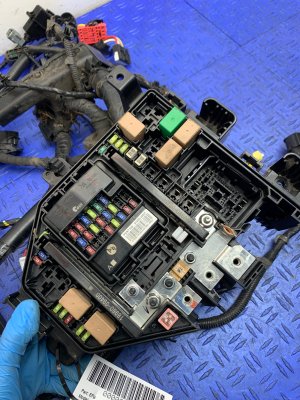
Used OEM Parts in Stock
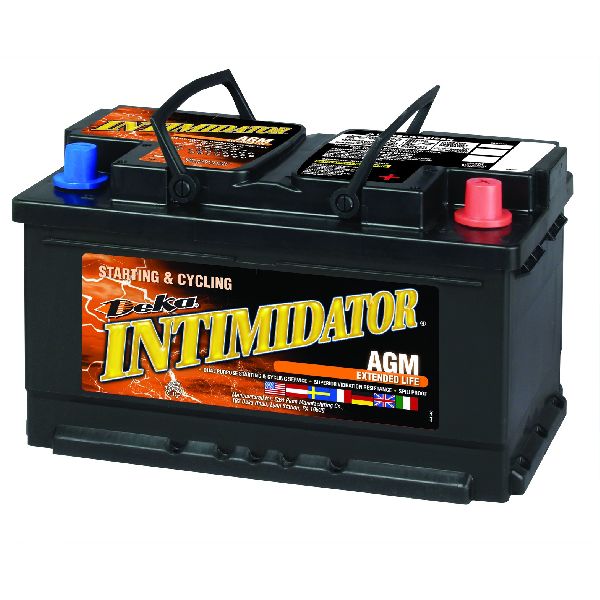
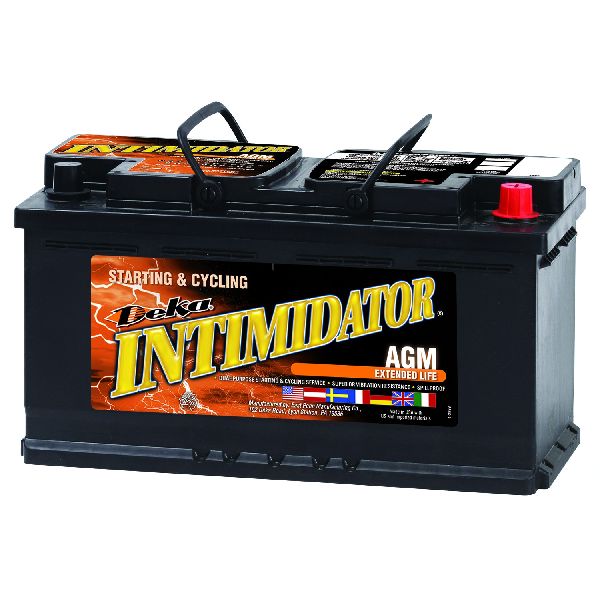
New Aftermarket Parts Available


The information in this article is provided for general reference and educational purposes only. Vehicle specifications, procedures, and part compatibility can vary by production date, trim level, and region. Always consult your vehicle's factory service manual and verify part numbers before purchasing or performing repairs. Safety-critical components such as airbags, seat belts, and braking systems should be installed by a qualified professional.
- Kia Stinger:
- 🧭 Diagnostic Flowchart
- 🎬 Helpful Videos
- 🛍️ Shop This Part
- What's Unique About the 2018-2023 Kia Stinger
- Symptoms You May Notice
- Most Likely Causes
- Rare But Worth Checking
- Diagnosis Steps
- Parts You'll Likely Need
- Related Codes That Often Appear With This One
- Technical Service Bulletins (TSBs) & Recalls
- Platform-Specific Known Issues
- Mechanic-Grade Diagnostic Values
- Scan Tool Commands That Help
- Wiring & Ground Locations
- OEM Part Supersession History
- Model Year Variations Within This Range
- Other Known Issues on This Vehicle
- Used vs. New Parts: Buying Guide for This Vehicle
- Real Owner Stories
- 2018-2021 Kia Stinger
- Related OBD-II Codes
- Frequently Asked Questions
- 🎟️ Get 5% Off