

U0073 on 2007-2009 Saturn Aura: Control Module Communication Failure Causes and Fixes
Code U0073 on a 2007-2009 Saturn Aura indicates a total network communication failure. The most common causes are corroded connectors at the Body Control Module (BCM) behind the passenger kick panel or a wiring issue related to the Transmission Control Module (TCM). This is a complex electrical fault that requires advanced diagnosis. Many owners have successfully fixed this by cleaning the BCM connectors with dielectric grease.
- U0073 is a critical failure of the main communication network; do not drive the vehicle.
- Before replacing any expensive modules, check the easiest things first: battery health and all related fuses.
- The most likely cause on a 2007-2009 Aura is a poor connection at the Body Control Module (BCM) behind the passenger kick panel. Cleaning the connectors often resolves the issue.
- The second most likely cause is a wiring problem (chafing, corrosion, bad ground) or a failed Transmission Control Module (TCM).
- This is not a beginner-friendly DIY repair. Professional diagnosis is strongly recommended to avoid costly misdiagnosis.
What's Unique About the 2007-2009 Saturn Aura
The Saturn Aura is built on the GM Epsilon platform, sharing its electrical architecture with the Chevrolet Malibu and Pontiac G6. For this platform, network failures like U0073 are frequently traced back to specific weak points. A notable issue is fretting corrosion at the Body Control Module (BCM) connectors, a problem owners have documented fixing themselves. Additionally, problems with the Transmission Control Module (TCM/TEHCM) or its wiring are a well-documented cause of communication codes that can bring down the entire network. A GM Technical Service Bulletin, PIT4730B, explicitly advises technicians to suspect intermittent wiring shorts before condemning the BCM itself, as the BCM can appear offline when the fault is active.
Symptoms You May Notice
- Multiple warning lights on the dashboard (Check Engine, ABS, Traction Control, Service ESC)
- Vehicle may not start or may stall while driving.
- Transmission may be stuck in one gear (limp mode) or shift erratically and harshly.
- Loss of power steering assist, with a warning message on the DIC.
- Instrument cluster gauges behaving erratically, dropping to zero, or flashing.
- Power windows, locks, or radio may not function.
- "Service Air Bag" or other warning messages appearing on the Driver Information Center (DIC).
- Replacing the Body Control Module (BCM) without first performing a thorough diagnosis of the wiring harness. TSB PIT4730B specifically warns against this, as an intermittent wiring short can mimic a failed BCM.
- Replacing the Engine Control Module (ECM). While the ECM is a terminating resistor on the network, it is less commonly the root cause of a total network failure on this platform compared to wiring, the BCM connectors, or the TCM.
Most Likely Causes
- Corroded or Loose Body Control Module (BCM) Connectors 🔴 High Probability → Shop Body Control Module The BCM is a central hub for the communication network. Its connectors can develop fretting corrosion (micro-scopic wear from vibration) or a poor connection over time, disrupting the entire CAN bus. This is a widely reported issue on forums for the Aura and its platform mates.
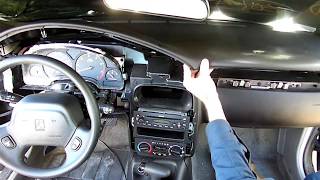
How to confirm: Visually inspect the connectors on the BCM, which is located behind the passenger side kick panel. 🎬 Watch: How to access and remove the BCM for cleaning. Look for any signs of green or white corrosion on the pins or looseness in the connector levers. A common DIY diagnostic is to wiggle the connectors with the vehicle acting up to see if it resolves the issue temporarily.
Typical fix: Disconnect the battery. Unplug the BCM connectors (often blue or gray). Clean the male and female pins carefully with a quality electrical contact cleaner. Apply a small amount of dielectric grease to the pins before reconnecting to prevent future corrosion and fretting. Reseat the connectors firmly until the levers lock. Multiple owners have confirmed this fix.
Est. part cost: $5-$20 - Wiring Harness Damage (Chafing, Corrosion, Bad Ground) 🟡 Medium Probability GM TSB PIT4730B specifically highlights that intermittent shorts in the GMLAN wiring are a common cause for U0073, often misdiagnosed as a bad BCM. Wires can chafe against chassis components, or water intrusion in the footwells (from clogged sunroof drains or bad windshield seals) can corrode splices, particularly under the driver's door sill plate. Another documented chafe point is the engine harness rubbing against the top front of the transmission case.
How to confirm: Perform a thorough visual inspection of the wiring harnesses, especially where they pass through the firewall, under the driver's door sill plate, and around the BCM and TCM. Check major ground points for tightness and corrosion. A multimeter check between pins 6 (CAN High) and 14 (CAN Low) of the OBD-II port (battery disconnected) should show ~60 ohms. A reading of 120 ohms points to a break in the wiring or a faulty terminating resistor. A reading near 0 ohms indicates a short between the two wires.
Typical fix: Repair the damaged section of wire. If a splice is corroded, it must be cut out and replaced with a new, properly sealed (e.g., solder and heat-shrink) splice. Clean and secure any loose or corroded ground connections.
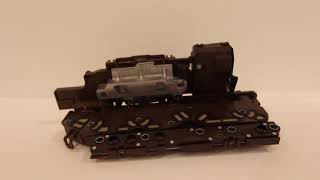
Est. part cost: $10-$50 - Failed Transmission Control Module (TCM/TEHCM) 🟡 Medium Probability → Shop Transmission Assembly On Auras with the 6-speed 6T70/6T75 automatic transmission, the TCM is integrated into the valve body as a TEHCM (Transmission Electro-Hydraulic Control Module). This module is a known high-failure item due to its location inside the hot transmission, leading to internal electronic failures that can disrupt the CAN bus and bring down the entire network.
How to confirm: This requires professional diagnosis. A technician will use a scan tool to confirm the TCM is not communicating. They will then verify the TCM has proper power and ground at the transmission's main connector. If power, ground, and the communication wires to the module are good, the TEHCM itself is condemned.
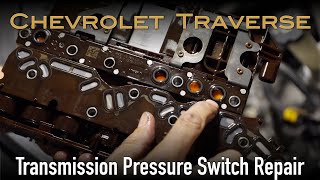
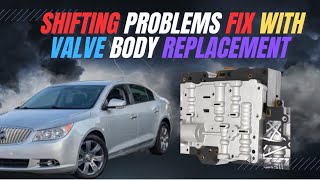
Typical fix: Replace the Transmission Electro-Hydraulic Control Module (TEHCM). This part is located inside the transmission side cover and requires draining the fluid and removing the valve body to access. 🎬 See this walkthrough for replacing the TEHCM and valve body. The new module must be programmed to the vehicle's VIN.
Est. part cost: $250-$600 - Weak Battery or Poor Battery Connections ⚪ Low Probability → Shop Vehicle Battery Low system voltage during startup can prevent control modules from initializing correctly, leading to a cascade of communication faults. While not specific to the Aura, it's a common cause for network codes on all modern vehicles.
How to confirm: Test the battery with a digital battery tester. Ensure it has at least 12.4 volts with the engine off and that the charging system is producing over 13.5 volts when running. Check that battery terminals and main ground straps are clean and tight.
Typical fix: Charge or replace the battery. Clean the battery terminals and cable ends with a wire brush.
Est. part cost: $0-$250
Rare But Worth Checking
- Failed ABS/EBCM Module:
- Aftermarket Accessories:
Diagnosis Steps
- Check battery voltage and clean/tighten battery terminals. Ensure the battery is healthy (above 12.4V) and the charging system is working (13.7-14.7V).
- With the battery disconnected, use a multimeter to measure the resistance between Pin 6 (CAN High) and Pin 14 (CAN Low) of the OBD-II diagnostic port. A healthy reading is approximately 60 ohms.
- If resistance is 120 ohms, it indicates a break in the circuit or a problem with one of the two terminating resistors (located in the ECM and TCM/TEHCM).
- If resistance is near zero, there is a short between the CAN High and Low wires.
- Visually inspect and clean the connectors at the Body Control Module (BCM), located behind the passenger side kick panel. Apply dielectric grease before reconnecting. This is a very common fix.
- Peel back the carpet and remove the driver's door sill plate. Inspect the wiring harness in the channel for signs of water intrusion, corrosion, or chafing wires.
- If the fault is intermittent, try wiggling sections of the wiring harness (especially at the BCM, TCM connector, and under the driver's sill) with the key on to see if symptoms appear, which can help pinpoint a wiring break.
Parts You'll Likely Need
- Dielectric Grease / Electrical Contact Cleaner — Required for the most common fix: cleaning the corroded BCM connectors.
Trusted brands: Permatex, CRC
OEM price range: $10-$20
Aftermarket price range: $5-$15 - Transmission Electro-Hydraulic Control Module (TEHCM)
(OEM #24256861 (Verify by VIN))— A common point of internal failure on models with the 6T70/6T75 transmission that can bring down the entire network.
Trusted brands: ACDelco (OEM), Dorman
OEM price range: $400-$600
Aftermarket price range: $250-$450 - Body Control Module (BCM) — Rarely the actual cause, but replaced when misdiagnosed. Should only be replaced after all wiring and connector issues have been ruled out per TSB PIT4730B.
Trusted brands: ACDelco (OEM)
OEM price range: $300-$500
Aftermarket price range: $200-$350
Related Codes That Often Appear With This One
- U0100 — Lost Communication with ECM. This is a symptom of the U0073 network failure.
- U0101 — Lost Communication with TCM. This can be a primary cause of the U0073 (if the TCM fails internally) or a symptom of it. It often points the diagnosis toward the TCM or its wiring.
- U0121 — Lost Communication with ABS Control Module. This is another symptom of the main communication bus being down.
- U0140 — Lost Communication with Body Control Module. This code is often set alongside U0073 and can be caused by the same wiring faults or BCM connector issues. TSB PIT4730B directly addresses this code in conjunction with U0073.
Technical Service Bulletins (TSBs) & Recalls
- TSB PIT4730B: Warns technicians against prematurely replacing the BCM for U0073 or U0140. It explains that intermittent shorts in the GMLAN wiring can make the BCM appear offline during a single ignition cycle, but the root cause is the wiring itself.
- TSB 14404B: Special coverage for fractured 3-5-R wave plates in 6T70/6T75 transmissions, a common failure in Auras that can cause transmission issues and related communication codes.
- TSB 12-06-01-009F: Pertains to stretched timing chains on the 3.6L LY7 V6 engine, a major known issue for this platform.
Mechanic-Grade Diagnostic Values
- High-Speed GMLAN Bus Voltage (Key On, Engine Off) — expected: The bus is biased to 2.5V. CAN High (Pin 6) should toggle to ~3.5V and CAN Low (Pin 14) should toggle to ~1.5V during communication.. Failure: Voltages stuck high or low, or shorted to each other or ground/power, indicate a wiring fault or failed module.
- Low-Speed GMLAN Bus Voltage (Key On, Engine Off) — expected: Rests at ~0.2V (recessive, logic '1') and is driven to ~4.0V or higher (dominant, logic '0') during communication.. Failure: Bus stuck at 0V or a constant high voltage indicates a short or open in the low-speed network wiring or a fault in a connected module.
Scan Tool Commands That Help
- GM Tech 2 / GDS2: Module Status / Communication Status — Use this function to see a list of all expected control modules on the network and which ones are actively communicating. This is the first step in identifying which module(s) are offline, which helps narrow down the location of the fault.
- GM Tech 2 with CANdi Module: CANdi Diagnostics — The CANdi (Controller Area Network diagnostic interface) module is required for the Tech 2 to communicate with the CAN bus on 2007+ GM vehicles. The tool has self-tests and status LEDs for the CANdi module itself to ensure the diagnostic tool is not the source of the communication problem.
Wiring & Ground Locations
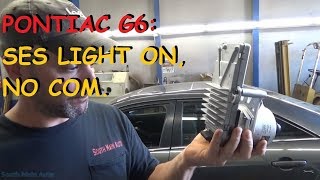
- BCM (Body Control Module) — Located behind the passenger side kick panel, integrated with the interior fuse box.. The BCM is a central gateway module connecting the high-speed and low-speed GMLAN networks. Its connectors are a primary failure point for U0073 due to fretting corrosion.
- G201 / G203 — Both are located under the dash, on the right side of the center console, near the floor.. These are major interior ground points for several modules, including the BCM. A loose or corroded ground here can cause intermittent communication issues across the network.
- G105 / G106 — G105 is on the rear of the cylinder head. G106 is on the rear of the engine near the PNP switch (2.4L) or above the oil filter (3.5L).. These are primary engine block grounds for the ECM and TCM. A poor connection can cause either module to drop off the network.
- Engine Harness Chafe Point — The engine harness may rub against the top front of the transmission case, just below the EBCM.. A GM service bulletin identifies this as a potential chafe point that can damage GMLAN wires, causing intermittent U0073 and other communication codes.
Real Owner Repair Stories
- Mainely Subarus forum user (2008 Saturn Aura XR) — Vehicle setting code U0073 with various associated electrical problems.
❌ Tried (didn't work) Not specified, user was seeking a solution.
✅ What actually fixed it The user located the Body Control Module (BCM) behind the passenger kick panel, unplugged the two main connectors (described as having blue plastic), applied dielectric grease to all the male pins on the module, and re-seated the connectors several times. This permanently resolved the U0073 code and associated symptoms.
OEM Part Supersession History
Multiple (Gen 1 TEHCM)→Multiple (Gen 2 TEHCM, e.g., 24257300, 24264346, 24267570)— Internal component and reliability updates for the Transmission Electro-Hydraulic Control Module (TEHCM) for the 6T70/6T75 transmission.
Heads up: The TEHCM generation must match the vehicle's original specification and software. All replacement TEHCMs, new or remanufactured, require programming to the vehicle's VIN using a tool like a GM Tech 2 or a J2534 pass-thru device.
Diagnostic Flowchart
Other Known Issues on This Vehicle
Issues unrelated to this code that are worth knowing about as an owner of this generation:
- 3-5-R Transmission Wave Plate Failure (6T70/6T75) 🔴 High → Shop Transmission Assembly — Very common, typically occurs between 60,000 and 120,000 miles. Leads to loss of 3rd, 5th, and Reverse gears. (Ref: TSB 14404B (Special Coverage Adjustment, now expired by date))
- Stretched Timing Chains (3.6L LY7 V6) 🔴 High — Common failure, often presenting after 80,000 miles. Causes check engine lights (P0008, P0009, P0017, etc.) and can lead to catastrophic engine damage if ignored. (Ref: TSB 12-06-01-009F)
- Loss of Electric Power Steering (EPS) Assist 🔴 High — Widespread issue leading to a sudden increase in steering effort, particularly at low speeds. (Ref: NHTSA Recall #14V153000)
- Fractured Transmission Shift Cable 🟠 Medium → Shop Transmission Assembly — Affects vehicles with the 4-speed automatic transmission. The cable end can break, causing a mismatch between the shifter position and the actual gear. (Ref: NHTSA Recall #14V224000, #12V483000)
- Brake Lights Inoperative or Stuck On 🟠 Medium — Caused by increased resistance in the Body Control Module (BCM) connection affecting the Brake Apply Sensor (BAS) circuit. (Ref: NHTSA Recall #14V252000)
Used vs. New Parts: Buying Guide for This Vehicle
When a used part is the smart pick: For the Body Control Module (BCM), a used part from a junkyard can be a cost-effective option, as the primary failure mode is often external connector corrosion, not internal failure. A used BCM from a vehicle with no signs of water leaks is a viable choice. Wiring harnesses and connectors are also excellent candidates for used parts.
Donor-vehicle mileage cap: roughly under 80000 miles for the part to have meaningful remaining life.
What to inspect on the donor part:
- For a BCM: Inspect the donor vehicle for any signs of water intrusion in the passenger footwell. Check the pins on the used BCM for any existing corrosion or damage.
- For a TEHCM: This is risky. Ask for any available history on the donor vehicle's transmission. Avoid parts from vehicles with known transmission problems or high mileage.
- For wiring: Ensure the insulation is not brittle, cracked, or previously repaired. Check connectors for corrosion-free pins and intact locking tabs.
OEM-only on this vehicle (don't cheap out):
- Transmission Electro-Hydraulic Control Module (TEHCM): While remanufactured units from reputable sources are available, cheap, unverified aftermarket TEHCMs are a significant risk. Given the labor to replace it and the need for programming, using a new GM part or a high-quality remanufactured unit is strongly recommended.
Aftermarket brands forum-validated for this vehicle:
- TransGo (for TEHCM pressure switch repair kits, if repairing instead of replacing)
Brands owners have reported issues with on this vehicle:
- Unbranded, no-name electronic modules (BCM, TEHCM) from online marketplaces without a warranty or clear return policy.
Real Owner Stories
Aggregated from forums and TSBs cited above. Mileages and costs reflect what owners reported in those sources.
2008 Saturn Aura XR
Symptoms: The owner experienced the U0073 code and used a step-by-step approach to troubleshoot the communication loss.
What fixed it: Cleaning the BCM connectors and applying dielectric grease to the pins.
Source hint: Mainely Subarus - 'Anyone know about this code? U0073' (Page 2)
2009 Saturn Aura XR
Symptoms: Electrical and computer problems consistent with U0073 symptoms.
What fixed it: Unplugging and replugging the BCM connectors to resolve fretting corrosion.
Source hint: Edmunds Car Forums - 'Saturn Aura Electrical / Computer Problems?'
2007-2009 Saturn Aura
Symptoms: Erratic gauges, hard shifting, and multiple communication codes appearing simultaneously.
What fixed it: Diagnosis of the GMLAN network to identify communication disruptions.
Source hint: Saturn Forum - 'aura electrical issues'
Related OBD-II Codes
Frequently Asked Questions
I'm seeing U0073 on my 2008 Saturn Aura XR; could this be a Body Control Module (BCM) failure as some shops suggest?
Where is the BCM located on the 2007-2009 Saturn Aura to check for corrosion?
My Aura has the 6-speed 6T70 transmission and is stuck in limp mode with U0073. What is a likely cause?
Can water leaks in my Saturn Aura cause the U0073 communication code?
Is there a specific TSB for the transmission issues I'm having alongside these codes?
What should the resistance be at the OBD-II port if the CAN bus is healthy on my Aura?
Helpful Videos
Used OEM Parts in Stock
New Aftermarket Parts Available

The information in this article is provided for general reference and educational purposes only. Vehicle specifications, procedures, and part compatibility can vary by production date, trim level, and region. Always consult your vehicle's factory service manual and verify part numbers before purchasing or performing repairs. Safety-critical components such as airbags, seat belts, and braking systems should be installed by a qualified professional.
- Saturn Aura:
- 🧭 Diagnostic Flowchart
- 🎬 Helpful Videos
- 🛍️ Shop This Part
- What's Unique About the 2007-2009 Saturn Aura
- Symptoms You May Notice
- Most Likely Causes
- Rare But Worth Checking
- Diagnosis Steps
- Parts You'll Likely Need
- Related Codes That Often Appear With This One
- Technical Service Bulletins (TSBs) & Recalls
- Mechanic-Grade Diagnostic Values
- Scan Tool Commands That Help
- Wiring & Ground Locations
- Real Owner Repair Stories
- OEM Part Supersession History
- Other Known Issues on This Vehicle
- Used vs. New Parts: Buying Guide for This Vehicle
- Real Owner Stories
- 2008 Saturn Aura XR
- 2009 Saturn Aura XR
- 2007-2009 Saturn Aura
- Related OBD-II Codes
- Frequently Asked Questions
- 🎟️ Get 5% Off