

U0100 on 2011-2018 Audi A6: Causes and Fixes for Lost ECM Communication
On a 2011-2018 Audi A6 (C7), code U0100 is most often caused by water damage to the Engine Control Module (ECM) due to clogged plenum drains, or a failed ECM main relay. Expect to first check the relay (a ~$30 part, #645) before investigating the more costly ECM. Water ingress is a known design vulnerability on this platform.
- Code U0100 on a 2011-2018 Audi A6 is a critical fault, often causing a no-start condition, and should be addressed immediately.
- The most likely cause is specific to this car: water damage to the ECM due to clogged plenum drains. Regularly cleaning the drains under the windshield cowl is crucial preventative maintenance.
- Before suspecting an expensive ECM failure, always check for low battery voltage and consider replacing the inexpensive ECM main power relay (P/N 4H0951253A).
- Replacing the ECM is not a DIY job for most, as it requires professional-level programming to sync with the vehicle's immobilizer system.
What's Unique About the 2011-2018 Audi A6
The Audi A6 C7 platform (2011-2018) is particularly susceptible to this code due to a specific design vulnerability. The ECM is located in the engine bay's plenum chamber, directly underneath a drain hole for the windscreen cowl. When the plenum drains become clogged with leaves and debris, rainwater can overflow and pour directly onto the ECM's wiring harness, causing corrosion and communication failure. This water ingress issue is a well-documented problem among owners, with some forum members questioning the design itself and reporting dealers offering partial goodwill repairs due to the known issue.
Symptoms You May Notice
- Engine cranks but will not start
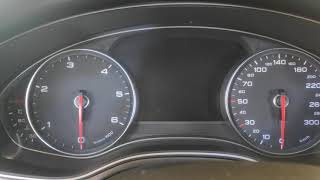
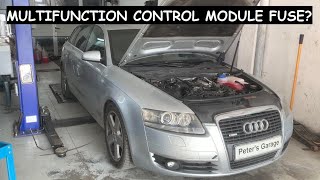
- Complete no-start, no-crank condition 🎬 Watch this video to troubleshoot a dead dashboard and no-start condition.
- Check Engine Light is on
- EPC (Electronic Power Control) light is on
- Multiple warning lights on the dashboard 🎬 Watch: How to fix an Audi A6 with no dashboard lights. (e.g., 'Gearbox Malfunction', 'Parking Brake Fault', 'Stability control failure').
- Engine may stall intermittently
- Starter may not engage at all.
- Vehicle enters 'limp mode' with drastically reduced power.
- Replacing the ECM without first checking for water damage or testing the main power relay. The relay is a cheap part that can produce identical symptoms to a much more expensive failed ECM.
- Condemning the ECM before verifying its power and ground connections are clean, tight, and receiving proper voltage.
Most Likely Causes
- Water Intrusion at ECM/Connectors 🔴 High Probability The ECM is located in the plenum area under the windshield cowl. Clogged drains cause rainwater to overflow from a drain hole located directly above the ECM wiring loom, wicking water into the connectors and module.
How to confirm: Remove the plastic cowl cover at the base of the windshield. Visually inspect the ECM, its connectors (especially the main harness), and the surrounding area for signs of moisture, water lines, or blue/green corrosion on the connector pins. An AudiWorld forum member documented this exact failure, sharing photos of the corroded pins provided by their dealer.
Typical fix: If corrosion is minor, cleaning the connector pins with a specialized contact cleaner and applying dielectric grease may work. If the damage is severe, the wiring harness connector may need to be repinned or replaced, and the ECM itself may be damaged beyond repair, requiring a costly replacement.
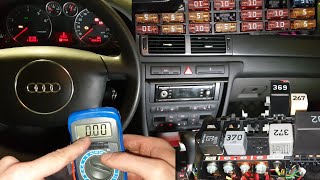
Est. part cost: $10-$50 for cleaning supplies, $1000-$2800 for a new or remanufactured ECM. - Faulty ECM Main Power Relay 🟡 Medium Probability This relay (labeled #645, part number 4H0951253A 🎬 See this guide for locating and replacing the main control relays.) is a common failure point that can mimic a dead ECM by cutting its power supply, causing a U0100 code. The internal contacts can burn out over time.
How to confirm: The relay is located in a box directly underneath the ECM. A technician can test the relay's function, but given its low cost, replacement is a common and effective diagnostic step. In one documented case, a visual inspection of the opened relay showed completely burned internal contacts. Tapping the relay box may temporarily restore function.
Typical fix: Replace the ECM main power relay. This is a simple plug-and-play part.
Est. part cost: $20-$50 - Weak or Failing Battery ⚪ Low Probability → Shop Vehicle Battery Modern Audis are extremely sensitive to battery voltage. A weak battery can cause unpredictable communication errors across various modules before it fails to crank the engine. Low voltage is one of the most common causes of generic U-codes.
How to confirm: Test the battery voltage with a multimeter (should be ~12.6V with engine off). A proper load test at an auto parts store is required to confirm the battery's health under load. Voltage below 12V is a red flag.
Typical fix: Recharge or replace the vehicle's battery. The new battery must be 'coded' to the vehicle using a diagnostic tool to ensure the Battery Management System (BMS) and charging system work correctly.
Est. part cost: $200-$400
Rare But Worth Checking
- Faulty CAN Gateway Module (J533): The CAN Gateway acts as the central router for all module communications. While not as common as ECM-related issues, a failure here can cut off the ECM from the rest of the network. It is located behind the glovebox. A related TSB for newer Audis points to software issues in this module causing communication DTCs.
- Damaged CAN Bus Wiring: A short or open circuit in the CAN bus wiring harness (the twisted pair of orange/brown and orange/black wires) somewhere in the vehicle can also cause this code. This is difficult to trace and usually requires professional diagnosis with an oscilloscope.
Diagnosis Steps
- Check and charge the battery. Perform a load test to ensure it's healthy. A weak battery is a simple fix that can cause complex communication codes.
- Scan all vehicle modules with an Audi-specific scan tool (like VCDS/ODIS). Note all modules that are reporting 'cannot be reached'. If only the ECM is offline, focus there. If multiple modules are offline, suspect a wider network problem.
- Remove the plenum cowl cover in the engine bay and visually inspect the ECM and its connectors for any signs of water damage, moisture, or corrosion. Check if the plenum drains are clogged with debris.
- If no water damage is found, locate and replace the ECM Main Power Relay (#645, P/N 4H0951253A), which is located in a relay box under the ECM module. This is a low-cost, high-probability fix.
- If the issue persists, verify power and ground at the ECM connector. With the key on, you should have a stable 12V power supply and a ground resistance of less than 0.2 Ohms.
- If power and ground are good, perform advanced CAN bus diagnostics. With the battery disconnected, check for ~60 Ohms of resistance across the CAN High and CAN Low pins at the OBD-II port. With the ignition on, CAN High should be ~2.5-3.0V and CAN Low should be ~2.0-2.5V.
- As a final step, if all wiring, power, grounds, and relays are confirmed to be good, the ECM itself is likely faulty and requires replacement and programming by a specialist.
Parts You'll Likely Need
- ECM Main Power Relay
(OEM #4H0951253A)— This is a frequent failure point that cuts power to the ECM, causing a communication loss. It's an inexpensive and logical first part to replace. It is often labeled with the number 645.
Trusted brands: Genuine Audi/VW, Bosch
OEM price range: $25-$50
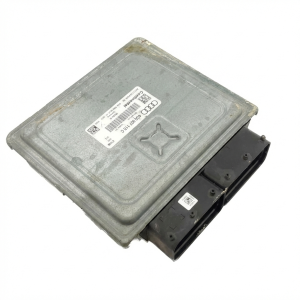
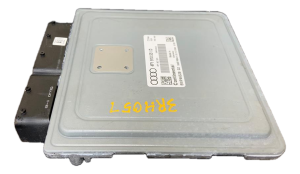
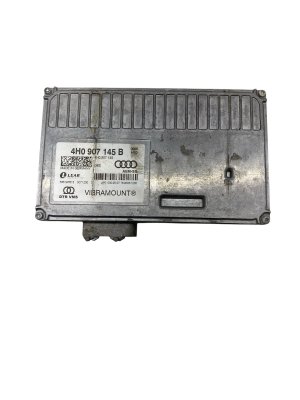
Aftermarket price range: $15-$30 - Engine Control Module (ECM) — The ECM is often the victim of water damage on this platform. If cleaning the connectors doesn't work, or if the unit is internally shorted, it must be replaced. This part is VIN-specific and requires programming and component protection removal.
Trusted brands: Bosch (OEM supplier), Genuine Audi
OEM price range: $1500-$2500
Aftermarket price range: $800-$1200 (remanufactured)
Related Codes That Often Appear With This One
- P0687 — This code means 'ECM/PCM Power Relay Control Circuit / Open'. It often appears with U0100 and strongly points to a problem with the ECM's main relay (#645) or its circuit.
- U0101 — 'Lost Communication with TCM'. Since the Transmission Control Module (TCM) relies on data from the ECM, if the ECM goes offline, the TCM will often log a communication fault code as well.
- Multiple U-codes — If many other modules (ABS, Airbag, Instrument Cluster) also log communication codes, it may point towards a central issue like the CAN Gateway (J533) or a main bus wiring fault, rather than just the ECM itself.
Technical Service Bulletins (TSBs) & Recalls
- TSB 2039995/2: Addresses rattling noises from the upper timing chain tensioners on the 3.0T engine by providing updated parts.
- TSB 91 23 70 (2062973/4): While for slightly newer models (2019+), it addresses communication DTCs and involves checking/replacing the gateway module (J949), which is relevant to network troubleshooting.
Platform-Specific Known Issues
- The design of the plenum chamber and windscreen drains makes the ECM highly vulnerable to water damage if the drains are not kept clear of leaves and debris. A forum member documented how rainwater from a drain hole pours directly onto the main ECU wiring harness, leading to corrosion.
Mechanic-Grade Diagnostic Values
- CAN Bus Network Resistance — expected: ~60 Ω (Ohms) across CAN High and CAN Low pins with battery disconnected.. Failure: A reading of ~120 Ω indicates an open circuit in the harness or a faulty terminating module. A reading near 0 Ω indicates a short between the CAN lines.
- CAN Bus Voltage (Key On, Engine Off) — expected: CAN High: ~2.5V to 3.5V. CAN Low: ~2.5V to 1.5V. Both lines should idle near 2.5V (recessive state).. Failure: Voltages stuck high or low, or no voltage, indicate a short to power/ground or an open circuit.
- ECM Ground Connection Resistance — expected: < 0.2 Ω between the ECM ground pin(s) at the connector and a clean chassis ground point.. Failure: Higher resistance indicates a poor ground connection, which can cause module communication errors.
- Battery Voltage During Cranking — expected: Should remain above 10.0V.. Failure: Voltage dropping below 10.0V during a crank attempt can cause various control modules to shut down and log communication faults.
Scan Tool Commands That Help
- VCDS or ODIS: CAN Gateway (Address 19) > Installation List — This is the first step to see which modules are and are not communicating with the gateway. If the Engine Electronics (Address 01) is missing from the list, it confirms the U0100 fault is active.
- ODIS (Dealer Tool): Component Protection Removal — This is mandatory after installing a new or used ECM. It requires an online connection to Audi's servers (GeKo) to authorize the module for this specific vehicle's VIN. Without this, the ECM will not function correctly.
- VCDS or ODIS: CAN Gateway (Address 19) > Adaptation > Battery Coding — Required after replacing the vehicle battery to inform the Battery Management System (integrated into the CAN Gateway on this platform) of the new battery's specifications, ensuring proper charging and longevity.
Wiring & Ground Locations
- J533 (CAN Gateway) — Behind the glove box, mounted to the right side of the passenger footwell area.. As the central hub for network traffic, a fault at the gateway or its connections can isolate the ECM. If multiple 'U' codes are present, this location is a primary suspect.
- Ground Point 12 — In the left side of the engine compartment.. This is a primary chassis ground point for components in the engine bay. A corroded or loose connection here can affect the ECM's ground reference.
- Ground Point 13 — In the right side of the engine compartment, sometimes noted as being near the alternator.. Another key engine bay ground point. The ECM and its power relay rely on clean, tight grounds to function. This is a critical point to check for corrosion or looseness.
- Ground Strap 3 — Main earth strap between the engine block and the vehicle body.. A faulty main ground strap can cause a floating ground and create voltage potential differences between modules, leading to communication errors.
Real Owner Repair Stories
- AudiWorld Forums user (2013 Audi A6 Avant 2.0 TDI (Manual)) — Intermittent no-start with a cascade of dashboard errors: 'electronic brake', 'put into Park' (on a manual car), 'Stability control failure', 'Headlamp focus failure'.
❌ Tried (didn't work) Letting the car sit for 6 hours temporarily resolved the issue, but it returned.
✅ What actually fixed it The dealer found corrosion on three pins of the main ECM harness connector due to water ingress. The user identified that a plenum drain hole was located directly above the ECM wiring loom, causing water to run down into the connector. The final fix was a dealer replacement of the ECM and harness connector, with Audi covering 70% of the cost under goodwill due to the known design issue. - Ross-Tech Forums user (2012 Audi A6 3.0TDI (C7), 128,673 km) — U0100 (Lost comms with ECM) and U0101 (Lost comms with TCM) stored as intermittent faults. 'Gearbox Malfunction' warning on dash.
❌ Tried (didn't work) Initial diagnosis was unclear; no visible water damage near ECM was noted.
✅ What actually fixed it An auto electrician discovered and repaired damage to four wires at the gearbox connector. The wiring loom and coolant valve were inspected and found to be okay. The repair cost approximately £100 and resolved all communication faults and symptoms. - NHTSA ODI #11218134 — An owner of a related Audi model reported a safety concern where the vehicle would sometimes require multiple cranks to start, regardless of whether the engine was warm or cold. A scan revealed code U0100, indicating a loss of communication to the ECM.
OEM Part Supersession History
4H0951253A→4H0951253C— Standard component revision, likely for improved internal contacts or manufacturing process.
Heads up: Part 4H0951253C is listed by retailers as a replacement for 4H0951253A. They are generally considered interchangeable, but it is always best practice to verify the specific relay number printed on the old part before ordering a replacement.
Model Year Variations Within This Range
- 2011-2018: The C7 platform received a facelift for the 2015/2016 model year (becoming the C7.5). Changes were primarily cosmetic and included an upgraded MMI infotainment system. However, the fundamental electronic architecture, including the location of the ECM in the vulnerable plenum chamber and the use of the #645 power relay, remained consistent. The U0100 fault and its primary causes apply to both pre-facelift and post-facelift models within this generation.
Diagnostic Flowchart
Other Known Issues on This Vehicle
Issues unrelated to this code that are worth knowing about as an owner of this generation:
- 3.0T Upper Timing Chain Tensioner Failure 🔴 High — Commonly presents as a 1-2 second startup rattle, especially on cold starts. Can occur from 40,000 miles, but more common around 80k-150k miles. Failure can cause jumped timing and catastrophic engine damage. (Ref: Audi TSB 2039995/2 was released for this issue, providing updated tensioner parts.)
- PCV Valve Failure (3.0T and 2.0T) 🟠 Medium — Leads to excessive oil consumption (e.g., 1 quart every 500-1000 miles), rough idle, and a whistling noise. Diagnosed by strong suction when trying to remove the oil cap while the engine is running. Can occur at various mileages, often after 60k miles. (Ref: A TSB exists to install a revised PCV and update software to lower crankcase pressure.)
- Failed/Leaking Engine Mounts 🟠 Medium — A very common issue on the C7 platform, even at lower mileages like 50,000 miles. Causes noticeable vibration at idle in Drive. The fluid-filled OEM mounts leak, and replacement is a common repair.
- 2.0T Carbon Buildup on Intake Valves 🟠 Medium — A known issue for all direct-injection (TFSI) engines. Causes misfires, hesitation, and reduced performance, typically becoming noticeable after 40,000-60,000 miles. Requires manual cleaning (walnut blasting).
- Excessive Oil Consumption (2.0T) 🟠 Medium — Particularly in earlier models, the 2.0T engine can consume significant amounts of oil, related to both PCV issues and piston ring design.
Used vs. New Parts: Buying Guide for This Vehicle
When a used part is the smart pick: A used ECM Main Power Relay (#645) is a smart, cost-effective choice. It is a simple component, and a used OEM part from a low-mileage vehicle is often more reliable than a cheap aftermarket alternative.
Donor-vehicle mileage cap: roughly under 80000 miles for the part to have meaningful remaining life.
What to inspect on the donor part:
- For relays, ensure the plastic housing is not cracked and the pins are straight and free of corrosion.
- For a used ECM, visually inspect the connectors for any bent or corroded pins and check the case for signs of being opened or water damage. Ask the seller if the part is guaranteed to be from a vehicle that was not flood-damaged.
OEM-only on this vehicle (don't cheap out):
- Engine Control Module (ECM). Due to Audi's 'Component Protection' system, a used ECM from another vehicle will not work without being reprogrammed by a specialist with dealer-level tools (ODIS with online GeKo access). This process can be costly and complex, making a new or professionally remanufactured/cloned ECM a safer, albeit more expensive, choice.
Aftermarket brands forum-validated for this vehicle:
- Bosch (often the OEM supplier for relays and the ECM)
- Genuine Audi/VW (for guaranteed compatibility)
Brands owners have reported issues with on this vehicle:
- Unbranded, no-name electronic modules from online marketplaces should be avoided for critical components like the ECM, as they often have high failure rates and can cause further diagnostic confusion.
Real Owner Stories
Aggregated from forums and TSBs cited above. Mileages and costs reflect what owners reported in those sources.
2013 Audi A6 C7
Symptoms: The vehicle experienced a no-start condition accompanied by multiple dashboard warning lights. Upon inspection, three pins on the ECM were found to be corroded.
What fixed it: The dealer identified water ingress from a drain hole in the windscreen cowl positioned directly above the ECM loom. The repair involved addressing the corrosion and potentially replacing the ECM.
Cost: $3,000-$3,200
Source hint: AudiWorld Forums: '2013 C7 - ECU corroded by water according to Garage - advice pls'
Related OBD-II Codes
Frequently Asked Questions
My 2013 Audi A6 has a 'Gearbox Malfunction' and won't start. Could this be the ECM?
Is there a specific relay I should check for a U0100 code on my Audi A6?
Where exactly is the ECM located on the 2011-2018 A6, and why does it fail?
Does Audi offer any 'goodwill' assistance for water-damaged ECMs on this model?
My A6 has a U0100 code and a startup rattle. Are these related?
Do I need to do anything special after replacing the battery to fix communication codes?
Helpful Videos

We Have This Part in Stock

The information in this article is provided for general reference and educational purposes only. Vehicle specifications, procedures, and part compatibility can vary by production date, trim level, and region. Always consult your vehicle's factory service manual and verify part numbers before purchasing or performing repairs. Safety-critical components such as airbags, seat belts, and braking systems should be installed by a qualified professional.
- Audi A6:
- 🧭 Diagnostic Flowchart
- 🎬 Helpful Videos
- 🛍️ Shop This Part
- What's Unique About the 2011-2018 Audi A6
- Symptoms You May Notice
- Most Likely Causes
- Rare But Worth Checking
- Diagnosis Steps
- Parts You'll Likely Need
- Related Codes That Often Appear With This One
- Technical Service Bulletins (TSBs) & Recalls
- Platform-Specific Known Issues
- Mechanic-Grade Diagnostic Values
- Scan Tool Commands That Help
- Wiring & Ground Locations
- Real Owner Repair Stories
- OEM Part Supersession History
- Model Year Variations Within This Range
- Other Known Issues on This Vehicle
- Used vs. New Parts: Buying Guide for This Vehicle
- Real Owner Stories
- 2013 Audi A6 C7
- Related OBD-II Codes
- Frequently Asked Questions
- 🎟️ Get 5% Off