

U0100 on 2010-2017 BMW 5-Series: Lost Communication with ECM/PCM Causes and Fixes
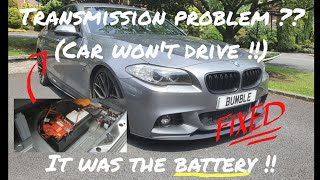
On a 2010-2017 BMW 5-Series (F10/F11/F07), code U0100 is most often caused by a weak or dying battery creating low voltage conditions. Before suspecting the expensive engine computer (DME), always test, charge, and potentially replace the battery first. A cascade of seemingly unrelated electronic warnings like 'Drivetrain Malfunction' is a classic symptom of this root cause.
- U0100 means the Engine Control Module (DME) is not communicating with other vehicle systems.
- The most common cause on a 2010-2017 BMW 5-Series is a weak or failing battery. Always check the battery and charging system first.
- Do not drive the vehicle, as it may stall or fail to restart.
- Due to the complexity of the CAN bus network, professional diagnosis is strongly recommended if a new battery does not solve the issue.
- Replacing the DME/ECM is a very expensive last resort and should only be done after exhaustive diagnostics.
What's Unique About the 2010-2017 BMW 5-Series
The F10/F11/F07 generation of BMW 5-Series is packed with numerous electronic modules that are highly sensitive to battery voltage. Unlike older vehicles, a slightly weak battery can cause a cascade of communication error codes like U0100, even if the car still starts. Owners often report these codes appearing intermittently, especially during cold weather, which points directly to battery health as the primary suspect before any complex wiring or module issues are considered. The car's complex power management, involving the Intelligent Battery Sensor (IBS), means that simply swapping the battery is not enough; it must be 'registered' to the vehicle for the charging system to work correctly.
Generation note: The 2010-2017 year range covers the F10 (Sedan), F11 (Touring/Wagon), and F07 (Gran Turismo) models. While the underlying electronic architecture is similar, specific module locations and wiring routes may vary slightly. The diagnostic principles remain the same across these chassis, as they share the same core electronic platform.
Symptoms You May Notice
- Check Engine Light is on (may be accompanied by ABS, DSC, and transmission warning lights).
- iDrive screen shows 'Drivetrain Malfunction' or 'Chassis Stabilization Error' messages.
- Vehicle enters 'limp mode' with reduced engine power.
- Engine may crank but fail to start ('click, click, click' sound).
- Intermittent stalling while driving.
- Transmission may not shift correctly or may feel stuck in gear.
- Inaccurate or failing gauges on the instrument cluster.
- Cooling fans running at maximum speed with the engine on, or running for a long time after the car is off.
- Replacing the Engine Control Module (DME) without first verifying that the battery, charging system, and all power/ground connections are perfect. A simple low voltage issue from a bad battery or corroded ground strap is far more common than a failed DME.
Most Likely Causes
- Weak or Failing Battery 🔴 High Probability → Shop Vehicle Battery These vehicles have a high electrical demand and complex battery management systems (IBS). Low voltage is a very common trigger for network communication faults, often presenting as a 'Drivetrain Malfunction' message before a no-start condition occurs.
How to confirm: Test the battery voltage with the car off; a healthy AGM battery should be at least 12.6 volts. Have the battery's health professionally tested with a digital load tester that can measure Cold Cranking Amps (CCA) against its rating. A battery can show good voltage but have very low CCA, causing module dropouts under load. Check for a history of battery discharge warnings on the iDrive screen.
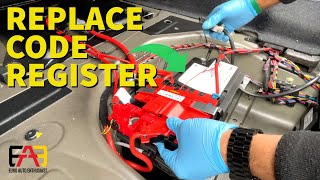
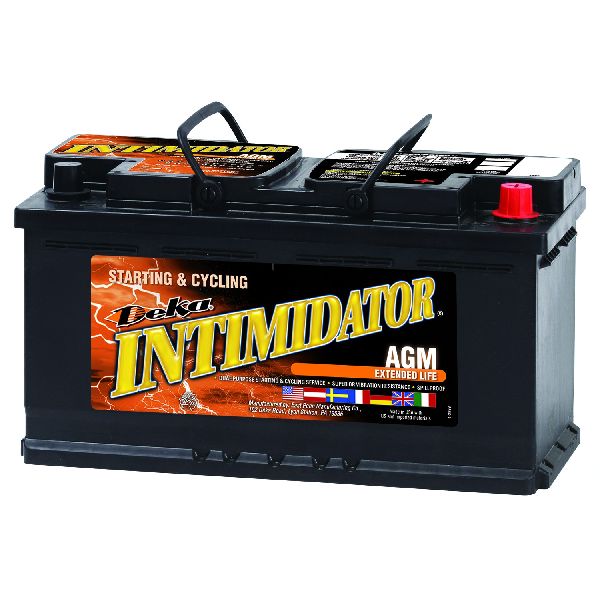
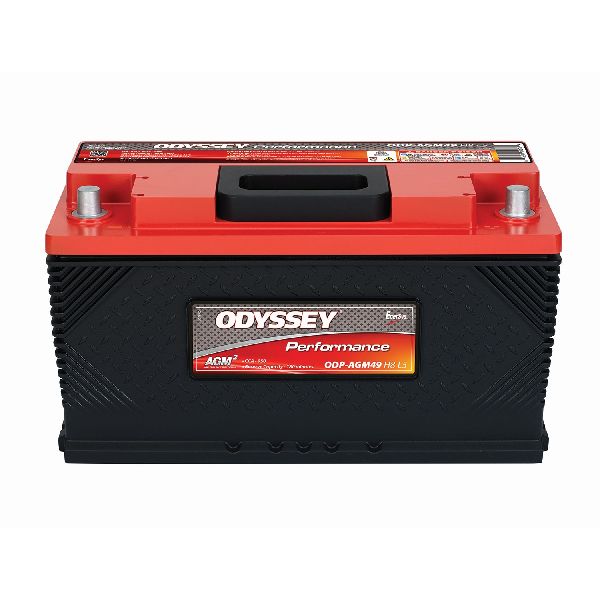
Typical fix: Replace the battery with a high-quality AGM (Absorbent Glass Mat) unit of the correct specification. The new battery MUST be registered with the vehicle's computer system using a capable scan tool (like ISTA, BimmerLink, or Carly). This step is crucial for the charging system to work correctly and ensure battery longevity. 🎬 See how to register and program your new battery.
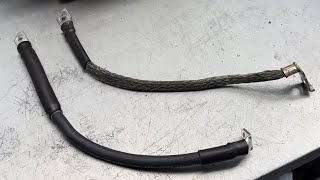
Est. part cost: $200-$400 - Corroded or Loose Battery Terminals/Ground Straps 🟡 Medium Probability → Shop Engine Ground Strap The main engine-to-chassis ground strap is a braided cable that can corrode and fray over time due to exposure to the elements, creating high resistance. This poor ground connection can mimic a weak battery and cause intermittent electrical issues.
How to confirm: Visually inspect the main battery terminals in the trunk. Locate and inspect the main engine ground strap, typically found near the passenger side (US) engine mount, connecting the engine block to the chassis. Look for green corrosion, fraying, or looseness.
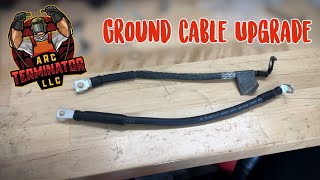
Typical fix: Clean the terminals and connection points with a wire brush. Replace any corroded or damaged ground straps. The OEM part is recommended for proper flexibility and conductivity. An example part number is 12427578869. 🎬 Watch: How to install an upgraded engine ground cable.
Est. part cost: $30-$80 - Faulty Alternator or IBS Sensor ⚪ Low Probability → Shop Alternator The Intelligent Battery Sensor (IBS), part of the negative battery cable, can fail and cause improper charging, leading to a drained battery and communication faults. Aftermarket accessories wired incorrectly can also confuse the IBS, causing parasitic drain.
How to confirm: Monitor the charging system voltage with a scan tool or multimeter while the engine is running. It should be between 13.5 and 14.8 volts. A BMW-specific scan tool can test the IBS function directly and check for parasitic draw faults.
Typical fix: Replace the faulty alternator or the negative battery cable which includes the IBS sensor. Disconnect any recently added aftermarket electronics to see if the problem resolves.
Est. part cost: $150-$700 - CAN Bus Wiring or Connector Issue (Water Ingress) ⚪ Low Probability Water intrusion is a known issue. Clogged sunroof drains or a bad cowl seal can allow water into the electronics box (E-box) in the engine bay, where the DME is located. Clogged trunk drains can also flood the battery area, damaging modules located there.
How to confirm: This requires advanced diagnostics. A technician will check for ~60 ohms of resistance across the CAN High and CAN Low pins at the OBD-II port with the battery disconnected. A visual inspection of the DME connectors in the E-box for blue or green corrosion is critical. Check the trunk floor under the battery for signs of moisture.
Typical fix: Repair the damaged section of wiring or replace the corroded connector. If the DME pins are corroded, it may need to be sent for professional cleaning and repair, or replacement. The source of the water leak must also be fixed.
Est. part cost: $50-$500 (wiring repair), $1000+ (DME repair/replacement)
Rare But Worth Checking
- Failed Engine Control Module (DME/ECM): → Shop Engine Control Module (ECM) This is the most expensive possibility and should only be considered after all other causes (power, ground, wiring) have been definitively ruled out. A failed DME will typically be completely unresponsive to a diagnostic scan tool or may have suffered internal damage from water ingress.
- Interference from Aftermarket Devices: Improperly installed aftermarket accessories like remote starters, alarms, or even plug-in Android Auto/CarPlay MMI boxes that are tapped into the CAN bus wiring can disrupt communication and trigger U-codes.
- Faulty Integrated Supply Module (IVM): The IVM is another module that supplies power to several key components. Internal cracks on its circuit board can cause intermittent power loss to the DME, triggering U0100. This is less common but has been reported by specialists.
Diagnosis Steps
- Read all codes from all modules using a BMW-capable OBD-II scanner (e.g., ISTA, Foxwell, Autel). Note all U-codes and any other faults present.
- Check and record the battery voltage with the engine off. It should be >12.6V.
- Perform a battery load test to check its Cold Cranking Amps (CCA) health. A battery showing good voltage can still be bad.
- Start the vehicle (if possible) and check the charging system voltage. It should be between 13.5V and 14.8V.
- If the battery is weak or old (>5 years), replace it and register the new battery. Clear codes and re-test.
- Visually inspect battery terminals and the main engine-to-chassis ground strap for corrosion and tightness. The strap is often near the passenger side engine mount.
- Inspect the DME in the engine bay E-box for any signs of water intrusion, physical damage, or corrosion on the connectors.
- If the battery and grounds are good, the issue is likely in the CAN bus wiring or the DME itself. This level of diagnosis requires professional tools and should be performed by a qualified technician.
Parts You'll Likely Need
- AGM Battery — The most frequent cause of U0100
Related Codes That Often Appear With This One
- U0101 — Lost Communication with TCM (Transmission Control Module). Since the TCM and ECM are on the same high-speed CAN bus (PT-CAN), a network-wide power or wiring issue will often cause both codes to appear together.
- Multiple U-codes — If many modules are reporting lost communication (e.g., U0121 - Lost Comms with ABS, U0140 - Lost Comms with Body Control Module), it strongly points to a systemic issue like low battery voltage or a major CAN bus wiring failure, rather than a single faulty module.
- Various BSD codes (e.g., 378F, 3446) — Codes related to the Bit Serial Data (BSD) bus, such as for the oil condition sensor or IBS, can appear alongside U0100. A failing component on the BSD line, like the water pump, can sometimes disrupt other systems.
Platform-Specific Known Issues
- A user on M5POST with an F10 M5 experienced U0100 after installing downpipes. The fix was to reseat the DME connectors, which had become slightly loose during the work. The advice was to push the connectors in fully by hand before using the locking lever.
- On Bimmerpost, a user with a 2011 F10 reported multiple electrical gremlins and communication faults. After replacing the battery, the issues persisted. The community advised that a BMW-specific tool like ISTA was necessary to diagnose the communication issue between modules, which a basic code reader cannot do.
- A Reddit user with a 'Drivetrain Malfunction' was quoted $500 for a battery by the dealer. The community confirmed that a bad battery is a very common cause for this warning, as low/unstable voltage causes modules to malfunction.
Mechanic-Grade Diagnostic Values
- CAN Bus Termination Resistance — expected: Approximately 60 Ω (measured between CAN High and CAN Low pins with ignition off).. Failure: A reading of 120 Ω indicates a break in the circuit or a missing terminating resistor in one of the modules (like the DME or DSC). A reading near 0 Ω indicates a short between the CAN lines.
- PT-CAN High (CAN-H) Voltage — expected: ~2.5V to 3.5V (Key On, Engine Off).. Failure: Voltage significantly outside this range, or stuck at battery/ground voltage, indicates a short or open on the line.
- PT-CAN Low (CAN-L) Voltage — expected: ~1.5V to 2.5V (Key On, Engine Off).. Failure: Voltage significantly outside this range, or stuck at battery/ground voltage, indicates a short or open on the line.
- DME Power Supply (Terminal 30) — expected: Battery Voltage (approx. 12.6V).. Failure: Low or no voltage indicates a problem with the power supply wiring, fuses, or the Integrated Supply Module (IVM).
- DME Ground Continuity — expected: < 0.2 Ω (measured between DME ground pins and a clean chassis ground point).. Failure: High resistance indicates a corroded or loose ground connection, a common cause of intermittent module communication.
Scan Tool Commands That Help
- ISTA/D (Rheingold): Vehicle Test / Read Out Vehicle Data — This is the initial step to get a full picture of which modules are responding and which are not. ISTA will display a graphical tree of all modules, showing the DME in red or yellow if it's not communicating.
- ISTA/D (Rheingold): Call up ECU functions -> Component Triggering — After identifying the non-communicating DME, this function allows you to directly command specific components controlled by the DME (if communication can be partially established) to see if the module is processing commands.
- ISTA/D (Rheingold): Service Functions -> Power Train -> Digital Engine Electronics -> Adjustment Functions — This menu contains various resets and adaptations. For a U0100, a relevant function might be a reset of the DME itself, or checking the status of related systems like the BSD bus components.
- Autohex II / K-Tag / VVDI2: Read/Write ISN — This is a specialist function required ONLY when replacing the DME with a used unit. The Individual Serial Number (ISN) from the original DME must be written to the donor DME to allow the car to start. ISTA cannot perform this function on used modules.
Wiring & Ground Locations
- Main Engine Ground Strap — On many F10 models (like the N55 RWD), the primary powertrain-to-chassis ground is not at the engine mount as in older BMWs. Instead, it's a braided strap located at the rear of the transmission, connecting the transmission case to a stud on the transmission tunnel/floor pan. On other models, a strap may be found near the passenger side engine mount.. This is the main ground path for the engine and all its electronics, including the DME. Corrosion or fraying of this strap creates high resistance, leading to intermittent voltage drops that can cause the DME to lose communication, mimicking a battery or module failure.
- DME PT-CAN Connector Pins — On the main connectors to the DME module located in the E-box in the engine bay. The Powertrain CAN (PT-CAN) signals are typically on specific pins, for example, Pin 1 (PT-CAN Low) and Pin 14 (PT-CAN High) on some DME connector configurations.. These are the exact pins where a technician would back-probe with a multimeter or oscilloscope to measure CAN bus voltage and signal integrity directly at the module. This confirms if the signal is reaching the DME or if the DME itself is not transmitting.
- Main Body Ground (Trunk) — In the trunk, near the battery. The main negative battery cable connects to a primary ground point on the chassis.. While less likely to be the sole cause than the engine strap, a poor main body ground can affect the stability of the entire vehicle electrical system, contributing to module communication errors.
- ZGW (Central Gateway Module) — Located under the steering wheel area, often behind the lower dash trim.. The ZGW is the central router for all the different CAN buses. The PT-CAN wires (typically twisted yellow/red and yellow/brown) pass through here. A fault at the ZGW or its connectors can isolate the DME from the rest of the vehicle network.
Real Owner Repair Stories
- Bimmerpost user (2012 F10 535i (N55), 78k miles) — Recurring 'Drive Train Malfunction' error, but only when accelerating hard or driving in sport mode. No check engine light. Car would enter limp mode. ISTA showed no misfire codes.
❌ Tried (didn't work) Dealer could not find the fix., Replaced spark plugs.
✅ What actually fixed it The root cause was an oil filter housing gasket leak. Leaking oil dripped onto the serpentine belt, causing it to slip under high load (hard acceleration). The belt slippage likely caused a momentary voltage drop from the alternator, which was enough to trigger the sensitive electronics and produce the drivetrain error. The fix was to replace the oil filter housing gasket, clean the oil off the pulleys, and replace the oil-contaminated serpentine belt.
OEM Part Supersession History
12427581396→12428643430— Updated design for engine/transmission ground strap.
Model Year Variations Within This Range
- 2010-2017: The specific type of DME (e.g., Siemens MSV90, Bosch MEVD17.2.6, Bosch MEVD17.2.9) varies by engine (N52, N55, N20, N63). For example, a 2011 528i used an N52 engine with a Siemens MSV90 DME, while a 2012-2016 528i used an N20 engine with a Bosch MEVD17.2.9 DME. This is critical when sourcing a replacement DME, as they are not interchangeable.
- 2014-2017 (LCI Models): The Life Cycle Impulse (LCI) or facelift models from 2014 onwards introduced updated electronics and sometimes different DME versions for the same engine. For instance, the N55 engine in later models used a Bosch MEVD17.2.G DME, which differs from the earlier MEVD17.2.6. Always verify the part number on the original DME before ordering a replacement.
Diagnostic Flowchart
Other Known Issues on This Vehicle
Issues unrelated to this code that are worth knowing about as an owner of this generation:
- N20 Engine Timing Chain Guide Failure 🔴 High — Common on pre-2015 528i models, often appearing around 70k-100k miles. A distinct whining noise is an early symptom. (Ref: Subject of a class-action lawsuit and a BMW extended warranty program in some regions.)
- N55 Engine Electric Water Pump Failure 🔴 High — Known to fail suddenly without much warning, typically between 60,000 and 100,000 miles.
- N55/N63 Oil Filter Housing Gasket (OFHG) Leak 🟠 Medium — Very common leak as the car ages. The rubber gasket hardens and cracks. If oil leaks onto the serpentine belt, it can cause the belt to slip off and be ingested by the main crank seal, leading to catastrophic engine damage.
- N63 Engine (Pre-LCI 550i) High Oil Consumption & Timing Chain Stretch 🔴 High — Affects early (2010-2013) 550i models. Issues are well-documented and led to a BMW 'Customer Care Package' (N63CCP) to address oil consumption, timing chains, and other items. (Ref: N63 Customer Care Package (not a formal recall))
- Front Thrust Arm Bushings (Control Arms) Failure 🟠 Medium — The fluid-filled bushings are a common wear item, leading to steering wheel vibrations or shimmy under braking, typically noticeable after 50,000 miles.
- Water Ingress in Trunk 🟠 Medium — A poorly sealed drain grommet can allow water to collect in the trunk well where the battery and several electronic modules (e.g., fuel pump controller, PDC module) are located, causing shorts and failures.
Used vs. New Parts: Buying Guide for This Vehicle
When a used part is the smart pick: A used DME (Engine Control Module) is a cost-effective option if the original has failed due to internal hardware issues (e.g., water damage, short circuit) and is unrepairable. However, it is NOT plug-and-play.
Donor-vehicle mileage cap: roughly under 100000 miles for the part to have meaningful remaining life.
What to inspect on the donor part:
- Ensure the part number on the used DME EXACTLY matches the original. Different part numbers are not compatible.
- Inspect the connector pins on the used DME for any signs of corrosion, damage, or being bent. A clean connector is crucial.
- Purchase from a reputable seller who guarantees the part was removed from a running vehicle and is not locked.
- If possible, buy a 'matched set' which includes the DME, CAS (Car Access System) module, and the original key fob from the same donor car. This can sometimes simplify the programming process.
OEM-only on this vehicle (don't cheap out):
- Engine Control Module (DME): While a used OEM unit is viable, avoid aftermarket 'remanufactured' DMEs from unknown brands. The programming and internal components are too complex and vehicle-specific. The only viable options are a new Genuine BMW DME or a used Genuine BMW DME that is then properly cloned/programmed.
- Engine Ground Strap: Due to its low cost and critical function, a new OEM ground strap is highly recommended to ensure proper conductivity and longevity.
Aftermarket brands forum-validated for this vehicle:
- For DME replacement, the key is not an aftermarket brand but a reputable 'DME Cloning Service' (e.g., DUDMD Tuning, RPM Motorsport) that can transfer your car's specific data (VIN, ISN immobilizer code) from your old DME to a compatible used donor DME.
Brands owners have reported issues with on this vehicle:
- Generic, pre-programmed aftermarket DMEs that claim to be 'plug and play' without requiring cloning or ISN transfer from your original module. These will almost certainly not work due to the BMW immobilizer system.
Real Owner Stories
Aggregated from forums and TSBs cited above. Mileages and costs reflect what owners reported in those sources.
2012 BMW F10 M5
Symptoms: Experienced a U0100 code immediately after installing downpipes.
What fixed it: Reseating the DME connectors. The connectors had become slightly loose during the mechanical work; they needed to be pushed in fully by hand before engaging the locking lever.
Source hint: M5POST - Bimmerpost thread titled 'F10 M5 experienced U0100 after installing downpipes'
2011 BMW 5-Series (F10)
Symptoms: Multiple electrical gremlins and communication faults. Issues persisted even after a battery replacement.
What fixed it: Advanced diagnosis using a BMW-specific tool (ISTA) to identify the specific communication break between modules that a basic reader could not find.
Source hint: Bimmerpost forum discussion on F10 electrical gremlins
2014 BMW 5-Series
Symptoms: Received a 'Drivetrain Malfunction' warning on the iDrive screen.
What fixed it: Battery replacement. The owner was quoted $500 by a dealer, as low/unstable voltage was causing modules to malfunction.
Cost: $200-$500
Source hint: Reddit r/BMW 'Drivetrain Malfunction' discussion
2015 BMW 5-Series
Symptoms: Battery discharge warnings appearing after installing an aftermarket Android Auto box.
What fixed it: Disconnecting the aftermarket electronics which were causing a parasitic drain and subsequent communication errors.
Source hint: F10.Bimmerpost thread regarding aftermarket Android Auto parasitic drain
Related OBD-II Codes
Frequently Asked Questions
My iDrive is showing 'Drivetrain Malfunction' and 'Chassis Stabilization' errors; could this just be a battery issue?
Can I replace the battery in my F10 5-Series myself to fix the U0100 code?
I'm hearing a 'click, click, click' sound when trying to start my 5-Series. Is this related to U0100?
Where is the main engine ground strap located on this vehicle?
Could my aftermarket Android Auto head unit be causing these communication errors?
Is there a specific part number for the ground strap if mine is corroded?
Helpful Videos
We Have This Part in Stock



The information in this article is provided for general reference and educational purposes only. Vehicle specifications, procedures, and part compatibility can vary by production date, trim level, and region. Always consult your vehicle's factory service manual and verify part numbers before purchasing or performing repairs. Safety-critical components such as airbags, seat belts, and braking systems should be installed by a qualified professional.
- BMW 5-Series:
- 🧭 Diagnostic Flowchart
- 🎬 Helpful Videos
- 🛍️ Shop This Part
- What's Unique About the 2010-2017 BMW 5-Series
- Symptoms You May Notice
- Most Likely Causes
- Rare But Worth Checking
- Diagnosis Steps
- Parts You'll Likely Need
- Related Codes That Often Appear With This One
- Platform-Specific Known Issues
- Mechanic-Grade Diagnostic Values
- Scan Tool Commands That Help
- Wiring & Ground Locations
- Real Owner Repair Stories
- OEM Part Supersession History
- Model Year Variations Within This Range
- Other Known Issues on This Vehicle
- Used vs. New Parts: Buying Guide for This Vehicle
- Real Owner Stories
- 2012 BMW F10 M5
- 2011 BMW 5-Series (F10)
- 2014 BMW 5-Series
- 2015 BMW 5-Series
- Related OBD-II Codes
- Frequently Asked Questions
- 🎟️ Get 5% Off