

U0100 on 2003-2026 Chevrolet Express: Lost ECM Communication Causes and Fixes
On a Chevrolet Express, code U0100 most often means a loss of communication with the engine computer due to a wiring problem, not a failed computer. The most common culprits are bad grounds, corroded wires, or a faulty underhood fuse block. Start by checking the battery and all major ground connections before suspecting expensive parts.
- Code U0100 on a Chevy Express is a critical fault that makes the vehicle unsafe to drive.
- Do not immediately replace the ECM. The problem is far more likely to be a bad ground, a corroded wire, or a faulty underhood fuse block.
- Start your diagnosis with the simplest things: test the battery and clean all major ground connections from the battery to the engine and frame.
- The underhood fuse block is a known weak point on these vans and should be inspected carefully for corrosion or signs of burning.
- Due to the complexity of network diagnostics, professional help is recommended if the basic checks do not solve the problem.
What's Unique About the 2003-2026 Chevrolet Express
The Chevrolet Express van has an exceptionally long production run (2003-present) using the same core GMT610 architecture. Because of its use as a work vehicle, it's often subjected to harsh conditions and high mileage. The most platform-specific issue for the U0100 code is the tendency for the underhood fuse block (also called the engine compartment junction block) to develop corrosion or internal faults due to its location and lack of a cover in some cases, leading to a host of electrical problems, including network communication failures. Additionally, due to the 'doghouse' engine cover, engine bay wiring and grounds can be exposed to significant heat and moisture, making them common failure points.
Generation note: The 2003-2026 range covers the second generation of the Express van, built on the GMT610 platform. While the core platform is the same, there were wiring and module updates over the years. Notably, a recall for 2022-2023 models involves incorrect TCM software, and a 2021 model recall notes a fuse block short circuit risk. However, the primary causes of U0100 (wiring, grounds, fuse block) are common across this entire year range due to the consistent design.
Symptoms You May Notice
- Engine will not start (no crank or cranks but won't fire)
- Engine stalls unexpectedly while driving
- Check Engine Light is on (may be intermittent or not on at all)
- Instrument cluster gauges behave erratically or go dead
- Warning lights for ABS, StabiliTrak, or other systems may illuminate
- "Service Airbag" message may appear on the dash
- Transmission may not shift correctly or may be stuck in 'limp mode'
- Cooling fans run constantly at high speed (a default failure mode)
- Scan tool cannot communicate with the ECM
- Reduced Engine Power message displayed
- Replacing the ECM without first checking grounds, power, and the underhood fuse block.
- Replacing the battery without confirming it failed a load test.
- Overlooking a corroded battery cable end or a loose chassis ground.
Most Likely Causes
- Poor ECM/Engine Ground Connections 🔴 High Probability Ground straps from the engine to the frame and body are exposed to moisture and road salt, leading to corrosion and high resistance. Engine vibration can also cause ground wires to fray or break at the terminal. These vans are notorious for ground issues.
How to confirm: Visually inspect the main ground cable from the battery to the engine block and frame. Locate and inspect the specific ECM ground straps, often found on the back of the cylinder head or front of the engine block. Perform a voltage drop test on the ground circuit; it should be less than 0.1 volts. A greenish or corroded body-to-frame strap is a common finding.
Typical fix: Clean the contact surfaces of the ground connection down to bare metal and re-secure tightly. Apply dielectric grease to prevent future corrosion. Replace any corroded or broken ground straps. Adding redundant ground wires is a common preventative measure by owners.
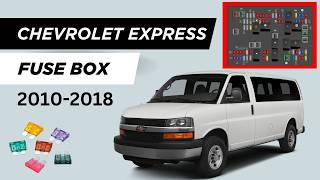
Est. part cost: $5-$50 - Corroded or Faulty Underhood Fuse Block 🔴 High Probability → Shop Fuse Box The location in the engine bay makes it susceptible to moisture intrusion, especially if the cover is missing or damaged, causing corrosion on the internal contacts and printed circuits. This is a well-documented weak point on Express and Savana vans.
How to confirm: Inspect the fuse block for any signs of water intrusion, green/white corrosion, or burnt terminals. A known issue is the fuel pump relay terminal overheating, which can affect power to other circuits. Tapping on the fuse block while trying to start the vehicle may temporarily restore connection, confirming an internal fault.
Typical fix: In minor cases, the block can be removed, disassembled, and cleaned. More often, the entire underhood fuse block needs to be replaced. Dealerships often stock this part due to the high failure rate. Aftermarket replacements are available from brands like Dorman.
Est. part cost: $200-$450 - Damaged CAN Bus Wiring Harness 🟡 Medium Probability The wiring harness can chafe against the engine, frame, or other components, eventually wearing through the insulation and causing a short or open circuit. Common chafe points are where the harness routes near the engine block, firewall, and around the 'doghouse' engine cover. Rodent damage is also a frequent cause.
How to confirm: Visually inspect the entire length of the harness between the ECM, TCM, and the main data link connector (DLC) for any signs of physical damage, chafing, or melting. Check the resistance between the two CAN wires (Pin 6 and Pin 14) at the DLC; it should be ~60 ohms with the battery disconnected.
Typical fix: Repair the damaged section of wire. This involves soldering in a new piece of wire and protecting it with heat shrink tubing. Do not use simple crimp connectors on CAN bus wires, as they can introduce resistance and further communication issues.
Est. part cost: $10-$100 - Low Battery Voltage or Faulty Battery 🟡 Medium Probability → Shop Vehicle Battery Work vans often have high electrical loads from added equipment, and frequent start/stop cycles can be hard on batteries. Control modules are sensitive to voltage and can stop communicating if system voltage drops too low during cranking or operation.
How to confirm: Test the battery with a multimeter. A healthy, fully charged battery should read approximately 12.6 volts with the engine off. Perform a load test to confirm the battery's health, as a battery can show good voltage but fail under load.
Typical fix: Recharge or replace the battery. Clean any corrosion from the battery terminals and ensure connections are tight.
Est. part cost: $150-$300
Rare But Worth Checking
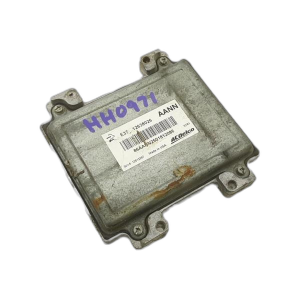
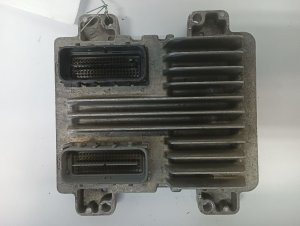
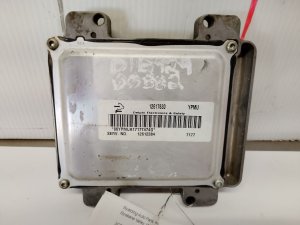
- Failed Engine Control Module (ECM/PCM): → Shop Engine Control Module (ECM) While this is what the code seems to imply, the ECM itself is rarely the point of failure. It should only be considered after all wiring, power, and ground issues have been exhaustively ruled out. Water intrusion into the ECM connector is a more likely scenario than internal failure.
- Faulty Terminating Resistor: The CAN bus has a 120-ohm resistor at each end of the network (often inside the ECM and another module, like the BCM or instrument cluster). If one of these fails, the total network resistance will be incorrect (reading 120 ohms instead of ~60 ohms), causing communication to fail. This requires advanced diagnostics to pinpoint.
- Faulty Ignition Switch: → Shop Ignition Switch A worn or faulty ignition switch can cause intermittent power loss to key modules on the network, triggering communication loss codes as modules drop offline and then reconnect.
Diagnosis Steps
- Check Battery Health: Ensure the battery is fully charged (12.6V+) and passes a load test. Clean battery terminals and inspect cables for corrosion or damage. A weak battery is a very common cause of network codes.
- Scan for All Codes: Use a high-quality scan tool to check for codes in all modules (BCM, TCM, ABS, etc.), not just the ECM. Note which modules are and are not communicating.
- Inspect Fuses: Visually inspect all fuses related to the ECM, ignition, and fuel system in both the underhood and interior fuse panels. Pay close attention to fuses labeled ECM, PCM, IGN, or BCM.
- Inspect Underhood Fuse Block: This is a critical step for the Express. Carefully examine the underhood fuse block for any signs of corrosion, water damage, or burnt terminals. Check for a missing or loose cover. Gently wiggle relays while an assistant tries to start the vehicle.
- Inspect Grounds: Locate, remove, clean, and re-secure all major engine and chassis grounds. Pay special attention to the main battery ground on the engine block, the frame-to-body ground strap, and any smaller ground straps from the harness to the cylinder heads.
- Check CAN Bus Resistance: Disconnect the battery. At the OBD-II port, measure the resistance between Pin 6 (CAN High) and Pin 14 (CAN Low). It should be approximately 60 ohms. If it's 120 ohms, there's an open in the circuit or a missing terminating resistor. If it's near 0 ohms, the wires are shorted together.
- Inspect Wiring Harness: Visually trace the wiring harness to and from the ECM. Look for chafing, melting, or rodent damage, especially where the harness passes near the engine, frame, or through the firewall.
- Check ECM Power/Ground at the Connector: Using a wiring diagram, identify the power and ground pins at the ECM connector. With the key on, verify battery voltage at the power pins and check for continuity to ground on the ground pins.
Parts You'll Likely Need
- Underhood Fuse Block — This is a very common failure point on the Express platform, leading to various electrical and communication faults.
Trusted brands: ACDelco, Dorman
OEM price range: $300-$500
Aftermarket price range: $200-$400 - Engine Control Module (ECM) — This is the last resort after all other causes are ruled out. If it fails, it must be replaced and programmed to the vehicle's VIN.
Trusted brands: ACDelco
OEM price range: $400-$700
Aftermarket price range: $250-$500 - Battery Ground Cable — The original cable can corrode or break, causing a poor ground connection which is a primary cause of U0100.
Trusted brands: ACDelco, Standard Motor Products
OEM price range: $40-$80
Aftermarket price range: $25-$60
Related Codes That Often Appear With This One
- U0101 — Lost Communication with TCM. The TCM and ECM are on the same high-speed CAN bus, so a network-wide failure will cause communication loss to both modules simultaneously.
- U0140 — Lost Communication with BCM. This indicates a widespread network problem, as a fault that takes down the ECM often affects the Body Control Module as well.
- U0073 — Control Module Communication Bus 'A' Off. This is a general code indicating the entire high-speed CAN bus has stopped communicating, often set alongside U0100.
Technical Service Bulletins (TSBs) & Recalls
- PIT4575F - While not directly for U0100, this TSB addresses various intermittent electrical issues, including no-crank/no-start conditions, and often points technicians towards checking for poor terminal tension at module connectors and the underhood fuse block, which are root causes of U0100.
Platform-Specific Known Issues
- The underhood fuse block is highly susceptible to moisture and internal corrosion, causing intermittent electrical faults and communication codes like U0100.
- Recall 24V-839 (for 2022-2023 models) addresses incorrect TCM software that can cause unexpected behavior and set incorrect DTCs, highlighting the sensitivity of the vehicle's network.
Mechanic-Grade Diagnostic Values
- CAN Bus Resistance (Battery Disconnected) — expected: ~60 Ohms. Failure: 120 Ohms indicates an open circuit or a faulty terminating resistor. ~0 Ohms indicates the CAN High and CAN Low wires are shorted together.
- CAN High (CAN-H) Voltage (Key On, Engine Off) — expected: ~2.5V (Recessive State) to ~3.5V (Dominant State). Failure: Voltage that is stuck high, low, or does not change indicates a bus problem or a module flooding the network.
- CAN Low (CAN-L) Voltage (Key On, Engine Off) — expected: ~2.5V (Recessive State) to ~1.5V (Dominant State). Failure: Voltage that is stuck high, low, or does not change indicates a bus problem or a module flooding the network.
- Ground Circuit Voltage Drop — expected: < 0.1 Volts. Failure: A reading higher than 0.1V indicates high resistance in the ground connection, which is a common cause of module communication issues.
Wiring & Ground Locations
- G101 — At the left front of the engine, lower block.. This is a primary ground point for the Engine Control Module (ECM) and Transmission Control Module (TCM). A poor connection here directly impacts the modules that are failing to communicate.
- G103 — Located at the left rear of the engine compartment on the cowl, above the brake booster.. This ground serves the Body Control Module (BCM), Instrument Panel Cluster (IPC), and the Data Link Connector (DLC) itself. A fault here can prevent a scan tool from communicating and can set a U0100 code.
- G105 / G106 — Located at the left front of the engine compartment behind cooling fan relays (G105) and on the front center of the frame cross rail (G106).. A GM service bulletin regarding erratic shifting and communication codes specifically calls out ensuring G103, G104, G105, and G106 have clean and tight connections, indicating their importance for overall network stability.
- Underhood Fuse Block — Located on the driver's side of the engine compartment.. This is the central hub for power distribution. Corrosion inside this block is a very common cause for U0100 on the Express, as it can cut power to the ECM or corrupt the CAN bus signals that pass through it.
- DLC (Data Link Connector) — Under the driver's side dashboard.. This is the diagnostic port. Pin 6 (CAN High) and Pin 14 (CAN Low) are where a technician measures bus resistance and voltage to assess the health of the entire network.
Real Owner Repair Stories
- EFILive Forum user (2006 GM Truck (similar platform)) — P0700 and U0100 codes, transmission in limp mode.
❌ Tried (didn't work) Resetting codes (problem returned after two weeks).
✅ What actually fixed it The main transmission connector at the back of the transmission was not fully seated. After cleaning the contacts and properly seating the connector, the problem was resolved.
Model Year Variations Within This Range
- 2003-2007 vs 2008+: Around 2008, GM's electrical architecture became more reliant on the high-speed GMLAN (CAN bus). While the principles are the same, later models have more modules on the network, making diagnosis potentially more complex. Wiring diagrams and fuse block layouts changed significantly in 2008 and again in 2010.
Diagnostic Flowchart
Other Known Issues on This Vehicle
Issues unrelated to this code that are worth knowing about as an owner of this generation:
- Fuel Level Sensor Failure 🟠 Medium — Extremely common. The fuel gauge will read empty or inaccurately, often setting codes like P0461, P0462, or P0463. The sensor is part of the fuel pump module in the tank.
- Intake Manifold Gasket Leaks 🔴 High — Common on V8 models, leading to coolant leaks (external or internal), engine overheating, and lean codes (P0171, P0174).
- Rusted Brake Lines 🔴 High — Very common in rust-belt states. The steel brake lines corrode and can fail suddenly, causing a complete loss of braking power. The line running to the rear is particularly vulnerable. (Ref: While no specific recall covers all models, this is a widely known safety issue.)
- Sliding Door Component Wear 🟡 Low — On cargo models, the sliding door hinge pins and rollers wear out from frequent use, causing the door to sag, stick, or become difficult to latch.
- Damaged Rear Tail Light Wiring 🟡 Low — In cargo vans, loading and unloading goods can damage the wiring harness for the tail lights that runs inside the rear of the van, causing lights to fail.
Used vs. New Parts: Buying Guide for This Vehicle
When a used part is the smart pick: For a U0100 repair, sourcing a used Underhood Fuse Block from a junkyard is a very smart and cost-effective choice. Complete wiring harnesses and specific connectors (pigtails) are also excellent candidates for used parts, as they are often vehicle-specific and expensive new.
Donor-vehicle mileage cap: roughly under 150000 miles for the part to have meaningful remaining life.
What to inspect on the donor part:
- For a fuse block: Look for a vehicle from a dry climate. Pry open the cover and inspect for any white or green powder (corrosion) or signs of water entry. Avoid any with melted plastic around relay sockets.
- For a wiring harness: Ensure no wires are cut. Check for rodent damage (chewed insulation). Inspect the plastic loom for brittleness or heat damage. All connector locking tabs should be intact.
- Look for a donor vehicle that was wrecked due to physical damage, not one that was junked for electrical problems.
OEM-only on this vehicle (don't cheap out):
- Engine Control Module (ECM/PCM): While rarely the cause, if it does need replacement, an OEM module is required. Used ECMs are often locked to the original vehicle's VIN and cannot be easily reprogrammed.
Aftermarket brands forum-validated for this vehicle:
- Dorman: Offers aftermarket replacements for the underhood fuse block, which is a common failure point on these vans.
Brands owners have reported issues with on this vehicle:
- Unbranded, no-name electrical connectors or fuse blocks from online marketplaces. These often use inferior quality terminals and plastics that do not hold up to engine bay heat and vibration, leading to repeat failures.
Real Owner Stories
Aggregated from forums and TSBs cited above. Mileages and costs reflect what owners reported in those sources.
2014 Chevrolet Express
Symptoms: The vehicle experienced a network-wide fault with U0100, U0101, and U0140 codes appearing simultaneously.
What fixed it: The owner identified it as a network-wide fault involving multiple modules (ECM, TCM, and BCM).
Source hint: https://chevroletforum.com/forum/express-g-series-vans-30/ebcm-communication-u-codes-115383/
2015 Chevrolet Express 4500
Symptoms: No-start condition accompanied by codes U0100, U0140, U0073, and a 'SERVICE AIRBAG' message on the dash.
What fixed it: Diagnosis of a cluster of communication faults across the ECM and BCM.
Source hint: https://chevroletforum.com/forum/express-g-series-vans-30/2015-chevy-express-4500-no-start-96791/
2008 Chevrolet Express
Symptoms: U0100 communication code causing vehicle defects.
What fixed it: Addressed as part of a widespread issue across the owner community involving the ECM communication circuit.
Source hint: https://www.opinautos.com/chevrolet/express/defectos/codigo-u0100
Related OBD-II Codes
Frequently Asked Questions
I have a 2022 Chevrolet Express; is there a recall that could cause communication codes like U0100?
My Express van won't start and the cooling fans are screaming at high speed. Is this related to U0100?
Could the underhood fuse block be the reason my 2015 Express is throwing U0100?
Does TSB PIT4575F apply to my no-start condition on the Express?
Where are the common ground points I should check on my Express to fix a U0100 code?
What should the resistance be at the OBD-II port if my CAN bus wiring is healthy?
Helpful Videos
We Have This Part in Stock

The information in this article is provided for general reference and educational purposes only. Vehicle specifications, procedures, and part compatibility can vary by production date, trim level, and region. Always consult your vehicle's factory service manual and verify part numbers before purchasing or performing repairs. Safety-critical components such as airbags, seat belts, and braking systems should be installed by a qualified professional.
- Chevrolet Express:
- 🧭 Diagnostic Flowchart
- 🎬 Helpful Videos
- 🛍️ Shop This Part
- What's Unique About the 2003-2026 Chevrolet Express
- Symptoms You May Notice
- Most Likely Causes
- Rare But Worth Checking
- Diagnosis Steps
- Parts You'll Likely Need
- Related Codes That Often Appear With This One
- Technical Service Bulletins (TSBs) & Recalls
- Platform-Specific Known Issues
- Mechanic-Grade Diagnostic Values
- Wiring & Ground Locations
- Real Owner Repair Stories
- Model Year Variations Within This Range
- Other Known Issues on This Vehicle
- Used vs. New Parts: Buying Guide for This Vehicle
- Real Owner Stories
- 2014 Chevrolet Express
- 2015 Chevrolet Express 4500
- 2008 Chevrolet Express
- Related OBD-II Codes
- Frequently Asked Questions
- 🎟️ Get 5% Off