

U0100 on 2005-2007 Ford Five Hundred: Lost Communication with PCM Causes and Fixes
On a 2005-2007 Ford Five Hundred, code U0100 is most often caused by a faulty instrument cluster with bad solder joints, which acts as a gateway for the vehicle's communication network. This is a well-known issue documented in Ford TSB 06-17-9. Other causes include wiring issues, a failing battery, or a faulty electronic throttle body. The most common fix is to have the instrument cluster rebuilt by a specialist for $150-$250, which resolves the communication failure.
- Code U0100 on a 2005-2007 Ford Five Hundred is most likely caused by a faulty instrument cluster due to a known manufacturing defect.
- Symptoms often include the gauges sweeping or going dead, along with a no-start or stalling condition.
- Do not replace the expensive PCM unless the instrument cluster, wiring, and battery/grounds have been proven to be good.
- The most cost-effective fix is typically having the original instrument cluster rebuilt by a specialist for around $150-$250.
- This is not a simple DIY fix; diagnosing network issues is complex and usually requires professional-level tools and expertise.
What's Unique About the 2005-2007 Ford Five Hundred
For the 2005-2007 Ford Five Hundred, the instrument cluster is a very common point of failure that leads to code U0100. The cluster in this vehicle is not just for displaying gauges; it's a critical gateway node in the CAN communication network. Defective solder joints on the cluster's internal circuit board can crack or fail, causing a network-wide communication breakdown. This is a well-documented issue, and Ford released Technical Service Bulletin (TSB) 06-17-9 to address intermittent cluster operation. While generic causes like wiring or battery issues are possible, a malfunctioning instrument cluster should be the primary suspect on this specific car and its platform mates, the Ford Freestyle and Mercury Montego.
Symptoms You May Notice
- Check Engine Light is on
- Wrench light is on
- Engine stalls or runs rough
- No-start or crank-no-start condition
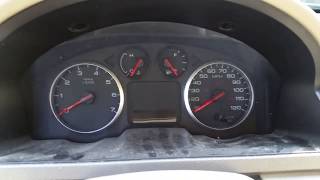
- Instrument cluster gauges stop working, sweep back and forth, or flicker intermittently
- Multiple warning lights (ABS, Airbag, 'Service Advancetrac', etc.) illuminate simultaneously
- Transmission shifts harshly or enters 'limp mode'
- Reverse lights stay on (even when in Park or Drive)
- Air conditioning stops working
- Message center displays 'Check Transmission'
- Replacing the PCM first. The PCM is expensive and rarely the root cause. The fault is much more likely to be in the wiring or another module on the network, like the instrument cluster.
- Replacing the battery without checking the charging system. A faulty alternator can cause voltage issues that mimic a bad battery, leading to recurring communication problems.
Most Likely Causes
- Faulty Instrument Cluster 🔴 High Probability → Shop Instrument Cluster A known factory defect involving poor solder joints on the instrument cluster's printed circuit board is common on this platform, as documented in Ford TSB 06-17-9. The cluster acts as a network gateway, and its failure disrupts all CAN bus communication. The issue is so prevalent that it's the first thing to suspect when U0100 appears with cluster-related symptoms.
How to confirm: Observe if the U0100 code is accompanied by intermittent gauge failure, flickering backlights, or the gauges sweeping. A tap on the dashboard may temporarily restore function. A professional would test CAN bus resistance at the OBD-II port; a reading other than ~60 ohms when the cluster is acting up points to a network issue, often originating from the cluster. Forum users confirm that when the cluster fails, communication with most modules via the OBD-II port is lost.
Typical fix: The instrument cluster must be removed and sent to a specialized electronics repair service (e.g., Circuit Board Medics, local electronics repair shops) to have the circuit board re-soldered and rebuilt. 🎬 Watch: How to repair the instrument cluster solder joints This is a permanent fix for the bad solder joints. Replacing with a new or used cluster is more expensive and requires programming to the vehicle.
Est. part cost: $150-$250 for a rebuild service. - Wiring Harness or Connector Issues 🟡 Medium Probability Wiring can chafe or corrode over time. Key areas to check are the harnesses near the PCM (located in the engine bay on the firewall), under the battery tray, and the main ground connections.
How to confirm: Visually inspect all visible wiring harnesses for chafing, corrosion, or damage, especially around the engine bay, fuse box (Smart Junction Box), and PCM connectors. Check the CAN bus wiring (typically a twisted pair of wires, see wiring diagrams) for opens or shorts using a multimeter. This often requires a wiring diagram and professional expertise.
Typical fix: Repair or replace the damaged section of the wiring harness. Clean any corroded connectors with electrical contact cleaner and ensure they are securely seated with dielectric grease.
Est. part cost: $10-$500 depending on the extent of the damage and whether a new harness is needed. - Weak or Failing Battery / Poor Grounds ⚪ Low Probability → Shop Vehicle Battery
How to confirm: Test the battery voltage with a multimeter; it should be above 12.4 volts with the engine off. A low or unstable voltage can cause unpredictable behavior in electronic modules. Inspect and clean the main chassis and engine ground connections (G101, G102, G104 at the right side of the engine compartment).
Typical fix: Recharge or replace the battery. Clean or tighten ground connections.
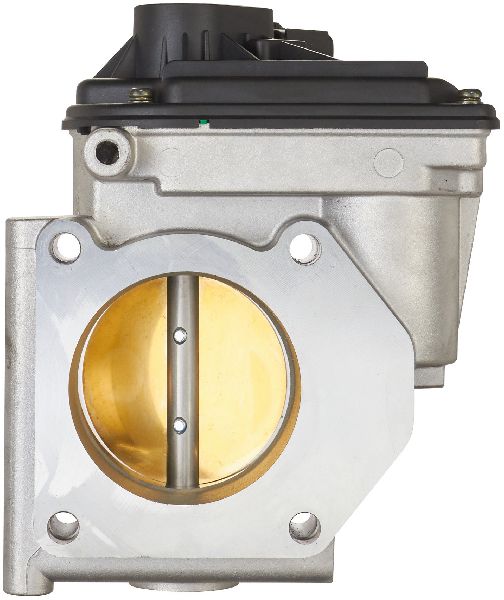
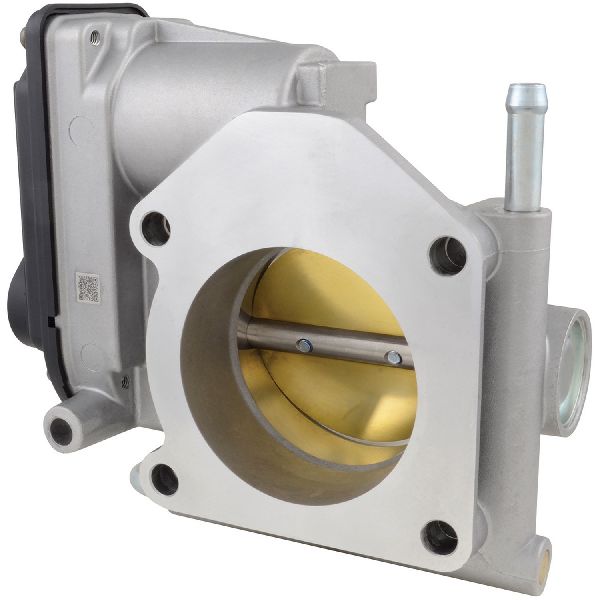
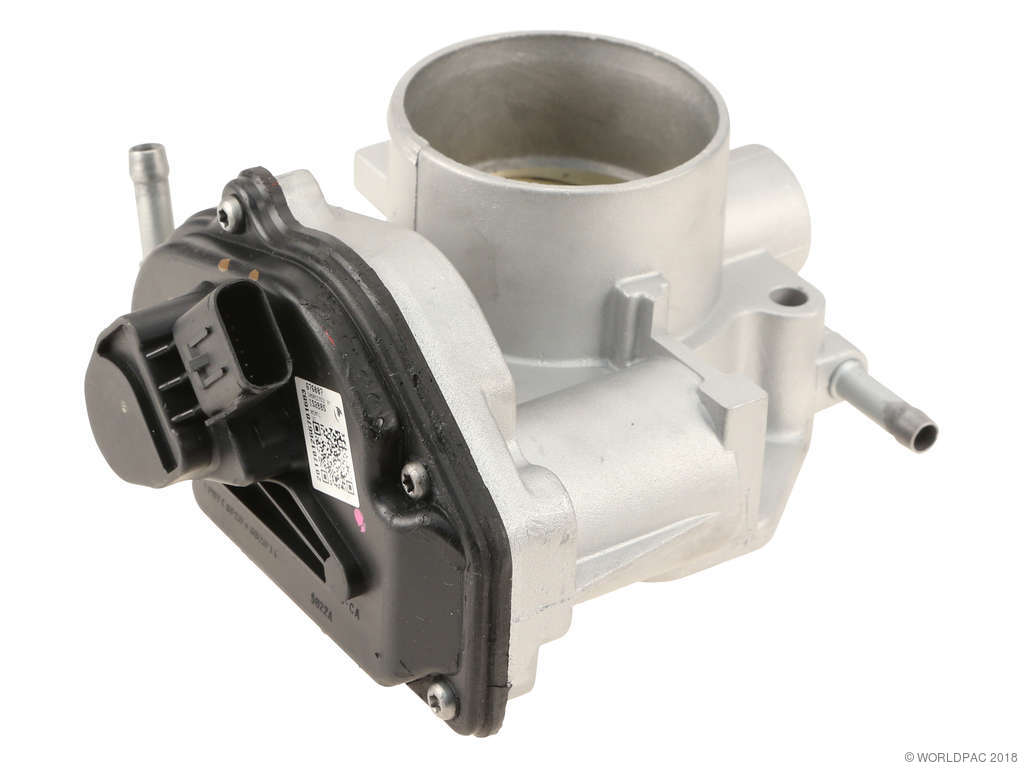
Est. part cost: $150-$250 for a new battery. - Faulty Electronic Throttle Body ⚪ Low Probability → Shop Fuel Injection Throttle Body The electronic throttle body on this platform is a known failure item that can cause stalling and a wrench light. In some cases, its internal failure can create electrical noise or a short on the network, disrupting CAN bus communication and contributing to codes like U0100.
How to confirm: The vehicle may enter a 'forced idle' or 'limp home' mode with no throttle response. A scan tool may show throttle position sensor (TPS) correlation codes. One owner noted that unplugging the TPS allowed their scan tool to communicate with the vehicle when it wouldn't before. Cleaning the throttle body is a first step, but often replacement is necessary.
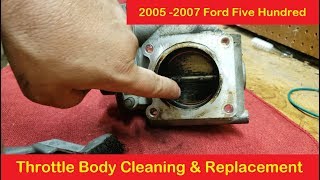
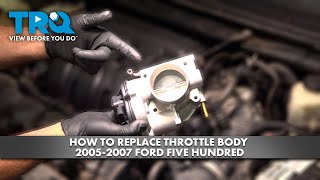
Typical fix: After verifying the wiring to the throttle body is intact, the throttle body assembly is replaced. 🎬 Watch: How to replace the throttle body The original OEM part number 5F9Z-9E926-B has been superseded by 6F9Z-9E926-A.
Est. part cost: $150-$450 for a new assembly.
Rare But Worth Checking
- Failed Powertrain Control Module (PCM): → Shop Engine Control Module (ECM) This is a rare cause of U0100. The PCM is a robust component and should only be considered for replacement after all other possibilities, including the instrument cluster, wiring, and grounds, have been exhaustively tested and ruled out.
- Failed Smart Junction Box (SJB): The SJB (the interior fuse panel) is another module on the network. While less common than the instrument cluster, a failure within the SJB could theoretically cause network communication issues.
Diagnosis Steps
- Check Battery Health: Start by testing the battery. Ensure it has a full charge (12.4V+ engine off) and that the terminals are clean and tight. A weak battery is a common source of electronic gremlins.
- Scan for All Codes: Use a high-quality scan tool (Ford-specific like FORScan is recommended) to read codes from ALL modules (ABS, TCM, BCM, etc.), not just the PCM. Note all U-codes present. If you can't communicate with any module, the network is down.
- Perform the 'Dash Tap' Test: 🎬 See this instrument panel removal and repair walkthrough This is the most crucial vehicle-specific step. With the key on, observe the instrument cluster. If it's blank or gauges are erratic, firmly tap the top of the dashboard above the cluster. If the gauges flicker or start working, the cluster's internal solder joints are faulty, and this is your problem.
- Inspect Grounds and Wiring: Perform a thorough visual inspection of the main engine and chassis ground points, particularly G101/G102/G104 in the engine bay. Look for any obvious damage, chafing, or corrosion on the wiring harnesses connected to the PCM and the Smart Junction Box (SJB) under the dash.
- Test the CAN Bus Network: This is an advanced step. Disconnect the battery. Using a multimeter, measure the resistance between Pin 6 (CAN High) and Pin 14 (CAN Low) on the OBD-II diagnostic port. A healthy network should read approximately 60 ohms. If it reads 120 ohms, there is an open circuit or a terminating resistor is missing (often in the cluster or PCM). If it reads close to 0 ohms, the CAN High and Low wires are shorted together.
- Isolate Modules: If the resistance is incorrect, a technician will unplug modules one by one from the HS-CAN bus (starting with the instrument cluster) and re-test resistance. When the 60-ohm reading returns, the last module unplugged is the source of the fault.
- Diagnose Throttle Body: If throttle-related symptoms (wrench light, limp mode) are present, inspect the wiring to the electronic throttle body and consider it as a potential cause.
Parts You'll Likely Need
- Instrument Cluster Repair Service — This is the most probable fix for U0100 on this vehicle due to a known defect with internal solder joints causing network failure, as per TSB 06-17-9.
Trusted brands: Circuit Board Medics, Module Master, Local electronics repair shops
OEM price range: $500-$900 for a new part
Aftermarket price range: $150-$250 for a rebuild service - Electronic Throttle Body
(OEM #5F9Z-9E926-B, 6F9Z-9E926-A)— A secondary common cause, especially if a wrench light and limp mode are the primary symptoms.
Trusted brands: Motorcraft, Cardone (Remanufactured), Dorman
OEM price range: $350-$450
Aftermarket price range: $150-$300
Related Codes That Often Appear With This One
- U1900 — This is another Ford-specific CAN Communication Bus Fault code. TSB 06-17-9 specifically mentions to look for U1900 in other modules when the instrument cluster fails.
- U0101 — Lost Communication with TCM (Transmission Control Module). Since the TCM also relies on the CAN bus to talk to the PCM, a network failure will often set communication codes for multiple modules.
- U0121 — Lost Communication with ABS Control Module. Like the TCM, the ABS module is on the high-speed CAN bus and will log a code if it cannot communicate with the PCM.
- P0701, P0871, P0961 — These are transmission-related codes that can appear alongside U0100, especially on CVT-equipped models, indicating the transmission control functions are compromised by the communication loss.
Technical Service Bulletins (TSBs) & Recalls
- TSB 06-17-9: Addresses intermittent instrument cluster operation where gauges may sweep or go blank. This is the primary document pointing to the root cause of U0100 on this platform.
- Bulletin #SSM 54333: While issued for different Ford models, this bulletin notes that DTC U0100 can be stored in the anti-lock brake system (ABS), audio front control module (ACM), and power steering control module (PSCM) during intermittent no crank/no start conditions.
- Bulletin #SSM 54574: A manufacturer service bulletin describing a "Service Immediately" message in the instrument panel cluster (IPC) with U0100 stored in the ABS module.
Platform-Specific Known Issues
- TSB 06-17-9 was issued by Ford for 2005-2006 Five Hundred models (built before 2/17/2006) for intermittent instrument cluster operation, which causes CAN network communication to become inoperative and can log codes like U1900 and U0100.
Mechanic-Grade Diagnostic Values
- CAN Bus Resistance (at OBD-II Pins 6 & 14, battery disconnected) — expected: ~60 Ω. Failure: 120 Ω indicates an open circuit or a missing terminating resistor in a module (like the cluster). ~0 Ω indicates a direct short between the CAN High and CAN Low wires.
- CAN High Voltage (Pin 6 to Ground, Key On) — expected: Average of ~2.6V, pulsing between 2.5V and 3.5V.. Failure: 0V or steady voltage indicates a fault. Voltage near battery voltage indicates a short to power. Voltage near 0V can indicate a short to ground.
- CAN Low Voltage (Pin 14 to Ground, Key On) — expected: Average of ~2.4V, pulsing between 2.5V and 1.5V.. Failure: 0V or steady voltage indicates a fault. Voltage near 0V indicates a short to ground.
- CAN Wire to Ground Resistance (Pins 6 or 14 to Pin 4/5, battery disconnected) — expected: Open Line / Infinite Resistance (O.L.). Failure: Any continuity reading indicates a short to ground in the CAN harness.
Hidden / Shadow Codes Worth Checking
- Cluster-Specific DTCs: The instrument cluster can store its own Diagnostic Trouble Codes (DTCs) which may not be visible with a generic OBD-II scanner. These codes can confirm an internal cluster fault. (see via Activate the Instrument Cluster Self-Diagnostic Mode by pressing and holding the trip reset button, then turning the ignition key to the 'ON' or 'II' position. Release the button when 'tESt' appears on the display. Repeatedly press the reset button to cycle through tests until you reach the 'DTC' screen.)
Scan Tool Commands That Help
- Ford IDS / FORScan: Programmable Module Installation (PMI) — This function is required when installing a new or used instrument cluster. It configures the new module to the vehicle's specifications and, critically, synchronizes the Passive Anti-Theft System (PATS) keys. Without this step, the vehicle will not start after a cluster replacement.
- Ford IDS / FORScan: Read Mileage from PCM/BCM — When installing a used instrument cluster, the mileage displayed will be from the donor car. FORScan can often read the true mileage stored in other modules (like the PCM), allowing a technician to program the correct mileage into the replacement cluster (note: programming mileage down is often blocked).
- Built-in (No Scan Tool): Instrument Cluster Self-Diagnostic Mode — Use as a first step to quickly check the cluster's health. It initiates a gauge sweep to test all stepper motors, a bulb check for all warning lights, and can display cluster-specific DTCs and live data like battery voltage at the cluster.
Wiring & Ground Locations
- G101 — Right front of the engine compartment.. This is a primary ground point for multiple engine components and modules. A poor connection here can cause widespread electrical issues, including module communication failures.
- G102 / G104 — Right rear of the engine compartment.. These grounds are also critical for the PCM and other engine bay modules. Corrosion or looseness can interrupt power and communication circuits.
- OBD-II Port Pins 6 & 14 — Under the driver's side dashboard.. These are the direct access points for the High-Speed CAN bus (Pin 6: CAN-H, Pin 14: CAN-L). All network voltage and resistance tests are performed here to assess the health of the entire communication backbone.
- Instrument Cluster Connectors (e.g., C2280A, C2280B) — On the rear of the instrument cluster, accessed by removing the dash trim.. These are the physical connection points where the failing solder joints are located. Inspecting these for looseness, corrosion, or signs of heat is a key diagnostic step if the cluster is removed.
- PCM Connector (e.g., C175b) — On the Powertrain Control Module, located in the engine bay, typically on the firewall.. This is the main connector for the PCM. Any corrosion or pin damage here will sever communication between the PCM and the rest of the vehicle, directly causing a U0100 code.
Real Owner Repair Stories
- Compilation of forum reports and Reddit threads regarding TSB 06-17-9 (2005 Ford Five Hundred) — Instrument cluster intermittently goes blank, gauges sweep to zero, multiple warning lights come on (ABS, wrench, check engine), A/C stops working, and reverse lights may stay on. Car may stall or fail to start. U0100 and U1900 codes are present.
❌ Tried (didn't work) Replacing the battery, Checking fuses, Clearing codes (they return immediately)
✅ What actually fixed it The definitive fix was removing the original instrument cluster and sending it to a specialized repair service (like Circuit Board Medics) to have the main connector pins re-soldered. This permanently corrects the cold/cracked solder joints that cause the network gateway to fail. The repair cost is typically $150-$250 and avoids the need for reprogramming a new or used cluster. - NHTSA ODI #11669147 — An owner reported experiencing power loss, mechanical noise, and diagnostic codes including U0100 (lost communication with ECM/PCM) and P0303.
- NHTSA ODI #11704877 — A report describes multiple communication fault codes appearing when the ignition is on with the engine off, including U0100, U0131, U0140, and U0151, which disappeared after the engine was started.
Documented NHTSA Reports
NHTSA ODI #11644872 highlights that some vehicles may exhibit an illuminated MIL with DTCs U0100 and U0401, referencing manufacturer service bulletin SSM 49157. Additionally, NHTSA ODI #11669147 describes a vehicle experiencing power loss and mechanical noise alongside U0100 and camshaft timing codes.
OEM Part Supersession History
5F9Z-9E926-B→6F9Z-9E926-A— Part revision/update by Ford.
Heads up: The new part number is the correct service replacement for the original Electronic Throttle Body.Various (e.g., 6G1Z-10849-CA, 6G1Z-10849-CB)→Various (e.g., 7G1Z-10849-C)— Rolling updates and revisions by Ford.
Heads up: Instrument cluster part numbers are highly specific to trim level (SEL, Limited), features, and production date. Using a rebuild service for the original cluster is the safest option. If replacing, the part number must be matched exactly.
Model Year Variations Within This Range
- 2005-2006: There are different instrument cluster part numbers based on the production date. For example, part number 6G1Z-10849-EA is specified for 2006 models built only up to December 5, 2005, indicating a mid-year part change. While the underlying soldering defect is common across the 2005-2007 range, the specific replacement part number may differ.
Diagnostic Flowchart
Other Known Issues on This Vehicle
Issues unrelated to this code that are worth knowing about as an owner of this generation:
- CVT Transmission Failure (AWD Models) 🔴 High → Shop Transmission Assembly — Common on AWD models equipped with the ZF CFT30 CVT. Issues like shuddering, slipping, or complete failure can occur, often before 150,000 miles.
- Premature Engine Mount Failure 🟠 Medium — The hydraulic engine mounts, especially the top 'dog bone' torque strut, are known to wear out prematurely, sometimes as early as 50,000 miles, causing excessive vibration at idle and clunking when shifting.
- Electronic Throttle Body Failure 🟠 Medium → Shop Fuel Injection Throttle Body — A common issue where the vehicle suddenly enters 'limp mode' with a wrench light and no throttle response. Often requires replacement of the entire throttle body assembly. (Ref: There was a customer satisfaction program for this, but it has long since expired.)
- Aisin 6-Speed Automatic Transmission Issues (FWD Models) 🟠 Medium → Shop Transmission Assembly — FWD models used an Aisin 6-speed automatic which can suffer from harsh shifting or delayed engagement, sometimes correctable with a PCM software update, but other times requiring valve body or internal repairs. (Ref: Multiple software update TSBs were released.)
- Lower Control Arm Ball Joint Failure 🔴 High — The front lower ball joints can wear prematurely, leading to clunking noises over bumps and, in severe cases, separation from the steering knuckle, causing a loss of steering control.
Used vs. New Parts: Buying Guide for This Vehicle
When a used part is the smart pick: A used Electronic Throttle Body from a low-mileage donor vehicle is a cost-effective and viable repair option. For the Instrument Cluster, a REBUILD of your original unit is strongly preferred over buying a used one.
Donor-vehicle mileage cap: roughly under 100000 miles for the part to have meaningful remaining life.
What to inspect on the donor part:
- For a throttle body, inspect for a clean throttle plate without heavy carbon deposits.
- Ensure the electrical connector and pins are free of corrosion or damage.
- Verify the part number on the used part matches the original or its superseded number.
OEM-only on this vehicle (don't cheap out):
- Instrument Cluster: While a rebuild service is ideal, if a full replacement is necessary, a new OEM part is the only way to guarantee compatibility, though it is expensive and requires programming. Complete aftermarket clusters are not recommended.
Aftermarket brands forum-validated for this vehicle:
- Circuit Board Medics: A widely cited and reputable service for rebuilding the original Ford Five Hundred instrument cluster.
Brands owners have reported issues with on this vehicle:
- Unbranded, no-name electronic throttle bodies from online marketplaces may have questionable quality and longevity.
Real Owner Stories
Aggregated from forums and TSBs cited above. Mileages and costs reflect what owners reported in those sources.
2005 Ford Five Hundred
Symptoms: Blank cluster, reverse lights on, no A/C, and a U0100 code.
What fixed it: Followed TSB 06-17-9 to address the instrument cluster repair.
Source hint: https://www.reddit.com/r/autorepair/comments/pl4p5d/05_ford_500_instrument_repair_guide_for_tsb_06179/
2005-2007 Ford Five Hundred
Symptoms: Wrench light is on, vehicle enters 'forced idle' or 'limp home' mode with no throttle response. Unplugging the TPS allowed the scan tool to communicate.
What fixed it: Replacement of the electronic throttle body assembly.
Source hint: Article context sections regarding Electronic Throttle Body failure
Related OBD-II Codes
Frequently Asked Questions
Does Ford TSB 06-17-9 apply to my 2005 Ford Five Hundred?
Why are my reverse lights staying on even when I'm in Park or Drive?
Can I fix the U0100 code by tapping on my dashboard?
Is there a specific part number I should look for if I need to replace my throttle body?
Will a U0100 code affect my Mercury Montego the same way it affects the Five Hundred?
Why does my 'Check Transmission' message appear alongside U0100?
Helpful Videos
We Have This Part in Stock


The information in this article is provided for general reference and educational purposes only. Vehicle specifications, procedures, and part compatibility can vary by production date, trim level, and region. Always consult your vehicle's factory service manual and verify part numbers before purchasing or performing repairs. Safety-critical components such as airbags, seat belts, and braking systems should be installed by a qualified professional.
- Ford Five Hundred:
- 🧭 Diagnostic Flowchart
- 🎬 Helpful Videos
- 🛍️ Shop This Part
- What's Unique About the 2005-2007 Ford Five Hundred
- Symptoms You May Notice
- Most Likely Causes
- Rare But Worth Checking
- Diagnosis Steps
- Parts You'll Likely Need
- Related Codes That Often Appear With This One
- Technical Service Bulletins (TSBs) & Recalls
- Platform-Specific Known Issues
- Mechanic-Grade Diagnostic Values
- Hidden / Shadow Codes Worth Checking
- Scan Tool Commands That Help
- Wiring & Ground Locations
- Real Owner Repair Stories
- Documented NHTSA Reports
- OEM Part Supersession History
- Model Year Variations Within This Range
- Other Known Issues on This Vehicle
- Used vs. New Parts: Buying Guide for This Vehicle
- Real Owner Stories
- 2005 Ford Five Hundred
- 2005-2007 Ford Five Hundred
- Related OBD-II Codes
- Frequently Asked Questions
- 🎟️ Get 5% Off