

U0100 on 2005-2007 Ford Freestyle: Lost Communication with PCM Causes and Fixes
On a 2005-2007 Ford Freestyle, code U0100 means the main engine computer (PCM) is offline. This often causes a no-start or stalling. Before suspecting a bad PCM, check for a weak battery, blown fuses (especially for the ABS module), corroded wiring, and faulty alternator, which are more common and cheaper to fix.
- U0100 is a critical network failure code that makes the vehicle unsafe to drive.
- Always start diagnostics with the easiest and most common causes: the battery, fuses, and visible ground connections.
- Do NOT assume the PCM is bad. The fault is more likely in the wiring or another module on the network, like the ABS module or instrument cluster.
- A multimeter is essential for diagnosis. Checking for 60 ohms of resistance across pins 6 and 14 of the OBD-II port is a key step to verify the health of the CAN bus wiring.
What's Unique About the 2005-2007 Ford Freestyle
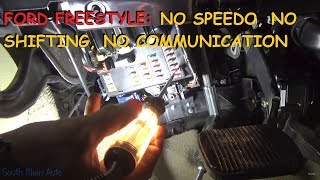
The Ford Freestyle's network design means that a failure in one specific module can sometimes bring down the entire system, causing other modules to log a U0100 code. For example, a shorted ABS module has been documented to cause a no-communication condition across the network, leading to symptoms like a dead speedometer and the transmission refusing to shift. 🎬 Watch: Diagnosing a Ford Freestyle with no speedometer and shifting issues Similarly, the instrument panel cluster acts as a critical hub (gateway) on the network, and failures within it can also lead to widespread communication faults. A failing alternator can also cause an over-voltage condition (17V+), which can shut down modules and cause communication errors. Furthermore, a failing electronic throttle body, a very common issue on this platform, can create electrical noise and faults that may contribute to network instability.
Symptoms You May Notice
- Check Engine Light is on
- Vehicle will not start, or cranks but fails to start
- Engine stalls intermittently while driving
- Transmission will not shift or shifts harshly (limp mode)
- Speedometer is inoperative or reads zero
- Multiple warning lights on the dashboard (ABS, Airbag, Traction Control, Wrench Light)
- Reduced engine power and poor fuel economy
- Scan tool shows 'No Communication' with the PCM
- 'Check Charging System' warning on dash, especially if accompanied by flickering lights
- Replacing the PCM first. The U0100 code is reported by *other* modules that can't hear the PCM. The problem is often the 'phone line' (wiring), a bad power/ground supply, or a different module screaming on the network, not the PCM itself.
- Replacing the transmission. Severe shifting problems are a common symptom of this network code, but they are caused by the Transmission Control Module (TCM) not getting data from the PCM, not an internal mechanical failure of the transmission.
Most Likely Causes
- Weak or Faulty Battery / Charging System Issue 🔴 High Probability → Shop Vehicle Battery All modern vehicles are sensitive to low voltage, which can cause unpredictable communication errors. Additionally, this platform is known for alternator failures that can cause an over-voltage condition (17V+), which also disrupts module communication and can cause the instrument cluster to go dead. Owners report that aftermarket/rebuilt alternators are a frequent cause of this specific over-voltage issue.
How to confirm: Test battery voltage engine-off (should be 12.6V+). Then, test voltage with the engine running. It should be ~13.5-14.5V. If it's below 13V, the alternator isn't charging. If it's over 15V (especially 17V+), the voltage regulator in the alternator has failed and is overcharging.
Typical fix: Recharge or replace the 12V battery. If the charging voltage is incorrect, replace the alternator. Using a Ford/Motorcraft alternator is highly recommended as owners report issues with aftermarket units. 🎬 Watch: How an overcharging alternator can ruin your battery
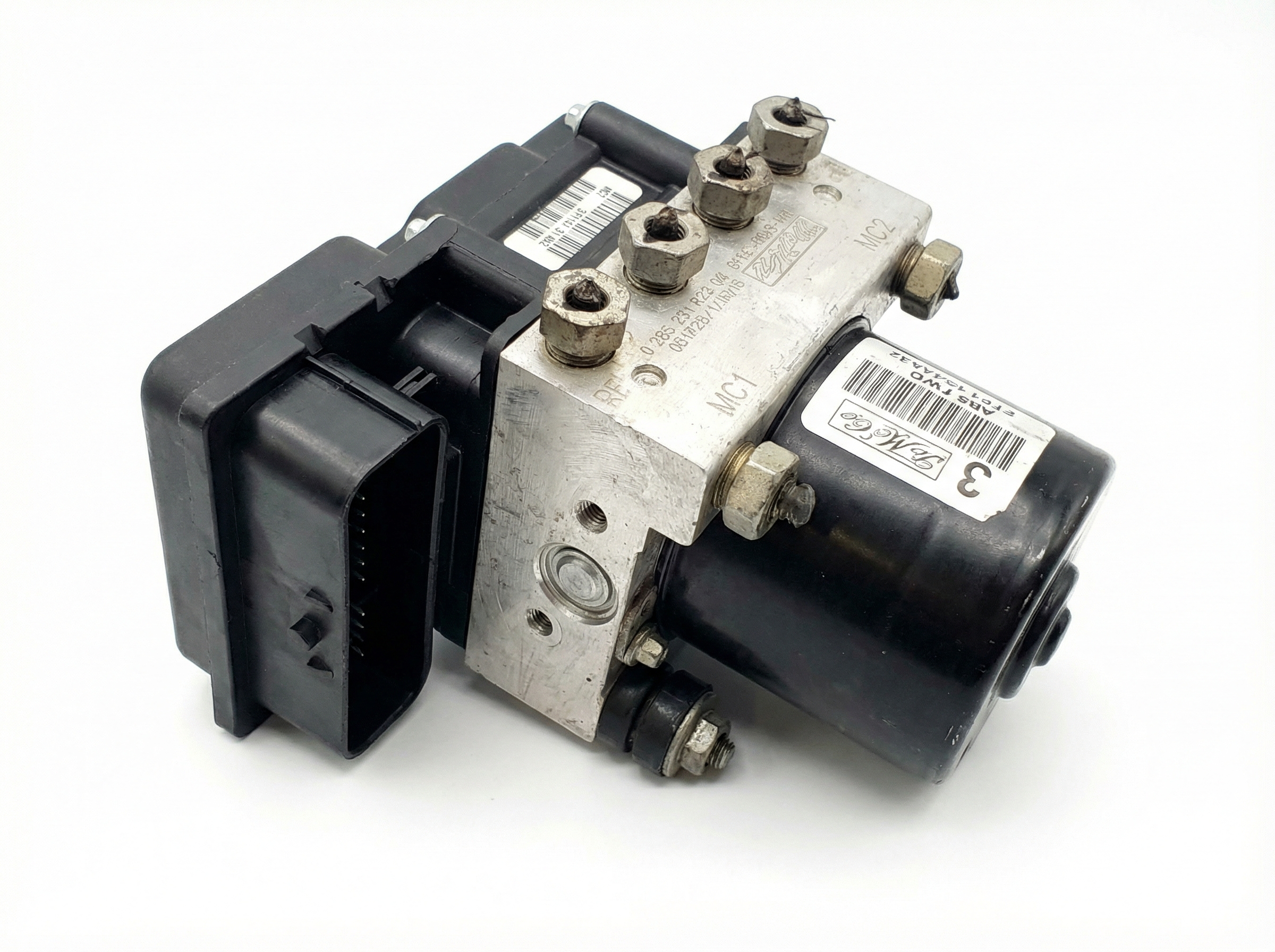
Est. part cost: $150-$250 for a battery, $250-$500 for a quality alternator. - Blown Fuses (Especially for ABS Module) 🟡 Medium Probability On this platform, a short circuit in the ABS module can blow its power fuse, taking the module offline and disrupting the entire CAN network, which other modules see as a loss of communication with the PCM. This is a widely-reported failure mode.
How to confirm: Visually inspect all fuses in the under-hood and interior fuse panels. A diagnostic scan showing no communication with the ABS module alongside U0100 is a very strong indicator. Disconnecting the ABS module and seeing if communication with the PCM returns is a definitive test.
Typical fix: If the ABS module is confirmed to be shorted (often internally), it must be replaced. Then, replace the blown fuse.
Est. part cost: $1-$5 for a fuse, $200-$500 for a used or remanufactured ABS module. - Corroded or Damaged CAN Bus Wiring 🟡 Medium Probability Wiring harnesses, especially those exposed to the elements under the vehicle or in the engine bay, can chafe, break, or suffer from water intrusion and corrosion over time. Common problem areas on Fords include harnesses near the driver's side kick panel/e-brake and grounds near the battery tray.
How to confirm: Perform a visual inspection of the main wiring harnesses. A more advanced check involves measuring the resistance between the CAN High and CAN Low pins at the OBD-II port (pins 6 and 14). A healthy network should read approximately 60 ohms. A reading of 120 ohms indicates an open circuit, while a reading near 0 ohms indicates a short.
Typical fix: Repairing the damaged section of the wiring harness or cleaning/repairing corroded connectors and ground points.
Est. part cost: $10-$100 for wiring repair supplies. - Failed Instrument Panel Cluster (IPC) ⚪ Low Probability → Shop Instrument Cluster The IPC on many Fords of this era contains one of the two 120-ohm terminating resistors for the CAN bus. A failure of the solder joints or internal electronics of the cluster can take the resistor offline or cause it to broadcast corrupt data, disrupting the network. This is a known failure point on Ford vehicles from this period, often due to cracked solder joints on resistors inside the cluster.
How to confirm: Symptoms often include erratic gauge behavior or a completely dead instrument cluster along with the U0100 code. Confirm by checking CAN bus resistance; if it's 120 ohms, and disconnecting the PCM makes it go to open-circuit, the cluster's resistor is likely the one that has failed. A DIY test involves pressing on the circuit board behind the gauges; if the display flickers, it points to bad solder joints.
Typical fix: The instrument cluster must be removed and sent to a specialist for repair (resoldering of internal components), or replaced with a new/remanufactured unit which will require programming.
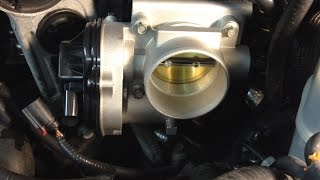
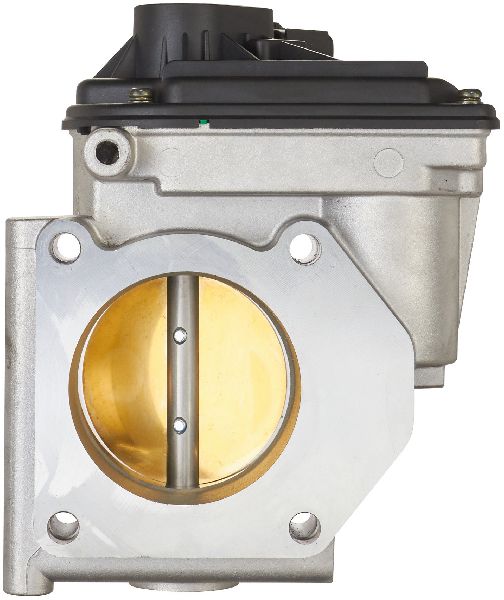
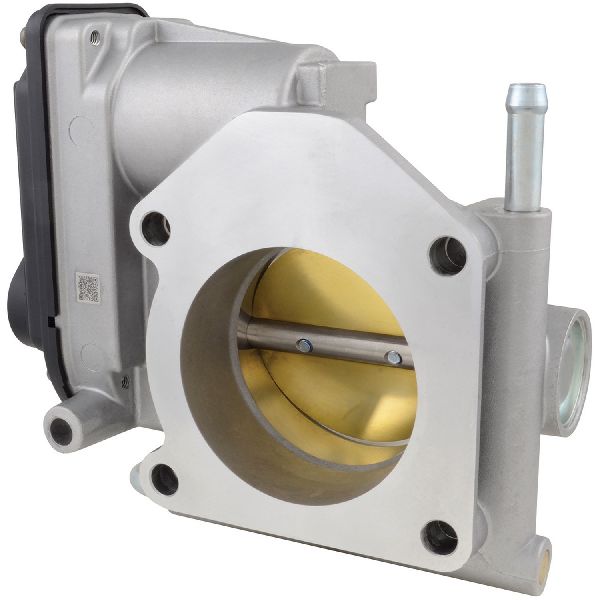
Est. part cost: $200-$500 for a repair service or remanufactured part. - Failed Electronic Throttle Body (ETB) ⚪ Low Probability → Shop Fuel Injection Throttle Body The ETB is a notoriously common failure point on the Freestyle. While it usually causes limp mode and a wrench light, a failing ETB can create electrical noise or internal shorts that disrupt the CAN bus, potentially contributing to a U0100 code.
How to confirm: Look for accompanying symptoms like the wrench light, sudden loss of power, or surging. Codes related to throttle position may be stored. Cleaning the throttle body is a simple first step that sometimes helps.
Typical fix: Clean the throttle body with a dedicated cleaner. If the problem persists, the entire ETB assembly must be replaced. 🎬 See this step-by-step electronic throttle body replacement walkthrough Ford extended the warranty on this part, but it has since expired.
Est. part cost: $150-$300 for a new throttle body.
Rare But Worth Checking
- Failed Powertrain Control Module (PCM): → Shop Engine Control Module (ECM) While this is the module named in the code, the PCM itself is rarely the point of failure. It should only be considered after all other possibilities (power, ground, wiring, other modules) have been exhaustively ruled out.
Technical Service Bulletins (TSBs) & Recalls
While specific to different Ford models, the following manufacturer records highlight how the U0100 code often interacts with the ABS and other systems on the Ford network:
- TSB Bulletin #SSM 54333 notes that some Ford vehicles may exhibit a no crank/no start condition with multiple warning indicators and DTC U0100 stored in the anti-lock brake system (ABS) and other modules.
- TSB Bulletin #SSM 54574 describes a "Service Immediately" message displayed in the instrument panel cluster (IPC) with U0100 stored specifically in the anti-lock brake system (ABS) module.
Diagnosis Steps
- Perform a full network scan with a quality OBD-II scanner to see which modules are reporting 'Lost Communication' and which modules are not responding at all.
- Check the Battery and Charging System. Ensure the battery has a full charge (12.6V+ engine off) and that terminals are clean. Start the engine and check voltage; it should be ~13.5-14.5V. If it's over 15V, the alternator's internal regulator has failed.
- Inspect all related fuses. Check the fuse boxes (both interior and under-hood) for any blown fuses, particularly those labeled PCM, ECM, ABS, and IPC.
- Inspect Grounds. Check the main PCM ground connections and chassis ground straps for tightness and corrosion. A bad ground can cause all sorts of communication issues.
- Check CAN Bus Resistance. With the battery disconnected, use a multimeter to measure the resistance between Pin 6 (CAN High) and Pin 14 (CAN Low) of the OBD-II port. The reading should be approximately 60 ohms. If it's 120 ohms, there's a break in the circuit or a failed terminating resistor. If it's near 0 ohms, the CAN High and Low wires are shorted together.
- Isolate the Fault. If the resistance is incorrect, you can disconnect modules one by one (start with the ABS module, then the instrument cluster) and re-check the resistance. When the resistance returns to 60 ohms, the last module disconnected is likely the source of the fault.
- If wiring is suspected, visually inspect harnesses for chafing or corrosion, especially near the driver's kick panel and under the hood. A pin-to-pin continuity test of the CAN wires from the module connector to the OBD-II port may be necessary.
- If all wiring, grounds, and other modules check out, the final step is to test the power and ground circuits at the PCM connector itself. If they are good, the PCM may have an internal fault.
Parts You'll Likely Need
- ABS Control Module — A common point of failure on this platform that can short out, blow its fuse, and bring down the entire CAN network.
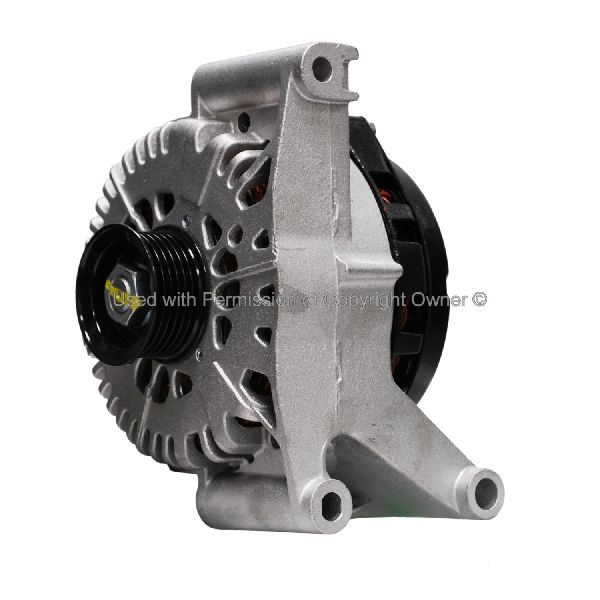
- Alternator
(OEM #Motorcraft GL-989-RM (example, verify by VIN))— A failing internal voltage regulator can cause overcharging, which disrupts network communication and causes multiple electronic failures. - Electronic Throttle Body
(OEM #Motorcraft 6E5Z-9E926-AA (example, verify by VIN))— A very common failure on the Freestyle that causes limp mode and can create electrical noise on the CAN bus. - Battery — Low voltage from an old or weak battery is a primary cause of communication codes on all modern vehicles.
Related Codes That Often Appear With This One
- U1900 — This is a Ford-specific code for a CAN Bus Communication Fault. It often appears alongside U0100 and indicates a general network problem rather than an issue with one specific module.
- U0121 — This code means 'Lost Communication With ABS Control Module'. If you see this with U0100, it's a strong clue that the ABS module or its wiring is the source of the entire network crash.
- U0155 — This code means 'Lost Communication With Instrument Panel Cluster (IPC) Control Module'. Seeing this points towards the instrument cluster as a potential source of the network failure.
Mechanic-Grade Diagnostic Values
- CAN Bus Network Resistance — expected: ~60 Ω (Ohms). Failure: 120 Ω indicates an open circuit or a failed terminating resistor in a module (like the IPC or PCM). ~0 Ω indicates the CAN High and CAN Low wires are shorted together.
- CAN High (CAN+) Voltage to Ground (Key On) — expected: ~2.5V to 3.5V (fluctuating). Failure: Voltage stuck at 0V, 5V, or battery voltage (12V) indicates a short. A steady 2.7V with no fluctuation can indicate an open circuit.
- CAN Low (CAN-) Voltage to Ground (Key On) — expected: ~2.5V to 1.5V (fluctuating). Failure: Voltage stuck at 0V or battery voltage (12V) indicates a short. A steady 2.3V with no fluctuation can indicate an open circuit.
- Alternator Output Voltage (Engine Running) — expected: ~13.5V to 14.5V. Failure: Sustained voltage over 15V, especially spiking to 17V+, indicates a failed internal voltage regulator, a known cause of module shutdown and U0100 on this platform.
- PCM Ground Circuit Resistance — expected: < 0.1 Ω (Ohms). Failure: Higher resistance indicates a corroded or loose ground connection, which can starve the PCM of a stable reference and cause communication faults.
Hidden / Shadow Codes Worth Checking
- U0100:87: This is a Ford-specific sub-code for 'Missing Message'. It explicitly confirms that other modules on the network were expecting a specific message from the PCM but did not receive it within the expected timeframe. This is more specific than the generic U0100 and strongly points to a communication breakdown rather than a power issue at the PCM itself. (see via Ford Integrated Diagnostic System (IDS) or a high-end professional scanner with Ford-specific software.)
Scan Tool Commands That Help
- Ford IDS (Integrated Diagnostic System): Network Test / Self Test — This should be the very first step in diagnosis. It polls all modules on the CAN bus and creates a map showing which modules are online, which are offline (not communicating), and which are reporting codes. This quickly identifies the scope of the problem (e.g., only one module offline vs. many).
- Ford IDS (Integrated Diagnostic System): Programmable Module Installation (PMI) — This function is required after replacing a major module like the PCM, ABS module, or Instrument Cluster. It transfers the vehicle's specific configuration data (VIN, security keys, options) to the new module, allowing it to function correctly on the network.
Wiring & Ground Locations
- G100 / G101 — Located in the engine bay on the inner fenders/shock towers.. These are primary chassis and engine ground points. Corrosion or looseness here is common and can cause unstable voltage and communication faults across multiple modules, including the PCM.
- Driver's Side Kick Panel Harness — In the area near the parking brake pedal assembly and the driver's side door sill.. This harness bundle contains CAN bus wires and is a known chafe point on many Ford platforms. Wires can rub against brackets or get damaged from water entry, causing intermittent shorts or opens on the network.
- OBD-II Connector Pins 6 & 14 — The diagnostic port under the driver's side dashboard.. Pin 6 is CAN High and Pin 14 is CAN Low. These are the direct access points for testing the resistance and voltage of the High-Speed CAN network, which is essential for diagnosing U0100.
Real Owner Repair Stories
- Reddit user post on r/MechanicAdvice (2005 Ford Freestyle) — Car idles fine, but when the throttle is pressed, all gauges and the AC shut off, and a 'Check Charging System' light comes on. Scan tool cannot communicate with modules.
❌ Tried (didn't work) Replacing the battery.
✅ What actually fixed it The vehicle was overcharging at 17V+ when revved. The cause was a faulty rebuilt alternator. Replacing the recently installed rebuilt alternator with a quality new unit (specifically a Ford/Motorcraft one was recommended) resolved the over-voltage condition and the communication errors. - Ford Truck Enthusiasts Forum post (2013 F-250 (Illustrates a common Ford wiring/fuse box issue applicable to U0100)) — No crank, no start, 'Service Advancetrack' message, and U0100 code.
❌ Tried (didn't work) Checking firewall connections and grounds., Wiggling and inspecting the common chafe-point harness by the e-brake.
✅ What actually fixed it A female pin/terminal for a relay inside the under-hood fuse box had broken and pushed down into the box, creating an open circuit. The fix required repairing the terminal within the fuse box itself, which restored power and communication.
Documented NHTSA Reports
- An owner reported in NHTSA ODI #11644872 that their vehicle exhibited an illuminated MIL with DTC U0100, citing a related service bulletin SSM 49157.
- In NHTSA ODI #11669147, a driver experienced power loss, mechanical noise, and diagnostic codes including P0014, P0303, and U0100 (lost communication with ECM/PCM).
- According to NHTSA ODI #11704877, an owner noticed multiple communication fault codes including U0100, U0131, U0140, and U0151 appearing when the ignition was on with the engine off, which disappeared after the engine started.
Model Year Variations Within This Range
- 2007: For the 2007 model year, front side airbags and curtain side airbags with rollover deployment became standard equipment. While not directly causing U0100, this adds the Restraint Control Module (RCM) and its associated sensors as standard components on the CAN bus network, slightly increasing the complexity of network diagnosis compared to a 2005-2006 base model where they were optional.
Diagnostic Flowchart
Other Known Issues on This Vehicle
Issues unrelated to this code that are worth knowing about as an owner of this generation:
- Electronic Throttle Body (ETB) Failure 🔴 High → Shop Fuel Injection Throttle Body — Very common. Often occurs between 70,000 and 150,000 miles. Symptoms include sudden deceleration (limp mode), surging, and the 'wrench' warning light. (Ref: Ford issued a Customer Satisfaction Program (13N03) extending the warranty on the throttle body to 10 years/150,000 miles, though this has now expired.)
- CVT Transmission Failure 🔴 High → Shop Transmission Assembly — A significant number of vehicles experienced issues, sometimes before 100,000 miles. Symptoms include surging, loss of power, and complete failure to move. (Ref: Multiple TSBs were issued, but no widespread recall. It is a known, major weak point of the vehicle.)
- Prematurely Worn Rear Brakes 🟠 Medium — Common complaint from owners, with rear pads and rotors wearing out much faster than expected.
- Faulty Alternator / Overcharging 🟠 Medium → Shop Alternator — Failures can cause over-voltage (17V+), leading to flickering lights, dead instrument clusters, and damage to other electronic modules. Aftermarket alternators are often cited as problematic.
- Cracked Engine Mounts 🟡 Low — The passenger-side engine mount is prone to leaking hydraulic fluid and collapsing, causing engine vibration and noise.
Used vs. New Parts: Buying Guide for This Vehicle
When a used part is the smart pick: A used ABS module or Instrument Panel Cluster (IPC) from a junkyard can be a cost-effective option, provided you can verify the part number matches exactly. These modules are common points of failure and are often available from donor vehicles.
Donor-vehicle mileage cap: roughly under 150000 miles for the part to have meaningful remaining life.
What to inspect on the donor part:
- Match the part number EXACTLY. For ABS modules, there are different part numbers for FWD and AWD models.
- Inspect connectors for any signs of corrosion, bent pins, or heat damage.
- For an instrument cluster, check the clear plastic lens for deep scratches or cracks.
- Ask the salvage yard if they have any history on the donor vehicle (e.g., was it a front-end collision, which is less likely to have damaged a rear-mounted module).
- Ensure there is a return policy in case the electronic part is dead on arrival.
OEM-only on this vehicle (don't cheap out):
- Alternator: The voltage regulator is extremely sensitive. Forum and owner reports strongly indicate that aftermarket or rebuilt alternators frequently cause over-voltage (17V+) issues on this platform, leading directly to communication codes like U0100. It is highly recommended to use a new or remanufactured Ford/Motorcraft part.
- Powertrain Control Module (PCM): Due to the need for precise VIN and security (PATS) programming, a new or professionally remanufactured PCM from a reputable supplier is the only reliable option. A used PCM will not start the vehicle without dealer-level programming.
Brands owners have reported issues with on this vehicle:
- Generic/unbranded rebuilt alternators: Widely reported to have faulty voltage regulators that cause overcharging issues.
Real Owner Stories
Aggregated from forums and TSBs cited above. Mileages and costs reflect what owners reported in those sources.
2005 Ford Freestyle
Symptoms: Electrical issues, dead gauges, and rough running shortly after the alternator was replaced.
What fixed it: Replacing the aftermarket alternator with a high-quality unit to resolve charging system sensitivity.
Source hint: https://www.fordforums.com/threads/2005-freestyle-electrical-issues-and-rough-running.169841/
2006 Ford Freestyle
Symptoms: Surging and limp mode accompanied by a wrench light on the dashboard.
What fixed it: Replacement of the Electronic Throttle Body (ETB).
Source hint: https://www.2carpros.com/questions/2006-ford-freestyle-transmission-or-throttle-body
2005 Ford Freestyle
Symptoms: The dashboard went dead and the engine began running rough after installing an aftermarket alternator.
What fixed it: Replacing the non-OEM charging components with Ford/Motorcraft parts.
Source hint: https://www.fordforum.com/forum/ford-freestyle-12/2005-freestyle-engine-lights-problem-39943/
2005 Ford Freestyle
Symptoms: New alternator and battery installed, but the vehicle experienced a 17V+ overcharging condition, causing the gauges and A/C to shut off completely.
What fixed it: Correcting the over-voltage condition caused by a failed internal voltage regulator in the alternator.
Source hint: https://www.reddit.com/r/MechanicAdvice/comments/c0018g/2005_ford_freestyle_new_alternator_and_battery/
Related OBD-II Codes
Frequently Asked Questions
Why did my Ford Freestyle's dashboard go dead and the A/C stop working after I replaced the alternator?
Can a problem with my ABS system cause a U0100 communication code on this vehicle?
Is there a specific brand of alternator recommended for the 2005-2007 Freestyle to avoid U0100 issues?
How can I tell if my Freestyle's instrument cluster is the reason for the 'Lost Communication' code?
My Freestyle is surging and showing a wrench light; could this be related to U0100?
What should the resistance be at the OBD-II port if the CAN bus is healthy?
Helpful Videos

Used OEM Parts in Stock
New Aftermarket Parts Available


The information in this article is provided for general reference and educational purposes only. Vehicle specifications, procedures, and part compatibility can vary by production date, trim level, and region. Always consult your vehicle's factory service manual and verify part numbers before purchasing or performing repairs. Safety-critical components such as airbags, seat belts, and braking systems should be installed by a qualified professional.
- Ford Freestyle:
- 🧭 Diagnostic Flowchart
- 🎬 Helpful Videos
- 🛍️ Shop This Part
- What's Unique About the 2005-2007 Ford Freestyle
- Symptoms You May Notice
- Most Likely Causes
- Rare But Worth Checking
- Technical Service Bulletins (TSBs) & Recalls
- Diagnosis Steps
- Parts You'll Likely Need
- Related Codes That Often Appear With This One
- Mechanic-Grade Diagnostic Values
- Hidden / Shadow Codes Worth Checking
- Scan Tool Commands That Help
- Wiring & Ground Locations
- Real Owner Repair Stories
- Documented NHTSA Reports
- Model Year Variations Within This Range
- Other Known Issues on This Vehicle
- Used vs. New Parts: Buying Guide for This Vehicle
- Real Owner Stories
- 2005 Ford Freestyle
- 2006 Ford Freestyle
- 2005 Ford Freestyle
- 2005 Ford Freestyle
- Related OBD-II Codes
- Frequently Asked Questions
- 🎟️ Get 5% Off