

U0100 on 2003-2026 GMC Savana: Lost Communication with ECM Fixes
U0100 on a GMC Savana means the Engine Control Module (ECM) has stopped communicating. This often causes a no-start or stalling. The most common causes are not a bad ECM, but poor battery voltage, corroded ground wires, or damaged wiring at the ECM or other modules on the CAN network.
- U0100 is a critical code on a Savana that will likely leave you stranded. Do not drive the vehicle.
- The most likely causes are simple: a weak battery, corroded ground wires, or damaged wiring. Check these first.
- Do not assume the ECM is bad. It is the most expensive part and often the least likely to have failed.
- A fault in another module, like the ABS or transmission controller, can bring down the whole network and set a U0100 code.
- Diagnosing this code correctly requires tools and knowledge beyond a basic code reader; professional service is strongly recommended.
What's Unique About the 2003-2026 GMC Savana
The GMC Savana platform has been in production for a very long time with the same basic architecture. This longevity means that wiring harnesses can become brittle, grounds can corrode, and connectors can fail after years of service, especially in work vans that see heavy use. A common failure pattern on GM trucks and vans involves other modules on the network, like a faulty ABS module, shorting out the CAN bus and causing a U0100 code, even though the ECM itself is fine. A diagnostic video of a 2017 Savana showed a melted ABS module connector was the true cause of the network failure. Forum discussions also point to the Electronic Brake Control Module (EBCM) connector as a potential source of issues, where a bad pin can cause communication codes. Due to their use as work vehicles, water intrusion into connectors and under-carpet wiring is also a known issue that can lead to network faults.
Generation note: The 2003-2026 GMC Savana is part of a single long-running generation, but has had numerous electrical and network updates. While the core meaning of U0100 is the same, the specific locations of modules, grounds, and wiring connectors may differ. For example, a 2017 model had a specific issue with a melted ABS module connector causing the fault. On many GM vehicles, the two 120-ohm terminating resistors are located within the ECM/PCM and the EBCM (ABS module), meaning if one of these modules is unplugged or fails, network resistance will change. Always use a wiring diagram specific to your vehicle's model year for diagnosis. The communication protocol also evolved; models from 2003-2007 used a mix of Class 2 and high-speed GMLAN, while later models transitioned more fully to high-speed and low-speed GMLAN, with the BCM acting as a gateway module between the networks.
Symptoms You May Notice
- Engine will not crank or start
- Engine stalls intermittently while driving
- Check Engine Light is on
- ABS, Traction Control, and/or StabiliTrak warning lights are on
- Instrument cluster gauges behave erratically or go dead
- Gear selector indicator (PRNDL) may not display the current gear
- Cooling fans may run constantly at high speed (fail-safe mode)
- Transmission may shift harshly or get stuck in one gear (limp mode)
- Power steering may be lost
- Replacing the ECM when the actual fault is a bad ground, weak battery, or a different failed module on the network.
Most Likely Causes
- Low Battery Voltage or Poor Ground Connections 🔴 High Probability → Shop Vehicle Battery Work vans like the Savana often have accessories added or experience heavy battery cycling, leading to weak batteries. Frame grounds are also susceptible to corrosion over time. A weak battery is one of the most common causes of communication codes.
How to confirm: Test the battery voltage with a multimeter; it should be at least 12.6 volts with the engine off. Perform a load test. Locate and clean the main engine-to-chassis and battery-to-chassis ground straps. A GM service bulletin for similar trucks identifies the main EBCM ground on the frame beneath the driver's side door as a common point of failure causing communication loss. A 2021 recall (NHTSA ID 21V-189) was issued for Savanas with 6.6L gas engines due to a risk of the positive battery cable shorting against a fuse block post, which can cause low voltage warnings or a dead battery. NHTSA ODI #11687675 notes a case where a low power condition (B1325) was documented alongside U0100 and BCM communication loss.
Typical fix: Recharge or replace the battery. Clean or replace corroded ground straps and ensure all connections are tight and clean. Address any recall-related wiring issues.
Est. part cost: $5-$250 - Damaged Wiring or Connectors 🟡 Medium Probability Engine heat, vibration, and rodent damage can compromise the wiring harness leading to the ECM or other modules. Connectors can also fill with water and corrode. On Savana vans, wiring in the cargo area and under the front carpet is known to be susceptible to damage.
How to confirm: Visually inspect the wiring harness for any signs of chafing, melting, or breaks. Pay close attention to the connectors at the ECM, ABS module (EBCM), and Transmission Control Module (TCM). A 2017 Savana was diagnosed with a melted ABS module connector that took down the network. Manufacturer Bulletin #PIT6198 suggests testing the accessory wake-up circuit to the ECM for power when a U0100 is present at startup.
Typical fix: Repair the damaged section of the harness or replace the corroded connector pigtail. Ensure connectors are free of moisture and properly seated.
Est. part cost: $20-$200 - Faulty Module on the CAN Bus (e.g., ABS, TCM) 🟡 Medium Probability An internal short in another module on the same network can disrupt all communication, making it seem like the ECM is the problem. On GM trucks and vans, the ABS module (EBCM) is a known potential point of failure that can bring down the network.
How to confirm: This requires advanced diagnostics. A technician will use a scan tool to see which modules are offline, then systematically unplug modules one by one to see when communication with the ECM is restored. Bulletin #PIT5586G notes that multiple communication codes including U0100 and U0101 can be caused by a logic lock of the Serial Data Gateway Module.
Typical fix: Replace the faulty module that is causing the network interference. For a 2017 Express/Savana, an example ABS control module part number is 84055067. For 2012-2017 models, another EBCM part number is 22792968. For 2018-2025 models, part number 86517385 (supersedes 23412419) is used.
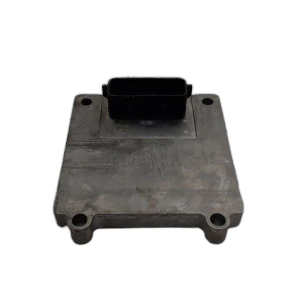
Est. part cost: $200-$1200 - Failed Engine Control Module (ECM) ⚪ Low Probability → Shop Engine Control Module (ECM) While possible, outright ECM failure is less common than wiring or power supply issues. The ECM is often wrongly condemned.
How to confirm: This is the last step after all other possibilities (power, ground, wiring, other modules) have been exhaustively ruled out. The ECM's power and ground circuits must be verified directly at the module connector using a wiring diagram.
Typical fix: Replace and program the Engine Control Module. For a 2017-2018 Savana with a 6.0L engine, a common ECM part number is 12698131. For a 2013 6.6L Diesel, an example part number is 12654088. Programming with GM-specific tools is required.
Est. part cost: $400-$1500
Rare But Worth Checking
- Failed CAN Bus Terminating Resistor: The CAN bus has a 120-ohm resistor at each end of the network. If one fails, the network becomes unstable. A healthy network should show 60 ohms of resistance when measured across the CAN High and CAN Low pins at the OBD-II port (with the battery disconnected). A reading of 120 ohms indicates an open circuit or a failed resistor. 🎬 See how to test CAN bus resistance at the OBD-II port. On many GM vans, one resistor is in the ECM and the other is in the EBCM (ABS module), so a failure of the module itself can cause this issue.
- Aftermarket Device Interference: Poorly designed or improperly installed aftermarket electronics, such as remote starters, alarms, or trailer brake controllers, can interfere with the CAN bus and cause communication codes. If the problem started after installing a new device, try disconnecting it to see if communication is restored.
Diagnosis Steps
- Check Battery Health: Ensure the battery has a full charge (12.6V+) and passes a load test. Clean any corrosion from the terminals. A weak battery is a very common cause. 🎬 Watch: Troubleshooting a no-crank and no-communication issue on a GM van.
- Scan All Modules: Use a professional scan tool to attempt communication with every module on the vehicle. Note which modules are not responding. A long list of 'U' codes points to a network-wide problem.
- Check Fuses: Inspect all fuses related to the ECM, TCM, BCM, and EBCM (ABS).
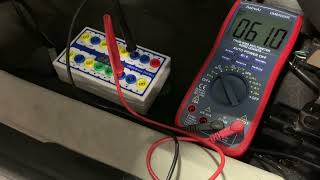
- Check Network Integrity: With the battery disconnected, use a multimeter to measure the resistance between Pin 6 (CAN High) and Pin 14 (CAN Low) at the OBD-II port. A healthy network should read approximately 60 ohms. A reading of 120 ohms indicates an open in the circuit or a bad terminating resistor/module. A reading near 0 ohms indicates a short between the two CAN wires.
- Visual Inspection: Thoroughly inspect the wiring harnesses to the ECM, ABS module, and transmission for any signs of physical damage, corrosion, or melting. Pay special attention to connectors, especially the large connector on the EBCM.
- Check Power and Grounds at the ECM: If the network wiring seems okay, use a wiring diagram to check for proper power and ground signals directly at the ECM connector.
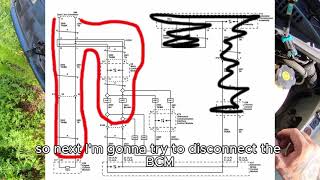
- Isolate Modules: If a network fault is suspected (e.g., incorrect resistance), begin unplugging modules one by one from the CAN bus, re-checking resistance each time. Start with the easiest to access modules identified on a wiring diagram, such as the EBCM. When the resistance returns to normal (or communication is restored), the last module unplugged is likely the source of the fault.
Parts You'll Likely Need
- Battery — Low voltage is a primary cause of communication faults.
Trusted brands: ACDelco
OEM price range: $200-$300
Aftermarket price range: $150-$250 - Engine Control Module (ECM/PCM)
(OEM #e.g., 12698131 (2017-18 6.0L), 12654088 (2013 6.6L Diesel))— This is the last resort after all wiring, power, ground, and other module faults have been ruled out.
Trusted brands: ACDelco
OEM price range: $600-$1000
Aftermarket price range: $400-$800 - Electronic Brake Control Module (EBCM/ABS Module)
(OEM #e.g., 22792968 (2012-17), 86517385 (2018-25))— A common point of failure on the CAN bus that can cause a U0100 code by disrupting the entire network.
Trusted brands: ACDelco, Dorman (Remanufactured)
OEM price range: $400-$700
Aftermarket price range: $250-$500
Related Codes That Often Appear With This One
- U0101 — Lost Communication with Transmission Control Module (TCM). The TCM and ECM are on the same high-speed CAN bus, so a network-wide failure will often set both codes. Manufacturer Bulletin #PIT5677E lists U0100 and U0101 as codes that may appear together during diagnostic procedures.
- U0140 — Lost Communication with Body Control Module (BCM). This indicates a widespread network issue, as the BCM is another critical module on the bus.
- U0073 — Control Module Communication Bus 'A' Off. This is a general code indicating the entire high-speed CAN bus is down, which is the root cause of the U0100 code.
Technical Service Bulletins (TSBs) & Recalls
- Recall N212329040 (NHTSA ID 21V-189): Affects some 2021 models with 6.6L gas engines. The positive battery cable can short to a fuse block post, causing low voltage, a dead battery, and risk of fire. This could potentially trigger a U0100 code due to the voltage drop.
- Bulletin #PIT6198: Provides a diagnostic tip for a Malfunction Indicator Lamp (MIL) at startup with DTC U0100, instructing technicians to test the accessory wake-up circuit to the ECM for power.
- Bulletin #PIT5677E: Identifies U0100 as a relevant diagnostic code alongside various powertrain and communication faults (U0073, U0101, U0140) in the GMLAN system.
- Bulletin #PIT5586G: Notes that U0100 can be found when AC controls are inoperative, often requiring a check for logic lock of the Serial Data Gateway Module.
Platform-Specific Known Issues
- Melted EBCM (ABS) Connector: A documented case on a 2017 Savana showed that heat from the exhaust can melt the EBCM connector, which is located nearby. This can cause a direct short on the CAN bus wires, taking the entire network down and logging a U0100 code.
- Water Intrusion Under Carpet: RepairPal notes that on Savana/Express vans, electrical components located under the front carpet can be damaged by water during interior cleaning or from leaks, potentially causing various electrical faults.
- Damaged Tail Light Wiring: Due to their use as cargo vans, wiring in the rear of the vehicle is susceptible to damage from shifting loads. This can cause shorts that, while less likely to directly cause U0100, can contribute to general electrical instability.
Mechanic-Grade Diagnostic Values
- CAN Bus Resistance (Battery Disconnected) — expected: ~60 Ohms. Failure: 120 Ohms indicates an open circuit or one missing terminating resistor. ~0 Ohms indicates a short between CAN High and CAN Low.
- High-Speed GMLAN Voltage (Key On, Engine Off) — expected: CAN High (Pin 6 to Ground): ~2.6V. CAN Low (Pin 14 to Ground): ~2.4V.. Failure: Significant deviation from these voltages, or both lines showing the same voltage, indicates a bus fault.
- Module Ground Circuit Resistance — expected: < 0.1 Ohms. Failure: Higher resistance indicates a poor ground connection, a common cause of communication faults.
- CAN Line Resistance to Ground (Battery Disconnected) — expected: Megaohms or Open/Infinite. Failure: A low resistance reading indicates a short to ground on either the CAN High or CAN Low wire.
Scan Tool Commands That Help
- DLC Breakout Box (e.g., AES Line Spy): Physical Test Point Access — Used at the start of diagnostics to safely access CAN High (Pin 6), CAN Low (Pin 14), and grounds (Pins 4/5) for testing with a multimeter or oscilloscope without damaging the OBD-II port pins.
- GDS2/Tech2: Module Status / Communication Check — To poll all modules on the network and see which ones are reporting online and which are not communicating. This helps create a map of the fault.
- GDS2/Tech2: Isolate Modules / Split the Network — While observing live data or network resistance, a technician will physically unplug modules one by one. The scan tool confirms when communication is restored, identifying the faulty module. For example, unplugging the EBCM and seeing the ECM come back online proves the EBCM was the source of the network disruption.
Wiring & Ground Locations
- EBCM Ground — On the frame rail, located beneath the driver's side door. It can be identified as a heavy-gauge wire (approx. 12-gauge).. A GM service bulletin identifies a poor connection at this specific ground as a primary cause for EBCM communication loss (DTC U1041) and related network faults.
- G103 — On the cowl in the left rear of the engine compartment, often above the brake booster.. This is a critical ground point for the ECM, BCM, Instrument Panel Cluster (IPC), and the Data Link Connector (DLC) itself. A fault here can cause widespread communication failure.
- G104 — On the rear of the left (driver's side) cylinder head.. This ground is associated with the Vehicle Control Module (VCM/ECM) on some engine configurations. A poor connection can lead to intermittent module operation.
- CAN Bus Splice Pack (SP205/SP206) — Often located under the driver's side dashboard, above the emergency brake pedal area. They are connectors that join multiple CAN bus wires together.. These splice packs are junction points for the network. Corrosion or loose pins within a splice pack can take down multiple modules at once. They are also a key diagnostic location for isolating sections of the network.
Real Owner Repair Stories
- Chevrolet Forum user (2014 Chevrolet Express 1500 5.3L) — U0100, U0101, U0140 codes stored in the EBCM. No check engine light, no driveability issues, but 'Service Traction Control' message appears during scans.
❌ Tried (didn't work) Checked battery, Performed CAN bus voltage and resistance tests (showed no issues), Visually inspected fuses, main grounds, and harnesses, Checked powers and grounds at the EBCM connector
✅ What actually fixed it The problem was traced to a 'sketchy pin on the EBCM connector.' Cleaning the connector resolved the communication codes. - YouTube video (Pine Hollow Auto Diagnostics) (2017 GMC Savana) — No communication on the CAN bus, no-start condition, instrument cluster dead.
❌ Tried (didn't work) Scanning for codes (no communication possible), Checking communication at the TCM connector (network was still down)
✅ What actually fixed it The technician isolated the network by unplugging modules. Unplugging the EBCM (ABS module) restored CAN bus communication. The EBCM connector was found to be melted and shorting the network. Replacing the EBCM and its connector fixed the vehicle. - NHTSA ODI #11286489 — An owner reported error code U0100 along with P25A2 and U0415, noting that the engine and transmission were not performing as expected. The dealer indicated that GMC was aware of the problem and had a possible fix, though no recall was issued for that specific instance.
OEM Part Supersession History
23412419→86517385— Standard part revision/update.
Heads up: This is the ABS Control Module (EBCM). Using the wrong part number for the model year can lead to communication or function errors.
Model Year Variations Within This Range
- 2003-2007 (approx.): These earlier models used a mix of communication protocols. The powertrain modules (ECM, TCM) used a high-speed GMLAN (a CAN variant), while many body modules (radio, door modules, etc.) used the older, slower, single-wire Class 2 protocol. The BCM often acted as a gateway to translate between them.
- 2008-Present (approx.): GM transitioned to a system using both high-speed and low-speed GMLAN. High-speed is used for critical powertrain/safety modules (ECM, EBCM, TCM), while low-speed is used for less critical body functions. This change affects diagnostic strategy, as a fault could be on either the high or low-speed bus.
- 2003: The 2003 model year marked a major update, introducing the new LS-based engines and a more integrated electrical architecture compared to the pre-2003 vans.
Diagnostic Flowchart
Other Known Issues on This Vehicle
Issues unrelated to this code that are worth knowing about as an owner of this generation:
- Peeling White Paint 🟡 Low — Extremely common on white-painted vans, particularly from the late 1990s through the 2000s, but reported on later models as well. The paint delaminates from the primer in large sheets. (Ref: No recall, as it's a cosmetic issue. Class action lawsuits have been filed for this issue on other GM trucks.)
- Faulty Fuel Level Sensor (Erratic Fuel Gauge) 🟠 Medium — Very common across many model years. The fuel gauge will read incorrectly, often showing empty right after filling up, or fluctuating randomly. (Ref: No recall, but it is a widely documented problem. The fix requires replacing the sensor, which is part of the fuel pump module inside the fuel tank.)
- Transmission Failures and Shifting Issues 🔴 High → Shop Transmission Assembly — Various transmission issues are reported depending on the specific transmission (e.g., 4L60E, 4L80E, 6L90). Problems include harsh 1-2 shifts, loss of gears, and torque converter problems. An investigation was opened for 6L90 transmission issues in 2016-2022 models. (Ref: Multiple recalls and TSBs exist for specific transmission issues over the long production run, such as a 2022-2023 recall for incorrect TCM software causing harsh shifts.)
- Intake Manifold Gasket Leaks 🟠 Medium — Common on Vortec V6 and V8 engines from the late 90s to mid-2000s, causing coolant leaks (internal or external) and potential engine overheating.
- Excessive Oil Consumption (Vortec 5.3L V8) 🔴 High — Affects some 2010-2013 models with the 5.3L V8, often attributed to the Active Fuel Management (AFM) system and piston ring design. (Ref: Subject of a class-action lawsuit.)
Used vs. New Parts: Buying Guide for This Vehicle
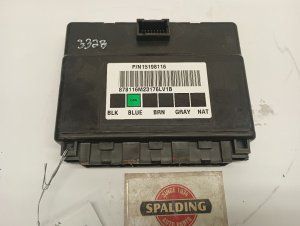
When a used part is the smart pick: Used parts are a smart choice for major electronic modules like the Engine Control Module (ECM) and the Electronic Brake Control Module (EBCM), provided you can get them from a reputable seller who guarantees they are functional. Since these parts can be very expensive new, a used part from a lower-mileage donor vehicle can save significant money.
Donor-vehicle mileage cap: roughly under 150000 miles for the part to have meaningful remaining life.
What to inspect on the donor part:
- Check for any physical damage, especially bent or corroded connector pins.
- Ask for the VIN of the donor vehicle to help with compatibility checks and potential programming needs.
- Avoid parts from vehicles with flood or fire damage, as this can cause hidden electronic issues.
- Ensure the part number exactly matches your original part or is a confirmed superseded number.
Aftermarket brands forum-validated for this vehicle:
- Dorman (for remanufactured EBCM/ABS modules)
- Cardone (for remanufactured electronics)
- Circuit Board Medics (for repair services of existing modules)
Brands owners have reported issues with on this vehicle:
- Unbranded, no-name electronic modules from online marketplaces should be avoided, as they often lack proper programming, quality control, and warranty support.
Real Owner Stories
Aggregated from forums and TSBs cited above. Mileages and costs reflect what owners reported in those sources.
2017 GMC Savana
Symptoms: The vehicle experienced a communication loss on the CAN bus. Diagnostics showed the network was down until a specific module was unplugged.
What fixed it: Unplugging a faulty ABS module restored the CAN bus signal; the fix involved replacing the ABS control module (Part #84055067) and repairing a melted connector.
Source hint: diagnostic video on a 2017 Savana,
2015 Chevrolet Express 4500
Symptoms: No-start condition with codes U0100, U0140, and U0073.
What fixed it: Diagnosed as a CAN bus communication failure.
Source hint: Chevrolet Forum - chevyforums.com: Thread titled '2015 Chevy Express 4500 - no start'
2008 Chevrolet Express
Symptoms: U0100 code and 'no communication with the computer'.
What fixed it: The source identifies the issue as a communication failure with the computer, though specific repair part is not detailed beyond the diagnostic finding.
Source hint: Opinautos.com user report
2017 Chevrolet Express
Symptoms: No-start issue similar to other communication-loss cases.
What fixed it: Identified as a communication failure with the computer.
Source hint: Opinautos.com user report
2003-2026 GMC Savana (General Platform)
Symptoms: Heat-related no-start event, U0100 code, hard shifting, and loss of power steering.
What fixed it: Temporarily resolved by a battery disconnect (hard reset), though it highlighted an intermittent electrical/network issue.
Source hint: Chevy HHR Network
Related OBD-II Codes
Frequently Asked Questions
My 2021 GMC Savana with the 6.6L gas engine has a dead battery and low voltage warnings; is there a known issue?
I have a 2017 Savana and the gauges are dead with a U0100 code. Where should I check first?
Could water under the carpet of my Savana van cause communication codes like U0100?
What is the correct resistance reading for the CAN bus on a GMC Savana?
If I need to replace the ABS module on my 2015 Savana to fix this code, what is the part number?
Can a bad ground on the frame cause the U0100 code on my GMC van?
Helpful Videos
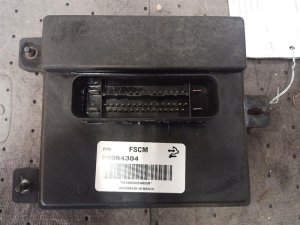
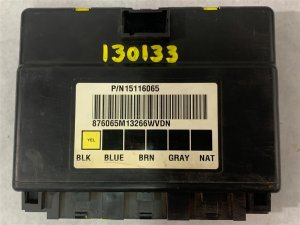
We Have This Part in Stock

The information in this article is provided for general reference and educational purposes only. Vehicle specifications, procedures, and part compatibility can vary by production date, trim level, and region. Always consult your vehicle's factory service manual and verify part numbers before purchasing or performing repairs. Safety-critical components such as airbags, seat belts, and braking systems should be installed by a qualified professional.
- GMC Savana:
- 🧭 Diagnostic Flowchart
- 🎬 Helpful Videos
- 🛍️ Shop This Part
- What's Unique About the 2003-2026 GMC Savana
- Symptoms You May Notice
- Most Likely Causes
- Rare But Worth Checking
- Diagnosis Steps
- Parts You'll Likely Need
- Related Codes That Often Appear With This One
- Technical Service Bulletins (TSBs) & Recalls
- Platform-Specific Known Issues
- Mechanic-Grade Diagnostic Values
- Scan Tool Commands That Help
- Wiring & Ground Locations
- Real Owner Repair Stories
- OEM Part Supersession History
- Model Year Variations Within This Range
- Other Known Issues on This Vehicle
- Used vs. New Parts: Buying Guide for This Vehicle
- Real Owner Stories
- 2017 GMC Savana
- 2015 Chevrolet Express 4500
- 2008 Chevrolet Express
- 2017 Chevrolet Express
- 2003-2026 GMC Savana (General Platform)
- Related OBD-II Codes
- Frequently Asked Questions
- 🎟️ Get 5% Off