

U0100 on 2016-2021 Honda Civic: Lost Communication with ECM/PCM Causes and Fixes
On a 2016-2021 Honda Civic, code U0100 is most often caused by a weak or dead battery, sometimes due to a parasitic drain from a known software flaw (TSB A19-039). Before suspecting expensive components, fully charge and test your battery and check the main ground strap on the transmission. A new battery costs around $150-$250.
- U0100 on your Civic is very serious and means you should not drive the vehicle.
- The most likely cause is a weak battery. Fully charge and test your battery before any other diagnostics.
- Check battery terminals and main ground straps for clean, tight connections.
- A known software flaw may cause a parasitic drain. If you have recurring dead batteries, ask a Honda dealer about PCM software updates related to TSB A19-039.
- Do not replace the expensive PCM unless all other possibilities have been professionally ruled out.
What's Unique About the 2016-2021 Honda Civic
The 10th generation Civic is highly sensitive to battery voltage. Many U0100 faults on this platform are not due to a failed PCM, but simply a weak battery. A known software issue, detailed in TSB A19-039 for the shared-platform CR-V, can cause a parasitic drain that prematurely kills the battery. The flaw occurs when the PCM performs an evaporative system check after shutdown and fails to go back to sleep, draining the battery. Owners often find that replacing the relatively small factory Group 51R battery with a higher-capacity one (like a Group 24F or 35 AGM) can prevent future issues.
Symptoms You May Notice
- Check Engine Light is on
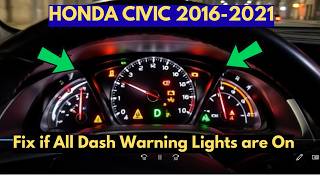
- Multiple other warning lights on the dashboard 🎬 Watch: How to fix multiple dashboard warning lights on your Civic (e.g., ABS, VSA, power steering, brake system)
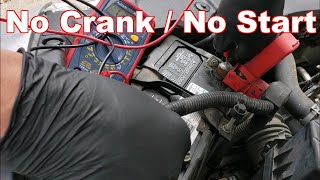
- Engine will not start or cranks but does not fire
- Engine stalls intermittently while driving
- Transmission may not shift out of Park
- Loss of power or vehicle entering 'limp mode'
- Push-to-start system is completely unresponsive (no click)
- Erratic door chime behavior
- Replacing the PCM without first testing the battery and checking all power/ground connections. A new PCM will not fix a problem caused by low voltage or a bad ground.
Most Likely Causes
- Weak or Faulty Battery 🔴 High Probability → Shop Vehicle Battery These vehicles have sensitive electronics that require stable voltage. A known software flaw (TSB A19-039) can cause a parasitic drain, weakening the battery over time. The original equipment battery (Group 51R) is also noted by owners as being undersized for the vehicle's electrical demands.
How to confirm: Test the battery voltage with a multimeter. A healthy battery should read at least 12.6 volts with the engine off. If it's below 12.4 volts, it needs charging. If it won't hold a charge after being tested with a professional load tester, it needs replacement. A Reddit user with a 2019 Civic reported being on their 4th battery due to a parasitic drain, highlighting the severity of the issue.
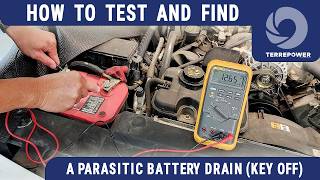
Typical fix: Replace the vehicle battery. Consider upgrading to a larger group size like a 24F or 35 AGM battery for better capacity. If a parasitic drain is suspected, have a dealer perform the software update 🎬 Learn how to test for a parasitic battery drain yourself per TSB A19-039.
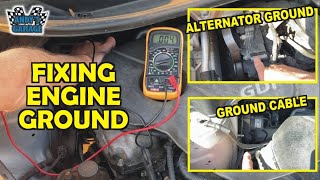
Est. part cost: $150-$300 - Poor Battery Terminal Connection or Ground Strap 🟡 Medium Probability → Shop Engine Ground Strap Corrosion on battery terminals or a loose/corroded main ground strap can create enough voltage drop to disrupt module communication. The main engine-to-chassis ground strap 🎬 See this guide on how to check and fix engine grounds, often located on the transmission housing under the airbox, is a known weak point for corrosion.
How to confirm: Visually inspect battery terminals for corrosion. Check that the main ground straps from the battery to the chassis and from the engine/transmission to the chassis are clean, tight, and free of corrosion or damage. Simulating a good ground with a jumper cable from the negative battery post to the engine block can be a quick diagnostic test.
Typical fix: Clean the battery terminals and posts with a wire brush. Remove, clean, and securely re-fasten the main ground straps, especially the one on the transmission. Replace the strap if it is heavily corroded.
Est. part cost: $10-$40 - Damaged Wiring or Connectors ⚪ Low Probability Rodent damage is a notable issue on this platform, with rodents reportedly chewing on harnesses, particularly near cylinder #4. Previous improper repairs can also lead to breaks or shorts in the CAN bus wiring harness.
How to confirm: Visually inspect the wiring harnesses connected to the PCM for any signs of chewing, chafing, burning, or corrosion on the connector pins. This is a complex check best performed by a professional.
Typical fix: Repair or replace the damaged section of the wiring harness.
Est. part cost: $20-$500
Rare But Worth Checking
- Faulty Powertrain Control Module (PCM): → Shop Engine Control Module (ECM) This is rarely the cause. All other possibilities, especially battery, grounds, and wiring, must be exhaustively ruled out before considering PCM replacement. A user on a CivicX forum tried a known-good PCM with no success, indicating the problem was elsewhere in the harness or power supply.
- Faulty Transmission Control Module (TCM): → Shop Transmission Assembly A Honda TSB for 2016-2017 Civics indicates a faulty TCM can cause a no-start and communication codes. While U0100 is not the primary code listed, a failing module on the CAN bus could disrupt the network and contribute to this fault.
- Multipurpose Camera Unit Software: On shared-platform vehicles, manufacturer Bulletin #A18-006 notes that an internal software issue with the multipurpose camera unit can trigger a "Lost Communication with the PCM" message and log code U0100-F1.
Diagnosis Steps
- Check for other DTCs. Multiple 'U' codes suggest a network-wide problem, often power-related.
- Test the battery. Use a multimeter to check the static voltage (should be >12.6V). Have the battery professionally load-tested, even if it seems fine. Low voltage is the #1 cause.
- Inspect battery terminals and cables. Ensure they are clean, tight, and free of corrosion.
- Inspect main ground straps. Critically, locate and inspect the ground strap on the transmission housing, which may require removing the air intake box for access. Check for tightness and corrosion.
- Check fuses. Inspect all fuses related to the PCM, ECM, and other control modules in the under-hood and interior fuse panels.
- If the battery, grounds, and fuses are good, the issue is likely more complex. A professional should perform a CAN bus network test. This involves checking for 60 ohms of resistance across the CAN High and CAN Low pins (pins 6 and 14) at the OBD-II port with the battery disconnected.
- If network resistance is correct, a technician will need to check for power and ground at the PCM connector. If power and ground are present, the PCM itself may be faulty, but this is the least likely cause.
Parts You'll Likely Need
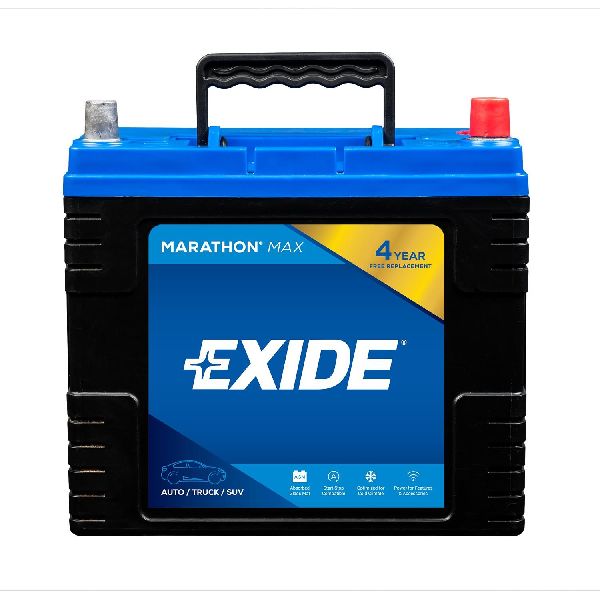
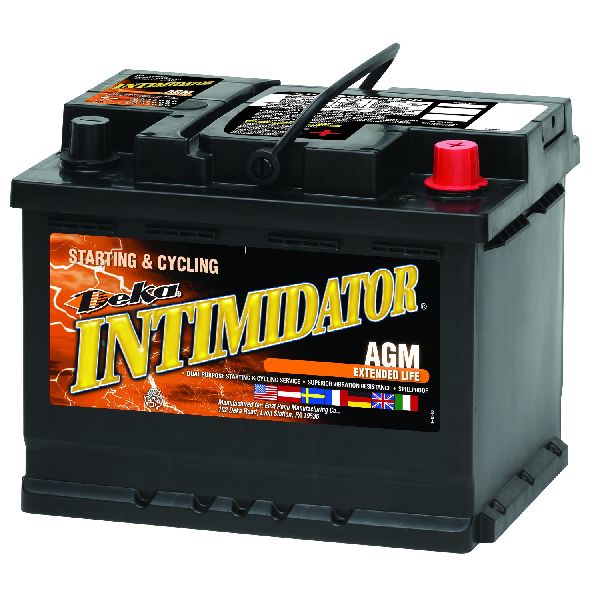
- Vehicle Battery
(OEM #31500-TBA-A11 (Original, Discontinued), Replaced by 31500-TGG-100M)— This is the most common cause. The vehicle's electronics are sensitive to low voltage, which can cause communication dropouts between modules, often triggered by a parasitic drain.
Trusted brands: Interstate (AGM), DieHard (AGM), Duralast Gold, EverStart Platinum AGM
OEM price range: $220-$320
Aftermarket price range: $180-$280
Related Codes That Often Appear With This One
- U0122 — Lost Communication With Vehicle Dynamics Control (VSA) Module. The VSA module is on the same network, and network-wide voltage issues will often cause multiple modules to report communication loss.
- U0038 — Vehicle Communication Bus B Performance. This code was noted alongside U0100 in a user's 2019 Civic with a no-start condition, suggesting a broader CAN bus fault.
- U0101 — Lost Communication with TCM. As seen in NHTSA ODI #11589674, this code often appears alongside U0100 and U0122 when multiple modules on the network fail to communicate simultaneously.
- U0416-68 — Invalid Data Received From Vehicle Dynamics Control Module. This code is frequently logged in conjunction with U0100 during system-wide communication failures, as documented in NHTSA ODI #11496856.
Technical Service Bulletins (TSBs) & Recalls
- A19-039 (NHTSA 10169977) - Officially for the 2019 CR-V, but directly relevant to the Civic. Describes a PCM software flaw causing a parasitic drain that leads to a dead battery and communication codes like U0100. The fix is a software update.
- Bulletin #A18-006 - Describes an internal software issue with the multipurpose camera unit that can cause an "Auto High Beam Problem" message and log code U0100-F1.
- Honda Service Bulletin 17-041/17-042 - While addressing a torque converter judder, these TSBs involve software updates to the PGM-FI (ECU/PCM) and TCM, showing how software plays a critical role in the powertrain communication on this platform.
- Honda Service Bulletin 19-091 - Details the 10-year warranty extension for faulty A/C condensers, a major non-U0100 issue for this platform.
Platform-Specific Known Issues
- A Technical Service Bulletin for the 2019 CR-V (A19-039, NHTSA 10169977) addresses a parasitic battery drain caused by a PCM software flaw. After the vehicle is parked, the PCM performs an EVAP system check but may fail to return to sleep mode, draining the battery. This issue is known to affect the 2016-2021 Civic as it shares the same platform and electrical vulnerabilities, making it a primary root cause for U0100. The fix is a PCM software update performed by a dealer.
Mechanic-Grade Diagnostic Values
- CAN Bus Network Resistance — expected: ~60 Ohms. Failure: A reading of ~120 Ohms indicates an open circuit or a fault in one of the two terminating resistors (one is in the PCM, the other often in the gauge control module). A reading near 0 Ohms indicates a short between the CAN High and CAN Low wires.
- CAN Bus Voltage (Key ON, Engine OFF) — expected: CAN High (Pin 6 at DLC): ~2.6V. CAN Low (Pin 14 at DLC): ~2.4V. Both voltages should be steady and mirror each other.. Failure: Voltages that are stuck high (near 5V), low (near 0V), or are identical indicate a short to power, ground, or a short between the two CAN lines.
- PCM Ground Connection Voltage Drop — expected: < 1.0V. Failure: A voltage reading higher than 1.0V between the PCM ground pin and the negative battery terminal indicates a poor ground connection, which can cause communication issues.
Scan Tool Commands That Help
- Honda Diagnostic System (HDS): F-CAN Bus Connected Unit Check — To poll the entire Fast-speed CAN bus and see which modules are online and communicating. This can quickly identify if the PCM is the only module offline or if multiple modules are down.
- Honda Diagnostic System (HDS) or capable aftermarket scanner (e.g., Autel, Launch): Immobilizer System > Replace ECM/PCM — This function is mandatory after installing a new or used PCM. It rewrites the key and immobilizer data to the replacement module, allowing the engine to start. Failure to perform this step will result in a no-start condition.
Wiring & Ground Locations
- G101 — Main engine-to-chassis ground, typically located on the transmission housing, under the air intake assembly.. This is the primary ground path for the powertrain. Corrosion or looseness here is a very common cause of low voltage to the PCM, triggering U0100 before any other symptoms appear.
- G201 — Located under the dashboard, typically near the driver's side kick panel.. This is a major interior ground point. While less likely to be the primary cause than G101, a fault here can cause communication issues between the PCM and interior modules like the gauge cluster or BCM.
- CAN Bus Terminating Resistors — Two 120-Ohm resistors exist. One is internal to the PCM. The second is typically located in the Gauge Control Module (instrument cluster) on this platform.. The network requires 60 Ohms of total resistance to function. If the Gauge Control Module fails or is disconnected, the total bus resistance will jump to 120 Ohms, disrupting communication and potentially setting a U0100 code, even though the PCM itself may be fine.
Real Owner Repair Stories
- CivicX Forum / YouTube Diagnosis (2016-2018 Honda Civic) — Intermittent no-start, multiple warning lights, U0100 code stored.
❌ Tried (didn't work) Replacing the battery, Checking main engine grounds, Clearing codes (they returned immediately)
✅ What actually fixed it A poorly installed aftermarket remote start system was found to be the cause. The system's wiring was improperly spliced into the CAN bus, causing interference and intermittent communication loss. Removing the aftermarket remote start system and repairing the spliced wires resolved all issues. - YouTube - Professional Technician Diagnosis (2007 Honda Civic Si (similar F-CAN architecture)) — No communication with Gauge Control Module, temperature gauge not working, various CAN codes including U0100.
❌ Tried (didn't work) Initially suspected the Gauge Control Module was faulty due to specific codes., Checking PCM connections.
✅ What actually fixed it The technician disconnected modules on the CAN bus one by one. When the ABS/VSA module was disconnected, communication on the network was restored. The ABS/VSA module had an internal short that was pulling down the entire CAN bus. Replacing the faulty ABS module fixed the U0100 and all other communication codes. - NHTSA ODI #11670114 — An owner reported receiving codes P0172, U0038, and U0100. Despite being told that replacing fuel injectors would fix the vehicle, the issues persisted.
- NHTSA ODI #11442354 — A report describes a "Lost Communication with ECM/PCM 'A'" condition specifically identified as U0100-00, requesting a manufacturer fix for the recurring communication failure.
OEM Part Supersession History
37820-5BA-A71, 37820-5BA-A72, ...A73, ...A74, ...A75, ...A76→37820-5BA-A77— Firmware updates and minor hardware revisions to address bugs and improve performance.
Heads up: While later part numbers are generally backward compatible for a given engine/transmission/emissions configuration, all replacements (new or used) require mandatory immobilizer programming with a tool like the Honda HDS to allow the vehicle to start.31500-TBA-A11→31500-TGG-100M— Original Group 51R battery was found to be undersized for the vehicle's electrical load and parasitic drain vulnerability. The replacement is a slightly higher capacity version, though many owners opt for a much larger aftermarket AGM battery.
Model Year Variations Within This Range
- 2019-2021: The 2019 model year refresh introduced minor interior and exterior styling changes, made the Honda Sensing suite standard, and added a physical volume knob to the Display Audio system. While the core electrical architecture and L15BA engine remained the same, some control module part numbers and software versions may differ from the 2016-2018 models. However, the underlying vulnerability to U0100 from low voltage remains identical across the entire 2016-2021 range.
Diagnostic Flowchart
Other Known Issues on This Vehicle
Issues unrelated to this code that are worth knowing about as an owner of this generation:
- Engine Oil Dilution 🔴 High — Common, especially on 2016-2018 models in colder climates or with frequent short trips. Can occur at low mileage (<30,000 miles). (Ref: Honda issued multiple TSBs (e.g., 18-137, 19-033) and a warranty extension to address this. The fix involves software updates for the ECU and TCU, and sometimes an A/C control unit replacement to improve engine warm-up.)
- A/C Condenser Leaking 🔴 High — Very common across all 2016-2021 models. The condenser is prone to developing tiny holes and leaking refrigerant. (Ref: Honda extended the warranty on the A/C condenser to 10 years with unlimited mileage (TSB 19-091). This does not cover damage from road debris.)
- A/C Compressor Shaft Seal Leak 🟠 Medium — A known issue due to a supplier manufacturing defect, causing refrigerant to leak from the compressor shaft seal. (Ref: Honda extended the warranty on the A/C compressor shaft seal to 10 years with unlimited mileage (TSB 23-039).)
- Premature Head Gasket Failure 🟠 Medium — Seen on some 1.5T engines, typically between 40,000 to 70,000 miles. Symptoms include coolant consumption and a cold start misfire.
- Sticky or Failing Electronic Parking Brake Button 🟡 Low — The button in the center console can become sticky or fail, often due to spilled liquids, preventing the parking brake from being set or released.
Used vs. New Parts: Buying Guide for This Vehicle
When a used part is the smart pick: A used PCM from a reputable recycler is a viable cost-saving option, provided it is the exact matching part number for the vehicle's engine, transmission, and emissions package. A used wiring harness section can also be a good choice for repairing localized rodent or physical damage.
Donor-vehicle mileage cap: roughly under 100000 miles for the part to have meaningful remaining life.
What to inspect on the donor part:
- For a PCM: Ensure no physical damage, corrosion, or signs of water intrusion on the case or connectors.
- For a wiring harness: Check for uncut connectors, intact sheathing, and no signs of previous repairs, burns, or rodent nesting.
OEM-only on this vehicle (don't cheap out):
- Powertrain Control Module (PCM): While a used OEM part is acceptable, avoid unbranded 'new' aftermarket PCMs. The complexity of Honda's software and immobilizer system means only genuine OEM or professionally remanufactured OEM units are reliable.
Aftermarket brands forum-validated for this vehicle:
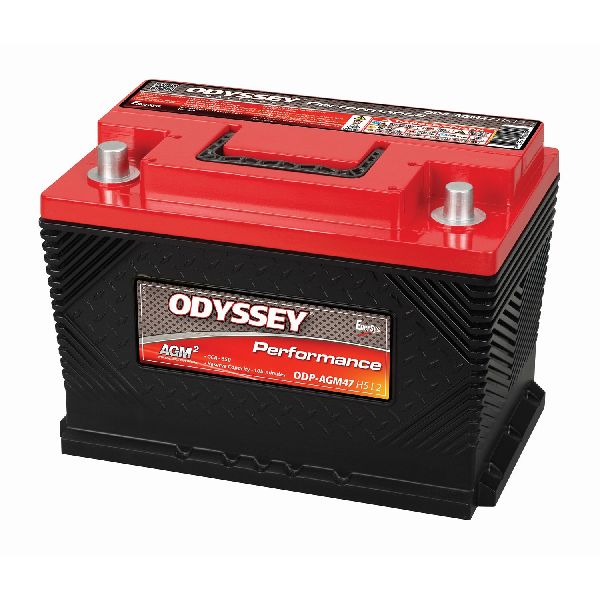
- Battery: Interstate (MTP or MTX series), DieHard Platinum AGM, Duralast Platinum AGM, Odyssey, and NorthStar are frequently recommended by owners as robust upgrades over the stock battery.
Brands owners have reported issues with on this vehicle:
- Remote Starters / Alarms: Avoid any brand that requires splicing into CAN bus wires. Only consider 'T-harness' or 100% plug-and-play systems if an aftermarket starter is desired, and even then, be aware they can be a potential point of failure.
Real Owner Stories
Aggregated from forums and TSBs cited above. Mileages and costs reflect what owners reported in those sources.
2019 Honda Civic 1.5L Turbo — 43000 miles
Symptoms: Owner reported being on their fourth battery due to a persistent parasitic drain issue.
What fixed it: The context identifies the fix for this parasitic drain as a PCM software update per TSB A19-039 to ensure the EVAP system check enters sleep mode.
Source hint: Reddit (r/MechanicAdvice)
2019 Honda Civic EX 1.5L Turbo
Symptoms: No-start condition with codes U0100 and U0038 appearing after the airbox and turbo were removed for service.
What fixed it: Checking all connections and grounds during reassembly, specifically focusing on the area around the airbox where ground straps are located.
Source hint: ScannerDanner Forum
2019 Honda Civic Type R
Symptoms: No-start, no-crank condition with code U0100. Fuses were checked and the PCM was swapped but the issue remained.
What fixed it: The failure pointed toward a wiring harness or ground fault rather than a faulty PCM.
Source hint: Reddit (r/CivicX)
2021 Honda Civic
Symptoms: Owner reported receiving codes U0100, U0038, and P0172 on an OBD-II scanner. The vehicle continued to have issues even after fuel injectors were replaced.
What fixed it: The owner noted that the dealership's initial mechanical fix did not resolve the underlying electrical/communication faults.
Source hint: NHTSA ODI #11670114
Documented NHTSA Reports
Shared Platform Communication Failures
Symptoms: A dealership found a massive log of communication errors including U0100-00, U0100-F1, U0101-00, U0122-00, and U0151-00 after a vehicle rebooted and cleared errors.
Context: This pattern of "Lost Communication" codes across multiple modules is typical of the voltage-sensitive architecture found in modern Honda vehicles.
Source hint: NHTSA ODI #11589674
Network-Wide Permanent Codes
Symptoms: Diagnostic scans revealed a long list of permanent codes including U0100, U1204, U12A5, and U0111 affecting the powertrain, steering, and braking systems.
Context: Such extensive code lists often point to a central gateway or power supply issue rather than individual module failures.
Source hint: NHTSA ODI #11496856
Related OBD-II Codes
Frequently Asked Questions
Does TSB A19-039 apply to my 2016-2021 Honda Civic?
Why does my Civic have a 'Christmas tree' of warning lights like ABS, VSA, and Power Steering along with U0100?
Can I upgrade the battery in my Civic to prevent U0100 and parasitic drain issues?
Where is the main ground strap located on the 1.5L Turbo Civic?
Is there a warranty extension for the A/C system on my 2016-2021 Civic?
Could rodents be the cause of my U0100 code?
Helpful Videos

We Have This Part in Stock


The information in this article is provided for general reference and educational purposes only. Vehicle specifications, procedures, and part compatibility can vary by production date, trim level, and region. Always consult your vehicle's factory service manual and verify part numbers before purchasing or performing repairs. Safety-critical components such as airbags, seat belts, and braking systems should be installed by a qualified professional.
- Honda Civic:
- 🧭 Diagnostic Flowchart
- 🎬 Helpful Videos
- 🛍️ Shop This Part
- What's Unique About the 2016-2021 Honda Civic
- Symptoms You May Notice
- Most Likely Causes
- Rare But Worth Checking
- Diagnosis Steps
- Parts You'll Likely Need
- Related Codes That Often Appear With This One
- Technical Service Bulletins (TSBs) & Recalls
- Platform-Specific Known Issues
- Mechanic-Grade Diagnostic Values
- Scan Tool Commands That Help
- Wiring & Ground Locations
- Real Owner Repair Stories
- OEM Part Supersession History
- Model Year Variations Within This Range
- Other Known Issues on This Vehicle
- Used vs. New Parts: Buying Guide for This Vehicle
- Real Owner Stories
- 2019 Honda Civic 1.5L Turbo — 43000 miles
- 2019 Honda Civic EX 1.5L Turbo
- 2019 Honda Civic Type R
- 2021 Honda Civic
- Documented NHTSA Reports
- Shared Platform Communication Failures
- Network-Wide Permanent Codes
- Related OBD-II Codes
- Frequently Asked Questions
- 🎟️ Get 5% Off