

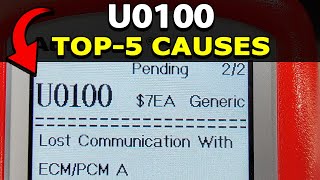
U0100 on 2007-2012 Hyundai Santa Fe: Lost Communication With ECM/PCM Causes and Fixes
On a 2007-2012 Hyundai Santa Fe, code U0100 most often means there is a power supply problem. Before suspecting an expensive computer failure, check that the battery is fully charged (at least 12.6V) and inspect all engine and chassis ground connections for corrosion or looseness. A failing alternator or oil leaking onto it from a bad valve cover gasket is also a known issue on this platform that can lead to voltage problems and this code.
- Code U0100 means the Engine Control Module (ECM) has lost communication, which is a critical failure.
- Do not immediately assume the ECM is bad. The most common causes are much simpler: a weak battery, loose/corroded ground wires, or a blown fuse.
- Start your diagnosis by testing the battery and inspecting all power and ground connections before moving to more complex wiring checks.
- This code is a major safety concern as the engine can shut down unexpectedly. Do not drive the vehicle until the issue is resolved.
- Due to the complexity of network diagnostics, professional service is highly recommended if the basic checks do not solve the problem.
What's Unique About the 2007-2012 Hyundai Santa Fe
For the second-generation (CM) Hyundai Santa Fe, the U0100 code is specifically triggered when modules like the 4WD system (ITM-ECU) lose the required data stream from the engine computer. While the causes are common to many vehicles, these Santa Fe models are particularly sensitive to low battery voltage, which can disrupt communication between modules and is a very frequent root cause of this code. Furthermore, on V6 models, a leaking front valve cover gasket is a known problem that can drip oil directly onto the alternator, causing it to fail, leading to charging system issues and subsequent communication codes.
Symptoms You May Notice
- Check Engine Light is on (may be solid or flashing)
- Vehicle will not start, or the starter does not engage
- Engine stalls intermittently while driving
- Reduced engine power or 'limp mode'
- Poor fuel economy
- Multiple warning lights on the dashboard (e.g., ABS, ESP, 4WD) may illuminate simultaneously
- Erratic idle speed
- Dimming or flickering headlights and interior lights
- Replacing the ECM/PCM without first verifying its power and ground supply. A new ECM will not work if the underlying wiring or power issue is not fixed.
- Replacing the battery without checking the alternator's health. If a bad alternator is not charging the battery, the new battery will soon fail and the U0100 code will return.
Most Likely Causes
- Weak or Faulty Battery 🔴 High Probability → Shop Vehicle Battery Modern control modules are highly sensitive to voltage. A battery providing less than 12.4 volts at rest can cause unpredictable communication errors across the CAN network. This is the most common and easiest-to-fix cause.
How to confirm: Use a multimeter to test the battery voltage with the engine off. A healthy battery should read at least 12.6 volts. Test the voltage during cranking; it should not drop below 10 volts. If the car starts, check the voltage with the engine running; it should be between 13.7 and 14.7 volts to confirm the alternator is charging.
Typical fix: Recharge or replace the vehicle's battery. Clean any corrosion from the battery terminals with a wire brush.
Est. part cost: $150-$300 - Poor ECM/PCM Power or Ground Connections 🟡 Medium Probability Engine bay ground straps can corrode or become loose over time, creating high resistance in the circuit that powers the ECM. This effectively starves the module of stable power. Checking grounds is a critical step before replacing any parts.
How to confirm: Visually inspect all ground straps from the engine and transmission to the chassis for corrosion, fraying, or looseness. A key ground point is often located on the driver's side inner fender near the battery. Use a multimeter to check for continuity (less than 0.1 ohms) between the ECM ground pins and the chassis.
Typical fix: Clean the contact points of the ground connections with a wire brush and ensure they are tight. Replace any corroded or broken ground straps.
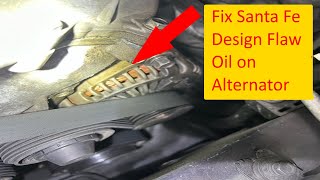
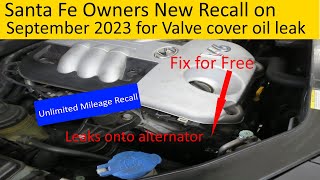
Est. part cost: $15-$50 - Failing Alternator (Potentially due to oil leak) 🟡 Medium Probability → Shop Alternator On the 3.3L and 3.5L V6 engines, the front valve cover gasket is prone to leaking oil directly onto the alternator below it. This oil saturation causes the alternator to fail prematurely, leading to an unstable power supply and triggering communication codes like U0100.
How to confirm: Visually inspect the alternator for signs of oil saturation. With the engine running, use a multimeter to check the voltage at the battery terminals. A reading below 13.7V indicates a charging problem. Symptoms also include dimming lights, a battery warning light, or a whining noise from the engine bay.
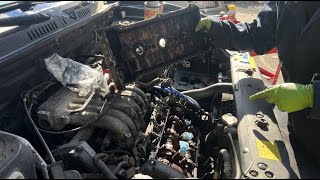
Typical fix: Replace the failed alternator. Crucially, the source of the oil leak (the valve cover gasket) 🎬 Watch: How to replace the valve cover gasket and alternator. must also be replaced to prevent repeat failure.
Est. part cost: $200-$500 (Alternator), $50-$100 (Gasket Set) - Damaged Wiring or Connectors on the CAN Bus 🟡 Medium Probability
How to confirm: Perform a thorough visual inspection of the wiring harness leading to the ECM and other modules. Look for chafed wires, rodent damage, or corrosion on connector pins. This may require removing plastic covers or tape.
Typical fix: Repair the damaged section of wiring. Clean or replace corroded connectors. Ensure all connectors are fully seated.
Est. part cost: $10-$100 - Blown Fuse ⚪ Low Probability
How to confirm: Check all fuses related to the ECM, PCM, or ECU in both the interior and under-hood fuse boxes. A blown fuse will prevent the module from powering on.
Typical fix: Replace the blown fuse with a new one of the exact same amperage rating.
Est. part cost: $1-$5
Rare But Worth Checking
- Faulty Engine Control Module (ECM/PCM): → Shop Engine Control Module (ECM) This is the least likely cause and should only be considered after all power, ground, and wiring issues have been definitively ruled out. Module failure can happen, but it's often misdiagnosed.
- Shorted 5V Sensor Reference Circuit: A sensor connected to the ECM can short internally, pulling down the 5-volt reference circuit and preventing the ECM from functioning correctly. Diagnosis involves unplugging sensors one by one (like the MAP sensor) to see if communication is restored.
- Aftermarket Device Interference: Improperly installed remote starters, alarms, or audio equipment can interfere with the CAN bus network, causing communication errors.
Diagnosis Steps
- Check Battery and Charging System: Using a multimeter, verify the battery has at least 12.6V with the engine off. Start the engine and confirm charging voltage is between 13.7V and 14.7V. A low reading indicates a faulty alternator. Clean any corrosion from the terminals.
- Inspect Fuses: Check all fuses labeled ECM, PCM, ECU, or B+ in both the interior and under-hood fuse panels. Replace any that are blown.
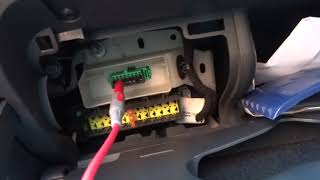
- Inspect Grounds: Visually inspect and physically check the main engine and chassis ground connections. 🎬 Watch: How to diagnose and fix bad ground connections. Ensure they are clean, tight, and free of corrosion. Pay special attention to the main ground strap between the engine block and the chassis.
- Inspect for Oil Leaks (V6 Models): On 3.3L and 3.5L engines, carefully inspect the front valve cover for oil leaks. Look for signs of oil residue on or below the valve cover, dripping down onto the alternator.
- Inspect Wiring Harness: Visually inspect the wiring harness connected to the ECM for any signs of physical damage, such as chafing, melting, or rodent damage. Check that the connectors are secure and the pins are not corroded.
- Check for Power at the ECM: Using a wiring diagram for your specific vehicle, use a multimeter to confirm that the ECM is receiving battery voltage and has a solid ground connection at its connector pins.
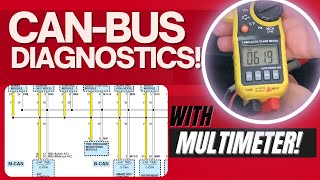
- Check the CAN Bus Network: This is an advanced step. With the ignition off, use a multimeter to check for resistance between pins 6 (CAN-H) and 14 (CAN-L) 🎬 See this quick guide on testing CAN bus resistance. of the OBD-II port. The reading should be approximately 60 Ohms. A reading of 120 Ohms suggests an open circuit or a missing terminating resistor, while 0 Ohms indicates a short between the two lines.
- Isolate Modules: If the network appears to be down, you can try disconnecting other modules on the same CAN bus (like the ABS or TCM) one at a time to see if communication with the ECM returns. A faulty module can short the entire network.
- Suspect the ECM: If all wiring, power, and grounds are confirmed to be good, the ECM itself may have failed. This should be the final step in diagnosis.
Parts You'll Likely Need
- Vehicle Battery — Low system voltage is the most common cause of communication network codes like U0100.
Trusted brands: Bosch, Duralast, Interstate
OEM price range: $200-$350
Aftermarket price range: $150-$300 - Engine Control Module (ECM)
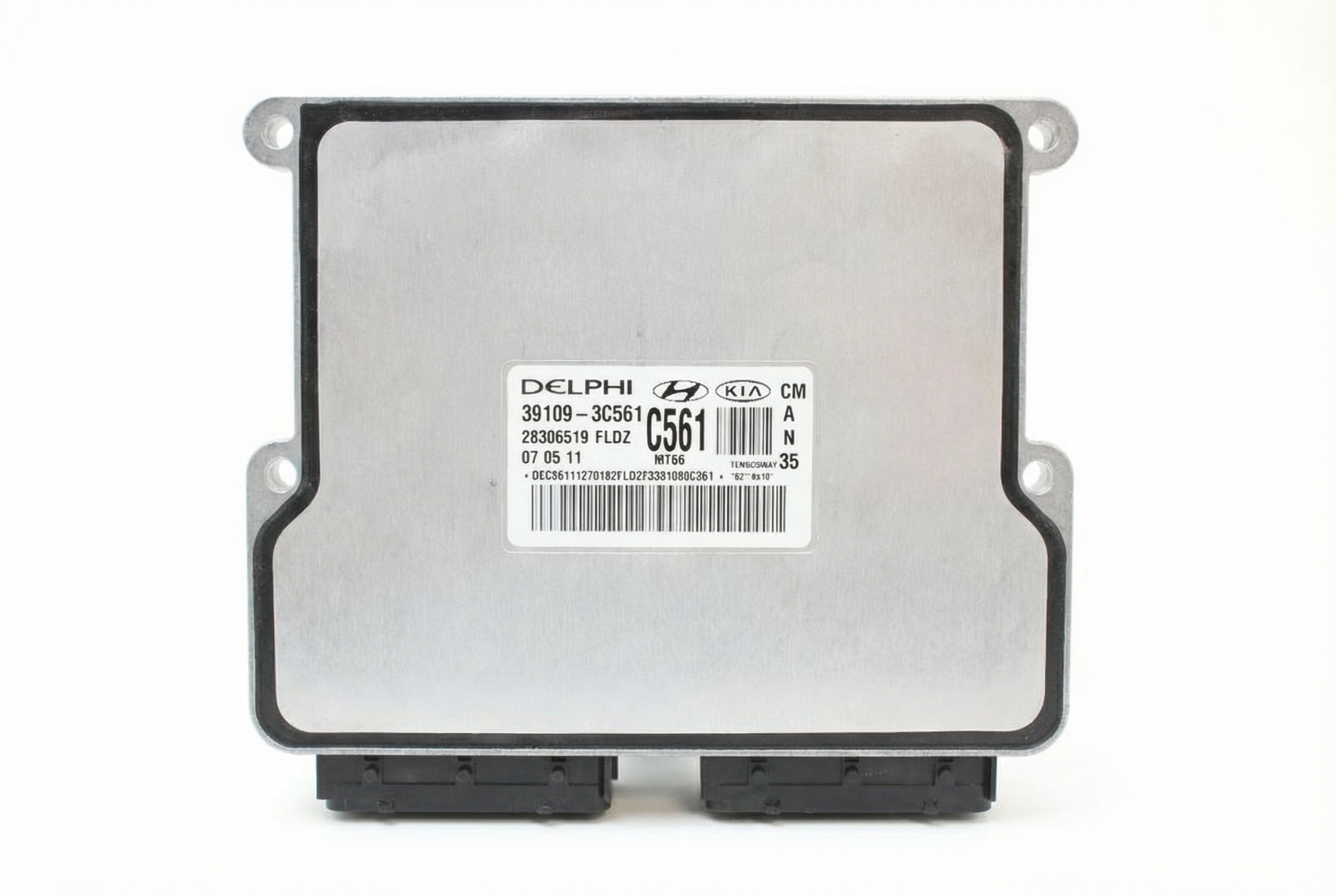
(OEM #e.g., 39110-3C561, 39110-3C562 (for 2007-2009 3.3L/3.5L, always verify with VIN))— If all wiring, power, and ground circuits are verified to be good, the module itself may have failed internally.
Related Codes That Often Appear With This One
- U0101 — Lost Communication with TCM. The TCM (Transmission Control Module) is on the same high-speed CAN network, so a network-wide failure will often cause communication loss to both modules.
- U0121 — Lost Communication with ABS Control Module. Like the TCM, the ABS module is on the same network, and a general communication failure will log codes for multiple modules.
- P0562 — System Voltage Low. This code strongly suggests that a failing battery or charging system is the root cause of the communication failure.
Platform-Specific Known Issues
- source — A user on the 2CarPros forum described a no-start condition with a U0100 code after replacing a damaged engine wiring harness. The symptoms included clicking from the fuse box and all dash lights going out when trying to start. The initial advice from a mechanic was to first verify the replacement harness was correct and then meticulously check all fuses and ground wire connections, as these are easy to overlook during a harness swap.
Mechanic-Grade Diagnostic Values
- CAN Bus Network Resistance — expected: Approximately 60 Ohms. Failure: 120 Ohms indicates a missing terminating resistor or an open circuit. 0 Ohms indicates a short between CAN High and CAN Low lines.
- CAN Bus Voltage (Key On, Engine Off) — expected: CAN-H (Pin 6) to Ground: ~2.6V to 3.0V. CAN-L (Pin 14) to Ground: ~2.4V to 2.0V.. Failure: A line stuck at 0V or 5V indicates a short to ground or power, respectively.
- ECM Internal Resistance (CAN Port) — expected: 28k - 50k Ohms. Failure: A reading significantly outside this range suggests internal damage to the ECM's CAN transceiver.
Scan Tool Commands That Help
- Hyundai GDS (Global Diagnostic System): Vehicle S/W Management (ECU Upgrade) — Used to re-flash the ECM with updated software, which can resolve logic-based communication faults. It can be run in 'Auto Mode' for standard updates or 'Manual Mode' for recovery if an update fails.
- Hyundai GDS (Global Diagnostic System): Flight Record — This function is used to capture data during a test drive to diagnose intermittent communication dropouts. It records data from the last ten minutes when a trigger is activated by the technician.
Wiring & Ground Locations
- G01 — On the body, near the right front (passenger side) of the engine compartment.. This is a primary ground point for various engine bay components. While not exclusively for the ECM, poor contact at this location can introduce electrical noise and voltage stability issues that affect module communication.
- OBD-II Connector (DLC) — Under the driver's side dashboard.. This is the primary access point for testing the entire CAN bus network. Pins 6 (CAN-H) and 14 (CAN-L) are used for network resistance and voltage checks.
- TCM Connector (C224-C) — On the passenger side of the vehicle.. On some models, this provides an alternative access point to the CAN bus wires (Pin 3 for CAN-H, Pin 4 for CAN-L) if the OBD-II port is suspected to be isolated from the main network by a faulty gateway.
Real Owner Repair Stories
- Aftermarketonline Magazine (2016 Hyundai Santa Fe Diesel (Note: a newer generation, but the diagnostic principle for CAN failure is identical)) — Vehicle would start but not move. Nearly every warning light was on. Electronic parking brake would not release. Scan tool could only communicate with three modules (Immobilizer, A/C, CODE module), all reporting CAN faults.
❌ Tried (didn't work) Initial scan showed a massive network failure, pointing to a system-wide issue rather than a single module.
✅ What actually fixed it The technician diagnosed a short-to-ground on the CAN bus. By disconnecting modules one by one, the fault was isolated to the rear camera. The faulty rear camera was shorting out the entire network, preventing communication. Replacing the camera restored all communications and vehicle function. - YouTube (Pine Hollow Auto Diagnostics) (2022 Hyundai Santa Fe (Note: a newer generation, but illustrates a common wiring failure mode)) — Intermittent CAN communication fault on the local CAN between the lane-keep assist camera and the adaptive cruise control radar.
❌ Tried (didn't work) Initial checks of the CAN signal with an oscilloscope showed an incorrect waveform.
✅ What actually fixed it The technician found that wiggling the connector at the radar module would clean up the signal. The cause was poor terminal tension on the radar's power feed pin within the connector, causing unstable power to the module and disrupting its ability to communicate. Replacing the sub-harness with the faulty connector resolved the issue.
Model Year Variations Within This Range
- 2007-2009: Pre-facelift models were primarily offered with the 2.7L V6 and 3.3L V6 engines.
- 2010-2012: The 2010 model year facelift introduced new powertrain options, replacing the previous engines with a 2.4L I4 and a 3.5L V6. While the U0100 diagnostic principles are the same, the specific ECM part numbers and locations of some components like the alternator (prone to oil leaks on the 3.5L) will differ from earlier V6 models.
Diagnostic Flowchart
Other Known Issues on This Vehicle
Issues unrelated to this code that are worth knowing about as an owner of this generation:
- Faulty Fuel Level Sensor 🟠 Medium — Very common on 2007-2009 models. The fuel gauge becomes erratic or reads empty, often triggering a Check Engine Light.
- Leaking Valve Cover Gaskets (V6 Engines) 🔴 High — Common on 3.3L and 3.5L V6 engines. The front gasket leaks oil directly onto the alternator, causing premature alternator failure.
- Failing Crankshaft Position Sensor 🔴 High — A known issue that can cause intermittent stalling or a no-start condition.
- Transmission Hesitation and Hard Shifting 🟠 Medium → Shop Transmission Assembly — Owners report issues with shift quality and hesitation, particularly in earlier years of this generation.
- Prematurely Worn Suspension Components 🟡 Low — Ball joints, tie rods, and control arm bushings can wear out faster than expected, leading to noise and alignment problems.
Used vs. New Parts: Buying Guide for This Vehicle
When a used part is the smart pick: A used Engine Control Module (ECM) from a reputable salvage yard can be a cost-effective option, especially if a new unit is prohibitively expensive or unavailable. It is critical to match the part number exactly. Used alternators and batteries are generally not recommended due to their limited and uncertain remaining lifespan.
Donor-vehicle mileage cap: roughly under 100000 miles for the part to have meaningful remaining life.
What to inspect on the donor part:
- For an ECM, ensure the donor vehicle was not in a flood or fire.
- Verify the part number on the used ECM is an exact match to the original.
- Check the salvage yard's return policy in case the module is faulty or requires programming that cannot be completed.
- Inspect the connector pins on the used ECM for any signs of corrosion or damage.
OEM-only on this vehicle (don't cheap out):
- Engine Control Module (ECM): While a used OEM unit is an option, avoid non-branded, no-name aftermarket ECMs. Stick with original Hyundai parts (new or used) or reputable remanufacturers (e.g., Cardone, Blue Streak Electronics) as they are properly programmed and tested for compatibility.
Aftermarket brands forum-validated for this vehicle:
- Alternators: Denso, Valeo, Mando (often the OEM supplier for Hyundai).
- Batteries: Interstate, Bosch, Duralast.
Brands owners have reported issues with on this vehicle:
- Avoid unbranded, 'white-box' electronic components like ECMs or sensors from online marketplaces, as they often have high failure rates and can cause further diagnostic confusion.
Real Owner Stories
Aggregated from forums and TSBs cited above. Mileages and costs reflect what owners reported in those sources.
2007-2012 Hyundai Santa Fe
Symptoms: No-start condition after replacing a damaged engine wiring harness; clicking sounds coming from the fuse box and all dashboard lights going out when attempting to start the vehicle.
What fixed it: Meticulously checking all fuses and ground wire connections to ensure they were tight and correctly installed following the harness replacement.
Source hint: 2CarPros forum thread titled 'will-not-start-and-code-u0100'
Related OBD-II Codes
Frequently Asked Questions
Why is my 3.3L or 3.5L V6 Santa Fe showing a U0100 code along with a whining noise from the engine?
My Santa Fe won't start and the dash lights are flickering; could this be the ECM?
I just replaced my engine wiring harness and now I have a U0100 and a no-start condition. What should I check?
Can a blown fuse cause a U0100 code on a 2007-2012 Santa Fe?
Is there a specific ground point I should check on my Santa Fe to fix communication errors?
What should the resistance be when testing the CAN Bus at the OBD-II port?
Helpful Videos



Used OEM Parts in Stock
New Aftermarket Parts Available


The information in this article is provided for general reference and educational purposes only. Vehicle specifications, procedures, and part compatibility can vary by production date, trim level, and region. Always consult your vehicle's factory service manual and verify part numbers before purchasing or performing repairs. Safety-critical components such as airbags, seat belts, and braking systems should be installed by a qualified professional.
- Hyundai Santa Fe:
- 🧭 Diagnostic Flowchart
- 🎬 Helpful Videos
- 🛍️ Shop This Part
- What's Unique About the 2007-2012 Hyundai Santa Fe
- Symptoms You May Notice
- Most Likely Causes
- Rare But Worth Checking
- Diagnosis Steps
- Parts You'll Likely Need
- Related Codes That Often Appear With This One
- Platform-Specific Known Issues
- Mechanic-Grade Diagnostic Values
- Scan Tool Commands That Help
- Wiring & Ground Locations
- Real Owner Repair Stories
- Model Year Variations Within This Range
- Other Known Issues on This Vehicle
- Used vs. New Parts: Buying Guide for This Vehicle
- Real Owner Stories
- 2007-2012 Hyundai Santa Fe
- Related OBD-II Codes
- Frequently Asked Questions
- 🎟️ Get 5% Off