

U0100 on 2013-2018 Hyundai Santa Fe: Lost Communication With ECM Fixes
U0100 on a 2013-2018 Santa Fe indicates a loss of communication with the engine computer. The most common causes are a weak battery, corroded battery terminals, or bad ground connections. Before suspecting the expensive ECM, always test the battery and inspect all main power and ground connections, as low voltage is a very frequent trigger for this code.
- Do not drive your vehicle. U0100 indicates a critical communication failure that could cause the engine to stall at any time.
- Always check the battery and ground connections first. A simple voltage drop is the most common trigger for this code.
- Multiple warning lights on the dashboard are a common symptom and point towards a network-wide communication problem, not necessarily a failure of all those individual systems.
- If your Santa Fe is a 2013-2015 Sport model, check if Recall 194 regarding the ABS module has been performed, as it can cause related electrical issues.
- Avoid immediately replacing the ECM. It is the most expensive and least likely cause; all other diagnostic steps should be completed first.
What's Unique About the 2013-2018 Hyundai Santa Fe
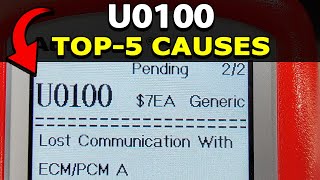
The 2013-2018 Santa Fe (generation DM/NC) relies heavily on its CAN bus network for all systems to function. While U0100 is a generic code, its appearance on this platform is frequently traced back to simple electrical system faults rather than catastrophic computer failure. 🎬 Watch: Top 5 causes for lost communication with the ECM. Owners often report that a weak battery or a loose ground strap is enough to disrupt the entire network, causing this code and a host of other alarming symptoms. It's a platform where starting with the most basic electrical checks is paramount, as modern vehicles have a high electrical demand and communication systems are often the first to fail when voltage is low.
Symptoms You May Notice
- Check Engine Light is on, possibly flashing or turning on and off intermittently.
- Multiple other warning lights on the dash (ABS, ESC, Airbag).
- Engine will not start or cranks but does not fire.
- Engine stalls intermittently while driving.
- Transmission may not shift correctly or get stuck in one gear (limp mode).
- Drastic drop in fuel economy.
- Loss of throttle response or vehicle enters 'limp mode' with reduced power and RPM limited to ~2000.
- Replacing the ECM without first verifying battery health, ground connections, and wiring integrity. The ECM is expensive and often blamed incorrectly when the root cause is a simple power or ground issue.
Most Likely Causes
- Weak or Failing Battery 🔴 High Probability → Shop Vehicle Battery Modern vehicles have a high electrical demand. A battery with low voltage can cause modules to drop off the network during startup or operation. This is the most common and easiest-to-fix cause.
How to confirm: Test the battery voltage with a multimeter. A healthy battery should read at least 12.4-12.6 volts with the engine off. It should stay above 10 volts while cranking the engine. Many auto parts stores will test your battery for free.
Typical fix: Recharge or replace the battery. 🎬 See this walkthrough for replacing the battery on your Santa Fe.
Est. part cost: $150-$300 - Corroded or Loose Battery Terminals/Grounds 🔴 High Probability → Shop Vehicle Battery Engine bay ground straps and battery terminals are exposed to the elements and can corrode over time, creating high resistance and voltage drops that disrupt module communication.
How to confirm: Visually inspect the battery terminals, main chassis ground (negative battery cable to body), and engine block ground strap for corrosion, looseness, or damage. Perform a voltage drop test on the ground circuit to confirm a solid connection.
Typical fix: Clean terminals with a wire brush and baking soda solution, then tighten securely. Replace corroded ground straps or terminals if necessary. A common ground strap to inspect is the one from the engine/transmission to the chassis.
Est. part cost: $10-$50 - Damaged Wiring Harness or Connectors 🟡 Medium Probability Some Santa Fe models used soy-based wiring insulation which can attract rodents, leading to chewed wires. Wires can also be damaged from rubbing against chassis components, heat from the exhaust, or corrosion in connectors.
How to confirm: Visually inspect the main wiring harness, especially the sections going to the ECM and the main fuse box (junction box). Look for any signs of chafing, melting, rodent damage, or breaks. Check connectors for corrosion or bent pins.
Typical fix: Repair the damaged section of the wire or replace the affected connector. In severe cases, a harness section may need replacement.
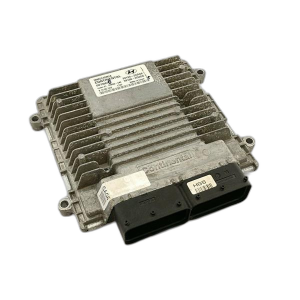
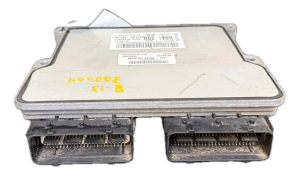
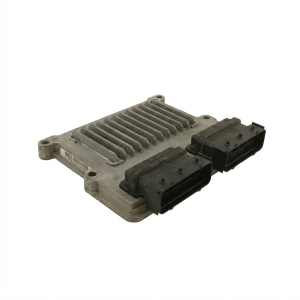
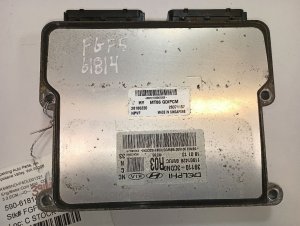
Est. part cost: $20-$500 - Faulty Engine Control Module (ECM/PCM) ⚪ Low Probability → Shop Engine Control Module (ECM) While less common, internal failure of the ECM due to electrical surges, water damage, or component failure can occur.
How to confirm: This is typically a last resort after all other possibilities (power, ground, wiring) have been exhaustively checked and ruled out by a professional. The module may have visible burn marks or a burnt smell if opened.
Typical fix: Replace the ECM. This requires programming the new module to the vehicle's VIN and immobilizer system.
Est. part cost: $800-$1200
Rare But Worth Checking
- Faulty ABS Module: → Shop ABS Control Module For 2013-2015 Santa Fe Sport models, there was a recall (Campaign 194, NHTSA 20V-520) for ABS modules that could leak internally and cause an electrical short. An electrical short in a major module like the ABS unit can disrupt the entire CAN network and potentially trigger a U0100 code, even when the vehicle is off. This recall was superseded by NHTSA Recall 21V-303.
- Aftermarket Device Interference: Improperly installed remote starters, alarms, or OBD-II tracking devices can interfere with the CAN bus communication and cause network codes like U0100. If you have recently installed any such device, it should be the first suspect.
- Faulty Fuse or Relay: A blown fuse or a faulty relay for the ECM can cut power to the module, causing it to drop off the network and log a U0100 code. Always check the fuses in the under-hood and interior fuse boxes before proceeding to more complex diagnostics.
Diagnosis Steps
- Check the battery first. Ensure it is fully charged (12.6V+) and holds a charge under load. A weak battery is the most common cause.
- Inspect battery terminals and cables for corrosion and tightness. Clean and tighten as needed.
- Visually inspect all major ground straps from the battery to the chassis and from the chassis to the engine/transmission. Ensure they are clean, tight, and not frayed or broken.
- Scan for all codes in all modules. Note any other 'U' codes or power-related codes like P0562. The pattern of codes can help isolate the problem.
- Check all fuses related to the ECM/PCM in both the engine bay and interior fuse panels.
- Visually inspect the main engine wiring harness for any signs of physical damage, such as rubbing, melting, or rodent damage (especially with soy-based wiring).
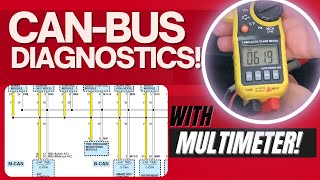
- With the battery disconnected, use a multimeter to check for 60 ohms of resistance across the CAN bus terminals (Pin 6 and Pin 14) at the OBD-II port. 🎬 Watch: How to test CAN bus resistance with a multimeter. This confirms the integrity of the network's terminating resistors.
- If wiring, power, and grounds are confirmed to be good, the issue may be with a specific module. This advanced diagnosis, which may involve using an oscilloscope to check CAN signals, should be performed by a professional.
- As a final step, if all other components and wiring are good, the ECM itself may be faulty.
Parts You'll Likely Need
- Battery — A weak or failing battery is the most common cause of network communication codes due to low voltage.
Trusted brands: Bosch, Interstate, DieHard
OEM price range: $200-$350
Aftermarket price range: $150-$300 - Engine Control Module (ECM/PCM)
(OEM #39100-3CDP1 (Example for 2017-2018 3.3L, part numbers are highly specific to year/engine/options))— If all power, ground, and wiring checks pass, the ECM itself may have an internal fault preventing communication. This is a low-probability but possible cause.
Trusted brands: Hyundai (OEM), Bosch (Remanufactured)
OEM price range: $900-$1500
Aftermarket price range: $500-$800 - Battery Ground Strap
(OEM #91860-4Z511)— Corrosion or breakage of the main ground strap can cause intermittent and widespread electrical issues, including CAN network failure.
Trusted brands: Hyundai (OEM)
OEM price range: $25-$50
Aftermarket price range: $10-$30
Related Codes That Often Appear With This One
- U0101 — Lost Communication with TCM. The Transmission Control Module (TCM) is on the same high-speed CAN network, so a network-wide failure will often log codes for both modules.
- U0121 — Lost Communication with ABS Control Module. Like the TCM, the ABS module is on the same network, and a general communication failure will log codes for multiple modules.
- P0562 — System Voltage Low. This code is a strong indicator that a failing battery or charging system is the root cause of the U0100 communication failure.
Technical Service Bulletins (TSBs) & Recalls
- While no TSB is directly for U0100 on this platform, TSBs related to CAN communication logic updates on other Hyundai models (e.g., 20-FL-003H for Sonata) show a history of software fixes for network issues. It's always worth checking with a dealer for the latest ECM software updates.
Platform-Specific Known Issues
- Recall 194 (NHTSA 20V-520) was issued for certain 2013-2015 Santa Fe Sport models for an ABS module that could leak brake fluid internally, potentially causing an electrical short that disrupts the CAN bus and triggers a U0100.
Mechanic-Grade Diagnostic Values
- CAN Bus Termination Resistance — expected: Approximately 60 Ohms. Failure: A reading of 120 Ohms indicates an open circuit or one of the two terminating resistors (often in the ECM or Instrument Cluster) is offline. A reading near 0 Ohms indicates a short between CAN High and CAN Low wires.
- CAN High Voltage to Ground — expected: ~2.5V to 3.5V (key on, engine off). Failure: Significant deviation from this range suggests a short to power or ground on the CAN High line.
- CAN Low Voltage to Ground — expected: ~1.5V to 2.5V (key on, engine off). Failure: Significant deviation from this range suggests a short to power or ground on the CAN Low line.
Scan Tool Commands That Help
- Hyundai GDS (Global Diagnostic System): DTC Analysis / Network Topology Test — This function polls all modules on the CAN network and displays a topology map showing which modules are communicating and which are not. It's the fastest way to confirm which module is offline and is the source of the U0100 code set by other modules.
- Hyundai GDS (Global Diagnostic System): Flight Record — For intermittent U0100 codes, the flight record function can capture data leading up to the communication loss event while driving, helping to identify triggers like voltage drops or specific operating conditions.
- Hyundai GDS (Global Diagnostic System): ECU Upgrade — After confirming the ECM is communicating, checking for software updates is a valid step. Corrupted firmware can cause communication issues, and a reflash can sometimes resolve the U0100 code.
Wiring & Ground Locations
- ECM Connector C100-A — At the Engine Control Module, typically located in the engine bay.. This is the main connector for the ECM. Pins for CAN High and CAN Low must be checked here for voltage and continuity back to the OBD-II port if a network issue is suspected.
- Ground Point GC101 / GC102 — Main chassis ground points located in the engine bay, typically on the fender apron or firewall near the battery.. These are the primary ground points for the ECM and other critical engine bay modules. Corrosion or looseness here can cause a floating ground, leading to unpredictable module behavior and communication loss.
- Smart Junction Block (SJB) — Typically located in the driver's side interior kick panel area.. The SJB acts as a central hub for multiple electrical systems and CAN bus lines. It contains critical fuses and relays for the ECM and is a common point for network wiring to pass through. Corrosion or faults within the SJB can disrupt communication.
- Joint Connector JF01 — A main CAN bus junction connector, often located behind the dashboard or in a kick panel.. This connector ties multiple CAN bus branches together. A poor connection or corrosion at this single point can take down the entire network, causing widespread communication codes including U0100.
Real Owner Repair Stories
- Hyundai Forums user report (2014 Hyundai Santa Fe Sport) — U0100, U0101, U0121 codes, multiple dash lights, no-start condition.
❌ Tried (didn't work) Replacing the battery, Checking all fuses, Cleaning ground straps
✅ What actually fixed it The root cause was a faulty instrument cluster. The cluster acts as a gateway module on the CAN network. Its internal failure brought down communication between the ECM, TCM, and ABS modules. Replacing and programming a new instrument cluster resolved all codes. - Reddit r/MechanicAdvice post (2016 Hyundai Santa Fe Sport) — Intermittent loss of steering wheel controls (radio, cruise), followed by an airbag light, and eventually a U0100 code with stalling.
❌ Tried (didn't work) Clearing codes (they returned immediately)
✅ What actually fixed it The clock spring (spiral cable) in the steering column had failed. The internal ribbon cable developed a short, which not only disabled the steering wheel controls and airbag but also intermittently shorted the CAN bus lines that pass through it, causing the U0100 code. Replacing the clock spring fixed all issues.
OEM Part Supersession History
39110-3CDP0→39110-3CDP1, 39110-3CDP2— Internal component revisions and software updates.
Heads up: Part numbers are extremely specific to the vehicle's VIN, engine, transmission, and options (e.g., AWD vs FWD). The wrong part number may physically fit but will not communicate correctly. Always order by VIN.
Model Year Variations Within This Range
- 2013-2015: These model years were subject to NHTSA recall 20V-520 for internal leaking of the ABS module, which could short and disrupt the CAN bus. While the part may have been updated for later years, failure is still possible.
- 2017-2018: Facelift models from 2017 onward may have a different gateway module architecture, where the Body Control Module (BCM) or a dedicated gateway module, rather than the instrument cluster, handles network traffic routing. This can change the diagnostic path for isolating a network failure.
Diagnostic Flowchart
Other Known Issues on This Vehicle
Issues unrelated to this code that are worth knowing about as an owner of this generation:
- Theta II Engine Failure 🔴 High — Widespread across 2.4L and 2.0T engines. Can occur at various mileages, often under 100k miles. Led to massive recalls and class-action lawsuits. (Ref: NHTSA Recalls 20V-746 (Hyundai 198), among others. Hyundai also extended warranties and offered a Knock Sensor Detection System (KSDS) software update.)
- Excessive Oil Consumption 🟠 Medium — Common on GDI engines, particularly the 2.4L and 2.0T. Owners report needing to add oil between changes, sometimes as much as 1 quart per 1,000 miles. (Ref: TSB 23-EM-008H provides dealers with an oil consumption testing and repair procedure. A faulty PCV valve can be a simple contributing factor.)
- Worn Steering Coupler 🟡 Low — Extremely common. Owners typically notice a clicking or clunking sound from the steering column when turning at low speeds, starting around 50k-80k miles. (Ref: No recall for the Santa Fe, but Hyundai extended the warranty for this part on other models. The replacement part is an updated, more durable material (Part # 56315-2K000-FFF).)
- ABS Module Fire Risk 🔴 High → Shop ABS Control Module — Affects 2013-2015 Santa Fe Sport models. Brake fluid can leak into the ABS module, causing an electrical short and potential fire, even when the car is parked. (Ref: NHTSA Recall 20V-520 (Hyundai #194), later superseded by NHTSA 21V-303.)
Used vs. New Parts: Buying Guide for This Vehicle
When a used part is the smart pick: A used wiring harness from a low-mileage, non-crashed donor vehicle can be a cost-effective solution if a specific section of your harness is damaged beyond repair. Used ground straps are also generally acceptable if they are clean and free of corrosion.
Donor-vehicle mileage cap: roughly under 80000 miles for the part to have meaningful remaining life.
What to inspect on the donor part:
- For wiring harnesses, inspect for any cuts, abrasions, melted sections, or signs of rodent damage.
- Ensure all connector locking tabs are intact and not brittle.
- Check for any signs of previous repair (e.g., electrical tape splices).
- Verify the donor vehicle was not a flood or fire victim.
OEM-only on this vehicle (don't cheap out):
- Engine Control Module (ECM/PCM)
- Instrument Cluster
- ABS Module
- Clock Spring
Aftermarket brands forum-validated for this vehicle:
- For batteries: Interstate, Bosch, DieHard.
- For CAN bus decoders (for aftermarket radios): Axxess, PAC
Brands owners have reported issues with on this vehicle:
- Unbranded, no-name ECMs or electronic modules from online marketplaces are extremely high-risk. They often have programming issues, are improperly refurbished, or fail quickly.
Real Owner Stories
Aggregated from forums and TSBs cited above. Mileages and costs reflect what owners reported in those sources.
2013 Hyundai Santa Fe Sport 2.0T
Symptoms: Vehicle experienced a no-start condition accompanied by multiple 'U' codes including U0100, U0101, U0109, U0121, U0129, U0131, and U0155.
What fixed it: After extensive diagnosis of the communication network, the issue was resolved by replacing the Engine Control Module (ECM).
Source hint: https://www.hyundai-forums.com/threads/2013-santa-fe-sport-2-0t-wont-start-u0100-u0101-u0109-u0121-u0129-u0131-u0155.678121/
2013 Hyundai Santa Fe Sport
Symptoms: The engine would stall intermittently while driving; communication codes were reported as part of the diagnostic trouble.
What fixed it: The resolution involved performing battery and ground circuit checks, as weak voltage or poor grounds often disrupt module communication.
Source hint: https://www.santafeforums.com/threads/2013-santa-fe-sport-stalls-while-driving.17553/
Related OBD-II Codes
Frequently Asked Questions
Could the ABS recall on my 2013-2015 Santa Fe Sport be causing the U0100 code?
Is there a specific software update for communication issues on the Santa Fe?
Why does my Santa Fe enter 'limp mode' with a U0100 code?
Can a bad battery really cause a U0100 code on a 2013-2018 Santa Fe?
Does the soy-based wiring in the Santa Fe affect the U0100 code?
What part number is used to fix the clicking steering sound often found with these codes?
Helpful Videos

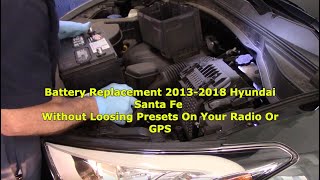

![How to [EASILY] Replace the Battery - Hyundai Santa Fe (2013-2018)](https://img.youtube.com/vi/bohu2M2cwkE/mqdefault.jpg)

Used OEM Parts in Stock
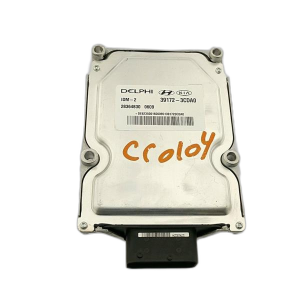
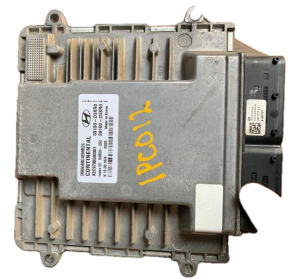
New Aftermarket Parts Available


The information in this article is provided for general reference and educational purposes only. Vehicle specifications, procedures, and part compatibility can vary by production date, trim level, and region. Always consult your vehicle's factory service manual and verify part numbers before purchasing or performing repairs. Safety-critical components such as airbags, seat belts, and braking systems should be installed by a qualified professional.
- Hyundai Santa Fe:
- 🧭 Diagnostic Flowchart
- 🎬 Helpful Videos
- 🛍️ Shop This Part
- What's Unique About the 2013-2018 Hyundai Santa Fe
- Symptoms You May Notice
- Most Likely Causes
- Rare But Worth Checking
- Diagnosis Steps
- Parts You'll Likely Need
- Related Codes That Often Appear With This One
- Technical Service Bulletins (TSBs) & Recalls
- Platform-Specific Known Issues
- Mechanic-Grade Diagnostic Values
- Scan Tool Commands That Help
- Wiring & Ground Locations
- Real Owner Repair Stories
- OEM Part Supersession History
- Model Year Variations Within This Range
- Other Known Issues on This Vehicle
- Used vs. New Parts: Buying Guide for This Vehicle
- Real Owner Stories
- 2013 Hyundai Santa Fe Sport 2.0T
- 2013 Hyundai Santa Fe Sport
- Related OBD-II Codes
- Frequently Asked Questions
- 🎟️ Get 5% Off