

U0100 on 2007-2017 Jeep Patriot: Lost Communication with ECM/PCM Causes and Fixes
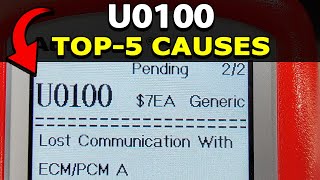
On a 2007-2017 Jeep Patriot, code U0100 typically indicates a failure in the electrical system or a faulty module, not necessarily a bad engine computer (PCM). The most common causes are a weak battery, corroded grounds (specifically the G110 ground on the frame rail), a faulty Totally Integrated Power Module (TIPM), or damaged wiring. A complete vehicle stall is a primary symptom.
- U0100 on a Jeep Patriot is a critical code indicating a communication failure with the engine computer, often causing the vehicle to stall or not start.
- Do not immediately assume the PCM is bad. Start diagnostics with the simplest and most common causes: the battery, its connections, and all major ground wires.
- The Totally Integrated Power Module (TIPM) is a known weak point on this vehicle and a likely culprit for this code.
- Due to the risk of stalling, the vehicle is not safe to drive until the issue is properly diagnosed and repaired by a professional.
- Check for open recalls, as some 2016-2017 models had recalls for wiring and PCM issues that can cause this code.
What's Unique About the 2007-2017 Jeep Patriot
The Jeep Patriot (MK platform) from this era, along with its siblings the Jeep Compass and Dodge Caliber, uses a Totally Integrated Power Module (TIPM). This unit acts as both a fuse box and a central gateway computer. The TIPM is a known weak point and can internally fail due to issues like cracked solder joints on its circuit board, causing a wide range of electrical issues, including the U0100 communication code. Another key failure point is the ASD relay pack located in the driver's side fender well, which is highly susceptible to corrosion from moisture and dirt, leading to a no-start and U0100 code.
Symptoms You May Notice
- Engine stalls while driving, sometimes abruptly with no warning.
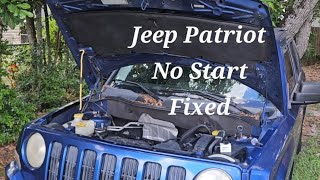
- Vehicle will not start (no-crank or crank-no-start). 🎬 Watch this step-by-step repair for a Jeep Patriot no-start condition.
- Check Engine Light is on.
- Multiple warning lights on the dashboard may illuminate simultaneously, including the ABS, traction control, and the red 'lightning bolt' (Electronic Throttle Control) light.
- Erratic gauge behavior (needles dropping to zero).
- Transmission may not shift properly or may go into limp mode.
- Headlights, turn signals, or other accessories may work intermittently or not at all (symptom of TIPM failure).
- Replacing the PCM first. The PCM is often blamed, but the actual cause is more frequently a power supply, ground, or TIPM issue. Thoroughly diagnosing the system, starting with grounds and power, can prevent the unnecessary expense of a new PCM.
Most Likely Causes
- Weak Battery or Poor Connections 🔴 High Probability → Shop Vehicle Battery All modern vehicles are sensitive to low voltage, which can disrupt module communication. A battery voltage below 12.4V is often enough to cause communication codes. This is not a design flaw but a common starting point for any electrical diagnosis.
How to confirm: Test the battery voltage with a multimeter. A healthy, fully charged battery should read at least 12.6 volts with the engine off. A load test is a more definitive way to confirm battery health. Inspect battery terminals for corrosion and ensure they are tight.
Typical fix: Clean the battery terminals and cable ends with a wire brush. If the battery is old or fails a load test, it must be replaced.
Est. part cost: $150-$300 - Damaged Wiring or Corroded Grounds 🔴 High Probability Corrosion on main ground straps or damage to the CAN bus wiring harness can interrupt communication. A specific, well-documented failure point is the G110 ground, located on the frame rail between the alternator and coolant bottle, which is known to corrode under its insulation. Additionally, the ASD (Auto Shutdown) relay pack in the driver's side fender well is prone to corrosion from moisture and road debris, which can cause a no-start and U0100 code. A recall (S89 / NHTSA 16V-907) was issued for 2016 models because improperly manufactured connectors on the crank and camshaft sensors could cause stalling and communication loss.
How to confirm: Visually inspect the G110 ground point for corrosion. Check the main battery ground, chassis grounds, and engine block ground strap. 🎬 Learn how to properly check and clean your vehicle's ground connections. Inspect the wiring harness for chafing, rodent damage, or corrosion, especially where it passes through the fender or near the engine. A technician can test CAN bus resistance (should be 60 ohms) and voltage (should be ~2.5V on each line).
Typical fix: Disassemble, clean, and protect the G110 and other ground points. Repair or replace the damaged section of the wiring harness. This can be labor-intensive.
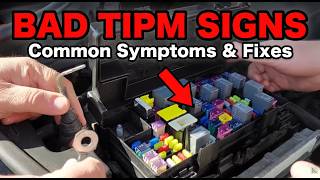
Est. part cost: $20-$500 - Faulty Totally Integrated Power Module (TIPM) 🟡 Medium Probability → Shop Fuse Box The TIPM used in this generation of Jeep/Dodge/Chrysler vehicles is a known failure point. Internal relays and circuit board failures (e.g., cracked solder joints) can interrupt power and communication to the PCM. This is a common cause for the U0100 code, often accompanied by other electrical gremlins.
How to confirm: A technician can perform a TIPM-specific diagnostic test. Sometimes, tapping on the TIPM while the fault is active can cause a change in symptoms, pointing to an internal issue. Checking for related TIPM-specific fault codes (like U0141) is also a key step.
Typical fix: The TIPM is typically replaced as a complete unit or sent to a specialist for repair and remanufacturing. Remanufactured units are a popular option.
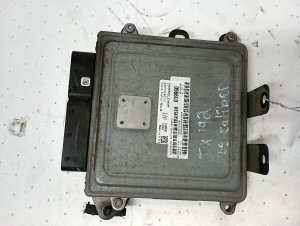
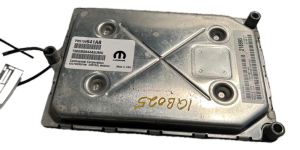
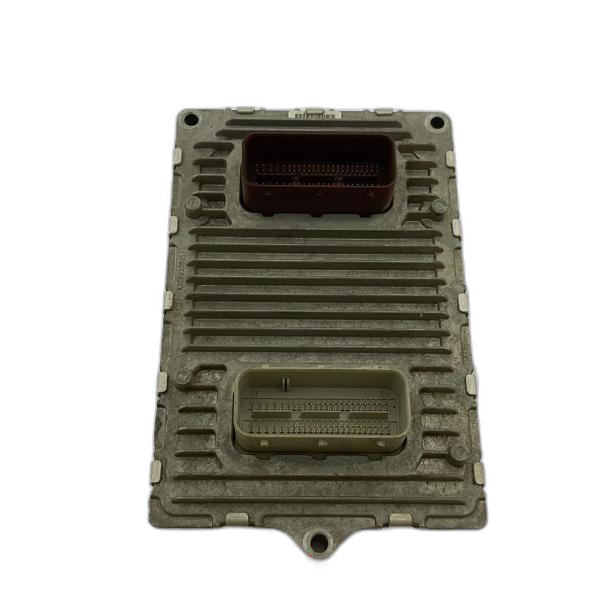
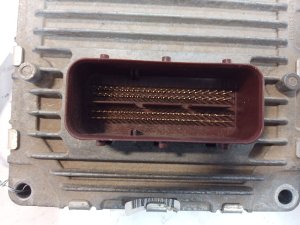
Est. part cost: $400-$900 - Faulty Powertrain Control Module (PCM) ⚪ Low Probability → Shop Engine Control Module (ECM) While less common than other causes, the PCM can fail internally. A Reddit user confirmed a PCM replacement fixed their 2012 Patriot's U0100 code after all other diagnostics failed. A recall on other 2018+ FCA models (U87 / NHTSA 18V-524) was issued for a faulty internal voltage regulator that caused stalling, indicating this type of failure is possible, even if the recall didn't cover the Patriot.
How to confirm: This is a last resort after all other possibilities (power, grounds, TIPM, and wiring) have been thoroughly ruled out. A technician must verify that the PCM has proper power and ground but is still not communicating.
Typical fix: Replace the PCM. The new module must be programmed to the vehicle's VIN and specific configuration.
Est. part cost: $500-$1200
Rare But Worth Checking
- Faulty module on the CAN bus: A different module, such as the ABS controller, instrument cluster, or even the radio, can short out the entire network, preventing the PCM from communicating. A technician can diagnose this by unplugging modules one by one while monitoring CAN bus resistance to see if communication is restored. Manufacturer service bulletins for other Jeep models, such as TSB Bulletin #S2608000007, note that a Trailer Tow Module (TTM) can also set an active U0100-00 code.
- Faulty Wireless Control Module (WCM): The WCM, also known as the Sentry Key Remote Entry module, is part of the vehicle's security system and is on the CAN bus. If it fails, it can disrupt network communication, causing a U0100 code and a no-start condition, often indicated by a flashing security light on the dash.
Diagnosis Steps
- Check Battery Health: Ensure the battery has a full charge (12.6V+) and that the terminals are clean and tight. Perform a load test for a definitive result.
- Scan for All Codes: Use a professional scanner capable of reading codes from all modules (Body, Chassis, Network), not just the engine. Note all 'U' codes. TSB Bulletin #23-033-25 highlights that U0100-00 often appears alongside U0101-00 (Lost Communication with TCM) and U0102-00 (Lost Communication with Transfer Case Control Module).
- Inspect Fuses: Check all fuses related to the PCM, TCM, and the OBD-II port itself, often located in the TIPM.
- Inspect Key Grounds: Specifically inspect and clean the G110 ground on the frame rail between the alternator and coolant bottle. Also check the main battery-to-chassis and engine block ground straps for corrosion or looseness.
- Inspect Fender Relays: Check the ASD (Auto Shutdown) relay and its connector block, located inside the driver's side front fender well, for any signs of water intrusion or corrosion.
- Inspect Wiring Harness: Look for any visible damage, corrosion, or loose connectors at the PCM and TIPM. Pay close attention to areas where the harness passes near the body in the fender wells, as chafing can occur.
- Test CAN Bus: With the battery disconnected, measure the resistance between Pin 6 (CAN High) and Pin 14 (CAN Low) at the OBD-II port. It should be 60 ohms. A reading of 120 ohms suggests an open circuit or a missing terminating resistor. A reading near 0 ohms indicates a short between the two CAN wires.
- Verify Power and Ground at PCM: Using a wiring diagram, confirm that the PCM is receiving proper battery power and has solid ground connections on all specified pins. For example, on some models, the CAN+ is pin 57 and CAN- is pin 33 on the C1 connector, while grounds can be on pins 82, 83, and 84.
- Isolate Modules: If the CAN bus resistance is incorrect, a technician may need to disconnect modules (ABS, TCM, Instrument Cluster, etc.) one by one to find the one causing the network fault. TSB Bulletin #1800623 notes that U0100 may be accompanied by electronic throttle control forced limited RPM (P2110) or EVAP system leaks (P0456).
Parts You'll Likely Need
- Totally Integrated Power Module (TIPM)
(OEM #Varies by year/options. Common PNs include 04692342 (w/ heated seats), 04692343 (w/o heated seats), 4692207, 68232878.)— This is a common failure point on Jeep Patriot models that can cause a loss of communication with the PCM.
Trusted brands: Mopar, Dorman, Circuit Board Medics (Repair Service)
OEM price range: $600-$900
Aftermarket price range: $400-$600 - Powertrain Control Module (PCM) — Replaced only after all other causes are ruled out. A Reddit user confirmed a PCM replacement fixed their 2012 Patriot with a U0100 after extensive diagnostics.
Trusted brands: Mopar, Cardone, Flagship One
OEM price range: $800-$1200
Aftermarket price range: $500-$800
Related Codes That Often Appear With This One
- U0101 — Lost Communication with TCM (Transmission Control Module). The TCM and PCM are on the same network; a network-wide failure will often set both codes.
- U0141 — Lost Communication with Front Control Module (FCM)/TIPM. This code points more directly to a problem with the TIPM itself.
- C2202 — VIN Mismatch. This code can appear alongside U0100 if a module (like a used TIPM or PCM) has been replaced without proper programming, or if a communication fault is preventing the modules from verifying the vehicle's VIN with each other.
- U1701-87 — Engine Control Module (ECM) - Missing message. According to TSB Bulletin #1809723, this code may be found alongside U0100-00 during investigation of MIL illumination.
Technical Service Bulletins (TSBs) & Recalls
- S89 / NHTSA 16V-907: Affects some 2016 models. Addresses improperly manufactured crankshaft and camshaft sensor wire harness connectors that can cause stalling.
- U87 / NHTSA 18V-524: Affects some 2017 models (within the broader recall scope). Addresses a faulty voltage regulator within the PCM that can cause stalling or a no-start condition.
- TSB Bulletin #18-109-20: While for a different model, this bulletin notes that U0100-00 can occur alongside various misfire codes (P0300-P0303) and PCM internal engine off timer performance issues (P2610-00).
Platform-Specific Known Issues
- Faulty TIPM: The Totally Integrated Power Module is a well-documented point of failure on many 2007-2017 Chrysler/Dodge/Jeep vehicles, leading to a host of electrical problems, including communication codes. Failures can be intermittent and temperature-sensitive.
- Corroded Ground Points: The Patriot is susceptible to corrosion at key electrical ground points. The G110 ground, located on the driver's side frame rail between the alternator and coolant reservoir, is a frequent offender. Corrosion here can interrupt the PCM's ground path and cause a U0100 code. Another known spot for corrosion is the ASD relay pack located inside the driver's side fender liner.
Mechanic-Grade Diagnostic Values
- CAN Bus Resistance (Battery Disconnected) — expected: Approximately 60 Ω between Pin 6 (CAN-H) and Pin 14 (CAN-L) at the OBD-II port.. Failure: A reading of 120 Ω indicates an open circuit or one of the two terminating resistors is offline. A reading near 0 Ω indicates a short between the CAN-H and CAN-L wires. A reading of ~40-45 Ω could indicate a third, improper resistor on the network or a failing module.
- CAN Bus Voltage (Key On, Engine Off) — expected: CAN-H (Pin 6 to Ground) should be ~2.5V to 3.0V. CAN-L (Pin 14 to Ground) should be ~2.5V to 2.0V. The two voltages should add up to approximately 5V.. Failure: If both lines show 2.5V, they may be shorted together. If one line shows 0V, it may be shorted to ground. If one line shows battery voltage, it may be shorted to power.
- Ground Circuit Resistance — expected: Less than 0.1 Ω from the component's ground pin to the negative battery terminal.. Failure: Any reading higher than 0.1-0.2 Ω indicates excessive resistance in the ground path, which can cause module communication issues.
Scan Tool Commands That Help
- Witech or AlphaOBD: Network Topology / Bus Diagnostics — To get a visual map of all modules on the CAN bus and see which ones are actively communicating and which are offline. This is a primary step to see if only the PCM is offline or if multiple modules are affected.
- Witech or AlphaOBD: Proxy Alignment — After replacing a major module like the TIPM, PCM, or even after a battery replacement on some FCA vehicles. A proxy alignment re-synchronizes all modules on the network. A blinking odometer is a key symptom that a proxy alignment is needed.
- Witech or AlphaOBD: WCM Key Re-learn / Program VIN — If the Wireless Control Module (WCM) is replaced. The new module must be programmed with the vehicle's PIN and VIN to recognize the existing keys, otherwise the vehicle will not start.
Wiring & Ground Locations
- G110 — On the right front frame rail, near the engine compartment side frame, between the alternator and coolant bottle.. This is a primary ground point for several engine compartment components. Corrosion here is a very common and well-documented cause of stalling and U0100 on the Patriot platform.
- ASD Relay Pack — Inside the driver's side front fender well, behind the fender liner.. This location is exposed to moisture and road debris, causing severe corrosion on the relay pins and connectors. The ASD relay supplies power to the PCM and fuel pump; a failure here will cause a no-start and loss of communication.
- G300 — Varies slightly by year, but generally located in the rear of the vehicle, under the right or left rear quarter trim panel.. This is a major body ground point. While less likely to cause a primary U0100 code than engine bay grounds, a poor connection here can cause issues with modules located in the rear of the vehicle (like the fuel pump module), which can sometimes affect the network.
- CAN C Bus Wires — At the PCM C1 connector, the CAN-C High wire is often on Pin 57 and the CAN-C Low wire is on Pin 33. These are twisted pair wires (often white and white/orange stripe).. These are the specific pins to test for voltage and continuity directly at the PCM to confirm if the module itself is receiving network signals.
- Terminating Resistors — The CAN bus has two 120-ohm terminating resistors. On this platform, they are typically located internally within the PCM and the ABS module or Instrument Cluster.. The entire network relies on having a total resistance of 60 ohms. If a module containing a resistor fails or is disconnected, the resistance jumps to 120 ohms, causing signal reflections and unstable communication.
Real Owner Repair Stories
- Reddit user in /r/MechanicAdvice (2012 Jeep Patriot 2.0L) — Car would shut off completely while driving. Would restart after a few minutes. Check engine light on with only code U0100.
❌ Tried (didn't work) Checked all grounds, Checked fuse box, Visually inspected harnesses, Performed resistance (ohm) tests on wiring, Verified power to modules
✅ What actually fixed it Replacing the Powertrain Control Module (PCM) resolved the issue. - YouTube video by Forlife Auto (2008 Jeep Patriot/Compass 2.4L) — No crank, no start, no sound from fuel pump when key is turned. Code U0100 active for lost communication with ECM.
❌ Tried (didn't work) Checking all fuses in the TIPM (all were good).
✅ What actually fixed it Found severe moisture and corrosion in the ASD relay block located in the driver's side fender well. One of the relay pins had corroded and broken off inside the connector. Cleaning the connectors and replacing the relays was the identified fix.
"I Checked Everything" — The Actual Cause
- A common pattern for network codes like U0100 is when all wiring tests (continuity, resistance, shorts to power/ground) come back clean, but the code persists. In a documented case on a similar Jeep platform, the cause was an internally shorted ABS module. The module itself was bringing the entire CAN bus down, but since the fault was internal to the module, the external wiring harness tested perfectly. The fix was to replace the ABS module, which restored network communication.
OEM Part Supersession History
Varies widely, e.g., 04692342AA, 04692342AB→e.g., 04692342AC— Revisions to address internal relay failures and circuit board issues.
Heads up: When replacing a TIPM, the part number must match the vehicle's options (e.g., with/without heated seats). The last two letters of the part number (e.g., AA, AB, AC) usually indicate revisions and are generally interchangeable, with the latest version being preferred. A part number starting with 'RL' indicates a Mopar-rebuilt unit.
Model Year Variations Within This Range
- 2011-2017: Facelifted models from 2011 onwards may have different TIPM part numbers than the earlier 2007-2010 models. For example, part number 04692342 is commonly associated with 2011-2014 models. Always verify the part number on the original unit before ordering a replacement.
- 2016: A specific recall (S89 / NHTSA 16V-907) was issued for some 2016 models due to improperly manufactured crankshaft and camshaft sensor wiring connectors. This specific wiring fault could directly cause stalling and the U0100 code, making it a primary suspect for this model year.
Diagnostic Flowchart
Used vs. New Parts: Buying Guide for This Vehicle
When a used part is the smart pick: A used TIPM from a junkyard can be a cost-effective option, as they are a common failure item and a used OEM unit may be more reliable than some aftermarket alternatives. Used wiring harnesses or connectors for repairing specific damage are also a good choice.
Donor-vehicle mileage cap: roughly under 100000 miles for the part to have meaningful remaining life.
What to inspect on the donor part:
- For a TIPM, check for any signs of water damage, corrosion on the external pins, or melted plastic.
- Ensure the part number on the used TIPM exactly matches the original, including options like heated seats.
- Ask for the VIN of the donor vehicle if possible; some suppliers note that programming may be required.
- For wiring, inspect for any cuts, brittleness, or previous repairs. Ensure connector locking tabs are intact.
OEM-only on this vehicle (don't cheap out):
- Powertrain Control Module (PCM): While remanufactured units from specialists are viable, a used PCM from a junkyard is very risky. It is electronically tied to the original vehicle's VIN and security information and will require specialized programming that many shops cannot perform.
- Crankshaft Position Sensor: It is strongly recommended to use only OEM (Mopar) or high-quality OE-equivalent (like NTK) sensors. Cheap aftermarket crank sensors are notorious for failing out-of-the-box or within a very short time, leading to repeat repairs.
Aftermarket brands forum-validated for this vehicle:
- Dorman (for TIPM)
- Circuit Board Medics (for TIPM repair service)
- MAKS TIPM Rebuilders (for TIPM)
- Cardone (for remanufactured PCM)
- Flagship One (for pre-programmed PCM)
Brands owners have reported issues with on this vehicle:
- Unbranded, no-name crankshaft position sensors from online marketplaces.
Real Owner Stories
Aggregated from forums and TSBs cited above. Mileages and costs reflect what owners reported in those sources.
2012 Jeep Patriot 2.0L
Symptoms: The vehicle would stall while driving and showed a U0100 code.
What fixed it: Replacing the Powertrain Control Module (PCM) resolved the issue after the battery, charging system, grounds, and wiring were all confirmed to be good.
Source hint: Reddit: r/MechanicAdvice - 2012 jeep patriot 2.0L U0100
Jeep Patriot
Symptoms: A crank-no-start condition accompanied by multiple communication codes, including U0100 and U0401.
What fixed it: The issue was traced back to a bad ground that was causing a fuse to repeatedly blow.
Source hint: Reddit: r/JeepPatriot - Now it won't turn on
Related OBD-II Codes
Frequently Asked Questions
I heard about a specific bad ground on the Jeep Patriot that causes electrical problems. Where is it?
My 2016 Patriot is stalling while driving. Is there a recall for this?
Is it more likely that my Patriot's PCM or TIPM has failed if I have a U0100 code?
What's the first thing I should check myself before taking my Patriot to a shop for a U0100 code?
My mechanic mentioned the ASD relay. Where is that on a Patriot and how does it relate to U0100?
Besides the check engine light, what other weird electrical issues point to a U0100 problem on my Patriot?
Helpful Videos


We Have This Part in Stock

The information in this article is provided for general reference and educational purposes only. Vehicle specifications, procedures, and part compatibility can vary by production date, trim level, and region. Always consult your vehicle's factory service manual and verify part numbers before purchasing or performing repairs. Safety-critical components such as airbags, seat belts, and braking systems should be installed by a qualified professional.
- Jeep Patriot:
- 🧭 Diagnostic Flowchart
- 🎬 Helpful Videos
- 🛍️ Shop This Part
- What's Unique About the 2007-2017 Jeep Patriot
- Symptoms You May Notice
- Most Likely Causes
- Rare But Worth Checking
- Diagnosis Steps
- Parts You'll Likely Need
- Related Codes That Often Appear With This One
- Technical Service Bulletins (TSBs) & Recalls
- Platform-Specific Known Issues
- Mechanic-Grade Diagnostic Values
- Scan Tool Commands That Help
- Wiring & Ground Locations
- Real Owner Repair Stories
- "I Checked Everything" — The Actual Cause
- OEM Part Supersession History
- Model Year Variations Within This Range
- Used vs. New Parts: Buying Guide for This Vehicle
- Real Owner Stories
- 2012 Jeep Patriot 2.0L
- Jeep Patriot
- Related OBD-II Codes
- Frequently Asked Questions
- 🎟️ Get 5% Off