

U0100 on 2007-2018 Jeep Wrangler: Lost Communication with ECM/PCM Causes and Fixes
On a 2007-2018 Jeep Wrangler (JK), code U0100 means the Powertrain Control Module (PCM) has lost communication. This often causes a no-start or stalling. The most common causes are a weak battery, corroded grounds, a faulty TIPM (fuse box), or damaged wiring, especially after off-roading.
- U0100 on a JK Wrangler is a critical code that often results in a no-start or stalling; do not drive the vehicle.
- Always start diagnostics with the simplest things: load test the battery and thoroughly inspect all main power and ground connections for corrosion and tightness.
- The TIPM (main fuse box) is a very common point of failure on these Jeeps and a likely cause of this code if the battery and grounds are good.
- Thoroughly inspect the wiring harness for any signs of physical damage, especially if the vehicle has been used off-road or has had aftermarket electrical accessories installed.
- Do not replace the expensive PCM unless you have definitively ruled out all other possibilities.
What's Unique About the 2007-2018 Jeep Wrangler
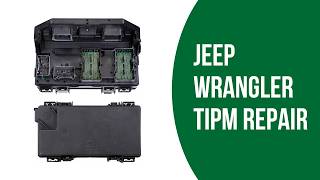
The 2007-2018 Jeep Wrangler (JK generation) uses a Totally Integrated Power Module (TIPM), which is more than just a fuse box; it's a central computer gateway that controls nearly all electrical functions. This TIPM is a known weak point, and its internal non-serviceable relays (especially for the fuel pump) or circuit board can fail, causing a wide range of electrical issues, including network codes like U0100. A failing TIPM can disrupt power to the PCM or corrupt the CAN bus network, directly causing the communication loss. 🎬 Watch: Understanding the U0100 code and how to fix it. Additionally, because these vehicles are frequently modified and used off-road, they are highly susceptible to wiring harness damage from chafing against the frame or engine, moisture intrusion, and loose or corroded ground wires, which are leading causes of this code.
Generation note: This guide covers the Jeep Wrangler JK generation (2007-2018). While the core issues are similar, note the engine change from the 3.8L V6 (2007-2011) to the 3.6L Pentastar V6 (2012-2018). Wiring harness routing and specific ground locations may differ slightly between these two engine types. The TIPM also has different part numbers for early (2007-2011) and later (2012-2018) models, and they are generally not interchangeable.
Symptoms You May Notice
- Engine will not crank or start.
- Engine stalls intermittently while driving, often without warning.
- Multiple warning lights on the dashboard (Check Engine, ABS, Traction Control, blinking security light).
- Transmission stuck in 'limp mode' (second gear).
- No communication with a standard OBD-II scan tool, or the tool powers on but cannot connect to the PCM.
- Wipers, horn, door locks, or other accessories acting erratically (a classic sign of TIPM failure).
- Cooling fans run continuously with the key on.
- Fuel pump does not prime when the key is turned to the 'ON' position.
- Replacing the PCM without first verifying power, grounds, and the integrity of the wiring harness and TIPM.
- Replacing the battery without load testing it first, as a battery can show good voltage but fail under load.
Most Likely Causes
- Weak or Faulty Battery / Poor Connections 🔴 High Probability → Shop Vehicle Battery Low system voltage is a very common cause of module communication drop-out. The JK Wrangler's electrical system is sensitive to battery health, and a battery below 12.4V can cause unpredictable network errors.
How to confirm: Load test the battery; a simple voltage check is not enough. A healthy battery should read above 12.6V at rest. Inspect battery terminals and main cable ends for any signs of corrosion, swelling, or looseness.
Typical fix: Replace the battery and clean or replace corroded battery terminal clamps.
Est. part cost: $150-$300 - Corroded or Loose Ground Wires 🔴 High Probability Off-road use exposes chassis and engine grounds to moisture and vibration. A bad ground provides an unstable reference voltage for the modules, disrupting CAN bus signals. Key locations like G102 (near passenger headlamp) and G101/G104 on the engine block are frequent culprits.
How to confirm: Visually inspect and physically check the main ground straps. Key spots are from the battery to the fender, from the firewall to the engine, and various points on the frame. Perform a voltage drop test on the ground circuit from the PCM connector to the negative battery terminal; it should be less than 0.2V.
Typical fix: Remove, wire brush all contact surfaces (wire, terminal, and chassis) until they are shiny, and securely retighten the ground connections. Apply dielectric grease to prevent future corrosion. 🎬 Watch: How to diagnose and repair faulty electrical grounds.
Est. part cost: $5-$50 - Faulty Totally Integrated Power Module (TIPM) 🟡 Medium Probability → Shop Fuse Box The TIPM used in this generation of Jeep is a well-documented failure point. Internal non-serviceable relays, particularly for the fuel pump, can fail and disrupt network communication or cut power to the PCM.
How to confirm: Diagnosis is complex. It often involves checking for power at specific PCM fuses (e.g., J13, J17, M28, M33 in the TIPM), observing other erratic electrical behavior (wipers, horn), and using an advanced scan tool to see which modules are offline. Bypassing the fuel pump relay is a common diagnostic test.
Typical fix: Replacement of the TIPM. Several companies offer remanufactured units with upgraded relays.
Est. part cost: $400-$1200 - Damaged CAN Bus Wiring Harness 🟡 Medium Probability Wiring harnesses can chafe against the frame, engine components, or firewall, especially after off-roading or if aftermarket accessories have been installed. A common chafe point is the harness rubbing against the A/C line near the firewall or against the exhaust manifold.
How to confirm: A thorough visual inspection of the wiring harness, particularly where it runs near the engine, across the firewall, and along the frame rails. Look for melted, chafed, or corroded sections. Check for continuity and resistance on the CAN bus wires (twisted pair, typically white/white-blue and white/white-orange) between the PCM connector and the OBD-II port (Pins 6 and 14).
Typical fix: Repair the damaged section of the harness using solder and heat-shrink tubing. Secure the harness away from any sharp edges or heat sources with zip ties and protective loom.
Est. part cost: $10-$100
Rare But Worth Checking
- Faulty Powertrain Control Module (PCM): → Shop Engine Control Module (ECM) While often suspected first, the PCM is less likely to fail than the wiring, grounds, or TIPM. It should only be considered after all other possibilities have been exhaustively ruled out by confirming good power, ground, and CAN bus signals at the PCM connector. Manufacturer TSB Bulletin #18-109-20 notes that U0100-00 can appear alongside PCM internal engine off timer performance issues (P2610-00).
- Faulty ABS or other module: A single faulty module on the network (like the ABS, Wireless Control Module, or even the radio) can broadcast corrupt data and bring down the entire CAN bus, triggering a U0100. This can be diagnosed by unplugging non-essential modules one by one to see if communication with the PCM is restored. NHTSA ODI #11721623 describes a scenario where the ABS module comes and goes offline, triggering U0100 and C2200.
Diagnosis Steps
- Check for other stored trouble codes. Multiple 'U' codes strongly suggest a network-wide problem. Manufacturer TSB Bulletin #23-033-25 confirms that U0100-00 often appears with U0101-00 (Lost Communication with TCM) and U0102-00 (Lost Communication with Transfer Case Control Module).
- Charge and load test the battery. Ensure it is in excellent health (above 12.6V resting).
- Inspect battery terminals and main power/ground cables for tightness and corrosion. Follow the main negative cable to its chassis ground point and ensure it's clean and tight.
- Check all fuses in the TIPM related to the PCM, TCM, and BCM (Body Control Module). Pay special attention to fuses M28 and M33.
- Perform a thorough visual inspection of the engine wiring harness. Key areas include behind the passenger fender liner, around the exhaust manifolds, and across the firewall.
- Locate, disconnect, clean, and securely retighten the main engine and body ground connections. Refer to a ground location diagram for your specific year.
- Using a multimeter, check for CAN bus signal at the OBD-II port (Pins 6 and 14). With the key on, you should measure around 2.3V on CAN L and 2.7V on CAN H. The total resistance between pins 6 and 14 with the battery disconnected should be ~60 ohms (as there are two 120-ohm terminating resistors in the system).
- If possible, use a multimeter to check for power and ground at the PCM connector pins using a vehicle-specific wiring diagram. For a 3.6L, this often involves checking for battery voltage at Pin 87 and good ground at Pins 82, 83, and 84 of connector C1.
- If all wiring, power, and grounds are confirmed good, the fault likely lies with the TIPM or, more rarely, the PCM itself.
Parts You'll Likely Need
- Totally Integrated Power Module (TIPM)
(OEM #4692236AK (2008), 68163903AD (2013), 68105503AB (2012-2013))— This is a very common failure point on 2007-2018 Wranglers that causes a host of electrical and communication issues, including U0100. Part numbers are year-specific and supersede each other frequently.
Trusted brands: Mopar
OEM price range: $600-$1200
Aftermarket price range: $400-$800 (Remanufactured) - Battery — A weak or failing battery is the most common and simplest cause of network communication codes due to low system voltage.
Trusted brands: Mopar, Interstate, DieHard, Odyssey
OEM price range: $200-$350
Aftermarket price range: $150-$250
Related Codes That Often Appear With This One
- U0101 — Lost Communication with TCM. The Transmission Control Module is on the same CAN bus, so a network-wide failure will often set both codes.
- U0121 — Lost Communication with ABS Control Module. The ABS module is also on the primary CAN bus and is a common companion code.
- U110C — Lost Fuel Level Message. This often points towards a TIPM or CAN bus issue, as the fuel level data is communicated over the network.
Platform-Specific Known Issues
- The Totally Integrated Power Module (TIPM) is a known high-failure item on the JK Wrangler and many other Chrysler products of the era, frequently causing U0100.
- Wiring harnesses are prone to damage from off-road use, leading to shorts or open circuits in the CAN bus wiring.
Mechanic-Grade Diagnostic Values
- CAN Bus Resistance at OBD-II Port — expected: ~60 Ohms between Pin 6 (CAN-H) and Pin 14 (CAN-L) with battery disconnected.. Failure: A reading of ~120 Ohms indicates an open circuit or a missing terminating resistor. A reading near 0 Ohms indicates a short between the two CAN wires.
- CAN Bus Voltage at OBD-II Port — expected: With key on, engine off: Pin 6 (CAN-H) to ground should be ~2.7V. Pin 14 (CAN-L) to ground should be ~2.3V. The sum of the two should be ~5V.. Failure: Voltages that are identical, missing, or do not add up to ~5V indicate a bus or module problem.
- PCM Power/Ground at Connector C1 (3.6L Engine) — expected: With key on: Battery voltage at Pin 87. Near zero Ohms resistance to ground at Pins 82, 83, and 84.. Failure: Missing voltage or high resistance on ground pins indicates a wiring or TIPM power feed issue to the PCM.
Scan Tool Commands That Help
- wiTECH (Chrysler Dealer Tool): Network Topology View — This provides a color-coded map of all vehicle modules, instantly showing which modules are offline (not communicating), which have codes, and which are responsive. It's the fastest way to see the scope of the communication failure.
- wiTECH: Network Test (Bus Diagnostics) / Loss of Communication Test — This function actively 'pings' each module on the network to check for communication dropouts in real-time. It is invaluable for diagnosing intermittent issues by performing a wiggle test on harnesses or tapping on modules while the test is running.
- wiTECH: View Original VIN in Module — When diagnosing a potentially faulty module like a TIPM or PCM, this function can show if the module has been replaced with a used part from another vehicle. This can be crucial information, as an incorrectly programmed used module can cause network issues.
Wiring & Ground Locations
- G101 / G104 — On the engine block, passenger side, under the exhaust heat shield near the catalytic converter. G101 is the main battery ground drop, and G104 bundles grounds for O2 sensors, EGR, and A/C compressor.. These are the primary grounds for the engine sensors and are notoriously difficult to access. Corrosion or looseness here due to heat and moisture can cause erratic sensor data and disrupt the PCM, leading to U0100. A common failure is the wire breaking inside the crimped terminal.
- G102 — In the engine compartment, near the right (passenger side) headlamp assembly.. This is a major body ground point. Corrosion here from road spray and battery fumes can create high resistance, affecting multiple modules that use this point as a reference, including the PCM.
- G201 / G203 — Located in the passenger footwell, under the kick panel.. These are interior grounds for various modules. Water leaks from a bad cowl or door seal can cause corrosion at these points, leading to network communication issues.
- Harness Chafe Point — Wiring harness rubbing against the A/C line assembly near the firewall, or against the exhaust manifold.. Vibration can cause the A/C line or exhaust to rub through the loom and insulation of the CAN bus wires, causing them to short to ground or to each other, which will bring down the entire network.
Real Owner Repair Stories
- JK-Forum.com user 'Wilkey73' (Jeep Wrangler JK (year not specified)) — No crank, no start after trail riding. Multiple codes including U0100, U1118, U110B, U114F. Battery, check engine, traction control lights on, security light blinking.
❌ Tried (didn't work) Disconnecting the battery to reset the system.
✅ What actually fixed it The user was advised that after off-roading, the most likely causes were either a damaged wiring harness or a failed PCM. The final resolution was not posted, but the strong consensus pointed to one of these two outcomes. Another case on a similar platform confirmed a PCM replacement fixed a U0100 after trail riding. - JK-Forum.com user 'planman' (2013 JKU Rubicon) — Intermittent wipers coming on during turns, A/C fan motor cutting out, and an intermittent crank-stall-no-restart condition that was resolved by removing and reinserting the key.
❌ Tried (didn't work) Initial diagnosis pointed towards multiple separate issues.
✅ What actually fixed it The user physically removed the TIPM, cleaned all connectors with electrical cleaner, pushed in all fuses and relays to ensure they were seated, and reinstalled it. This resolved the erratic electrical behavior. This suggests that poor pin connections within the TIPM connectors can be a direct cause of network-like symptoms. - JK-Forum.com user 'Jk-stinger' (2007 Jeep Wrangler) — Front washer not working, passenger window intermittent, door locks would unlock but not lock, no 3-flash turn signal.
❌ Tried (didn't work) Dealer quoted $700 for a TIPM replacement.
✅ What actually fixed it The user replaced the TIPM themselves. The key part of the story is the required initialization procedure: after installing the new TIPM and reconnecting the battery, turn the key to the 'ON' position for exactly 12 seconds, then turn it off, then start the vehicle normally. This allows the new TIPM to learn the vehicle's configuration from the other modules. - NHTSA ODI #11721623 — An owner reported that their vehicle was left unusable due to a lack of available ABS modules. The failure involved the module coming and going offline, throwing codes C2200, U0100, U0141, U0126, and U0002.
"I Checked Everything" — The Actual Cause
- In the context of electrical codes, this pattern translates to 'all wiring tests passed, but the problem persisted.' A documented case on a similar Jeep platform found that an internally shorted ABS module was broadcasting corrupt data and taking down the entire CAN bus. The external wiring harness tested perfectly for continuity and shorts, but the fault was inside the module itself. The fix was to unplug modules one-by-one until communication was restored, identifying the ABS module as the culprit.
Model Year Variations Within This Range
- 2007-2011 (3.8L Engine): Uses an earlier generation of TIPM and PCM. The wiring harness routing and ground locations (specifically G101/G104) are unique to the 3.8L engine bay. Failures are very common but part numbers are specific to this era.
- 2012-2018 (3.6L Pentastar Engine): Introduced a new PCM and updated TIPM to accommodate the 3.6L Pentastar engine. While the failure patterns are similar, the TIPM and PCM part numbers are not backward-compatible with the 2007-2011 models. PCM connector pinouts for testing are also different.
Diagnostic Flowchart
Other Known Issues on This Vehicle
Issues unrelated to this code that are worth knowing about as an owner of this generation:
- Death Wobble 🔴 High — Common, especially on lifted vehicles or after hitting a bump at speeds over 45 mph. Caused by worn or loose front suspension/steering components. (Ref: Multiple TSBs exist, but it's primarily a wear-and-tear issue. The root cause is usually a worn track bar, ball joints, or tie rod ends.)
- Cracked Oil Filter Housing (3.6L Pentastar) 🟠 Medium — Very common on 2012-2018 models, typically after 60,000 miles. The plastic housing can crack or warp from heat cycles and over-tightening, causing significant oil and/or coolant leaks into the engine valley.
- Excessive Oil Consumption (3.8L V6) 🟠 Medium — Common on 2007-2011 models, often becoming noticeable after 70,000 miles. Can be caused by stuck piston rings. Chrysler's official stance was that burning one quart per 750-1000 miles was 'acceptable'.
- Cracked Exhaust Manifolds (3.8L V6) 🟡 Low — A frequent issue on 2007-2011 models, causing an exhaust leak and ticking noise, especially when cold. The cast iron manifolds are prone to cracking from thermal stress.
- Water Leaks into Cabin 🟡 Low — Extremely common across all years. Leaks often occur at the A-pillar, door seals, and hardtop panels, leading to wet floorboards.
Used vs. New Parts: Buying Guide for This Vehicle
When a used part is the smart pick: A used TIPM from a junkyard can be a cost-effective option, but it is a gamble. It makes the most sense if the donor vehicle is a low-mileage, late-model year JK that was wrecked due to collision, not an electrical fire or flood.
Donor-vehicle mileage cap: roughly under 75000 miles for the part to have meaningful remaining life.
What to inspect on the donor part:
- Check for any signs of water intrusion or corrosion on the exterior casing and connectors.
- Avoid TIPMs from vehicles with visible signs of electrical fire or flood damage.
- If possible, get the VIN of the donor vehicle to check its history and confirm it had the same engine and options.
- Ensure the part number on the used TIPM is an exact match or a known compatible superseded number for your vehicle's year.
OEM-only on this vehicle (don't cheap out):
- Powertrain Control Module (PCM): While used PCMs are available, they are tied to the original vehicle's VIN and security system (SKIM). They require specialized programming by a dealer or a well-equipped independent shop to work in a new vehicle. An incorrect or failed programming attempt can render the module useless. For this reason, a new or professionally remanufactured and pre-programmed PCM is often a safer bet.
Aftermarket brands forum-validated for this vehicle:
- Circuit Board Medics (Remanufactured TIPM): Often mentioned in forums as a reliable source for rebuilt TIPMs where they address the common internal relay failures.
- MAKS TIPM Rebuilders (Remanufactured TIPM): Another company reported by users to offer rebuilt TIPMs.
Brands owners have reported issues with on this vehicle:
- Unbranded/Generic eBay/Amazon TIPMs: While cheap, these often have high failure rates. Some users report success with Dorman remanufactured units, but others have had issues, suggesting quality can be inconsistent.
Real Owner Stories
Aggregated from forums and TSBs cited above. Mileages and costs reflect what owners reported in those sources.
Jeep Wrangler JK
Symptoms: No-crank situation with multiple U-codes appearing after an off-roading trip.
What fixed it: Detailed inspection and repair of the wiring harness for damage/chafing.
Source hint: JK-Forum.com: Lost communication with ECM (codes U0100, U1118, U110B, U114F)
2007-2008 Jeep Wrangler 3.8L
Symptoms: High oil consumption issues discussed alongside general reliability of the early JK platform.
What fixed it: Replacing the PCV valve or switching to a heavier weight engine oil.
Source hint: Reddit r/Jeep: Found out all 3.8 Jeep 07-08's burn oil. Worth fixing and keeping it?
2016 Jeep Wrangler
Symptoms: The ABS module intermittently goes offline, causing multiple communication codes including U0100, U0141, and U0126.
What fixed it: While the owner reported difficulty finding replacement parts, the diagnosis confirmed the ABS module was the source of the network disruption.
Source hint: NHTSA ODI #11721623
Documented NHTSA Reports
Manufacturer service bulletins have highlighted that U0100-00 (Lost Communication With ECM/PCM) is frequently found in conjunction with other network failures. For instance, TSB Bulletin #23-033-25 notes its occurrence alongside U0101-00 (Lost Communication with TCM) and P0607-00 (ECU Internal Performance). Additionally, TSB Bulletin #18-109-20 indicates that this code can be associated with PCM internal timing performance issues and multiple cylinder misfires (P0300-00).
Related OBD-II Codes
Frequently Asked Questions
Why are my wipers and horn acting crazy along with the U0100 code on my JK Wrangler?
Can a weak battery really cause a 'Lost Communication' code in my 2007-2018 Jeep?
Where should I check for ground issues on my Wrangler if I have a U0100?
Is there a specific wiring harness area prone to damage on the JK?
Which fuses in the TIPM should I check for PCM communication issues?
My fuel pump isn't priming and I have a U0100; could it be the TIPM?
Helpful Videos

We Have This Part in Stock

The information in this article is provided for general reference and educational purposes only. Vehicle specifications, procedures, and part compatibility can vary by production date, trim level, and region. Always consult your vehicle's factory service manual and verify part numbers before purchasing or performing repairs. Safety-critical components such as airbags, seat belts, and braking systems should be installed by a qualified professional.
- Jeep Wrangler:
- 🧭 Diagnostic Flowchart
- 🎬 Helpful Videos
- 🛍️ Shop This Part
- What's Unique About the 2007-2018 Jeep Wrangler
- Symptoms You May Notice
- Most Likely Causes
- Rare But Worth Checking
- Diagnosis Steps
- Parts You'll Likely Need
- Related Codes That Often Appear With This One
- Platform-Specific Known Issues
- Mechanic-Grade Diagnostic Values
- Scan Tool Commands That Help
- Wiring & Ground Locations
- Real Owner Repair Stories
- "I Checked Everything" — The Actual Cause
- Model Year Variations Within This Range
- Other Known Issues on This Vehicle
- Used vs. New Parts: Buying Guide for This Vehicle
- Real Owner Stories
- Jeep Wrangler JK
- 2007-2008 Jeep Wrangler 3.8L
- 2016 Jeep Wrangler
- Documented NHTSA Reports
- Related OBD-II Codes
- Frequently Asked Questions
- 🎟️ Get 5% Off