

U0100 on 2011-2015 Kia Sorento: Lost Communication with ECM/PCM Causes and Fixes
The U0100 code on a 2011-2015 Kia Sorento means the Engine Control Module (ECM) has lost communication. The most common cause is a weak or failing battery, followed by corroded battery terminals or bad ground connections. Start by testing the battery and inspecting grounds before suspecting more complex wiring or ECM issues, which are less common but possible.
- U0100 is a critical code indicating a communication failure with the engine computer; do not drive the vehicle.
- The most likely cause is a simple electrical issue: a weak battery, corroded terminals, or a bad ground connection.
- Always test the battery and inspect basic connections before suspecting a more expensive problem like a wiring harness or the ECM itself.
- Diagnosis of the CAN bus network is complex and should be performed by a professional with the correct tools.
- If the ECM needs to be replaced, the new unit must be programmed to your vehicle's VIN.
What's Unique About the 2011-2015 Kia Sorento
For the 2011-2015 Sorento (XM generation), the U0100 code often appears against a backdrop of other known electrical and engine issues. This generation is notorious for catastrophic Theta II engine failures, which led to a massive recall (SC147) and a class-action lawsuit. While U0100 isn't directly caused by the engine bearing failure, the widespread electrical issues and numerous recalls, like the one for HECU fire risk (SC284), suggest a vulnerability in the vehicle's overall electrical integrity. Therefore, diagnosis should start with the basics common to all vehicles—power and ground issues—before considering a complex ECM or network fault, as these are far more common culprits.
Symptoms You May Notice
- Engine will not start, or cranks but fails to fire.
- Engine stalls intermittently while driving, sometimes at red lights.
- Check Engine Light is on, but may be intermittent.
- Vehicle enters 'limp mode' with drastically reduced power.
- Multiple warning lights on the dashboard may illuminate simultaneously (e.g., ABS, Traction Control, Power Steering).
- Rough or erratic idle.
- Complete loss of power with no crank and no start.
- Replacing the ECM without first testing the battery and checking all power and ground connections. A weak battery is the most frequent cause of this code.
Most Likely Causes
- Weak or Faulty Battery 🔴 High Probability → Shop Vehicle Battery Modern vehicles like the Sorento are highly sensitive to voltage. A battery that is old or failing can provide enough power to turn on lights but drop voltage significantly during cranking, causing communication modules to reset or fail.
How to confirm: Test the battery with a multimeter. A healthy, fully charged battery should read at least 12.6 volts with the engine off. A reading below 12.4V warrants a recharge, and below 12V suggests a bad battery. A load test at an auto parts store is the most definitive way to confirm battery health.
Typical fix: Recharge or replace the battery.
Est. part cost: $150-$300 - Corroded or Loose Battery Terminals / Ground Straps 🟡 Medium Probability → Shop Engine Ground Strap Corrosion on battery terminals or a loose main engine/chassis ground strap creates high resistance, which can starve the ECM of the stable voltage it needs to communicate. Poor grounding is a known cause of module communication issues.
How to confirm: Visually inspect the battery terminals for white or greenish buildup. Follow the negative battery cable to its connection point on the chassis and the engine block to check for tightness and corrosion. Clean them with a wire brush and ensure they are secure.
Typical fix: Clean the battery terminals and cable ends with a wire brush and baking soda solution. Ensure all ground connections are clean, tight, and free of rust or paint.
Est. part cost: $5-$20 - Damaged Wiring Harness or Connectors ⚪ Low Probability Wires can become damaged from chafing against other components, heat from the engine/exhaust, or rodent activity. The main ECM connector is also susceptible to moisture intrusion, which causes corrosion on the pins and leads to intermittent or total communication loss.
How to confirm: Visually inspect the wiring harness leading to the ECM for any signs of damage, melting, or chafing. Unplug the ECM connectors (with the battery disconnected) and check for corrosion (white or green deposits), bent pins, or moisture inside the connector housing. 🎬 See how to clean corroded computer connectors with spray.
Typical fix: Repair the damaged section of the wiring harness or clean/replace the affected connector. In some cases, a corroded ECM pigtail connector needs to be replaced.
Est. part cost: $20-$500+ - Failed Engine Control Module (ECM) ⚪ Low Probability → Shop Engine Control Module (ECM) While not a common failure, the ECM can suffer from internal hardware failure due to voltage spikes, moisture intrusion, or age. Given the platform's other electrical recalls (e.g., HECU), module failure is a possibility after other causes are eliminated. A technician on a 2014 Sorento with a no-start and U0100 diagnosed a bad ECM after confirming all power and ground inputs to the module were present but it still would not communicate. 🎬 Watch: A professional diagnostic walkthrough for a Sorento no-start.
How to confirm: This is typically a last resort after all other possibilities (power, ground, wiring) have been exhaustively ruled out by a professional. A technician will verify the ECM has proper power and ground at its connector pins. If all inputs are good and the module still won't communicate, it is condemned.
Typical fix: Replace the ECM. The new module must be programmed with the vehicle's VIN and specific software.
Est. part cost: $400-$1200
Rare But Worth Checking
- Aftermarket Device Interference: Poorly installed remote starters, alarms, or telematics devices spliced into the CAN bus wiring can disrupt communication and trigger a U0100 code.
- Faulty Fuse or TIPM/Integrated Fuse Box: An internal fault in the Totally Integrated Power Module (TIPM), or main fuse box, can cut power to the ECM's circuit, even if the fuse itself appears good. This can cause a no-power situation at the ECM connector, leading to a U0100 code.
Diagnosis Steps
- Check Battery Health: Use a multimeter to verify battery voltage is above 12.4V. A reading below 12.4V indicates the need for charging and testing. Perform a load test to confirm its stability under load.
- Inspect Battery Terminals and Grounds: Clean any corrosion from the battery posts and terminals. Trace and inspect the main engine and chassis ground straps for tightness and corrosion. Ensure a clean, metal-to-metal connection.
- Check Fuses: Inspect all fuses related to the ECM/PCM, often labeled 'ECU,' 'ECM,' or 'Engine Control,' in both the engine bay and interior fuse panels.
- Scan for Other Codes: Use an OBD-II scanner to see if other 'U' codes are present. Multiple communication codes point towards a network problem, not just a faulty ECM.
- Visually Inspect Wiring: Carefully inspect the wiring harness connected to the ECM for any visible signs of damage, such as chafing, melting, rodent damage, or corrosion. Pay close attention to the connector itself.
- Professional Network Diagnosis: If the above steps do not resolve the issue, professional service is required. A technician will check the CAN bus for proper resistance (should be ~60 ohms between Pin 6 (CAN High) and Pin 14 (CAN Low) at the OBD-II port with the battery disconnected). They will also check for shorts to power or ground and use an oscilloscope to analyze network signals.
- Test the ECM: As a final step, a technician will verify that the ECM has proper power (12V+) and ground at its connector pins. If all inputs are good and the module still won't communicate, the ECM is condemned.
Parts You'll Likely Need
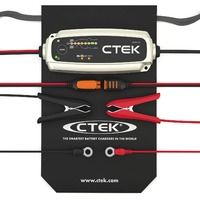
- Battery — A weak or failing battery is the most common trigger for communication fault codes like U0100.
Trusted brands: Bosch, Interstate, DieHard
OEM price range: $200-$350
Aftermarket price range: $150-$300 - Engine Control Module (ECM/PCM)
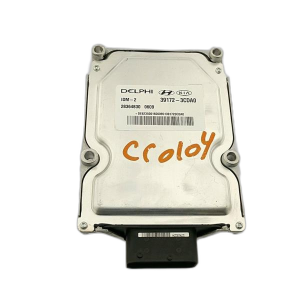
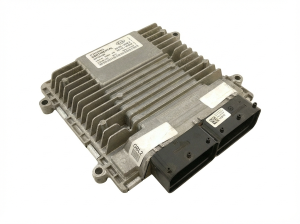
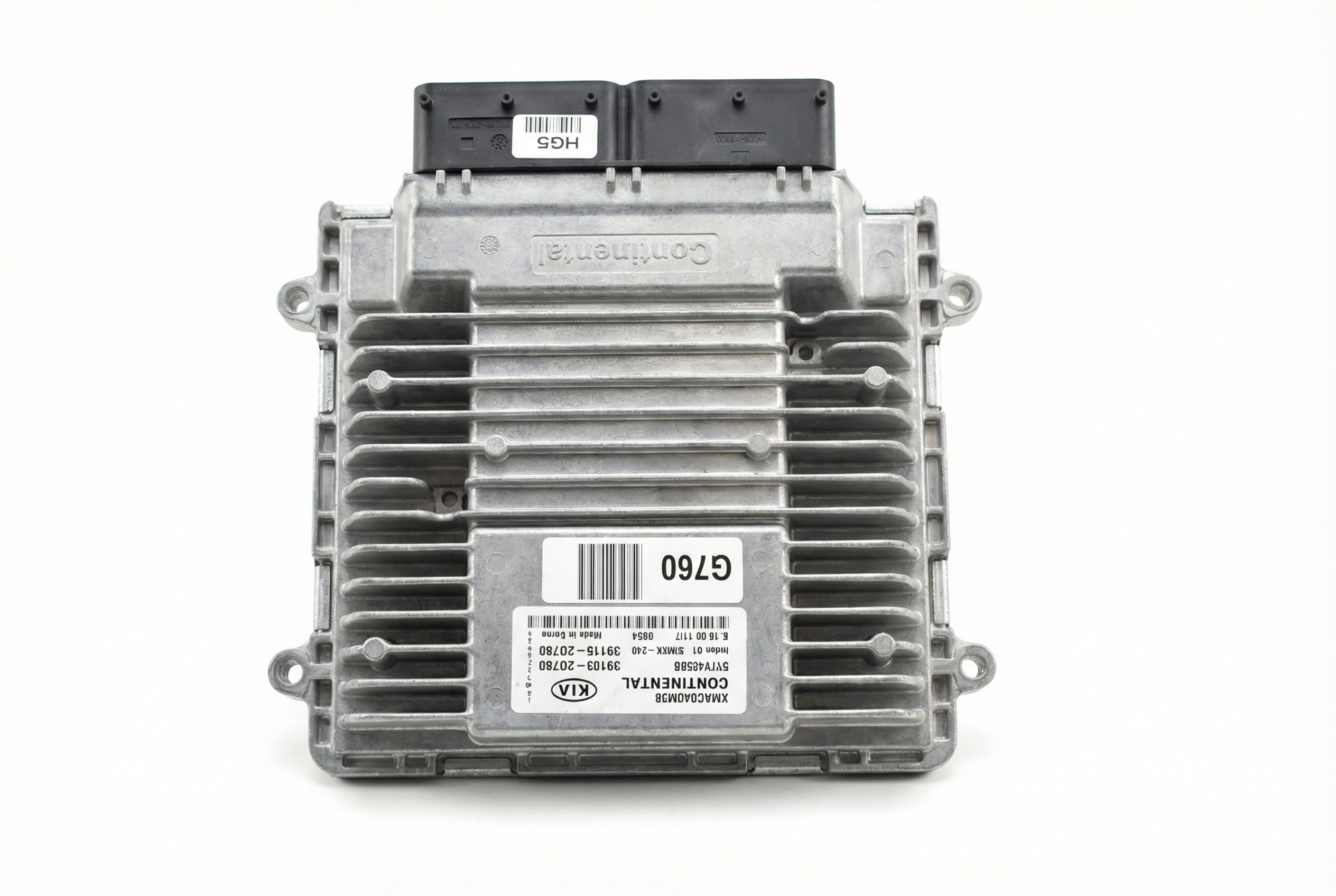
(OEM #Varies by year and engine, e.g., 39103-2G120, 39111-2G855)— This is the part to replace if it has been professionally diagnosed as faulty after all power, ground, and wiring issues have been ruled out.
Trusted brands: Kia (OEM), Bosch (Remanufactured), Flagship One
OEM price range: $800-$1200
Aftermarket price range: $400-$700 (Remanufactured)
Related Codes That Often Appear With This One
- U0101 — This code indicates 'Lost Communication with TCM' (Transmission Control Module). Since the ECM and TCM are on the same high-speed CAN network, a network-wide problem will often cause both codes to appear together.
- Multiple other U-codes — If many modules are reporting lost communication (e.g., U0121 for ABS, U0140 for BCM), it strongly suggests a network-wide issue like a wiring fault, a bad ground, or a faulty gateway module, rather than a single failed ECM. A technician diagnosing a 2014 Sorento found codes for lost communication with the ECM from the ABS, airbag, and blind-spot detection modules, confirming the ECM was the source of the network silence.
Technical Service Bulletins (TSBs) & Recalls
- While no TSB directly addresses U0100 for this vehicle, several are relevant to the platform's electrical and control module integrity. Recall SC147 (Engine Replacement) involved engine inspection and potential replacement due to manufacturing defects. Recall SC284 addresses a fire risk from the HECU, highlighting potential electrical system vulnerabilities. TSBs like CS2310 for remote start modules show that module software and communication is a known area for service updates.
Platform-Specific Known Issues
- Corrosion in ECM Connector: Some owners have found that removing the ECM connectors and cleaning green or white corrosion from the pins resolved intermittent stalling and a U0100 code. This can be caused by moisture wicking into the connector over time.
- Progressive Failure Leading to No-Start: A user on 2CarPros.com described a scenario where their car developed a slight misfire, then began stalling at red lights, and finally resulted in a complete no-crank, no-start, which is a classic progression for a failing ECM power supply or intermittent connection.
Mechanic-Grade Diagnostic Values
- CAN Bus Network Resistance — expected: ~60 Ω (ohms). Failure: A reading of ~120 Ω indicates a missing terminating resistor or an open in the circuit. A reading of ~0 Ω indicates a short between CAN High and CAN Low wires.
- CAN Bus Voltage (Key On, Engine Off) — expected: CAN High (Pin 6): ~2.5-3.5V, CAN Low (Pin 14): ~1.5-2.5V. Both should read approximately 2.5V when the bus is idle.. Failure: Voltages that are stuck high (near battery voltage) or low (near 0V) indicate a short to power or ground.
- ECM Power Pin Voltage Drop — expected: Less than 0.2V. Failure: A reading higher than 0.2V indicates excessive resistance in the power supply circuit to the ECM.
- ECM Ground Pin Voltage Drop — expected: Less than 0.1V. Failure: A reading higher than 0.1V indicates a poor ground connection, which can cause modules to malfunction.
Scan Tool Commands That Help
- Professional Scan Tool (e.g., Kia GDS, Autel, Snap-on): Network Scan / Health Report — This is the first step after reading the initial U0100 code. The tool will attempt to communicate with every module on the vehicle. Seeing the ECM/PCM as 'Not Responding' or 'Offline' while other modules are online and reporting 'Lost Communication with ECM' is the primary method for confirming the ECM is the silent module on the network.
Wiring & Ground Locations
- Main Chassis Ground — Follow the main negative battery cable to where it bolts directly to the vehicle's chassis, often on the inner fender or strut tower near the battery.. This is the primary ground return path for all vehicle electronics. Corrosion or looseness here can cause widespread, intermittent electrical issues, including module communication failures.
- Engine/Transmission Ground Strap — A braided or thick wire strap connecting the engine block or transmission case directly to the vehicle's frame/chassis.. This provides the main ground path for the engine and its components, including the alternator and the ECM itself. A poor connection here can starve the ECM of a stable ground reference.
- ECM Power/Ground Pins — At the main electrical connectors of the Engine Control Module, located in the engine bay (typically on the driver's side).. These are the final points to test to confirm if the ECM is receiving the power and ground it needs to operate. If voltage tests are good here, but the module is offline, the ECM itself is highly suspect.
- Interior Grounding Point — There is often a main grounding bolt with multiple wires attached located near the interior fuse panel, behind the driver's side kick panel.. This point grounds many interior modules. While less likely to cause a U0100 alone, a fault here can contribute to overall network instability.
Real Owner Repair Stories
- YouTube channel 'JL's Auto Solution' (2014 Kia Sorento with 3.3L GDI engine) — No-start condition. Check engine light is on, but a scan tool cannot establish communication with the engine module.
❌ Tried (didn't work) The technician found that two power feed pins on the ECM connector were dead. He traced this to a relay that was controlled by the ECM itself (a catch-22). He then supplied 12V directly to these pins using a power probe to 'wake up' the ECM.
✅ What actually fixed it Even after supplying external power to the correct pins, the ECM would not come online or communicate with the scan tool. All other powers and grounds at the connector were verified as good. The final diagnosis was an internal failure of the ECM, requiring replacement.
OEM Part Supersession History
Varies significantly by year, engine, and features→Varies— Part numbers differ between the 2.4L I4 and 3.3L V6 engines, and also based on features like the presence of an immobilizer. For example, 39103-2G120 for a 2011-2013 2.4L vs. 39111-3CWN0 for a 2015-2016 3.3L.
Heads up: ECMs are not interchangeable between engines or even model years without exact part number matching and VIN programming. Using the wrong module will result in a no-start condition or other critical failures.
Model Year Variations Within This Range
- 2011-2013 vs 2014-2015: The 2014 model year introduced a major facelift, including the option of a 3.3L GDI V6 engine alongside the 2.4L I4. The ECM, wiring, and associated components are different between these two engines. Diagnosis and parts must be specific to the engine installed in the vehicle.
Diagnostic Flowchart
Other Known Issues on This Vehicle
Issues unrelated to this code that are worth knowing about as an owner of this generation:
- Catastrophic Engine Failure (Theta II GDI) 🔴 High — Widespread across 2.0L and 2.4L GDI engines, often occurring before 100,000 miles. Caused by manufacturing debris (metal shavings) leading to connecting rod bearing wear and eventual engine seizure. (Ref: Recall SC147; Class-action lawsuit settlement valued up to $1.3 billion providing lifetime warranties and reimbursements.)
- Faulty Exterior Door Latches 🟠 Medium — Very common problem where doors, particularly the 2011 model year, fail to open from the outside handle. (Ref: Customer Satisfaction Program / Warranty Extension (Campaign CS1603) was issued instead of a formal recall.)
- Hydraulic Electronic Control Unit (HECU) Fire Risk 🔴 High — Affects multiple model years. Brake fluid can leak inside the HECU, causing an electrical short and increasing the risk of an engine compartment fire, even when the vehicle is parked. (Ref: Recall SC284.)
- Peeling White Paint 🟡 Low — Affects 'Snow White Pearl' paint on 2013-2016 models, where the paint delaminates in large sheets, exposing the primer or bare metal.
- Faulty Ignition Coils 🟡 Low → Shop Ignition Coil — Reported in 2011-2013 models, leading to engine misfires, rough idle, and a flashing check engine light.
Used vs. New Parts: Buying Guide for This Vehicle
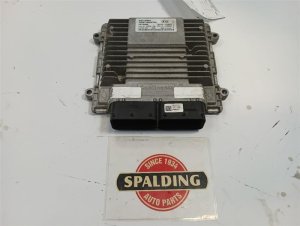
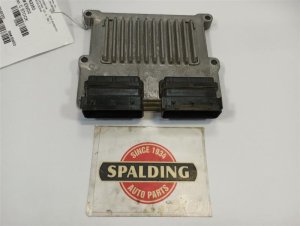
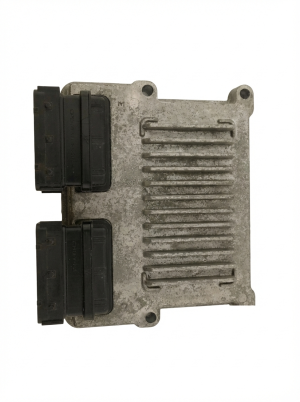
When a used part is the smart pick: A used ECM from a reputable salvage yard can be a cost-effective option if the failure has been definitively traced to the module itself. It makes sense when the budget is tight, provided you can get the module programmed to your vehicle.
Donor-vehicle mileage cap: roughly under 120000 miles for the part to have meaningful remaining life.
What to inspect on the donor part:
- Ensure the donor vehicle was not involved in a flood or front-end collision that could have damaged the ECM.
- Inspect the connector pins on the used ECM for any signs of corrosion, moisture, or physical damage.
- Obtain the VIN of the donor vehicle if possible, as this can help with programming.
- Purchase from a seller that offers a warranty and return policy.
OEM-only on this vehicle (don't cheap out):
- Engine Control Module (ECM/PCM) - While used OEM is an option, avoid generic 'new' aftermarket ECMs with no brand recognition. Stick with original Kia parts or reputable remanufacturers who specialize in them.
Aftermarket brands forum-validated for this vehicle:
- Flagship One (FS1)
- Auto Computer Performance
Brands owners have reported issues with on this vehicle:
- Unbranded, no-name sellers on marketplace sites that do not offer VIN programming services or a warranty.
Real Owner Stories
Aggregated from forums and TSBs cited above. Mileages and costs reflect what owners reported in those sources.
2014 Kia Sorento
Symptoms: The vehicle experienced a no-start condition. A technician found that while the ECM had proper power and ground, it would not communicate with the scan tool.
What fixed it: Replacement of the Engine Control Module (ECM) and programming it with the vehicle's VIN.
Source hint: Article Context: common_causes, Failed Engine Control Module (ECM)
2011-2015 Kia Sorento
Symptoms: Car wouldn't start even after the battery was changed; U0100 code was present.
What fixed it: Replacing fried engine pigtail connectors and reprogramming the ECU.
Source hint: Reddit r/MechanicAdvice: Car wont start even after changing the battery
2011-2015 Kia Sorento
Symptoms: The vehicle's performance degraded over several weeks, starting with a slight misfire, then stalling at red lights, and finally resulting in a complete no-crank, no-start condition.
What fixed it: The owner had to check ECM wires and fuses as part of a complex electrical fault diagnosis.
Source hint: 2CarPros: No Crank, No Start, Code U0100
2011-2015 Kia Sorento
Symptoms: Multiple check engine light codes and poor engine performance.
What fixed it: Removing the ECM connectors and cleaning corrosion build-up from the pins.
Source hint: YouTube: ECM fix. Corrosion build up.
Related OBD-II Codes
Frequently Asked Questions
Could the engine replacement recall (SC147) be related to my U0100 code?
Is there a recall for electrical fires that might affect my ECM communication?
My 2014 Sorento won't start and has a U0100; could it be the ECM?
Can a weak battery really cause a U0100 'Lost Communication' code?
I see green buildup on my ECM pins; is this causing my stalling?
Are there any TSBs for the Sorento's remote start module affecting communication?
Helpful Videos
Used OEM Parts in Stock
New Aftermarket Parts Available

The information in this article is provided for general reference and educational purposes only. Vehicle specifications, procedures, and part compatibility can vary by production date, trim level, and region. Always consult your vehicle's factory service manual and verify part numbers before purchasing or performing repairs. Safety-critical components such as airbags, seat belts, and braking systems should be installed by a qualified professional.
- Kia Sorento:
- 🧭 Diagnostic Flowchart
- 🎬 Helpful Videos
- 🛍️ Shop This Part
- What's Unique About the 2011-2015 Kia Sorento
- Symptoms You May Notice
- Most Likely Causes
- Rare But Worth Checking
- Diagnosis Steps
- Parts You'll Likely Need
- Related Codes That Often Appear With This One
- Technical Service Bulletins (TSBs) & Recalls
- Platform-Specific Known Issues
- Mechanic-Grade Diagnostic Values
- Scan Tool Commands That Help
- Wiring & Ground Locations
- Real Owner Repair Stories
- OEM Part Supersession History
- Model Year Variations Within This Range
- Other Known Issues on This Vehicle
- Used vs. New Parts: Buying Guide for This Vehicle
- Real Owner Stories
- 2014 Kia Sorento
- 2011-2015 Kia Sorento
- 2011-2015 Kia Sorento
- 2011-2015 Kia Sorento
- Related OBD-II Codes
- Frequently Asked Questions
- 🎟️ Get 5% Off