

U0100 on 2012-2016 Mazda CX-5: Lost Communication with PCM Causes and Fixes
On a 2012-2016 Mazda CX-5, code U0100 is most often caused by a weak or failing battery. Before starting complex diagnostics, test and replace the battery if its voltage is low or it's more than 4-5 years old. This is a high-probability, low-cost first step that resolves the issue for many owners.
- For a 2012-2016 Mazda CX-5, the first and most important step when diagnosing a U0100 code is to test and likely replace the battery if it is not in perfect health.
- Do not immediately assume a major computer like the PCM or TCM has failed; simple electrical issues are far more common for this code on this vehicle.
- If the code appeared after heavy rain or a car wash, carefully inspect wiring harnesses and connectors for signs of water intrusion.
- This code indicates a potentially serious problem that could leave you stranded; driving should be avoided until the issue is resolved.
What's Unique About the 2012-2016 Mazda CX-5
Unlike other Mazda models from the same era (like the Mazda3 and Mazda5) where a U0100 code frequently points to a failed Transmission Control Module (TCM), this is not a well-documented, common failure pattern for the 2012-2016 CX-5. Instead, owner reports for the CX-5 most often link this code to basic electrical system problems, particularly a weak or poor-quality battery, which can disrupt network communications. One owner reported that after replacing a cheap battery that failed, a higher-quality one solved the problem permanently.
Generation note: The 2012-2016 year range covers the first generation (KE) of the Mazda CX-5. A mid-cycle refresh occurred for the 2016 model year which included an updated infotainment system, an electronic parking brake, and quieter cabin, but no significant differences related to the CAN bus architecture or common causes for this trouble code have been identified.
Symptoms You May Notice
- Check Engine Light is on
- Multiple warning lights may illuminate, such as the airbag light, ABS, or traction control.
- Vehicle may not start, or only crank without firing. 🎬 Watch: Troubleshooting a Mazda no-start condition step-by-step
- Vehicle may stall unexpectedly
- Transmission may enter 'limp mode', stuck in a single gear.
- No noticeable difference in driving performance in some cases.
- Replacing the Powertrain Control Module (PCM) without first testing the battery and inspecting all related wiring and grounds.
- Assuming the Transmission Control Module (TCM) is the cause based on information from other Mazda models, without confirming the presence of TCM-specific codes (like U0101) on the CX-5.
Most Likely Causes
- Weak or Failing Battery 🔴 High Probability → Shop Vehicle Battery Modern vehicles like the CX-5 are highly sensitive to system voltage. A battery that is old or failing can provide inconsistent voltage, causing communication modules to drop off the network. One owner reported that using a cheap replacement battery caused the issue to return, while a higher-quality battery solved it permanently, suggesting the vehicle's electronics are picky.
How to confirm: Use a multimeter to test the battery voltage with the engine off. A healthy battery should read at least 12.4-12.6 volts. Have the battery load-tested at an auto parts store to confirm its health, as voltage alone doesn't guarantee health. During cranking, voltage should not drop below 9.6V.
Typical fix: Replace the vehicle's battery. Ensure terminals are clean and tight. Using a quality AGM (Absorbent Glass Mat) battery is recommended, especially for vehicles with i-stop functionality.
Est. part cost: $150-$350 - Corroded or Loose Wiring/Connectors 🟡 Medium Probability Some owners have reported the code appearing after heavy rain, suggesting water may be intruding into a critical connector 🎬 See how to find and fix a wet electrical connector for the CAN bus or PCM. General corrosion on ground straps or main module connectors can also interrupt communication. Key ground points are located in the engine compartment, bolted to the chassis and engine block. In a related Mazda report, NHTSA ODI #11196097, an owner found that a connector unclipped during assembly and a loose wire from the air bag system was linked to a pending U0100 code for no PCM communication.
How to confirm: Visually inspect the wiring harnesses and connectors for the PCM, TCM, and main fuse box (engine bay and interior). Look for any signs of green/white corrosion, chafed wires, or loose-fitting connectors. Check that the main PCM ground points are clean and tight to the chassis.
Typical fix: Clean corroded terminals with a contact cleaner and apply dielectric grease. Repair any damaged wires. Securely reseat all related connectors.
Est. part cost: $5-$50 - Blown Fuse ⚪ Low Probability An electrical short or surge can blow a fuse that provides power to the PCM, causing it to shut down and lose communication with the rest of the vehicle.
How to confirm: Check the vehicle's fuse boxes (both in the engine bay and inside the cabin) for any fuses labeled 'PCM', 'ECM', or 'ECU'. Visually inspect the fuse or use a multimeter to test for continuity. Also check the fuse for the OBD-II port itself.
Typical fix: Replace the blown fuse. If the fuse blows again, it indicates a short circuit that needs to be diagnosed.
Est. part cost: $1-$10
Rare But Worth Checking
- Faulty Powertrain Control Module (PCM): → Shop Engine Control Module (ECM) While possible, the PCM itself is rarely the point of failure. This should only be considered after all other possibilities (battery, wiring, grounds, fuses) have been thoroughly ruled out by a professional. A PCM failure can sometimes be identified by a burnt smell or visible damage on the circuit board.
- Faulty Transmission Control Module (TCM): → Shop Transmission Assembly A failing TCM can disrupt the entire CAN network. While this is a very common issue on other Mazda models, it is less frequently reported for the CX-5. It's worth investigating if you also have transmission-specific codes (like U0101) or erratic shifting behavior. In one documented case on a 2015 CX-5, a U0101 code appeared after an incorrect jump-start procedure where the jumper cable clamps were accidentally touched together, suggesting a voltage spike damaged the module.
Diagnosis Steps
- Read all fault codes from all modules using a high-quality OBD-II scanner. Note any other 'U' codes or module-specific codes.
- Test the battery. Check the voltage with a multimeter (should be 12.4V+ engine off) and have it professionally load-tested, as voltage alone doesn't guarantee health under load.
- Inspect battery terminals and main chassis ground connections for corrosion and tightness. Key ground points are located in the engine bay on the frame and engine block.
- If the battery is healthy, inspect all fuses related to the PCM/ECM and TCM in both the interior and engine bay fuse panels.
- Perform a thorough visual inspection of the wiring harness leading to the PCM and TCM. Look for any signs of damage, chafing, or corrosion, paying close attention to areas exposed to weather.
- Disconnect and inspect the main connectors at the PCM and TCM. Look for bent pins or corrosion. Clean with electronic contact cleaner and reseat firmly.
- If the problem persists, a professional should test the CAN bus network. This involves checking for 60 ohms of resistance across pins 6 (CAN High) and 14 (CAN Low) of the OBD-II port with the battery disconnected. 🎬 Watch: How to perform a CAN bus resistance check A reading of 120 ohms indicates an open circuit or a module is offline. With the ignition on, voltage should be approximately 2.5V on both CAN lines.
Parts You'll Likely Need
- 12V Automotive Battery — A weak or failing battery is the most frequently reported cause of code U0100 on this specific vehicle.
Trusted brands: Interstate, DieHard, Duralast (AGM), Bosch
OEM price range: $200-$350
Aftermarket price range: $150-$250 - Powertrain Control Module (PCM)
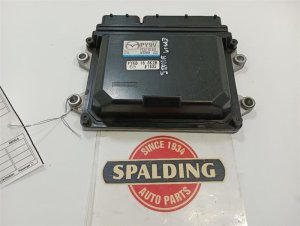
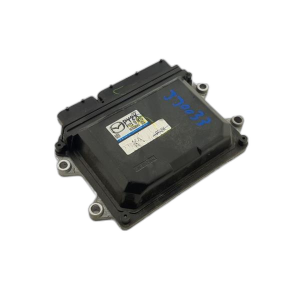
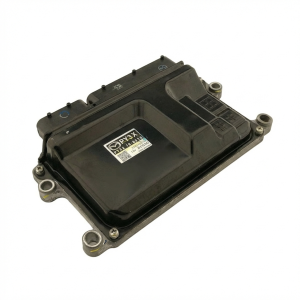
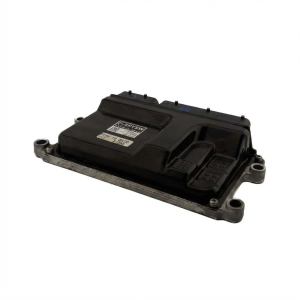
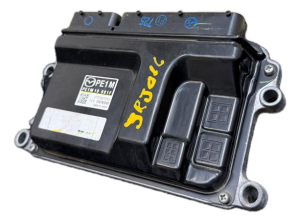
(OEM #PE01-18-881 series (e.g., PE1B-18-881F for 2013), PUZ1-18-881E (2013-2015), PX43-18-881 (2019+ for reference))— This is a rare but possible cause. If the PCM fails, it must be replaced. Part numbers are specific and must match the original unit. Replacement often requires programming to the vehicle's VIN.
Trusted brands: Mazda (OEM - Denso), Flagship One (Remanufactured)
OEM price range: $650-$900
Aftermarket price range: $300-$500
Related Codes That Often Appear With This One
- U0115 — This code indicates 'Lost Communication With ECM/PCM B'. It often appears with U0100 and points to a widespread network communication failure, frequently caused by a systemic issue like low battery voltage.
- U0101 — This code means 'Lost Communication with TCM'. If you see U0100 and U0101 together, it significantly increases the likelihood that the Transmission Control Module (TCM) is faulty or that wiring related to the TCM is damaged, disrupting the network.
- U0073 — This code stands for 'Control Module Communication Bus Off'. Seeing this with U0100 indicates a more severe, system-wide CAN bus failure, rather than a problem with just one module.
Platform-Specific Known Issues
- source — An owner on Reddit (r/MechanicAdvice) reported that after purchasing a 2016 CX-5, codes U0100 and U0115 appeared along with a flashing airbag light. A first attempt with a cheap replacement battery provided a temporary fix, but the issue returned. A second replacement with a higher-quality battery resolved the codes permanently.
- source — An owner on Reddit (r/CX5) noted that the U0100 code appeared immediately following a period of torrential rain. The code later cleared on its own after some driving, suggesting a temporary issue caused by moisture in a connector or wiring harness that dried out.
- 2015 CX-5 with U0101 (TCM Communication Loss) After Botched Jump-Start: A forum user reported that a U0101 code (Lost Communication with TCM) appeared on their 2015 CX-5 after an incorrect jump-start procedure where the jumper cable clamps were accidentally touched together. This suggests that a voltage spike can damage sensitive control modules on the CAN network, leading to communication loss codes like U0100 or U0101. The Mazda owner's manual provides a specific sequence for connecting jumper cables to avoid this.
Mechanic-Grade Diagnostic Values
- CAN Bus Resistance (Battery Disconnected) — expected: ~60 Ohms. Failure: A reading of ~120 Ohms indicates one of the two terminating resistors is offline or there's an open in the bus. A reading of 0 Ohms indicates a short between CAN High and CAN Low wires.
- CAN High Voltage (Key On, Engine Off) — expected: ~2.5V - 3.5V. Failure: Voltage stuck at 0V, battery voltage, or significantly outside the expected range indicates a short or open on the CAN High line.
- CAN Low Voltage (Key On, Engine Off) — expected: ~1.5V - 2.5V. Failure: Voltage stuck at 0V, battery voltage, or significantly outside the expected range indicates a short or open on the CAN Low line.
- Battery Cranking Voltage — expected: Should not drop below 9.6V. Failure: A drop below 9.6V during engine cranking indicates a weak battery that cannot maintain sufficient voltage to keep all modules online, a very common cause for U-codes.
Scan Tool Commands That Help
- FORScan: On-Demand Self Test (for various modules like PCM, IPC) — After resolving a potential cause, you can run a self-test on individual modules (like the Instrument Panel Cluster or Powertrain Control Module) to confirm they are back online and communicating. FORScan can also read manufacturer-specific DTCs that generic scanners might miss.
- Mazda IDS (Integrated Diagnostic System): Module Network Test / Datalogger — This is the dealer-level tool used to perform a comprehensive network test, view live data from all modules, and identify which specific module is not responding. It is also required for programming a new PCM to the vehicle.
Wiring & Ground Locations
- HS-CAN Terminating Resistors — On the 2012-2016 CX-5, the two 120-Ohm terminating resistors for the High-Speed CAN bus are located inside the Powertrain Control Module (PCM) and the Instrument Cluster.. If the CAN bus resistance test at the OBD-II port reads 120 Ohms instead of 60, it means one of these two modules (or the wiring to it) is offline. This helps narrow down the fault. For example, if the instrument cluster is also dead, it points towards a failure in that module or its connections.
- OBD-II Port CAN Pins — Pin 6 is CAN High (HS-CAN+) and Pin 14 is CAN Low (HS-CAN-).. These are the primary access points for diagnosing the entire network. All resistance and voltage measurements for the main powertrain bus are taken from these two pins.
- PCM Location — The PCM is located in the engine bay, mounted to the battery tray and covered by a plastic shield.. This is the module that has lost communication. Its location is critical for inspecting its connectors for corrosion or damage, and for checking its ground connections.
Real Owner Repair Stories
- Reddit user on r/MechanicAdvice (2016 Mazda CX-5) — Check engine light on with codes U0100 and U0115, and a blinking airbag light.
❌ Tried (didn't work) Replacing the battery with a cheap, low-quality battery. The problem returned after a short time.
✅ What actually fixed it Replacing the battery a second time with a higher-quality battery resolved the issue permanently, suggesting the vehicle's electronics are sensitive to battery quality and stability. - Reddit user on r/CX5 (2014 Mazda CX-5) — Check engine light with code U0100 appeared after a period of torrential rain. No other drivability issues were noted.
✅ What actually fixed it The code cleared itself after driving for a while. The owner suspected moisture got into a connector and the problem resolved once it dried out. This points to water intrusion as a potential cause. - NHTSA ODI #10781946 — An owner reported that their vehicle came to a complete stop while running on the highway, immobilizing all systems. A scan detected code U0100. Despite checking the wiring and replacing parts, the problem persisted, highlighting the severe safety risk of unexpected stalling associated with this code.
OEM Part Supersession History
PE1F-18-881F, G, H, K→PE1F-18-881U— Standard part revision and update by the manufacturer.
Heads up: PCMs are highly specific. Always order by the code printed on the original module and ensure it matches the vehicle's engine, transmission, and emissions type (Federal vs. California).PY09-18-881C, D, G; PYXH-18-881, A→PYXH-18-881C— Standard part revision and update by the manufacturer.
Heads up: PCMs are not interchangeable between different engine sizes or drivetrain configurations. Using the wrong part will result in a no-start condition or severe running issues.
Model Year Variations Within This Range
- 2016.5: A mid-year update designated '2016.5' made a backup camera standard on automatic models and navigation standard on Touring and Grand Touring trims. While these changes involve the infotainment and related modules, they do not fundamentally alter the diagnostic approach for a U0100 code, which remains primarily focused on the battery and core network wiring.
Diagnostic Flowchart
Other Known Issues on This Vehicle
Issues unrelated to this code that are worth knowing about as an owner of this generation:
- LED Daytime Running Light (DRL) Failure 🟠 Medium — Very common on 2016 models, but also reported on 2014-2015. Typically occurs between 40,000-60,000 miles. (Ref: Recall 4320A / NHTSA 20V083000. Caused by a faulty sealing gasket on the wiring connector, leading to corrosion.)
- Premature Brake Wear 🟡 Low — Common complaint across the first generation, with owners reporting needing to replace pads and/or rotors as early as 25,000-30,000 miles.
- Cracked Windshield 🟡 Low — Numerous owner complaints of windshields cracking spontaneously without any impact, particularly on 2014-2016 models.
- Failing Rear Liftgate Struts 🟠 Medium — Affects 2013-2016 models. The gas lift supports can corrode and fail, causing the liftgate to drop unexpectedly. (Ref: Recall 9916H / NHTSA 16V623000.)
- Skyactiv-G Carbon Buildup 🟡 Low — As a direct-injection engine, carbon buildup on intake valves is possible, though Mazda's Skyactiv design seems less prone than competitors. It is more likely for vehicles driven mostly on short trips without reaching full operating temperature. A Mazda master tech noted they rarely have to perform carbon cleaning on these engines.
- Corroded Power Liftgate Switch 🟡 Low — On models with a power liftgate, the close button on the tailgate itself can fail due to water intrusion and corrosion, especially after car washes. This can also cause a parasitic battery drain. (Ref: TSB 09-013/25 (for later models, but demonstrates the issue).)
Used vs. New Parts: Buying Guide for This Vehicle
When a used part is the smart pick: A used PCM from a junkyard can be a cost-effective option, but only if you can find an exact part number match from a donor vehicle with the same year, engine, transmission, and drivetrain. Used wiring harnesses or connectors can also be sourced to repair a damaged section of your vehicle's harness.
Donor-vehicle mileage cap: roughly under 120000 miles for the part to have meaningful remaining life.
What to inspect on the donor part:
- For a PCM, verify the part number on the label matches your original unit exactly.
- Inspect the donor vehicle for signs of flood or fire damage. Avoid any electronic modules from such vehicles.
- Check the pins on the PCM's connectors to ensure none are bent, corroded, or broken.
- Ask the salvage yard about their return policy in case the part is dead on arrival.
OEM-only on this vehicle (don't cheap out):
- Powertrain Control Module (PCM): While a used OEM part is viable, avoid aftermarket 'rebuilt' PCMs from unknown brands. A new or used genuine Mazda (Mitsubishi-made) PCM is the most reliable choice. Replacement, whether new or used, will likely require programming by a dealer or a specialized shop with Mazda IDS software.
Brands owners have reported issues with on this vehicle:
- Unbranded/generic CAN bus decoders for aftermarket radios have been reported to cause network issues.
Real Owner Stories
Aggregated from forums and TSBs cited above. Mileages and costs reflect what owners reported in those sources.
2016 Mazda CX-5
Symptoms: U0100 and U0115 codes appeared along with a flashing airbag light.
What fixed it: Replacing a cheap replacement battery with a higher-quality battery resolved the codes permanently.
Source hint: Reddit r/MechanicAdvice thread titled 'u0100_code_mazda_cx5'
2014 Mazda CX-5
Symptoms: The U0100 code appeared immediately following a period of torrential rain.
What fixed it: The code cleared on its own after driving, suggesting moisture in a connector or wiring harness had dried out.
Source hint: Reddit r/CX5 thread titled 'u0100_check_engine_code'
2015 Mazda CX-5
Symptoms: U0101 code (Lost Communication with TCM) appeared and the vehicle would not start.
What fixed it: The issue occurred after an incorrect jump-start procedure where jumper cable clamps touched, causing a voltage spike.
Source hint: Mazdas247 Forum thread discussing a 2015 CX-5 U0101 code
2016 Mazda CX-5
Symptoms: U0100 and U0115 codes appeared after a new battery was installed during a major repair for a seized engine.
What fixed it: The codes surfaced during other major repairs, illustrating how underlying electrical issues can be triggered during service.
Source hint: Mazda Forum report on a 2016 CX-5 with seized engine
Related OBD-II Codes
Frequently Asked Questions
Can a weak battery really cause a U0100 code on my Mazda CX-5?
Why did my CX-5 throw a U0100 code after driving through heavy rain?
I accidentally touched my jumper cables together while jump-starting my 2015 CX-5; could this cause a communication code?
What should the resistance be when testing the CAN bus at the OBD-II port?
Are there any recalls for wiring issues that might be related to electrical faults in the 2016 CX-5?
Helpful Videos
![How To Test CAN BUS With A Multimeter [CAN Bus Resistance Check] Mechanic Mindset](https://img.youtube.com/vi/JPE42HSJxAk/mqdefault.jpg)
We Have This Part in Stock

The information in this article is provided for general reference and educational purposes only. Vehicle specifications, procedures, and part compatibility can vary by production date, trim level, and region. Always consult your vehicle's factory service manual and verify part numbers before purchasing or performing repairs. Safety-critical components such as airbags, seat belts, and braking systems should be installed by a qualified professional.
- Mazda CX-5:
- 🧭 Diagnostic Flowchart
- 🎬 Helpful Videos
- 🛍️ Shop This Part
- What's Unique About the 2012-2016 Mazda CX-5
- Symptoms You May Notice
- Most Likely Causes
- Rare But Worth Checking
- Diagnosis Steps
- Parts You'll Likely Need
- Related Codes That Often Appear With This One
- Platform-Specific Known Issues
- Mechanic-Grade Diagnostic Values
- Scan Tool Commands That Help
- Wiring & Ground Locations
- Real Owner Repair Stories
- OEM Part Supersession History
- Model Year Variations Within This Range
- Other Known Issues on This Vehicle
- Used vs. New Parts: Buying Guide for This Vehicle
- Real Owner Stories
- 2016 Mazda CX-5
- 2014 Mazda CX-5
- 2015 Mazda CX-5
- 2016 Mazda CX-5
- Related OBD-II Codes
- Frequently Asked Questions
- 🎟️ Get 5% Off