

U0100 on 2013-2019 Nissan Sentra: Lost Communication With ECM/PCM Causes and Fixes
On a 2013-2019 Nissan Sentra, U0100 often points to a communication breakdown caused by a weak battery, bad ground connections, or wiring issues near the transmission control module (TCM). Before suspecting a bad Engine Control Module (ECM), always check the battery and all related wiring first, as the TCM is a frequent culprit for bringing down the network.
- U0100 on a 2013-2019 Sentra means the Engine Control Module (ECM) has lost communication with other modules.
- Do NOT immediately assume the ECM is bad. The most likely causes are a weak battery, bad ground connections, or a wiring issue.
- Check for code U0101 (Lost Communication with TCM) as well. If both are present, the problem is very likely related to the transmission's electronics.
- Start your diagnosis with the simplest things: test the battery, clean the terminals, and inspect all major ground straps for corrosion or damage.
- Due to the complexity of network diagnostics, professional help is recommended if the issue isn't a simple battery or ground problem.
What's Unique About the 2013-2019 Nissan Sentra
The 2013-2019 Sentra (B17 generation) uses a Continuously Variable Transmission (CVT) whose Transmission Control Module (TCM) is a known point of interest. While U0100 points to the ECM going 'silent', it's often logged by the TCM or another module when the TCM itself fails and disrupts the entire CAN bus network. Issues with the TCM, its wiring, or its power supply can cause other modules to report a loss of communication with the ECM. Owner experiences often show U0100 appearing alongside U0101 (Lost Communication with TCM), strongly suggesting a fault related to the transmission's electronics is the root cause.
Symptoms You May Notice
- Check Engine Light is on (may be flashing in severe cases)
- Vehicle will not start or has a hard start condition
- Engine stalls intermittently while driving
- Transmission warning light may be illuminated
- Transmission may seem stuck in one gear ('limp mode')
- Erratic or harsh shifting
- Loss of power and poor acceleration
- Instrument cluster lights flicker or go dark
- Inability to shift out of Park
- Replacing the ECM without checking the battery, grounds, and wiring first. The U0100 code means the ECM is not communicating, not necessarily that it has failed.
- Overlooking the TCM as the primary cause when U0100 is present without U0101. A faulty TCM can disrupt the network in a way that makes it appear as if the ECM is the one that is offline.
Most Likely Causes
- Weak or Failing Battery 🔴 High Probability → Shop Vehicle Battery All modern vehicles are sensitive to low voltage. A battery below 12.4 volts can cause modules to malfunction and drop off the communication network, triggering spurious communication codes.
How to confirm: Test the battery voltage with a multimeter with the engine off. A healthy battery should read at least 12.4V. Test the charging system; it should be between 13.5V and 14.5V with the engine running.
Typical fix: Recharge or replace the battery. Clean any corrosion from the battery terminals.
Est. part cost: $150-$300 - Poor Ground Connections 🟡 Medium Probability Corrosion on ground straps is common and can create high resistance, disrupting module communication. Key locations on the Sentra include the main ground from the battery negative terminal to the chassis, and a critical strap from the chassis to the transmission housing.
How to confirm: Visually inspect the main ground straps for looseness, fraying, or corrosion. Perform a voltage drop test on the ground circuit from the module to the battery negative post; it should be less than 0.2 volts.
Typical fix: Remove, clean all contact points with a wire brush until shiny, and securely re-fasten the ground straps. Replace any corroded or damaged straps.
Est. part cost: $20-$50 - Damaged Wiring or Connectors to TCM/ECM 🟡 Medium Probability The TCM on the Sentra's CVT is located on the side of the transmission, and its harness can be susceptible to damage. A Reddit user reported U0100 and U0101 codes appearing after a transmission fluid change, suggesting the harness may have been disturbed. In a cross-manufacturer reference, NHTSA ODI #11450973 describes a case where a mechanic diagnosed a potential harness issue with code U0100, though the dealer eventually replaced the IPDM.
How to confirm: Visually inspect the wiring harnesses and connectors going to the Engine Control Module (ECM) and the Transmission Control Module (TCM). Look for any signs of chafing, corrosion, or backed-out pins. Pay close attention to the main connector on the TCM.
Typical fix: Repair the damaged section of the wiring harness or clean/replace the affected connector.
Est. part cost: $10-$100 for repair materials - Faulty Transmission Control Module (TCM) 🟡 Medium Probability → Shop Transmission Assembly Nissan has issued several TSBs and a significant warranty extension related to CVT and TCM issues on this platform. A failing TCM can disrupt the entire CAN network, causing other modules to log a U0100 code because they can no longer hear from the ECM through the now-corrupted network.
How to confirm: This requires a professional scan tool that can attempt to communicate with each module individually. If the TCM is unresponsive but has proper power and ground, it is likely faulty. This often appears with code U0101.
Typical fix: Replace the Transmission Control Module. This requires programming to the vehicle's VIN. Nissan extended the warranty on the CVT, including the TCM, to 84,000 miles or 7 years for many of these vehicles.
Est. part cost: $500-$900
Rare But Worth Checking
- Faulty Engine Control Module (ECM): → Shop Engine Control Module (ECM) While U0100 directly implicates the ECM, it is rarely the root cause. All other possibilities (power, ground, wiring, other modules) must be ruled out before condemning the ECM.
- CAN Bus Terminating Resistor Failure: The CAN bus has two 120-ohm terminating resistors (often within the ECM and another module like the instrument cluster). A failure is rare but can bring down the entire network, causing a U0100 code.
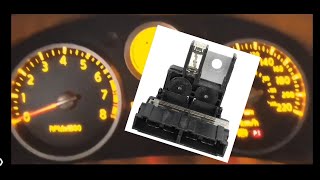
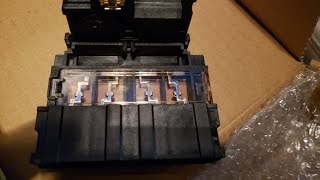
- Blown Fuse: A blown fuse for the ECM or TCM can cause either module to lose power and drop off the network. Always check fuses in the IPDM (Intelligent Power Distribution Module) in the engine bay and the interior fuse panel. 🎬 See how to check for a failed Nissan fusible link.
Diagnosis Steps
- Scan for all codes in all modules. Note any other 'U' codes, especially U0101, or any transmission-specific 'P' codes.
- Check Battery Health: Test the battery voltage (should be >12.4V engine off) and the alternator output (should be 13.5-14.5V engine on). A weak battery is a very common cause.
- Inspect Fuses: Check all fuses related to the ECM, TCM, and CAN system in the fuse boxes (both in the cabin and the engine bay IPDM).
- Inspect Grounds: Visually inspect and verify the integrity of the main battery ground to chassis, and the engine/transmission ground strap. On the Sentra, this strap is often located between the transmission mount and the chassis. Ensure they are clean and tight.
- Inspect Wiring: Carefully inspect the wiring harnesses and connectors for the ECM and TCM. The TCM is located on the side of the CVT assembly. Look for any signs of physical damage, corrosion, or loose pins.
- CAN Bus Check (Advanced): With the battery disconnected, use a multimeter to check the resistance between Pin 6 (CAN High) and Pin 14 (CAN Low) on the OBD-II port. A healthy CAN bus should read approximately 60 ohms. A reading of 120 ohms indicates an open circuit or a missing terminating resistor, while 0 ohms indicates a short.
- Module Isolation (Professional): If the steps above do not reveal the issue, a technician will use an advanced scan tool to try and communicate with each module individually to determine which one is offline or causing the network to crash. They may also use an oscilloscope to check the CAN signal waveform for noise or distortion.
Parts You'll Likely Need
- Battery — Low system voltage is the most common cause of communication codes on modern vehicles.
Trusted brands: Interstate, DieHard, Bosch
OEM price range: $200-$300
Aftermarket price range: $150-$250 - Ground Strap — A corroded or broken ground strap can interrupt power and communication to critical modules.
Trusted brands: Standard Motor Products, Dorman
OEM price range: $30-$60
Aftermarket price range: $15-$40 - Transmission Control Module (TCM)
(OEM #310F6-3BE0A (for 2013-2014 models), 31036-4AT0B (for 2014-2016 models) - Note: Always verify with VIN.)— A known issue on Nissan CVT models. A faulty TCM can take down the CAN network, causing other modules to log a U0100 code.
Trusted brands: Hitachi (OEM Manufacturer), Genuine Nissan
OEM price range: $700-$900
Aftermarket price range: $500-$700 (Remanufactured)
Related Codes That Often Appear With This One
- U0101 — Stands for 'Lost Communication with TCM'. If both codes are present, it strongly suggests the problem originates with the TCM or its wiring, causing a network-wide disruption.
- U1000 — This is a more generic Nissan code for 'CAN Communication Circuit'. It often appears with other U-codes and points to a general network problem rather than a specific module.
- P07xx — Any P07xx series codes (e.g., P0746, P0776) are transmission-related and, if present with U0100, further point towards the CVT or TCM as the source of the problem.
Technical Service Bulletins (TSBs) & Recalls
- NTB17-034g: CVT Judder and/or DTC P0746/P0965/P17F0 Stored: This bulletin addresses CVT drivability issues like judder and hesitation on 2013-2017 Sentras. While not directly for U0100, it details diagnostic procedures for the CVT system, which is often the root cause of network communication faults.
- Bulletin #NTB13047: A manufacturer service bulletin notes that when in "Extended Storage Mode," vehicles can set DTC U0100 if the ignition switch is left in the accessory position for longer than 2 seconds.
- Nissan CVT Warranty Extension: Nissan extended the original 5-year/60,000-mile warranty to 7 years/84,000 miles for the CVT assembly on many 2013-2017 Sentras. This coverage includes the CVT assembly, internal components, valve body, and TCM reprogramming.
Platform-Specific Known Issues
- There are several Technical Service Bulletins (TSBs) for the 2013-2017 Sentra related to reprogramming the TC
Mechanic-Grade Diagnostic Values
- CAN Bus Resistance (Key Off) — expected: ~60 Ω. Failure: A reading of 120 Ω suggests an open circuit or one of the two terminating resistors is offline. A reading near 0 Ω indicates a short between CAN High and CAN Low wires.
- CAN High (CAN-H) Voltage to Ground (Key On, Network Awake) — expected: ~2.7 V. Failure: Significant deviation from this voltage can indicate a short to power or ground on the CAN-H line.
- CAN Low (CAN-L) Voltage to Ground (Key On, Network Awake) — expected: ~2.3 V. Failure: Significant deviation from this voltage can indicate a short to power or ground on the CAN-L line.
- Healthy Battery Voltage (Engine Off) — expected: 12.4V to 12.6V. Failure: A reading below 12.4V (and especially below 12.0V) indicates a discharged or failing battery that can cause modules to drop off the network.
Hidden / Shadow Codes Worth Checking
- P17F0: CVT_JUDDER [T/M INSPECTION]. While not a direct cause of U0100, this is a 'hidden' diagnostic trouble code that does not illuminate the MIL but is stored in the TCM. Its presence indicates internal CVT issues that could be related to TCM stress or failure, which can then lead to network codes like U0100. (see via This code is visible with a Nissan CONSULT scan tool or an advanced aftermarket scanner. Nissan TSB NTB18-058b details a TCM reprogram to enhance the logic for storing this code.)
Scan Tool Commands That Help
- Nissan CONSULT-III Plus: CAN Diagnosis Support Monitor — This function provides a live view of which control modules are actively communicating on the CAN bus. It's the primary tool for identifying which module is 'offline' or not responding, which is the root of any U-code diagnosis.
- Nissan NERS (Nissan ECU Reprogramming Software): TCM Reprogramming / Blank Programming — When a new or used TCM is installed, it is not plug-and-play. NERS, often used with a J2534 pass-thru device, is required to load the correct calibration file for the specific transmission and VIN. Failure to program the TCM will result in communication errors and drivability problems.
- Generic OBD-II Scanner / Key Cycle: TCM Reset (Throttle Position Reset) — As a preliminary, non-invasive step, some owners report success with a throttle position relearn procedure which can sometimes clear minor communication glitches. The procedure involves turning the key to 'ON', pressing the gas pedal for 5+ seconds, turning the key 'OFF', releasing the pedal, and waiting several minutes before starting the engine. This is not a guaranteed fix for U0100 but can resolve related drivability symptoms.
Wiring & Ground Locations
- Transmission Ground Strap — Typically located between the transmission housing/mount and the vehicle's chassis frame rail on the driver's side of the engine bay.. This is a critical ground path for the TCM. Corrosion or looseness here can cause voltage drops and disrupt TCM operation, leading it to crash the CAN network and trigger a U0100 code in other modules.
- IPDM (Intelligent Power Distribution Module) — Located in the engine bay, usually near the battery. It is the main fuse and relay box.. The IPDM is a 'smart' fuse box that acts as a control module itself. It supplies power to the ECM and TCM. Internal corrosion from moisture ingress can cause intermittent power loss to these modules, directly causing a U0100 or U0101 code.
- TCM Connector — The TCM is bolted to the side of the CVT transmission assembly. The main electrical connector is exposed to the underhood environment.. This connector is a common point of failure. Pins can become corroded, bent, or backed out, especially if disturbed during service like a transmission fluid change. A poor connection here will cut off communication from the TCM, causing network-wide faults.
Real Owner Repair Stories
- Reddit user in r/MechanicAdvice (2015 Nissan Sentra, 82k miles) — Vehicle shut off while parked, went into limp mode with codes U0100 and U0101. Check engine light remained on.
❌ Tried (didn't work) Restarting the vehicle temporarily cleared the limp mode, but the CEL and underlying issue persisted.
✅ What actually fixed it The user noted the issue occurred two days after a transmission fluid change. The community diagnosis pointed to the TCM connector having been disturbed, contaminated, or damaged during the service. The fix is to carefully inspect, clean with contact cleaner, apply dielectric grease, and securely reseat the TCM connector. - NHTSA ODI #11537805: An owner reported a dangerous incident involving a sudden stop where the vehicle was found facing the wrong direction. Diagnostic checks revealed code U0100 for the ECM/PCM "A" DTC.
OEM Part Supersession History
310F6-3BE0A→310F6-3BE0B, 310F6-5RD0B (and others, always verify by VIN)— Revisions to address reliability issues and component updates.
Heads up: Part numbers are not directly interchangeable without reprogramming. The part number on the label is for the hardware; the actual software/calibration version is internal and must be matched or programmed using Nissan's NERS software. Installing a used TCM, even with the same hardware number, requires it to be programmed to the new vehicle's VIN and specific transmission calibration data.
Model Year Variations Within This Range
- 2016-2019: The 2016 model year received a significant facelift. While the core powertrain remained the same, there were updates to the interior, center stack, and electronic systems, including a new instrument cluster display and updated NissanConnect features. These changes can affect CAN bus diagnostics, as different modules may be present. For example, new safety technologies like Intelligent Cruise Control and Forward Emergency Braking were added, introducing new modules to the network.
- 2013-2015 vs 2016-2019: Nissan issued TSB NTB18-058b for 2013-2017 Sentras to reprogram the TCM with enhanced diagnostic logic. This suggests that earlier models may not be as effective at self-diagnosing certain CVT issues that could lead to network problems. The TCM hardware part numbers also evolved during the production run.
Diagnostic Flowchart
Other Known Issues on This Vehicle
Issues unrelated to this code that are worth knowing about as an owner of this generation:
- Premature CVT Transmission Failure 🔴 High → Shop Transmission Assembly — Very common. Symptoms like shuddering, hesitation, or complete failure can appear at any mileage but are more frequent after 60,000 miles. (Ref: Multiple TSBs (e.g., NTB17-034g) and a warranty extension to 84,000 miles/7 years were issued.)
- Faulty Mass Airflow (MAF) Sensor 🟠 Medium — A common issue causing hesitation, stalling, and poor fuel economy. Often triggered by a dirty air filter or PCV system issues. (Ref: A PCM reflash was available at dealers to address sensitivity issues.)
- Defective Brake Light Switch 🟠 Medium — Widespread enough to trigger a major recall (Nissan PM971) for 2016-2019 models. Can cause brake lights to fail and may prevent the engine from starting. (Ref: Recall #PM971; NHTSA Campaign #21V135000)
- Excessive Oil Consumption 🟠 Medium — Reported in some higher-mileage engines, often attributed to piston ring wear.
- Failing ABS Wheel Speed Sensors 🟡 Low — The right-rear sensor is a common failure point, causing the ABS and traction control lights to illuminate.
Used vs. New Parts: Buying Guide for This Vehicle
When a used part is the smart pick: For this repair, using used parts is generally limited to easily verifiable components like ground straps or battery cables. A used IPDM (fuse box) can be a cost-effective option if it is carefully inspected for corrosion and the part number matches exactly. A used ECM could be considered if it comes with the key and immobilizer components from the same donor car, but this is complex.
Donor-vehicle mileage cap: roughly under 80000 miles for the part to have meaningful remaining life.
What to inspect on the donor part:
- For an IPDM: Check for a clean, dry donor vehicle. Open the IPDM and inspect for any hint of water intrusion, mineral deposits, or green/white corrosion on the board or connectors.
- For a TCM: Inspect the connector pins for straightness and lack of corrosion. Check the casing for any signs of physical damage or heat stress.
- Always try to get parts from a vehicle with a known history and lower mileage if possible.
OEM-only on this vehicle (don't cheap out):
- Transmission Control Module (TCM): While remanufactured units exist, a new Genuine Nissan part is the safest bet. A used TCM is a significant gamble because it is NOT plug-and-play. It must be professionally reprogrammed with Nissan-specific software (CONSULT/NERS) using calibration data for YOUR car's transmission. An improperly programmed module will not work and can cause further issues.
Aftermarket brands forum-validated for this vehicle:
- For Batteries: Interstate, Bosch, DieHard are reputable brands.
- For Ground Straps: Standard Motor Products, Dorman.
Brands owners have reported issues with on this vehicle:
- Avoid no-name, ultra-cheap electronic modules from online marketplaces. For a critical component like the TCM, the risk of a defective or improperly specified part is very high.
Real Owner Stories
Aggregated from forums and TSBs cited above. Mileages and costs reflect what owners reported in those sources.
2015 Nissan Sentra
Symptoms: The car threw U0100 and U0101 codes immediately after a transmission fluid service. The vehicle entered 'limp mode' but was able to be driven again after a restart.
What fixed it: The issue was related to the TCM or its harness being disturbed during the transmission fluid service.
Source hint: r/MechanicAdvice - '2015 nissan sentra ecm/tcm communication failure code u0100 and u0101'
Related OBD-II Codes
Frequently Asked Questions
Is there a warranty extension for the CVT and TCM on my 2013-2017 Nissan Sentra?
My 2015 Sentra has U0100 and U0101 codes after a transmission fluid change. What could be the cause?
Does TSB NTB17-034g apply to the U0100 communication code?
Can a weak battery really cause a U0100 code on a Nissan Sentra?
Where are the critical ground straps located on the Sentra that I should check for U0100?
Is there a recall for the brake light switch on my 2016-2019 Sentra?
Helpful Videos
We Have This Part in Stock

The information in this article is provided for general reference and educational purposes only. Vehicle specifications, procedures, and part compatibility can vary by production date, trim level, and region. Always consult your vehicle's factory service manual and verify part numbers before purchasing or performing repairs. Safety-critical components such as airbags, seat belts, and braking systems should be installed by a qualified professional.
- Nissan Sentra:
- 🧭 Diagnostic Flowchart
- 🎬 Helpful Videos
- 🛍️ Shop This Part
- What's Unique About the 2013-2019 Nissan Sentra
- Symptoms You May Notice
- Most Likely Causes
- Rare But Worth Checking
- Diagnosis Steps
- Parts You'll Likely Need
- Related Codes That Often Appear With This One
- Technical Service Bulletins (TSBs) & Recalls
- Platform-Specific Known Issues
- Mechanic-Grade Diagnostic Values
- Hidden / Shadow Codes Worth Checking
- Scan Tool Commands That Help
- Wiring & Ground Locations
- Real Owner Repair Stories
- OEM Part Supersession History
- Model Year Variations Within This Range
- Other Known Issues on This Vehicle
- Used vs. New Parts: Buying Guide for This Vehicle
- Real Owner Stories
- 2015 Nissan Sentra
- Related OBD-II Codes
- Frequently Asked Questions
- 🎟️ Get 5% Off