

U0100 on 2011-2018 Porsche Cayenne: Causes and Fixes for Lost ECM Communication
On a 2011-2018 Porsche Cayenne, code U0100 is most often caused by corroded wiring in the driver's or passenger's footwell due to water leaks from clogged cowl, sunroof, or AC evaporator drains. Before suspecting an expensive computer failure, check for damp carpets, test the main engine (DME) relay, and ensure the battery is healthy.
- Code U0100 on a 2011-2018 Cayenne is a critical fault that can leave you stranded. Do not drive the vehicle.
- Before assuming an expensive computer has failed, your first and most important check should be for dampness under the front carpets. This is the #1 cause.
- Regularly cleaning the plenum drains under the front cowl and the sunroof drains is the best preventative maintenance to avoid this issue.
- A faulty main DME relay is another likely, and much cheaper, culprit than the DME itself.
- Diagnosing this code often requires patience and a methodical approach, starting with the battery and moving to the known platform-specific weak points.
What's Unique About the 2011-2018 Porsche Cayenne
The 2011-2018 (958) Cayenne is notoriously prone to water leaks into the cabin from clogged plenum/cowl drains, sunroof drains, and AC evaporator drains. This water saturates the carpets and thick underlying foam padding, corroding critical, non-waterproofed CAN bus wire splices in the main harness located in the footwells. These splices, often found under the driver's dead pedal or along the passenger sill, are the primary failure point. This specific water ingress issue is a far more common cause for U0100 on a Cayenne than a random ECM failure.
Symptoms You May Notice
- Intermittent or complete no-start condition (turn the key and nothing happens, or it cranks but won't fire).
- Engine stalls while driving, sometimes after warming up.
- Multiple, unrelated warning lights on the instrument cluster (e.g., PSM, ABS, Ignition Fault, Brake Proportioning Warning).
- Check Engine Light is on.
- Transmission may be stuck in 'limp mode'.
- Inability for a standard OBD-II scanner to communicate with the engine control module.
- A 'Christmas tree' effect on the dashboard with numerous faults displayed simultaneously.
- Error messages like "Ignition Lock Faulty" or "Brake Proportioning Warning".
- Replacing the Engine Control Module (DME) without first checking for water damage in the footwells or testing the DME relay. The root cause is far more likely to be the wiring or power supply to the module, not the module itself.
- Replacing the battery without clearing the drains, leading to a repeat failure when the new battery is drained by parasitic draw from wet modules or the wiring corrodes again.
Most Likely Causes
- Corroded Wiring Harness in Footwells from Water Leaks 🔴 High Probability The Cayenne's cowl, sunroof, and AC evaporator drains are prone to clogging with leaves and debris, causing rainwater or condensation to overflow into the cabin instead of exiting under the car. The main wiring looms, which contain poorly sealed factory splices for the CAN bus network (often twisted pairs of wires), run along the floor and are directly in the path of this water. The thick foam padding under the carpet can hold moisture for months, leading to severe corrosion of these critical connections.
How to confirm: Pull back the carpets and sound-deadening material in both the driver and passenger front footwells. Pay special attention to the area under the driver's dead pedal and along the door sills. Check for any signs of moisture, mildew smell, rust stains on the floor pan, or visible green/white corrosion on the wiring harness and its splices. The carpet may feel dry on top while the foam underneath is saturated.
Typical fix: The corroded section of the wiring harness must be repaired. This involves cutting out the damaged splices and wires and replacing them with new wire using waterproof, heat-shrink butt connectors. It is crucial to stagger the splices to prevent a bulge in the harness. The entire area must be thoroughly dried (which can take days), and the source of the leak (clogged drains) must be identified and cleared.
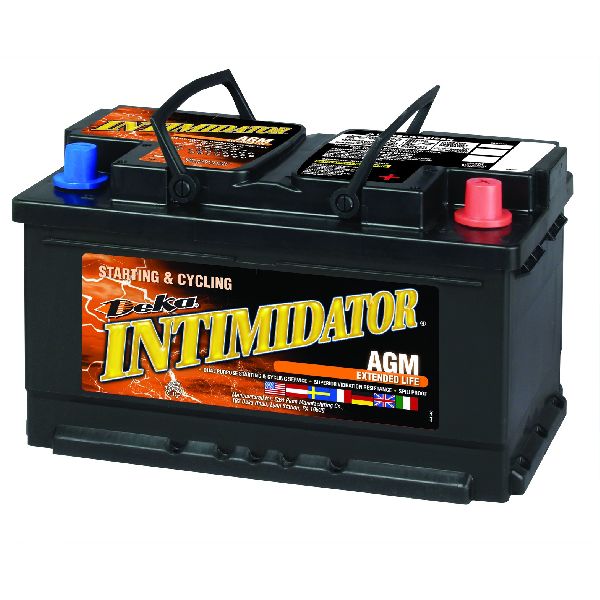
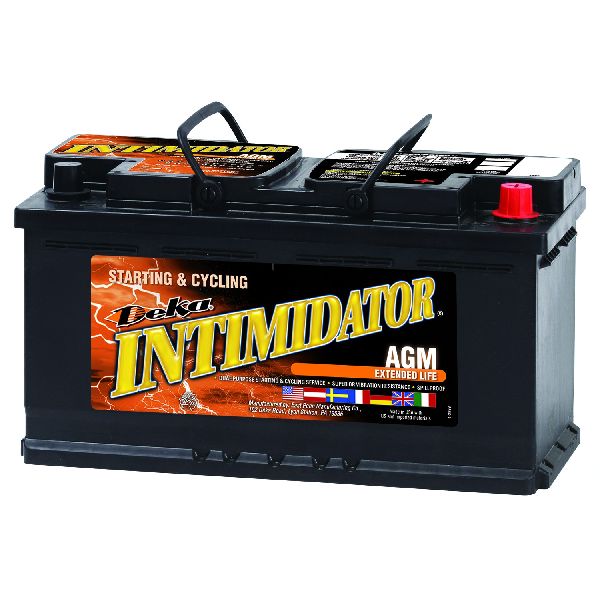
Est. part cost: $10-$50 for wire and connectors - Weak or Failing Battery 🟡 Medium Probability → Shop Vehicle Battery Like many complex European vehicles, the Cayenne is highly sensitive to system voltage. An aging or weak AGM battery can provide insufficient or unstable voltage during engine cranking, causing network modules like the DME to glitch, reset, or drop communication, triggering a U0100 code. This can happen even if the lights and radio still turn on.
How to confirm: Use a multimeter to test the battery voltage with the engine off; a healthy battery should read at or above 12.6 volts. More importantly, perform a load test using a dedicated battery conductance tester to check its true health. Any voltage drop below 10V during cranking is a red flag. Many auto parts stores offer this service for free.
Typical fix: Replace the vehicle's battery with a new AGM battery of the correct specification (e.g., H8 AGM). On the Cayenne, this must be followed by using a scan tool to register the new battery with the vehicle's gateway module to ensure proper charging and longevity.
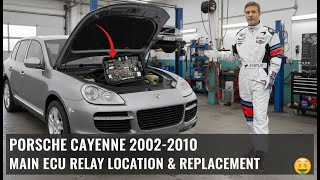
Est. part cost: $200-$450 - Faulty Main DME Relay 🟡 Medium Probability The DME relay is a double relay that supplies power to the engine computer and fuel pump. Internal solder joints can crack over time from heat and vibration, leading to intermittent power loss. A documented case on a 2016 Cayenne showed that an internally failing DME relay provided intermittent and low voltage (2-7V instead of 12V) to the engine computer, causing it to lose communication and trigger U0100.
How to confirm: Locate the DME relay in the E-Box (water box) under the windshield cowl. Symptoms include the engine cranking but not starting, or stalling when warm and then refusing to restart until it cools. Tapping on the relay while trying to start the car may temporarily restore connection. The definitive test is to check for proper voltage output at the relay's terminals when activated.
Typical fix: Replace the DME relay. 🎬 Watch this video to troubleshoot and replace the DME relay. This is a simple plug-and-play part, though accessing the E-box requires removing the cowl cover.
Est. part cost: $40-$80
Rare But Worth Checking
- Failed Engine Control Module (DME): → Shop Engine Control Module (ECM) While possible, the DME itself is a robust component. It should only be considered faulty after all other possibilities—especially wiring, relays, and power supply—have been exhaustively ruled out. Water damage to the DME itself is possible if the cowl box drains are severely clogged. This is an expensive last resort.
- Damaged CAN Bus Wiring Elsewhere: Rodent damage or chafing of the CAN bus wiring harness in the engine bay or under the vehicle can also cause this code, though it is less common than the specific footwell corrosion issue.
- Faulty KESSY/Gateway Module: The Keyless Entry (KESSY) and Gateway modules are also located in areas susceptible to water damage. A failure in these modules can disrupt the entire CAN network, leading to a U0100 code among others. A water-damaged KESSY module under the seat is a known issue.
Diagnosis Steps
- Check Battery Health: Using a multimeter, confirm battery voltage is at least 12.6V with the engine off. Perform a conductance load test to ensure the battery is not failing under load. A weak battery is a very common cause of network codes. Charge or replace the battery if necessary.
- Scan for All Codes: Use a Porsche-capable scan tool (like PIWIS) to read codes from ALL modules, not just the engine. Note all communication (U-series) codes present, as this can help pinpoint the scope of the network failure.
- Inspect for Water Ingress (CRITICAL): This is the most important step. Pull back the front carpets on both the driver's and passenger's sides. Squeeze the thick foam padding underneath. Inspect the floor pan for any signs of moisture, mildew, or standing water. Check under the driver's dead pedal and along the door sills.
- Inspect Footwell Wiring: If water is found, carefully unwrap the electrical tape from the large wiring harnesses running along the floor. Look for corroded, green, or white powdery splices. These are often just twisted together from the factory with minimal sealing. Gently tug on wires at the splice points to see if they pull apart.
- Clear All Drains: Proactively clean the cowl drains (under the plastic cowl below the windshield), the sunroof drains (four corners), and the AC evaporator drain (exits into passenger footwell area). YouTube has many video guides for this. Some owners modify the drain ends to prevent future clogs.
- Inspect and Test DME Relay: Locate the main DME relay (Porsche P/N 958-615-008-01 for a 2016 model, verify for your specific year) in the electronics box in the plenum chamber (under the windshield cowl). Swap with a known good relay or test its output voltage. If it's intermittent or low, replace it.
- Check Fuses: Inspect all fuses related to the engine control module and other systems showing faults, both in the cabin and in the under-hood E-box.
Parts You'll Likely Need
- Main DME Relay
(OEM #958-615-008-01)— A documented failure point that causes intermittent power to the engine computer, directly leading to a U0100 code. It's a relatively inexpensive part to rule out.
Trusted brands: Porsche (OEM)
OEM price range: $40-$80
Aftermarket price range: $20-$50 - Battery (AGM Type, H8/Group 49) — Low system voltage from a weak battery is a common trigger for communication faults on this platform.
Trusted brands: Bosch, Interstate, Varta, DieHard
OEM price range: $350-$500
Aftermarket price range: $200-$350 - Waterproof Heat-Shrink Butt Connectors — These are essential for properly repairing corroded CAN bus wires in the footwell harness to prevent a recurrence of the issue.
Trusted brands: 3M, Ancor
Aftermarket price range: $10-$30
Related Codes That Often Appear With This One
- U0101 — This code indicates 'Lost Communication with TCM' (Transmission Control Module). Since the TCM and DME are on the same high-speed CAN bus, a network-wide problem like corroded wiring will often cause communication to be lost with both modules simultaneously.
- Multiple other U-codes — A general failure of the CAN bus due to wiring corrosion can cause communication loss with many different modules (ABS, PSM, Air Conditioning, Instrument Cluster), resulting in a cascade of U-series trouble codes.
- U0301 — Indicates a software incompatibility with the ECM/PCM. This can sometimes be triggered alongside U0100 when communication is intermittent or corrupted, making other modules believe there is a software mismatch.
Platform-Specific Known Issues
- Driver's Side 'Dead Pedal' Splice Corrosion: A very common failure point is a set of CAN bus splices located directly under the driver's side dead pedal. To access them, the carpet must be pulled back, which often requires removing the door sill trim and seat rail bolts. Owners report finding multiple green, corroded wires twisted together under a layer of fabric tape. Repairing these splices often resolves a host of communication errors.
- AC Evaporator Drain Failure: The AC evaporator drain can become clogged or detached, causing condensation to drain directly into the passenger footwell. Owners report hearing water 'sloshing' in the dash and seeing water drip onto the passenger floor mat, especially during turns. This specifically targets the wiring harness on the passenger side.
- Proactive Drain Modification: Due to the high frequency of clogs, many owners and even some dealers recommend modifying the rubber drain grommets/nozzles. This involves trimming the 'duckbill' or 'nipple' end of the sunroof and cowl drains to create a larger opening, which is less likely to be blocked by small debris.
Mechanic-Grade Diagnostic Values
- CAN Bus Network Resistance — expected: Approximately 60 Ohms when measured between CAN-High and CAN-Low pins at the OBD-II port with the ignition off and battery disconnected.. Failure: A reading of ~120 Ohms indicates an open circuit or a missing terminating resistor. A reading near 0 Ohms indicates a short between the CAN lines.
- CAN Bus Voltage — expected: Approximately 2.5V on both CAN-High and CAN-Low lines relative to chassis ground with the key on, engine off.. Failure: Voltages that are stuck high (e.g., 5V or 12V) or low (0V) indicate a short to power or ground on that line.
- DME Module Power Supply — expected: 12.0V - 14.5V at the DME power pins with the key on.. Failure: Voltage dropping below 10V during cranking can cause modules to reset and lose communication. No voltage indicates a fuse, relay, or wiring issue.
- Module Ground Connection Resistance — expected: Less than 0.5 Ohms between the module's ground pin and a clean chassis ground point.. Failure: High resistance indicates a corroded or loose ground connection, which can cause intermittent communication faults.
Scan Tool Commands That Help
- Porsche PIWIS: Network Scan / Control Unit Overview — This is the first step to determine the scope of the communication failure. It will show which modules are online and which are not responding, helping to isolate the fault.
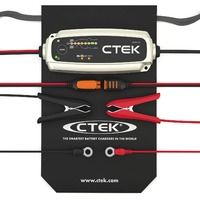
- Porsche PIWIS: Control Unit Programming / Automatic Programming — This function is mandatory when replacing the DME, KESSY, or Gateway module. It codes the new module to the vehicle's VIN and immobilizer system. A battery charger supplying at least 40A is required during this process.
- Porsche PIWIS: Adaptations — After a new DME has been programmed, various adaptations must be run to ensure all related systems function correctly with the new module.
Wiring & Ground Locations
- Main Vehicle Ground Point — Located directly in front of the driver's seat under a small, pre-cut flap in the carpet.. This is a master ground connection for the vehicle. A loose or corroded connection here can cause widespread, intermittent electrical issues. It can also be used to perform a 'cold reboot' of all vehicle modules by disconnecting it for 30 minutes, which can sometimes resolve software glitches.
- DME (ECM) Location — In the electronics box (plenum chamber or 'E-Box') under the plastic cowl cover, on the right (passenger) side of the vehicle.. This is the physical location of the module itself. The E-Box is supposed to be watertight, but severely clogged cowl drains can lead to water ingress and direct damage to the DME or its connectors.
- CAN Bus Splices — Within the main wiring harnesses that run along the floor in the driver and passenger footwells. A key area is under the driver's dead pedal.. These are the most common failure points for U0100 on this vehicle. They are not waterproofed from the factory and corrode when the cabin floods from clogged drains, breaking the CAN network connection.
- KESSY (Keyless Entry) Module — Under the driver's seat (LHD vehicles) or passenger's seat (RHD vehicles).. This module is critical for vehicle startup authorization and is also on the CAN network. Its low-lying position makes it extremely vulnerable to water damage from clogged drains, which can cause a no-start and network communication faults.
Real Owner Repair Stories
- Rennlist Forum User (2016 Porsche Cayenne (958.2)) — Water ingress from blocked drains led to the driver's window not working and a flickering reverse light.
❌ Tried (didn't work) A Porsche dealer diagnosed a bad Bose amp and quoted thousands to strip the interior without first addressing the wiring.
✅ What actually fixed it The user noted that the well-known fix involves clearing drains, removing the interior to dry it completely, and tracing/repairing corroded, non-waterproofed butt connectors within the main wiring looms in the footwells. Often, repairing the wiring is all that is needed to fix the electrical problems without replacing expensive modules.
Model Year Variations Within This Range
- 2011-2018: While mechanically very similar, the pre-facelift 958.1 (2011-2014) and facelift 958.2 (2015-2018) can have subtle differences in CAN bus communication protocols for certain modules, such as headlights. This means modules are not always cross-compatible. The PCM (infotainment system) was also updated significantly for the 2017+ model years. However, the root causes of U0100 related to water ingress and wiring harness design are consistent across the entire generation.
Diagnostic Flowchart
Used vs. New Parts: Buying Guide for This Vehicle
When a used part is the smart pick: A used wiring harness or a section of harness is an excellent choice if it is sourced from a dry, accident-free vehicle. Relays can also be sourced used, but are inexpensive enough to buy new.
What to inspect on the donor part:
- For wiring, inspect connectors for any green/white powder (corrosion).
- Ensure the harness sheathing is intact and not brittle.
- Ask for photos of the footwell area of the donor car if possible to verify it was dry.
OEM-only on this vehicle (don't cheap out):
- Engine Control Module (DME)
- KESSY / Gateway Module
- Body Control Module (BCM)
Real Owner Stories
Aggregated from forums and TSBs cited above. Mileages and costs reflect what owners reported in those sources.
2011-2018 Porsche Cayenne
Symptoms: A 'Christmas tree' effect on the dashboard with numerous faults displayed simultaneously, including PSM, ABS, Ignition Fault, and Brake Proportioning Warning.
What fixed it: Repairing a set of green, corroded CAN bus splices found under the driver's side dead pedal. The factory splices were just twisted wires under fabric tape and had been damaged by water ingress.
Source hint: Rennlist: '955/957/958 Cayenne DIY: Wiring problems due to moisture'
2016 Porsche Cayenne
Symptoms: The engine would stall while driving after it warmed up, and then would crank but refuse to restart until it had cooled down completely.
What fixed it: The main DME relay (P/N 958-615-008-01) was failing internally and providing low voltage to the engine computer. Replacing the relay, located in the E-Box under the windshield cowl, resolved the problem.
Source hint: Documented case of failing DME relay cited in article context
2011-2018 Porsche Cayenne
Symptoms: Heard water sloshing around in the dashboard area, followed by water dripping onto the passenger side floor mat and a host of electrical warnings on the cluster.
What fixed it: The AC evaporator drain was clogged, causing condensation to flood the passenger footwell. The fix required clearing the drain and repairing the water-damaged wiring harness that runs along the passenger side floor.
Source hint: Rennlist: 'Major Water leak in passenger footwell'
Related OBD-II Codes
Frequently Asked Questions
Where is the most common place for the wiring to corrode on my 2011-2018 Cayenne, causing a U0100 code?
My Cayenne's carpet feels dry, but I have a U0100 and other random warnings. Could it still be a water leak?
I hear a 'sloshing' sound in my dashboard and now have a U0100 code. Are these related?
What can I do to prevent these water-related electrical issues on my Cayenne?
My 2016 Cayenne cranks but won't start and shows a U0100. Besides wiring, is there a specific part I should check?
I just replaced the battery in my Cayenne to fix a U0100 code, but it didn't help. What did I miss?
Helpful Videos
We Have This Part in Stock


The information in this article is provided for general reference and educational purposes only. Vehicle specifications, procedures, and part compatibility can vary by production date, trim level, and region. Always consult your vehicle's factory service manual and verify part numbers before purchasing or performing repairs. Safety-critical components such as airbags, seat belts, and braking systems should be installed by a qualified professional.
- Porsche Cayenne:
- 🧭 Diagnostic Flowchart
- 🎬 Helpful Videos
- 🛍️ Shop This Part
- What's Unique About the 2011-2018 Porsche Cayenne
- Symptoms You May Notice
- Most Likely Causes
- Rare But Worth Checking
- Diagnosis Steps
- Parts You'll Likely Need
- Related Codes That Often Appear With This One
- Platform-Specific Known Issues
- Mechanic-Grade Diagnostic Values
- Scan Tool Commands That Help
- Wiring & Ground Locations
- Real Owner Repair Stories
- Model Year Variations Within This Range
- Used vs. New Parts: Buying Guide for This Vehicle
- Real Owner Stories
- 2011-2018 Porsche Cayenne
- 2016 Porsche Cayenne
- 2011-2018 Porsche Cayenne
- Related OBD-II Codes
- Frequently Asked Questions
- 🎟️ Get 5% Off