

U0100 on 2010-2016 Porsche Panamera: Causes and Fixes for Lost ECM Communication
On a 2010-2016 Panamera, U0100 is most often caused by a weak battery or water intrusion from clogged drains leading to corroded wiring or a failed Gateway Module. Before suspecting an expensive computer failure, fully charge and test the battery and check for damp carpets in the footwells and trunk.
- U0100 is a critical fault that makes the vehicle unsafe to drive; do not operate it until the issue is resolved.
- The most likely causes are not a failed engine computer, but rather a weak battery or water damage to the vehicle's wiring or Gateway Module.
- Your first diagnostic steps should be to fully charge and load-test the battery, and then thoroughly inspect the front footwells and trunk for any signs of moisture.
- Repair is complex and requires Porsche-specific tools and knowledge. This is not a typical DIY repair, and professional diagnosis is strongly recommended to avoid unnecessary and expensive parts replacement.
What's Unique About the 2010-2016 Porsche Panamera
The first-generation Panamera (970) is a complex vehicle with numerous electronic modules. Its primary vulnerability related to code U0100 is water intrusion. The design includes sunroof, cowl, and active rear spoiler drains that are prone to clogging. When these drains back up, water is channeled into the cabin, pooling in the front footwells or the trunk, directly endangering critical network components like the Gateway Module, which is located in the trunk. This makes water damage a far more common cause for this communication code on a Panamera than on many other vehicles. This issue is so prevalent that it has led to class-action lawsuits, such as *Washburn v. Porsche Cars North America, Inc.*, concerning water damage from faulty drainage systems.
Symptoms You May Notice
- Multiple, simultaneous warning lights on the dashboard, such as 'PSM Failure', 'Chassis System Fault', 'Check Engine', and 'Transmission Fault'.
- Engine will not crank or start, sometimes intermittently.
- Engine stalls while driving.
- Vehicle enters a reduced-power 'limp mode'.
- Transmission may seem stuck in one gear or act as if it's in neutral.
- Instrument cluster gauges may stop working or show dashes.
- Air suspension may show a 'Chassis system failure' warning and fail to adjust height.
- Replacing the Engine Control Module (DME) without first ruling out battery, wiring, and Gateway Module issues. The DME is expensive and rarely the root cause.
- Replacing the battery but failing to register it with the vehicle's computer system, leading to continued electrical issues and premature battery failure.
Most Likely Causes
- Weak or Failing Battery 🔴 High Probability → Shop Vehicle Battery The Panamera's complex electrical systems with dozens of modules are highly sensitive to voltage. A battery that is old, undercharged, or failing may not provide the stable voltage required, causing modules to randomly drop off the communication network, triggering a U0100 code.
How to confirm: Test the battery voltage with a multimeter. A healthy, fully charged AGM battery should read approximately 12.6-12.8 volts with the engine off. Perform a load test to check its health under stress. Low voltage is a primary suspect for widespread communication faults.
Typical fix: Replace the battery with a new AGM battery of the correct specification. 🎬 See this step-by-step guide for replacing your Panamera battery. The new battery MUST be registered to the vehicle's system using a Porsche-specific scan tool like the PIWIS. This process informs the Gateway Module of the battery's age and capacity, ensuring proper charging strategy and preventing premature failure. 🎬 Watch: How to register your new battery using a scanner.
Est. part cost: $250-$500 - Water Intrusion and Wiring Corrosion 🔴 High Probability Clogged sunroof, cowl (at the base of the windshield), or rear spoiler drains are a well-documented issue, causing water to leak into the cabin and trunk. This water saturates wiring harnesses under the carpet, particularly CAN bus junction points and splices, causing corrosion that breaks the network connection. The cowl drains are a known fire risk per Porsche Safety Recall 19V322000, as water can short the A/C blower.
How to confirm: Physically inspect for dampness, moldy smells, or moisture under the front carpets (especially driver and passenger footwells) and in the trunk, particularly on the driver's side where the Gateway Module is located behind a trim panel. 🎬 Watch: How to fix water leaks in the trunk area. The foam padding under the carpet can be saturated while the top surface feels dry.
Typical fix: Dry out the affected area completely. Identify the corroded wires or connectors, and repair or replace the damaged section of the harness. This can be a very labor-intensive process requiring removal of seats and carpets. The clogged drains must be cleared to prevent recurrence.
Est. part cost: $50-$1500+ - Faulty Gateway Control Module 🟡 Medium Probability → Shop Body Control Module The Gateway Module acts as the central router for all vehicle communication networks. Its location in the trunk behind the driver's side rear wheel well panel makes it susceptible to failure from water damage if the rear drains are clogged. Internal electronic failure is also possible.
How to confirm: This requires a Porsche-specific scan tool (PIWIS) to see if the Gateway Module is responsive. A visual inspection for water damage or corrosion on the module and its connectors is also necessary. The module is located behind the driver's side trunk liner.
Typical fix: Replace the Gateway Control Module. The new module will require programming (coding) to the specific vehicle using a PIWIS tester. A used module can be installed but also requires programming.
Est. part cost: $400-$800
Rare But Worth Checking
- Faulty Engine Control Module (DME/PCM): → Shop Engine Control Module (ECM) While the code directly points to a loss of communication with the DME, it's more common for the network or other modules to be the problem. The DME itself is a robust unit and typically fails only due to external factors like a voltage spike or water damage. Always exhaust all other possibilities before condemning the DME.
- Aftermarket Device Interference: Improperly installed aftermarket devices (such as remote starters, alarms, or tracking units) that are tapped into the CAN bus can disrupt communication and cause a U0100 code. These should be disconnected as a primary diagnostic step.
Diagnosis Steps
- Check Battery Health: → Shop Vehicle Battery Start with the simplest cause. Measure the battery's static voltage (should be ~12.6V) and perform a load test. Ensure battery terminals are clean and tight. If replaced, the new battery MUST be coded to the car with a tool like PIWIS.
- Full System Diagnostic Scan: Use a Porsche-compatible scanner (PIWIS recommended) to pull codes from ALL vehicle modules. Note which modules are not communicating. A failure to communicate with the Gateway module is a key indicator.
- Inspect for Water Intrusion: Thoroughly check for any signs of dampness under the carpets in the front footwells and in the trunk, especially around the Gateway Module on the driver's side rear. Check for clogged cowl, sunroof, and spoiler drains.
- Visual Inspection of Wiring: If moisture is found, pull back the carpets to inspect the wiring harnesses and CAN bus connectors for signs of green or white corrosion. Pay close attention to splice points under the driver's dead pedal and along the main harness running under the seats.
- Check Fuses: Inspect all fuses related to the various control modules, including the DME and Gateway. The fuse panel locations are in the dashboard ends and the luggage compartment.
- Test CAN Bus Resistance: With the battery disconnected, measure the resistance between the CAN High (Pin 6) and CAN Low (Pin 14) pins at the OBD-II port. A healthy network should read approximately 60 ohms. A reading of 120 ohms suggests a break in the circuit or a missing termination resistor (often in a failed module), while a reading near 0 ohms indicates a short circuit between the two CAN lines.
- Isolate Modules: If the resistance is incorrect, a technician will begin disconnecting modules one by one from the CAN network to isolate the faulty component or wiring section that is causing the problem. This is an advanced step requiring a wiring diagram and professional expertise.
Parts You'll Likely Need
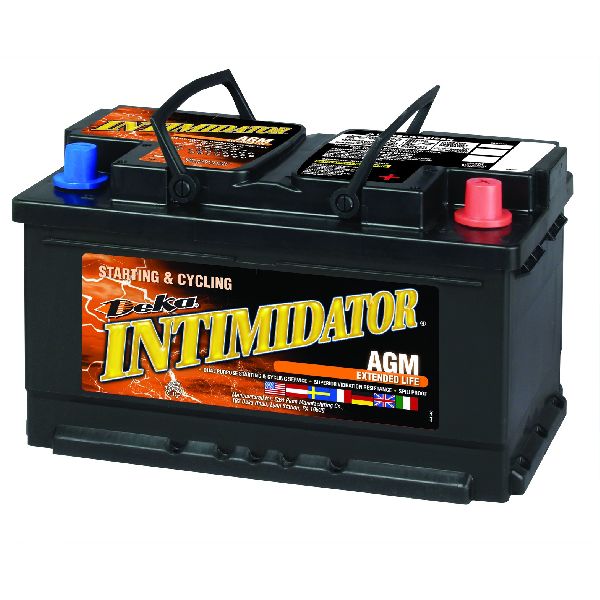
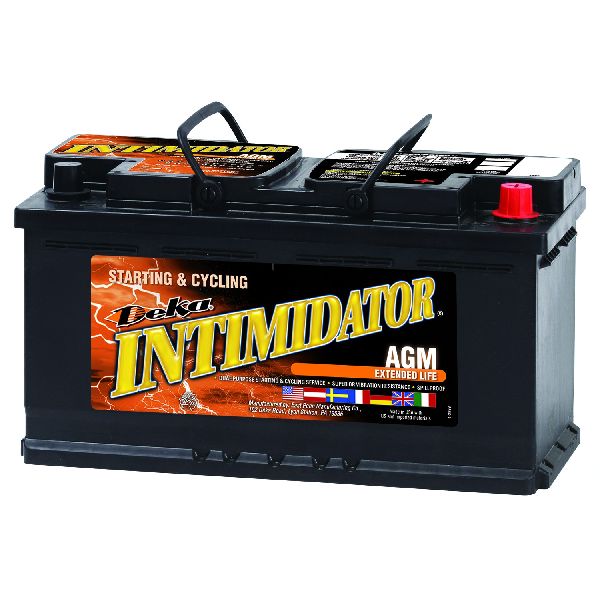
- AGM Battery — A weak or failing battery is the most common and simplest cause of network communication faults on this vehicle. Registration with a PIWIS tool is mandatory for longevity.
Trusted brands: Bosch, Interstate, Varta (OEM supplier)
OEM price range: $400-$600
Aftermarket price range: $250-$450 - Gateway Control Module
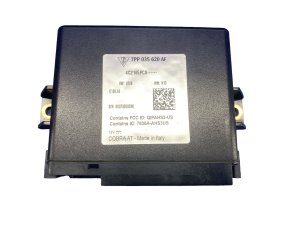
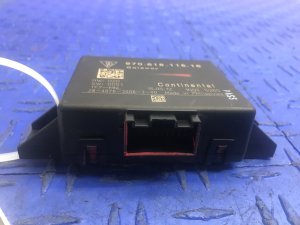
(OEM #97061811517 (latest supersession, check VIN for compatibility))— This central communication hub is a common point of failure, often due to water damage from its location in the trunk. It requires programming after installation.
Trusted brands: Porsche (OEM)
OEM price range: $350-$450
Related Codes That Often Appear With This One
- U0101 — Lost Communication with TCM (Transmission Control Module). The TCM is on the same critical network, and a general bus failure will cause communication loss with multiple modules.
- U0121 — Lost Communication With Anti-Lock Brake System (ABS) Control Module. This is another key module on the high-speed CAN bus that will lose communication during a network-wide failure.
- P0562 — System Voltage Low. This code often appears with U0100 because a low voltage condition from a failing battery or alternator is a primary cause of the communication failure.
Platform-Specific Known Issues
- A class-action lawsuit ('Washburn v. Porsche Cars North America, Inc.') has been settled regarding water damage in Panameras (model years 2014-2023) and other Porsches from clogged drains, highlighting how widespread this issue is. The settlement provides for potential reimbursement for past repairs and free annual drain cleaning at dealers for a limited time.
- Porsche Technical Information bulletin ATI 1903 discusses water management issues with panoramic roofs, noting that poorly adjusted frames and drains that are not completely clear can lead to water ingress.
Mechanic-Grade Diagnostic Values
- CAN Bus Resistance at OBD-II Port — expected: ~60 Ohms (with battery disconnected). Failure: A reading of ~120 Ohms indicates an open circuit or a missing terminating resistor. A reading near 0 Ohms indicates a short between the CAN High and CAN Low lines.
- CAN Bus Voltage at OBD-II Port — expected: CAN High (Pin 6): 2.6V to 3.5V (active); CAN Low (Pin 14): 2.4V to 1.5V (active) with key on.. Failure: Voltages stuck at 0V, 5V, or 12V indicate a short to ground or power.
- Main DME Relay Output Voltage — expected: ~12V. Failure: A relay intermittently providing low voltage (e.g., 2-3V) can cause the DME to drop off the network, triggering U0100. The failure may only occur when the relay is tapped or vibrated.
- Module Ground Connection Resistance — expected: Less than 0.5 Ohms between a module's ground pin and a clean chassis ground.. Failure: High resistance indicates a corroded or loose ground connection, a common source of intermittent communication faults.
Scan Tool Commands That Help
- Porsche PIWIS Tester: Control Module Replacement > Read-out values / Write-in values — This function must be used when replacing the Gateway Module. It reads the vehicle-specific configuration from the old module before removal and writes it to the new module after installation to ensure all vehicle options function correctly.
- Porsche PIWIS Tester: Vehicle Handover — This is a preliminary diagnostic step recommended for any widespread electrical issue. It re-initializes communication between all control modules and can sometimes resolve software glitches or communication errors without replacing parts. It should be run before deeper diagnostics.
- Porsche PIWIS Tester: Automatic Programming — After installing a new, unprogrammed module like a Gateway or DME, this function connects to Porsche's servers (PPN) to download and install the correct software and coding for the vehicle's specific VIN. A stable power supply of at least 40A (90A recommended) is critical during this process.
Wiring & Ground Locations
- CAN Bus Wiring — Twisted pair of wires, typically Orange/Green (CAN High) and Orange/Brown (CAN Low), found in the main harnesses in the driver and passenger footwells.. These harnesses, particularly the splice points under the driver's dead pedal, are highly susceptible to corrosion from water that wicks under the carpet. A corroded splice here is a primary cause of network failure.
- Gateway Control Module — In the trunk, behind the driver's side (LHD) rear wheel well trim panel.. This is the central router for the CAN network. Its location makes it vulnerable to water damage from clogged rear spoiler or sunroof drains, leading to total network collapse.
- Ground Point GP27 — In the left rear of the luggage compartment, near the Gateway module.. A poor or corroded ground connection for the Gateway module can cause intermittent communication faults that mimic a complete module failure.
- KESSY (Keyless Entry) Module — Under the driver's seat (LHD vehicles).. This module is on the CAN bus and its low-lying position makes it extremely vulnerable to water damage from clogged drains. A failure here can disrupt the network and cause a U0100 code along with no-start issues.
Real Owner Repair Stories
- Rennlist user 'aryork' (2016 Panamera Base, 129k miles) — Intermittent no-start (turn key, nothing happens), multiple warning codes on dash including U0100 and U0301 (Software Incompatibility).
❌ Tried (didn't work) Replacing the battery (did not solve the intermittent no-start).
✅ What actually fixed it The main DME relay (P/N 958-615-008-01) was faulty. It tested fine on the bench but was intermittently providing only 2-3V instead of 12V. Tapping the relay could induce the failure. Replacing the relay resolved all symptoms. - Rennlist user 'James.B' (Porsche Panamera (year not specified)) — Multiple faults on dash (PASM, Chassis, headlights), steering column stalks not working.
❌ Tried (didn't work) Charging the battery (charger reported a fault), replacing the battery.
✅ What actually fixed it The user removed the steering wheel to access the steering wheel electronic module, checked CAN bus voltages, and re-seated the connectors. The fault disappeared and did not return, indicating the cause was a loose connector at that module.
OEM Part Supersession History
97061811502, 97061811503, 97061811504, 97061811505, 97061811511, 97061811512, 97061811513, 97061811514, 97061811515, 97061811516→970-618-115-17— Incremental hardware and software revisions by the manufacturer to improve reliability and compatibility.
Heads up: While earlier versions may function, it is always recommended to use the latest available part number (970-618-115-17) when replacing the Gateway module to ensure compatibility with all other vehicle modules and PIWIS tester software. All versions require programming.
Model Year Variations Within This Range
- 2014-2016 (970.2 Facelift): The 970.2 facelift introduced revised aesthetics and some engine changes (e.g., S/4S models moved from a 4.8L V8 to a 3.0L twin-turbo V6). However, the fundamental electrical architecture, CAN bus layout, and vulnerability to water intrusion in the footwells and trunk remain consistent with the earlier 970.1 models. The causes and diagnostic procedures for U0100 are effectively the same across the entire 2010-2016 generation.
Diagnostic Flowchart
Other Known Issues on This Vehicle
Issues unrelated to this code that are worth knowing about as an owner of this generation:
- Air Suspension Failure 🔴 High — Very common as the vehicle ages. Leaks often develop in the rubber air springs/bellows or at the top seals, typically after 5-8 years or 60k+ miles. This overworks and can burn out the air compressor.
- Camshaft Adjuster Bolt Failure 🔴 High — Affects V8 models, primarily from 2010-2012. The original aluminum bolts can shear off, causing loss of engine timing, sudden stalling, and potential catastrophic engine damage. (Ref: NHTSA Recall 17V-368 / Porsche Campaign AH08)
- Coolant Pipe Leaks / Adhesive Failure 🔴 High — Common on V8 models. Coolant pipes and fittings within the engine were secured with epoxy adhesive that can degrade and fail over time with heat cycles, causing a sudden and massive coolant leak, overheating, and potential engine failure. (Ref: Subject of class-action lawsuit 'Xu et al. v. Porsche Cars North America, Inc.')
- High-Pressure Fuel Pump (HPFP) Failure 🟠 Medium — Reported across various engine types. Failure can lead to long crank times, rough running, engine stalling, and check engine lights. Onset can vary but is more common on higher-mileage vehicles.
- Water Pump and Thermostat Housing Leaks 🟠 Medium — A common source of coolant leaks on both V6 and V8 models. The plastic components can become brittle and crack over time, leading to slow leaks that can cause overheating if not addressed.
Used vs. New Parts: Buying Guide for This Vehicle
When a used part is the smart pick: A used Gateway Control Module can be a cost-effective option, but ONLY if you have access to a Porsche PIWIS tester for programming. A used module will not work without being coded to your specific vehicle's VIN and equipment list. Sections of wiring harnesses from a donor car are also a good choice, provided they come from a dry, non-corroded vehicle.
Donor-vehicle mileage cap: roughly under 100000 miles for the part to have meaningful remaining life.
What to inspect on the donor part:
- For a Gateway Module, ask the seller for the VIN of the donor car to check its history.
- Request clear photos of the module's connectors to check for any bent pins or signs of green/white corrosion.
- For wiring harnesses, verify they were sourced from a vehicle in a dry climate and inspect for any cuts, abrasions, or corrosion on the connectors.
- Confirm with the seller that the donor vehicle did not have flood or fire damage.
OEM-only on this vehicle (don't cheap out):
- Gateway Control Module (even used parts are OEM)
- Engine Control Module (DME)
- Main DME Relay (due to low cost and high importance)
Aftermarket brands forum-validated for this vehicle:
- Varta (OEM supplier for batteries)
- Bosch (Batteries and some electronics)
Brands owners have reported issues with on this vehicle:
- Unknown or unverified brands for electronic modules. The complexity of the Panamera's network makes it risky to use non-OEM modules which may have compatibility issues.
Real Owner Stories
Aggregated from forums and TSBs cited above. Mileages and costs reflect what owners reported in those sources.
2010-2016 Porsche Panamera (970)
Symptoms: The owner experienced a 'Chassis system failure' and needed to locate the Gateway Module to diagnose communication issues.
What fixed it: Accessed the Gateway Module located in the driver's side rear trunk area for inspection/replacement.
Source hint: Rennlist - 'Panamera 970.2 Gateway Module DIY'
2014-2023 Porsche Panamera
Symptoms: Water damage resulting from clogged drains leading to electrical issues and module failures.
What fixed it: The settlement provides for potential reimbursement for past repairs and free annual drain cleaning at dealers.
Source hint: Washburn v. Porsche Cars North America, Inc. class-action lawsuit
2010-2016 Porsche Panamera
Symptoms: The owner needed to register a new battery to the vehicle to ensure proper charging and system stability.
What fixed it: Used a Porsche PIWIS III diagnostic tool to perform the battery registration/update process.
Source hint: Rennlist - 'updating your Battery with PIWIS III'
Related OBD-II Codes
Frequently Asked Questions
I have a 'Chassis System Fault' and 'PSM Failure' on my Panamera; could this be related to my battery?
Do I really need a PIWIS tool to change the battery on my 2010-2016 Panamera?
Is there a recall for the water leaks that cause these communication codes?
Where is the Gateway Control Module located if I need to check it for water damage?
My Panamera won't crank and shows 'Transmission Fault'—could this be a wiring issue?
Helpful Videos

Used OEM Parts in Stock
New Aftermarket Parts Available



The information in this article is provided for general reference and educational purposes only. Vehicle specifications, procedures, and part compatibility can vary by production date, trim level, and region. Always consult your vehicle's factory service manual and verify part numbers before purchasing or performing repairs. Safety-critical components such as airbags, seat belts, and braking systems should be installed by a qualified professional.
- Porsche Panamera:
- 🧭 Diagnostic Flowchart
- 🎬 Helpful Videos
- 🛍️ Shop This Part
- What's Unique About the 2010-2016 Porsche Panamera
- Symptoms You May Notice
- Most Likely Causes
- Rare But Worth Checking
- Diagnosis Steps
- Parts You'll Likely Need
- Related Codes That Often Appear With This One
- Platform-Specific Known Issues
- Mechanic-Grade Diagnostic Values
- Scan Tool Commands That Help
- Wiring & Ground Locations
- Real Owner Repair Stories
- OEM Part Supersession History
- Model Year Variations Within This Range
- Other Known Issues on This Vehicle
- Used vs. New Parts: Buying Guide for This Vehicle
- Real Owner Stories
- 2010-2016 Porsche Panamera (970)
- 2014-2023 Porsche Panamera
- 2010-2016 Porsche Panamera
- Related OBD-II Codes
- Frequently Asked Questions
- 🎟️ Get 5% Off