

U0100 on 2010-2012 Saab 9-5: Lost Communication with ECM/PCM Causes and Fixes
On a 2010-2012 Saab 9-5, code U0100 most often points to a power supply issue to the Engine Control Module (ECM). Before suspecting a failed ECM, check the battery, its connections, and the R4 relay in the engine bay fuse box, which is a known failure point. This is often a low-cost fix.
- U0100 means the Engine Control Module (ECM) has gone offline; it is a serious code that can cause stalling or a no-start.
- Before assuming a major failure, ALWAYS check the simplest things first: the battery's state of charge and the condition of its terminals.
- The most likely vehicle-specific cause is a faulty R4 power relay in the engine bay fuse box. Swapping this inexpensive part is a key diagnostic step.
- This is a power or network problem. Do not replace other modules (like the TCM or BCM) that are reporting this code.
- A failed ECM is a possibility, but it should be the last item on your diagnostic list after all power, ground, and wiring checks have been completed.
What's Unique About the 2010-2012 Saab 9-5
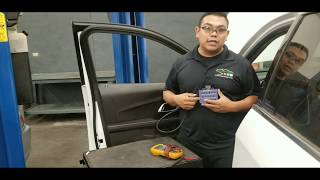
The 2010-2012 Saab 9-5 (NG9-5) is built on General Motors' Epsilon II platform, sharing its underlying electrical architecture with vehicles like the Buick LaCrosse and Cadillac XTS. While the U0100 code is a standard communication error, 🎬 Watch: A guide to common causes and fixes for U0100 codes. this platform has specific quirks. A very common, and often overlooked, cause for intermittent U0100 codes is the failure of the R4 relay in the engine bay fuse box, which supplies power to the ECM. This is a well-known issue in owner forums. Additionally, like many GM vehicles, these Saabs are highly sensitive to low battery voltage, which can trigger a host of communication codes, including U0100, without there being a major component failure.
Symptoms You May Notice
- Check Engine Light (MIL) is on.
- Vehicle will not start or has a crank-no-start condition.
- Engine stalls unexpectedly while driving.
- Transmission may enter 'limp mode' or default to a single gear.
- Multiple other warning lights (ABS, Traction Control, etc.) may illuminate.
- Noticeable drop in engine performance and fuel economy.
- Scan tool cannot communicate with the ECM/PCM.
- Instrument cluster may go blank or display multiple service messages.
- Replacing the Transmission Control Module (TCM) or Body Control Module (BCM) because they are logging the U0100 code. These modules are simply reporting that they can't hear the ECM; they are not the source of the problem.
- Immediately replacing the ECM without first exhaustively checking power, grounds, and the R4 relay.
Most Likely Causes
- Low Battery Voltage or Poor Battery Connections 🔴 High Probability → Shop Vehicle Battery Modern vehicles, including this GM-based platform, have numerous modules that require stable voltage. Communication can cease if system voltage drops below a 9-12 volt threshold, a common point for GM modules to stop communicating.
How to confirm: With the vehicle off, use a multimeter to test the battery. A healthy battery should read at least 12.4-12.6 volts. Inspect battery terminals for tightness and signs of corrosion. Perform a load test to check the battery's true health.
Typical fix: Clean battery terminals and cable ends with a wire brush. Charge or replace the battery if it fails a load test.
Est. part cost: $150-$300 for a new AGM battery - Faulty ECM Power Relay (R4) 🔴 High Probability This specific relay, located in the engine compartment fuse box (labeled 'SB' fuse and relay box on some diagrams), is a widely documented weak point on this platform for causing intermittent power loss to the engine computer. The failure is often erratic and may not be caught with a simple bench test.
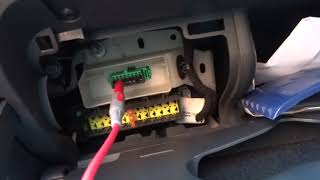
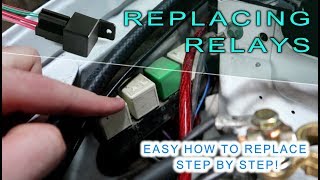
How to confirm: Locate the R4 relay in the engine bay fuse/relay box (in front of the steering wheel on LHD cars). You can swap it with an identical relay from a non-critical system (like the horn) to see if the problem resolves. If the car starts and runs, the relay is bad. Given the low cost, many owners opt to replace it preventatively. 🎬 See how easy it is to replace a faulty relay.
Typical fix: Replace the faulty relay with a new one. The common part is a standard 4-pin or 5-pin mini relay.
Est. part cost: $10-$30 - Poor ECM Ground Connection 🟡 Medium Probability Corrosion or looseness at main grounding points can interrupt power to the ECM, causing communication loss. The primary battery ground is on the left-hand structural member behind the headlamp, designated as G2 in Saab service information. Other engine grounds are also critical.
How to confirm: Locate the main engine and chassis ground straps, especially G2. Inspect for corrosion, fraying, or looseness. Use a multimeter to check for low resistance (less than 1 ohm) between the ECM casing and the battery negative terminal. Perform a voltage drop test on the ground circuit for a more accurate diagnosis.
Typical fix: Disconnect, clean all contact surfaces of the ground strap and chassis with a wire brush, and re-secure tightly. Apply dielectric grease to prevent future corrosion.
Est. part cost: $0-$25 for a new ground strap if needed - Damaged Wiring or Connectors ⚪ Low Probability Wiring for the CAN bus network can be damaged by vibrations, heat, or previous repairs, causing shorts or open circuits. The connectors at the ECM are a critical point to inspect for pin tension, corrosion, or water intrusion.
How to confirm: Visually inspect the wiring harness leading to the ECM for any signs of chafing, melting, or corrosion. Pay close attention to the large connectors at the ECM itself. Check for pin tension, corrosion, or pushed-out pins.
Typical fix: Repair the damaged section of wiring. Clean or replace corroded connectors.
Est. part cost: $5-$100 for wiring repair supplies
Rare But Worth Checking
- Failed Engine Control Module (ECM): → Shop Engine Control Module (ECM) While often blamed, the ECM is rarely the true cause. It should only be suspected after all power, ground, and network wiring issues have been definitively ruled out. Symptoms often include other internal processor codes like P0601. Replacement requires programming to the vehicle's VIN.
- Faulty Underhood Fuse Box: → Shop Fuse Box Less common, but internal corrosion or a loose main connector block within the fuse box itself can sever power or communication to the ECM. On similar GM platforms, a loose connector underneath the fuse box is a known cause of U0100 and no-crank symptoms.
Diagnosis Steps
- Check Battery Health: Use a multimeter to ensure the battery has at least 12.4V with the engine off. Perform a load test to verify its health. Clean any corrosion from the terminals and ensure clamps are tight.
- Inspect Fuses and Relays: Check all fuses related to the ECM, ignition, and BCM. Locate the R4 relay in the engine bay fuse box and swap it with a known-good, identical relay to test for failure. This is a very common fix.
- Scan for All Codes: Use a high-quality OBD-II scanner capable of reading codes from all modules (TCM, BCM, ABS, etc.). Note which modules are reporting the U0100 code and which, if any, are not communicating at all. This helps map the fault.
- Verify ECM Power and Ground: Following the Saab WIS (Workshop Information System), disconnect the ECM connector. Use a multimeter to verify battery voltage (B+) and ignition voltage at the appropriate pins. Check for resistance to ground on the ground pins; it should be less than 1 ohm.
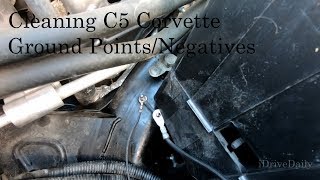
- Inspect Grounding Points: Locate and inspect the main battery ground point (G2) on the left-hand structural member behind the headlamp. Ensure it is clean, tight, and free of corrosion. Check other chassis and engine grounds referenced in service manuals.
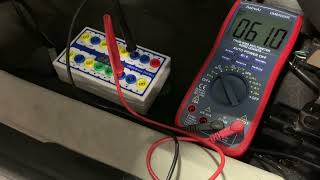
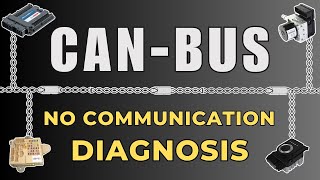
- Check CAN Bus Network: With the battery disconnected, measure the resistance between Pin 6 (CAN High) and Pin 14 (CAN Low) at the OBD-II port. A healthy network should read approximately 60 ohms. If it reads 120 ohms, there is a break in the circuit or a terminating resistor is offline. If it's near 0 ohms, the CAN High and Low wires are shorted together. 🎬 Watch: How to perform a full CAN-BUS diagnostic with a multimeter.
- Inspect ECM and Harness: If all else tests normal, carefully inspect the wiring harness to the ECM for any visible damage. Check the ECM connectors for bent, corroded, or loose pins. If water intrusion is suspected, open the connector to check for moisture.
- Suspect ECM: If all power, ground, and network tests are passed, the ECM itself may have an internal fault. This is the last step in diagnosis.
Parts You'll Likely Need
- ECM Power Relay (R4)
(OEM #13500114 (GM/ACDelco))— This is a very common and inexpensive failure point specific to this platform that directly causes power loss to the ECM.
Trusted brands: Bosch, ACDelco, Standard Motor Products
OEM price range: $20-$40
Aftermarket price range: $10-$25 - AGM Battery — Low system voltage is a primary trigger for communication codes. An aging or weak battery is a frequent culprit.
Trusted brands: ACDelco, Bosch, Interstate
OEM price range: $250-$350
Aftermarket price range: $150-$300 - Engine Control Module (ECM)
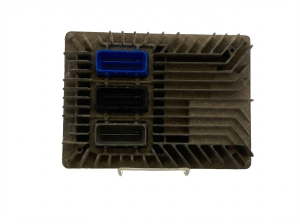
(OEM #12643542 (For 2.0T), 12616889)— This is the part to replace only when all other power, ground, and wiring issues have been ruled out. A replacement will require VIN programming to function.
Related Codes That Often Appear With This One
- U0101 — Lost Communication with Transmission Control Module (TCM). If the main CAN bus network has a problem, or a central module like the BCM is failing, communication can be lost with multiple modules simultaneously.
- P0562 — System Voltage Low. This code directly points to a low battery or charging system issue, which is a primary cause of the U0100 code.
- U0073 — Control Module Communication Bus 'A' Off. This is a more general network failure code that can appear with U0100, indicating a system-wide communication halt rather than just a single module dropping off.
Technical Service Bulletins (TSBs) & Recalls
- DTC U0100-U02FF (Saab WIS): The Saab Workshop Information System (WIS) document for U-codes on the 2011 9-5 details the diagnostic procedure. It confirms that low battery voltage (below 9V) can cause modules to stop communicating and set this code. It also provides the step-by-step logic for testing power, grounds, and the CAN circuit.
- PIT5405C, PIT5586G (GM): While not for Saab specifically, these GM TSBs for platform mates address common causes of U0100, such as poor BCM grounds (G218) and Serial Data Gateway Module logic locks. These point to systemic electrical weak points in the GM family that are relevant to the Saab 9-5.
Platform-Specific Known Issues
- The R4 relay in the main engine bay fuse box is a known failure point that can cause intermittent U0100 codes and no-start conditions.
Mechanic-Grade Diagnostic Values
- CAN Bus Resistance — expected: ~60 Ω. Failure: 120 Ω indicates an open circuit or offline terminating module. ~0 Ω indicates a short between CAN High and CAN Low wires.
- CAN Bus Voltage (Key On, Engine Off) — expected: CAN High (Pin 6) ~2.7V, CAN Low (Pin 14) ~2.3V. Failure: Voltages stuck at 0V or 12V indicate a short to ground or power.
- ECM Ground Circuit Resistance — expected: < 10 Ω. Failure: A reading greater than 10 Ω indicates high resistance in the ground circuit, which can cause the module to drop offline.
- ECM Power Supply (B+ and Ignition) — expected: Test lamp illuminates brightly.. Failure: If the test lamp does not illuminate, the circuit has an open or high resistance. If the fuse for the circuit is blown, there may be a short to ground in the wiring or internally in the ECM.
- System Voltage for Module Communication — expected: 9-16 V. Failure: If system voltage drops below 9V, modules may stop communicating and set U-codes.
Hidden / Shadow Codes Worth Checking
- U0100-71, U0100-72: These are GM-specific symptom bytes that may be stored alongside the main DTC. They indicate 'Invalid Serial Data Received'. If these appear without other DTCs, Saab/GM service information suggests reprogramming the control module that is not communicating. If the code returns, the module should be replaced. (see via A dealer-level scan tool like the GM Tech 2 or modern equivalent with GDS2 software.)
Scan Tool Commands That Help
- GM Tech 2: Network Scan / Bus Communication Check — When a U0100 code is present, the Tech 2 can poll the entire vehicle network (iBus and pBus) to show which modules are 'OK' and which are 'Missing'. This is the first step to confirm that the ECM is the module that is truly offline and not responding.
- GM Tech 2: Reprogram Control Module — As a diagnostic step for a U0100 with symptom bytes 71 or 72, service information may call for reprogramming the offline module. This can resolve software glitches causing the communication loss.
- GM Tech 2: Add/Remove Module (SPS - Service Programming System) — If the ECM is replaced, the new module must be programmed to the vehicle's VIN and configuration. The Tech 2 is used to perform this 'marriage' process, without which the new ECM will not function.
Wiring & Ground Locations
- G2 — On the left-hand structural member, located behind the headlamp assembly. This is a primary battery ground point.. This is a main chassis ground point. Poor contact here can cause a voltage drop to multiple systems, including the ECM, leading to communication codes.
- G25 — Directly on the gearbox casing.. This is the main, heavy-gauge ground cable from the battery negative terminal to the powertrain. A loose or corroded connection here directly affects the engine and all its electronics, including the ECM.
- G7 — On the side of the intake manifold (for 4-cylinder engines).. This is a critical engine-side ground point for various sensors and potentially the ECM itself. Corrosion or looseness can cause erratic sensor readings and module communication issues.
- Underhood Fuse Box (UEC) — In the engine bay, in front of the driver's side steering wheel area.. This box contains the critical R4 ECM power relay. More importantly, the entire box can become a failure point due to internal corrosion or, more insidiously, a loose main connector block on the underside of the box, disrupting power to multiple circuits including the ECM.
- ECM Connector X1 — The main connector at the Engine Control Module.. This is the direct interface for all power, ground, and communication lines to the ECM. Specific pins to test for voltage and ground include Pin 20 (Battery Positive Voltage) and Pin 19 (Ignition 1 Voltage).
Real Owner Repair Stories
- Reddit user in r/saab (2010-2012 Saab 9-5 (NG)) — Intermittent U0100 code, crank-no-start, car runs fine otherwise.
❌ Tried (didn't work) Bench testing the original R4 relay (it tested fine).
✅ What actually fixed it Replacing the R4 relay in the underhood fuse box preventatively. The user noted the failure is erratic and a bench test can be misleading, so replacement is the most effective diagnostic step. - 2CarPros Forum User (GM Epsilon Platform vehicle with U0100) — Crank-no-start, U0100 and U0100pd codes, dash lights go blank when trying to start, clicking from fuse box.
❌ Tried (didn't work) Replacing a hacked engine wiring harness with a used one., Testing the starter motor (it worked fine)., Considering replacing the Crank Position Sensor.
✅ What actually fixed it The final resolution was not posted, but the expert advice focused heavily on verifying all ground wire connections were correct and secure after the harness swap, and checking for a bad battery, as these are the most common causes after major wiring work.
OEM Part Supersession History
Multiple (e.g., 12088567, 12135034, 19116057)→13500114— Part consolidation and design updates by General Motors over many years.
Heads up: GM part number 13500114 is a widely used multi-purpose relay across many GM vehicles and is the correct service replacement for the original R4 ECM relay in the Saab 9-5 NG.
Diagnostic Flowchart
Real Owner Stories
Aggregated from forums and TSBs cited above. Mileages and costs reflect what owners reported in those sources.
Saab 9-5
Symptoms: Experienced an intermittent U0100 code that would come and go unpredictably.
What fixed it: Replaced the R4 relay in the engine bay fuse box, which was recommended by the community as a well-known issue and the most likely culprit.
Source hint: Reddit r/Saab - U0100 code comes and goes
Saab 9-5
Symptoms: Suffered a progressive failure starting with sluggish starting, then the engine dying at red lights, and eventually a complete failure to crank with a U0100 code.
What fixed it: Diagnosed as a classic ECM power-loss scenario requiring verification of ECM power and grounds.
Source hint: 2CarPros - No Crank, No Start, Code U0100
2011 Chevrolet Malibu
Symptoms: Vehicle would not start and threw a U0100 code.
What fixed it: Traced the issue to a hacked-up wiring harness. The fix required verifying all powers and grounds to the ECU and repairing the harness to ensure correct connections.
Source hint: 2CarPros - Will Not Start and Code U0100
Related OBD-II Codes
Frequently Asked Questions
Is there a specific relay on the 2010-2012 Saab 9-5 that causes the U0100 code?
What does the Saab Workshop Information System (WIS) say about diagnosing U0100?
Where is the main ECM ground located on my Saab 9-5?
Do GM Technical Service Bulletins like PIT5405C or PIT5586G apply to my Saab 9-5?
How can I test the CAN bus network on my Saab 9-5?
Helpful Videos



We Have This Part in Stock

The information in this article is provided for general reference and educational purposes only. Vehicle specifications, procedures, and part compatibility can vary by production date, trim level, and region. Always consult your vehicle's factory service manual and verify part numbers before purchasing or performing repairs. Safety-critical components such as airbags, seat belts, and braking systems should be installed by a qualified professional.
- Saab 9-5:
- 🧭 Diagnostic Flowchart
- 🎬 Helpful Videos
- 🛍️ Shop This Part
- What's Unique About the 2010-2012 Saab 9-5
- Symptoms You May Notice
- Most Likely Causes
- Rare But Worth Checking
- Diagnosis Steps
- Parts You'll Likely Need
- Related Codes That Often Appear With This One
- Technical Service Bulletins (TSBs) & Recalls
- Platform-Specific Known Issues
- Mechanic-Grade Diagnostic Values
- Hidden / Shadow Codes Worth Checking
- Scan Tool Commands That Help
- Wiring & Ground Locations
- Real Owner Repair Stories
- OEM Part Supersession History
- Real Owner Stories
- Saab 9-5
- Saab 9-5
- 2011 Chevrolet Malibu
- Related OBD-II Codes
- Frequently Asked Questions
- 🎟️ Get 5% Off