

U0100 on 2010-2015 Toyota Prius: Causes for Lost Communication With ECM/PCM
On a 2010-2015 Prius, U0100 is often caused by a weak 12V auxiliary battery or a blown 15A EFI fuse, sometimes due to a stolen catalytic converter. Start by checking the 12V battery and fuses before suspecting more expensive parts like the ECM or inverter.
- U0100 on a Gen 3 Prius is a critical fault that will likely make the car undrivable.
- Before suspecting expensive computer failures, ALWAYS check the 12V auxiliary battery and the 15A EFI fuse first.
- If the EFI fuse is blown, inspect the vehicle for a stolen catalytic converter and damaged oxygen sensor wires, as this is a very common cause.
- Diagnosing the exact point of failure in the communication network is complex and usually requires a professional with advanced diagnostic tools.
- Do not immediately blame the ECM; it is more often the victim of a power or wiring issue than the root cause of the failure.
What's Unique About the 2010-2015 Toyota Prius
The Gen 3 Prius has a highly integrated network of computers managing its hybrid system. A communication failure like U0100 can have cascading effects, often causing a complete no-start condition or putting the car into a severely limited 'limp mode'. A very common and platform-specific reason for this code is the aftermath of a catalytic converter theft; when thieves cut the converter out, they often sever the oxygen sensor wires. The exposed, powered wires can short to the chassis, blowing the 15A EFI fuse in the under-hood fuse box. This fuse supplies power to the ECM, so when it blows, the ECM goes offline, and other modules log the U0100 code.
🎬 Watch: A real-world diagnosis of the U0100 error code.Symptoms You May Notice
- "Check Hybrid System" message on the dashboard
- Vehicle will not start or 'Ready' light does not come on
- Engine stalls or shuts down while driving
- Multiple warning lights illuminated at once (ABS, VSC, Check Engine, Red Triangle of Doom)
- Car enters 'limp mode' with severely reduced power
- Vehicle may only go into electric mode for a few seconds before shutting down
- Gas gauge blinking or inaccurate
- Inability to unlock doors with key fob
- Failure of the OBD-II smog check due to bulb check or communication failures, as noted in NHTSA ODI #10967916
- Replacing the main hybrid battery. While a failing hybrid battery can cause many issues, it is not a direct or common cause of a U0100 code. The 12V auxiliary battery is a much more likely culprit.
- Replacing the ECM first. The ECM is an expensive part and is more often the victim of a problem (like loss of power from a blown fuse or a wiring short) than the cause itself.
Most Likely Causes
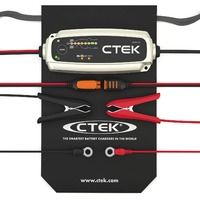
- Weak or Failed 12V Auxiliary Battery 🔴 High Probability → Shop Vehicle Battery The Prius's complex network of ECUs is highly sensitive to low voltage. A weak 12V battery can cause numerous, unpredictable communication errors between modules before it's even weak enough to prevent the car from turning on.
How to confirm: Test the 12V battery (located in the trunk on the passenger side) with a multimeter. A healthy, resting battery should read approximately 12.6 volts. A reading below 12.2V is suspect and requires charging. For a more definitive test, a parts store can perform a load test to see if the voltage drops significantly under load.
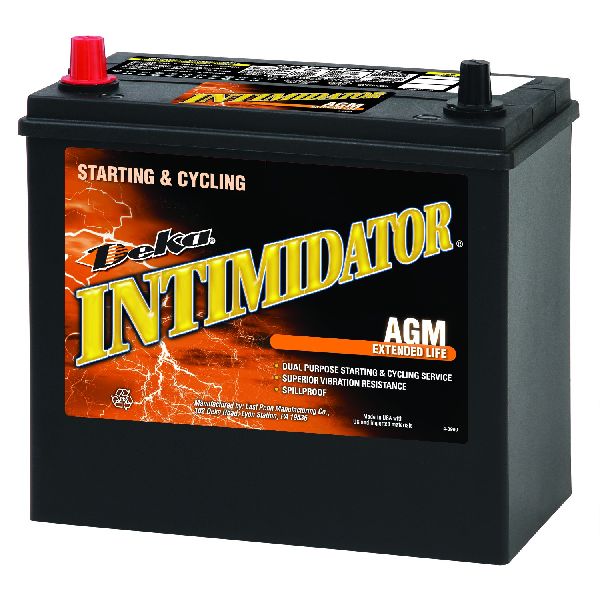
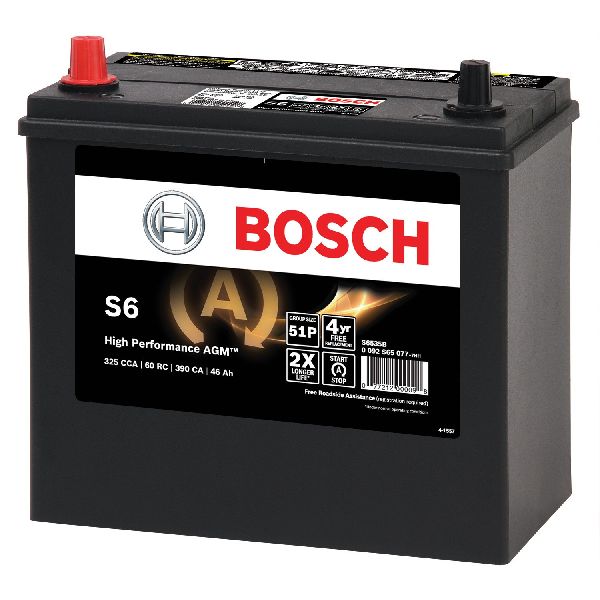
Typical fix: Recharge or replace the 12V AGM auxiliary battery. Ensure it is the correct S46B24R type.
Est. part cost: $200-$300 - Blown EFI or AM2 Fuse 🔴 High Probability Catalytic converter theft is rampant on the Gen 3 Prius. Thieves cutting the O2 sensor wires often cause a short that blows the 15A EFI fuse, which powers the ECM. A failing inverter coolant pump can also short and blow the AM2 fuse, causing a no-start and communication codes.
How to confirm: Inspect the 15A EFI fuse and the AM2 fuse in the under-hood fuse box. If the EFI fuse is blown, immediately inspect the oxygen sensor wiring under the car for damage. If the AM2 fuse is blown, the inverter pump is the likely suspect.
Typical fix: Replace the blown fuse. If the cause was a shorted O2 sensor wire, the wiring must be repaired or the sensor replaced before replacing the fuse, or it will blow again.
Est. part cost: $1-$20 for fuses, $100-$250 for an O2 sensor if needed - Failed Inverter Coolant Pump 🟡 Medium Probability The electric water pump for the hybrid inverter is a known failure point on this generation Prius. A failing pump can overheat the inverter, causing a shutdown. In some cases, the pump motor shorts internally, blowing the AM2 fuse and leading to a no-start with communication codes like U0100.
How to confirm: With the car in 'Ready' mode (if possible), open the hood and remove the cap from the inverter coolant reservoir. Look for turbulence or swirling fluid. If the fluid is completely still, the pump has failed. If the car won't start, check the AM2 fuse.
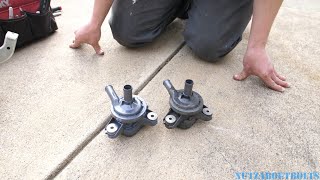
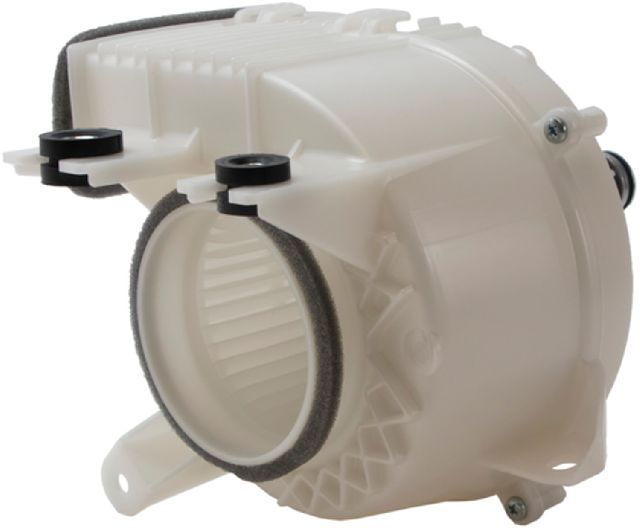
Typical fix: Replace the inverter coolant pump (OEM Part No. G9040-47090) and the blown fuse if applicable. Bleed the inverter cooling system afterward. 🎬 Watch: Step-by-step guide to replacing the inverter water pump.
Est. part cost: $100-$200 - CAN Bus Wiring or Connector Issue 🟡 Medium Probability Wiring can be damaged by rodents, corrosion (especially in wet climates), or previous repairs. The Prius has several CAN junction connectors behind the dashboard and in the kick panels that can be a source of failure if corroded or loose. Manufacturer Bulletin #T-SB-0072-19 notes that U0100 can be caused by corrosion or water in the ECM connector, which may also lead to low fuel pressure concerns.
How to confirm: This requires advanced diagnostics. A technician would use a wiring diagram and a multimeter to check for ~60 ohms of resistance between pins 6 (CAN-H) and 14 (CAN-L) on the OBD-II port. They would also inspect key junction connectors, like J/B No. 3, for corrosion or damage.
Typical fix: Repair the damaged section of wiring or clean/replace the faulty connector.
Est. part cost: $10-$500 depending on the extent of damage and labor - Faulty Engine Control Module (ECM) ⚪ Low Probability → Shop Engine Control Module (ECM) While electronic modules are generally reliable, internal failure is possible, though it's far less common than external factors like power supply (blown fuse) or wiring issues.
How to confirm: This is a diagnosis of last resort. A professional must exhaustively rule out all other possibilities (power, grounds, fuses, wiring, and other modules on the network) before condemning the ECM. The ECM itself is rarely the root cause.
Typical fix: Replace the ECM. This requires programming the new unit to the vehicle using specialized software.
Est. part cost: $300-$1000+
Rare But Worth Checking
- Faulty Hybrid Battery Voltage Sensor: → Shop Vehicle Battery In some cases, a faulty voltage sensor within the high-voltage battery pack can cause communication codes, including U0100, often accompanied by P0B47 or U0293. This is an internal component of the hybrid battery assembly.
- Brake ECU Programming: According to Manufacturer Bulletin #23TC02 and #23TC02a, certain programming in the brake ECU can cause DTC U0100 to be stored and unable to be cleared, even though it may not affect vehicle operation.
Diagnosis Steps
- Check 12V Auxiliary Battery: Ensure the battery is fully charged and terminals are clean. A resting voltage below 12.2V is suspect. Consider a load test for a definitive answer.
- Scan for All Codes: Use a high-quality scanner (ideally Toyota Techstream) to read codes from ALL modules. Note which specific module is reporting the U0100 code, as this is a critical diagnostic clue.
- Inspect Fuses: Check the 15A 'EFI' fuse and the 'AM2' fuse in the engine bay fuse box. These are very common failure points.
- Inspect for Catalytic Converter Theft/O2 Sensor Damage: This is a primary cause. Visually inspect the underside of the vehicle for a missing catalytic converter and/or cut, dangling, or damaged oxygen sensor wires.
- Check Inverter Coolant Pump: With the car in 'Ready' mode (if it will start), remove the inverter coolant reservoir cap and look for fluid turbulence. No movement means the pump has failed.
- Inspect Wiring Harnesses: Visually inspect major wiring harnesses connected to the ECM, under the dash, and in the driver/passenger kick panels for signs of damage, corrosion, or rodent activity.
- Advanced CAN Bus Diagnostics: If the above steps do not identify the issue, a professional should measure the resistance between pins 6 and 14 of the OBD-II port (should be ~60Ω). If the resistance is incorrect (0Ω or 120Ω), it indicates a wiring short/open or a faulty terminating resistor in a module.
Parts You'll Likely Need
- 12V Auxiliary Battery (AGM)
(OEM #28800-21171 (Superseded by 00544-21171-325))— A weak 12V battery is the most common cause of network communication codes on a Prius.
Trusted brands: Toyota TrueStart, Optima YellowTop, Bosch AGM
OEM price range: $220-$350
Aftermarket price range: $180-$280
Related Codes That Often Appear With This One
- U0293 — Lost Communication With Hybrid Vehicle Control Module. This code often appears with U0100, indicating a widespread communication breakdown within the hybrid system.
- C1259 — HV System Regenerative Malfunction. This brake-related code is often triggered when the hybrid system has a major fault, as regenerative braking is managed by the hybrid ECU.
- C1310 — HV System Malfunction. This is another general code indicating a fault in the hybrid system, often logged by the brake control module when it detects a problem.
- P3000 — Battery Control System Malfunction. This code indicates a fault has been detected by the hybrid battery ECU. It often accompanies communication codes when the system is unstable.
- U0001 — High Speed CAN Communication Bus. An owner reported in NHTSA ODI #11376111 that U0100 appeared alongside U0001 during an incident involving the accelerator.
Platform-Specific Known Issues
- Catalytic converter theft is rampant on the Gen 3 Prius. The resulting damage to the downstream oxygen sensor wiring is a primary cause for the 15A EFI fuse to blow, which in turn causes the U0100 code by de-powering the ECM.
- The inverter coolant pump is a common failure point that can lead to various hybrid system faults, including communication codes as the car tries to protect itself from overheating components.
Mechanic-Grade Diagnostic Values
- CAN Bus Network Resistance — expected: 54-69 Ω (typically ~60 Ω). Failure: A reading of ~120 Ω indicates an open circuit or a single faulty terminating resistor. A reading below 54 Ω indicates a short between the CAN High and CAN Low lines.
- CAN Bus Voltage (Key ON) — expected: CAN-H (Pin 6): ~2.5V to 3.5V. CAN-L (Pin 14): ~1.5V to 2.5V. The sum of both voltages should be ~5V.. Failure: Voltages outside these ranges, or a sum not equal to ~5V, indicates a bus wiring fault or a faulty ECU pulling the voltage down.
- ECM Ground Point Resistance — expected: Below 1 Ω. Failure: Resistance higher than 1 Ω indicates a poor ground connection, which can cause intermittent communication issues.
Hidden / Shadow Codes Worth Checking
- U0100 with INF 211, 212, or 530: These are Information Codes (INF) that provide specific details about the U0100 fault. 211 indicates a problem receiving a specific frame from the ECM. 212 indicates a problem sending data to the ECM. 530 indicates a problem receiving all frames from the ECM. (see via These codes are visible using Toyota's Techstream diagnostic software. Standard OBD-II scanners will typically only show the main U0100 code.)
Scan Tool Commands That Help
- Toyota Techstream: CAN Bus Check — This function is used to actively poll all modules on the network. It provides a live list of which ECUs are communicating and which are not. This is a crucial first step in isolating the location of the communication breakdown on the bus.
- Toyota Techstream: Health Check — Performs a comprehensive scan of all vehicle ECUs. It's vital to see which specific ECU is logging the U0100 code. For example, if the Hybrid Control ECU logs U0100, it means it cannot hear the Engine Control Module (ECM). This helps narrow the search.
Wiring & Ground Locations
- ECM (Engine Control Module) — In the engine compartment, on the driver's side, next to the main fuse and relay box.. This is the primary module that other ECUs are reporting a loss of communication with. All power, ground, and communication lines to this module must be intact.
- Ground Point 'BE' — Located on the left front fender apron, near the ECM and fuse box area.. This is a primary grounding point for the Engine Control Module (ECM). A loose or corroded connection here will interrupt power to the ECM and cause it to drop off the network, triggering a U0100 from other modules.
- CAN Junction Connectors (J/C1, J/C2) — There are several CAN junction blocks located behind the dashboard, often near the driver and passenger side kick panels.. These connectors are hubs where the CAN bus wiring from multiple ECUs meets. A loose connection, pin corrosion from water intrusion, or damage at one of these junctions can take down a whole segment of the network.
Real Owner Repair Stories
- PriusChat Forum Member (2012 Toyota Prius) — No start, "Check Hybrid System" message, buzzing relay, and U0100 code immediately after performing a spark plug change.
❌ Tried (didn't work) Resetting the error code (would allow the car to start temporarily), Considering replacement of the integration relay
✅ What actually fixed it The problem was a bad engine ground. The ground connection was likely disturbed or not properly re-secured during the spark plug service. Cleaning and tightening the engine ground resolved all symptoms. - PriusChat Forum Member (2005 Toyota Prius (Gen 2, but principle applies)) — Dash lit up with multiple warnings (RTOD, CEL, ABS), car went into limp mode, then would not shut off properly. Later, U0100 and U0293 codes appeared.
❌ Tried (didn't work) Checking 12V battery, Checking 20A HEV and 15A AM2 fuses, Unplugging and re-plugging hybrid battery ECU connectors
✅ What actually fixed it The issue was caused by a cheap, generic ELM 327 Mini OBD-II dongle that was left plugged in. The dongle was interfering with the CAN bus communication during vehicle startup. Removing the dongle completely resolved the issue and the codes did not return. - Reddit user r/prius (2012 Toyota Prius, 194k miles) — "Check Hybrid System" message, car entered limp mode and then would not drive at all. U0100 code present.
❌ Tried (didn't work) Replacing the 12V auxiliary battery
✅ What actually fixed it The root cause was a blown fuse. The user identified it as being on 'relay D', which likely corresponds to the EFI fuse that powers the ECM. The next step for the owner was to find the source of the short that blew the fuse. - NHTSA ODI #10967916 Report — An owner reported that their vehicle failed a smog check due to an OBDII failure where the service fault codes U0100 (Lost Communication with ECM/PCM "A") and U0111 (Lost Communication with Battery Energy Control Module "A") were present.
"I Checked Everything" — The Actual Cause
- A case was documented where all standard checks (battery, fuses, connections) were normal, but intermittent U0100 and U0293 codes kept appearing. The root cause was a low-quality, constantly plugged-in OBD-II Bluetooth dongle interfering with the CAN bus network during the vehicle's startup sequence. Removing the dongle permanently fixed the problem, a cause that standard diagnostic procedures would never find.
When the Usual Fixes Don't Work
- While a weak 12V battery and a blown EFI fuse are the most common culprits, they are not the only causes. In one documented case, a 2012 Prius with a U0100 code and no-start condition immediately after a spark plug change had a perfectly good battery and fuses. The actual cause was a bad engine ground connection that was disturbed during the service. This highlights the need to consider recent repair work as a primary clue; a simple mechanical mistake like a forgotten ground strap can manifest as a complex electronic fault code.
OEM Part Supersession History
G9040-48020→G9040-47090— Standard part revision and consolidation by Toyota.
Heads up: Both parts are generally interchangeable for the 2010-2015 Prius, but G9040-47090 is the latest recommended service part.
Model Year Variations Within This Range
- 2010-2015: While there were running changes to the Gen 3 Prius (e.g., piston ring update in 2014 to address oil consumption, facelift in 2012), the diagnostic approach for a U0100 code, including the common causes like the 12V battery, EFI fuse, and CAN wiring, remains consistent across the entire model year range.
Diagnostic Flowchart
Real Owner Stories
Aggregated from forums and TSBs cited above. Mileages and costs reflect what owners reported in those sources.
Symptoms: The vehicle repeatedly blew the 15A EFI fuse, resulting in a U0100 code and a no-start condition.
What fixed it: Traced the short to the O2 sensor wires, which were being rubbed through by an aftermarket catalytic converter shield. Repaired the wiring and replaced the fuse.
Source hint: PriusChat.com thread titled 'U0100 and 15A fuse at 30 EFI blown'
Symptoms: Experienced a no-start condition and a U0100 code immediately after having a stolen catalytic converter replaced.
What fixed it: Diagnosed as a wiring short and blown fuse caused by damage to the O2 sensor wiring during the catalytic converter theft and replacement process.
Source hint: Reddit r/prius thread 'Catylitic converter replaced now car wont start'
Symptoms: Car would not start and presented a massive cascade of confusing hybrid system codes including U0100, U0111, P0AF0, P3000, P3004, and P0420.
What fixed it: Diagnosed as a core power or communication failure on the hybrid network, linking the cascade of codes to a single root electrical fault.
Source hint: PriusChat.com thread 'Confusing codes help no start U0100, U0111, P0AF0, P3000, P3004, P0420'
Symptoms: An owner reported an incident involving the accelerator where the vehicle pulled codes U0001 and U0100. On subsequent occurrences, no codes were captured by the reader.
What fixed it: While the specific fix was not documented, the event highlights intermittent communication failures on the high-speed CAN bus.
Source hint: NHTSA ODI #11376111
Related OBD-II Codes
Frequently Asked Questions
My 2010-2015 Prius has a U0100 code and the 15A EFI fuse keeps blowing. What causes this?
Can a bad 12V battery cause a U0100 code on my Prius?
I have a U0100 code and my inverter coolant pump isn't showing any turbulence in the reservoir. Are they related?
My catalytic converter was just replaced on my Prius, and now it won't start and shows U0100. What happened?
How do I test the CAN bus wiring on my Gen 3 Prius for the U0100 code?
What warning lights typically accompany the U0100 code on the 2010-2015 Prius?
Helpful Videos
We Have This Part in Stock


The information in this article is provided for general reference and educational purposes only. Vehicle specifications, procedures, and part compatibility can vary by production date, trim level, and region. Always consult your vehicle's factory service manual and verify part numbers before purchasing or performing repairs. Safety-critical components such as airbags, seat belts, and braking systems should be installed by a qualified professional.
- Toyota Prius:
- 🧭 Diagnostic Flowchart
- 🎬 Helpful Videos
- 🛍️ Shop This Part
- What's Unique About the 2010-2015 Toyota Prius
- Symptoms You May Notice
- Most Likely Causes
- Rare But Worth Checking
- Diagnosis Steps
- Parts You'll Likely Need
- Related Codes That Often Appear With This One
- Platform-Specific Known Issues
- Mechanic-Grade Diagnostic Values
- Hidden / Shadow Codes Worth Checking
- Scan Tool Commands That Help
- Wiring & Ground Locations
- Real Owner Repair Stories
- "I Checked Everything" — The Actual Cause
- When the Usual Fixes Don't Work
- OEM Part Supersession History
- Model Year Variations Within This Range
- Real Owner Stories
- Related OBD-II Codes
- Frequently Asked Questions
- 🎟️ Get 5% Off