

U0100 on 2003-2014 Volvo XC90: Lost Communication With ECM/PCM Causes and Fixes
On a 2003-2014 Volvo XC90, code U0100 is most often caused by a failing Central Electronic Module (CEM), frequently due to water damage, or a weak battery. Always test the battery first, but be prepared to inspect the CEM for corrosion, as it is a very common failure point on this platform.
- For a 2003-2014 XC90, U0100 is more likely a problem with the Central Electronic Module (CEM) or battery than the Engine Control Module (ECM) itself.
- Always start your diagnosis by testing the battery and charging system. These vehicles are very sensitive to low voltage.
- The most critical diagnostic step is to physically inspect the CEM under the driver's side dash for signs of water damage and corrosion.
- Do not buy a used CEM or ECM unless you have a plan to clone the software from your original module; they are not plug-and-play.
- Due to the need for module programming and complex electrical diagnosis, professional help is strongly recommended if a bad battery isn't the cause.
What's Unique About the 2003-2014 Volvo XC90
The first-generation Volvo XC90 is built on Volvo's P2 platform, which is known for specific electronic vulnerabilities. Unlike many other vehicles where U0100 might point to a bad ECM or simple wiring, on this XC90 the prime suspect is often the Central Electronic Module (CEM). This module is located under the driver's side dashboard in a position that makes it highly susceptible to water damage from a leaking windshield or clogged sunroof drains, leading to corrosion and network failure. Owners frequently trace a host of strange electrical problems, including this code, back to a faulty CEM.
Symptoms You May Notice
- Check Engine Light is on
- Vehicle will not start or is hard to start
- Intermittent stalling while driving
- Transmission shifting issues or getting stuck in one gear, sometimes with a "Transmission Service Urgent" message
- Multiple warning lights appearing on the dashboard (e.g., ABS, Anti-skid, Brake Failure)
- Instrument cluster gauges and lights behaving erratically or going completely blank intermittently
- Power windows, radio, sunroof, or remote locks stop working intermittently
- Wipers or horn activating randomly
- Replacing the Engine Control Module (ECM) first. The U0100 code directly names the ECM, but on this specific vehicle, the Central Electronic Module (CEM) is a much more frequent cause of the network failure.
- Replacing the battery without testing it. While a weak battery is a common cause, it's important to confirm its condition before spending money on a replacement.
Most Likely Causes
- Failing Central Electronic Module (CEM) 🔴 High Probability The CEM is located under the dashboard above the driver's feet and is highly susceptible to water damage from clogged sunroof drains or a leaking windshield cowl. This water intrusion causes corrosion on the circuit board and connectors, leading to network failure.
How to confirm: Visually inspect the CEM by removing the panels under the driver's side dashboard. Look for green or white corrosion on the connectors and circuit board. A Volvo-specific scanner (VIDA) may show multiple communication faults pointing to the CEM as the source. XeMODeX offers a specific repair for when the CEM fails to supply "wake-up" power to the Brake Control Module (BCM) via fuse #15, a common failure mode.
Typical fix: The CEM must be repaired by a specialist service (like XeMODeX or Volvo Diagnostic), or replaced. A used CEM from another vehicle will not work without cloning the original's software and immobilizer data. A new CEM requires programming by a dealer or qualified shop with VIDA software. Repair services often apply a water-resistant coating to the board to prevent future failures.
Est. part cost: $400-$800 for a repair/cloning service, $1000+ for a new programmed unit. - Weak or Failing Battery 🟡 Medium Probability → Shop Vehicle Battery Volvos of this era are highly sensitive to system voltage. A battery that provides low voltage, especially during startup, can cause random modules to fail to initialize and communicate properly, triggering a U0100 code.
How to confirm: Test the battery with a multimeter or a digital battery tester. A healthy, fully charged battery should read approximately 12.6 volts with the engine off. Check the voltage while cranking; if it drops below 10.5 volts, the battery is weak and likely the cause. Also inspect terminals for corrosion.
Typical fix: Replace the vehicle's battery. It is recommended to use a high-quality AGM battery.
Est. part cost: $150-$300 - CAN Bus Wiring or Connector Issues ⚪ Low Probability Corrosion can develop on the main connectors for the CEM or ECM, disrupting the network. Ground straps, particularly the main engine-to-chassis ground, can also corrode or break, leading to unstable module voltage.
How to confirm: Visually inspect the connectors for the CEM and ECM for any signs of corrosion, moisture, or pushed-out pins. Check the main engine and chassis ground straps for tightness and corrosion. A multimeter can be used to check for continuity on ground straps and to measure resistance between CAN_H and CAN_L wires (should be ~60 ohms).
Typical fix: Clean the corroded connectors using an electronic contact cleaner and a small brush. Replace any damaged wiring sections or faulty ground straps.
Est. part cost: $10-$100 - Faulty Engine Control Module (ECM) ⚪ Low Probability → Shop Engine Control Module (ECM)
How to confirm: This is typically a diagnosis of last resort after all other possibilities (CEM, battery, wiring) have been definitively eliminated. Requires testing with a specialized scanner (VIDA) to confirm it's unresponsive while verifying it has proper power and ground.
Typical fix: Replace the ECM and have it programmed to the vehicle's VIN and security information. This often requires a dealer or specialized Volvo independent shop.
Est. part cost: $800-$1500
Rare But Worth Checking
- Blown Fuse: A blown fuse that supplies power to the ECM or CEM can cause a total loss of communication. Always check the fuse boxes in the engine bay and cabin (specifically fuse #15 for BCM communication) before replacing expensive modules.
- Faulty Alternator: → Shop Alternator A failing alternator can cause voltage spikes or drops, leading to unpredictable behavior in various electronic modules and potentially triggering communication codes like U0100.
Diagnosis Steps
- Check Battery Health: Start by fully charging and testing the battery. Ensure it reads ~12.6V at rest and maintains voltage above 10.5V during cranking. Clean any corrosion from the terminals.
- Scan for All Codes: Use a high-quality OBD-II scanner (preferably a Volvo-specific one like VIDA) to read codes from all available modules, not just the engine. Note all communication ('U') codes and codes from the CEM and BCM.
- Inspect Fuses: Check all fuses related to the ECM, CEM, and TCM in both the engine bay and interior fuse panels. Pay special attention to fuse #15 in the CEM, which powers the BCM wakeup signal.
- Inspect the Central Electronic Module (CEM): Remove the trim panels under the driver's side dashboard to access the CEM (located above the pedals). Disconnect its connectors (disconnect battery first) and carefully inspect the module and the wiring terminals for any signs of green or white corrosion, which indicates water damage.
- Inspect ECM and Ground Connectors: Check the main connectors at the Engine Control Module (usually in a black box in the engine bay) for corrosion. Locate and verify the main engine-to-chassis ground strap is clean, tight, and intact.
- Check Sunroof Drains: Pour a small amount of water into the sunroof tray and check if it drains properly underneath the car. Clogged drains 🎬 See how to clean clogged sunroof drains are a primary cause of water getting to the CEM.
- Professional CAN Bus Diagnosis: If the cause is not obvious, the vehicle should be taken to a professional. They can test the CAN bus wires for proper resistance (around 60 ohms between CAN High and CAN Low), check for shorts to power or ground, and use advanced tools to see which modules are offline.
Parts You'll Likely Need
- Central Electronic Module (CEM)
(OEM #Varies by year/model. Examples: 8688513, 9494594, 30728539, 31394157. Note: Part number 8688513 is noted by specialists as being particularly failure-prone.)— This is the most common point of failure on the P2 platform XC90 leading to network codes like U0100, often due to water intrusion.
Trusted brands: Volvo (OEM), XeMODeX (Remanufacturing Service)
Related Codes That Often Appear With This One
- U0101 — Lost Communication with TCM. The 🎬 Watch: Troubleshooting a no-start and TCM communication issue same network fault that isolates the ECM will often isolate the Transmission Control Module (TCM), as they are on the same CAN bus.
- U0140 — Lost Communication with Body Control Module. On Volvos, the CEM functions as the Body Control Module, so this code often appears with U0100 when the CEM itself is the root cause.
- P0562 — System Voltage Low. This code can appear if a failing battery or faulty alternator is the root cause of the communication issues.
- BCM-0094 — Communication between control units. Communication problems with the Engine control module (ECM). This is a Volvo-specific code from the Brake Control Module indicating it cannot talk to the ECM, often pointing to a CEM failure.
Technical Service Bulletins (TSBs) & Recalls
- While no specific TSB is directly for U0100, Volvo has issued Technical Journals (TJ) related to CEM communication issues. For example, TJ26123 discusses diagnosing CEM-related communication problems, reinforcing its role as a central point of failure.
Platform-Specific Known Issues
- Water Ingress Damaging the CEM: The design of the windshield cowl and sunroof drains can lead to water leaking directly onto the Central Electronic Module, causing corrosion and failure. This is a widely documented problem for first-generation XC90s. Owners on forums like SwedeSpeed and Matthew's Volvo Site frequently post about tracing U0100 and other electrical gremlins to a corroded CEM after a heavy rain.
- Owner Experience: The "Christmas Tree" Dash: A common story from owners on forums involves the instrument cluster suddenly lighting up with multiple warnings (ABS, Anti-Skid, Brake Failure) while driving, often accompanied by the gauges dropping to zero and the transmission going into limp mode. This event, nicknamed the "Christmas Tree" dash, is a classic symptom of an intermittent CEM failure. One user on SwedeSpeed described this exact scenario, which was ultimately resolved by sending their CEM to XeMODeX for repair.
Mechanic-Grade Diagnostic Values
- CAN Bus Network Resistance — expected: ~60 Ohms. Failure: A reading of ~120 Ohms indicates one of the two terminating resistors (usually in the ECM and CEM) is offline. A reading near 0 Ohms indicates a short between CAN High and CAN Low wires.
- CAN High (CAN-H) and CAN Low (CAN-L) Voltage — expected: Approximately 2.5 Volts on each line with key on, engine off.. Failure: Significant deviation from 2.5V, or one line being shorted to ground (0V) or power (5V/12V), indicates a wiring fault.
- Ground Circuit Resistance — expected: Less than 0.1 Ohms. Failure: Higher resistance indicates a poor ground connection, which is a common cause of communication failures on these vehicles.
Hidden / Shadow Codes Worth Checking
- CEM-1A59: Communication with the Engine Control Module (ECM). Signal missing. This is a CEM-specific DTC that directly corresponds to the generic U0100 code, confirming the CEM is not receiving data from the ECM. (see via Volvo-specific scanner like VIDA or advanced professional scanners.)
- BCM-E000: Communication fault. This is a generic code from the Brake Control Module indicating it cannot communicate with other essential modules, often triggered as a consequence of the CEM/ECM communication loss. (see via Volvo-specific scanner like VIDA or advanced professional scanners.)
Scan Tool Commands That Help
- Volvo VIDA: Network Test / Module Status — This is a primary diagnostic step. The function polls all modules on the CAN bus and provides a list of which ones are online and which are not responding. This can quickly confirm if the ECM is truly offline or if another module is causing the network disruption.
- Volvo VIDA or VDASH: CEM Reload / Software Download — This is required after replacing the CEM with a new or used (cloned) unit. The function downloads the vehicle-specific configuration file (car config) to the module, which is necessary for it to function. A failed software update attempt can sometimes corrupt the CEM and cause communication loss, requiring a reload to fix.
- Volvo VIDA: Advanced Test - Wake Up Module — If a module is suspected to be 'sleeping' or unresponsive, this command can be used to manually send a wake-up signal to it. This helps differentiate between a module that has failed completely and one that is simply not initializing correctly.
Wiring & Ground Locations
- Main Engine Ground Strap — On P2 platform vehicles, there is a large ground strap running from the transaxle to the vehicle's subframe/chassis. There is also a smaller, but critical, ground from the valve cover to the firewall.. Corrosion or looseness of these primary grounds is a very common cause of intermittent and widespread electrical issues, including communication codes. The modules lack a stable voltage reference, causing data corruption and network failure.
- CEM Connectors — Located above the driver's side footwell, under the dashboard. The module has several large multi-pin connectors.. These connectors are the direct interface for the high and low-speed CAN bus networks. Water intrusion from clogged sunroof drains frequently drips directly onto these connectors, causing corrosion on the pins and leading to a total network breakdown.
- Strut Tower Grounds — Multiple ground wires are attached to bolts on both the driver and passenger side strut towers in the engine bay.. These are central grounding points for many engine bay components and sensors. Corrosion here can lead to erratic sensor data and module behavior, potentially contributing to network instability.
Real Owner Repair Stories
- Matthews Volvo Site user (P2 Platform V70 (shares electronics with XC90)) — Multiple weird errors including 'DSTC service needed', erratic idle, CEL on, and cam adjuster errors. Errors would sometimes disappear after restarting the engine.
❌ Tried (didn't work) Initial confusion due to the intermittent nature of the faults.
✅ What actually fixed it The owner found heavy corrosion on the valve cover side of the small ground strap that runs from the valve cover to the firewall. After cleaning the connection point and re-securing the ground strap (adding a star washer for better contact), all the intermittent errors disappeared. - Reddit user u/thetransmissionmech (2005 Volvo XC90) — Car wouldn't start and had 'wonky' electrical behavior after driving through a torrential downpour. After drying out, the car ran but the check engine light remained on.
❌ Tried (didn't work) Dealer wanted to replace the ECM immediately for a high cost.
✅ What actually fixed it The owner let the vehicle sit and dry for several days, after which it started and ran. This indicates the root cause was water intrusion affecting a key module (likely the CEM, which is often misidentified as the ECM by non-specialists). The final fix would involve identifying the leak source (sunroof drains/windshield cowl) and repairing the corroded module or connections.
Model Year Variations Within This Range
- 2003-2006: Models equipped with the 2.9L T6 engine used a GM-sourced 4T65E 4-speed automatic transmission that was notoriously weak for the engine's power and the vehicle's weight, leading to a high failure rate. This can sometimes present as communication codes if the TCM fails electronically.
- 2003-2004 vs 2005-2014: The CEM design and part numbers changed around the 2005 model year. While both are susceptible to water damage, the removal procedure and specific internal components differ slightly. Early CEMs (up to 2004) and later CEMs (2005+) are not interchangeable without specialized cloning services that can adapt the software.
- 2007+: The 4.4L V8 and 3.2L I6 engines were introduced, replacing the earlier T6. These models used more robust 6-speed Aisin transmissions, eliminating the common transmission failure point of the T6 models.
Diagnostic Flowchart
Other Known Issues on This Vehicle
Issues unrelated to this code that are worth knowing about as an owner of this generation:
- GM 4T65EV-GT Transmission Failure (T6 Models) 🔴 High → Shop Transmission Assembly — Extremely common on 2003-2005 T6 models, often failing before 100,000 miles. The transmission was not robust enough for the engine's torque and vehicle's weight.
- Angle Gear / Bevel Gear Spline Failure (AWD Models) 🔴 High — Common failure, especially on higher mileage V8 and 3.2L models. The splined sleeve connecting the transmission to the angle gear strips out, resulting in loss of all-wheel drive.
- Sunroof Drain Clogging and Water Leaks 🟠 Medium — Very common across all years. The drain tubes clog with debris, causing water to overflow from the sunroof cassette and leak into the cabin, damaging the CEM and flooding floorboards.
- Rear Wheel Bearing Failure 🟠 Medium — Front and rear wheel bearings are known to fail prematurely, often becoming noisy between 80,000 and 120,000 miles.
- PCV System Clogging (5-Cylinder Turbo) 🟠 Medium — The Positive Crankcase Ventilation system can clog over time, leading to increased crankcase pressure, oil leaks (especially from cam seals), and a whistling noise.
Used vs. New Parts: Buying Guide for This Vehicle
When a used part is the smart pick: A used Central Electronic Module (CEM) is a viable and cost-effective option ONLY if you send both your original CEM and the donor CEM to a specialized cloning service. These services transfer the immobilizer data and vehicle configuration from your old module to the used one.
Donor-vehicle mileage cap: roughly under 120000 miles for the part to have meaningful remaining life.
What to inspect on the donor part:
- Verify the part number on the donor CEM is an exact match to your original.
- Inspect the connectors on the donor unit for any signs of green/white corrosion or bent pins.
- Whenever possible, source parts from vehicles in dry climates to minimize the risk of prior water damage.
OEM-only on this vehicle (don't cheap out):
- Central Electronic Module (CEM)
- Engine Control Module (ECM)
Aftermarket brands forum-validated for this vehicle:
- XeMODeX (for remanufacturing and cloning services)
- Volvo Diagnostic (UK-based repair service)
Brands owners have reported issues with on this vehicle:
- Unbranded modules from online marketplaces (e.g., eBay, Amazon) that do not offer a lifetime warranty or have a clear history of successful cloning/repair services for Volvo.
Real Owner Stories
Aggregated from forums and TSBs cited above. Mileages and costs reflect what owners reported in those sources.
2003-2014 Volvo XC90
Symptoms: The instrument cluster suddenly lit up with multiple warnings including ABS, Anti-Skid, and Brake Failure while driving. The gauges dropped to zero and the transmission entered limp mode.
What fixed it: Sent the Central Electronic Module (CEM) to XeMODeX for professional repair.
Source hint: swedespeed.com forum thread described in 'Owner Experience: The Christmas Tree Dash'
2003-2005 Volvo XC90 T6
Symptoms: Network codes were present alongside symptoms that appeared to be a catastrophic transmission failure.
What fixed it: Diagnosis required distinguishing between network communication faults and the known mechanical issues with the GM transmission used in early T6 models.
Source hint: volvoforums.com thread titled 'XC90 T6 Catastrophic Transmission Failure'
2003-2014 Volvo XC90
Symptoms: Water backing up and leaking into the cabin, threatening the electrical modules.
What fixed it: Cleaned out the rear sunroof drains from the trunk area to prevent water from reaching the CEM.
Source hint: reddit.com/r/VolvoXC90 post titled 'Tip Thursday, clean your sunroof drains out!'
Related OBD-II Codes
Frequently Asked Questions
Can I use a used Central Electronic Module (CEM) from a donor XC90 to fix my U0100 code?
Is there a specific Technical Journal for diagnosing communication issues on the XC90?
Why does my dashboard look like a 'Christmas Tree' with ABS and Anti-skid warnings?
How do sunroof drains cause a U0100 communication code?
What is the significance of fuse #15 in the CEM for this vehicle?
Could a simple battery issue be causing my transmission shifting problems and U0100 code?
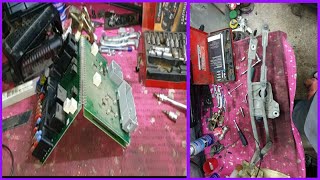
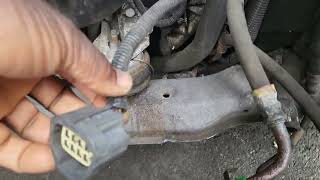
Helpful Videos


The information in this article is provided for general reference and educational purposes only. Vehicle specifications, procedures, and part compatibility can vary by production date, trim level, and region. Always consult your vehicle's factory service manual and verify part numbers before purchasing or performing repairs. Safety-critical components such as airbags, seat belts, and braking systems should be installed by a qualified professional.
- Volvo XC90:
- 🧭 Diagnostic Flowchart
- 🎬 Helpful Videos
- What's Unique About the 2003-2014 Volvo XC90
- Symptoms You May Notice
- Most Likely Causes
- Rare But Worth Checking
- Diagnosis Steps
- Parts You'll Likely Need
- Related Codes That Often Appear With This One
- Technical Service Bulletins (TSBs) & Recalls
- Platform-Specific Known Issues
- Mechanic-Grade Diagnostic Values
- Hidden / Shadow Codes Worth Checking
- Scan Tool Commands That Help
- Wiring & Ground Locations
- Real Owner Repair Stories
- Model Year Variations Within This Range
- Other Known Issues on This Vehicle
- Used vs. New Parts: Buying Guide for This Vehicle
- Real Owner Stories
- 2003-2014 Volvo XC90
- 2003-2005 Volvo XC90 T6
- 2003-2014 Volvo XC90
- Related OBD-II Codes
- Frequently Asked Questions
- 🎟️ Get 5% Off