

U0101 on 2014-2020 Acura MDX: Lost Communication With Transmission Control Module Causes and Fixes
U0101 on a 2014-2020 Acura MDX means the Transmission Control Module (TCM) has stopped communicating with other vehicle computers. The most common causes are a weak battery, poor ground connections, or a wiring fault. For 2016-2020 models with the 9-speed transmission, software updates and inherent transmission behavior can also be related factors. A failed TCM is possible but less common.
- U0101 is a serious code that makes the vehicle unsafe to drive; have it diagnosed promptly.
- Always start your diagnosis with the simplest and most common causes: test the battery and inspect all power and ground connections before suspecting more expensive parts.
- This is an electrical network code, not a mechanical transmission code. Do not assume the transmission needs replacement.
- If the TCM needs to be replaced, it will require programming to your vehicle's VIN, which usually requires a dealer or a specialized repair shop.
- Check with an Acura dealer if there are any open recalls or software updates for your vehicle's VIN.
What's Unique About the 2014-2020 Acura MDX
For the 2014-2020 Acura MDX, the U0101 code is frequently triggered by foundational electrical issues rather than an inherent flaw in the transmission module itself. This generation is split between two transmissions: a 6-speed automatic (2014-2015) and a ZF-designed 9-speed automatic (2016-2020). The 9-speed models, in particular, are known for quirky shifting behavior that has been the subject of multiple software updates. Owners and technicians frequently find that a weak or aging battery is the root cause of U0101, as low system voltage can disrupt communication between modules. Acura has also issued software updates, such as TSB 23-001, which addresses auto idle-stop issues related to low battery health, further highlighting the platform's sensitivity to electrical stability. For Sport Hybrid models, TSB 20-039 was released to fix a software bug preventing the clearance of certain diagnostic codes.
Symptoms You May Notice
- Check Engine Light is on
- Transmission warning light is illuminated ('D' indicator may flash).
- Multiple other warning lights may appear (VSA, ABS, Power Steering).
- Vehicle is stuck in 'limp mode', often in a single gear (like 2nd or 3rd).
- Harsh, erratic, or delayed shifting.
- Vehicle may not shift out of Park.
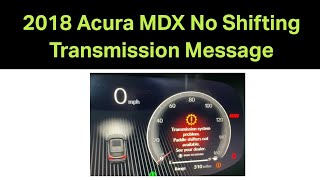
- Vehicle may unexpectedly shift into Neutral while driving 🎬 See this video on the 9-speed transmission's dangerous shifting issues. (a known issue with the 9-speed transmission).
- The PRNDL gear indicator on the dashboard may disappear or be incorrect.
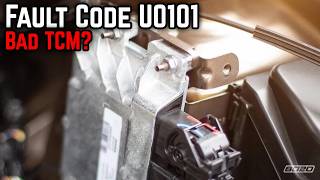
- Scan tool cannot communicate with the TCM. 🎬 Watch: A quick breakdown of the U0101 code and common fixes.
- Replacing the entire transmission when the issue is purely electronic or software-related.
- Replacing the TCM without first thoroughly checking the battery, grounds, fuses, and wiring harness.
- Attributing all shifting issues to a mechanical failure without first checking for software updates, especially on 2016+ models with the 9-speed transmission.
Most Likely Causes
- Weak or Failing Battery 🔴 High Probability → Shop Vehicle Battery Modern vehicles like the MDX have numerous electronic modules that are sensitive to voltage. A battery that can still start the car may not provide the stable 12.4V+ required for all modules to communicate properly, especially during engine cranking or auto start-stop events. Forum users on Acurazine frequently report that replacing a battery, even one that tests as borderline, resolves a host of electronic issues, including communication codes.
How to confirm: Test the battery voltage with a multimeter. A healthy, resting battery should be at 12.4V or higher. Have the battery load-tested at an auto parts store, as a simple voltage test is not always sufficient.
Typical fix: Replace the battery with a high-quality AGM (Absorbent Glass Mat) battery to meet the vehicle's high electrical demands.
Est. part cost: $200-$400 - Poor Power or Ground Connections 🟡 Medium Probability Corrosion can build up on battery terminals, ground straps, and major power connections over time, creating resistance that disrupts module communication. Key ground points are from the battery to the chassis and from the engine/transmission to the chassis.
How to confirm: Visually inspect the battery terminals for corrosion. Locate and inspect the main engine-to-chassis and battery-to-chassis ground straps for corrosion, tightness, and integrity. Use a multimeter to check for voltage drop across the ground connections.
Typical fix: Disconnect, clean all contact surfaces of battery terminals and ground connection points with a wire brush until they are shiny, then re-secure them. Apply dielectric grease to prevent future corrosion.
Est. part cost: $5-$50 - Damaged Wiring or Connectors 🟡 Medium Probability
How to confirm: Visually inspect the wiring harness leading to the Transmission Control Module for any signs of damage, chafing, rodent activity, or corrosion. Pay close attention to the connectors at the TCM for bent, pushed-out, or corroded pins. Moisture intrusion is also a possibility.
Typical fix: Repair the damaged section of the wiring harness. Clean contaminated connectors with electrical contact cleaner and a small brush, then blow dry with compressed air. Replace the affected connector if pins are damaged.
Est. part cost: $20-$200 - Failed Transmission Control Module (TCM) ⚪ Low Probability → Shop Transmission Assembly
How to confirm: This is typically diagnosed by exclusion. If the battery, grounds, and all wiring (power, ground, and CAN bus lines) to the TCM test good with a multimeter, the module itself is the likely culprit. A professional scanner that fails to establish communication with the TCM after all other checks pass points to an internal module fault.
Typical fix: Replace the Transmission Control Module. The new module will require programming by an Acura dealer or a qualified shop with the proper tools (like the Honda HDS) to match the vehicle's VIN and software configuration.
Est. part cost: $400-$900
Rare But Worth Checking
- CAN Bus Network Fault: A fault in the CAN bus wiring itself (the twisted pair of wires) or another module on the network failing can disrupt communication for all modules, including the TCM. This is complex to diagnose and requires specialized equipment to measure resistance (should be ~60 ohms) and check for shorts.
- PCM/TCM Software Issue: Acura has issued TSBs for PCM and transmission software updates on this generation MDX. Outdated software can cause communication glitches or undesirable transmission behavior. TSB 23-001 was released for idle-stop issues and TSB 20-039 for Sport Hybrids. Always check with a dealer if the latest software is installed.
- Blown Fuse: A blown fuse for the TCM, ECU, or another related system can cut power and cause a communication loss. Check all fuses in the under-hood and interior fuse boxes related to the powertrain and transmission controls.
Diagnosis Steps
- Scan for all diagnostic trouble codes from all modules (PCM, TCM, ABS, BCM, etc.). Note any other 'U' codes, as they can point to a wider network problem.
- Check battery health. Test voltage (should be 12.4V+ resting) and perform a load test. A weak battery is the number one suspect. 🎬 Watch: Why Acura batteries often fail and how to check yours.
- Inspect all fuses related to the TCM and PCM in both the interior and under-hood fuse panels.
- Visually inspect the main ground straps: battery-to-chassis and engine/transmission-to-chassis. Ensure they are clean, tight, and free of corrosion.
- Locate the Transmission Control Module (TCM). For the 9-speed, it's often located on or near the transmission itself. Inspect its wiring harness and connectors for any visible damage, corrosion, or loose connections.
- If the above steps do not reveal the issue, use a multimeter to verify that the TCM is receiving proper power (12V+) and ground (less than 0.5 Ω resistance to chassis ground) at its connector pins.
- Test the CAN bus wiring for proper resistance (typically 60 ohms between CAN High and CAN Low at the OBD-II port with the battery disconnected) and check for shorts to power or ground.
- Check with an Acura dealer for any open recalls or available PCM/TCM software updates for your specific VIN.
- If all wiring, power, grounds, and software are confirmed to be good, the TCM is the most likely failed component.
Parts You'll Likely Need
- Transmission Control Module (TCM)
(OEM #ZF0501223455 (For 9-Speed Models))— This is the part that needs to be replaced if it has internally failed and is no longer communicating, after all other electrical causes have been ruled out. This part number is associated with the ZF 9-speed transmission used in 2018-2020 models.
Related Codes That Often Appear With This One
- U0100 — Stands for 'Lost Communication with ECM/PCM'. If there is a network-wide issue like a bad ground, low voltage, or a CAN bus fault, communication can be lost with multiple modules simultaneously.
- U0122 — Stands for 'Lost Communication with Vehicle Dynamics Control (VSA) Module'. This often appears alongside other U-codes during a general network failure, as the VSA system relies on data from the engine and transmission.
- P0700 — This is a generic code indicating that the TCM has requested the check engine light to be turned on. It signals that a transmission-specific fault (like U0101) is stored in the TCM.
Technical Service Bulletins (TSBs) & Recalls
- 23-001: Product Update: 2016-20 MDX PGM-FI Idle Stop Software Update. Addresses no-restart condition after idle stop, often related to low battery health.
- 23-002: Warranty Extension: Engine Does Not Auto Restart After Entering Auto Idle Stop. Extends warranty for starter and valve adjustment for the idle-stop issue.
- 20-039: Emissions Recall: 2017-20 MDX Sport Hybrid Odd Gear Monitor Software Update. Fixes an issue preventing certain permanent DTCs from being cleared.
Platform-Specific Known Issues
- ZF 9-Speed Transmission Behavior (2016-2020): → Shop Transmission Assembly The 9-speed automatic transmission introduced in 2016 is known for problematic behavior, including jerky shifts, hesitation, and randomly shifting into neutral. Acura has released multiple software updates to address these complaints. Some owners report that a transmission fluid service and software flash at the dealer improved behavior.
- Auto Idle-Stop Restart Failure (TSB 23-001 & Warranty Extension 23-002): Acura issued TSB 23-001 for 2016-2020 MDX models to update PCM software. The original software could improperly engage idle-stop when battery health was low, potentially leading to a no-restart condition. This highlights the platform's sensitivity to battery voltage. A related warranty extension (23-002) covers starter replacement and valve adjustment for this issue if the software update doesn't fix it.
- Parasitic Battery Drain from HFL Module: → Shop Vehicle Battery On some older Acura models, a faulty HandsFreeLink (HFL) Bluetooth module is a known cause of parasitic battery drain, leading to a dead battery and subsequent electronic issues. While less documented for this specific generation, if you experience a recurring dead battery, it's a potential culprit to investigate by unplugging the module.
Mechanic-Grade Diagnostic Values
- CAN Bus Network Resistance — expected: Approximately 60 Ω. Failure: A reading of 120 Ω indicates one of the two terminating resistors is offline. A reading significantly lower than 60 Ω (e.g., 40 Ω) suggests an extra resistor or a shorted module on the network. An open circuit (O.L.) indicates a break in the wiring.
- CAN Bus Voltage (Key On, Engine Off) — expected: CAN High (Pin 6): 2.5V to 3.5V. CAN Low (Pin 14): 1.5V to 2.5V.. Failure: Voltages that are stuck high, stuck low, or do not fluctuate indicate a short to power, short to ground, or a dead module pulling the bus down.
- TCM Power Supply Voltage — expected: Approximately 12.0V or battery voltage.. Failure: Low or no voltage indicates a blown fuse, faulty relay, or a break in the power wire to the TCM.
- TCM Ground Circuit Resistance — expected: Less than 1.0 Ω.. Failure: High resistance indicates a corroded or loose ground connection, which can cause intermittent communication issues.
Scan Tool Commands That Help
- Honda HDS (or i-HDS): All DTC Check — This is the first step to see a complete picture of the network. It will show which other modules (VSA, EPS, BCM) are also reporting a loss of communication with the TCM, helping to determine if the fault is isolated to the TCM or is a wider bus issue.
- Honda HDS (or i-HDS): TCM Communication Check / Live Data — Used to directly poll the TCM. If the HDS cannot establish a connection, it confirms the module is offline and the problem lies in its power, ground, or the module itself. If it connects, the issue may be intermittent or a software glitch.
- Honda HDS (or i-HDS): ECU/PCM/TCM Reprogramming — Used after confirming the vehicle's software is out of date by checking against Technical Service Bulletins (TSBs). This function updates the module's firmware, which can resolve known communication bugs, especially on the 9-speed models.
Wiring & Ground Locations
- Engine Ground Hanger — On 2017+ models, there is a primary negative ground connection point on an engine hanger that is located underneath the main plastic engine cover.. This is a critical chassis ground point for the powertrain. If it becomes loose or corroded, it can cause unstable voltage and disrupt communication between the PCM and TCM.
- G501 / G503 — Common Honda/Acura interior ground points. G501 is typically located behind the left kick panel (driver's side), and G503 is behind the right kick panel (passenger's side).. Multiple modules, including the TCM on some models, may share these interior ground points. A loose or corroded connection here can cause widespread communication codes.
- TCM Connector (9-Speed) — On the transmission housing itself. You will need to access the vehicle from underneath to inspect the connectors and harness.. This is the primary connection point for all power, ground, and CAN bus signals to the TCM. It is exposed to road debris, heat, and vibration, making it a potential point of failure for wiring or pin connections.
- TCM Connector (6-Speed) — For 2014-2015 models, the transmission control functions are often handled by the PCM or a separate module located in the cabin, frequently behind the glove box or center console area.. Unlike the 9-speed, the fault may not be at the transmission itself but at an interior module connector, which could be affected by cabin water leaks or issues behind the dashboard.
Real Owner Repair Stories
- General consensus from multiple automotive guides and forums. (2014-2020 Acura MDX, multiple trims) — Multiple random warning lights (Check Engine, VSA, ABS, Transmission), erratic shifting, no-start, or failure to shift out of Park. Code U0101 is present, often with U0100 and U0122.
❌ Tried (didn't work) Clearing codes, only for them to return immediately., Checking fuses, which were all found to be good.
✅ What actually fixed it Replacing the vehicle's battery, even if it tested as 'borderline' or was still able to start the engine. Modern Acuras are extremely sensitive to stable voltage, and a slightly weak battery is a very common root cause for a flood of communication codes. - CorvetteForum user story, applicable principle for CAN bus faults. (General CAN-equipped vehicle) — U0101 code, transmission in limp mode, intermittent communication loss.
❌ Tried (didn't work) Scanning and clearing codes., Inspecting visible sections of the wiring harness.
✅ What actually fixed it A single wire pin had backed out of its seat within a large, main electrical connector block (often near the battery or under-hood fuse box). The pin was making intermittent contact. Pushing the pin firmly back into the connector until it clicked into place permanently resolved the communication fault. - Acura RLX cross-manufacturer reference (NHTSA ODI #11499832). An owner reported that after scanning for codes, multiple communication faults were found including U0101-00, U0100-00, U0122-00, and U0416-68, despite having no prior warning lamps or symptoms indicating a problem with the vehicle.
OEM Part Supersession History
37820-5J6-C61 (PCM)→37820-5J6-C62, 37820-5J6-C63 (PCM)— Internal revisions and software updates by the manufacturer.
Heads up: While this example is for the PCM, the same principle applies to the TCM. Always provide the VIN to an Acura dealer to get the absolute latest part number for the specific vehicle, as older stock may have unpatched software issues.
Model Year Variations Within This Range
- 2014-2015: These models use a Honda-designed 6-speed automatic transmission. The transmission control is typically integrated within the main Powertrain Control Module (PCM) or is a separate module inside the cabin. They use Honda ATF-DW1 fluid.
- 2016-2020: These models use a ZF 9-speed automatic transmission (ZF9HP). The Transmission Control Module (TCM) is a separate computer located on the transmission housing. These models have been subject to numerous software updates (TSBs) to improve shift quality. They use a specific, more expensive ZF-specification fluid, not ATF-DW1.
Diagnostic Flowchart
Other Known Issues on This Vehicle
Issues unrelated to this code that are worth knowing about as an owner of this generation:
- ZF 9-Speed Automatic Transmission Behavior 🔴 High → Shop Transmission Assembly — Common on 2016-2018 models, less so on 2019-2020 after software updates. Issues include harsh/jerky shifting, hesitation, and randomly shifting to neutral. (Ref: Multiple software updates have been issued; not a formal TSB number but handled by dealers.)
- Variable Cylinder Management (VCM) Concerns 🟠 Medium — A long-term concern for all Honda/Acura J35 V6 engines. Can lead to fouled spark plugs (especially on rear cylinders), oil consumption, and engine vibrations over time.
- Dual-Screen Infotainment System Glitches 🟠 Medium — Common across the generation. Issues include a lagging or frozen lower touchscreen, blank upper screen, and Bluetooth/connectivity problems. (Ref: Various software updates and some hardware fixes (like FAKRA connectors) are known.)
- Auto Idle-Stop System Failure to Restart 🟠 Medium — Frequent enough to warrant a specific software update and warranty extension. Primarily affects 2016-2020 models. (Ref: TSB 23-001 (software) and Warranty Extension 23-002 (hardware).)
- Denso Fuel Pump Failure 🔴 High — Affects some 2019-2020 models. The fuel pump can fail, causing the engine to stall while driving. (Ref: Safety Recall)
Used vs. New Parts: Buying Guide for This Vehicle
When a used part is the smart pick: For this specific repair, a used part is almost never a smart choice. A used wiring harness pigtail or connector can be a good option if the original is damaged, but the control module itself should be avoided.
Donor-vehicle mileage cap: roughly under 50000 miles for the part to have meaningful remaining life.
What to inspect on the donor part:
- For a wiring pigtail, ensure there is no corrosion on the pins.
- Check that the connector's locking tabs are intact.
- Ensure there are several inches of wire past the connector for easier splicing.
OEM-only on this vehicle (don't cheap out):
- Transmission Control Module (TCM): Acura TCMs are VIN-locked to the original vehicle. A used module from a salvage yard will not communicate with your car and cannot be reprogrammed by a dealer or most independent shops.
- Transmission Fluid: Using the exact specified fluid (ATF-DW1 for 6-speed, ZF-spec fluid for 9-speed) is critical. Using a generic 'multi-vehicle' fluid can cause shifting problems and long-term damage.
Aftermarket brands forum-validated for this vehicle:
- Battery: Bosch, Interstate, or other high-quality brands that offer a direct-fit AGM (Absorbent Glass Mat) battery are recommended to meet the vehicle's high electrical demands.
Brands owners have reported issues with on this vehicle:
- Remanufactured TCMs from unknown online sellers without a strong warranty and reprogramming support.
- Universal or 'multi-vehicle' transmission fluids.
Real Owner Stories
Aggregated from forums and TSBs cited above. Mileages and costs reflect what owners reported in those sources.
2018 Acura MDX
Symptoms: Cold-start jerkiness and transmission acting up after the battery died.
What fixed it: Replacing the dead battery with a new one significantly improved the ZF 9-speed transmission's behavior.
Source hint: Acurazine.com thread titled 'Bad Battery = Transmission Acting Up?'
2016 Acura MDX
Symptoms: Surging, erratic shifting, and problematic behavior from the then-new 9-speed transmission.
What fixed it: A software flash from the dealer helped resolve the shifting problems.
Source hint: Acurazine.com thread 'Those who purchased a new 2016 MDX, have you experienced any transmission issues...?'
2016-2020 Acura MDX
Symptoms: Vehicle fails to restart after the Auto Idle-Stop feature engages at a stop.
What fixed it: PCM software update per TSB 23-001; in some cases, starter replacement and valve adjustment under warranty extension 23-002.
Source hint: TSB 23-001 and Warranty Extension 23-002
Related OBD-II Codes
Frequently Asked Questions
My 2017 MDX is stuck in limp mode and won't shift out of Park. Could this be related to a TSB?
Can a weak battery really cause my 9-speed transmission to shift into Neutral unexpectedly?
Is there a specific battery type recommended for the 2016-2020 MDX to prevent communication codes?
Does the 2016 MDX have a known issue with the TCM software?
I have a 2019 MDX Sport Hybrid; is there a specific recall related to clearing codes like U0101?
Could my HandsFreeLink (HFL) module be causing the U0101 code indirectly?
Helpful Videos

We Have This Part in Stock





The information in this article is provided for general reference and educational purposes only. Vehicle specifications, procedures, and part compatibility can vary by production date, trim level, and region. Always consult your vehicle's factory service manual and verify part numbers before purchasing or performing repairs. Safety-critical components such as airbags, seat belts, and braking systems should be installed by a qualified professional.
- Acura MDX:
- 🧭 Diagnostic Flowchart
- 🎬 Helpful Videos
- 🛍️ Shop This Part
- What's Unique About the 2014-2020 Acura MDX
- Symptoms You May Notice
- Most Likely Causes
- Rare But Worth Checking
- Diagnosis Steps
- Parts You'll Likely Need
- Related Codes That Often Appear With This One
- Technical Service Bulletins (TSBs) & Recalls
- Platform-Specific Known Issues
- Mechanic-Grade Diagnostic Values
- Scan Tool Commands That Help
- Wiring & Ground Locations
- Real Owner Repair Stories
- OEM Part Supersession History
- Model Year Variations Within This Range
- Other Known Issues on This Vehicle
- Used vs. New Parts: Buying Guide for This Vehicle
- Real Owner Stories
- 2018 Acura MDX
- 2016 Acura MDX
- 2016-2020 Acura MDX
- Related OBD-II Codes
- Frequently Asked Questions
- 🎟️ Get 5% Off