

U0101 on 2004-2011 Chevrolet Aveo: Lost Communication with TCM Causes and Fixes
On a 2004-2011 Chevy Aveo, code U0101 almost always points to an electrical problem, not a failed transmission. The most likely cause is a wiring issue, a poor ground connection, or low battery voltage. Always check these simple, low-cost items before replacing the expensive Transmission Control Module (TCM).
- U0101 is an electrical fault, not a mechanical transmission failure. Do not replace the transmission.
- Always start diagnosis with the simplest things: check the battery voltage and all related fuses.
- The most common cause is a problem with the wiring harness or a bad ground connection. Thoroughly inspect these before buying parts.
- The TCM's location on an Aveo can vary. Be prepared to look both inside the car under the dashboard and in the engine bay.
- If you replace the TCM, it will likely need to be programmed by a dealer or a qualified shop with the proper tools.
What's Unique About the 2004-2011 Chevrolet Aveo
The Chevrolet Aveo does not have a single, widely-documented design flaw that causes the U0101 code. Instead, it suffers from the same issues common to many GM economy cars of this era: vulnerability to wiring damage and grounding problems. The most significant challenge on the Aveo is physically locating the TCM, as its position can vary. For the T250 generation (2007-2011), it is most commonly located inside the cabin, to the left of the steering column under the dashboard. Some owners have traced communication issues back to corrosion or poor connections in the main C101 32-pin connector coming from the fuse box.
Generation note: The 2004-2011 range covers two generations of the Aveo: the T200 (2004-2006) and the T250 (2007-2011). While the root causes for U0101 are similar, the exact location of the Transmission Control Module (TCM) and its corresponding part number may differ between these generations. Always verify the TCM location for your specific model year before beginning diagnosis.
Symptoms You May Notice
- Check Engine Light is on
- Transmission warning lamp is illuminated
- Harsh, erratic, or delayed shifting
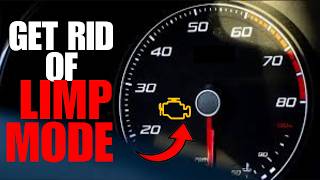
- Vehicle is stuck in one gear (fail-safe or "limp mode")
- Inability to shift out of Park or Neutral
- PRNDL gear indicator on the dashboard is blank or incorrect
- Sudden loss of power or stalling when the transmission attempts to shift 🎬 Watch: How to diagnose and reset transmission limp mode
- Replacing the entire transmission. This code points to an electrical communication problem, not a mechanical failure inside the transmission.
- Replacing the TCM without first verifying its power, ground, and wiring connections. The module is often blamed when the actual fault is in the supporting wiring.
Most Likely Causes
- Wiring Harness or Connector Issues 🔴 High Probability As an economy car, wiring harnesses may have less protective loom and can be susceptible to heat from the engine or chafing against the chassis over time. Corrosion in connectors is also a common cause of communication failures.
How to confirm: Visually inspect the wiring harness leading to the TCM for any signs of chafing, melting, or corrosion. Unplug the TCM connector and check for corroded, bent, or backed-out pins. Pay special attention to the main C101 connector from the fuse box, as noted in owner forums.
Typical fix: Repair or replace the damaged section of the wiring harness. Clean or replace the connector pins.
Est. part cost: $10-$100 - Poor Power or Ground Supply 🔴 High Probability Grounding points on the chassis or engine block can corrode over time, creating high resistance that disrupts module communication. A weak battery or failing alternator can also cause intermittent communication faults, as modules are sensitive to low voltage.
How to confirm: Check that the battery voltage is above 12.4V with the engine off. Use a multimeter to verify a clean, tight ground connection (less than 0.5 Ohms of resistance) at the TCM's ground pin and at the main chassis ground points. A 2010 Aveo wiring diagram shows ground points G103 (below ECM) and G203 (below ashtray) which could be relevant.
Typical fix: Clean the corrosion from ground points and terminals with a wire brush and ensure connections are tight. Charge or replace the battery if it's failing.
Est. part cost: $0-$200 - Failed Transmission Control Module (TCM) 🟡 Medium Probability → Shop Transmission Assembly
How to confirm: This is diagnosed by exclusion. If the TCM has stable 12V power, a good ground, and the communication wires (CAN bus) are intact, but the module still won't communicate with a scan tool, the module itself is likely faulty. 🎬 Watch: How to diagnose a U0101 no communication code NHTSA ODI #11616544 notes a case where troubleshooting confirmed the TCM was bad, requiring removal of components for replacement.
Typical fix: Replace the Transmission Control Module. A new or used module will likely require programming to the vehicle's VIN.
Est. part cost: $75-$400 - Blown Fuse ⚪ Low Probability
How to confirm: Check the vehicle's fuse boxes (both in the engine bay and inside the cabin) for any fuses related to the Transmission, TCM, or ECU. A blown fuse will cut all power to the module. In some GM platforms, U0101 has appeared alongside ignition switch faults, as seen in NHTSA ODI #11354020.
Typical fix: Replace the blown fuse. If it blows again, this indicates a short circuit in the wiring that needs to be found and repaired.
Est. part cost: $1-$5
Diagnosis Steps
- Scan for All Codes: Use an OBD-II scanner to check for any other communication (U-codes) or powertrain (P-codes). The presence of other codes can help pinpoint a wider network issue.
- Check Battery and Fuses: Ensure the battery has a full charge (at least 12.4 volts engine-off). A weak battery is a very common cause of intermittent communication codes. Visually inspect all fuses related to the transmission and engine control modules in both the interior and under-hood fuse panels.
- Locate the TCM: This is a critical step on the Aveo. For the T250 (2007-2011), check under the driver's side dashboard, to the left of the steering column. For earlier T200 models, it may be in the engine bay.
- Inspect Wiring and Connector: Once located, perform a thorough visual inspection of the TCM's wiring harness. Look for any signs of chafing, melting, or physical damage. Disconnect the TCM and inspect the connector pins for corrosion, moisture, or damage.
- Verify Power and Ground: Using a multimeter and the vehicle's wiring diagram, test for 12V power at the appropriate pin on the TCM connector with the key on. Test for a good ground by checking for continuity (less than 0.5 Ohms) between the ground pin and the negative battery terminal.
- Check CAN Bus Wires: If power and ground are good, check the resistance between the two CAN bus wires at the diagnostic port (pins 6 and 14). It should be around 60 Ohms. A reading of 120 Ohms or an open circuit indicates a break in the wiring or a faulty terminating resistor.
- Suspect the TCM: If all wiring, power, and ground circuits test good, the TCM itself is the most likely culprit.
Parts You'll Likely Need
- Transmission Control Module (TCM)
(OEM #96423611, 96802673)— If all wiring and power/ground circuits are confirmed to be good, the internal electronics of the TCM have likely failed. Part number 96802673 is commonly cited for 2009-2010 models.
Trusted brands: ACDelco (OEM), Dorman
OEM price range: $300-$500
Aftermarket price range: $150-$350
Related Codes That Often Appear With This One
- U0100 — Lost Communication with ECM/PCM. If both codes are present, it often points to a larger network issue like a bad ground or a problem on the main CAN bus wiring rather than a single faulty module. 🎬 See this step-by-step U0100 communication code fix
- U0073 — Control Module Communication Bus 'A' Off. This is a general network code indicating the entire communication bus has shut down, strengthening the case for a wiring, power, or ground issue affecting multiple modules.
- P0700 — Transmission Control System Malfunction. This is a generic code that the ECM sets to turn on the Check Engine Light when the TCM has stored a specific fault. It often appears alongside communication codes like U0101.
Platform-Specific Known Issues
- A user on Opinautos.com reported that after extensive troubleshooting for U0101, including replacing computers, the ultimate fault was found in the C101 32-pin connector that comes from the fuse box. This suggests checking major harness connectors for corrosion or loose pins is a worthwhile diagnostic step on the Aveo.
Mechanic-Grade Diagnostic Values
- CAN Bus Network Resistance — expected: Approximately 60 Ohms. Failure: A reading of 120 Ohms indicates an open circuit or faulty terminating resistor. A reading near 0 Ohms indicates the CAN High and CAN Low wires are shorted together.
- TCM Power Supply Voltage — expected: 12.0 - 12.6 Volts. Failure: Significantly lower voltage or no voltage indicates a blown fuse, wiring issue, or problem with the power source.
- TCM Ground Circuit Resistance — expected: Less than 0.5 Ohms. Failure: A reading higher than 0.5 Ohms indicates excessive resistance in the ground circuit, which can cause the module to malfunction.
- CAN Bus Voltage (Key On, Engine Off) — expected: CAN High (Pin 6): ~2.5-3.5V; CAN Low (Pin 14): ~1.5-2.5V. Failure: Voltages that are stuck high (5V) or low (0V), or that do not mirror each other, indicate a short or open in the CAN bus wiring.
Scan Tool Commands That Help
- GM Tech2 / GDS2 or equivalent professional scanner: Module Communication Test / Ping Module — Use this bidirectional command to actively request a response from the TCM. If the scanner receives no response, it confirms a hard communication failure, pointing towards a power, ground, or network wiring fault.
- GM Tech2 / GDS2 with TIS2WEB/SPS subscription: TCM Programming and Setup — This is mandatory after replacing the TCM with a new or used unit. The module must be programmed with the vehicle's specific VIN and calibration files to function correctly.
- Advanced OBD-II Scanner: Transmission Adaptive Learning Reset — After replacing and programming a new TCM, this function should be used to clear the old learned shift parameters, allowing the new module to adapt to the transmission's current state and driver's habits.
Wiring & Ground Locations
- G103 — In the engine compartment, located below the Engine Control Module (ECM).. This is a primary engine-side ground. High resistance at this point can affect both the ECM and TCM, causing communication errors.
- G203 — Inside the cabin, located below the ashtray in the center console area.. This is an important interior ground point. Since the TCM on T250 models is inside the cabin, this ground's integrity is critical for its operation.
- C202 — For T250 (2007-2011) models, this is the main TCM connector, typically an 11-pin white connector located behind the instrument panel fuse block.. This is the primary connection point for testing the TCM's power, ground, and network signals directly at the module.
- J102 — A junction point within the TCM wiring harness, located between the firewall grommet and the breakout to the main instrument panel harness.. Harness junctions are potential failure points for corrosion or loose connections that can interrupt communication signals to the TCM.
Real Owner Repair Stories
- CarKiller Forum User (2011 Chevrolet Aveo LT 1.4L A/T, 150,000 km) — Check Engine Light on, intermittent jerking or clunking when shifting into Drive or from 1st to 2nd gear.
❌ Tried (didn't work) The owner initially had both P0700 and U0100 codes.
✅ What actually fixed it Cleaning a corroded body ground connector successfully eliminated the U0100 (Lost Communication with ECM) code. However, the P0700 (Transmission Control System Malfunction) code continued to appear intermittently, indicating the underlying TCM communication issue was not fully resolved by that single ground point. - Chevrolet Forum User (Chevrolet Sonic (Aveo platform)) — Check Engine Light with codes U0073, U0100, and U0101.
❌ Tried (didn't work) Reseating connectors, visual wiring inspection.
✅ What actually fixed it In one case within the thread, a user reported that replacing a faulty alternator with a heavy-duty unit resolved the recurring communication codes. This suggests that electrical noise or voltage instability from the charging system was the root cause. - NHTSA Owner Report (Chevrolet Silverado) — An owner reported that a failed TCM resulted in U0101, low power ("limp mode"), hard shifting, and the absence of a gear selection indicator (NHTSA ODI #11654876).
- NHTSA Owner Report (Chevrolet Spark) — One report describes a vehicle that would not turn over or click, showing no power to the starter or alternator while throwing code U0101 (NHTSA ODI #11279453).
When the Usual Fixes Don't Work
- While cleaning a main body or engine ground is a very common fix, it may not be a complete solution. In one documented case, a 2011 Aveo owner fixed a U0100 code by cleaning a ground, but the transmission-specific P0700 code and shifting issues persisted. This indicates that multiple electrical faults can exist independently, such as a bad ground AND a separate issue with the TCM's internal circuitry or a different part of the harness. A single fix may not resolve all symptoms. Additionally, NHTSA ODI #11673769 notes that U0101 can sometimes be associated with power steering or Stabilitrak warnings if the electrical fault is part of a larger gear assembly or sensor cover kit issue.
OEM Part Supersession History
96802673→N/A— This is a confirmed OEM part number for the TCM.
Heads up: This part number is specifically cited for 2009-2010 Aveo, G3, and Wave models. Compatibility with other years must be verified by VIN.
Model Year Variations Within This Range
- 2007-2011 (T250 Generation): The TCM is consistently located inside the vehicle, under the dashboard to the left of the steering column. Its main connector is C202, found behind the instrument panel fuse block.
- 2004-2006 (T200 Generation): The TCM location is more likely to be in the engine compartment, though its exact position is less consistently documented than in the later T250 generation.
Diagnostic Flowchart
Other Known Issues on This Vehicle
Issues unrelated to this code that are worth knowing about as an owner of this generation:
- Premature Timing Belt Failure 🔴 High — Very common, with many reported failures between 40,000 and 70,000 miles, well before the 60,000-mile recommended replacement interval. This is an interference engine, so a belt failure will cause catastrophic engine damage. (Ref: TSB 06-06-01-021 (Offered a 'goodwill' belt replacement for some vehicles under 55,000 miles))
- Cracked Plastic Thermostat Housing 🟠 Medium — The OEM plastic housing is prone to cracking from heat cycles, causing coolant leaks and potential overheating. This is a very common failure point.
- Leaking Valve Cover Gasket 🟡 Low — A very common oil leak source. The gasket and bolt grommets harden over time, allowing oil to seep out onto the exhaust manifold (causing a burning smell) and into the spark plug wells (causing misfires).
- Malfunctioning Daytime Running Light (DRL) Module 🟠 Medium — The DRL module, located in the center console, can overheat and melt, creating a fire risk. (Ref: Recall 14236 (for 2004-2008 models))
- Faulty Turn Signal Switch 🟡 Low — A common issue where the turn signals fail to operate correctly due to a malfunctioning switch in the steering column.
- ABS Module Corrosion (2009-2010) 🔴 High — Improper brake fluid from the factory could fail to prevent corrosion inside the ABS module, potentially leading to reduced braking performance. (Ref: Recall 14505)
Used vs. New Parts: Buying Guide for This Vehicle
When a used part is the smart pick: A used TCM from a reputable salvage yard is a very practical and cost-effective option, often costing significantly less than a new OEM or aftermarket unit. Given that the primary failure mode is electronic, a part from a lower-mileage, accident-damaged vehicle is a good candidate.
Donor-vehicle mileage cap: roughly under 100000 miles for the part to have meaningful remaining life.
What to inspect on the donor part:
- Verify the part number on the used module EXACTLY matches the original (e.g., 96802673).
- Inspect the connector pins for any signs of corrosion, moisture damage, or physical bending.
- Ask for the VIN of the donor vehicle to help with potential programming needs.
- Ensure the seller offers a warranty or return policy in case the unit is faulty.
OEM-only on this vehicle (don't cheap out):
- While aftermarket TCMs exist, using a genuine OEM part (either new from ACDelco or a used original) is often recommended for best compatibility and to avoid programming issues.
Aftermarket brands forum-validated for this vehicle:
- Dorman (as mentioned in Pass 2)
Real Owner Stories
Aggregated from forums and TSBs cited above. Mileages and costs reflect what owners reported in those sources.
2008 Chevy Aveo
Symptoms: U0073 and U0101 codes appeared immediately after the battery died and was replaced.
What fixed it: The issue was related to voltage sensitivity and the battery replacement process.
Source hint: Reddit r/MechanicAdvice - '2008 Chevy Aveo - Multiple Check Engine Light Codes Issues'
Chevrolet Aveo (T250)
Symptoms: U0101 code persisted even after replacing the vehicle's computers and the VSS (Vehicle Speed Sensor).
What fixed it: The fault was eventually traced to a dirty or faulty C101 32-pin connector originating from the fuse box.
Source hint: Opinautos.com - 'Chevrolet Aveo: Codigo u0101'
Chevrolet Aveo
Symptoms: U0073, U0100, and U0101 codes occurred simultaneously after the owner changed the throttle body.
What fixed it: The issue was attributed to a harness or connector disturbance during the mechanical repair.
Source hint: AveoForum.com - 'U0073, U0100, and U0101 codes'
Related OBD-II Codes
Frequently Asked Questions
Where is the Transmission Control Module (TCM) located on my 2008 Chevrolet Aveo?
I have U0101 and my car won't shift out of Park. Is this common for the Aveo?
Could a bad battery cause U0101 on my 2010 Aveo?
Are there specific ground points I should check for this code?
Is there a specific connector known for causing U0101 on the Aveo?
Does the Pontiac G3 share this same transmission communication issue?
Helpful Videos

We Have This Part in Stock

The information in this article is provided for general reference and educational purposes only. Vehicle specifications, procedures, and part compatibility can vary by production date, trim level, and region. Always consult your vehicle's factory service manual and verify part numbers before purchasing or performing repairs. Safety-critical components such as airbags, seat belts, and braking systems should be installed by a qualified professional.
- Chevrolet Aveo:
- 🧭 Diagnostic Flowchart
- 🎬 Helpful Videos
- 🛍️ Shop This Part
- What's Unique About the 2004-2011 Chevrolet Aveo
- Symptoms You May Notice
- Most Likely Causes
- Diagnosis Steps
- Parts You'll Likely Need
- Related Codes That Often Appear With This One
- Platform-Specific Known Issues
- Mechanic-Grade Diagnostic Values
- Scan Tool Commands That Help
- Wiring & Ground Locations
- Real Owner Repair Stories
- When the Usual Fixes Don't Work
- OEM Part Supersession History
- Model Year Variations Within This Range
- Other Known Issues on This Vehicle
- Used vs. New Parts: Buying Guide for This Vehicle
- Real Owner Stories
- 2008 Chevy Aveo
- Chevrolet Aveo (T250)
- Chevrolet Aveo
- Related OBD-II Codes
- Frequently Asked Questions
- 🎟️ Get 5% Off