

U0101 on 2016-2019 Chevrolet Volt: Lost Communication with Transmission Module Causes and Fixes
On a 2016-2019 Volt, code U0101 is most often a symptom of a failing Battery Energy Control Module (BECM), a known issue covered by GM Special Coverage N232432680. This means the problem isn't the transmission module itself, but rather the BECM disrupting the car's communication network. Another common cause is a weak 12V AGM battery causing widespread electrical gremlins. A BECM replacement is a dealer-only repair covered for 15 years/150,000 miles, while a new 12V battery is around $200-$275 a
- U0101 on a 2016-2019 Volt means the transmission control module (HPCM2) is offline, but the cause is very often a different part: the Battery Energy Control Module (BECM).
- Check if your vehicle is covered by GM Special Coverage N232432680 for the BECM. If so, the repair should be free at a GM dealer.
- Before suspecting a major module failure, test the 12V accessory battery. A weak 12V battery is a common and much cheaper cause of communication codes.
- This is not a DIY-friendly repair. Diagnosis and module replacement require dealer-level tools and software programming.
- Do not continue to drive the vehicle for long distances. While it may operate in a reduced power mode, there is a risk of being stranded.
What's Unique About the 2016-2019 Chevrolet Volt
The Chevrolet Volt's Voltec drivetrain is not a conventional transmission system, so its 'TCM' (the HPCM2) has a unique role in managing the electric drive unit and gasoline engine. However, the most critical factor for this code on the Gen 2 Volt is a well-documented and widespread failure of a different part: the Battery Energy Control Module (BECM). A failing BECM often disrupts the entire vehicle communication network, causing a cascade of communication codes, with U0101 being a common secondary fault. This means that while the code definition points to the transmission module, the root cause is very frequently the battery control module.
Symptoms You May Notice
- Check Engine Light illuminated
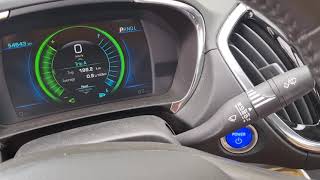
- "Propulsion Power is Reduced" message in the driver information center
- Vehicle enters a 'limp mode' with limited speed
- Slower than normal acceleration
- Engine running at a higher RPM than usual to propel the vehicle
- Vehicle may fail to start or refuse to shift out of Park
- Vehicle may refuse to charge
- Disappearance of the gear indicator (PRNDL) on the dash
- Multiple, seemingly unrelated warning messages appearing and disappearing
- Erratic infotainment/radio behavior
- Replacing the Hybrid Powertrain Control Module 2 (HPCM2) without first investigating the Battery Energy Control Module (BECM). The BECM is a far more common failure point on this vehicle that causes the U0101 code as a secondary fault.
- Assuming a major hybrid component has failed without first load-testing and verifying the health of the 12V AGM battery.
Most Likely Causes
- Failing Battery Energy Control Module (BECM) 🔴 High Probability → Shop Vehicle Battery This is a widely known pattern failure for the 2016-2018 Volt, addressed by GM Special Coverage N232432680, issued in March 2024. The BECM can fail internally, disrupting the entire CAN bus network and causing other modules to set communication codes as a symptom of the network failure.
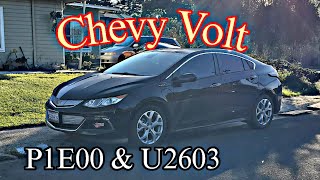
How to confirm: A technician at an authorized EV dealer must perform a full diagnostic scan. The presence of U0101 along with other communication codes (especially U26xx codes like U2603-U2624) strongly points to the BECM. 🎬 Watch: Diagnosing common BECM codes like P1E00 and U2603. Symptoms often include a no-start or no-charge condition.
Typical fix: The BECM must be replaced and programmed by a GM dealer. This repair is covered for 15 years or 150,000 miles for affected vehicles under Special Coverage N232432680, regardless of ownership.
Est. part cost: $600-$900 - Weak or Failing 12V AGM Battery 🟡 Medium Probability → Shop Vehicle Battery Low voltage from the 12V accessory battery can cause unpredictable communication errors between modules on any modern vehicle. The Volt is particularly sensitive to the health of its 12V battery, and a failing one can cause a cascade of errors that mimic a major component failure.
How to confirm: Test the 12V battery with a digital multimeter or a proper load tester. A healthy battery should show at least 12.6 volts with the car off. Any reading below 12.4V suggests it is weak. Owners report strange symptoms like the 'Initializing... wait to shift' message appearing more often, or key fob detection issues as early warnings.
Typical fix: Replace the 12V Absorbent Glass Mat (AGM) battery. This is a critical first step in diagnosis for any widespread electronic issue on this car.
Est. part cost: $200-$275 - Wiring Harness or Connector Issue ⚪ Low Probability Wiring issues are a possible cause for communication codes on all vehicles. Wires can be damaged by chafing, vibration, or rodents. Connectors can suffer from corrosion or loose pins, especially those exposed to the elements.
How to confirm: Visually inspect the wiring harnesses and connectors going to the HPCM2 and BECM. Check for any signs of damage, corrosion, or insecure connections. A technician can perform a continuity and resistance test on the CAN bus wires.
Typical fix: Repair the damaged section of the wiring harness or clean/replace the faulty connector.
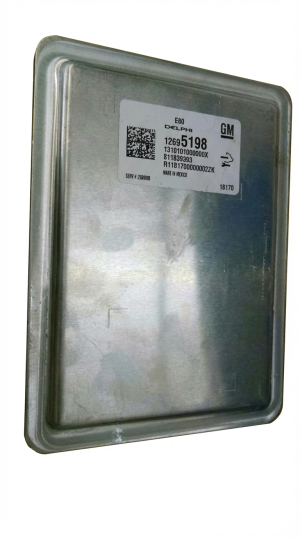
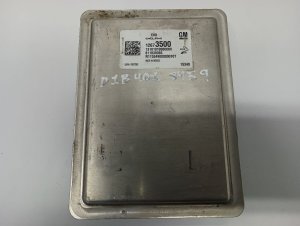
Est. part cost: $10-$500 depending on the extent of damage - Failing Hybrid Powertrain Control Module 2 (HPCM2) ⚪ Low Probability → Shop Engine Control Module (ECM) While less common than BECM failure, the HPCM2 can fail internally. GM has issued part restrictions in the past (PIC5380E) requiring dealer contact with GM's Technical Assistance Center before ordering a replacement, indicating it's a sensitive component.
How to confirm: This is a diagnosis of exclusion. If the BECM, 12V battery, and all related wiring are confirmed to be good, the HPCM2 itself may have failed. This requires advanced diagnostics by a dealer.
Typical fix: Replace and program the HPCM2.
Est. part cost: $400-$700
Rare But Worth Checking
- Aftermarket OBD-II Port Device: According to GM TSB 13-08-116-001E, insurance monitoring dongles, aftermarket tuners, or other devices plugged into the diagnostic port can interfere with network communication and trigger a flood of U-codes, including U0101. Always unplug these devices before starting diagnosis.
Diagnosis Steps
- Read all codes from all modules using a high-quality OBD-II scanner that can access manufacturer-specific codes. Note if multiple 'U' (network) codes are present, especially any in the U26xx range.
- Immediately check the 12V battery's state of health with a load tester. Do not just check voltage. A weak 12V battery is a very common cause of random electronic issues and must be ruled out first.
- Remove any aftermarket devices plugged into the OBD-II diagnostic port, as they can interfere with the network.
- Visually inspect the main wiring harnesses in the engine bay, especially around the hybrid components, for any signs of rodent damage, chafing, or corrosion.
- Check fuses related to the powertrain and transmission control modules in the under-hood fuse block.
- If simple checks do not resolve the issue, the vehicle must be taken to a GM dealer or a qualified EV repair shop. They are the only ones equipped to diagnose and replace the BECM or HPCM2.
- Specifically mention GM Special Coverage N232432680 to the service advisor. Verify your VIN's eligibility for this coverage, as some owners have reported issues despite their vehicle matching the model years.
Parts You'll Likely Need
- Battery Energy Control Module (BECM)
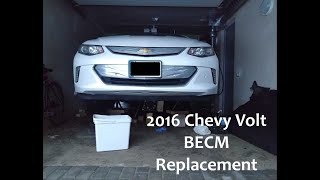
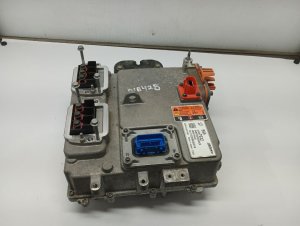
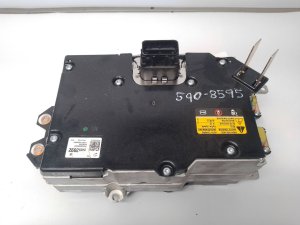
(OEM #24296900)— This is the most common point of failure on this vehicle that leads to code U0101. It requires dealer programming upon replacement. The replacement parts are reportedly sourced from a different supplier to prevent repeat failures. 🎬 See this professional walkthrough of the BECM replacement process.
Trusted brands: ACDelco, GM Genuine Parts
OEM price range: $600-$900 - 12V AGM Battery
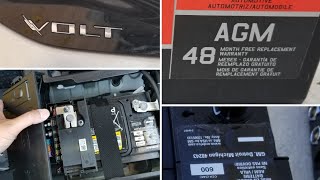
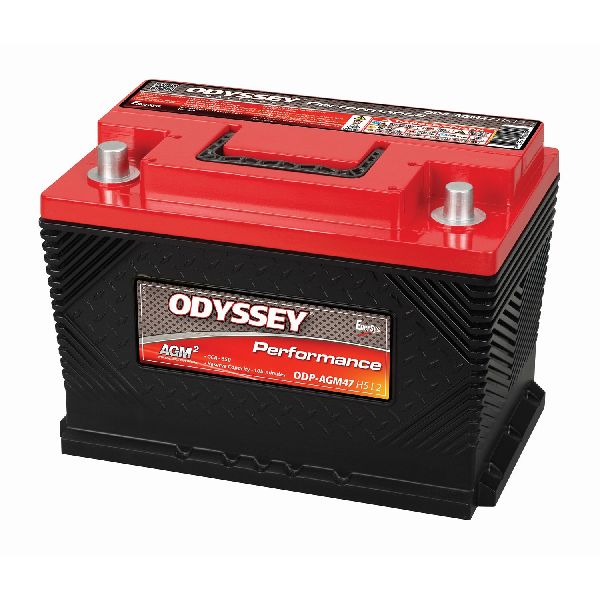
(OEM #88866291 (ACDelco Part # LN2AGM))— A weak 12V battery can cause a wide range of communication faults. Replacing it is a common and relatively simple fix to rule out deeper issues. 🎬 Watch: Step-by-step guide to replacing your 12V AGM battery.
Trusted brands: ACDelco, DieHard, Duralast
OEM price range: $220-$275
Aftermarket price range: $200-$250 - Hybrid Powertrain Control Module 2 (HPCM2)
(OEM #24291550 (supersedes 20882022, 22762258, 22854018, 22994053, 24283995))— The least likely cause, replaced only after all other possibilities are exhausted.
Trusted brands: GM Genuine Parts
OEM price range: $400-$700
Related Codes That Often Appear With This One
- U0100 — Lost Communication with ECM. This often appears with U0101 when a major module like the BECM fails, disrupting the entire network.
- U2603-U2624 — Lost Communication with specific Battery Pack Sections. These codes are a very strong indicator that the BECM is the root cause of the communication failure.
- P1E00 — This code is often a precursor, indicating the high-voltage system needs service and can be related to the BECM or charging system issues that lead to communication faults.
- U0293 — Lost Communication with Hybrid Powertrain Control Module. This is another communication code that points to a general network failure.
Technical Service Bulletins (TSBs) & Recalls
- N232432680 (Supersedes 18-NA-261): Special Coverage for Battery Energy Control Module (BECM) Malfunction.
- 13-08-116-001E: Warns that aftermarket devices in the diagnostic port can cause network communication faults.
- PIC5380E: Part restriction notice for the HPCM2, indicating it is a sensitive component requiring TAC involvement for replacement.
- Bulletin #PIT5586G: Notes that a technician may find DTC U0101 along with several other codes if there is a logic lock of the Serial Data Gateway Module.
- Bulletin #PIT5713A: Describes symptoms such as IPC gauges sweeping while driving and multiple warning messages when U0101 is present in combination with other communication codes.
Platform-Specific Known Issues
- BECM Failure (Special Coverage N232432680): Some 2016-2018 Volts have a known issue where the Battery Energy Control Module (BECM) malfunctions. This can cause reduced power, a no-start condition, or a no-charge condition, often accompanied by multiple communication codes like U0101. GM has extended the warranty on this part to 15 years or 150,000 miles.
Mechanic-Grade Diagnostic Values
- High-Speed GMLAN (CAN Bus) Network Resistance — expected: Approximately 60 Ω. Failure: A reading of 120 Ω indicates an open circuit or a missing terminating resistor (i.e., a module is offline). A reading near 0 Ω indicates a short between the CAN High and CAN Low wires.
- CAN Bus Wires to Ground Resistance — expected: Megaohms or Open/Infinite resistance (OL). Failure: Any low resistance reading (e.g., 1.5 ohms) indicates a short to ground on either the CAN High or CAN Low wire, which will bring down the network.
- 12V AGM Battery Voltage (Key Off) — expected: 12.6V or higher. Failure: A reading below 12.4V indicates a weak battery that can cause widespread, intermittent communication faults.
Scan Tool Commands That Help
- GDS2 (GM Dealer Software): Clear Secured High Voltage DTCs — This function, found under 'Hybrid Powertrain Control Module 2 > Control Functions', can sometimes be used as a temporary fix to clear certain BECM-related faults and restore propulsion, allowing the vehicle to be driven to a service center. However, it does not fix the underlying hardware issue.
- GDS2 (GM Dealer Software) / Techline Connect: SPS (Service Programming System) - Module Programming/Setup — This is required after replacing the BECM or HPCM2. The new module must be programmed with the vehicle's VIN and the latest software calibrations to function.
Wiring & Ground Locations
- HPCM2 (TCM) — Under the front passenger seat. The seat does not need to be fully removed; taking out the two rear bolts allows it to be tilted forward for access from the rear passenger footwell.. This is the module that is reported as having lost communication. Checking its connector for corrosion or damage is a key diagnostic step.
- G111 (Ground) — On a Gen 1 Volt, this is located on the left side of the engine compartment. While Gen 2 locations vary slightly, checking major powertrain grounds on the engine block, frame rail, and firewall is critical.. The ECM and HPCM2 rely on this ground. A corroded or loose ground connection can cause a loss of power or intermittent communication faults that mimic module failure.
- DLC (OBD-II Port) — Under the driver's side dashboard.. Pins 6 (CAN High) and 14 (CAN Low) are the access point for testing the entire high-speed communication network's resistance.
- 12V Battery Ground — In the trunk, the main ground cable connects from the battery's negative terminal to the chassis.. A poor main ground connection can cause system-wide low voltage and communication errors. When adding accessories, it's critical to ground to the chassis and not the negative terminal itself to avoid interfering with the battery current sensor.
Real Owner Repair Stories
- gm-volt.com forum user (2017 Chevrolet Volt) — Check engine light with code U0101, 'Propulsion Power is Reduced' message, vehicle stuck in limp mode.
❌ Tried (didn't work) Initial dealer diagnosis suggested replacing the HPCM2., Clearing codes with a standard scanner provided only temporary relief.
✅ What actually fixed it After the owner insisted the dealer investigate the BECM issue, the technician confirmed the BECM was faulty. It was replaced under the Voltec warranty (prior to the new Special Coverage announcement), which resolved all communication codes and symptoms. - Reddit r/volt user (2016 Chevrolet Volt) — Flood of random communication codes including U0101, erratic behavior of the infotainment screen, 'Wait to Shift' messages.
❌ Tried (didn't work) Worrying about a major hybrid component failure.
✅ What actually fixed it Replacing the original 12V AGM battery. The old battery tested weak under load, and once a new battery was installed, all communication codes disappeared and did not return. - NHTSA ODI #11545559 — An owner reported that a dealer noted an error code relating to lost communication/invalid data to the DTC (code U0101). The dealer reset the code and checked connections but could not reproduce the intermittent issue.
- NHTSA ODI #11462789 — An owner reported that their vehicle suddenly stopped while driving; a subsequent diagnostic scan revealed codes U0100, U0101, U0415, and U0073.
OEM Part Supersession History
23263544, 23285010, 24279214, 24283058, 24288760, 24289067, 24294960→24296900— Revision to address internal component failure causing communication disruptions.
Heads up: Reports indicate the replacement modules are sourced from a different supplier to prevent repeat failures. A used BECM cannot be reprogrammed to a different vehicle as it is VIN-locked.20882022, 22762258, 22854018, 22994053, 24283995→24291550— Standard part updates and revisions for the Hybrid Powertrain Control Module 2 (HPCM2).
Heads up: A used HPCM2 cannot be reprogrammed to a different vehicle. It must be purchased new and programmed by a dealer using GDS2/Techline Connect.
Model Year Variations Within This Range
- 2019: The 2019 Volt introduced an optional, more powerful 7.2 kW onboard charger, up from the standard 3.6 kW system. This involves a different Onboard Charger Module (OBCM), which is a major node on the CAN bus. While U0101 points to the HPCM2, a fault in a different, year-specific module like the 7.2 kW OBCM could potentially disrupt the network and trigger other communication codes.
- 2016-2018: The GM Special Coverage N232432680 for BECM failure explicitly covers the 2016-2018 model years. This strongly suggests that the 2019 model may have received a revised, more reliable BECM from the factory, making it less prone to this specific pattern failure.
Diagnostic Flowchart
Other Known Issues on This Vehicle
Issues unrelated to this code that are worth knowing about as an owner of this generation:
- Shift to Park Message 🟠 Medium — Very common across 2016-2019 models. A faulty microswitch in the shifter assembly fails to signal that the car is in Park, preventing it from shutting down and causing 12V battery drain. (Ref: TSB 19-NA-206 (supersedes earlier versions). A class-action lawsuit settlement also addresses this.)
- EGR Cooler Clogging / EGR Valve Failure 🔴 High — Common, especially on 2016-2017 models. The EGR cooler clogs with carbon, causing a P0401 code. A failing EGR valve can also short circuit, blowing a fuse shared with the engine water pump, leading to sudden overheating and 'Propulsion Power Reduced' warnings. (Ref: TSB 18-NA-089 points to the clogged cooler as the primary cause. Parts availability for the EGR valve has been a major issue for owners.)
- Premature 12V AGM Battery Failure 🟠 Medium → Shop Vehicle Battery — Common for the original 12V battery to fail within 3-5 years. A weak 12V battery causes a cascade of seemingly unrelated electronic issues, including no-start, charging problems, and random error messages before triggering a specific battery warning.
Used vs. New Parts: Buying Guide for This Vehicle
When a used part is the smart pick: For this specific repair, obtaining used parts is NOT recommended for the primary electronic modules. The only part where a used component might be considered is for wiring harness sections or connectors if a specific point of damage is identified.
Donor-vehicle mileage cap: roughly under 150000 miles for the part to have meaningful remaining life.
What to inspect on the donor part:
- For wiring: Check for any signs of brittleness, cracking, or previous repairs (splices, tape).
- For connectors: Ensure locking tabs are intact and pins are not corroded, bent, or spread open.
OEM-only on this vehicle (don't cheap out):
- Battery Energy Control Module (BECM)
- Hybrid Powertrain Control Module 2 (HPCM2)
Aftermarket brands forum-validated for this vehicle:
- For the 12V Battery: ACDelco (OEM), DieHard, Duralast are all reputable choices.
Brands owners have reported issues with on this vehicle:
- No-name, unverified online sellers of electronic modules. These modules are VIN-locked and cannot be reprogrammed from one vehicle to another, making a used module useless for this repair.
Real Owner Stories
Aggregated from forums and TSBs cited above. Mileages and costs reflect what owners reported in those sources.
2016 Chevrolet Volt
Symptoms: Multiple, cascading error messages including 'Cannot be charged,' 'Shift to Park,' and 'Reduced Propulsion.'
What fixed it: The owner suspected a failing 12V battery as the root cause of the string of bad behaviors.
Source hint: Reddit r/volt thread 'Catastrophic-looking string of bad behaviors from my 2016 Volt'
2017 Chevrolet Volt
Symptoms: Codes P1E00, U2605, and U2618 present; strange radio behavior and a no-charge condition.
What fixed it: The dealer replaced the Battery Energy Control Module (BECM) under warranty.
Source hint: Reddit r/volt thread 'BECM or 12v battery issue on a 2017 Volt?'
2018 Chevrolet Malibu (Cross-Manufacturer Reference)
Symptoms: The vehicle was driving and suddenly stopped while in the carpool lane.
What fixed it: A diagnostic scan revealed codes U0100, U0101, U0415, and U0073. This was the second time the same messages and symptoms occurred.
Source hint: NHTSA ODI #11462789
Related OBD-II Codes
Frequently Asked Questions
Is the BECM failure on my 2017 Volt covered by a special warranty?
My dash shows 'Propulsion Power is Reduced' and U0101 is set. Could it just be the 12V battery?
Can I use an OBD-II Bluetooth adapter to monitor my Volt's performance?
Why is my engine running at high RPM even when I'm not driving fast?
Does the 'Shift to Park' message have anything to do with my U0101 communication code?
What should I tell the dealer if I suspect a BECM failure?
Helpful Videos
Used OEM Parts in Stock
New Aftermarket Parts Available


The information in this article is provided for general reference and educational purposes only. Vehicle specifications, procedures, and part compatibility can vary by production date, trim level, and region. Always consult your vehicle's factory service manual and verify part numbers before purchasing or performing repairs. Safety-critical components such as airbags, seat belts, and braking systems should be installed by a qualified professional.
- Chevrolet Volt:
- 🧭 Diagnostic Flowchart
- 🎬 Helpful Videos
- 🛍️ Shop This Part
- What's Unique About the 2016-2019 Chevrolet Volt
- Symptoms You May Notice
- Most Likely Causes
- Rare But Worth Checking
- Diagnosis Steps
- Parts You'll Likely Need
- Related Codes That Often Appear With This One
- Technical Service Bulletins (TSBs) & Recalls
- Platform-Specific Known Issues
- Mechanic-Grade Diagnostic Values
- Scan Tool Commands That Help
- Wiring & Ground Locations
- Real Owner Repair Stories
- OEM Part Supersession History
- Model Year Variations Within This Range
- Other Known Issues on This Vehicle
- Used vs. New Parts: Buying Guide for This Vehicle
- Real Owner Stories
- 2016 Chevrolet Volt
- 2017 Chevrolet Volt
- 2018 Chevrolet Malibu (Cross-Manufacturer Reference)
- Related OBD-II Codes
- Frequently Asked Questions
- 🎟️ Get 5% Off