

U0101 on 2015-2017 Chrysler 200: Lost Communication With TCM Causes and Fixes
On a 2015-2017 Chrysler 200, code U0101 means the Transmission Control Module (TCM) for the ZF 9-speed automatic has stopped communicating on the vehicle's network. This frequently causes the car to enter 'limp mode,' getting stuck in one gear. Common causes are wiring issues, low battery voltage, or a faulty TCM, but checking for mandatory software updates via TSBs is the critical first step.
- U0101 means the Transmission Control Module (TCM) is offline, which is a critical failure that makes the vehicle unsafe to drive.
- Before suspecting an expensive TCM failure, thoroughly check the battery, ground connections, fuses, and all related wiring for damage or corrosion.
- Check with a Chrysler dealer for any open recalls or available software updates for the Powertrain Control Module (PCM) or TCM, as a reflash can sometimes be the fix.
- Diagnosis is a process of elimination. Do not replace the TCM until all other potential causes (power, ground, wiring, software) have been ruled out.
- Due to the need for specialized tools and potential module programming, professional service is highly recommended for this code.
What's Unique About the 2015-2017 Chrysler 200
The 2015-2017 Chrysler 200 uses the ZF 9HP48 9-speed automatic transmission, which is notoriously dependent on software for proper operation. Communication issues like U0101 can often be related to software glitches that require a dealer to reflash or update the Powertrain Control Module (PCM) or TCM. There have been several recalls and Technical Service Bulletins (TSBs) for this generation related to transmission and electrical system issues, making it crucial to check for any open campaigns before starting hardware repairs.
Symptoms You May Notice
- Check Engine Light and/or Transmission Warning Lamp is on.
- Vehicle enters 'limp mode,' getting stuck in a single gear (often 2nd or 3rd). 🎬 Watch: Understanding limp mode symptoms and how to reset it.
- Harsh, erratic, or delayed shifting.
- Inability to shift out of Park.
- The gear selector indicator (PRNDL) on the dashboard may go blank or show dashes.
- Vehicle may not start.
- Message on dash displaying 'Service Transmission', 'Service Park Brake', or similar warnings.
- Replacing the TCM without first checking for wiring issues, power/ground problems, or available software updates. Many issues are resolved with a simple reflash from the dealer.
Most Likely Causes
- Software Anomaly / Needs Update 🔴 High Probability Chrysler has issued numerous recalls and TSBs for this platform to update PCM/TCM software to fix communication and drivability issues. Problems are often resolved with a reflash.
How to confirm: A Chrysler dealership or a shop with a J2534 pass-through device and wiTECH subscription can check the current software calibration against the latest available version from the manufacturer. TSBs like 21-034-14 and 21-013-16 directly address TCM software and related procedures.
Typical fix: Perform a software update (reflash) of the Powertrain Control Module (PCM) and/or Transmission Control Module (TCM).
Est. part cost: $100-$250 - Wiring Harness or Connector Issues 🟡 Medium Probability Wiring harnesses can be susceptible to chafing and corrosion. The main TCM connector is a common point of failure due to loose or bent pins, or water intrusion.
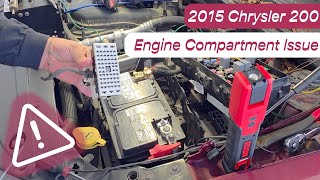
How to confirm: Visually inspect the TCM wiring harness for signs of damage, corrosion, or loose connections. Pay close attention to the main connector at the TCM. 🎬 See how to diagnose and fix lost communication with the TCM. Use a multimeter to check for continuity and proper voltage/ground at the TCM connector according to a factory service manual.
Typical fix: Repair or replace the damaged section of the wiring harness. Clean, repair, or replace the faulty connector. Ensure pins are straight and making good contact.
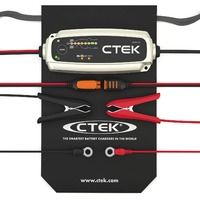
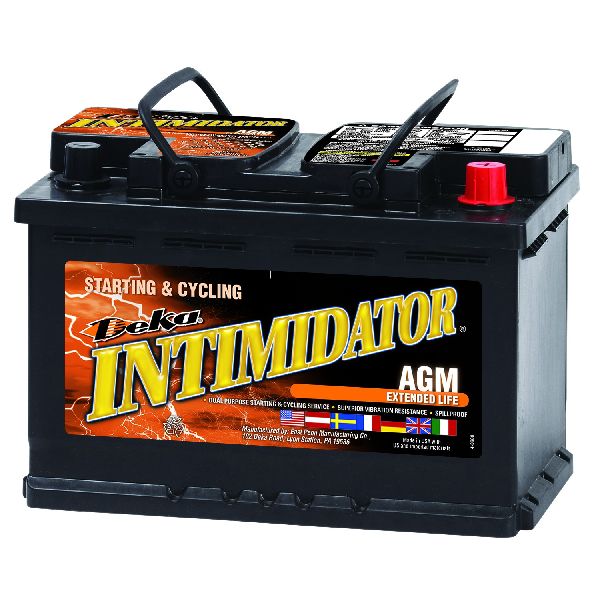
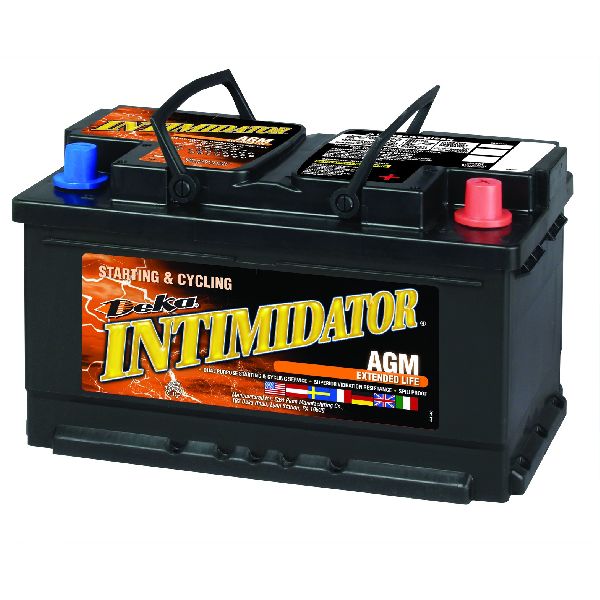
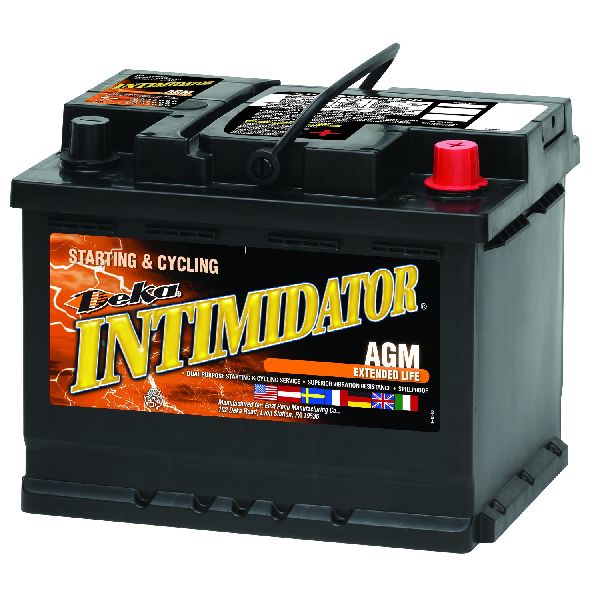
Est. part cost: $20-$300 - Low Battery Voltage or Poor Ground Connection 🟡 Medium Probability → Shop Vehicle Battery Modern vehicles are highly sensitive to voltage. A weak battery or corroded ground can cause unpredictable communication errors between modules. TSBs for flash procedures specifically warn to maintain stable voltage (13.2V-13.5V) to prevent programming failure.
How to confirm: Test the battery with the engine off (should be ~12.6V) and while running (should be ~13.7-14.7V). Inspect the main battery terminals and chassis ground connections for corrosion or looseness.
Typical fix: Clean battery terminals and ground points. If the battery is weak or fails a load test, replace it.
Est. part cost: $150-$300 - Faulty Transmission Control Module (TCM) ⚪ Low Probability → Shop Transmission Assembly While less common than software or wiring faults, the TCM is a complex electronic component that can fail internally over time due to heat and vibration.
How to confirm: This is typically a process of elimination. If all wiring, power, and ground checks are good, and all relevant software updates have been performed, the TCM is the likely culprit. A professional scan tool will be unable to communicate with the module at all.
Typical fix: Replace the Transmission Control Module. The new module will require programming to the vehicle's VIN.
Est. part cost: $600-$900
Rare But Worth Checking
- Blown Fuse: Always check the simple things first. A blown fuse that supplies power to the TCM will take it offline and trigger a U0101 code. Check fuses for the TCM, PCM, and ECU.
- CAN Bus Network Fault: The issue may not be with the TCM itself, but with the overall communication network. A short or open in the CAN bus wiring, or a fault in another module on the network, can prevent modules from talking to each other. This is a complex diagnosis best left to a professional.
Diagnosis Steps
- Scan for all diagnostic trouble codes (DTCs) in all modules. Note any other 'U' codes, as they can point to a broader network problem.
- Check for any open recalls or Technical Service Bulletins (TSBs) related to the transmission or PCM software (e.g., TSB 21-034-14, 21-013-16). A dealer software update may be required.
- Check the battery and charging system. Ensure voltage is stable and above 12.6V with the engine off and 13.7-14.7V while running.
- Inspect all fuses related to the TCM and PCM.
- Visually inspect the wiring harness and connectors going to the Transmission Control Module. The TCM is located on top of the transaxle, accessed by removing the left front wheel. Look for any signs of corrosion, damage, bent pins, or moisture.
- Using a wiring diagram, verify that the TCM has proper power and ground at its connector. Check for battery voltage (approx. 12.6V with key on, engine off) at the power supply pin.
- If power and grounds are good, check the CAN bus wiring for proper resistance. Disconnect the battery and measure resistance between Pin 6 (CAN-H) and Pin 14 (CAN-L) at the OBD-II port. A reading of approximately 60 ohms is expected. A reading of 120 ohms indicates a break in the circuit or a missing terminating resistor.
- If all other steps fail to identify the problem, the TCM itself is likely faulty and requires replacement and programming.
Parts You'll Likely Need
- Transmission Control Module (TCM)
(OEM #68225514AB)— If wiring, power, and software are confirmed to be good, the internal electronics of the TCM have likely failed. This part requires VIN programming upon installation.
Trusted brands: Mopar
OEM price range: $700-$900
Aftermarket price range: $500-$700 - Battery — A weak or failing battery is a common source of various electronic and communication faults in modern vehicles.
Trusted brands: Interstate, DieHard, Duralast
OEM price range: $200-$300
Aftermarket price range: $150-$250
Related Codes That Often Appear With This One
- U0100 — Lost Communication with ECM/PCM. If the main engine computer is also having network issues, it can cause multiple U-codes.
- U0140 — Lost Communication With Body Control Module. This code is mentioned in TSB 18-022-17 REV. A alongside other communication DTCs that can be fixed with a PCM software update.
- U0073 — Control Module Communication Bus Off. This indicates a general fault with the CAN bus network itself, rather than a single module.
Technical Service Bulletins (TSBs) & Recalls
- Safety Recall U59 / NHTSA 18V-332: Reprogram Powertrain Control Module.
- TSB 18-022-17 REV. A: Flash: Powertrain Diagnostic and System Improvements for 2015 models with the 2.4L engine.
- TSB 21-013-16: 948TE 9 Speed Transmission Quick Learn Procedure.
- TSB 21-034-14: Flash: 948TE 9 Speed Shift Enhancements And Quick Learn Enable.
- Bulletin #1801322: A manufacturer service bulletin for related models notes that MIL illumination may be accompanied by DTC U0101 (Lost Communication With TCM) and other communication faults like U0102 and U0103.
Platform-Specific Known Issues
- Safety Recall U59 / NHTSA 18V-332 was issued for 2015-2017 models to reprogram the Powertrain Control Module (PCM) due to a fault that could occur if the CAN-C bus stops communicating while cruise control is active.
- TSB 18-022-17 REV. A provides a PCM software update for 2015 models to address several DTCs, including the communication code U0140, indicating a history of software-related network fixes.
- The ZF 9HP48 transmission had numerous issues at launch, leading to many software updates aimed at improving shift quality and reliability.
Mechanic-Grade Diagnostic Values
- CAN Bus Network Integrity — expected: ~60 Ω. Failure: A reading of ~120 Ω indicates an open in the circuit or a faulty terminating resistor. A reading near 0 Ω indicates a short between CAN High and CAN Low wires.
- TCM Power Supply Voltage (KOEO) — expected: ~12.0 - 12.6 V. Failure: Significantly lower voltage or no voltage indicates a problem with the power supply wire, fuse, or relay.
- TCM Ground Circuit Resistance — expected: < 0.5 Ω. Failure: Resistance higher than 0.5 Ω indicates a poor ground connection, which can cause intermittent module operation.
- Voltage During TCM Flash/Programming — expected: Stable between 13.2 V and 13.5 V. Failure: Voltage dropping below 13.2V or climbing above 13.5V can interrupt the flash process and corrupt the module.
Scan Tool Commands That Help
- wiTECH: PROXI Configuration Alignment — This procedure is required after replacing the TCM or certain other modules. It synchronizes the configuration data of the new module with the rest of the vehicle's network. Failure to perform this can result in a flashing odometer and persistent communication faults.
- wiTECH: Quick Learn — This procedure must be performed after replacing the TCM/valve body or clearing adaptive memory. It allows the TCM to relearn clutch fill times and shift points for the 9-speed transmission. TSB 21-013-16 details this process.
- wiTECH: Reset Adaptive Values — This is performed before a 'Quick Learn' to clear out old, potentially incorrect learned data from the TCM's memory, ensuring the new learn procedure starts from a clean slate.
- wiTECH: VIN Verification — After installing a new TCM and performing a PROXI alignment, this function confirms the module has correctly accepted the vehicle's VIN.
Wiring & Ground Locations
- Transmission Control Module (TCM) — Mounted directly on the top of the transaxle housing. It is accessed by removing the left front wheel and working through the opening rearward of the suspension strut.. This is the module that has lost communication. Its location makes its wiring harness susceptible to damage from road debris, heat, and vibration.
- TCM Main Connector — The large electrical connector on the TCM itself, located on top of the transmission.. This is the primary point of failure for wiring issues. Pins can become corroded, bent, or contaminated with fluid, severing the power, ground, or CAN bus connections to the module.
Real Owner Repair Stories
- 200forums.com user discussion (2015 Chrysler 200) — Vehicle would not start, displayed 'Service Transmission' message, and had U0101 code.
❌ Tried (didn't work) Replacing the battery, Replacing the TCM, Replacing the PCM
✅ What actually fixed it The final resolution was found to be a loose main ground strap between the engine/transmission and the chassis. Tightening this ground connection restored communication and resolved all symptoms. - NHTSA ODI #10703530 — An owner reported that their vehicle lost communication with the TCM, triggering diagnostic code U0101-00. Despite dealer repair orders citing a STAR Case fix, the owner noted the vehicle was returned to the dealer multiple times.
OEM Part Supersession History
5150742AC→68225514AA, then 68225514AB— Revisions likely contain updated hardware or internal logic to improve reliability and address known failure points.
Heads up: While the parts are physically interchangeable, using an older part number may re-introduce issues that were fixed in later revisions. Always use the latest superseded part number.
Model Year Variations Within This Range
- 2015: Early 2015 models were subject to more TSBs and software updates for the 9-speed transmission compared to 2016-2017 models. For example, TSB 21-034-14 was specific to early 2015 models to enable the 'Quick Learn' function that was standard later.
Diagnostic Flowchart
Other Known Issues on This Vehicle
Issues unrelated to this code that are worth knowing about as an owner of this generation:
- Excessive Oil Consumption (2.4L Tigershark) 🔴 High — Widespread issue, often noticed between 30,000 and 80,000 miles. Can consume over a quart of oil per 1,000 miles. (Ref: Subject of a class-action lawsuit and TSB 09-006-20 REV. B for oil consumption testing.)
- Electronic Parking Brake (EPB) Malfunction 🟠 Medium — Owners report the EPB failing to engage or disengage, sometimes activating while driving. (Ref: TSB 08-029-16 addresses reprogramming the EPB module for some 2014-2016 models.)
- Harsh/Erratic Shifting (ZF 9-Speed) 🟠 Medium — Very common complaint, especially in 2015 models, leading to lurching, delayed shifts, or sudden shifts to neutral. (Ref: Multiple software updates (TSBs) and recall S55 / NHTSA 16V-529 were issued to improve shift quality.)
- Engine Stalling While Driving 🔴 High — Numerous owner complaints of the engine stalling unexpectedly, sometimes related to low oil from consumption issues or transmission faults. (Ref: Often linked to other issues like transmission communication loss or oil consumption.)
Used vs. New Parts: Buying Guide for This Vehicle
When a used part is the smart pick: A used TCM is generally not a smart choice for this vehicle. The module is VIN-locked to the original car. While some specialized services may be able to 'virginize' a used module, it often costs nearly as much as a new one and may not be reliable. It is almost always better to buy a new or professionally remanufactured TCM.
Donor-vehicle mileage cap: roughly under 50000 miles for the part to have meaningful remaining life.
What to inspect on the donor part:
- Ensure the part number is the latest superseded version (e.g., 68225514AB).
- Inspect the connector pins for any signs of corrosion, damage, or fluid contamination.
- Ask for the donor vehicle's VIN to check its history for transmission-related issues.
OEM-only on this vehicle (don't cheap out):
- Transmission Control Module (TCM)
Brands owners have reported issues with on this vehicle:
- Unbranded or no-name used modules from online marketplaces without a clear return policy and programming guarantee.
Real Owner Stories
Aggregated from forums and TSBs cited above. Mileages and costs reflect what owners reported in those sources.
2015 Chrysler 200 2.4L
Symptoms: The vehicle experienced communication issues and triggered code U0140.
What fixed it: A PCM software update was performed as per TSB 18-022-17 REV. A (Flash: Powertrain Diagnostic and System Improvements).
Source hint: TSB 18-022-17 REV. A
2015-2017 Chrysler 200
Symptoms: The electronic parking brake would not disengage, accompanied by a 'Service Park Brake' message on the dash.
What fixed it: This is identified as a network communication issue often resolved by addressing the CAN bus or module programming.
Source hint: Reddit r/chrysler200 thread titled 'Parking Brake Stuck'
2015 Chrysler 200
Symptoms: The owner faced difficulty in diagnosis even after replacing the PCM/TCM; the vehicle had communication faults on the CAN bus.
What fixed it: Diagnostic steps included checking CAN bus resistance at the OBD-II port (verifying 60 ohms) and ensuring proper module programming after replacement.
Source hint: Chrysler Sebring / 200 Convertible Club (chrysler-200.com)
Related OBD-II Codes
Frequently Asked Questions
My 2015 Chrysler 200 is stuck in gear and showing a 'Service Transmission' message; is there a software fix?
Is there a recall for the PCM on my 2015-2017 Chrysler 200 that could cause communication codes?
My dashboard gear selector (PRNDL) is blank and the car won't start. Could this be the TCM?
Where is the Transmission Control Module located on the 2015-2017 Chrysler 200?
I have a 'Service Park Brake' message along with transmission issues; are they related?
Does the 2.4L Tigershark engine have any known issues that might appear alongside these codes?
Helpful Videos

We Have This Part in Stock


The information in this article is provided for general reference and educational purposes only. Vehicle specifications, procedures, and part compatibility can vary by production date, trim level, and region. Always consult your vehicle's factory service manual and verify part numbers before purchasing or performing repairs. Safety-critical components such as airbags, seat belts, and braking systems should be installed by a qualified professional.
- Chrysler 200:
- 🧭 Diagnostic Flowchart
- 🎬 Helpful Videos
- 🛍️ Shop This Part
- What's Unique About the 2015-2017 Chrysler 200
- Symptoms You May Notice
- Most Likely Causes
- Rare But Worth Checking
- Diagnosis Steps
- Parts You'll Likely Need
- Related Codes That Often Appear With This One
- Technical Service Bulletins (TSBs) & Recalls
- Platform-Specific Known Issues
- Mechanic-Grade Diagnostic Values
- Scan Tool Commands That Help
- Wiring & Ground Locations
- Real Owner Repair Stories
- OEM Part Supersession History
- Model Year Variations Within This Range
- Other Known Issues on This Vehicle
- Used vs. New Parts: Buying Guide for This Vehicle
- Real Owner Stories
- 2015 Chrysler 200 2.4L
- 2015-2017 Chrysler 200
- 2015 Chrysler 200
- Related OBD-II Codes
- Frequently Asked Questions
- 🎟️ Get 5% Off