

U0101 on 2009-2020 Dodge Journey: Lost Communication with TCM Causes and Fixes
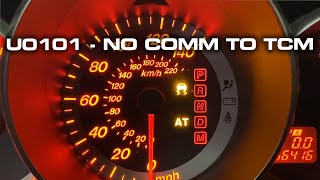
Code U0101 on a Dodge Journey means the Transmission Control Module (TCM) has stopped communicating with other vehicle computers. This often results in the transmission entering 'limp mode.' The most common causes are wiring issues, poor connections at the TCM, a faulty Totally Integrated Power Module (TIPM), or a failed TCM itself.
- U0101 means the Transmission Control Module (TCM) is offline.
- Before replacing the expensive TCM, thoroughly inspect all related wiring, connectors, fuses, and the battery.
- The most common fix is repairing a damaged wire or cleaning a corroded connector at the transmission.
- The vehicle will likely be stuck in 'limp mode' and is not safe for normal driving.
- Diagnosing this code can be complex and may require professional-level scan tools and electrical testing skills.
What's Unique About the 2009-2020 Dodge Journey
For the Dodge Journey, the U0101 code is frequently traced back to physical wiring problems or issues with the Totally Integrated Power Module (TIPM). The wiring harness leading to the transmission is susceptible to damage from road debris, heat, and corrosion. A YouTube video specifically on a 2010 Journey with a U0101 code showed the problem was rodent damage to the wires at the module connector. Furthermore, the TIPM, which acts as the central fuse and relay box, is a notorious failure point on this platform, and a faulty TIPM can cut power or communication to the TCM, directly causing a U0101 code. Before condemning the expensive Transmission Control Module (TCM), a thorough inspection of the battery, fuses, TIPM, and especially the wiring harness and its connectors is the critical first step for Journey owners.
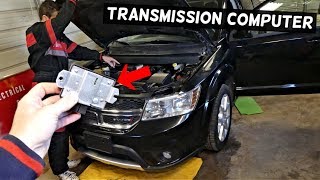
Generation note: The 2009-2020 Dodge Journey covers a single generation (JC), but it received a major facelift for the 2011 model year which included updated powertrains (like the 3.6L Pentastar V6) and electronics. While the meaning of U0101 is the same, wiring harness routing and TCM location may differ slightly 🎬 Watch: How to locate and replace the TCM between 2009-2010 and 2011-2020 models. A customer satisfaction campaign (V51) was issued for 2011-2015 models to reprogram the PCM for an issue where Permanent Fault Codes could not be erased after a repair; this is relevant if the code persists after a fix. Early models (2009-2010) used a 4-speed 40TES or 6-speed 62TE transmission, while 2011 and later models primarily used the 6-speed 62TE. The TCM is integrated with the PCM on some configurations, which can alter the diagnostic path.
Symptoms You May Notice
- Check Engine Light is on
- Transmission warning light is illuminated
- Vehicle is stuck in one gear (limp mode)
- Harsh or erratic shifting
- Vehicle may not start because the PCM cannot confirm the transmission is in Park or Neutral
- Gear position indicator on the dashboard may be blank or incorrect
- ESP/BAS warning lights may also illuminate
- Replacing the TCM without checking wiring or the TIPM first. Many owners and shops replace the expensive module only to find the U0101 code returns because the actual problem was a simple broken wire 🎬 See how to avoid common diagnostic mistakes with U0101, bad connection, or faulty TIPM.
Most Likely Causes
- Wiring Harness or Connector Damage 🔴 High Probability The wiring harness to the transmission is exposed under the vehicle, making it vulnerable to moisture, road salt, and physical damage over the Journey's long service life. A video of a 2010 Journey showed rodent damage to the TCM wires was the specific cause. Connectors can also become contaminated with fluid or corrode internally.
How to confirm: Visually inspect the entire wiring harness leading to the transmission for chafed, broken, or corroded wires. Disconnect the main TCM connector and check for corroded, bent, or pushed-out pins. Wiggling the harness near the TIPM or TCM while the key is on may cause audible clicking or changes in behavior, indicating a bad connection.
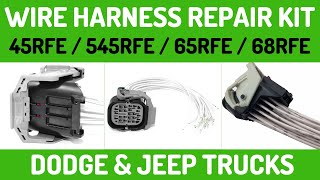
Typical fix: Repair the damaged section of the wiring harness. If the connector is damaged, it may need to be replaced with a pigtail kit. 🎬 Watch: How to use a transmission wire harness repair kit
Est. part cost: $20-$100 - Faulty Totally Integrated Power Module (TIPM) 🔴 High Probability → Shop Fuse Box The TIPM is a well-documented, high-failure item on many Chrysler products from this era, including the Journey. Internal relay or circuit board failures can cut power to the TCM, causing it to drop off the network and trigger U0101.
How to confirm: Check for power on the TCM-related fuses in the TIPM. A technician can perform a 'wiggle test' on the TIPM itself to see if it induces the fault. Swapping the auto shutdown relay can be a quick test. Diagnosis often involves confirming the TCM has no power and tracing it back to the TIPM output.
Typical fix: Replace the TIPM. In some cases, an external relay bypass can be installed for the fuel pump circuit, but for a TCM power issue, TIPM replacement is more common.
Est. part cost: $300-$800 - Low Battery Voltage or Poor Grounds 🟡 Medium Probability → Shop Vehicle Battery Control modules require a stable voltage (above ~12.4V) to communicate properly. An aging battery or corroded battery terminals/ground straps can cause intermittent communication drops, triggering a U0101 code, especially during startup.
How to confirm: Test the battery voltage with the engine off (should be ~12.6V) and while running (should be ~13.7-14.7V). Inspect and clean the battery terminals and main chassis ground connections, which are common corrosion points.
Typical fix: Replace the battery if it fails a load test. Clean or replace corroded battery terminals and ground straps.
Est. part cost: $10-$250 - Failed Transmission Control Module (TCM) 🟡 Medium Probability → Shop Transmission Assembly Internal electronic failure of the TCM can occur due to age, heat, or vibration. While less common than wiring or TIPM issues, it is a frequent point of failure after all other possibilities are exhausted.
How to confirm: This is typically a process of elimination. If the battery, fuses, TIPM, and all wiring (power, ground, and CAN bus) to the TCM test good, the module itself is the likely culprit. A high-end scan tool will show the module as completely offline and unable to communicate.
Typical fix: Replace the Transmission Control Module. The new module will require programming to the vehicle's VIN.
Est. part cost: $400-$900 - Blown Fuse for the TCM ⚪ Low Probability The Totally Integrated Power Module (TIPM), which houses the fuses, is a known area for electrical issues on many Chrysler/Dodge products of this era.
How to confirm: Consult the owner's manual or the diagram on the TIPM cover to locate the fuse(s) for the TCM. For 2011+ models, these are typically a 25A fuse and a 10A fuse in the underhood fuse box. Pull the fuse and visually inspect it. Test for power at the fuse socket.
Typical fix: Replace the blown fuse. If the fuse blows again immediately, it indicates a short circuit in the wiring that must be found and repaired.
Est. part cost: $1-$5
Rare But Worth Checking
- CAN Bus Network Fault: A short or open in the CAN bus wiring itself can cause this code. This is often accompanied by other 'U' codes for different modules, indicating a network-wide problem rather than just a TCM issue. A technician would test for 60 ohms of resistance across the CAN high and CAN low pins at the OBD-II port with the battery disconnected.
- Faulty Powertrain Control Module (PCM): → Shop Engine Control Module (ECM) In rare cases, the PCM itself can be the source of the communication failure, even if the code points to the TCM.
Technical Service Bulletins (TSBs) & Recalls
- TSB Bulletin #08-068-16: This bulletin warns technicians about incorrect module replacement when encountering U0101-00 (Lost Communication With TCM) alongside U0100-00 and U0402-00, emphasizing the need for proper network diagnosis.
- TSB Bulletin #1801122: Notes that U0101 may be found during investigations of MIL illumination, often occurring in conjunction with U0102 (Lost Communication with Transfer Case) or U0103.
Diagnosis Steps
- Check the battery voltage and inspect the battery terminals and ground connections for tightness and corrosion.
- Scan for all codes in all modules. Note if other 'U' (communication) codes are present, which would suggest a wider network issue.
- Check the fuses related to the Transmission Control Module (TCM) in the Totally Integrated Power Module (TIPM).
- Visually inspect the wiring harness going to the transmission. Look for any signs of chafing, melting, or corrosion. Pay close attention to where the harness may rub against the frame or engine components.
- Disconnect the main connector at the TCM. Inspect for corrosion, moisture, or bent/damaged pins. Clean with electrical contact cleaner if necessary.
- Using a digital multimeter and a wiring diagram, verify that the TCM is receiving proper power and has a good ground connection at the connector. Voltage should be greater than 10V.
- If power and ground are good, test the CAN bus wires for continuity and resistance between the TCM connector and the PCM or another accessible point on the network. Resistance between CAN High and CAN Low should be ~60 Ohms with the battery disconnected.
- If all wiring, power, and grounds are confirmed to be good, the Transmission Control Module (TCM) is the most likely failed component.
Parts You'll Likely Need
- Transmission Control Module (TCM)
(OEM #5140429AA)— If all wiring, TIPM, and power supply checks pass, the module itself has likely failed internally.
Trusted brands: Mopar (OEM)
OEM price range: $550-$900
Aftermarket price range: $400-$700 - Totally Integrated Power Module (TIPM) — A common failure point that can cause a loss of power to the TCM. If the TCM fuse has power but the module does not, the TIPM's internal circuits may be faulty.
Trusted brands: Mopar (OEM), Dorman (Remanufactured)
OEM price range: $600-$800
Aftermarket price range: $300-$500
Related Codes That Often Appear With This One
- P0700 — This is a generic code the PCM sets to turn on the check engine light when the TCM has detected a fault. It's an informational code that says 'go check the TCM for codes'.
- P0882 — This code means 'TCM Power Input Signal Low'. It often appears with U0101 and strongly points to a power supply issue, like a bad fuse, relay, faulty TIPM, or wiring problem, preventing the TCM from powering on.
- U0001 — This code for 'High Speed CAN Communication Bus' indicates a general network problem. If you see this with U0101, the issue is likely in the main CAN bus wiring rather than being isolated to the TCM circuit.
Platform-Specific Known Issues
- A user on DodgeForum.com reported their 2007 Charger (similar platform) would only throw the U0101 code when the ambient temperature was cold. After the car warmed up, the code could be cleared and would not return, pointing to a temperature-sensitive electrical connection or a failing component on the TCM circuit board.
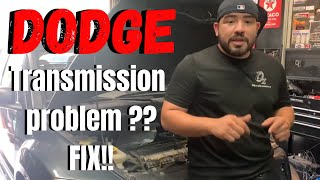
- The Totally Integrated Power Module (TIPM) is a major source of electrical gremlins on the Journey and related platforms. A diagnostic video by 'Oz Mechanics' on a Dodge with U0101 traced the fault directly to a bad connection within the TIPM by simply wiggling the module and hearing relays click, demonstrating how it can intermittently cut power to the TCM.
Mechanic-Grade Diagnostic Values
- CAN Bus Resistance — expected: ~60 Ω. Failure: 0 Ω indicates a short between CAN High and Low. 120 Ω indicates an open circuit or a fault in one of the two terminating resistors.
- TCM Power Supply Voltage — expected: > 10.0 Volts. Failure: Voltage below 10.0V indicates a problem with the power supply from the TIPM, a blown fuse, or a wiring issue.
- TCM Ground Circuit Resistance — expected: < 5.0 Ω. Failure: High resistance indicates a poor ground connection, which can cause intermittent module operation.
Scan Tool Commands That Help
- wiTECH (Chrysler/Dodge Dealer Tool): Quick Learn — This procedure must be performed after replacing the TCM, valve body, or the entire transmission to reset and learn clutch adaptive values for proper shift quality.
- wiTECH (Chrysler/Dodge Dealer Tool): Reset Adaptive Values — Used to clear the learned transmission shift adaptations. This is often done before a Quick Learn procedure to start fresh.
- wiTECH (Chrysler/Dodge Dealer Tool): ECU Data Report — After programming a new or used module, this report is used to verify that the correct VIN and calibration file have been successfully written to the module.
Wiring & Ground Locations
- G300 — Located in the left kick panel area, inside the passenger cabin.. This is a major interior ground point for multiple modules. Corrosion or a loose connection here can cause a host of communication issues, including U0101.
- G903 — On 3.6L models, this ground is located on top of the transmission. On 2.4L models, it's at the left rear of the engine.. This is a primary ground connection for the engine and transmission assembly. A poor connection here can directly impact the TCM's ability to function and communicate.
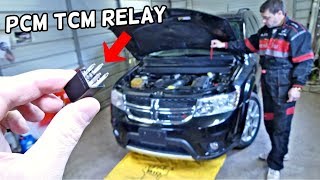
- TCM/PCM Relay — In the underhood fuse box (TIPM). For 2011+ models, it is a single shared relay for both modules.. This relay provides the main power to the control modules. A failure of this relay will cut all power, causing an immediate U0101 code.
- Connector C101 — A large inline connector located between the PCM and the TIPM in the engine bay.. This connector carries the transmission control output signal. A poor pin fit or corrosion within this specific connector has been documented to cause voltage drops and trigger transmission-related codes.
Real Owner Repair Stories
- Gears Magazine Case Study (2010 Dodge Journey AWD 3.5L V6 with 62TE transmission, 83,000 miles) — No upshifts, stuck in 3rd gear (failsafe mode), intermittent at first but became constant. Codes P0765, P0750, P0562, P0755.
❌ Tried (didn't work) Initial visual inspection and fluid check., Battery and charging system tests were performed and passed., Monitoring power at the TIPM showed no dropouts.
✅ What actually fixed it The technician identified a voltage drop at connector C101, located between the PCM and TIPM. The pin fit between the male and female terminals was loose. A temporary bypass wire was installed around the loose pin connection, which resolved all issues. The final fix was to permanently repair that specific wire connection. - YouTube channel "Oz Mechanics" (2008 Dodge Caliber (shares similar TIPM architecture)) — Transmission codes U0101 and U0402, fault occurs when wiggling the fuse box (TIPM).
❌ Tried (didn't work) Inspecting wiring around the TIPM.
✅ What actually fixed it By probing the transmission control output wire and the fused power wire at the TIPM, it was discovered that simply pushing on the back of the TIPM housing caused the control output signal to drop out while the main power remained steady. This confirmed an internal failure within the TIPM circuit board. The final fix was replacing the entire TIPM assembly. - DodgeJourneyForum.com user post (2010 Dodge Journey) — No start, dead battery, various electrical gremlins.
❌ Tried (didn't work) Adding extra ground wires to the engine and body., Cleaning all visible connections.
✅ What actually fixed it The root cause was corrosion on the pins of the large electrical connectors that plug into the bottom of the TIPM. A previous person had attempted a poor repair on one pin. The final fix was to replace the corroded connector with a new pigtail, clean all other pins, apply dielectric grease to all connections, and replace the faulty TIPM itself. - NHTSA ODI #11663394 — An owner reported that when the traction control light comes on, the vehicle feels like it pops into neutral, jarring the vehicle; investigation revealed code U0101 in the PCM, ABS, ESM, BCM, IPC, and RFH modules.
- NHTSA ODI #11153349 — A report describes a vehicle throwing multiple communication errors including U0100, U0101, and U1120, referencing communication issues between the TCM and PCM.
- NHTSA ODI #11362939 — An owner experienced multiple warning lights including ABS and Traction Control, with a scan revealing seven different codes including U0101, U1110, and U1120.
OEM Part Supersession History
68259132AA→68259132AB— Standard part revision for bug fixes or component updates.
Heads up: Applies to the Powertrain Control Module (PCM) for 2016-2019 models with the 2.4L engine and 62TE transmission.
Model Year Variations Within This Range
- 2009-2010: These early models could be equipped with either a 4-speed 40TES/41TES automatic transmission or the 6-speed 62TE. The 4-speed uses a different TCM and diagnostic strategy than the later, more common 6-speed.
- 2011-2020: These models predominantly use the 6-speed 62TE transmission. The TCM and PCM share a single power relay in the TIPM, and their fuses are located in specific slots (J13 - 25A, M2 - 10A, M38 - 10A). The TCM itself is located inside the cabin, behind the dash to the left of the steering column.
Diagnostic Flowchart
Other Known Issues on This Vehicle
Issues unrelated to this code that are worth knowing about as an owner of this generation:
- Totally Integrated Power Module (TIPM) Failure 🔴 High → Shop Fuse Box — Widespread across many 2007-2014 Chrysler/Dodge/Jeep models. Can occur at any mileage. (Ref: Multiple recalls and lawsuits, including for stalling due to fuel pump relay failure within the TIPM.)
- 3.6L Pentastar Engine Oil Cooler Housing Leak 🟠 Medium — Very common, typically after 60,000 miles. The original plastic housing cracks from heat cycles.
- 2.4L Engine Throttle Body Failure 🟠 Medium — Common failure item, often occurring around 60,000-100,000 miles, causing stalling or reduced power.
- Premature Brake Wear 🟡 Low — Frequently reported by owners, requiring brake pad and rotor replacement more often than expected. (Ref: Recall #18V523000 for rear brake caliper pistons on some 2018 models.)
- Heater Core Clogging 🟠 Medium — Common issue leading to poor or no heat on the driver or passenger side.
- Power Steering Return Hose Failure 🔴 High — Hose may rupture in cold weather at startup, causing a sudden loss of power steering. (Ref: Recall #16V273000 for 2009-2016 models.)
Used vs. New Parts: Buying Guide for This Vehicle
When a used part is the smart pick: A used wiring harness or connector pigtail from a junkyard is a perfectly acceptable and cost-effective repair for physical wire damage, provided it is in good condition with no corrosion.
Donor-vehicle mileage cap: roughly under 100000 miles for the part to have meaningful remaining life.
What to inspect on the donor part:
- For a TIPM, check the underside connectors for any signs of white or green corrosion, or melted plastic.
- Inspect wiring harnesses for brittleness, cuts, or evidence of rodent damage.
- Ensure the donor vehicle was not in a flood or front-end collision that could have damaged the TIPM.
OEM-only on this vehicle (don't cheap out):
- Transmission Control Module (TCM): While used TCMs are available, they are often problematic. They must be from an identical vehicle (year, engine, transmission) and will still require VIN programming with a dealer-level scan tool to function. The risk of a used module being faulty or incompatible is high.
Aftermarket brands forum-validated for this vehicle:
- Dorman (for TIPM): Dorman offers remanufactured TIPMs that are a common alternative to expensive OEM units. While quality can be variable, they are widely available and often come with a warranty.
Brands owners have reported issues with on this vehicle:
- No-name, unbranded electronic modules from online marketplaces should be avoided due to high failure rates and lack of support.
Real Owner Stories
Aggregated from forums and TSBs cited above. Mileages and costs reflect what owners reported in those sources.
2007 Dodge Charger (Platform Mate)
Symptoms: The vehicle would only throw the U0101 code when the ambient temperature was cold. After the car warmed up, the code could be cleared and would not return.
What fixed it: Identified as a temperature-sensitive electrical connection or a failing component on the TCM circuit board.
Source hint: DodgeForum.com: 'U0101 - Lost Communication With TCM'
2010 Dodge Journey
Symptoms: Total electrical failure and issues originating from the TIPM.
What fixed it: Replacement of the defective Totally Integrated Power Module (TIPM).
Source hint: CarComplaints.com: '2010 Dodge Journey Defective TIPM'
2010 Dodge Journey
Symptoms: U0101 code triggered by damaged wiring.
What fixed it: Repairing TCM wires that had been damaged by rodents.
Source hint: A video of a 2010 Journey showed rodent damage to the TCM wires was the specific cause.
2011-2020 Dodge Journey (General)
Symptoms: U0101 code with intermittent power loss to the TCM; relays could be heard clicking when the module was moved.
What fixed it: Traced the fault to a bad connection within the TIPM by performing a wiggle test.
Source hint: Diagnostic video by 'Oz Mechanics' on a Dodge with U0101
Related OBD-II Codes
Frequently Asked Questions
Why does my Dodge Journey only show the U0101 code when it is cold outside?
Can a bad TIPM cause my Dodge Journey to get stuck in limp mode?
I heard wiggling the wires can help diagnose this on a Journey; is that true?
Where are the TCM fuses located on a 2011 or newer Dodge Journey?
Could a simple battery issue trigger the U0101 code on my Journey?
Is the U0101 code common on other vehicles similar to the Dodge Journey?
Helpful Videos
We Have This Part in Stock


The information in this article is provided for general reference and educational purposes only. Vehicle specifications, procedures, and part compatibility can vary by production date, trim level, and region. Always consult your vehicle's factory service manual and verify part numbers before purchasing or performing repairs. Safety-critical components such as airbags, seat belts, and braking systems should be installed by a qualified professional.
- Dodge Journey:
- 🧭 Diagnostic Flowchart
- 🎬 Helpful Videos
- 🛍️ Shop This Part
- What's Unique About the 2009-2020 Dodge Journey
- Symptoms You May Notice
- Most Likely Causes
- Rare But Worth Checking
- Technical Service Bulletins (TSBs) & Recalls
- Diagnosis Steps
- Parts You'll Likely Need
- Related Codes That Often Appear With This One
- Platform-Specific Known Issues
- Mechanic-Grade Diagnostic Values
- Scan Tool Commands That Help
- Wiring & Ground Locations
- Real Owner Repair Stories
- OEM Part Supersession History
- Model Year Variations Within This Range
- Other Known Issues on This Vehicle
- Used vs. New Parts: Buying Guide for This Vehicle
- Real Owner Stories
- 2007 Dodge Charger (Platform Mate)
- 2010 Dodge Journey
- 2010 Dodge Journey
- 2011-2020 Dodge Journey (General)
- Related OBD-II Codes
- Frequently Asked Questions
- 🎟️ Get 5% Off