

U0101 on 2012-2016 Honda CR-V: Lost Communication With TCM Causes and Fixes
Code U0101 on a 2012-2016 Honda CR-V means the Transmission Control Module (TCM) is offline. The most common causes are a weak battery or a corroded main ground strap on the transmission case. Always check these simple electrical issues before suspecting a failed TCM. Cleaning or replacing the ground strap is a very common and effective fix discussed widely in owner forums.
- U0101 is an electrical communication code, not a mechanical transmission failure.
- Before any expensive repairs, fully test the battery and charging system. Low voltage is a very common cause.
- The most likely vehicle-specific cause is a corroded ground strap on the transmission case. Inspect and clean this connection before replacing any parts.
- Check all fuses related to the transmission and engine computers.
- Do not replace the TCM unless all other electrical possibilities have been professionally ruled out, as it is expensive and requires programming.
What's Unique About the 2012-2016 Honda CR-V
On this generation of Honda CR-V, electrical issues are the most frequent culprits for communication codes like U0101. While other Honda models of the era had known issues with TCM failure, the 2012-2016 CR-V is particularly susceptible to problems stemming from a weak battery or a corroded main ground strap (G101) located on the transmission housing. Owners in forums frequently report that resolving these simple electrical faults fixes the code without needing to replace the expensive TCM.
Symptoms You May Notice
- Check Engine Light is on
- Transmission warning light is on
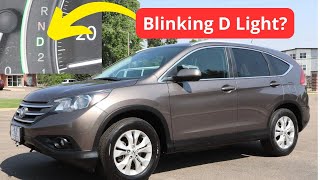
- Flashing 'D' (Drive) indicator light
- Vehicle is stuck in one gear (limp mode)
- Harsh or erratic shifting
- Inability to shift out of Park
- Gear indicator on the dashboard may be blank or incorrect
- Vehicle may not start or crank
- Replacing the Transmission Control Module (TCM) before thoroughly checking the battery, fuses, and especially the transmission ground strap.
- Assuming an internal transmission failure when it is an electronic communication problem.
- Replacing the battery without load testing it first, or without cleaning the main ground connections at the same time.
Most Likely Causes
- Weak or Failing Battery 🔴 High Probability → Shop Vehicle Battery Modern control modules are highly sensitive to voltage. A battery that drops below 12 volts during cranking can cause modules to lose communication and trigger U-codes. Short trips and the factory 51R battery's relatively small capacity can exacerbate this issue.
How to confirm: Test the battery with a multimeter or a load tester. A healthy, fully charged battery should read approximately 12.6 volts at rest. During cranking, the voltage should not drop below 10V. Many auto parts stores will test your battery for free.
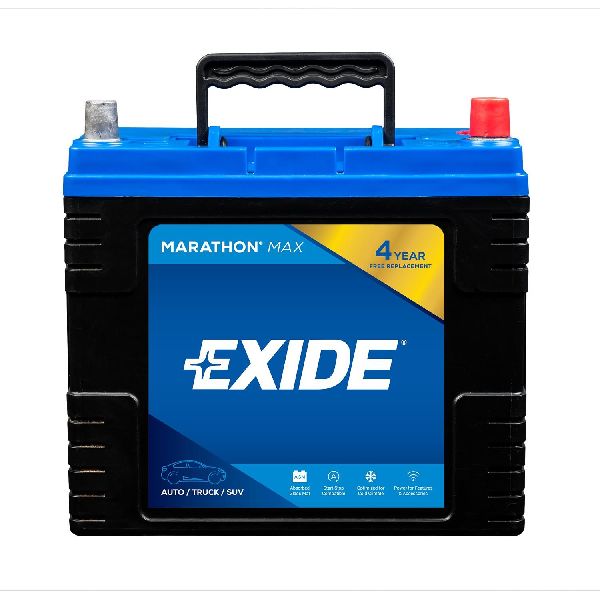
Typical fix: Replace the battery if it fails a load test. The correct battery group size for the 2012-2016 CR-V is 51R.
Est. part cost: $150-$250 - Corroded Transmission Ground Strap (G101) 🔴 High Probability → Shop Engine Ground Strap The main ground strap for the engine and transmission is bolted to the transmission case, where it is exposed to moisture and road salt, leading to heavy corrosion. A poor ground is a well-documented cause of various electrical and communication issues, including U0101, on this platform.
How to confirm: Visually inspect the ground wire that runs from the negative battery cable harness to a bolt on the transmission case. Access requires removing the air filter box. Look for green or white corrosion, rust, or looseness. Perform a voltage drop test by placing one multimeter lead on the battery negative post and the other on the transmission case; with the engine running, it should be less than 0.2 volts.
Typical fix: Disconnect the ground strap, clean the contact points on the wire terminal and the transmission case with a wire brush until they are shiny, apply dielectric grease, and re-secure the bolt tightly. If the cable is severely corroded, it must be replaced. The OEM part number is 32601-TLA-A00 (Cable Assy., Transmission Ground).
Est. part cost: $15-$50 - Blown Fuse 🟡 Medium Probability An electrical short or component failure can cause the fuse that powers the TCM to blow, cutting off its power completely.
How to confirm: Check the vehicle's fuse boxes (both under the hood and inside the cabin) for any fuses related to the TCM, PCM, or transmission. Consult the owner's manual for the specific fuse layout.
Typical fix: Replace the blown fuse. If the new fuse blows immediately, it indicates a short circuit in the wiring that needs to be diagnosed further.
Est. part cost: $1-$20 - Damaged Wiring or Connectors ⚪ Low Probability Wiring harnesses can be damaged by engine heat, vibration, or rodents. The main connector at the TCM can also become corroded or have pins back out.
How to confirm: Visually inspect the wiring harness leading to the TCM for any signs of chafing, melting, or breaks. Disconnect the TCM connector and check for corrosion, moisture, or bent/damaged pins.
Typical fix: Repair the damaged section of wiring. Clean any corrosion from connectors using an electrical contact cleaner. Replace the connector if it is damaged.
Est. part cost: $10-$100 - Faulty Transmission Control Module (TCM) ⚪ Low Probability → Shop Transmission Assembly While less common than electrical issues for the CR-V, the TCM can fail internally. This was a more prominent issue on some other Honda models from the same era, like the 2016-2017 Civic, which had a TSB for TCM replacement for this code.
How to confirm: This is typically diagnosed by exclusion. If all power, ground, and CAN bus wiring circuits test good with a multimeter, and the module still won't communicate with a professional scan tool, the TCM itself is likely faulty.
Typical fix: Replace the Transmission Control Module. The new module will need to be programmed to the vehicle by a Honda dealer or a qualified independent shop with the proper J2534 software.
Est. part cost: $400-$800
Rare But Worth Checking
- PCM Software Glitch: Honda released TSBs 15-086 and 17-040 for the 2012-2014 CR-V to address a transmission judder via a software update and fluid change. While not a direct fix for U0101, updating the powertrain software can sometimes resolve intermittent communication glitches between modules. This should be considered if other diagnostic steps don't find a fault.
Diagnosis Steps
- Read all fault codes from all modules using a comprehensive OBD-II scanner. Note if any other 'U' codes are present, which would suggest a network-wide problem.
- Check the battery voltage. It should be ~12.6V with the engine off and 13.7-14.7V when running. Load test the battery to ensure it's healthy, as surface charge can be misleading.
- Inspect the battery terminals and main chassis ground connections for corrosion and tightness.
- Locate and inspect all fuses related to the Powertrain Control Module (PCM) and Transmission Control Module (TCM) in both the under-hood and in-cabin fuse panels.
- Locate the main transmission ground strap (G101). Remove the air intake box for access. The strap connects the wiring harness to a bolt on the transmission case.
- Disconnect the ground strap. Thoroughly clean the wire's terminal and the mounting point on the transmission with a wire brush until shiny. Reattach securely.
- Perform a voltage drop test on the ground circuit. With the engine running, measure the voltage between the negative battery post and the transmission case. A reading above 0.2V indicates a poor ground.
- If the problem persists, inspect the wiring harness and electrical connector at the TCM for any visible damage, corrosion, or loose pins.
- Using a multimeter and a wiring diagram, verify that the TCM is receiving power and has a good ground at its connector.
- If all wiring, power, and grounds are good, the issue may be a faulty TCM or a complex CAN bus network fault that requires professional diagnosis.
Parts You'll Likely Need
- Battery — Low system voltage from a weak or failing battery is a leading cause of module communication errors.
Trusted brands: Interstate, DieHard, Duralast
OEM price range: $200-$300
Aftermarket price range: $150-$250 - Engine Ground Strap
(OEM #32601-TLA-A00)— The ground strap on the transmission is a common point of corrosion, which interrupts the TCM's ground path and causes communication failure.
Trusted brands: Honda (OEM)
OEM price range: $15-$25
Aftermarket price range: $10-$20
Related Codes That Often Appear With This One
- U0100 — Lost Communication with ECM/PCM 🎬 See this walkthrough on how to fix U0101 communication codes. A network-wide issue like a bad ground or low voltage will often cause communication to be lost with multiple modules simultaneously.
- U0122 — Lost Communication With Vehicle Dynamics Control (VSA) Module. The VSA module is on the same CAN bus network and will also report a fault if the network is down.
- P0562 — System Voltage Low. This code often appears with U-codes because low battery voltage is a primary cause of module communication failures.
Technical Service Bulletins (TSBs) & Recalls
- 15-086: Vibration While Driving Under Light Acceleration - Mentions a software update for the A/T on 2012-14 CR-V models.
- 17-040: Vibration While Driving Under Light Acceleration After Software Update - Follow-up to TSB 15-086, may involve torque converter replacement.
- Bulletin #A17060C: Notes that an internal malfunction with the transmission control module (TCM) can cause a vehicle to not shift out of park, not crank, and set DTC U0101.
- Bulletin #ATS161101: Describes issues where the vehicle won’t shift out of park and multiple indicators are lit on the instrument panel with DTC U0101 (Gauge Control Module Lost Communication with A/T) set.
Platform-Specific Known Issues
- A corroded main ground strap on the transmission housing (G101) is a frequently reported issue that can cause this and other communication codes.
Mechanic-Grade Diagnostic Values
- CAN Bus Network Resistance — expected: Approximately 60 Ohms. Failure: A reading of 120 Ohms indicates an open in the circuit or a missing terminating resistor. A reading near 0 Ohms indicates a short between CAN High and CAN Low wires.
- Ground Strap Voltage Drop — expected: Less than 0.2 Volts (200mV). Failure: A reading higher than 0.2V indicates excessive resistance in the ground path, which can cause modules to malfunction.
- TCM Power Supply at Connector — expected: 12.0 - 14.5 Volts. Failure: Low or no voltage indicates a problem with the fuse, relay, or wiring supplying power to the TCM.
- CAN Bus Voltage (Key On, Engine Off) — expected: CAN High: ~2.5-3.5V, CAN Low: ~1.5-2.5V. Failure: Voltages that are stuck high, low, or at 0V can indicate a short to power or ground on the bus.
Scan Tool Commands That Help
- Honda Diagnostic System (HDS): Clear DTCs — Used at the beginning of diagnosis to see if the code returns immediately, which indicates a hard fault rather than an intermittent one.
- Honda Diagnostic System (HDS) or J2534-compliant tool: TCM Replacement/Programming — This function is required after physically installing a new TCM. It writes the vehicle's VIN and specific configuration data to the new module, allowing it to communicate with the PCM and other modules on the network.
- Honda Diagnostic System (HDS) or J2534-compliant tool: Adaptive Value Reset — After a TCM replacement or major transmission service, this function erases the old learned shift adaptations stored in the module, forcing it to relearn the driver's habits and transmission characteristics for optimal performance.
Wiring & Ground Locations
- G101 — A bolt on the top of the transmission case, connecting a wire from the main engine harness/negative battery cable.. This is the primary ground point for the transmission and its control module. Corrosion here is extremely common and directly causes a loss of power to the TCM, triggering U0101.
- TCM (2012-2014 models with 5-speed A/T) — Located on the driver's side of the transmission, bolted externally. It is a silver metal box with cooling fins and one or two large electrical connectors.. This is the module that has lost communication. Its location is needed for visual inspection, connector checks, and power/ground/network testing at the module itself.
- TCM (2015-2016 models with CVT) — For the CVT models, the TCM is integrated with the Powertrain Control Module (PCM). The single PCM unit is located in the engine bay, typically near the firewall on the passenger side.. On these models, a U0101 code indicates an internal communication failure within the PCM between the engine and transmission logic boards, or a failure of the entire PCM unit. Diagnosis is different as there is no separate external TCM to test.
Real Owner Repair Stories
- CRV Owners Club Forum (2012 Honda CR-V) — Check engine light on, flashing 'D' light, VSA light on, code U0101.
❌ Tried (didn't work) Initially suspected a major transmission or computer failure.
✅ What actually fixed it The owner located the main ground strap on the transmission, found it was loose and corroded, removed the bolt, cleaned the contact surfaces of the wire and the transmission case with a wire brush, and re-tightened the bolt. All warning lights went off and the code was resolved.
Model Year Variations Within This Range
- 2012-2014: These models use a conventional 5-speed automatic transmission with a separate, externally mounted Transmission Control Module (TCM) on the side of the transmission case.
- 2015-2016: These facelift models use a Continuously Variable Transmission (CVT) and the transmission control logic is integrated into the main Powertrain Control Module (PCM). There is no separate, external TCM. A U0101 code on these models points to an internal PCM fault or a problem with the PCM's power/ground/network connections.
Diagnostic Flowchart
Other Known Issues on This Vehicle
Issues unrelated to this code that are worth knowing about as an owner of this generation:
- VTC Actuator Rattle on Cold Start 🟠 Medium — Common on 2012-2014 models. Causes a brief, loud grinding/rattling noise for 1-2 seconds upon starting the engine when cold. (Ref: TSB 16-012)
- Transmission Judder/Vibration Under Light Acceleration 🟠 Medium → Shop Transmission Assembly — Affects 2012-2014 models with the 5-speed automatic. A vibration or shudder is felt during light acceleration. (Ref: TSB 15-086, TSB 17-040)
- Premature Starter Motor Failure 🔴 High — Relatively common across this generation. Results in a no-start or intermittent no-crank condition, sometimes preceded by a single click.
- Excessive Oil Consumption 🟠 Medium — Some owners report consuming over a quart of oil between changes, with some cases leading to engine damage if the level is not monitored.
- Vibration at Idle (2015-2016 CVT Models) 🟡 Low — Common complaint on the facelifted models with the CVT transmission. A noticeable vibration is felt through the cabin when the vehicle is stopped and in gear. (Ref: TSB 15-046)
Used vs. New Parts: Buying Guide for This Vehicle
When a used part is the smart pick: A used ground strap from a donor vehicle in good condition is a perfectly acceptable and cost-effective repair. Other simple electrical components like fuses or relays are also fine to source from a junkyard.
Donor-vehicle mileage cap: roughly under 150000 miles for the part to have meaningful remaining life.
What to inspect on the donor part:
- For a ground strap, ensure the copper wire is not frayed or green with corrosion, and the eyelet terminals are intact.
- For any used part, check for signs of flood damage (silt, water lines) or fire (melted plastic, soot).
- Ideally, source parts from vehicles in dry, non-salt-belt regions to minimize corrosion.
OEM-only on this vehicle (don't cheap out):
- Transmission Control Module (TCM) / Powertrain Control Module (PCM)
Brands owners have reported issues with on this vehicle:
- Unknown/no-name online marketplace TCM/PCM units. These often have programming issues or are simply untested parts from a junkyard. Given the need for VIN-specific programming, buying a new OEM module or using a reputable remanufacturing service is the only reliable path.
Real Owner Stories
Aggregated from forums and TSBs cited above. Mileages and costs reflect what owners reported in those sources.
2012 Honda CR-V
Symptoms: Vehicle experienced a no-start condition after rodents chewed through a specific electrical wire.
What fixed it: Replacement of the G101 ground wire.
Source hint: Reddit r/crv thread titled "Ground G101 wire replacement? 2012 CRV"
2012-2016 Honda CR-V
Symptoms: Electrical issues and communication faults; visual inspection showed heavy green or white corrosion on the transmission ground point.
What fixed it: Cleaning the transmission ground point and wire terminal with a wire brush until shiny and applying dielectric grease.
Source hint: BobIsTheOilGuy.com thread titled "Honda CRV Battery Grounds/ Points"
2012-2016 Honda CR-V
Symptoms: U0101 code present; dashboard lights illuminated.
What fixed it: Testing and replacing the battery after confirming low voltage, as modern modules are sensitive to drops below 12V.
Source hint: Reddit r/MechanicAdvice thread titled "Code U0101: change battery or go to mechanic?"
Documented NHTSA Reports
Honda Communication Faults
Symptoms: An owner reported that their vehicle rebooted and cleared errors, but the dealership found multiple logged codes including U0100-00, U0101-00, and U0122-00.
Source hint: NHTSA ODI #11589674
Related OBD-II Codes
Frequently Asked Questions
My 2012 CR-V has a vibration when I accelerate lightly; is this related to the U0101 code?
Could a weak battery really cause a transmission communication error on my 2015 CR-V?
Where is the G101 ground strap located on the 2012-2016 CR-V?
What is the correct replacement battery for a 2012-2016 Honda CR-V to avoid voltage-related U-codes?
Is there a specific TSB for TCM failure causing U0101 on the CR-V like there is for the Civic?
My CR-V makes a loud grinding noise for two seconds on cold starts; is this part of the U0101 problem?
Helpful Videos
We Have This Part in Stock



The information in this article is provided for general reference and educational purposes only. Vehicle specifications, procedures, and part compatibility can vary by production date, trim level, and region. Always consult your vehicle's factory service manual and verify part numbers before purchasing or performing repairs. Safety-critical components such as airbags, seat belts, and braking systems should be installed by a qualified professional.
- Honda CR-V:
- 🧭 Diagnostic Flowchart
- 🎬 Helpful Videos
- 🛍️ Shop This Part
- What's Unique About the 2012-2016 Honda CR-V
- Symptoms You May Notice
- Most Likely Causes
- Rare But Worth Checking
- Diagnosis Steps
- Parts You'll Likely Need
- Related Codes That Often Appear With This One
- Technical Service Bulletins (TSBs) & Recalls
- Platform-Specific Known Issues
- Mechanic-Grade Diagnostic Values
- Scan Tool Commands That Help
- Wiring & Ground Locations
- Real Owner Repair Stories
- Model Year Variations Within This Range
- Other Known Issues on This Vehicle
- Used vs. New Parts: Buying Guide for This Vehicle
- Real Owner Stories
- 2012 Honda CR-V
- 2012-2016 Honda CR-V
- 2012-2016 Honda CR-V
- Documented NHTSA Reports
- Honda Communication Faults
- Related OBD-II Codes
- Frequently Asked Questions
- 🎟️ Get 5% Off