

U0101 on 2007-2012 Hyundai Santa Fe: Causes and Fixes for Lost TCM Communication
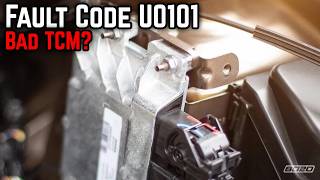
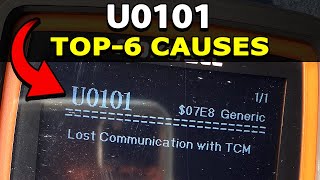
This code means the Transmission Control Module (TCM) has stopped communicating. The most common causes are wiring problems, a blown fuse or faulty ATM relay, or a bad ground connection. Before replacing an expensive control module, thoroughly inspect all related wiring, fuses, relays, and connectors.
- U0101 means the Transmission Control Module (TCM) is offline.
- Do not immediately assume the TCM has failed; wiring, connector, and power supply issues are more common causes.
- Driving is not recommended as the vehicle will be in a limited 'limp mode' and may shift erratically or not at all.
- Diagnosis requires checking fuses, inspecting harnesses, and using a multimeter to test for power and ground at the TCM.
- If the TCM does need replacement, it will likely require programming to your vehicle's VIN.
What's Unique About the 2007-2012 Hyundai Santa Fe
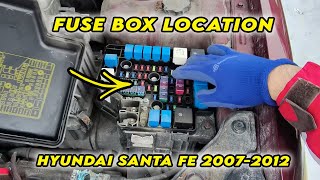
The 2007-2012 Hyundai Santa Fe, known as the 'CM' generation, does not have widespread, documented design flaws that make it uniquely prone to code U0101. However, like many vehicles of this era, its communication network relies on wiring that can become vulnerable to heat, vibration, and corrosion over time. Owner experiences suggest that wiring harness issues can sometimes be misdiagnosed as a failed module, making a thorough electrical diagnosis particularly important on this platform. The TCM itself is located under the battery tray in the engine compartment, making its connections susceptible to corrosion. Furthermore, power to the transmission controls is supplied via an ATM relay in the under-hood fuse box, which can be a simple 🎬 See this guide to locate your fuse box and relays. but overlooked failure point.
Symptoms You May Notice
- Check Engine Light and/or a transmission-specific warning light is on
- Vehicle is stuck in 'limp mode' (usually 2nd or 3rd gear)
- Harsh or erratic shifting, or a complete failure to shift
- The gear indicator (PRNDL) on the instrument cluster is blank or incorrect
- Inability to shift the vehicle out of Park
- A professional scan tool may be unable to establish communication with the TCM
- ABS or Electronic Stability Control (ESC) warning light may also illuminate
- Replacing the Transmission Control Module (TCM) without first performing a complete diagnosis of the power, ground, and communication circuits. A faulty ATM relay, corroded ground, or damaged wire is a more frequent and much cheaper cause of this code.
Most Likely Causes
- Wiring Harness or Connector Fault 🔴 High Probability Over years of exposure to engine heat and road vibration, wiring insulation can become brittle and crack, and connectors can corrode or become contaminated with moisture or oil. The TCM connectors under the battery tray are a common area for issues.
How to confirm: Visually inspect the entire wiring harness going to the TCM for any signs of chafing, melting, or corrosion. Disconnect the TCM connector and check for bent, loose, or corroded pins. Pay close attention to the CAN bus wires (a twisted pair).
Typical fix: Repair the damaged section of wire or clean/replace the faulty connector. Applying dielectric grease can help prevent future corrosion.
Est. part cost: $5-$50 - Loss of Power or Ground to the TCM 🟡 Medium Probability Fuses can blow, and the ATM (Automatic Transmission Module) relay in the engine compartment fuse box can fail. Ground straps in the engine bay (e.g., G39, G52) can corrode over time, leading to a poor connection.
How to confirm: Check the fuse box for any blown fuses related to the TCM or ECU. Swap the ATM relay with a known good one (e.g., the horn relay). Use a multimeter to verify a stable 12-volt power supply and a solid ground connection (less than 0.5 ohms) at the TCM's electrical connector with the key on.
Typical fix: Replace the blown fuse or faulty relay. Clean, tighten, or replace the faulty ground strap.
Est. part cost: $1-$30 - Failed Transmission Control Module (TCM) ⚪ Low Probability → Shop Transmission Assembly While less common than wiring issues, internal electronic components of the TCM can fail due to heat cycles and age.
How to confirm: This is a process of elimination. If power, ground, and the CAN bus communication wires all test good at the TCM connector, the module itself is the most likely point of failure.
Typical fix: Replace the Transmission Control Module. This often requires programming to the vehicle's VIN.
Est. part cost: $400-$900
Rare But Worth Checking
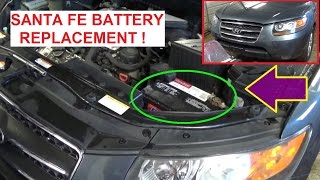
- Weak Battery or Failing Alternator: → Shop Alternator Control modules require a stable voltage to communicate properly. Low system voltage during startup or driving can cause intermittent communication dropouts and trigger U-codes. 🎬 Watch: How to properly replace a weak battery on this Santa Fe.
Diagnosis Steps
- Scan for Codes: Use an OBD-II scanner to confirm U0101 is present. Check for any other network codes (like U0073) or module-specific codes (like P0890), which can provide critical clues.
- Check Fuses and Relays: Inspect all fuses related to the TCM/ECU in the under-hood fuse box. Locate the ATM relay and swap it with an identical relay from a non-critical system (like the horn) to see if the problem resolves.
- Inspect Wiring: Perform a thorough visual inspection of the wiring harness leading to the TCM, which is located under the battery tray. Look for any obvious signs of damage, such as chafing, melting, or corrosion. Pay close attention to connectors.
- Test Power and Ground: Disconnect the TCM connector. Using a multimeter and a vehicle-specific wiring diagram, verify that the TCM is receiving full battery voltage on the appropriate pins and has a clean, low-resistance ground connection (under 0.5 Ohms).
- Check CAN Bus Integrity: With the battery disconnected, measure the resistance between Pin 6 (CAN High) and Pin 14 (CAN Low) at the OBD-II port. A healthy network should read approximately 60 Ohms. A reading of 120 Ohms indicates a break in the circuit or that a terminating module (like the TCM) is offline.
- Condemn the Module: If all wiring, power, ground circuits, and the ATM relay test good, the TCM itself is the most likely cause of the failure.
Parts You'll Likely Need
- Transmission Control Module (TCM)
(OEM #Varies by year/transmission. Examples: 95440-3A550, 95440-3A376, 95440-39671, 95447-3B260. Always verify with VIN.)— If power, ground, and network wiring are confirmed to be intact, the internal circuitry of the TCM has likely failed.
Trusted brands: Hyundai (OEM)
OEM price range: $600-$900
Aftermarket price range: $400-$700 - ATM Relay — This relay in the under-hood fuse box supplies power to the transmission control circuits and is a common, inexpensive failure point that can cause U0101 and P0890.
Trusted brands: Hyundai (OEM), Standard Motor Products
OEM price range: $15-$30
Aftermarket price range: $10-$20 - Wiring Repair Supplies — Wiring damage is a very common cause for this code. This includes wire, terminals, connectors, and heat shrink tubing.
OEM price range: $5-$50
Aftermarket price range: $5-$50
Related Codes That Often Appear With This One
- P0890 (TCM Power Relay Circuit Low) - This code often accompanies U0101 and points directly to a problem with the ATM relay or its circuit.
Platform-Specific Known Issues
- ATM Relay Failure: A user on CarKiller.com with a 2007 Santa Fe reported being stuck in 3rd gear with code P0890. A repair shop quoted $300, but the owner fixed the issue by simply replacing the ATM relay in the engine compartment fuse box.
- Corroded Relay Socket: A video diagnosing a similar P1723 code (TCM Power Relay circuit) on a Santa Fe found that the relay socket itself had become oxidized from moisture, causing poor contact and fail-safe mode. The fix was to clean the socket contacts and replace the relay.
- Connector Pin Issues: In a related Hyundai model, NHTSA ODI #10862093 describes a U0101 code where the transmission returned to normal operation after a technician examined the pins and connectors and plugged the TCM back in.
Mechanic-Grade Diagnostic Values
- CAN Bus Network Resistance — expected: ~60 Ohms. Failure: A reading of ~120 Ohms indicates one of the two terminating resistors is offline (e.g., the TCM is disconnected or internally failed, or there's an open in the wiring). A reading near 0 Ohms indicates a short between the CAN High and CAN Low wires.
- CAN High Voltage (Key On, Engine Off) — expected: 2.5V - 3.5V (measured between Pin 6 at OBD-II port and chassis ground). Failure: Voltage stuck at 0V, 5V, or battery voltage indicates a short or open.
- CAN Low Voltage (Key On, Engine Off) — expected: 1.5V - 2.5V (measured between Pin 14 at OBD-II port and chassis ground). Failure: Voltage stuck at 0V, 5V, or battery voltage indicates a short or open.
- TCM Ground Circuit Resistance — expected: Less than 0.5 Ohms. Failure: Higher resistance indicates a poor ground connection, which can cause intermittent module operation.
- TCM Power Supply Voltage — expected: 12.0V - 12.6V (Key On, Engine Off). Failure: Low or no voltage indicates a problem with the fuse, ATM relay, or power supply wiring.
Scan Tool Commands That Help
- Hyundai GDS (Global Diagnostic System): Resetting Auto T/A values — This function is used to erase the transmission's adaptive learning values. It should be performed after certain repairs or if shift quality is poor, followed by a specific relearn drive cycle.
- Hyundai GDS (Global Diagnostic System): TCM Neutral mode — This is a mandatory first step when installing a replacement TCM (especially a used one). It prepares the module to be paired with the vehicle.
- Hyundai GDS (Global Diagnostic System): Key teaching — After performing 'TCM Neutral mode' on a replacement module, this function is used to program the vehicle's immobilizer or smart key information into the new TCM, allowing the vehicle to start.
Wiring & Ground Locations
- TCM Location — In the engine compartment, located under the battery and battery tray.. This location makes the TCM and its connectors vulnerable to corrosion from battery fumes or water ingress, which can interrupt power, ground, or communication signals.
- ATM Relay — In the under-hood fuse/relay box.. This relay provides the main power supply to the transmission control circuits. A failure of this inexpensive part will cut all power to the TCM, causing a U0101 code.
- G39 / G52 — Located at the left rear of the engine compartment (for 2009 models).. These are primary ground points for engine and transmission electronics. Corrosion or a loose connection at these points can cause a floating ground, leading to intermittent communication failures and U-codes.
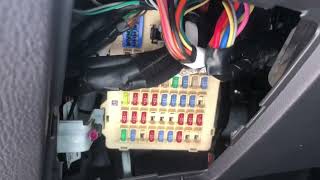
- OBD-II Port Pins 6 & 14 — Under the driver's side dashboard.. These are the direct access points for the CAN High (Pin 6) and CAN Low (Pin 14) network. They are the primary test points for checking the overall health of the communication bus with a multimeter or oscilloscope.
Model Year Variations Within This Range
- 2007-2009: These pre-facelift models were primarily equipped with a 2.7L V6 (4-speed auto) or a 3.3L V6 (5-speed auto). Diagnostic procedures and TCM part numbers are specific to these powertrain combinations.
- 2010-2012: These facelift models received new powertrains: a 2.4L I4 or a 3.5L V6, both paired with a new 6-speed automatic transmission. The TCM, wiring, and associated TSBs are different from the earlier models. For example, a TSB regarding adaptive value resets explicitly lists different procedures and applicability for the 2007-2009 and 2010+ models.
Diagnostic Flowchart
Other Known Issues on This Vehicle
Issues unrelated to this code that are worth knowing about as an owner of this generation:
- Faulty Fuel Level Sensor 🟠 Medium — Very common on 2007-2009 models. The fuel gauge becomes erratic or reads empty after a fill-up, triggering a P0463 code.
- Leaking Valve Cover Gasket (V6 Engines) 🔴 High — Widespread on 3.3L and 3.5L V6 engines. The front (radiator side) valve cover gasket leaks oil directly onto the alternator, causing premature alternator failure. (Ref: While not a formal recall for all models, this is a widely acknowledged issue. A similar issue was recalled on the related Hyundai Veracruz.)
- Faulty Stop Lamp Switch 🔴 High — Common enough to trigger a major recall (NHTSA Campaign Number 13V113000). Affects 2007-2009 models. (Ref: Recall 110 / TSB 17-01-021. A faulty switch can prevent brake lights from working, cause the ESC light to illuminate, and prevent shifting out of Park.)
- Airbag Warning Light 🟠 Medium — Common on 2007-2009 models, leading to a recall to update the Occupant Classification System (OCS) software. (Ref: NHTSA Recall 08V161000)
- Transmission Hesitation and Hard Shifting 🟠 Medium → Shop Transmission Assembly — Reported across the generation, particularly in earlier models. Symptoms include jerky shifting and hesitation during acceleration, separate from limp-mode caused by U0101.
Used vs. New Parts: Buying Guide for This Vehicle
When a used part is the smart pick: A used TCM can be a cost-effective option ONLY if you have guaranteed access to a Hyundai GDS (Global Diagnostic System) scan tool or a repair shop that does. The part is not plug-and-play and will not function without dealer-level programming.
Donor-vehicle mileage cap: roughly under 120000 miles for the part to have meaningful remaining life.
What to inspect on the donor part:
- Verify the part number on the used TCM exactly matches the original. There are many variations.
- Inspect the connector pins for any signs of corrosion, moisture damage, or being bent.
- Ask for the VIN of the donor vehicle to help cross-reference compatibility and check its history if possible.
- Avoid modules from vehicles with flood or fire damage.
OEM-only on this vehicle (don't cheap out):
- Transmission Control Module (TCM) - Due to the complex programming and integration with the vehicle's immobilizer system, using an OEM module (new or used) is strongly recommended. Aftermarket or remanufactured units may have a higher failure rate or programming issues.
Brands owners have reported issues with on this vehicle:
- Unbranded or no-name TCMs from online marketplaces are extremely high-risk due to the programming requirements and potential for being defective on arrival.
Real Owner Stories
Aggregated from forums and TSBs cited above. Mileages and costs reflect what owners reported in those sources.
2007 Hyundai Santa Fe
Symptoms: Vehicle was stuck in 3rd gear and throwing code P0890. A repair shop provided a high quote of $300 for the repair.
What fixed it: The owner replaced the ATM relay in the engine compartment fuse box.
Source hint: CarKiller.com - '[Solved] Hyundai santa fe 2007 TCM power relay circuit low'
2007 Hyundai Santa Fe 2.2 CRDI diesel
Symptoms: Transmission stuck in park, moves only with lock override lever. Codes U0101 and P1587 present. No PRND indication in dashboard. Transmission and glow warning lights blinking quickly.
What fixed it: No fix was reported by the user; resetting codes did not work.
Source hint: CarKiller - 'U0101 and P1587 codes. 2007 Hyundai Santa Fe.'
2007-2012 Hyundai Santa Fe
Symptoms: Vehicle entered fail-safe mode due to a P1723 code (TCM Power Relay circuit).
What fixed it: The relay socket was found to be oxidized from moisture. The fix involved cleaning the socket contacts and replacing the relay.
Source hint: Video diagnosis of P1723 code (TCM Power Relay circuit) on a Santa Fe
Hyundai Owner Report
Symptoms: An owner reported that their vehicle's TCM failed and gears became stuck while driving. They had to use the bypass switch to park the car, which then would no longer start. Code U0101 appeared along with the ECS light.
What fixed it: No specific fix reported in the initial complaint.
Source hint: NHTSA ODI #11578139
Related OBD-II Codes
Frequently Asked Questions
Why is my 2007-2012 Santa Fe stuck in 2nd or 3rd gear with a U0101 code?
Could a faulty brake light switch be causing my shifting issues on a 2007 Santa Fe?
Where is the TCM located on the 2007-2012 Hyundai Santa Fe?
Is there a specific relay I should check for U0101 or transmission power issues?
My gear indicator (PRNDL) is blank on the dashboard; is this related to U0101?
Can I test if the ATM relay is the problem without buying a new part?
Helpful Videos
We Have This Part in Stock




The information in this article is provided for general reference and educational purposes only. Vehicle specifications, procedures, and part compatibility can vary by production date, trim level, and region. Always consult your vehicle's factory service manual and verify part numbers before purchasing or performing repairs. Safety-critical components such as airbags, seat belts, and braking systems should be installed by a qualified professional.
- Hyundai Santa Fe:
- 🧭 Diagnostic Flowchart
- 🎬 Helpful Videos
- 🛍️ Shop This Part
- What's Unique About the 2007-2012 Hyundai Santa Fe
- Symptoms You May Notice
- Most Likely Causes
- Rare But Worth Checking
- Diagnosis Steps
- Parts You'll Likely Need
- Related Codes That Often Appear With This One
- Platform-Specific Known Issues
- Mechanic-Grade Diagnostic Values
- Scan Tool Commands That Help
- Wiring & Ground Locations
- Model Year Variations Within This Range
- Other Known Issues on This Vehicle
- Used vs. New Parts: Buying Guide for This Vehicle
- Real Owner Stories
- 2007 Hyundai Santa Fe
- 2007 Hyundai Santa Fe 2.2 CRDI diesel
- 2007-2012 Hyundai Santa Fe
- Hyundai Owner Report
- Related OBD-II Codes
- Frequently Asked Questions
- 🎟️ Get 5% Off