

U0101 on 2008-2015 Mercedes-Benz C-Class: Causes and Fixes for Lost Communication with TCM
On a 2008-2015 C-Class (W204), U0101 almost always points to a failure of the transmission conductor plate, which houses the Transmission Control Module (TCM). This is a well-documented failure on the 7G-Tronic (722.9) transmission. Repair is costly, typically $700-$1500 at a shop, and requires special programming (SCN coding or VIN programming), making it unsuitable for most DIYers unless a pre-programmed part is used.
- U0101 on a W204 C-Class means the Transmission Control Module (TCM) is offline.
- The most likely cause by a wide margin is a failed transmission conductor plate, which contains the TCM.
- Before suspecting the expensive conductor plate, always check the battery voltage and the security of the main transmission electrical connector first.
- This is not a DIY-friendly repair. The replacement part requires special programming (SCN coding) that only a dealer or specialized independent shop can perform.
- Symptoms include the car being stuck in gear (limp mode), harsh shifting, and sometimes a no-start condition.
What's Unique About the 2008-2015 Mercedes-Benz C-Class
The 2008-2015 C-Class (W204 generation) primarily uses the 7G-Tronic (722.9) automatic transmission. A defining feature of this design is that the Transmission Control Module (TCM) is not a separate box but is integrated directly into the 'conductor plate' (also called a valve body or mechatronic unit) that sits inside the transmission pan, submerged in hot fluid. This conductor plate is a known high-failure item due to the harsh environment, leading to internal electronic failures of components like speed sensors that cut off communication and trigger the U0101 code.
Symptoms You May Notice
- Check Engine Light is on
- Transmission warning message on the dashboard
- Vehicle is stuck in one gear (limp mode).
- Harsh or jerky shifting between gears, especially a hard 'clunk' when engaging Drive or Reverse.
- Inability to shift out of Park
- Gear selector indicator on the dash (P,R,N,D) may be blank, not update, or show all gears selected.
- Vehicle may crank but not start, as the ECU cannot confirm the transmission is in Park or Neutral.
- Replacing the entire transmission when only the conductor plate is faulty.
- Replacing the ECU when the fault lies with the TCM or wiring.
- Ignoring a low battery as the potential root cause.
- Replacing the gear shifter assembly (ESM) when the gear display issue is caused by the TCM communication loss.
Most Likely Causes
- Failed Transmission Conductor Plate (TCM) 🔴 High Probability → Shop Transmission Assembly The TCM is integrated into the conductor plate inside the hot transmission, leading to a high rate of failure of its internal speed sensors (Y3/8N1, Y3/8N2) and electronics. This is a widely documented weak point of the 722.9 transmission.
How to confirm: After confirming good power, ground, and CAN bus wiring to the transmission, the diagnosis is made by exclusion. A Mercedes-specific scan tool (like Xentry/DAS) will often show specific internal fault codes for the TCM (like speed sensor faults P0717, P0718, P2767, P2768) alongside the U0101, or it will be unable to communicate with the TCM at all.
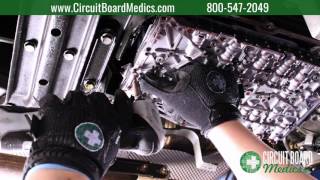
Typical fix: Replace the transmission conductor plate, along with the transmission fluid, filter, and pan gasket. The new conductor plate must be professionally programmed (SCN coded) to the vehicle. Alternatively, some specialists can repair the original plate or provide a pre-programmed replacement. 🎬 Watch: How to remove and repair the 722.9 conductor plate
Est. part cost: $400-$800 - Low Battery Voltage or Failing Battery 🟡 Medium Probability → Shop Vehicle Battery CAN bus networks are highly sensitive to voltage. A weak or failing battery can cause modules to drop off the network intermittently, creating communication codes like U0101, especially during engine cranking.
How to confirm: Test the battery with a multimeter. It should read at least 12.4V with the engine off and over 13.5V with the engine running. A simple voltage test may not be enough; a load test is recommended. If voltage is low, charge and re-test the battery. If it doesn't hold a charge, replace it.
Typical fix: Replace the vehicle's battery.
Est. part cost: $200-$350 - Damaged Transmission Wiring or Connector ⚪ Low Probability → Shop Transmission Assembly The main electrical connector at the transmission can sometimes leak fluid (wicking), contaminating the pins and harness, or the locking tab can break, causing a loose connection. While less common on the 722.9 than the older 722.6, it is still a valid check.
How to confirm: Visually inspect the round connector on the side of the transmission. Check for any signs of transmission fluid (it will be reddish or dark brown) and ensure the connector is fully seated and locked. Check for continuity and resistance on the CAN bus wires (typically a twisted pair) at the connector.
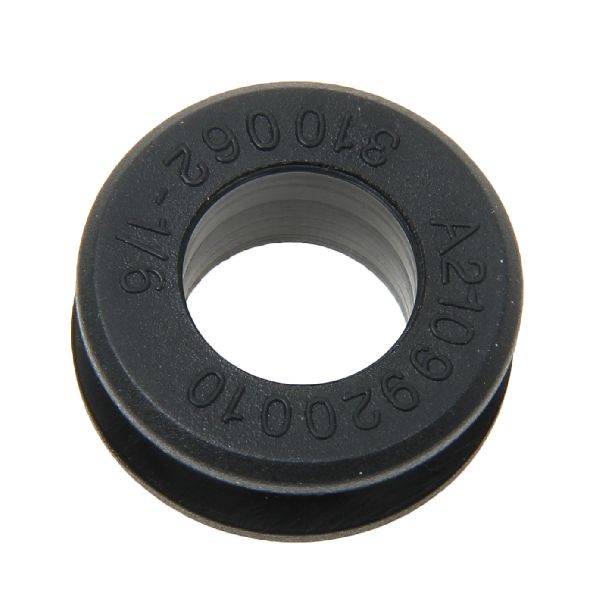
Typical fix: If the connector is loose, secure it. If it is contaminated with fluid, it may need to be cleaned with electronic cleaner or replaced, along with the internal seal that is leaking.
Est. part cost: $25-$150
Rare But Worth Checking
- Failed Engine Control Module (ECU/ECM) or Central Gateway Module (CGW): → Shop Engine Control Module (ECM) While rare, it's possible for the ECU or the Central Gateway Module to be the source of the communication problem. This should only be considered after all other possibilities (TCM, wiring, battery) have been definitively ruled out by a professional using advanced diagnostic tools.
Diagnosis Steps
- Check Battery Health: Ensure the battery has at least 12.4V with the car off and that the charging system is providing over 13.5V when running. A weak battery is a common cause of communication codes and should be the first check.
- Scan with a Professional Tool: Use a Mercedes-specific scanner (like Xentry/DAS) to check for codes in all modules. Note if the scanner can communicate with the TCM at all. A generic OBD-II reader will only show the U0101 in the ECU and is not sufficient for proper diagnosis.
- Inspect the Transmission Connector: Locate the main electrical connector on the transmission housing. Disconnect it and inspect for any signs of oil contamination or bent/corroded pins. Ensure it locks securely when reconnected.
- Check Fuses and Relays: Inspect all fuses related to the transmission and engine control modules in the vehicle's fuse boxes (SAM modules).
- Test CAN Bus Wiring: If the above steps don't resolve the issue, a technician will need to test the continuity and resistance of the CAN bus wires between the ECU and the TCM connector to rule out a wiring break. This involves checking for ~60 ohms of resistance across the CAN High and CAN Low pins.
- Condemn the Conductor Plate: If the battery is good, the connector is clean and secure, the fuses are intact, and the wiring tests okay, the fault is almost certainly internal to the transmission conductor plate/TCM.
Parts You'll Likely Need
- Transmission Conductor Plate / TCM
(OEM #A0002702600, A0034460310 (VGS3), A0335457332 (VGS2). Part must be matched to VIN.)— This is the component that houses the TCM and the speed sensors. It is the most common point of failure for this code on this vehicle. There are different versions (VGS2, VGS3), and the correct one must be used.
Trusted brands: Genuine Mercedes-Benz, Remanufactured by specialists (e.g., Circuit Board Medics, Injectronics)
OEM price range: $500-$800
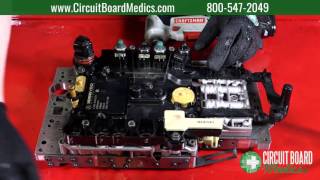
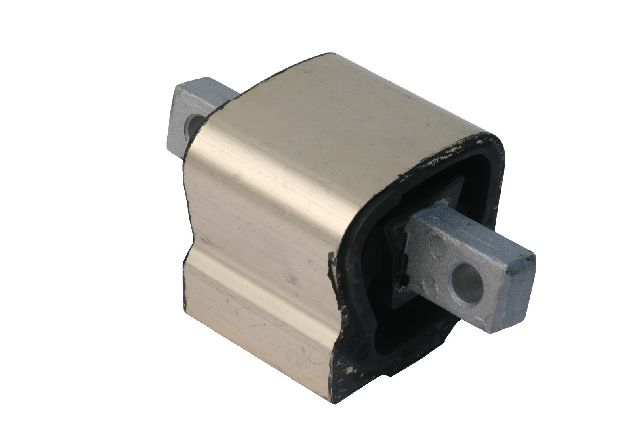
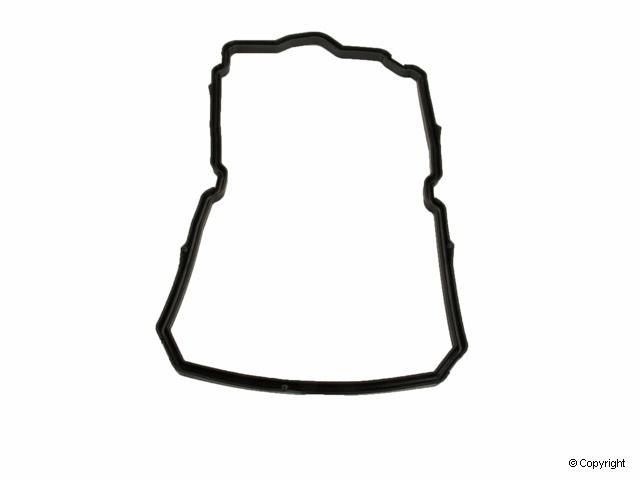
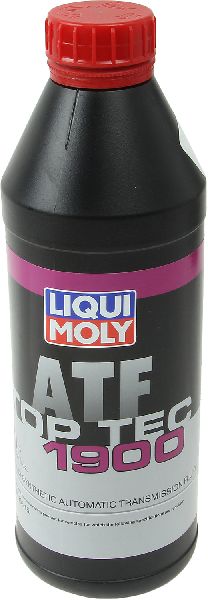
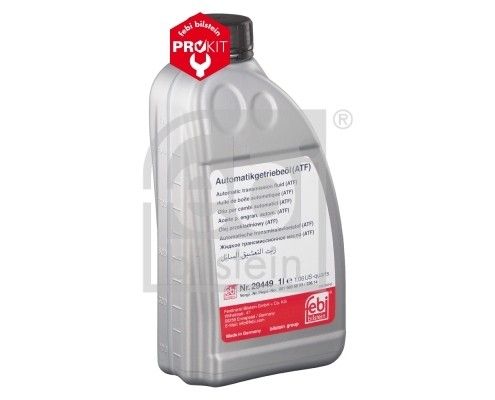
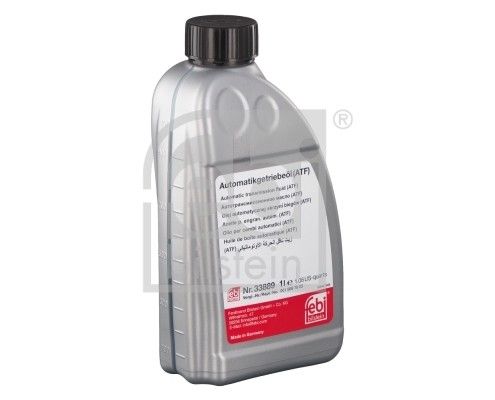
Aftermarket price range: $300-$600 (Often sold as remanufactured/repaired or pre-programmed) - Transmission Fluid, Filter, and Gasket Kit — These must be replaced whenever the transmission pan is removed to access the conductor plate. 🎬 See this walkthrough for installing the valve body and plate Using the correct fluid (MB 236.14 or 236.15 spec) is critical.
Trusted brands: FCP Euro, Vaico, Genuine Mercedes-Benz, Liqui Moly
OEM price range: $100-$200
Aftermarket price range: $70-$150
Related Codes That Often Appear With This One
- P0717, P0718 — These codes indicate a fault with the turbine speed sensor (Y3/8n1), which is located on the conductor plate.
- P2767, P2768 — These codes point to a failure of the internal speed sensor (Y3/8n2), also part of the conductor plate assembly.
- 0513 (Mercedes-specific) — This event code indicates the start enable signal from the TCM is missing, which can prevent the car from starting and is a direct result of the U0101 communication loss.
Platform-Specific Known Issues
- Owner Experience: Intermittent Limp Mode and No-Start: Owners on forums like MBWorld.org frequently describe the issue starting intermittently. The car may go into limp mode, and after being shut off and restarted, it works normally for a while before the fault returns. Eventually, the fault becomes permanent, and may even lead to a no-crank/no-start condition when the TCM fails to communicate that the transmission is in Park.
- Repair Story: DIY Replacement with Pre-Programmed Part: Some advanced DIYers have successfully replaced the conductor plate themselves by ordering a pre-programmed unit online, which is coded to their car's VIN before shipping. This bypasses the need for a dealer's SCN coding tools. However, the job is still complex, requiring removal of the valve body from within the transmission. One owner noted a dealer quoted $2000 for the repair, while a pre-programmed part was a fraction of the cost.
Mechanic-Grade Diagnostic Values
- CAN Bus Resistance — expected: ~60 Ω across CAN High and CAN Low pins at the TCM connector (with battery disconnected).. Failure: A reading of ~120 Ω indicates an open in one of the CAN lines or a missing terminating resistor. A reading of 0 Ω indicates a short between CAN High and Low.
- CAN Bus Voltage (Key On, Engine Off) — expected: CAN High: ~2.5-2.7V. CAN Low: ~2.3-2.5V.. Failure: Voltages that are stuck high, low, or at battery/ground potential indicate a short in the wiring.
- TCM Power Supply — expected: Battery voltage (~12.4V+) at the TCM power supply pin with the key on.. Failure: Low or no voltage indicates a problem with the fuse, relay, or wiring supplying power to the module.
- TCM Ground Resistance — expected: Below 0.5 Ω between the TCM ground pin and a clean chassis ground.. Failure: High resistance indicates a poor ground connection, which can cause intermittent module operation and communication faults.
Hidden / Shadow Codes Worth Checking
- 0513: A Mercedes-specific fault code stored in the ECU meaning 'Drive authorization signal from transmission control module is missing'. This is a direct consequence of the U0101 fault and often the reason for a no-start condition. (see via Requires a Mercedes-specific scanner like Xentry/DAS.)
- 6106 (in ABS/ESP Module): 'No CAN message was received from control unit Engine control module or N15/3 (Electronic transmission control unit)'. This code in another module confirms the TCM is offline from the perspective of the wider vehicle network. (see via Requires a full system scan with a professional or Mercedes-specific tool.)
Scan Tool Commands That Help
- Xentry/DAS, Autel MaxiIM, Yanhua Mini ACDP: Renew / Virginize — This function is used on a bench setup to erase the VIN and security data from a *used* donor conductor plate, making it 'virgin'. This is the necessary first step before it can be installed and programmed to a new vehicle.
- Xentry/DAS: Initial startup / SCN Coding — This is the official online procedure used after installing a *new* or *virginized* conductor plate. It connects to Mercedes-Benz servers to download vehicle-specific software and coding (Software Calibration Number) to marry the new TCM to the car's VIN.
- Xentry/DAS, Autel MaxiIM: Personalize / Activate — After a virgin module is installed, this function writes the car's VIN into the TCM, locking it to the vehicle. This is part of the overall programming process.
- Specialized Cloning Tools (e.g., Yanhua Mini ACDP): Clone / Data Transfer — This process reads the complete data (including VIN, coding, and adaptations) from the original faulty conductor plate and writes it directly to a compatible donor plate. This creates a plug-and-play replacement that does not require online SCN coding.
Wiring & Ground Locations
- Central Gateway (CGW / ZGW) — On the W204, the Central Gateway function is often integrated into the Front SAM (Signal Acquisition Module) / fuse box assembly in the engine bay. Water drains under the cowl can clog, leading to water intrusion and corrosion in this area.. The CGW is the central router for all CAN bus communication. A failure here can sever communication between the ECU and TCM, logging a U0101 code even if the TCM and its wiring are perfectly fine.
- TCM Connector — A round, multi-pin connector on the side of the 722.9 transmission housing.. This is the single point of connection for power, ground, and CAN bus signals to the TCM. It's the primary location for checking CAN resistance (~60Ω) and voltages to confirm the integrity of the harness leading to the module.
- Electronic Ignition Switch (EIS) — The ignition switch assembly in the dashboard where the key is inserted.. The EIS is a critical security and gateway module. A failing EIS can interrupt the drive authorization sequence and cause various communication codes, including U0101, and often results in a no-crank, no-start symptom.
Real Owner Repair Stories
- MBWorld.org Forums (2009 Mercedes-Benz C63 AMG (W204)) — Intermittent limp mode, stuck in gear, harsh engagement between P/R/N/D, and the gear indicator on the dash would go blank. Clearing the code would temporarily fix it.
❌ Tried (didn't work) Clearing codes with a scanner (fault returned quickly).
✅ What actually fixed it The locking tab on the main transmission wiring harness connector had worn down, allowing the plug to vibrate loose. The owner secured the connector firmly into the conductor plate socket using a zip tie and seizing wire, which permanently resolved the communication issue. - MBWorld.org Forums (Mercedes GL-Class (X164) with 722.9 transmission (similar architecture)) — U0101 code present, engine would crank but not start, especially after towing on a warm day. Issue became permanent.
❌ Tried (didn't work) Focusing solely on the U0101 and related transmission codes (like 0513).
✅ What actually fixed it The actual root cause was a failed fuel pump. Although the pump was running and making noise, it was not delivering any fuel. Replacing the fuel pump resolved the no-start condition and the U0101 code did not return, indicating it was a misleading secondary fault.
"I Checked Everything" — The Actual Cause
- A U0101 code can be present with a no-start condition, leading a technician to diagnose the TCM or wiring. However, in one documented case, the actual cause was a failed fuel pump. Basic troubleshooting (checking for fuel, spark, air) was initially skipped in favor of chasing the diagnostic code, leading to a misdiagnosis. The fuel pump was making noise but not delivering pressure, and replacing it fixed the vehicle.
- Multiple communication codes, including U0101, can appear along with a dashboard lit up with warnings. The cause may not be the TCM, but rather a failure of the Central Gateway Module (CGW), which on the W204 is often part of the front SAM/fuse box. This can be caused by water damage from clogged cowl drains, a problem unrelated to the transmission itself.
When the Usual Fixes Don't Work
- While the conductor plate is the most common cause, do not assume it is the only cause. One owner on MBWorld forums with a U0101 code and a no-start condition ultimately found the problem was a failed fuel pump, which was preventing the engine from starting and likely causing a secondary, misleading communication code. Another owner fixed an intermittent U0101 by simply securing the loose main transmission connector with a zip tie, as the original plastic locking tab had failed. These cases highlight the importance of checking basic mechanical systems and physical connections before condemning an expensive electronic module.
OEM Part Supersession History
VGS1 Conductor Plate→VGS2, VGS3— Design evolution and supplier changes.
Heads up: VGS1 replacement required purchasing both the conductor plate AND the valve body. VGS2 and VGS3 plates can be replaced separately from the valve body. Software for VGS2 and VGS3 is not cross-compatible; you cannot flash a VGS2 unit with VGS3 software.VGS2 Conductor Plate (e.g., A0335457332)→VGS3 Conductor Plate (e.g., A0034460310)— Updated design, often considered more reliable. The physical connector also changed, removing a K-line diagnostic pin present on VGS2.
Heads up: While a VGS3 can sometimes be used to replace a VGS2, it is not a direct swap. It requires specific programming procedures, and for official online SCN coding to work, the vehicle's data card (VeDoc) on Mercedes' servers may need to be updated to reflect the hardware change.
Model Year Variations Within This Range
- 2008-2011 (Pre-facelift) vs. 2012-2015 (Post-facelift): The W204 received a major facelift for the 2012 model year, which included significant interior and exterior changes. While the 7G-Tronic transmission was used throughout, forum users report that the shifting logic and responsiveness of the transmission were noticeably improved in the facelift models, suggesting software updates and potentially subtle hardware changes to the conductor plate and valve body.
- Full range (2008-2015): The conductor plate design transitioned from VGS2 to VGS3 during the W204's production life. There is no hard cutoff year. A VGS2 plate has an extra pin for K-line diagnostics compared to a VGS3. The software is not interchangeable between the two types. Identifying which version is in the car requires visual inspection of the part number on the plate itself.
Diagnostic Flowchart
Other Known Issues on This Vehicle
Issues unrelated to this code that are worth knowing about as an owner of this generation:
- Electronic Steering Lock (ESL/ELV) Failure 🔴 High — Extremely common. Failure often occurs without warning, resulting in a no-start condition where the key is not recognized and the steering wheel remains locked. (Ref: No recall, but a widely known failure. Repair involves replacing the lock or using an emulator.)
- Rear Subframe Corrosion/Failure 🔴 High — Common, especially in regions using road salt. The subframe can rust from the inside out, leading to perforation and potential failure of suspension mounting points. (Ref: Mercedes-Benz has issued an extended warranty for 20 years/unlimited miles for this specific issue on affected models, including the W204.)
- M272 V6 Engine Balance Shaft Gear Wear 🔴 High — Affects early V6 models (approx. 2008-2009 C300/C350) with engines produced before serial number 2729..30 468993. The gear wears prematurely, causing timing issues, check engine light (P0016/P0017), and rattling noises. (Ref: Subject of a class-action lawsuit. Repair is very labor-intensive as it requires engine removal.)
- M271 EVO (CGI) Engine Timing Chain Stretch 🟠 Medium — Affects 4-cylinder turbocharged models (e.g., C250). The timing chain can stretch, causing a rattling noise on cold starts. If ignored, it can lead to jumped timing and engine damage. Typically occurs around 60,000-100,000 miles.
- Leaking Transmission Oil Cooler Lines 🟡 Low → Shop Transmission Assembly — Reported on models with the 7G-Tronic transmission, especially those built up to 2011, often appearing after 75,000 miles (120,000 km).
Used vs. New Parts: Buying Guide for This Vehicle
When a used part is the smart pick: A standard 'used' conductor plate from a junkyard is almost never a smart choice. It is VIN-locked to the donor car and will not function. The only time a non-new part makes sense is when using a specialized service to either: 1) Repair and return your original unit, 2) 'Clone' your original unit's data onto a compatible used donor unit, or 3) Purchase a 'virginized' used unit that has been reset and is ready for programming.
Donor-vehicle mileage cap: roughly under 120000 miles for the part to have meaningful remaining life.
What to inspect on the donor part:
- Must be the correct VGS version (VGS2 or VGS3) to match the original.
- Verify the part number is compatible with your vehicle.
- When buying a donor for cloning, ensure it has the same hardware number as your original unit.
- The main electrical connector plug must be intact with no broken plastic or bent pins.
OEM-only on this vehicle (don't cheap out):
- Transmission Conductor Plate (TCM): Due to the VIN-locking and complex programming (SCN coding), you must use either a Genuine Mercedes-Benz new part, have your original OEM part repaired, or use a service that clones/virginizes an OEM donor part. Direct aftermarket 'clones' are not widely available or trusted.
Aftermarket brands forum-validated for this vehicle:
- For service items replaced during the job: Liqui Moly, Vaico, FCP Euro (for kits), Febi Bilstein (for fluid, filter, gasket).
Brands owners have reported issues with on this vehicle:
- Unknown/unbranded conductor plates from online marketplaces. These often fail, are not programmable, or are the wrong VGS version despite claims.
Real Owner Stories
Aggregated from forums and TSBs cited above. Mileages and costs reflect what owners reported in those sources.
2009 Mercedes-Benz C63 AMG
Symptoms: Intermittent limp mode, harsh gear engagement, and the dash gear display disappearing.
What fixed it: Diagnosis pointed to the conductor plate, a classic failure for this code on the W204 platform.
Source hint: mbworld.org: C63 Code U0101 - https://mbworld.org/forums/c63-amg-w204/866995-c63-code-u0101.html
Mercedes-Benz GL-Class (X164)
Symptoms: Vehicle experienced a crank-no-start condition with a U0101 code present.
What fixed it: Using a Mercedes-specific scan to retrieve real error codes from the TCM, as U0101 was just a generic report from other modules.
Source hint: mbworld.org: U0101 code. Won't start. - https://mbworld.org/forums/gl-class-x164/779836-u0101-code-wont-start.html
Mercedes-Benz E350 (W211) with 7G transmission
Symptoms: U0101 trouble code detected by mechanic.
What fixed it: Replacement of the transmission conductor plate, which is the standard fix for this code on the 7G-Tronic platform.
Source hint: mbworld.org: U0101 TROUBLE CODE - https://mbworld.org/forums/e-class-w211/546522-u0101-trouble-code.html
Mercedes-Benz W204 C200
Symptoms: No-start condition with U0101 code.
What fixed it: Checking battery voltage, as low voltage is a known trigger for communication codes on this vehicle.
Source hint: mbworld.org: TCM U0101 - https://mbworld.org/forums/c-class-w204/861771-tcm-u0101.html
2008-2015 Mercedes-Benz C-Class
Symptoms: Intermittent limp mode that eventually became permanent; dealer quoted $2000 for the repair.
What fixed it: DIY replacement of the conductor plate using a pre-programmed unit ordered online to bypass SCN coding.
Cost: $400-$2000
Source hint: Repair Story: DIY Replacement with Pre-Programmed Part
Related OBD-II Codes
Frequently Asked Questions
Why is my 2008-2015 C-Class stuck in one gear and showing a 'clunk' when I shift into Drive?
Can a weak battery really cause a U0101 code on my Mercedes?
My dash gear indicator (P,R,N,D) went blank and the car won't start. Is this related to U0101?
Do I need a special tool to diagnose U0101 on my W204 C-Class?
Can I fix the U0101 conductor plate issue myself to save on dealer costs?
Is the U0101 code common on other Mercedes models besides the C-Class?
Helpful Videos
We Have This Part in Stock

The information in this article is provided for general reference and educational purposes only. Vehicle specifications, procedures, and part compatibility can vary by production date, trim level, and region. Always consult your vehicle's factory service manual and verify part numbers before purchasing or performing repairs. Safety-critical components such as airbags, seat belts, and braking systems should be installed by a qualified professional.
- Mercedes-Benz C-Class:
- 🧭 Diagnostic Flowchart
- 🎬 Helpful Videos
- 🛍️ Shop This Part
- What's Unique About the 2008-2015 Mercedes-Benz C-Class
- Symptoms You May Notice
- Most Likely Causes
- Rare But Worth Checking
- Diagnosis Steps
- Parts You'll Likely Need
- Related Codes That Often Appear With This One
- Platform-Specific Known Issues
- Mechanic-Grade Diagnostic Values
- Hidden / Shadow Codes Worth Checking
- Scan Tool Commands That Help
- Wiring & Ground Locations
- Real Owner Repair Stories
- "I Checked Everything" — The Actual Cause
- When the Usual Fixes Don't Work
- OEM Part Supersession History
- Model Year Variations Within This Range
- Other Known Issues on This Vehicle
- Used vs. New Parts: Buying Guide for This Vehicle
- Real Owner Stories
- 2009 Mercedes-Benz C63 AMG
- Mercedes-Benz GL-Class (X164)
- Mercedes-Benz E350 (W211) with 7G transmission
- Mercedes-Benz W204 C200
- 2008-2015 Mercedes-Benz C-Class
- Related OBD-II Codes
- Frequently Asked Questions
- 🎟️ Get 5% Off