

U0101 on 2008-2010 Saturn Vue: Lost Communication With TCM Causes and Fixes
U0101 on a 2008-2010 Saturn Vue means the Transmission Control Module (TCM) has gone offline. For V6 models with the 6T70 transmission, this often points to a failed internal transmission computer (TEHCM), a complex and costly repair. For 4-cylinder models, the issue is more likely external, such as chafed wiring to the separate TCM, a blown fuse, or a bad ground. Always test the battery, fuses, and wiring before condemning any control module.
- U0101 means the transmission computer is offline, causing serious driving problems.
- First, determine if you have a 4-cylinder or V6 engine, as the cause and repair are completely different.
- For V6 models, a failed computer (TEHCM) inside the transmission is likely. This is a complex, expensive repair.
- For all models, always check the simple things first: battery health, grounds, and the TCM fuse.
- A replacement TCM or TEHCM must be professionally programmed to your vehicle's VIN to work.
What's Unique About the 2008-2010 Saturn Vue
The 2008-2010 Saturn Vue presents two very different scenarios for this code based on the engine. V6 models use a 6T70/6T75 6-speed transmission where the TCM is integrated into a module called the TEHCM (Transmission Electro-Hydraulic Control Module). This module is located *inside* the transmission oil pan, making it prone to failure from heat, vibration, and fluid contamination, and is difficult to replace. In contrast, 4-cylinder models use a 4T45E 4-speed transmission with an external TCM, where U0101 is more likely caused by external wiring, connector, or power supply issues. It is critical to identify your engine before starting diagnosis.
Symptoms You May Notice
- Check Engine Light is on
- Transmission warning light is on
- Vehicle is stuck in 'limp mode' (will not shift out of 2nd or 3rd gear)
- Harsh or banging shifts, especially when moving from Park to Drive
- Inability to shift out of Park
- Loss of the PRNDL gear position indicator on the dashboard (may be blank or incorrect)
- Vehicle may stall or have a sudden loss of power
- Scan tool is unable to communicate with the TCM
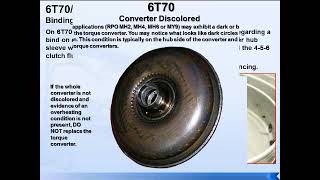
- A broken 3-5-R wave plate inside the 6T70 transmission (V6 models) can cause symptoms like slipping and loss of gears, which can be mistaken for a TCM/TEHCM issue. GM issued a special coverage (14404) for this mechanical failure. If you only have gear loss without a U0101 code, the wave plate is a more likely culprit. 🎬 Watch: Learn about common 6T70 transmission failure points and issues.
Most Likely Causes
- Internal TEHCM Failure (V6 Models) 🔴 High Probability → Shop Transmission Valve Body The Transmission Electro-Hydraulic Control Module (TEHCM) is located inside the transmission on 6-speed automatic V6 models, where it is exposed to constant heat and vibration. This environment can lead to solder joint fractures and internal circuit failure over time.
How to confirm: After verifying power, ground, and CAN bus wiring to the main transmission connector are intact and show correct resistance (60 ohms), the TEHCM itself is the likely point of failure. A professional scan tool will be unable to communicate with the TCM, confirming the 'lost communication' status.
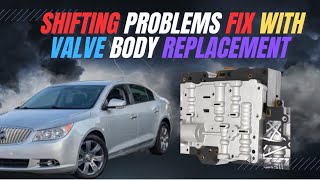
Typical fix: Replace the TEHCM assembly inside the transmission. This is a labor-intensive job that requires removing the transmission side cover and valve body. 🎬 See this walkthrough for replacing the TEHCM and valve body. The new TEHCM must be programmed to the vehicle's VIN. Updated part numbers like ACDelco 24256861 (which supersedes older versions) are often used.
Est. part cost: $400-$800 - Wiring or Connector Issues (All Models) 🔴 High Probability Engine bay wiring harnesses are exposed to heat, vibration, and moisture. On GM platforms sharing the 6T70 transmission, chafing of the harness wires right at the main 16-way transmission connector is a very common failure point leading to U0101. Corrosion on connector pins or pushed-out terminals are also frequent culprits.
How to confirm: Visually inspect the wiring harness and connectors going to the TCM (for 4-cyl) or the main transmission connector (for V6). Pay extremely close attention to the wires where they enter the connector housing for signs of rubbing or breaks. Test for 12V power, good ground (<0.5 ohms), and CAN bus signal integrity (approx. 60 ohms between CAN High and CAN Low pins with battery disconnected) at the connector with a multimeter.
Typical fix: Repair the damaged section of the wiring harness with a sealed, waterproof butt connector and heat shrink tubing. Clean corroded connectors with a specialized contact cleaner and apply dielectric grease to prevent future moisture intrusion. If the connector is damaged, a replacement pigtail may be needed.
Est. part cost: $10-$100 - Blown Fuse or Power Supply Issue 🟡 Medium Probability
How to confirm: Check the vehicle's fuse boxes (both in the engine bay and inside the cabin) for any fuses labeled TCM, TRANS, or ECU. Use a multimeter to test for 12V power at the TCM fuse. A blown fuse indicates a power supply problem.
Typical fix: Replace the blown fuse. If the fuse blows again immediately, it indicates a short circuit in the wiring that must be traced and repaired before it can damage a new module.
Est. part cost: $1-$5 - Failed External TCM (4-Cylinder Models) 🟡 Medium Probability
How to confirm: If all wiring, power, and ground tests at the external TCM connector are good, the module itself is the likely cause of failure. The TCM is typically located in the engine bay, often near the battery or firewall.
Typical fix: Replace the Transmission Control Module. The new module must be programmed with the vehicle's VIN to ensure it can communicate with the other vehicle modules.
Est. part cost: $200-$500
Rare But Worth Checking
- Weak or Failing Battery: → Shop Vehicle Battery Low system voltage (below 12.0V) can cause unpredictable communication errors between modules. Always ensure the battery is fully charged and the charging system is working correctly before diagnosing network faults.
- Poor Ground Connections: A corroded or loose ground strap for the TCM or main chassis can create high resistance and intermittent communication faults. A voltage drop test on the ground circuit is a key diagnostic step.
Diagnosis Steps
- Check the battery to ensure it is fully charged (12.6V+ engine off) and the terminals are clean and tight.
- Check all fuses related to the transmission (TCM, TRANS) in both the under-hood and interior fuse panels.
- Scan for other diagnostic trouble codes in all modules. Multiple 'U' codes (e.g., U0100, U0140, U0073) point towards a general network wiring problem, not just the TCM.
- For 4-cylinder models, locate the external TCM and inspect its connector and nearby wiring for any signs of damage, corrosion, or looseness.
- For V6 models, locate the main 16-way transmission harness connector on the front of the transmission case and inspect it and the surrounding harness carefully for chafed wires, as this is a known failure point.
- If visual inspection is clear, use a multimeter to test for 12V power and a good ground at the TCM/transmission connector with the key on. Perform a voltage drop test on the ground side.
- With the battery disconnected, test the CAN bus wires. Resistance between CAN High (Pin 6) and CAN Low (Pin 14) at the OBD-II port should be 60 ohms. If it's 120 ohms, there's a break in the circuit or a terminator is offline. If it's near 0 ohms, the wires are shorted together.
- If all wiring and power sources are confirmed to be good, the TCM/TEHCM itself is the most likely failed component.
Parts You'll Likely Need
- Transmission Electro-Hydraulic Control Module (TEHCM)
(OEM #24256861)— This is the most common point of failure for V6 models with the 6T70 transmission. It contains the TCM and is located inside the transmission. This part number is a common ACDelco replacement that supersedes previous versions.
Trusted brands: ACDelco
OEM price range: $500-$800
Aftermarket price range: $400-$650 - Transmission Control Module (TCM)
(OEM #24252114)— For 4-cylinder models with the 4T45E, this external computer is the likely cause if wiring is confirmed to be good. Part number 24252114 (hardware code) and service number 24252893 are associated with the 2008 2.4L model and may vary. Other part numbers like 24238856 and 24235732 also exist for this application. Always verify with VIN.
Trusted brands: ACDelco, Flagship One, NPC Automotive
OEM price range: $300-$500
Aftermarket price range: $200-$400
Related Codes That Often Appear With This One
- P0700 — P0700 is a general code set by the ECM to indicate the TCM has requested the Check Engine Light be turned on. It will almost always be present when the TCM has a serious fault or communication loss like U0101.
- U0073 — This code means 'Control Module Communication Bus 'A' Off' and indicates a general network failure. Its presence with U0101 suggests a broader wiring problem on the CAN bus affecting multiple modules, not just an isolated TCM issue.
- U0100 — Indicates 'Lost Communication with ECM/PCM'. If seen with U0101, it points to a more severe network problem or a failing module that is taking down the entire bus, rather than just a single point-to-point communication loss.
Technical Service Bulletins (TSBs) & Recalls
- Special Coverage Adjustment 14404: Addresses a fractured 3rd/5th/reverse gear clutch wave plate in 2008-2009 Saturn Vue models with the 6T70/6T75 transmission. This causes loss of 3rd, 5th, and Reverse gears and can be mistaken for a transmission control failure, though it is a purely mechanical issue.
- Special Coverage Adjustment 11340C: While not directly related to U0101, this TSB addresses premature timing chain wear on the 3.6L V6 engine, a very common and expensive issue for these vehicles.
- GM TSB PIP4990D (for other GM models): While not for the Vue specifically, this TSB for the Saturn Outlook highlights the high probability of chafed wiring at the 16-way transmission connector on the shared 6T70/75 transmission, which is directly applicable to the Vue V6. This bulletin advises technicians to review service information for DTC U0101 and gather all other diagnostic trouble codes in the vehicle.
- GM TSB Bulletin #PIP4990C: This bulletin notes that vehicles may have a service engine soon lamp on with DTC U0101 current or stored in history. It advises technicians to check terminal pin fit at the transmission connector and the under-hood fuse block, as well as the Transmission Control Module itself.
Platform-Specific Known Issues
- On V6 models with the 6T70 transmission, the symptoms of a U0101 code can be identical to a failed 3-5-R wave plate, a known mechanical issue with an extended warranty (Special Coverage 14404). A proper diagnosis is critical to differentiate between the electronic and mechanical failures.
Mechanic-Grade Diagnostic Values
- CAN Bus Network Resistance — expected: 60 Ohms (± 3 Ohms). Failure: 120 Ohms indicates an open circuit or an offline terminating module. ~0 Ohms indicates a short between the CAN High and CAN Low wires.
- TCM/TEHCM Power Supply Voltage — expected: 12.0 - 12.6 Volts (Key On, Engine Off). Failure: Voltage significantly below 12V indicates a power supply issue (fuse, wiring) or a weak battery. This must be load-tested to be conclusive.
- TCM/TEHCM Ground Resistance — expected: < 0.5 Ohms. Failure: Resistance higher than 0.5 Ohms to a known good chassis ground indicates a poor ground connection, which can cause intermittent module operation.
Scan Tool Commands That Help
- GM Tech 2 / GDS2: Module Communication Status / Device Control — This function is used to poll the entire GMLAN network and see which modules are actively communicating. If the TCM is listed as 'Not Communicating' or 'Offline', it confirms the U0101 fault from the perspective of the scan tool, validating the next steps of electrical diagnosis.
- J2534 Pass-Thru Device with GM SPS/SPS2 (TIS2Web): TCM/TEHCM Programming & Setup — This is mandatory after installing a new, unprogrammed TCM or TEHCM. The tool downloads the correct VIN-specific calibration file from GM's servers and flashes it to the new module. Without this step, the new module will not function or communicate with the rest of the vehicle.
Wiring & Ground Locations
- G105 / G106 / G107 — These are primary engine/transmission grounds. Locations vary by engine, but they are typically found on the engine block, cylinder head, or transmission case itself. For example, G106 on some V6 models is on the top left front corner of the engine.. A corroded or loose TCM/TEHCM ground is a common cause for communication loss. GM Service Bulletin PIP4990D specifically calls out checking these grounds before replacing any modules.
- Underhood Fuse Block — Located on the driver's side of the engine bay.. This fuse block contains the primary power fuses for the TCM (both 4-cyl and V6 models). A poor connection or corrosion on the fuse terminals or within the block itself can cut power to the module, causing a U0101. GM bulletins mention checking for mispositioned fuses or damaged terminals here.
- Splice #107 (4-Cylinder Models) — Located in the wiring harness conduit directly above the transmission oil cooler lines, approximately 13 inches forward of the main transmission harness breakout.. On 4T45E-equipped models, the harness conduit can face upwards, trapping water. This leads to corrosion of Splice #107 (Pink wire, circuit 439), which is part of the TCM's power supply, causing intermittent or total loss of communication.
- Main Transmission Connector (16-way, V6 Models) — On the front, driver's side of the 6T70 transmission case.. This is the single point of connection for all power, ground, and communication lines to the internal TEHCM. The harness is known to chafe against the transmission case or engine block right at the connector, causing shorts or opens. It's also a common point for fluid contamination from internal leaks.
Real Owner Repair Stories
- YouTube video by 'Garrys repair and auto electrical diagnostics' (2012 Chevy Malibu with 3.6L V6 (Similar 6T70 transmission and TEHCM as Vue V6)) — U0101, limp mode, erratic door lock behavior, no communication with TCM via scan tool.
❌ Tried (didn't work) Initial checks of ECM power/ground were good.
✅ What actually fixed it The main transmission connector was found to be full of transmission fluid, which is conductive and was shorting the communication lines. The fix was to thoroughly clean the fluid out of the connector pins and housing, tighten the pin connections, and reassemble. This restored communication and resolved all symptoms. - Saturnfans.com forum user (2005 Vue with 2.2L and 4T45E transmission) — Would not shift into 3rd or 4th gear.
❌ Tried (didn't work) Considering transmission replacement.
✅ What actually fixed it The user discovered two broken ground wires (black and white) that had detached from a grounding bolt below the battery box. Reattaching these grounds and performing a PCM relearn procedure resolved the shifting issues.
OEM Part Supersession History
Various older TEHCM part numbers→24256861 (common ACDelco replacement)— GM updated the TEHCM design over time to improve reliability. Newer parts often have improved internal components and logic.
Heads up: When replacing a TEHCM, it is critical to use the correct part for the specific VIN and transmission RPO code. Installing a TEHCM from a different application, even if it physically fits, will result in programming failures and communication issues.
Model Year Variations Within This Range
- 2008-2010: The primary variation is not by year, but by engine. The 2.4L I4 engine uses the 4T45E 4-speed transmission with an external TCM. The 3.5L and 3.6L V6 engines use the 6T70/6T75 6-speed transmission with an internal TEHCM. Diagnostic and repair procedures are completely different between these two powertrains.
Diagnostic Flowchart
Other Known Issues on This Vehicle
Issues unrelated to this code that are worth knowing about as an owner of this generation:
- Premature Timing Chain Stretch (3.6L V6) 🔴 High — Very common, often occurring between 70,000 and 120,000 miles. Exacerbated by long oil change intervals. (Ref: Special Coverage Adjustment #11340C (Expired))
- Broken 3-5-R Wave Plate (6T70/6T75 Transmission) 🔴 High — Common failure causing loss of Reverse, 3rd, and 5th gears. Can occur without warning. (Ref: Special Coverage Adjustment #14404 (Expired))
- Power Steering Failure (Electric or Hydraulic) 🟠 Medium — Numerous complaints for both hydraulic line leaks on V6 models and total failure of the electric power steering motor/module on 4-cylinder models. (Ref: Recall 08V470000 for leaking hydraulic line nut.)
- Sticking/Binding Door Handles 🟡 Low — Common enough to warrant a recall; door may not latch properly if the handle sticks. (Ref: Recall 09V233000)
- Fractured Transmission Shift Cable End 🔴 High → Shop Transmission Assembly — Affects 4-speed automatic models. The gear selector may not match the actual transmission gear, potentially leading to a rollaway risk. (Ref: Recall 12106A (Primarily for Aura/Malibu/G6 but uses similar components))
- Ignition Key Can Be Removed When Not in Park 🔴 High — A safety issue where the ignition cylinder wears, allowing key removal without the vehicle being secured in Park, creating a rollaway risk. (Ref: Special Coverage for 2002-2007 models, but the underlying component design is similar.)
Used vs. New Parts: Buying Guide for This Vehicle
When a used part is the smart pick: A used part is a reasonable option for an external TCM (4-cylinder models) or a replacement wiring harness/pigtail, provided the part is from a low-mileage vehicle and the connectors are in perfect condition. A used TEHCM (V6 models) is extremely risky and not recommended.
Donor-vehicle mileage cap: roughly under 80000 miles for the part to have meaningful remaining life.
What to inspect on the donor part:
- For wiring: Check for any signs of brittleness, cracking, or previous repairs.
- For connectors: Pins should be straight, clean, and free of any green or white corrosion.
- For external TCMs: The casing should be free of physical damage or signs of water intrusion.
OEM-only on this vehicle (don't cheap out):
- Transmission Electro-Hydraulic Control Module (TEHCM). Due to the high failure rate and the absolute requirement for VIN-specific programming, a new, genuine ACDelco part is the only reliable option. Used or 'rebuilt' units from unknown sources have a very high rate of immediate failure or programming issues.
Aftermarket brands forum-validated for this vehicle:
- ACDelco (for OEM new parts)
- Dorman (Offers some TEHCMs and connector pigtails, but verify compatibility carefully)
Brands owners have reported issues with on this vehicle:
- Unbranded, no-name TEHCMs or TCMs from online marketplaces. These often fail to program or have a very short lifespan.
Real Owner Stories
Aggregated from forums and TSBs cited above. Mileages and costs reflect what owners reported in those sources.
2005 Saturn Vue
Symptoms: The owner was confused about whether the issue was the ECM or the TCM while dealing with a U0101 code and sought clarification on module identity.
What fixed it: The source discusses the diagnostic need to identify if the module is internal or external to resolve the communication fault.
Source hint: SaturnFans.com Forum - 'Is this the ECM? Or the TCM?'
2008-2010 Saturn Outlook (3.6L V6)
Symptoms: Loss of communication with the transmission module due to wiring issues at the main connector.
What fixed it: Repairing chafed wiring at the 16-way transmission connector.
Source hint: GM TSB PIP4990D
Related OBD-II Codes
Frequently Asked Questions
My 2008 Saturn Vue V6 is stuck in 2nd gear and won't shift. Could this be the 3-5-R wave plate issue instead of a U0101 code?
I have a 2009 Saturn Vue 4-cylinder. Is my TCM located inside the transmission like the V6 models?
Is there a specific wiring area I should check on my Saturn Vue V6 for the U0101 code?
If I replace the TEHCM (part number 24256861) in my Saturn Vue, is it a simple 'plug and play' repair?
What should the resistance be when testing the CAN bus at the OBD-II port for a U0101 code?
Helpful Videos

We Have This Part in Stock


The information in this article is provided for general reference and educational purposes only. Vehicle specifications, procedures, and part compatibility can vary by production date, trim level, and region. Always consult your vehicle's factory service manual and verify part numbers before purchasing or performing repairs. Safety-critical components such as airbags, seat belts, and braking systems should be installed by a qualified professional.
- Saturn Vue:
- 🧭 Diagnostic Flowchart
- 🎬 Helpful Videos
- 🛍️ Shop This Part
- What's Unique About the 2008-2010 Saturn Vue
- Symptoms You May Notice
- Most Likely Causes
- Rare But Worth Checking
- Diagnosis Steps
- Parts You'll Likely Need
- Related Codes That Often Appear With This One
- Technical Service Bulletins (TSBs) & Recalls
- Platform-Specific Known Issues
- Mechanic-Grade Diagnostic Values
- Scan Tool Commands That Help
- Wiring & Ground Locations
- Real Owner Repair Stories
- OEM Part Supersession History
- Model Year Variations Within This Range
- Other Known Issues on This Vehicle
- Used vs. New Parts: Buying Guide for This Vehicle
- Real Owner Stories
- 2005 Saturn Vue
- 2008-2010 Saturn Outlook (3.6L V6)
- Related OBD-II Codes
- Frequently Asked Questions
- 🎟️ Get 5% Off