

U0101 on 2014-2018 Subaru Forester: Lost Communication With TCM Causes and Fixes
On a 2014-2018 Forester, code U0101 indicates a loss of communication with the Transmission Control Module (TCM). While electrical issues should be checked first, this code, along with shifting problems and a flashing 'AT OIL TEMP' light, often points to a failing CVT valve body. This is a very common issue on the TR580 CVT, so much so that Subaru extended the warranty to 10 years/100,000 miles under TSB 16-107-17R.
- U0101 on a 2014-2018 Forester is a serious code that will cause significant driving issues and should be addressed promptly.
- Before assuming an expensive part has failed, always check the battery, fuses, and wiring first, as these are simple fixes for communication codes.
- The most common cause of transmission problems and related codes on this vehicle is a failed CVT valve body.
- Check with a Subaru dealer to see if your vehicle is covered by the 10-year/100,000-mile CVT warranty extension, which could cover the costly valve body replacement for free.
- Only use Genuine Subaru parts for the valve body and CVT fluid; aftermarket solutions are known to be unreliable.
What's Unique About the 2014-2018 Subaru Forester
The 2014-2018 Forester uses a TR580 Continuously Variable Transmission (CVT). Unlike many vehicles where the TCM is inside the transmission, this Forester has an external, separate TCM located in the engine bay. However, the most common reason for transmission-related communication codes and symptoms on this platform is not the external TCM itself, but an internal failure of the CVT's valve body, which contains critical solenoids. This issue is so prevalent that Subaru issued a warranty extension (TSB 16-107-17R) covering the CVT for 10 years or 100,000 miles, which specifically addresses this type of failure.
Symptoms You May Notice
- Check Engine Light is on
- AT OIL TEMP light flashes continuously.
- Multiple warning lights illuminate on the dashboard simultaneously (often called a 'Christmas tree'), including ABS, Hill Start Assist, and Vehicle Dynamics Control.
- Vehicle enters 'limp mode,' limiting engine power and vehicle speed.
- Harsh or clunky shifting, especially when moving from Park to Drive or Reverse.
- Gear position indicator (PRNDL) on the dashboard may disappear or stop updating.
- A scan tool may be unable to communicate with the transmission module.
- Vehicle may refuse to shift out of Park, or the transmission fails to engage when shifted into Drive or Reverse.
- Replacing the external TCM when the actual fault is the internal CVT valve body.
- Condemning the entire transmission for replacement when only the valve body is needed.
- Replacing the valve body without first checking for simple electrical issues like a bad ground, blown fuse, or damaged wiring harness.
- Ignoring a low battery or charging system issue, which can cause intermittent communication codes.
Most Likely Causes
- CVT Valve Body Failure 🔴 High Probability → Shop Transmission Valve Body The solenoids within the valve body of the TR580 CVT are a known high-failure item, often occurring between 100,000 and 150,000 miles. This internal electronic failure disrupts communication from within the transmission, leading the external TCM to drop off the network and trigger a U0101 code.
How to confirm: A technician will typically scan for other transmission-specific codes (like P2764 or P0971 for solenoid circuits) that often accompany U0101. If U0101 is present with drivability symptoms and all external electrical checks pass, the valve body is the prime suspect. The vehicle's VIN should be checked for eligibility under Subaru's CVT warranty extension (TSB 16-107-17R), which covers this repair for 10 years/100,000 miles.
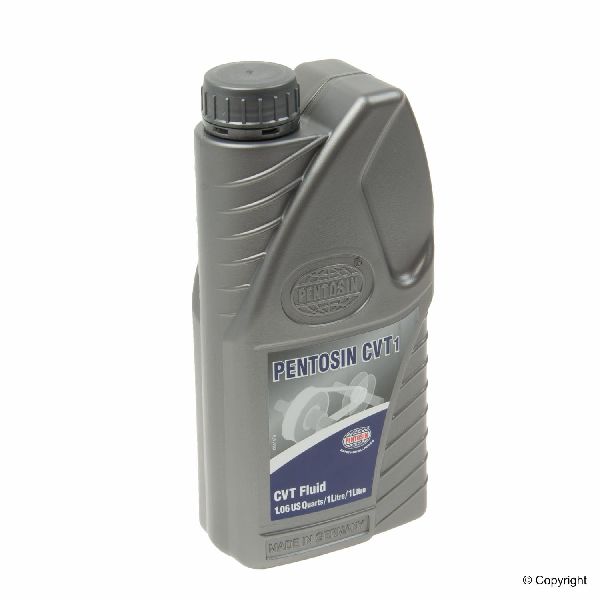
Typical fix: Replace the entire CVT valve body assembly with a new Genuine Subaru part. 🎬 See this step-by-step walkthrough of the valve body replacement. Aftermarket solenoids or rebuilt units are not recommended. The transmission fluid must be drained and refilled with Subaru High-Torque CVT Fluid, and a CVT re-learn procedure must be performed with a compatible scan tool. 🎬 Watch how to perform the essential CVT re-learn procedure.
Est. part cost: $800-$1100 - Damaged Wiring or Corroded Connectors 🟡 Medium Probability The wiring harness leading to the external TCM in the engine bay or the main connector on the transmission itself can be exposed to moisture, heat, and road debris, leading to corrosion or physical damage. Rodents chewing on soy-based wire insulation is also a known issue on Subarus.
How to confirm: Visually inspect the wiring harness and connectors for the TCM and the main transmission plug. A technician would use a multimeter to check for power, ground, and continuity on the CAN bus wires at the TCM connector. Any corrosion should be cleaned, and damaged wires repaired.
Typical fix: Repair the broken or corroded wire section or clean/replace the damaged connector. Ensure connections are sealed with dielectric grease.
Est. part cost: $10-$100 - Low Battery Voltage or Poor Ground Connection ⚪ Low Probability → Shop Vehicle Battery On 2016-2018 models, a faulty Data Communications Module (DCM) related to the obsolete 3G network can cause a parasitic battery drain, leading to low voltage conditions that disrupt module communication. This issue is covered by Subaru TSB 15-316-23R and a related warranty extension. Weak grounds are also a common source of intermittent electronic issues.
How to confirm: Test the battery voltage with the engine off (should be ~12.6V) and running (should be 13.7-14.7V). Perform a voltage drop test on the main ground connections from the battery to the chassis and engine. If a parasitic drain is suspected, an ammeter can be used to measure dark current; a draw from the DCM is a known fault.
Typical fix: Recharge or replace the weak battery. Clean or tighten loose or corroded ground straps. If the DCM is faulty, it can be reprogrammed or bypassed by a dealer or with an aftermarket harness.
Est. part cost: $150-$300
Rare But Worth Checking
- Faulty Transmission Control Module (TCM): → Shop Transmission Assembly While possible, the external TCM on these Foresters is not the most common point of failure. It is a robust component and should only be considered for replacement after all wiring, power/ground, and internal transmission faults (like the valve body) have been definitively ruled out.
- Blown Fuse: A simple blown fuse for the TCM can cause a complete loss of communication. Always check the fuse box in the engine bay and inside the cabin before beginning more complex diagnostics.
Diagnosis Steps
- Check Battery Health: Ensure the battery voltage is stable and correct (approx. 12.6V engine off, 13.7-14.7V running). A weak battery is a common cause of communication codes.
- Scan All Modules: Use an advanced scan tool to check for codes in all vehicle modules, not just the engine computer. Note any other 'U' codes or transmission-specific 'P' codes like P2764 or P0971.
- Check Fuses: Inspect all fuses related to the TCM and ECM in the under-hood and interior fuse panels.
- Consult TSBs: Check if the vehicle's VIN falls under the CVT warranty extension (TSB 16-107-17R) or the DCM battery drain warranty extension (TSB 15-316-23R). If covered, the dealer should perform the diagnosis and repair.
- Inspect Wiring and Connectors: Visually inspect the wiring harness going to the external TCM in the engine bay and the main connector on the CVT itself. Look for any signs of corrosion, chafing, or rodent damage.
- Verify TCM Power and Ground: Using a multimeter and wiring diagram, confirm that the TCM is receiving proper power and has a solid ground connection at its connector. Perform a voltage drop test on the ground circuit.
- Check CAN Bus Integrity: A technician can check the resistance between pins 6 and 14 of the OBD-II port (with the battery disconnected). A reading of 60 ohms indicates a healthy network; 120 ohms suggests a break in the circuit or a module is offline.
- Diagnose Valve Body: If all external electrical checks are good and symptoms persist, the fault is almost certainly the internal CVT valve body. This is a widely documented failure point confirmed by many technicians and owners.
Parts You'll Likely Need
- CVT Valve Body Assembly
(OEM #31706AA033 (Note: This is a common part number, but always verify with VIN. It may be superseded by 31706AA034 or other numbers).)— This is the most common point of failure on the TR580 CVT that leads to communication issues and performance problems. The entire assembly must be replaced as individual solenoids are not sold by Subaru and aftermarket options are unreliable.
Trusted brands: Subaru (Genuine OEM)
OEM price range: $800-$1100
Aftermarket price range: Not Recommended - Subaru High-Torque CVT Fluid (CVTF-II)
(OEM #SOA427V1660)— The transmission fluid must be drained to replace the valve body and refilled with the correct
Related Codes That Often Appear With This One
- U0100 — Lost Communication With ECM/PCM 'A'. This can appear with U0101 during a major network-wide communication failure, often pointing to a wiring or power supply issue affecting multiple modules.
- U0122 — Lost Communication With Vehicle Dynamics Control Module. This often appears as part of the 'Christmas tree' effect when a primary module like the TCM goes offline.
- P2764 — Torque Converter Clutch Pressure Control Solenoid Control Circuit Low. This is a very specific code that often points directly to the solenoid failure within the CVT valve body, confirming it as the root cause.
- P0971 — Pressure Control Solenoid 'C' Control Circuit High. Similar to P2764, this code points to a specific solenoid fault within the valve body, strongly indicating it needs replacement.
Technical Service Bulletins (TSBs) & Recalls
- TSB 16-107-17R: Extends the CVT warranty to 10 years or 100,000 miles for a wide range of Subaru models, including the 2014-2015 Forester, due to potential issues like valve body failure.
- TSB 15-316-23R / 15-312-23R: Address a parasitic battery drain caused by the Data Communications Module (DCM) endlessly searching for the decommissioned 3G network. A warranty extension covers the fix.
- TSB 05-70-19: Announces a design change to the rear wheel backing plates to prevent distortion that could lead to premature rear wheel bearing failure and noise on 2013-2016 Foresters.
Platform-Specific Known Issues
- Subaru extended the warranty on the CVT for many 2014-2015 models to 10 years or 100,000 miles due to known issues, including valve body failure. Owners should always check with a Subaru dealer for potential coverage.
- For 2016-2018 models, a separate warranty extension exists for the Data Communications Module (DCM), which can cause battery drain and subsequent electrical/communication codes.
Mechanic-Grade Diagnostic Values
- CAN Bus Network Integrity — expected: Approximately 60 Ω. Failure: A reading of 120 Ω indicates one of the two terminating resistors is offline or there is a break in the circuit. A reading near 0 Ω indicates a short between the CAN High and CAN Low wires.
- Torque Converter Clutch (TCC) Lock-Up Solenoid Resistance — expected: 12.2 - 13.2 Ω. Failure: A significantly higher reading (e.g., kilohms or open circuit) indicates a failed solenoid, a common cause of valve body-related codes.
- TCM Power Supply Voltage — expected: ~12.6 V (engine off) or ~14.0 V (engine running). Failure: Low or no voltage indicates a blown fuse, wiring issue, or problem with the main power supply.
Scan Tool Commands That Help
- Subaru Select Monitor (SSM) or compatible aftermarket (e.g., Autel): Clear Memory / Clear Memory 2 — Used after a repair to clear stored Diagnostic Trouble Codes (DTCs). The 'Clear Memory 2' function is more thorough, as it also clears the learned control memory, which is advisable after replacing major components.
- Subaru Select Monitor (SSM) or compatible aftermarket (e.g., Autel): AT Learning Mode — This is a mandatory calibration procedure required after replacing the CVT valve body. The function guides the technician through a specific sequence to allow the TCM to learn the characteristics of the new solenoids. Failure to perform this can result in poor shifting and drivability.
Wiring & Ground Locations
- Transmission Control Module (TCM) — In the engine bay, near the battery, under a black sound-deadening cover. It is external from the transmission.. This is the module that has lost communication. Its location in the engine bay makes it susceptible to heat and moisture but also relatively easy to access for electrical testing at its main connector.
- CVT Valve Body — Unusually, it is located on TOP of the TR580 transmission, beneath a cover plate in the engine bay.. This is the most common point of failure. Knowing it's on top of the transmission is critical for estimating labor, as the transmission does not need to be dropped from below; access is from the engine bay.
- Ground Point G100 — On the passenger side of the engine bay.. This is a known chassis ground point for circuits related to the TCM. A poor connection here can cause a loss of ground to the module, leading to communication failure.
- OBD-II Data Link Connector — Inside the cabin, under the driver's side dashboard.. Pins 6 and 14 of this connector provide a direct access point to the CAN bus network for diagnostic resistance and voltage measurements without having to access individual modules first.
Real Owner Repair Stories
- Reddit user in r/MechanicAdvice (2017 Subaru Forester XT, ~97,000 miles) — Randomly illuminated 'Christmas tree' dash with codes U0101, U0122, U0155, and U0100. Vehicle would enter a low-power safe mode. Codes would sometimes clear themselves upon restart.
❌ Tried (didn't work) Initial diagnosis focused on CAN network issues.
✅ What actually fixed it The positive battery terminal was found to be corroded and faulty. Replacing the terminal resolved the network-wide communication failure. - YouTube user detailing their DIY repair (2014 Subaru Forester XT, 197,310 miles) — Hard 'gear shifts' at low speed, codes P2762 and P0700 (precursors to valve body failure and U0101).
❌ Tried (didn't work) Driving the car after the repair without performing a relearn resulted in throttle response that felt 'off' and not smooth.
✅ What actually fixed it The user replaced the TCC solenoid on the valve body. The key part of the fix was then using an affordable aftermarket scan tool to perform the 'CVT relearn' procedure, which made a 'VERY noticeable difference in driveability' and restored smooth operation.
OEM Part Supersession History
31706AA033→31706AA331— Product improvement or revision by the manufacturer.
Heads up: While multiple part numbers exist (ending in 030, 031, 032, 034), it is critical to verify the correct part number for your specific vehicle's VIN with a Subaru dealer. Using the wrong revision may lead to compatibility issues.
Model Year Variations Within This Range
- 2014-2018: The primary difference is the engine option: a 2.5L naturally aspirated engine (typically with the TR580 CVT) and a 2.0L direct-injection turbo engine (2.0XT, often with a high-torque TR690 CVT). While the transmission models can differ, the root cause of U0101 is very often the same failure of the internal valve body solenoids, an issue known to affect both TR580 and TR690 models.
Diagnostic Flowchart
Other Known Issues on This Vehicle
Issues unrelated to this code that are worth knowing about as an owner of this generation:
- Excessive Oil Consumption 🔴 High — Very common, particularly in 2014-2015 models with the 2.5L FB25 engine. Often caused by faulty piston rings. A class-action lawsuit was filed over this issue. (Ref: Subaru issued TSBs and an extended warranty for the short block replacement, though eligibility may have expired for many vehicles.)
- Premature Rear Wheel Bearing Failure 🟠 Medium — A common issue causing a roaring or humming noise that changes with vehicle speed. Failures can occur well before 100,000 miles. (Ref: TSB 05-70-19 addresses a contributing factor (backing plate design), and earlier TSBs updated bearing parts and procedures. Covered under the 5yr/60k powertrain warranty.)
- DCM Parasitic Battery Drain (3G Sunset) 🟠 Medium → Shop Vehicle Battery — Affects 2016-2018 models. The telematics module (DCM) continuously tries to connect to the now-defunct 3G network, draining the battery when the car is off. (Ref: TSB 15-316-23R and a related warranty extension (8 years/100k miles) were issued to reprogram or bypass the module.)
- Failing Rear Suspension Coil Springs 🟡 Low — Some owners, particularly of the 2014 model year, report broken rear coil springs, causing the vehicle to sag. (Ref: A recall was issued for some vehicles for faulty rear suspension springs. Owners should check their VIN on Subaru's recall site.)
- Catalytic Converter Failure 🟠 Medium — Can fail prematurely, often triggering a P0420 code. This is often a consequence of other issues, like excessive oil consumption contaminating the converter.
Used vs. New Parts: Buying Guide for This Vehicle
When a used part is the smart pick: A used part is almost never a smart choice for this repair. The valve body failure is related to wear and mileage, so a used part from a donor vehicle is likely to have or develop the same problem. The only exception might be sourcing a known-good external TCM if it has been definitively proven faulty, but this is a rare failure.
Donor-vehicle mileage cap: roughly under 50000 miles for the part to have meaningful remaining life.
What to inspect on the donor part:
- For a used TCM, verify the part number matches exactly.
- For a used valve body (not recommended), ask for the donor vehicle's mileage and any history of transmission issues.
OEM-only on this vehicle (don't cheap out):
- CVT Valve Body Assembly
Aftermarket brands forum-validated for this vehicle:
- Dorman (for individual TCC solenoid only)
Brands owners have reported issues with on this vehicle:
- Unbranded or no-name remanufactured valve body assemblies from online marketplaces like eBay or AliExpress are considered a high-risk purchase with questionable quality control and solenoid longevity.
Real Owner Stories
Aggregated from forums and TSBs cited above. Mileages and costs reflect what owners reported in those sources.
2014 Subaru Forester — ~125000 miles
Symptoms: The 'Christmas tree' of lights appeared on the dashboard, including the AT OIL TEMP light flashing continuously.
What fixed it: Replacement of the internal CVT valve body assembly because the solenoids within the TR580 CVT failed.
Source hint: Reddit r/SubaruForester - 'CVT Issues / Valve Body Assembly Repairs' (2024)
2016 Subaru Forester — ~85000 miles
Symptoms: A P0971 code was present along with drivability issues.
What fixed it: Replacing a single solenoid for $55 and performing a CVT re-learn at home.
Cost: $55-$2,200
Source hint: Reddit r/SubaruForester - 'Yet another valve body issue' (2026)
2018 Subaru Forester Touring
Symptoms: Frustrating, intermittent CAN bus fault causing multiple communication codes including U0100, U0101, U0122, and U0155.
What fixed it: Diagnosis of intermittent wiring or ground issues, though these are noted as difficult to pinpoint.
Source hint: Reddit r/SubaruForester - '2018 Touring U0100' (2026)
2013-2015 Subaru Crosstrek (TR580 CVT)
Symptoms: No engagement in Drive or Reverse and a grinding noise.
What fixed it: Valve body failure diagnosis; shares the same TR580 transmission and failure patterns as the Forester.
Source hint: The Subaru Forums - 'CVT failure need help diagnosing further' (2023)
Related OBD-II Codes
Frequently Asked Questions
Is my 2014-2015 Subaru Forester covered for the CVT valve body failure under a warranty extension?
My 2017 Forester has a 'Christmas tree' of lights and the battery keeps dying. Could this cause U0101?
What specific transmission fluid should be used if I replace the valve body in my Forester?
Can I just replace a single solenoid instead of the entire $800-$1100 valve body assembly?
Why did my gear position indicator (PRNDL) disappear when the U0101 code appeared?
Are there any other Subaru models that share this U0101/CVT issue?
Helpful Videos
We Have This Part in Stock

The information in this article is provided for general reference and educational purposes only. Vehicle specifications, procedures, and part compatibility can vary by production date, trim level, and region. Always consult your vehicle's factory service manual and verify part numbers before purchasing or performing repairs. Safety-critical components such as airbags, seat belts, and braking systems should be installed by a qualified professional.
- Subaru Forester:
- 🧭 Diagnostic Flowchart
- 🎬 Helpful Videos
- 🛍️ Shop This Part
- What's Unique About the 2014-2018 Subaru Forester
- Symptoms You May Notice
- Most Likely Causes
- Rare But Worth Checking
- Diagnosis Steps
- Parts You'll Likely Need
- Related Codes That Often Appear With This One
- Technical Service Bulletins (TSBs) & Recalls
- Platform-Specific Known Issues
- Mechanic-Grade Diagnostic Values
- Scan Tool Commands That Help
- Wiring & Ground Locations
- Real Owner Repair Stories
- OEM Part Supersession History
- Model Year Variations Within This Range
- Other Known Issues on This Vehicle
- Used vs. New Parts: Buying Guide for This Vehicle
- Real Owner Stories
- 2014 Subaru Forester — ~125000 miles
- 2016 Subaru Forester — ~85000 miles
- 2018 Subaru Forester Touring
- 2013-2015 Subaru Crosstrek (TR580 CVT)
- Related OBD-II Codes
- Frequently Asked Questions
- 🎟️ Get 5% Off