

U0140 on 2008-2016 Audi A4: Lost Communication with Body Control Module Causes and Fixes
On a 2008-2016 Audi A4, code U0140 means the Body Control Module (BCM), known as the J519 module, has stopped communicating. This is often caused by low battery voltage, a bad ground, or a faulty J519 module itself, frequently due to water damage from clogged sunroof drains. A replacement J519 module costs $250-$500 and requires professional coding to remove 'Component Protection'.
- Before suspecting expensive parts, always check the battery and charging system first. Low voltage is the #1 cause of this code.
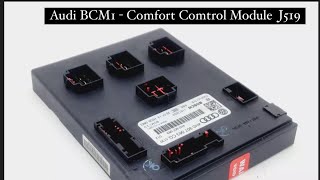
- On an Audi A4, the Body Control Module is called the J519. It is located under the driver's side dash.
- Inspect the J519 and its connectors for signs of water damage, a known issue for this vehicle generation.
- Replacing the J519 is not a DIY job for most people, as it requires special equipment to code the new module to the car.
- If you experience a sudden cascade of electrical failures and warning lights, it is highly likely a network communication problem originating from this code.
What's Unique About the 2008-2016 Audi A4
The 2008-2016 Audi A4 belongs to the B8 generation. On this platform, the Body Control Module is a specific unit known as the J519, located under the driver's side dashboard, behind the headlight switch. Unlike some generic BCM issues, problems on the A4 B8 are very commonly traced to water ingress from clogged sunroof drains or a leaking windshield seal, which allows water to drip directly onto the module and its connectors. Another known issue is pushed-back pins in the A/C pressure sensor connector, which can mimic a J519 fault. Replacement is not plug-and-play; the new J519 module must be coded to the vehicle's specific options using diagnostic tools like VCDS. This process, known as 'long coding', is necessary, and the dealer or a specialist must also adapt the 'Component Protection' system to allow the new module to fully function.
Generation note: The 2008-2016 model years cover the B8 generation of the Audi A4. An updated 'B8.5' was released in 2013, but the fundamental electrical architecture, including the location and function of the J519 Body Control Module, remained consistent across this range.
Symptoms You May Notice
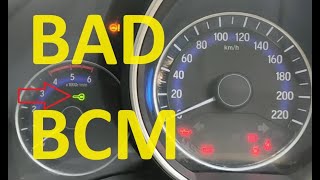
- Multiple dashboard warning lights illuminating simultaneously (ABS, Airbag, Traction Control, Parking Brake).
- Complete or intermittent failure of interior and exterior lights (e.g., lights stuck on, flickering, or not working at all).
- Power windows, central locking, and radio stop working.
- Windshield wipers operate erratically, won't turn off, or not at all.
- A/C system may not cool or function correctly.
- Parasitic battery drain, causing a dead battery after sitting.
- Vehicle may fail to start or crank (less common, but possible with severe network failure).
- Key fob remote functions not working.
- Replacing individual components like light bulbs, wiper motors, or window switches when they are not receiving commands from the offline J519 module.
- Condemning the battery without testing the alternator's output, as a failing alternator can cause the same low-voltage issues.
- Replacing the J519 module without first identifying and repairing the source of a water leak, leading to repeat failure of the new part.
Most Likely Causes
- Faulty J519 Body Control Module (due to water damage) 🔴 High Probability → Shop Body Control Module The J519 is located directly in the path of water from two common leak points: clogged sunroof drains that overflow behind the A-pillar, and failing upper windshield seals. Water drips onto the module, corroding the connectors and damaging the internal circuit board.
How to confirm: After accessing the module under the driver's dash, disconnect the large electrical connectors (often T73 and T46 plugs). Look for green or white corrosion on the pins of both the module and the harness connectors. Water stains on the module casing or surrounding carpet are also strong indicators.
Typical fix: First, the water leak MUST be fixed by cleaning the sunroof drains or resealing the windshield. Then, replace the J519 module and code the new one to the car. In some cases, if corrosion is minor, cleaning the pins with electrical contact cleaner may temporarily restore function.
Est. part cost: $250-$500 - Low Battery Voltage or Failing Alternator 🟡 Medium Probability → Shop Vehicle Battery Modern Audis have high electrical demands. Control modules are sensitive to voltage and can drop offline if system voltage falls below a certain threshold (typically ~9-10V), triggering communication codes.
How to confirm: With the engine off, measure the battery voltage at the terminals using a multimeter. A healthy AGM battery should read 12.4V or higher. With the engine running, the voltage should be between 13.7V and 14.7V.
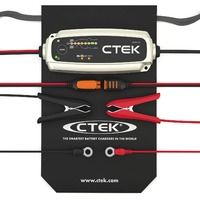
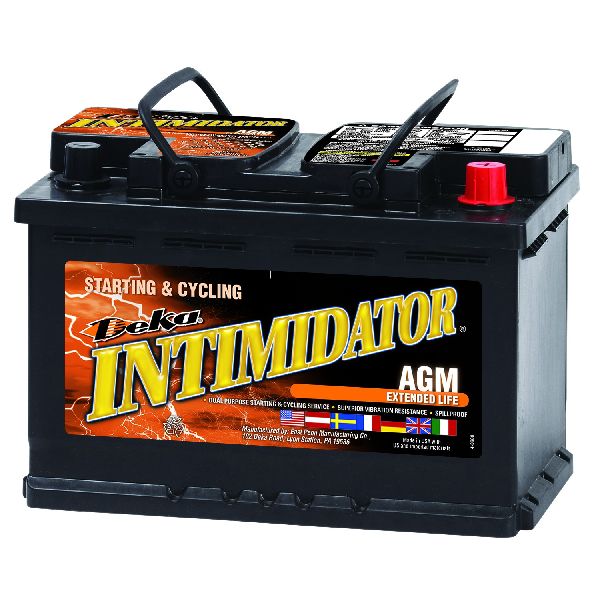
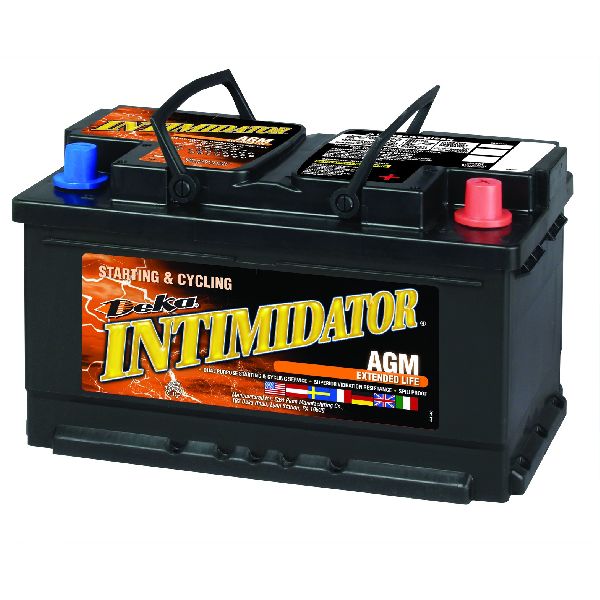
Typical fix: Charge or replace the battery. If replacing, an AGM battery is required and the new battery must be 'coded' to the vehicle's battery management system. If charging voltage is low, the alternator may need replacement.
Est. part cost: $200-$400 - Corroded or Damaged Wiring/Connectors 🟡 Medium Probability
How to confirm: Visually inspect the connectors and wiring harness at the J519 module for signs of corrosion (green or white powder), water stains, or physical damage. Check the CAN bus wiring for shorts or opens by measuring resistance between pins 6 and 14 at the OBD-II port (should be ~60 ohms).
Typical fix: Clean corroded pins with an electrical contact cleaner and a small brush. Repair or replace damaged sections of the wiring harness. Severely corroded connector plugs may need to be replaced.
Est. part cost: $20-$200 - Poor Ground Connection ⚪ Low Probability
How to confirm: Locate the main chassis ground points near the J519 module (often behind the driver's side kick panel, labeled G44 on some diagrams) and the main battery ground. Check for looseness, rust, or corrosion. Use a multimeter to check for voltage drop between the J519 ground pin and the battery negative terminal; it should be less than 0.2V.
Typical fix: Remove the ground connection, clean the contact point to bare metal, and re-secure it tightly. Apply a dielectric grease to prevent future corrosion.
Est. part cost: $5-$10
Rare But Worth Checking
- Blown Fuse for J519 Module: A blown fuse is almost always a symptom of a deeper problem, such as a short circuit in the wiring or an internal failure in the module itself, often caused by water damage. Simply replacing the fuse may result in it blowing again.
- CAN Bus Gateway Failure: The CAN Gateway module (Address 19) manages traffic between different vehicle networks. If it fails, it can isolate the J519, causing a U0140 code. This is usually accompanied by a host of other communication codes from other modules.
- Faulty A/C High-Pressure Sensor (G65) Connector: A known issue involves the pins within the G65 sensor connector pushing back, creating an open or short circuit. This can cause A/C-related faults within the J519 and, in some cases, may contribute to communication issues. Before condemning the J519 for an A/C problem, inspect this connector carefully.
Diagnosis Steps
- Check Battery Health: Start with the simplest cause. Fully charge and test the battery. Ensure system voltage is above 12.4V with the engine off and between 13.7V-14.7V with the engine running.
- Scan for All Codes: Use an Audi-compatible scan tool (like VCDS) to perform a full system scan. Note all modules that are reporting 'Cannot be reached' and all stored U-codes. This helps determine if the problem is isolated to the J519 or is a network-wide issue.
- Check for Water Ingress: Pull back the driver's side floor mat and check for dampness. Visually inspect the area around the fuse panel and under the dash for signs of water stains or rust.
- Inspect the J519 Module: Access the J519 module located under the driver's side dashboard. Disconnect its connectors (T73, T46) and inspect for any signs of water damage, corrosion, or pushed-out pins.
- Check Fuses: Inspect all fuses related to the Central Electronics module (J519). Refer to the owner's manual or fuse diagram for locations in the driver-side, passenger-side, and trunk fuse panels.
- Verify Power and Ground: With the J519 disconnected, use a multimeter and wiring diagram to confirm that the module is receiving proper battery power, ignition power, and has a solid ground connection at its connector pins.
- Check CAN Bus Integrity: With the battery disconnected, measure the resistance between Pin 6 (CAN-High) and Pin 14 (CAN-Low) at the OBD-II port. A reading of approximately 60 ohms indicates the main bus wiring and terminating resistors are likely intact. A reading of 120 ohms suggests a break in the circuit or a faulty terminating resistor.
- Isolate the Module: If power, ground, and the CAN network are all good, but the J519 module will not communicate, the module itself is the most likely culprit.
- Replace and Code: If the J519 is confirmed faulty, replace it. A new module must be programmed with the vehicle's specific 'long coding' and have Component Protection removed by a dealer or specialist to ensure all features work correctly.
Parts You'll Likely Need
- Body Control Module (J519)
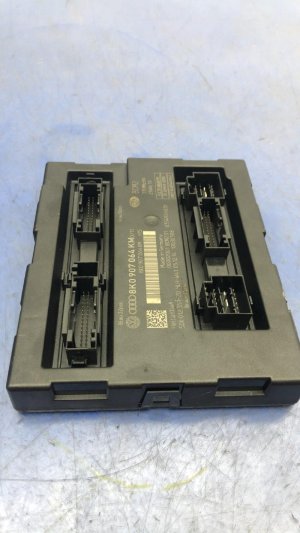
(OEM #8K0907063 (Suffix varies, e.g., D, P, J, N). It is recommended to match the suffix letter of the original part.)— This module is the central point of failure for this code. It can fail internally or, most commonly, due to external factors like water damage.
Trusted brands: Bosch, Genuine Audi
OEM price range: $400-$600
Aftermarket price range: $250-$450 - AGM Battery
(OEM #Varies by size (H7, H8))— Low system voltage is a common trigger for communication codes. The B8 platform requires an Absorbent Glass Mat (AGM) battery, which must be coded to the vehicle's energy management system upon installation.
Trusted brands: Varta, Banner, Bosch, Interstate
OEM price range: $250-$400
Aftermarket price range: $200-$300
Related Codes That Often Appear With This One
- U0073 — Control Module Communication Bus 'A' Off. This indicates a failure of the entire CAN bus network, of which the U0140 is just one symptom.
- U0155 — Lost Communication with Instrument Panel Cluster. The cluster and BCM are in constant communication. A network fault often affects both.
- 00446 — Function Limitation due to Insufficient Voltage. This is a common Audi-specific fault code that points directly to a low battery or charging system problem as the root cause.
- 00457 — Control Module for Network (J519) - No Signal/Communication. This is an Audi-specific code that is functionally identical to U0140.
Technical Service Bulletins (TSBs) & Recalls
- TSB 2027731/5 - 'Engine oil consumption too high': While not directly related to U0140, this is a critical TSB for the B8 platform concerning excessive oil consumption on 2.0T engines, a major known issue.
Platform-Specific Known Issues
- Water ingress from a leaking windshield cowl or sunroof drain can drip onto the J519 module, causing corrosion and failure.
- A Technical Service Bulletin (TSB) exists for related issues where a damaged LIN bus wire between the J519 and the A/C pressure sensor (G395) can cause communication faults and battery drain.
Mechanic-Grade Diagnostic Values
- CAN Bus Network Resistance — expected: ~60 Ω. Failure: A reading of ~120 Ω indicates a break in the CAN circuit or a missing terminating resistor. A reading near 0 Ω indicates a short circuit between the CAN High and CAN Low wires.
- CAN Bus Voltage (Key On, Engine Off) — expected: CAN-High (Pin 6 to ground) should be ~2.5-2.7V. CAN-Low (Pin 14 to ground) should be ~2.3-2.5V.. Failure: Significant deviation from these voltages, or voltages that are stuck high or low, can indicate a short to power/ground or a faulty module transceiver.
- Ground Point Voltage Drop — expected: < 0.2V (200mV). Failure: A reading higher than 0.2V indicates excessive resistance in the ground circuit, which can cause modules to malfunction.
Scan Tool Commands That Help
- VCDS (VAG-COM): Long Coding Helper (in 09-Cent. Elect.) — When replacing the J519 module. You must save the 'long coding' string from the original module before removal and write it to the new module to configure it for the car's specific options (e.g., Xenon vs. Halogen headlights, keyless entry, etc.).
- VCDS (VAG-COM): Output Tests (in 09-Cent. Elect.) — Before condemning the J519, you can use output tests to command specific functions (e.g., 'activate left low beam,' 'run wipers'). If the component works during the test, the wiring and component are likely good, pointing towards a logic or communication issue within the J519.
- ODIS (Factory Tool): Component Protection Removal — This is a mandatory step after installing a new or used J519 module. Without it, many functions will be disabled and a 'Component Protection Active' message will be present. This function requires an online connection to Audi's servers (GeKo access) and is typically only performed by dealers or certified specialists.
Wiring & Ground Locations
- J519 Module — Under the driver's side dashboard, to the left of the steering column, often behind the headlight switch and lower trim panel.. This is the module that has lost communication. Its location makes it highly susceptible to water damage from clogged sunroof drains or leaking windshield seals.
- G44 Ground Point — Behind the driver's side kick panel, near the A-pillar.. This is a primary ground connection for the J519 Body Control Module. Corrosion or looseness at this point can cause a loss of power and trigger communication faults.
- G32 Ground Point — Behind the driver's side kick panel, often near G44.. Another critical ground point in the driver's footwell area that serves multiple electronic modules. Verifying all grounds in this area is essential.
- T73 / T46 Connectors — These are the main multi-pin connectors that plug into the J519 module. T73 is a 73-pin connector, and T46 is a 46-pin connector.. These connectors are the direct interface for power, ground, and CAN bus signals to the module. They are the primary inspection point for corrosion, water damage, or backed-out pins.
Real Owner Repair Stories
- AudiWorld Forums User (2011 Audi Q5 Premium Plus (B8 Platform)) — Component Protection Active error, non-functional interior lights, dimmed MMI screen, front right headlight, signal, and DRLs not working.
❌ Tried (didn't work) Initial diagnosis pointed to multiple failed components.
✅ What actually fixed it The original J519 (BCM 1.0) had water damage. The owner replaced it with a used module from eBay and then paid an Audi dealer $150 to remove the Component Protection, which resolved the issues.
OEM Part Supersession History
8K0 907 063→Multiple suffix variations (e.g., D, J, P, DH, DJ)— Revisions for hardware updates, feature changes (e.g., Xenon vs Halogen), and bug fixes throughout the B8 platform's lifecycle.
Heads up: The part number, including the suffix letter, must be an exact match or a known compatible replacement. A module from a car with different options (e.g., different headlights, no keyless entry) will not work correctly and may not be codable. For example, a module ending in 'DH' is for cars with Xenon headlights. Using a module from an A5 in an A4, even with the same part number, can cause issues due to different datasets.
Model Year Variations Within This Range
- 2013-2016 (B8.5 Facelift): The B8.5 facelift introduced electromechanical steering, replacing the B8's hydraulic steering. While the J519's core function and location remained the same, interior controls and some electronics were updated. The MMI system was upgraded to 3G+, and button layouts for climate control changed. These changes can affect the required 'long coding' for a replacement J519 module.
Diagnostic Flowchart
Other Known Issues on This Vehicle
Issues unrelated to this code that are worth knowing about as an owner of this generation:
- Excessive Oil Consumption (2.0T Engine) 🔴 High — Extremely common on early 2.0T TFSI engines (approx. 2009-2013). Caused by defective piston rings. Often requires new pistons and rings to resolve. (Ref: TSB 2027731/5 (also referred to as 17 13 43) was issued for high oil consumption. Multiple class-action lawsuits have been settled regarding this issue, offering warranty extensions and reimbursements for some owners.)
- Timing Chain Tensioner Failure (2.0T Engine) 🔴 High — Common on pre-facelift (before 2013) models. The original tensioner can fail without warning, allowing the timing chain to jump, causing catastrophic engine damage. (Ref: A class-action settlement led to a warranty extension (U35) covering the timing chain and tensioner for 10 years or 100,000 miles on affected vehicles.)
- Water Pump Failure 🟠 Medium — The water pump, often with a plastic housing, is prone to premature failure, leading to coolant leaks and potential overheating. Typically fails between 60,000 and 80,000 miles.
- Carbon Buildup on Intake Valves 🟠 Medium — A systemic issue with direct-injection engines like the 2.0T. Carbon accumulates on the back of intake valves over 50,000-80,000 miles, causing rough idle, misfires, and reduced performance.
- Worn Control Arm Bushings 🟡 Low — Front control arm bushings wear out, leading to knocking or clunking noises over bumps and imprecise steering feel. A common maintenance item.
Used vs. New Parts: Buying Guide for This Vehicle
When a used part is the smart pick: A used J519 module is a very common and cost-effective repair strategy, especially for DIYers, provided the water leak that caused the original failure is permanently fixed. It makes sense if the buyer can match the part number exactly and has a plan for removing Component Protection.
Donor-vehicle mileage cap: roughly under 150000 miles for the part to have meaningful remaining life.
What to inspect on the donor part:
- Part number MUST match your original module exactly, including the suffix letter (e.g., 8K0 907 063 P).
- Ask the seller for clear, high-resolution photos of the connector pins. Do not buy any module with even the slightest hint of green or white corrosion.
- Ideally, source the part from a donor vehicle with the same factory options (headlights, keyless entry, etc.) as your car.
- Avoid modules from flood-damaged or front-end collision vehicles, even if they look clean.
OEM-only on this vehicle (don't cheap out):
- Body Control Module (J519) itself. There are no reliable aftermarket manufacturers for this complex component.
Aftermarket brands forum-validated for this vehicle:
- For replacement connector housings or pins, if the originals are corroded, OEM-quality suppliers found on sites like AliExpress or FindPigtails.com can be a source for the T73/T46 plugs.
Brands owners have reported issues with on this vehicle:
- No-name, unbranded electronic modules claiming to be a J519 replacement should be avoided entirely.
Real Owner Stories
Aggregated from forums and TSBs cited above. Mileages and costs reflect what owners reported in those sources.
2009 Audi A4
Symptoms: Following heavy rainfall, the owner experienced classic failure symptoms including lights staying on and the wipers and A/C becoming completely unresponsive.
What fixed it: The community identified water ingress drenching the J519 module as the cause, requiring the module to be addressed and the leak source (sunroof drains or windshield seals) to be cleared.
Source hint: AudiWorld Forums - 'Electrical Problem'
2010 Audi A5 (B8 Platform)
Symptoms: The Daytime Running Lights (DRL) and A/C system stopped working. Upon inspection, the owner found corrosion on the J519 unit's internal circuit board.
What fixed it: The owner successfully removed the J519 unit and cleaned the corrosion off the board to restore function, avoiding the cost of a full replacement.
Source hint: YouTube - '2010 Audi A5, B8. DRL and A/C not working. Removal of J519 unit Part 3'
2010 Audi A5
Symptoms: Erratic light behavior caused by water damage to the J519 module.
What fixed it: Replacement of the J519 module; the owner confirmed that Component Protection must be addressed on the replacement module for it to work.
Source hint: Ross-Tech Forums - 'J519 2010 A5 had water damage...'
2008-2016 Audi A4 (B8)
Symptoms: A/C system not functioning, which was initially suspected to be a faulty J519 module.
What fixed it: The issue was traced to pushed-back pins in the A/C pressure sensor connector rather than a failure of the J519 module itself.
Source hint: AudiWorld Forums - 'No A/C Fault In J519 Module'
Related OBD-II Codes
Frequently Asked Questions
My 2009 Audi A4 has lights stuck on and the wipers won't turn off after a heavy rain. Is this U0140?
Can I just clean the J519 module connectors to fix the communication error?
Does the new J519 module need special programming for my A4?
Is there a TSB for the A/C not working and battery drain on the B8 A4?
Could a low battery trigger U0140 on my Audi?
Where is the J519 module located in my 2008-2016 A4?
Helpful Videos

Used OEM Parts in Stock
New Aftermarket Parts Available


The information in this article is provided for general reference and educational purposes only. Vehicle specifications, procedures, and part compatibility can vary by production date, trim level, and region. Always consult your vehicle's factory service manual and verify part numbers before purchasing or performing repairs. Safety-critical components such as airbags, seat belts, and braking systems should be installed by a qualified professional.
- Audi A4:
- 🧭 Diagnostic Flowchart
- 🎬 Helpful Videos
- 🛍️ Shop This Part
- What's Unique About the 2008-2016 Audi A4
- Symptoms You May Notice
- Most Likely Causes
- Rare But Worth Checking
- Diagnosis Steps
- Parts You'll Likely Need
- Related Codes That Often Appear With This One
- Technical Service Bulletins (TSBs) & Recalls
- Platform-Specific Known Issues
- Mechanic-Grade Diagnostic Values
- Scan Tool Commands That Help
- Wiring & Ground Locations
- Real Owner Repair Stories
- OEM Part Supersession History
- Model Year Variations Within This Range
- Other Known Issues on This Vehicle
- Used vs. New Parts: Buying Guide for This Vehicle
- Real Owner Stories
- 2009 Audi A4
- 2010 Audi A5 (B8 Platform)
- 2010 Audi A5
- 2008-2016 Audi A4 (B8)
- Related OBD-II Codes
- Frequently Asked Questions
- 🎟️ Get 5% Off