

U0140 on 2023-2025 Cadillac Escalade: Causes and Fixes for Lost BCM Communication
On a 2023-2025 Escalade, code U0140 typically points to a network communication problem, not necessarily a failed Body Control Module (BCM). Manufacturer bulletins suggest the most likely causes are a faulty Serial Data Gateway Module (SDGM) or a poor connection at the SDGM. Diagnosis is complex and professional service is highly recommended. Do not swap modules from another vehicle to test, as this will damage both units.
- U0140 on a 2023-2025 Escalade is a serious network fault that requires prompt attention.
- Do not immediately assume the Body Control Module (BCM) is bad. The Serial Data Gateway Module (SDGM) is a more likely culprit according to GM's own service bulletins.
- Diagnosis is complex and should be performed by a professional with the correct scan tools and access to GM's programming software.
- Always check for simple issues first: ensure the battery is fully charged and all connections are clean and tight.
- Any replacement of the BCM or SDGM will require professional programming to function correctly in the vehicle.
What's Unique About the 2023-2025 Cadillac ESCALADE
The 2023-2025 Cadillac Escalade is built on GM's latest 'Vehicle Intelligence Platform' (VIP), also known as Global B architecture. This system is highly centralized and can process over 4.5 terabytes of data per hour, using the Serial Data Gateway Module (SDGM) as a master router for all high-speed network traffic. Unlike older vehicles where U0140 might point directly to a bad BCM 🎬 Watch: Common causes and fixes for the U0140 code, on this platform, the issue is frequently traced back to the SDGM. A logic failure in the SDGM or a poor connection can completely isolate the BCM from the rest of the vehicle, making the SDGM the primary suspect per multiple GM Technical Service Bulletins (TSBs).
Diagnostic Flowchart
Tap your situation to follow the diagnostic path that matches what you're seeing on this vehicle.
Symptoms You May Notice
- Multiple warning lights on the dashboard (ABS, Traction Control, Airbag, Service Steering Column Lock).
- Exterior lights (headlights, turn signals) not working or staying on.
- Power windows, door locks, or seats are inoperative.
- Key fob not working for remote entry or remote start.
- Wipers behaving erratically or not working.
- Instrument cluster display may be blank or show error messages.
- Radio/infotainment screen is blank or unresponsive.
- Vehicle may not start, or may start and then immediately stall.
- Unable to turn the ignition off after starting.
- Replacing the Body Control Module (BCM) without ruling out the SDGM and wiring. TSB PIT4730B specifically warns that an intermittent network fault can make a good BCM appear 'offline', leading to misdiagnosis.
- Swapping modules (BCM, SDGM, etc.) from a known-good vehicle for testing. TSB PIP4670E states this will damage the modules in BOTH vehicles on this platform.
- Replacing the Image Processing Module. TSB #PIC6607B specifically warns *not* to replace this module if U0140 is found as a history code.
- Replacing individual components like light switches or window motors without first diagnosing the network communication failure.
Most Likely Causes
- Faulty Serial Data Gateway Module (SDGM) or Poor Connection 🔴 High Probability → Shop Telematics Interface Module Multiple GM TSBs (#PIT5586G, #20-NA-212) for modern T1XX platform SUVs point directly to the SDGM as a primary cause for a flood of communication codes, including U0140. The module can suffer from internal 'logic locks' or poor pin connections at its X1 or X2 connectors.
How to confirm: A technician will use a high-end scan tool to check which modules are offline. Per TSB guidance, they will inspect the SDGM and its connectors for corrosion or damage. A key step is checking the vehicle's VIN against Service Update N212353390, as some replacement SDGMs installed by dealers were improperly programmed, requiring a re-flash to fix communication issues.
Typical fix: First, attempt to reset the module by disconnecting the battery or the specific SDGM fuse. If that fails, a dealer must reprogram the module with the latest software. If a connector fault is found, the affected terminal is repaired. If the module itself is faulty, it will require replacement and programming.
Est. part cost: $150-$300 - Faulty Body Control Module (BCM) 🟡 Medium Probability → Shop Body Control Module While the BCM is the module that has lost communication, it may not be the root cause. However, internal failure from vibration, moisture, or manufacturing defects can occur. TSB 23-NA-023 notes that a BCM messaging issue can cause no-start or no-shut-off conditions, which is resolved with a software update.
How to confirm: This is diagnosed through a process of elimination. If the SDGM, all wiring, power, and ground connections to the BCM test good, the BCM itself is the likely culprit. TSB PIT4730B warns that an intermittent network short can make a good BCM appear offline, so careful wiring diagnosis is critical before condemning the module.
Typical fix: If a software update per TSB 23-NA-023 doesn't resolve the issue, the BCM must be replaced. The new module must be programmed to the vehicle's VIN by a dealer or a qualified independent shop with GM's Service Programming System (SPS) software.
Est. part cost: $350-$550 - Wiring Harness Issue 🟡 Medium Probability The complex wiring harnesses in the Global B architecture can be susceptible to chafing, corrosion, or damage, especially at connectors or where they pass through the firewall or body panels. Water intrusion into wiring channels, particularly in door sills, has been known to cause network failures on similar platforms.
How to confirm: Visually inspect the wiring between the BCM, SDGM, and the OBD-II port. A technician will perform continuity and resistance tests on the CAN bus wires to check for opens or shorts. This can be labor-intensive.
Typical fix: Repair the damaged section of the wire or replace the affected connector. This can be labor-intensive depending on the location of the fault.
Est. part cost: $20-$200 - Low Battery Voltage or Poor Ground Connection ⚪ Low Probability → Shop Vehicle Battery Modern control modules are highly sensitive to system voltage. A weak battery or a corroded ground can cause unpredictable communication errors across all networks. Programming and diagnostic procedures require a stable voltage supply.
How to confirm: Test the battery's state of charge and health with a digital battery tester. Perform a voltage drop test on the main power and ground cables to check for hidden corrosion. A ground resistance test should show less than 0.1 Ω.
Typical fix: Charge or replace the battery. Clean or replace corroded battery terminals and ground straps. Ensure a stable power supply is used during any module programming.
Est. part cost: $20-$400
Rare But Worth Checking
- Software Glitch / Module Logic Lock: As mentioned in TSB #PIT5586G, the SDGM can get into a 'logic lock' state where it powers on but ceases all communication. Sometimes, a simple battery disconnect for 30 minutes can resolve this. In other cases, a dealer may need to re-flash the module with updated software.
- Aftermarket Device Interference: Poorly installed aftermarket accessories like remote starters, alarms, or telematics devices that tap into the CAN bus can disrupt network communication and trigger a U0140 code.
Diagnosis Steps
- Verify Battery Health: Check that the battery voltage is above 12.4V and that terminals are clean and tight. Ensure a stable power supply is available for further diagnostics.
- Full Vehicle DTC Scan: Use a professional scan tool (GM MDI 2 or equivalent) to pull codes from ALL modules. Note which modules are reporting a loss of communication with the BCM and which modules are not communicating at all.
- Check for TSBs: Review GM's service bulletins for the specific vehicle VIN, paying close attention to PIT5586G, 20-NA-212, N212353390, and 23-NA-023.
- Inspect the Serial Data Gateway Module (SDGM): Following TSB guidance, locate and inspect the SDGM and its X1 and X2 connectors for any signs of damage, corrosion, or loose pins.
- Inspect the Body Control Module (BCM): Check the BCM's power, ground, and communication line connectors for tightness and any signs of corrosion or water intrusion.
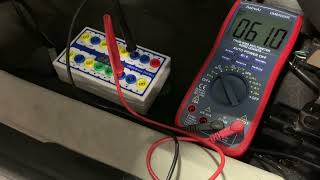
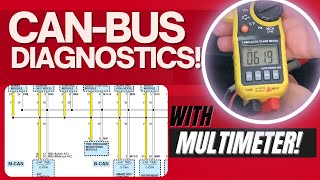
- Test CAN Bus Resistance: With the battery disconnected, measure the resistance between pins 6 and 14 of the OBD-II port. A healthy high-speed CAN bus should read approximately 60 ohms. Readings of 120 ohms or infinite resistance indicate an open circuit or a failed terminating resistor.
- Isolate the Fault: DO NOT swap modules from another vehicle. A technician will use a scan tool to try and communicate with the BCM and SDGM directly. If the BCM is offline but other modules are not, the focus remains on the SDGM, BCM, and their shared wiring. Be aware that an intermittent wiring short can make a good BCM appear offline until the ignition is fully cycled.
- Module Replacement and Programming: If a module is confirmed to be faulty, it must be replaced and then programmed to the vehicle's VIN using GM's SPS software.
Parts You'll Likely Need
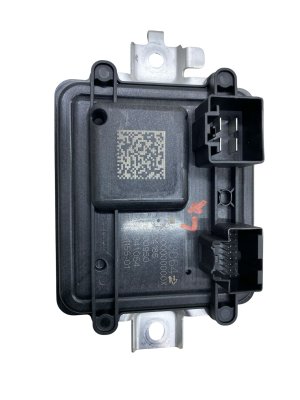
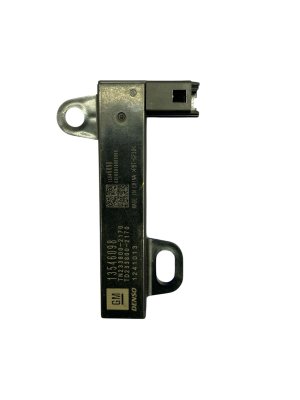
- Serial Data Gateway Module (SDGM)
(OEM #13599318)— TSBs identify this as a primary point of failure for network communication issues on modern GM SUVs. It acts as the central router for data and is prone to logic lock-ups and connector issues. This part number supersedes 13509768, 13524297, 13524298, and 13599317. Requires professional programming upon installation.
Trusted brands: ACDelco, GM Genuine Parts
OEM price range: $150-$300
Aftermarket price range: $100-$200 - Body Control Module (BCM)
(OEM #84922494)— If the SDGM and wiring are confirmed to be good, the BCM itself has likely failed internally. This part requires professional programming upon installation and cannot be swapped from another vehicle for testing. This part number has a long list of superseded numbers, indicating many revisions over time.
Trusted brands: GM Genuine Parts
OEM price range: $350-$550
Aftermarket price range: $250-$450
Related Codes That Often Appear With This One
- U0073 — Control Module Communication Bus 'A' Off. This is a general network failure code that often accompanies more specific communication codes like U0140, indicating a system-wide issue.
- U0100 — Lost Communication with ECM/PCM. When the central network is disrupted by a faulty SDGM or BCM, communication with the engine computer is also often lost.
- U0101 — Lost Communication with TCM. Similar to U0100, this indicates the Transmission Control Module has also dropped off the network, pointing to a widespread fault.
- U0155 — Lost Communication With Instrument Panel Cluster (IPC) Control Module. The instrument panel is another key module on the network that will report a fault when the BCM or SDGM fails.
Technical Service Bulletins (TSBs) & Recalls
- TSB PIT5586G / 20-NA-212: Instructs technicians to check for SDGM logic lock or bent/loose terminals at the X1/X2 connectors as a primary cause for a flood of communication DTCs, including U0140.
- Service Update N212353390: A critical notice for 2021+ models where service-replacement SDGMs may have been programmed incorrectly, causing communication failures. The fix is a dealer re-program.
- TSB PIP4670E: A stern warning NOT to swap control modules between vehicles with Global B architecture for diagnosis, as it will damage the modules in both cars and cause a no-start condition.
- TSB 23-NA-023: Addresses BCM messaging issues that can cause no-start/no-shut-off conditions, fixed by a BCM software update.
- TSB PIT4730B: Explains how an intermittent short on the high-speed network can make a perfectly good BCM appear to be offline, leading to misdiagnosis. It advises checking wiring thoroughly before replacing the BCM.
Platform-Specific Known Issues
- Water Intrusion Leading to Network Failure: On the related GMT900 platform (older Tahoe/Escalade), a well-documented failure pattern involves water leaking past the door seals or from clogged sunroof drains and collecting in the wiring channel under the driver's side door sill plate. This corrodes splice packs and wires for the CAN bus, causing a flood of communication codes, including U0140. While the T1XX platform is newer, checking for any signs of water intrusion near the BCM or main harnesses is a wise diagnostic step if wiring is suspected.
Mechanic-Grade Diagnostic Values
- CAN Bus Resistance — expected: ~60 Ω. Failure: A reading of ~120 Ω indicates an open circuit on one of the terminating resistors. A reading near 0 Ω indicates a short between the CAN High and CAN Low wires.
- CAN High Voltage (Key On) — expected: ~2.6 V (average). Failure: Significant deviation from this voltage can indicate a short or open on the CAN High line.
- CAN Low Voltage (Key On) — expected: ~2.4 V (average). Failure: Significant deviation from this voltage can indicate a short or open on the CAN Low line.
- BCM Power Supply Voltage — expected: 12.2 - 12.8 V. Failure: Low or no voltage indicates a problem with the fuse, wiring, or power source for the BCM.
- BCM Ground Resistance — expected: < 0.1 Ω. Failure: High resistance indicates a poor ground connection, which can cause intermittent module operation.
Hidden / Shadow Codes Worth Checking
- U0140 SYM00: The symptom byte '00' is a generic indicator for this code, often meaning 'No Subtype Information' is available. Its presence is noted in TSB #PIC6607B, which advises against replacing the Image Processing Module when this code is stored in history. (see via This is typically visible using the dealer-level GM GDS2 (Global Diagnostic System 2) software.)
Scan Tool Commands That Help
- GM GDS2: Module Diagnostics > BCM > Bi-Directional Controls — To test if the BCM can command specific functions like exterior lights, power locks, or wipers. If the commands work, it suggests the BCM itself is functional and the issue is likely with network communication or another module.
- GM GDS2: Service Programming System (SPS2) — This function is required to reprogram or program a new BCM or SDGM. A new module will not function until it is programmed to the vehicle's VIN using SPS2 via a Techline Connect subscription.
Wiring & Ground Locations
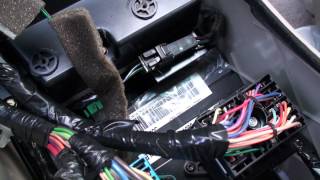
- Body Control Module (BCM) — Inside the passenger cabin, located behind the lower dashboard panel on the driver's side.. This is the module that has lost communication. Its location is essential for checking power, ground, and network connections directly at the module.
- Serial Data Gateway Module (SDGM) — The SDGM on the 2023-2025 Escalade is typically located behind the instrument panel, often near the center stack or glove box area. Specific location may require consulting the service manual.. The SDGM is the central router for network traffic on the Global B platform and a primary suspect for causing code U0140. Access is needed to inspect its connectors as per TSBs.
- G103 / G104 — Located at the left rear of the engine compartment, on the cowl or firewall area.. These are major ground points for multiple interior modules, including the BCM on some GM platforms. A loose or corroded connection here can cause widespread electrical issues.
- G201 — Located inside the cabin, on the driver's side, typically near the A-pillar behind the kick panel or lower dash.. This is a critical instrument panel ground. A fault at G201 is a known cause for communication codes on previous generation GM SUVs and remains a key checkpoint.
Real Owner Repair Stories
- Reddit user post in r/Cadillac (2023 Cadillac Escalade) — Vehicle was put into 'demo mode' and user settings were deleted. The vehicle could not be registered to the owner's account or connect to WiFi.
❌ Tried (didn't work) Owner tried to re-register the vehicle through the infotainment system., OnStar support was unable to resolve the issue remotely.
✅ What actually fixed it The dealer had replaced the Body Control Module (BCM) due to a fault. The story highlights that a BCM replacement requires proper dealer programming to restore all vehicle functions and registrations, which had not been completed correctly initially.
OEM Part Supersession History
Varies by VIN→Varies by VIN— BCM and SDGM part numbers are highly specific to the vehicle's VIN and option content. For the 2023 Escalade, a common BCM part number is 13546975. A common SDGM part number is 13542886. Always verify the correct part number with a dealer using the vehicle's VIN before ordering.
Heads up: Using an incorrect part number, even if it physically fits, will result in a programming failure and a non-functional module. Used modules must be reprogrammed by a professional with a GM Techline Connect subscription.
Model Year Variations Within This Range
- 2023-2024: A customer satisfaction program (N242435630) was issued for certain 2023-2024 Escalades for a battery drain risk following an over-the-air update. The fix is to reprogram the Serial Data Gateway Module (SDGM), which could be related to communication stability.
Helpful Videos
![How To Test CAN BUS With A Multimeter [CAN Bus Resistance Check] Mechanic Mindset](https://img.youtube.com/vi/JPE42HSJxAk/mqdefault.jpg)


We Have This Part in Stock
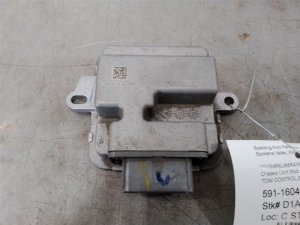
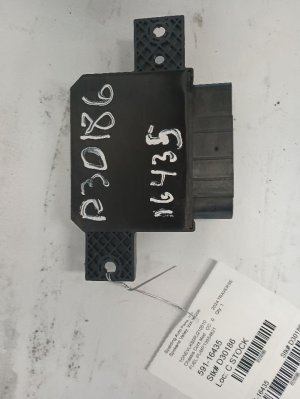
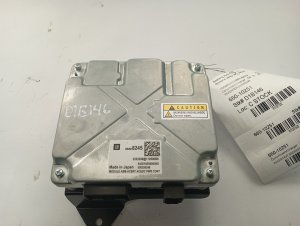
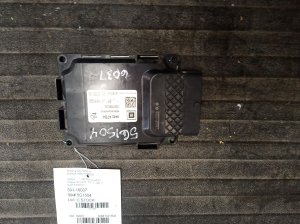

The information in this article is provided for general reference and educational purposes only. Vehicle specifications, procedures, and part compatibility can vary by production date, trim level, and region. Always consult your vehicle's factory service manual and verify part numbers before purchasing or performing repairs. Safety-critical components such as airbags, seat belts, and braking systems should be installed by a qualified professional.
- Cadillac ESCALADE:
- 🧭 Diagnostic Flowchart
- 🎬 Helpful Videos
- 🛍️ Shop This Part
- What's Unique About the 2023-2025 Cadillac ESCALADE
- Symptoms You May Notice
- Most Likely Causes
- Rare But Worth Checking
- Diagnosis Steps
- Parts You'll Likely Need
- Related Codes That Often Appear With This One
- Technical Service Bulletins (TSBs) & Recalls
- Platform-Specific Known Issues
- Mechanic-Grade Diagnostic Values
- Hidden / Shadow Codes Worth Checking
- Scan Tool Commands That Help
- Wiring & Ground Locations
- Real Owner Repair Stories
- OEM Part Supersession History
- Model Year Variations Within This Range
- 🎟️ Get 5% Off