

U0140 on 2015-2022 Cadillac Escalade ESV: BCM Communication Loss Causes and Fixes
On 2015-2020 Escalades, code U0140 is very often caused by a poor Body Control Module (BCM) ground connection known as G218, located under the driver's side dash. This is a well-documented issue per GM Technical Service Bulletin PIT5405C, where sound-deadening material gets trapped under the ground terminal from the factory. Fixing the ground is a low-cost repair, but diagnosis is key to avoid unnecessarily replacing the expensive BCM or Serial Data Gateway Module (SDGM).
- For a 2015-2020 Escalade ESV, U0140 is most likely caused by a bad BCM ground (G218), not a failed BCM.
- Before buying any parts, locate the ground under the driver's side dash, clean it thoroughly, and re-tighten it.
- Symptoms are often severe and widespread, including blank screens, loss of power steering, and stalling.
- If the BCM does need replacement, it is not plug-and-play and requires professional programming to your vehicle's VIN.
- Always check the battery and its connections first, as low voltage can mimic module communication failures.
What's Unique About the 2015-2022 Cadillac ESCALADE ESV
For the 2015-2020 (4th generation, K2XX platform) Escalade and its platform mates (Tahoe, Yukon, Silverado, Sierra), this code is strongly linked to a specific, well-documented problem: a poor ground connection for the BCM at a location designated G218. Manufacturer TSBs #PIT5405B and #PIT5405C directly point to this faulty ground as a primary cause for a cascade of electrical issues and a long list of communication codes, including U0140. This makes the ground inspection the most critical first diagnostic step on these vehicles, ahead of assuming the BCM itself has failed.
Diagnostic Flowchart
Tap your situation to follow the diagnostic path that matches what you're seeing on this vehicle.
Generation note: The 2015-2022 range covers two generations: the 4th generation (2015-2020, GMT K2XX platform) and the 5th generation (2021-2022, GMT T1XX platform). The most widely documented cause, a poor BCM ground at G218, specifically applies to the 2015-2020 K2XX models as noted in TSBs. The 2021+ T1XX models use a different electrical architecture (GM's Global B / VIP), so while causes can be similar (wiring, module failure), the specific G218 ground issue is not a known pattern for them.
Symptoms You May Notice
- Instrument panel (IPC) going blank or inoperative.
- Radio and HVAC control screens going blank.
- Reduced or total loss of power steering assist, especially when turning at low speeds.
- Engine stalling.
- Multiple warning lights on the dash, such as for ABS, Stabilitrak, or traction control.
- Power windows, door locks, and mirrors not working.
- Exterior lights (headlights, turn signals) flickering, failing to operate, or staying on.
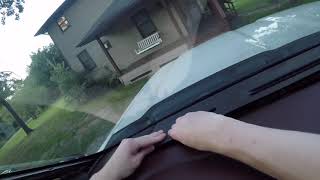
- Windshield wipers behaving erratically or stopping 🎬 See how a bad ground causes flickering and power loss. in the wrong position.
- Alarm sounding randomly when locking doors or door locks cycling.
- "Hood Ajar" message appearing on the dash.
- Replacing the BCM without first checking and cleaning the G218 ground connection. The symptoms of a bad ground and a bad BCM are nearly identical, but the cost difference is enormous.
- Replacing the BCM when the fault is an intermittent short in the CAN wiring or a logic-locked SDGM. TSB PIT4730B warns that intermittent network faults can make a good BCM appear offline.
Most Likely Causes
- Poor BCM Ground (G218) 🔴 High Probability This is a known factory assembly defect documented in GM TSB #PIT5405C for 2015-2017+ models. Forum discussions and repair videos confirm that sound-deadening material gets trapped under the ground point from the factory, leading to a poor, high-resistance connection that worsens over time.
How to confirm: Locate ground G218 under the driver's side of the dashboard, near the base of the A-pillar by the speaker. Access requires removing the side dash panel and A-pillar trim. Visually inspect for the black foam/insulation mat being pinched under the ground terminal's eyelet. A voltage drop test on the ground circuit while the system is active will definitively confirm a bad ground; the reading should be less than 0.1 volts.
Typical fix: Disconnect the negative battery terminal. Remove the 10mm ground nut. Cut away the interfering insulation mat. Clean the terminal, the stud, and the chassis surface to bare metal with a wire brush or sandpaper. Securely re-tighten the connection to 9 Nm (80 lb-in). 🎬 Watch this step-by-step guide to cleaning the G218 ground.
Est. part cost: $0-$5 - Failed or Logic-Locked Serial Data Gateway Module (SDGM) 🟡 Medium Probability → Shop Telematics Interface Module The SDGM acts as the central router for all CAN bus traffic. TSB #PIT5586G notes it can suffer from a 'logic lock' state or have loose/faulty connector terminals, causing widespread communication codes including U0140.
How to confirm: The SDGM is located behind the glove box. After a battery disconnect, inspect the connectors (X1 and X2) for any loose pins, corrosion, or damage per TSB #PIT5586G. A professional scan tool may be able to communicate with some networks but not others, pointing to the SDGM as the bottleneck. A temporary fix by disconnecting the battery or the SDGM fuse can sometimes point to a logic lock issue.
Typical fix: First, attempt a hard reset by disconnecting the battery for 30 minutes. If issues persist, the SDGM may require replacement and programming by a dealer or qualified shop.
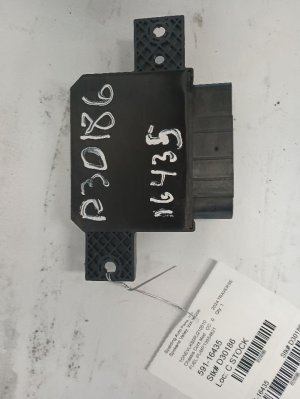
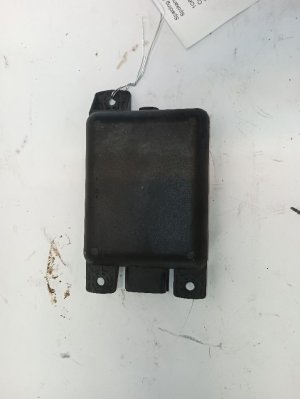
Est. part cost: $70-$175 - Failed Body Control Module (BCM) 🟡 Medium Probability → Shop Body Control Module Internal component failure from vibration, moisture, or age can cause the BCM to fail. On these complex vehicles, the BCM is a sophisticated and active computer, making it a potential point of failure, though less common than the G218 ground issue.
How to confirm: This is a process of elimination. If power and ground connections to the BCM (especially G218) are verified as good, and the CAN bus wiring and SDGM are deemed functional, but a professional scan tool still cannot communicate with the BCM, the module itself is condemned.
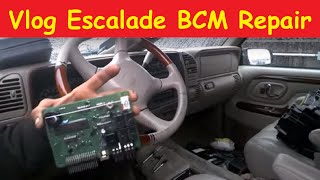
Typical fix: Replace the Body Control Module. The new BCM must be programmed to the vehicle's VIN and specific options by a dealer or a properly equipped independent shop. It is not a plug-and-play part. 🎬 Watch a professional technician diagnose and replace a faulty BCM.
Est. part cost: $300-$600 - Low Battery Voltage or Faulty Battery ⚪ Low Probability → Shop Vehicle Battery Modern control modules are sensitive to voltage. A weak or failing battery can cause modules to drop off the communication network intermittently, especially during engine cranking or when high-load accessories are used.
How to confirm: Test the battery with a digital battery tester that can measure voltage and cold cranking amps (CCA) under load. A simple voltage check is not sufficient. Check that the charging system maintains 13.7-14.7V when running.
Typical fix: Replace the vehicle's battery and ensure terminals are clean and tight.
Est. part cost: $150-$350 - Damaged CAN Bus Wiring ⚪ Low Probability On GM trucks and SUVs of this era, the body harness can sometimes rub against sharp metal brackets under the dash, such as the parking brake assembly, causing chafing and short circuits.
How to confirm: Visually inspect wiring harnesses routed under the driver's side dashboard, particularly near any brackets. Check for continuity and shorts to ground on the CAN bus wires (Pins 6 and 14 at the OBD-II port should measure ~60 ohms between them with the battery disconnected). This is an advanced step.
Typical fix: Repair the damaged section of the wiring harness and protect it from future chafing with loom or tape.
Est. part cost: $5-$100
Rare But Worth Checking
- Internal Corrosion in Negative Battery Cable: → Shop Vehicle Battery
- Shorted Starter Solenoid B+ Cable:
Diagnosis Steps
- Check and charge the battery. Ensure system voltage is stable and above 12.4V with the engine off and 13.7-14.7V when running.
- Scan all vehicle modules with a professional-grade scan tool. Save the full report. Note all 'U' codes and which modules are not responding.
- For 2015-2020 models: Locate and inspect ground G218 under the driver's side dash near the A-pillar. Disassemble, clean all mating surfaces to bare metal, remove any trapped insulation, and securely re-tighten the connection. This is the most probable fix.
- Check fuses related to the BCM and SDGM in both the interior and under-hood fuse panels.
- Inspect the Serial Data Gateway Module (SDGM) connectors (X1 and X2) behind the glovebox for loose pins, corrosion, or damage, as per TSB #PIT5586G.
- If the issue persists, perform a voltage drop test on the main battery cables, especially the negative cable, to check for internal corrosion.
- Test the power and ground pins directly at the BCM connector using a multimeter to ensure the module is receiving proper power and ground.
- Inspect the wiring harness near the BCM and around the parking brake bracket for any signs of chafing or damage.
- If all power, grounds, and wiring are confirmed good, the BCM itself is likely faulty and requires replacement and programming.
Parts You'll Likely Need
- Body Control Module
(OEM #13594764 (Example for 2015 w/ RPO AVF), 13594692 (Example, always verify by VIN))— If all wiring, grounds, and the SDGM are good, the BCM itself is the point of failure. Note that for 2015 models, you must check for RPO code 'AVF' on the glove box sticker to ensure you get the correct part.
Trusted brands: ACDelco (OEM), Dorman, Cardone
OEM price range: $250-$500
Aftermarket price range: $170-$350 - Serial Data Gateway Module (SDGM)
(OEM #13534928 (Example, always verify by VIN))— If diagnostics per TSB #PIT5586G point to a faulty SDGM, or if it's experiencing a 'logic lock' that a reset won't fix, it will need replacement. This part also requires programming.
Trusted brands: ACDelco (OEM)
OEM price range: $100-$175
Aftermarket price range: $70-$120
Related Codes That Often Appear With This One
- U0073 — Control Module Communication Bus 'A' Off. This is a general network failure code that often appears with U0140 when the BCM, a major network module, goes offline. It is listed in TSB #PIT5405C.
- U0100 — Lost Communication with ECM/PCM. The BCM acts as a gateway for many systems, and its failure can disrupt communication with the Engine Control Module. It is listed in TSB #PIT5405C.
- U0101 — Lost Communication with TCM. Similar to the ECM, the Transmission Control Module can lose communication when the BCM fails. It is listed in TSB #PIT5405C.
- U0121 — Lost Communication with Anti-Lock Brake System (ABS) Control Module. The ABS module relies on data passed through the network, and a BCM failure can interrupt this. It is listed in TSB #PIT5405C.
Technical Service Bulletins (TSBs) & Recalls
- PIT5405C: The primary TSB for 2015-2017+ models that identifies the G218 ground (insulation trapped underneath) and starter cable shorts as the root cause for U0140 and a host of other electrical gremlins.
- PIT5586G: Points to the Serial Data Gateway Module (SDGM) having connector terminal issues or being in a 'logic lock' state as a cause for multiple communication codes, including U0140.
- PIT4730B: Explains how intermittent shorts on the CAN bus can cause the BCM to appear 'offline' for a full ignition cycle, leading to misdiagnosis of BCM failure.
- PIT5405B: The predecessor to PIT5405C, also pointing to the G218 ground issue on 2015-2016 models.
Platform-Specific Known Issues
- TSB #PIT5405C and #PIT5405B specifically call out that a multitude of communication DTCs, including U0140, along with symptoms like blank screens and stalling, can be caused by a poor BCM ground at G218 on 2015-2017+ models due to trapped insulation.
- For 2015 models specifically, a mid-year production change affects BCM compatibility. Owners must check for the RPO code 'AVF' on the glovebox sticker to determine the correct part number.
Mechanic-Grade Diagnostic Values
- High-Speed GMLAN Bus Resistance — expected: Approximately 60 Ω. Failure: A reading of ~120 Ω indicates an open circuit. A reading significantly below 60 Ω indicates a short between the CAN High and Low wires.
- BCM Ground Circuit Voltage Drop — expected: < 0.1 Volts. Failure: A reading higher than 0.1V indicates high resistance in the ground connection, a primary cause of this code.
- High-Speed GMLAN Bus Voltage (Key On, Engine Off) — expected: CAN High (Pin 6) and CAN Low (Pin 14) should both be at approximately 2.5V in the recessive state.. Failure: Voltages that are stuck high (towards battery voltage), low (towards 0V), or do not change indicate a bus fault.
- System Voltage — expected: ~12.6V (engine off), 13.7V - 14.7V (engine running). Failure: Low static voltage or charging voltage outside the specified range can cause modules to drop offline.
Hidden / Shadow Codes Worth Checking
- U0140 00: The '00' is a symptom byte indicating 'No Subtype Information'. It's a general communication failure flag. (see via A dealer-level scan tool like GM GDS2 (Global Diagnostic System 2) can display these symptom bytes, which provide more specific context than a standard OBD-II reader.)
- U0073 71: This is often set alongside U0140. The '71' symptom byte indicates 'Invalid Serial Data Received'. This points to data corruption on the bus, often caused by intermittent shorts or poor connections. (see via Visible with a GM GDS2 scan tool. TSB PIT4730B specifically references this code and symptom byte combination.)
Scan Tool Commands That Help
- GM GDS2 / Techline Connect: BCM Programming/Setup — This is required any time the BCM is replaced. The new module must be programmed with the vehicle's VIN and RPO codes to function.
- GM GDS2 / Techline Connect: Key Relearn Procedure — After BCM replacement (even with a pre-programmed unit), this procedure must be performed to teach the new BCM to recognize the vehicle's existing keys for the Vehicle Theft Deterrent (VTD) system to work.
- GM SPS (Service Programming System): Serial Data Gateway Module Learn Procedure — On 2021+ models with the VIP/Global B architecture, this procedure must be run if the SDGM is replaced or if a new module is added to the network. It teaches the SDGM which modules are present on the vehicle.
Wiring & Ground Locations
- G218 — Under the driver's side of the dashboard, near the base of the A-pillar and the under-dash speaker. Access requires removing the driver's side dash end panel and potentially the A-pillar trim.. This is the primary ground for the Body Control Module on the 2015-2020 K2XX platform. A factory defect where insulation gets trapped under the ground eyelet is the most common cause of U0140 on these vehicles, per TSB PIT5405C.
- BCM Connector X3 — One of the main connectors on the Body Control Module, located under the driver's side dash.. This connector contains the critical High-Speed GMLAN data lines. Pin 8 (Tan/Black wire) is CAN Bus+ and Pin 9 (Tan wire) is CAN Bus-. Testing for voltage or resistance at these pins can help diagnose network wiring issues directly at the module.
- SDGM Connectors X1 & X2 — On the Serial Data Gateway Module, which is typically located behind the glove box or under the driver's side dash.. TSB PIT5586G identifies bent, backed out, or loose terminals in these specific connectors as a direct cause for a cascade of communication DTCs, including U0140.
Real Owner Repair Stories
- YouTube video by user Hunter Wilson for a 2014 Silverado (same K2XX platform) (2014 Chevrolet Silverado High Country) — Headlights and dash lights flickering/dimming when using turn signals or brakes. Progressed to the entire truck shutting off, loss of electric power steering, and multiple warning lights like 'Park Assist Disabled'.
❌ Tried (didn't work) Had the battery and alternator tested; both were confirmed to be good.
✅ What actually fixed it The problem was definitively solved by accessing and cleaning ground G218. The user noted that sound-deadening material was trapped under the ground connection from the factory, causing a poor, intermittent connection. After cleaning the ground, all electrical issues were resolved.
"I Checked Everything" — The Actual Cause
- A technician may find the BCM is completely unresponsive on the scan tool and condemn the module. However, TSB PIT4730B explains that if the high-speed data lines experience an intermittent short (e.g., from chafed wiring hitting a bump), the BCM can enter a 'bus off' state for the entire ignition cycle. The BCM is not faulty, but it will not communicate until the ignition is turned off and the module fully powers down, which can take up to 20 minutes. The actual root cause is the intermittent wiring short, not a failed BCM.
Model Year Variations Within This Range
- 2015-2020 (K2XX Platform): These models use GM's 'Global A' electrical architecture. The most common cause for U0140 is the physical G218 ground defect. Diagnosis is more focused on traditional wiring, grounds, and module failures. Module replacement requires programming but is less complex than on later models.
- 2021-2022 (T1XX Platform): These models use the newer 'Global B' or Vehicle Intelligence Platform (VIP) architecture. This system is more complex, featuring enhanced cybersecurity, CAN FD and Ethernet buses, and requires the MDI 2 interface and a Techline Connect subscription for any module programming. The SDGM is a more critical component, and its failure or need for a 'learn procedure' is a more likely cause of U0140 than the G218 ground issue.
Helpful Videos


We Have This Part in Stock

The information in this article is provided for general reference and educational purposes only. Vehicle specifications, procedures, and part compatibility can vary by production date, trim level, and region. Always consult your vehicle's factory service manual and verify part numbers before purchasing or performing repairs. Safety-critical components such as airbags, seat belts, and braking systems should be installed by a qualified professional.
- Cadillac ESCALADE ESV:
- 🧭 Diagnostic Flowchart
- 🎬 Helpful Videos
- 🛍️ Shop This Part
- What's Unique About the 2015-2022 Cadillac ESCALADE ESV
- Symptoms You May Notice
- Most Likely Causes
- Rare But Worth Checking
- Diagnosis Steps
- Parts You'll Likely Need
- Related Codes That Often Appear With This One
- Technical Service Bulletins (TSBs) & Recalls
- Platform-Specific Known Issues
- Mechanic-Grade Diagnostic Values
- Hidden / Shadow Codes Worth Checking
- Scan Tool Commands That Help
- Wiring & Ground Locations
- Real Owner Repair Stories
- "I Checked Everything" — The Actual Cause
- Model Year Variations Within This Range
- 🎟️ Get 5% Off