

U0140 on 2011-2018 Chevrolet Orlando: Lost BCM Communication Causes and Fixes
Code U0140 on a 2011-2018 Chevrolet Orlando means the Body Control Module (BCM) has lost communication with other vehicle computers. This often results in erratic lights, power locks, and windows. The most common causes are wiring problems, poor grounds, or a weak battery, not necessarily a failed BCM. On this platform, specifically check the negative battery cable and its ground connection, as documented in GM service bulletins for platform-mates. Diagnosis is complex and professional help is r
- U0140 means the Body Control Module (BCM) is offline and not communicating with other vehicle systems.
- Do not immediately assume the BCM has failed. The most likely causes are wiring problems, a bad ground, or a weak battery.
- Symptoms are widespread and affect many non-engine systems like lights, locks, and windows.
- This is not a DIY-friendly repair. Accurate diagnosis requires special tools and expertise in vehicle network systems.
- Driving is not recommended, as essential safety systems like exterior lights may fail without warning.
What's Unique About the 2011-2018 Chevrolet Orlando
The Chevrolet Orlando is based on GM's Delta II platform, shared with the popular Chevrolet Cruze and Buick Verano. On many GM vehicles of this era, network communication codes like U0140 are frequently traced back to wiring and connection issues rather than an outright failure of the BCM itself. Specifically for the Cruze, GM issued special coverage (14311B) for an insufficient crimp on the negative battery cable terminal, which causes widespread electrical problems and communication DTCs. Problems like chafed harnesses, corroded ground points (like G218 mentioned in TSB 18-NA-161), or poor pin connections at major connectors are common culprits that can disrupt the network and mimic a module failure.
Symptoms You May Notice
- Multiple dashboard warning lights (Check Engine, ABS, Traction Control, Service Stabilitrac)
- Interior or exterior lights flickering, staying on, or not working at all
- Power windows and/or power door locks are inoperative
- Remote key fob not working
- Wipers behaving erratically or not turning on
- Vehicle may not start or may stall while driving
- Instrument panel gauges may fluctuate or go blank
- Radio/HVAC display may turn on and off
- Audible chimes may operate erratically
- Replacing the Body Control Module (BCM) without first thoroughly testing all related wiring, power, and ground circuits. GM TSB PIT4730B specifically warns that intermittent network shorts can mimic a failed BCM, making it appear offline to a scan tool. The fault is often in the connections to the module, not the module itself.
Most Likely Causes
- Faulty Negative Battery Cable or Poor Ground Connection 🔴 High Probability → Shop Vehicle Battery The platform-mate Chevrolet Cruze had a special coverage campaign (14311B) for an insufficient crimp on the negative battery cable, causing high resistance and numerous electrical faults, including communication codes. Other GM bulletins (e.g., 46000, 18-NA-161) point to loose ground stud connections as a cause for stalling and no-start conditions. This is the most likely starting point.
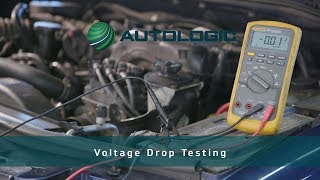
How to confirm: Perform a voltage drop test on the negative battery cable. With the engine running, measure the voltage between the battery negative post and a clean chassis ground; it should be very low (<0.2V). Visually inspect the crimp on the battery terminal and the security of the ground connection at the chassis.
Typical fix: Replace the faulty negative battery cable. Ensure the chassis ground point is clean (bare metal) and tight. GM's fix for the Cruze involved a redesigned cable.
Est. part cost: $50-$150 - Wiring Harness or Connector Fault 🟡 Medium Probability GM TSB 08-07-30-021H and PIT4730B highlight that chafed wiring harnesses and poor pin connections are a known cause of intermittent U-code faults. The issue is often an intermittent short to ground on the CAN bus wires, which can happen when driving over bumps. Manufacturer service bulletin #PIT5713A notes that while driving, several IPC warning messages and the MIL may display due to a combination of DTCs including U0140, U0100, and U0121.
How to confirm: Perform a thorough visual inspection of the wiring harnesses connected to the BCM, under the dashboard, and near the transmission. Look for any signs of chafing, breaks, or corrosion. Use a multimeter to check for continuity and shorts on the CAN bus wires (Pins 6 & 14) at the OBD-II port.
Typical fix: Repair the damaged section of the wire or replace the faulty connector. Secure the harness to prevent future damage.
Est. part cost: $10-$50 - Poor Battery Health or Low System Voltage 🟡 Medium Probability → Shop Vehicle Battery Modern vehicle modules are sensitive to voltage. If the battery is weak or the alternator is failing, voltage can drop low enough during cranking or operation to cause modules to temporarily drop off the communication network. Bulletin #PIT5677E lists U0140 alongside various electrical system codes that may trigger during voltage fluctuations.
How to confirm: Test the battery with a digital battery tester. It should have at least 12.4V at rest. With the engine running, check the alternator output; it should be between 13.7V and 14.7V.
Typical fix: Replace the weak battery or faulty alternator.
Est. part cost: $150-$400 - Failed Body Control Module (BCM) ⚪ Low Probability → Shop Body Control Module While less common than wiring issues, the BCM can fail internally due to age, voltage spikes, or water intrusion. However, GM TSBs strongly advise against replacing the BCM until all other possibilities are exhausted. Bulletin #PIC6607B specifically communicates not to replace modules if DTC U0140 is only stored as a history code.
How to confirm: This is a process of elimination. If all power, ground, and network wiring to the BCM test good, and the BCM is still unresponsive to a professional scan tool, the module itself is likely faulty.
Typical fix: Replace the Body Control Module. This new module MUST be programmed by a dealer or a qualified shop with GM-specific software (e.g., Techline Connect).
Est. part cost: $250-$500
Rare But Worth Checking
- A different faulty module on the CAN bus network (e.g., ABS, TCM) is creating electrical noise and disrupting communication for all modules. Bulletin #PIT5586G suggests checking for a logic lock of the Serial Data Gateway Module when U0140 and other communication codes are present.
- Interference from poorly installed aftermarket electronics (e.g., remote start, alarm system) tapped into the CAN bus wiring.
Diagnosis Steps
- Read all codes from all modules using a professional scan tool. Note which modules are not communicating and if codes like U0073 are also present.
- Check the battery. Ensure it is fully charged and healthy. Test the charging system to confirm proper alternator output (13.7V-14.7V).
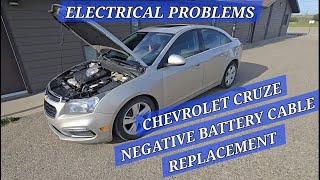
- Crucial Step for this Platform: Thoroughly inspect the negative battery cable, its terminal clamp, and the chassis ground point. Perform a voltage drop test on the cable as this is a known failure point on the platform-mate Cruze. 🎬 Watch: How to perform a proper voltage drop test
- Inspect all fuses related to the BCM and other affected systems. Check both the under-hood and interior fuse panels.
- Locate and inspect the main ground connections for the BCM (often G218 on GM platforms) and in the engine bay. Look for looseness and corrosion.
- Perform a thorough visual inspection of the wiring harness leading to the BCM, typically located behind the glove box or under the driver's side dashboard. Look for chafing, pinching, or signs of rodent damage.
- If accessible, disconnect the BCM connector (with the battery disconnected) and inspect for corroded, bent, or pushed-out pins.
- Using a wiring diagram, check for proper power and ground at the BCM connector with a multimeter.
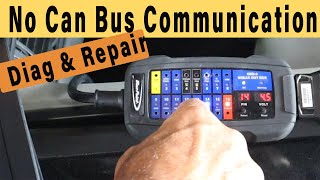
- Check the CAN bus network resistance. With the battery disconnected, measure the resistance between CAN High (Pin 6) and CAN Low (Pin 14) at the OBD-II port. It should be approximately 60 ohms.
- If an intermittent fault is suspected, gently wiggle wiring harnesses while monitoring the network status with a scan tool to try and replicate the fault, as suggested by TSBs.
- If all wiring, power, and grounds are confirmed to be good, the BCM is the likely culprit. This step should be confirmed by a professional before ordering a replacement part.
Parts You'll Likely Need
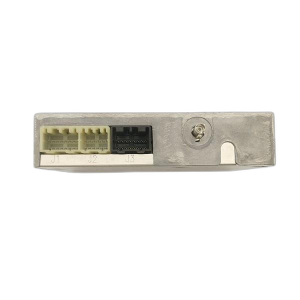
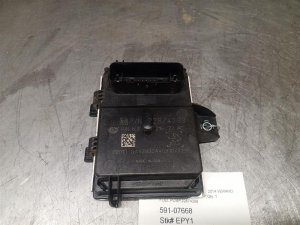
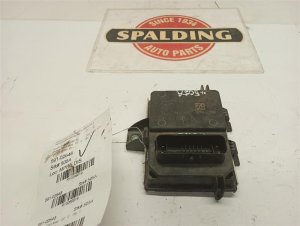
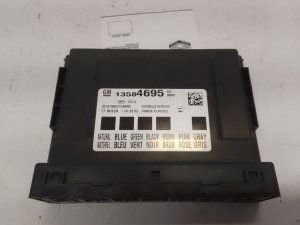
- Body Control Module (BCM)
(OEM #13586278 (may be superseded by 13592590 or 13534182))— This is the part that needs to be replaced if it has been confirmed to have failed after all wiring and power/ground checks have been completed.
Trusted brands: ACDelco, GM Genuine Parts
OEM price range: $300-$500
Aftermarket price range: $200-$400 - Negative Battery Cable — A faulty crimp or internal corrosion on the negative battery cable is a documented cause of widespread electrical and communication issues on the platform-mate Chevy Cruze.
Trusted brands: ACDelco, Dorman, Standard Motor Products
OEM price range: $70-$120
Aftermarket price range: $40-$80 - Wiring Harness Repair Kit — For repairing specific sections of the CAN bus wiring that may be chafed or corroded, particularly near connectors or known chafe points.
Trusted brands: SenCom, MEAT & DORIA, Metzger
OEM price range: N/A
Aftermarket price range: $10-$30
Related Codes That Often Appear With This One
- U0073 — Control Module Communication Bus 'A' Off. This is a general high-speed CAN bus failure code often set alongside U0140.
- U0100 — Lost Communication with ECM/PCM. If the BCM is causing network interference, it can disrupt communication with many other modules.
- U0101 — Lost Communication with TCM. Often appears with U0140 when a network-wide issue is present.
- U0121 — Lost Communication With Anti-Lock Brake System (ABS) Control Module. This often appears alongside BCM communication faults as they share the same network.
- U0155 — Lost Communication With Instrument Panel Cluster (IPC) Control Module. The instrument cluster may go blank or act erratically when BCM communication is lost.
Technical Service Bulletins (TSBs) & Recalls
- GM PIT4730B: Warns that intermittent shorts on the high-speed CAN bus can make the BCM appear offline, leading to misdiagnosis of U0140. Advises checking wiring for intermittent shorts before replacing the BCM.
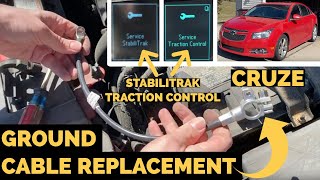
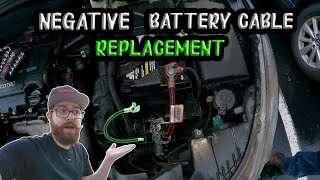
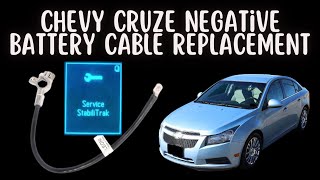
- GM 14311B (for Cruze): Special coverage for faulty negative battery cable crimp causing widespread electrical issues and communication codes. Highly relevant due to shared platform.
- GM 18-NA-161: Lists U0140 among many codes caused by voltage drop issues from battery cables or poor grounds (specifically mentions G218).
- GM 08-07-30-021H (for GMT900, but relevant principle): Documents U0140 being caused by chafed wiring and poor connections in major harness connectors.
- Bulletin #PIC6607B: Instructs technicians not to replace the Image Processing Module if U0140 is found as a history code.
- Bulletin #PIT5677E: Lists U0140 in conjunction with several power circuit and communication DTCs (such as U0073, U0100, and U0101) during electrical system diagnostics.
- Bulletin #PIT5713A: Describes symptoms including multiple IPC warning messages and the MIL being displayed while driving when U0140 is present.
- Bulletin #PIT5586G: Advises checking for a logic lock of the Serial Data Gateway Module when diagnosing U0140 and other communication faults.
Platform-Specific Known Issues
- The platform-mate Chevrolet Cruze was subject to GM Special Coverage 14311B due to an insufficient crimp on the negative battery cable terminal. This leads to high resistance, low voltage, and a host of communication DTCs, including U0140. This should be a primary suspect for the Orlando.
Mechanic-Grade Diagnostic Values
- CAN Bus Network Resistance — expected: Approximately 60 Ω. Failure: A reading of 120 Ω indicates an open circuit or a missing terminating resistor. A reading near 0 Ω indicates a short between the CAN High and CAN Low wires.
- CAN Bus Voltage (Key On, Engine Off) — expected: CAN High (Pin 6 to ground): ~2.6V. CAN Low (Pin 14 to ground): ~2.4V. The lines should mirror each other.. Failure: CAN Low voltage being high (e.g., over 4V) can indicate a bad ground at a module on the network. Voltages that are stuck high or low or do not change indicate a short to power or ground.
- BCM Power Supply Voltage — expected: 12.2V - 12.8V. Failure: Low or no voltage indicates a problem with the power feed circuit, fuse, or wiring.
- BCM Ground Resistance — expected: < 0.1 Ω. Failure: High resistance indicates a poor ground connection, which is a common cause of communication issues.
Scan Tool Commands That Help
- GDS2 (GM Global Diagnostic System 2): Module Diagnostics > BCM > Data Display — To see if the BCM is online and reporting any data at all. If it's not communicating with the scan tool, this will confirm it's offline.
- GDS2 (GM Global Diagnostic System 2): Output Controls — If the BCM is online, use bidirectional controls to command functions like lights, locks, and wipers. If the commands work, the BCM and output circuits are likely good, pointing to a problem with input signals (switches) or network messages.
- GM Service Programming System (SPS): Replace and Program ECU — This function is required after installing a new or used BCM. It downloads the correct software and vehicle options (RPOs) from GM's servers and flashes it to the module, making it operational for that specific VIN.
Wiring & Ground Locations
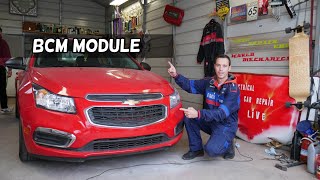
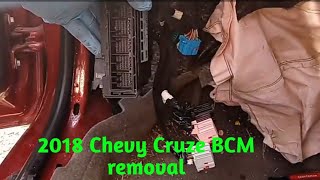
- BCM Location — Typically located behind the glove box or in the center console area on the GM Delta II platform (Cruze/Orlando).. Physical access is required to inspect connectors for corrosion, check for power/ground at the module, and to replace it if necessary.
- BCM Connectors (X1-X7) — Multiple connectors plug into the BCM itself. On the platform-mate Cruze, these are often labeled X1 through X7.. These are the primary points for checking power, ground, and network wire integrity directly at the module. Pin fretting or corrosion is common. A pinout diagram is essential for testing.
- G218 (Ground) — On many GM front-wheel-drive cars, G218 is a primary interior ground located under the driver's side of the dashboard, near the A-pillar or behind the kick panel.. This ground is often shared by multiple interior modules, including the BCM. A loose or corroded G218 can cause intermittent communication faults across several systems.
- Engine Harness Chafe Points — GM bulletins for similar platforms highlight potential chafing against the ECM/TCM bracket, upper control arm, and shock tower in the driver's side wheel well.. Although these bulletins may not name the Orlando specifically, the shared platform architecture makes these locations highly suspect for wire damage that can short out the CAN bus, leading to codes like U0140.
Real Owner Repair Stories
- YouTube video 'Fix CAN Bus Network Error' (2008 Chevrolet Cobalt (a different GM platform, but demonstrates a universal GM CAN bus diagnostic principle)) — Check engine light, power steering warning, codes U0101 and U0140.
❌ Tried (didn't work) Initial assumption was a failed Transmission Control Module (TCM) because unplugging it changed the CAN voltage readings.
✅ What actually fixed it The CAN Low voltage was abnormally high (4.4V instead of ~2.3V). The technician found a bad ground connection at the TCM. Instead of repairing the old wire, a new ground wire was run from the module's ground point to a clean chassis ground, which immediately stabilized the CAN voltage to the correct 2.8V and resolved the communication errors. - NHTSA ODI #11252479 — An owner reported a "Lost Body Control" U0140 code appearing alongside several other communication faults, including B1325 for the control module power circuit and U0184 for lost communication with the HVAC control.
OEM Part Supersession History
13586278→13534181— Standard part revision and consolidation by GM.
Heads up: The new part number is the correct service replacement. Both new and old part numbers require programming with GM's Service Programming System (SPS) after installation. They are not plug-and-play.
Diagnostic Flowchart
Other Known Issues on This Vehicle
Issues unrelated to this code that are worth knowing about as an owner of this generation:
- 1.4L Turbo PCV System Failure 🔴 High — Very common. A check valve in the intake manifold can get ingested by the engine, and/or the diaphragm in the valve cover can rupture, causing a P0171 lean code, whistling noise, and high oil consumption. (Ref: Multiple TSBs exist that address symptoms like P0171.)
- Automatic Transmission Jerking/Failure 🟠 Medium → Shop Transmission Assembly — More common on earlier models (pre-2014). Owners report jerking, delayed shifts, and in some cases, complete failure. Can sometimes be caused by electrical/voltage issues.
- Engine Oil Leaks from Oil Cooler/Heat Exchanger 🟠 Medium — Reported on both 1.8L petrol and 2.0L diesel engines. The gaskets for the oil-water heat exchanger degrade, leading to oil leaking externally or mixing with coolant.
- Radiator and Expansion Tank Failures 🟠 Medium — Plastic components like the radiator end tanks and the coolant expansion tank can become brittle and crack, leading to coolant leaks and potential overheating.
- Faulty Negative Battery Cable Connection 🔴 High → Shop Vehicle Battery — A known issue on the platform-mate Cruze (TSB 14311B) where an insufficient crimp causes high resistance, leading to flickering lights, loss of power steering assist, and various communication error codes. (Ref: 14311B (for Cruze))
Used vs. New Parts: Buying Guide for This Vehicle
When a used part is the smart pick: A used BCM from a salvage yard can be a cost-effective option, BUT ONLY if you have access to a professional with GM programming tools (GDS2/SPS). A used module is a paperweight until it is reprogrammed to your vehicle's VIN and options. For wiring harnesses or connectors, used parts are a good option if they are in excellent condition with no corrosion or damage.
Donor-vehicle mileage cap: roughly under 120000 miles for the part to have meaningful remaining life.
What to inspect on the donor part:
- For a BCM: Ensure no signs of water intrusion (white or green corrosion on the case or pins).
- Check that all connector sockets are clean and free of bent or pushed-out pins.
- For a wiring harness: Inspect for any cuts, abrasions, or brittle insulation. Avoid harnesses from vehicles in salt-belt regions if possible due to corrosion risk.
OEM-only on this vehicle (don't cheap out):
- Body Control Module (BCM): While you can buy a used OEM part, avoid unbranded aftermarket BCMs. Programming can be difficult or impossible, and they may lack full functionality. Stick with genuine GM or ACDelco parts.
Aftermarket brands forum-validated for this vehicle:
- Negative Battery Cable: ACDelco (OE), Dorman, Standard Motor Products (SMP) are generally reliable replacements.
Brands owners have reported issues with on this vehicle:
- Generic, unbranded BCMs from online marketplaces should be avoided due to high failure rates and programming incompatibility issues.
Real Owner Stories
Aggregated from forums and TSBs cited above. Mileages and costs reflect what owners reported in those sources.
2011-2016 Chevrolet Cruze (Platform-Mate)
Symptoms: Widespread electrical faults and communication DTCs including U0140 due to high resistance in the battery circuit.
What fixed it: Replacement of the negative battery cable with a redesigned version featuring a proper terminal crimp.
Source hint: GM Special Coverage 14311B (for Cruze)
Chevrolet Cobalt
Symptoms: U0101 and U0140 codes present; technician used a breakout box to monitor CAN bus voltages for communication stability.
What fixed it: Diagnostic verification of CAN bus integrity (Pins 6 & 14) to isolate the communication fault.
Source hint: YouTube video by 'Auto Repair Tips' diagnosing U0101 and U0140
GM Delta II Platform Vehicle
Symptoms: Intermittent power issues and U-codes related to module communication.
What fixed it: Troubleshooting and replacing the negative battery cable to resolve intermittent voltage drops.
Source hint: https://www.gm-trucks.com/forums/topic/257260-negative-battery-cable/
Chevrolet Impala
Symptoms: Multiple codes appeared including U0140 (Lost Body Control), B1325 (Control Module Power Circuit), and U0184 (Lost Communication HVAC Control).
What fixed it: Diagnostic isolation of the power circuit fault affecting the BCM and HVAC modules.
Source hint: NHTSA ODI #11252479
Related OBD-II Codes
Frequently Asked Questions
Does the negative battery cable issue from the Chevrolet Cruze apply to my Chevrolet Orlando?
My Orlando is stalling and showing U0140; could it be a simple ground issue?
Should I replace the Body Control Module (BCM) immediately if I see U0140?
Can a weak battery cause my Orlando's radio and HVAC display to flicker?
Is there a specific wiring area I should check for shorts on my Orlando?
Helpful Videos
We Have This Part in Stock

The information in this article is provided for general reference and educational purposes only. Vehicle specifications, procedures, and part compatibility can vary by production date, trim level, and region. Always consult your vehicle's factory service manual and verify part numbers before purchasing or performing repairs. Safety-critical components such as airbags, seat belts, and braking systems should be installed by a qualified professional.
- Chevrolet Orlando:
- 🧭 Diagnostic Flowchart
- 🎬 Helpful Videos
- 🛍️ Shop This Part
- What's Unique About the 2011-2018 Chevrolet Orlando
- Symptoms You May Notice
- Most Likely Causes
- Rare But Worth Checking
- Diagnosis Steps
- Parts You'll Likely Need
- Related Codes That Often Appear With This One
- Technical Service Bulletins (TSBs) & Recalls
- Platform-Specific Known Issues
- Mechanic-Grade Diagnostic Values
- Scan Tool Commands That Help
- Wiring & Ground Locations
- Real Owner Repair Stories
- OEM Part Supersession History
- Other Known Issues on This Vehicle
- Used vs. New Parts: Buying Guide for This Vehicle
- Real Owner Stories
- 2011-2016 Chevrolet Cruze (Platform-Mate)
- Chevrolet Cobalt
- GM Delta II Platform Vehicle
- Chevrolet Impala
- Related OBD-II Codes
- Frequently Asked Questions
- 🎟️ Get 5% Off