

U0140 on 2021-2024 Chrysler Pacifica Hybrid: Causes and Fixes for Lost BCM Communication
On the 2021-2024 Pacifica Hybrid, U0140 is almost always caused by a software glitch in the Power Sliding Door Module (PSDM), especially if the sliding doors are also inoperable. The fix is a simple dealer software update covered by TSB 08-170-24, which is free if under warranty. Do not replace the BCM before this software update is performed.
- If you have a 2021-2024 Pacifica Hybrid with code U0140 and your power sliding doors don't work, the problem is almost certainly a software bug.
- Contact a Chrysler dealer and reference TSB 08-170-24. A simple software update is the most likely fix.
- Do not replace the expensive Body Control Module (BCM) until you have had the PSDM software updated and have ruled out battery/wiring issues.
- Always check the health of the 12V battery system first, as low voltage is a common trigger for all communication codes on this vehicle.
What's Unique About the 2021-2024 Chrysler Pacifica Hybrid
For the 2021-2024 Pacifica Hybrid, this code has a very specific and well-documented cause. Chrysler issued Technical Service Bulletin (TSB) 08-170-24, which directly links the U0140 code to inoperable power sliding doors on vehicles built on or before August 18, 2024. The bulletin clarifies that the problem is often not a failure of the BCM itself, but a software bug in the Power Sliding Door Module (PSDM) that causes it to disrupt the network. This makes a dealer-installed software update the most probable and correct first step in the diagnostic process, often resolving the issue without any hardware replacement.
Symptoms You May Notice
- Check Engine Light (Malfunction Indicator Lamp) is illuminated
- Power sliding doors are inoperable or work erratically
- Malfunctions with other BCM-controlled systems: interior/exterior lights, power windows, door locks, wipers
- A 'no-start' condition in some cases
- Multiple warning lights on the instrument cluster (e.g., ABS, traction control)
- Key fob remote may stop working
- Instrument panel lights and shifter light may cycle on and off every 30 seconds after the vehicle is shut off, causing a parasitic battery drain
- Replacing the Body Control Module (BCM) when the actual fault is the Power Sliding Door Module (PSDM) software.
- Replacing the 12V battery without diagnosing an underlying parasitic drain, leading to the new battery failing prematurely.
- Replacing the Power Sliding Door motor or latches when the issue is a software glitch or dried out weather stripping increasing friction.
Most Likely Causes
- Power Sliding Door Module (PSDM) Software Glitch 🔴 High Probability A known software bug prompted Chrysler to issue TSB 08-170-24 for vehicles built on or before August 18, 2024, equipped with power sliding doors (Sales Code JRK).
How to confirm: Check if the vehicle's VIN and build date fall under TSB 08-170-24, especially if the U0140 code is accompanied by non-functional power sliding doors. A dealer can confirm applicability using the VIN.
Typical fix: A dealer or qualified shop reprograms the PSDM with the latest software using a wiTECH scan tool. The labor time is approximately 0.2 hours and is covered under warranty. A battery charger must be connected during the reflash to ensure system voltage stays above 13.2 volts.
Est. part cost: $0 - Low 12V Battery Voltage or Poor Ground Connection 🟡 Medium Probability → Shop Vehicle Battery The Pacifica Hybrid has a complex electrical system with both a main and an auxiliary 12V battery. These vehicles are known for parasitic drain issues that can cause low voltage, which disrupts module communication. A failing auxiliary battery, in particular, can cause modules to get 'confused' and stay awake, draining the main battery.
How to confirm: Test the 12V battery with a multimeter or electronic tester; resting voltage should be above 12.4V. Perform a parasitic draw test; a normal draw should be under 50mA, but faulty Pacificas can draw over 150-300mA. Inspect the main battery ground connection and the BCM ground for tightness and corrosion.
Typical fix: Recharge or replace the weak 12V battery (main or auxiliary). Identify and fix the source of any parasitic drain. Clean and tighten all ground connections.
Est. part cost: $200-$450 - Wiring Harness or Connector Issue ⚪ Low Probability Wiring in high-flex areas like the sliding door boots can chafe and short over time, causing a parasitic drain and communication issues. The CAN Bus junction block ('Star Connector'), located under the passenger glove box, is also a known point for loose pins or internal circuit board failure (cracked solder joints) causing intermittent faults across the network.
How to confirm: Visually inspect wiring harnesses for damage, especially in the sliding door area. A 'wiggle test' on the Star Connector while monitoring network stability with a scan tool can identify a loose connection. A multimeter can be used to check for continuity and shorts on the CAN bus wires (should be ~60 ohms between CAN High and CAN Low with the battery disconnected).
Typical fix: Repair the damaged section of the wiring harness. Secure or replace faulty pins in a connector. In some cases, the entire Star Connector block must be replaced.
Est. part cost: $5-$100
Rare But Worth Checking
- Faulty Body Control Module (BCM): → Shop Body Control Module This is a rare cause and should only be considered after all other possibilities, especially the PSDM software update and wiring/power issues, have been thoroughly ruled out. Replacing the BCM is expensive and requires programming by a dealer or specialist.
Diagnosis Steps
- Check for Technical Service Bulletins: The first and most important step is to check if TSB 08-170-24 applies to your vehicle's VIN. If it does, and you have sliding door issues, this is your most likely fix.
- Scan for All Codes: Use a capable OBD-II scanner to read codes from all modules, not just the engine. A flood of 'U' (network) codes points towards a systemic issue like low voltage or a CAN bus fault, not a single bad module.
- Verify Battery Health: Test the 12V battery system. Ensure resting voltage is above 12.4V and check the charging system. Be aware of the dual-battery setup in the hybrid model; the small auxiliary battery can fail and cause widespread issues.
- Perform PSDM Software Update: If TSB 08-170-24 applies, have a dealer or qualified shop perform the software update. This is the most common fix.
- Investigate Parasitic Drain: If the battery is weak or dies overnight, perform a parasitic draw test. Common culprits are the Uconnect system, door modules not going to sleep, or shorted wiring in the sliding door harness.
- Inspect Grounds and Connectors: Check the main battery ground, chassis grounds, and the connectors at the BCM (under the dash, left of the steering column) and the Star Connector (under the glove box) for corrosion or loose pins. Manufacturer Bulletin #9100221 specifically advises following published diagnostic information for U0140 to ensure all module connections are secure.
- Inspect Wiring Harness: Visually inspect wiring for chafing or damage, paying close attention to the harness that runs into the power sliding doors.
- Advanced Network Diagnostics: If the problem persists, a technician will need to use a multimeter or oscilloscope to test the CAN bus wiring for opens, shorts, and proper resistance (should be ~60 ohms between CAN High and CAN Low). This can isolate a break in the wiring or a faulty terminating resistor.
- Consider BCM Failure: Only after all wiring, power, ground, and software issues have been ruled out should the BCM itself be considered faulty.
Parts You'll Likely Need
- Power Sliding Door Module (PSDM) Software Update — This is the official fix from Chrysler for the most common cause of U0140 on this specific vehicle, as detailed in TSB 08-170-24.
OEM price range: $0-$200
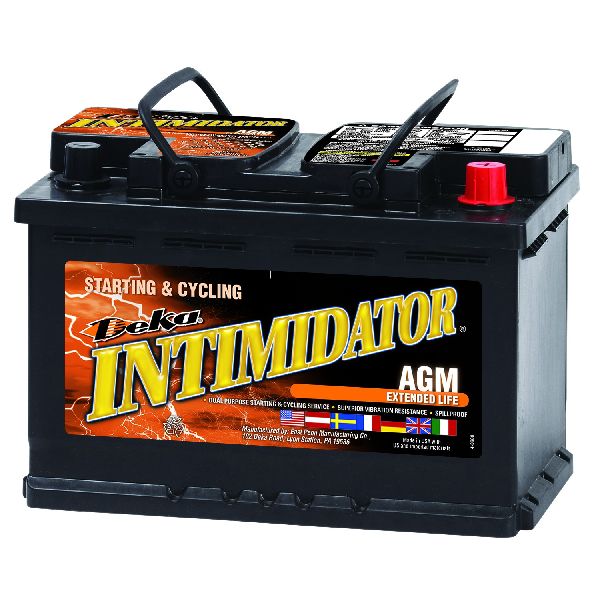
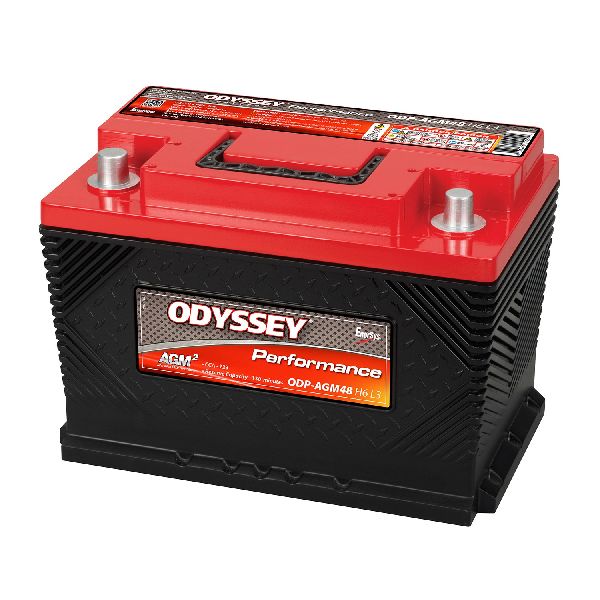
Aftermarket price range: $0 - 12V AGM Battery — Low system voltage is a frequent trigger for communication codes. The Pacifica Hybrid is known for having parasitic drain issues that can prematurely wear out the 12V battery. The auxiliary battery can also be a cause.
Trusted brands: Mopar, Duralast, DieHard
OEM price range: $300-$450
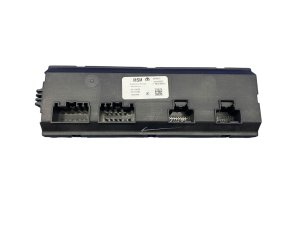
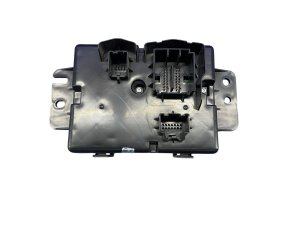
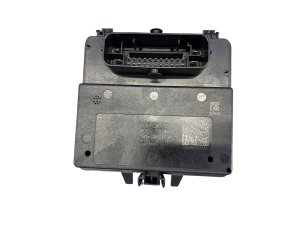
Aftermarket price range: $200-$350 - Body Control Module (BCM)
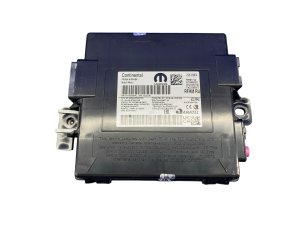
(OEM #68529662AC (example for 2022 model, always verify with VIN))— This is a last-resort part. If all software, wiring, and power supply issues are ruled out, the BCM itself may have failed internally. Requires programming.
Trusted brands: Mopar
OEM price range: $325-$600
Aftermarket price range: $270-$500
Related Codes That Often Appear With This One
- U0001 - High Speed CAN Communication Bus
- U0155 - Lost Communication With Instrument Panel Cluster (IPC) Control Module
- Multiple other 'U' codes indicating a widespread network communication failure.
- U0128, U0129, and U0141: As noted in TSB Bulletin #1801322, U0140 often appears alongside lost communication codes for the Park Brake Control Module, Brake System Control Module, and the IPM (BCM).
- P2299 and P0335: Manufacturer Bulletin #1807320 indicates that U0140 can sometimes be found in conjunction with brake pedal position incompatibility or crankshaft position sensor circuit codes.
Technical Service Bulletins (TSBs) & Recalls
- 08-170-24: Malfunction Indicator Lamp (MIL) illumination for U0140-00, with symptoms including inoperable power sliding doors. The official fix is a software reflash of the Power Sliding Door Module (PSDM) for vehicles built on or before August 18, 2024.
- 08-033-22: While not for U0140, this TSB involves a BCM software update for 2022 models to fix other electrical issues, showing that BCM software updates are a common repair strategy for this platform.
- Bulletin #9100221: Specifically addresses concerns related to DTC U0140, instructing technicians to ensure all Body Control Module connections are secure as part of the diagnostic process.
Platform-Specific Known Issues
- TSB 08-170-24: Addresses MIL illumination for DTC U0140-00 and inoperable power sliding doors on 2021-2024 models built on or before August 18, 2024. The fix is a software update for the Power Sliding Door Module (PSDM).
- Parasitic Battery Drain: This platform is known to have issues with modules not going to 'sleep' properly, leading to a dead 12V battery and subsequent communication codes.
Mechanic-Grade Diagnostic Values
- CAN Bus Network Resistance — expected: ~60 Ω (measured between CAN High and CAN Low with battery disconnected). Failure: A reading of 120 Ω indicates an open circuit or missing terminating resistor. A reading near 0 Ω indicates a short between the CAN High/Low wires.
- CAN Bus Voltage (Key On, Engine Off) — expected: CAN High: ~2.5V to 2.7V. CAN Low: ~2.3V to 2.5V. The sum of both voltages should be approximately 5V.. Failure: Voltages stuck high, low, or at 0V indicate a bus fault, such as a short to power or ground.
- BCM Ground Connection Voltage Drop — expected: ≤ 100–200 mV. Failure: A higher voltage reading points to excessive resistance in the BCM's ground circuit, which can cause intermittent operation and communication loss.
- System Voltage During Module Flashing — expected: Stable voltage between 13.2V and 13.5V. Failure: Voltage dropping below 13.2V or exceeding 13.5V can cause the software flash to fail and potentially damage the module. A dedicated power supply is required.
- Normal Parasitic Draw (after modules go to sleep) — expected: < 50 mA. Failure: A draw of 150-300mA or higher indicates a module is not entering sleep mode correctly, which is a known issue on this platform.
Hidden / Shadow Codes Worth Checking
- U0140-00: This is the specific sub-code for 'Lost Communication With Body Control Module' that is directly referenced in TSB 08-170-24. Seeing this specific code, especially with sliding door problems, makes the PSDM software update the most likely fix. (see via A professional-grade scanner like the dealer's wiTECH tool or equivalent that can read manufacturer-specific DTCs and their subtypes.)
- B222C: Vehicle Configuration Not Programmed. This code can appear after a BCM is replaced but not correctly configured. It indicates the module is not activated for the vehicle's specific features, which can cause some functions to be disabled. (see via Professional-grade scanners like wiTECH or AlfaOBD.)
Scan Tool Commands That Help
- wiTECH or equivalent (e.g., Autel, AlfaOBD): View Network Topology — This is a crucial first step to visualize the CAN bus network and see which modules are actively communicating and which are offline. It can quickly confirm if the BCM is the only module not responding.
- wiTECH or equivalent: BCM Replaced — This function is used after physically installing a new or used BCM. It initiates the process of copying the vehicle's immobilizer data and configuration from the Radio Frequency Hub (RFH) to the new BCM, allowing the vehicle to start.
- wiTECH or equivalent: Configuration Reset — This routine is used when programming a used BCM. It wipes the donor vehicle's configuration, allowing the technician to write the correct VIN and vehicle-specific settings for the car it is being installed in.
- wiTECH or equivalent: Bidirectional Test - Actuate Outputs — To test if the BCM is partially functional. A technician can command the BCM to turn on lights, lock doors, etc. If the BCM can perform these actions but still sets a U0140, it suggests an intermittent communication issue rather than a complete internal failure.
Wiring & Ground Locations
- Star Connector (CAN Bus Junction Block) — Located under the passenger side glove box. To access, the lower plastic trim panel must be removed.. This is a central hub where many CAN bus circuits connect. It is a known failure point for loose pins, corrosion, or internal board cracks, which can cause intermittent U0140 and other network codes. A 'wiggle test' of this connector is a key diagnostic step.
- Body Control Module (BCM) — Located above the driver's side kick panel, to the left of the steering column.. This is the module that has lost communication. Checking its connectors for moisture, corrosion, or loose pins is a critical diagnostic step after verifying power and grounds.
- BCM CAN-C Bus Pins — On a 2017 Pacifica (similar for this generation), the CAN-C High wire is Tan/White at pin 57 and CAN-C Low is Yellow at pin 58 of the BCM connector. This is where a technician can directly measure bus voltage or resistance to isolate the fault to the BCM or the rest of the network.. Provides direct test points at the module to verify if the network signal is reaching the BCM, or if the BCM itself is the source of the network disruption.
- Main Chassis Grounds — Key ground points are often located at the base of the A-pillars behind the kick panels and on the frame rails in the engine bay.. A poor ground connection is a common cause of low voltage and electrical noise, which can disrupt module communication and trigger a U0140 code.
Real Owner Repair Stories
- ScannerDanner Forum User (2017 Chrysler Pacifica) — Intermittent drivability issues with CAN bus waveforms going bad for 5-7 minutes at a time, then returning to normal. The voltage bias would go above 2.5V during the fault.
❌ Tried (didn't work) Initial diagnosis was difficult due to the intermittent nature of the fault. The problem would not stay long enough to isolate by unplugging modules at the Star Connector.
✅ What actually fixed it The final cause was identified as a faulty module. Although the specific module was not named in the final post, the diagnostic path confirmed that isolating modules one-by-one at the Star Connector is the correct procedure for an intermittent network fault that isn't resolved by TSBs or basic power/ground checks.
OEM Part Supersession History
68529662AC→68529662AD— Standard revision and update by the manufacturer. The new part is the correct service replacement for the original.
Heads up: The parts are interchangeable, but the correct part number for a specific vehicle should always be verified with the VIN.
Model Year Variations Within This Range
- 2021-2024 (built on or before August 18, 2024): Vehicles built on or before this date are subject to TSB 08-170-24, which points to a software bug in the Power Sliding Door Module (PSDM) as the primary cause of U0140. Vehicles built after this date should have the updated software from the factory, making this cause less likely.
- 2022: A separate TSB (08-033-22) was issued for a BCM software update on 2022 models to address other electrical issues like key fob detection. While not directly for U0140, it shows that BCM software is a common point of revision for this platform.
Diagnostic Flowchart
Used vs. New Parts: Buying Guide for This Vehicle
When a used part is the smart pick: A used BCM can be a cost-effective option IF you have access to a professional with a capable scan tool (like wiTECH or AlfaOBD) and the knowledge to perform the 'BCM Replaced' procedure. A used Star Connector or wiring pigtail from a salvage yard is an excellent, low-cost choice if the original is physically damaged.
Donor-vehicle mileage cap: roughly under 80000 miles for the part to have meaningful remaining life.
What to inspect on the donor part:
- For a BCM, match the part number exactly (e.g., 68529662AD).
- Ensure the donor vehicle was not involved in a flood or fire.
- Inspect connector pins on the used module for any signs of corrosion, moisture, or damage.
- For wiring, look for a harness section that is clean, uncut, and has flexible, undamaged insulation.
OEM-only on this vehicle (don't cheap out):
- Body Control Module (BCM) - While used OEM modules can work with programming, avoid aftermarket 'rebuilt' BCMs of unknown origin. The complexity of programming and vehicle integration makes OEM the most reliable choice.
Brands owners have reported issues with on this vehicle:
- Generic, unbranded BCMs found on auction sites. These often have compatibility issues and cannot be properly programmed to the vehicle's VIN and security settings.
Real Owner Stories
Aggregated from forums and TSBs cited above. Mileages and costs reflect what owners reported in those sources.
2018 Chrysler Pacifica
Symptoms: The owner described an intermittent power sliding door failure.
What fixed it: A similar problem reported by another user was fixed by a dealer software reflash.
Source hint: Reddit r/ChryslerPacifica - Power Sliding Door Issue - Any Suggestions?
2019 Chrysler Pacifica Hybrid
Symptoms: The 12V battery died, testing below 6V. Around the same time, the infotainment screen began rebooting repeatedly.
What fixed it: The owner identified the root cause as the dead 12V battery, which is a known source of module communication problems stemming from low voltage.
Source hint: Reddit r/pacificahybrid - 12v Battery Issue
Chrysler Pacifica
Symptoms: The dashboard and shifter lights would cycle on every 30 seconds after the vehicle was locked, causing the battery to drain overnight.
What fixed it: The issue was traced to corroded wiring in the sliding door harness sending a false 'door open' signal. A temporary fix was to pull the fuse for the power sliding doors to stop the parasitic drain.
Source hint: YouTube - Chrysler Pacifica batteries dying quickly. Very common reason
Related OBD-II Codes
Frequently Asked Questions
My 2022 Pacifica Hybrid's power sliding doors stopped working and the check engine light is on. What's the most likely problem?
How do I know if TSB 08-170-24 applies to my specific Pacifica Hybrid?
My van's 12V battery keeps dying overnight. Could this be related to the U0140 code?
The dealer said they need to perform the software update from TSB 08-170-24. How long does it take and will my warranty cover it?
After I turn my van off, the dash lights and shifter light keep flashing every 30 seconds. What causes this?
Besides the software update, what are the first things to check for a U0140 code?
Used OEM Parts in Stock
New Aftermarket Parts Available


The information in this article is provided for general reference and educational purposes only. Vehicle specifications, procedures, and part compatibility can vary by production date, trim level, and region. Always consult your vehicle's factory service manual and verify part numbers before purchasing or performing repairs. Safety-critical components such as airbags, seat belts, and braking systems should be installed by a qualified professional.
- Chrysler Pacifica Hybrid:
- 🧭 Diagnostic Flowchart
- 🛍️ Shop This Part
- What's Unique About the 2021-2024 Chrysler Pacifica Hybrid
- Symptoms You May Notice
- Most Likely Causes
- Rare But Worth Checking
- Diagnosis Steps
- Parts You'll Likely Need
- Related Codes That Often Appear With This One
- Technical Service Bulletins (TSBs) & Recalls
- Platform-Specific Known Issues
- Mechanic-Grade Diagnostic Values
- Hidden / Shadow Codes Worth Checking
- Scan Tool Commands That Help
- Wiring & Ground Locations
- Real Owner Repair Stories
- OEM Part Supersession History
- Model Year Variations Within This Range
- Used vs. New Parts: Buying Guide for This Vehicle
- Real Owner Stories
- 2018 Chrysler Pacifica
- 2019 Chrysler Pacifica Hybrid
- Chrysler Pacifica
- Related OBD-II Codes
- Frequently Asked Questions
- 🎟️ Get 5% Off