

U0140 on 2008-2012 Ford Escape: Lost Communication With Body Control Module Fixes
On a 2008-2012 Ford Escape, code U0140 is most often caused by a failing instrument cluster with bad solder joints on its main connector. A secondary common cause is water damage to the Smart Junction Box (SJB) in the passenger kick panel. Expect to pay $150-$300 for a cluster repair service or $200-$500 for a replacement SJB.
- U0140 on a 2008-2012 Escape is almost always an issue with the instrument cluster or the Smart Junction Box (BCM).
- Before any expensive repairs, perform a 'tap test' on the dash to check for a faulty cluster and inspect the passenger kick panel for signs of water damage.
- Do not immediately assume the BCM is bad; the instrument cluster is a more frequent point of failure on this specific vehicle.
- A weak battery can cause communication codes, so always test the battery and charging system as a first step.
- Replacing either the instrument cluster or the SJB will require programming by a dealer or a properly equipped independent shop.
What's Unique About the 2008-2012 Ford Escape
For the second-generation Ford Escape (2008-2012) and its platform mates, the Mercury Mariner and Mazda Tribute, the instrument panel cluster is not just a display; it's a critical communication hub (gateway) on the vehicle's CAN bus network. Internal solder joint failures on the cluster's main circuit board connector are a very common and well-documented problem that disrupts the network and frequently triggers the U0140 code, often alongside other communication faults. Additionally, these vehicles are known for water leaks from clogged sunroof drains or poor body seams that can damage the Smart Junction Box (SJB), another primary cause of this code.
Symptoms You May Notice
- Intermittent no-start or crank-no-start condition
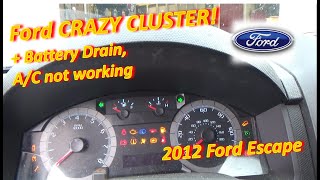
- Instrument cluster gauges drop to zero, freeze, or behave erratically
- Multiple warning lights on the dash (Check Engine, ABS, Airbag, wrench light, etc.)
- Power windows, door locks, or interior lights stop working
- Headlights, taillights, or wipers functioning incorrectly or not at all
- Battery drains overnight
- Transmission may enter a 'limp mode' or shift harshly
- Information display buttons (Setup, Info, Reset) become unresponsive.
- Engine continues to crank even after releasing the key ('Smart Start' feature malfunction).
- Inoperative climate or radio controls, as noted in manufacturer service bulletins regarding module communication loss.
- Replacing the battery without testing it and the charging system first.
- Replacing the Smart Junction Box (BCM) without first performing the 'tap test' on the dash to rule out the much more common instrument cluster fault, or without confirming visible water damage/corrosion on the SJB.
Most Likely Causes
- Failing Instrument Panel Cluster (IPC) 🔴 High Probability → Shop Instrument Cluster The IPC on this platform acts as a network gateway. Cracked solder joints on the main connector pins, caused by vibration and thermal cycles, are the most frequent root cause of communication loss.
How to confirm: With the key on, lightly tap the top of the dashboard above the instrument cluster. If the gauges flicker, warning lights flash, or symptoms appear/disappear, it strongly indicates a faulty cluster. Pushing on the main wire connector at the top of the cluster may also temporarily restore function.
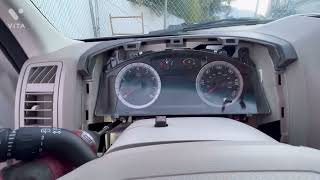
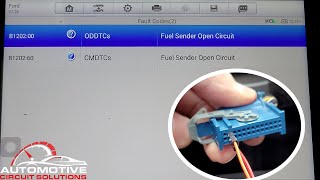
Typical fix: Remove the instrument cluster and send it to a specialized electronics repair service (e.g., Circuit Board Medics, Atlanta Speedometer, Automotive Circuit Solutions) to have the circuit board connector and other weak points re-soldered. This is more cost-effective than replacement and requires no reprogramming. 🎬 See this walkthrough on how to remove the instrument cluster.
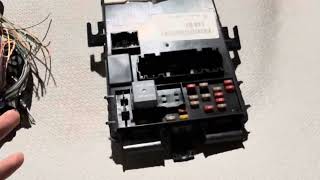
Est. part cost: $150-$300 for repair service, $400-$700 for a new programmed cluster. - Water Intrusion in Smart Junction Box (SJB/BCM) 🟡 Medium Probability Leaks from the windshield cowl, clogged sunroof drains, or body seams can allow water to drip directly onto the SJB, which is located in the passenger-side kick panel area. This causes corrosion on the board and connectors, leading to short circuits.
How to confirm: Remove the passenger-side kick panel and inspect the SJB (which also serves as the interior fuse panel) and its electrical connectors for any signs of green or white corrosion, water stains, or moisture. Check the carpet and padding in the area for dampness.
Typical fix: If corrosion is present, the SJB must be replaced. The source of the water leak must also be identified and repaired to prevent repeat failure. The new SJB will need to be programmed to the vehicle using a tool like FORScan or by a dealer.
Est. part cost: $200-$500 - Incomplete Module Configuration ⚪ Low Probability Manufacturer service bulletins, such as TSB Bulletin #SSM 46875, indicate that U0140 can sometimes be triggered by a loss of communication or incomplete module configuration within the Body Control Module (BCM) or Front Control Interface Module (FCIM).
- Poor Battery/Charging System Health ⚪ Low Probability → Shop Vehicle Battery
How to confirm: Test the battery voltage with a multimeter; it should be above 12.4V with the engine off and 13.5-14.7V when running. Low or unstable voltage can cause unpredictable behavior and communication dropouts in electronic modules.
Typical fix: Replace the weak battery or faulty alternator.
Est. part cost: $150-$400 - Damaged Wiring or Ground Connection ⚪ Low Probability
How to confirm: Visually inspect the wiring harnesses going to the SJB and instrument cluster for chafing, breaks, or corrosion, particularly in the A-pillar or door sills. Check the main body and BCM ground points for tightness and corrosion.
Typical fix: Repair the damaged section of wiring or clean/tighten the ground connection.
Est. part cost: $5-$50 for wiring supplies.
Rare But Worth Checking
- Faulty Aftermarket Electronics: Poorly installed remote starters, alarms, or audio equipment can interfere with the CAN bus network by tapping into the wrong wires, causing communication errors.
- Mechanical Engine Issues: While U0140 is a communication code, NHTSA ODI #11687721 describes a case where U0140 appeared alongside coolant leaks and misfire codes (P0302, P0316), suggesting that severe engine issues or harness damage from leaks can occasionally coincide with network faults.
Diagnosis Steps
- Scan for all codes in all modules using a capable scanner. Note any other 'U' codes, especially U0155 or U0073, and which modules are logging them.
- Check and verify battery voltage is stable and above 12.4V with the key off, and the charging system is working correctly (13.5-14.7V running).
- Perform a 'tap test' on the dashboard above the instrument cluster while the vehicle is on. Watch for any change in symptoms (gauges sweeping, lights flashing), which points to a bad cluster.
- Remove the passenger kick panel and thoroughly inspect the Smart Junction Box (SJB) and its connectors for any signs of water damage or corrosion. Feel the carpet in the area for dampness.
- Inspect the main wiring harnesses connected to the SJB and IPC for visible damage, chafing, or loose connections. Check for corrosion in connectors in the A-pillars.
- Check fuses related to the BCM/SJB and instrument cluster in both the under-hood and interior fuse panels.
- If the above steps do not identify the cause, use an advanced scan tool (like FORScan) or an oscilloscope to check the CAN bus network resistance (should be ~60 Ohms with battery disconnected) and signal integrity to see which modules are offline or sending corrupt data.
Parts You'll Likely Need
- Instrument Panel Cluster (Repair Service) — This is the most common failure point for U0140 on this vehicle. Repairing the existing cluster by re-soldering the board is more cost-effective than replacement and avoids reprogramming.
Trusted brands: Circuit Board Medics, Atlanta Speedometer, Automotive Circuit Solutions
Aftermarket price range: $150-$300 - Smart Junction Box (SJB / BCM)
(OEM #8L8Z-15604-B, 8L8T-15604-BK (Part numbers vary by year and options, always verify with VIN))— This is the second most common cause, almost always due to water damage. It must be replaced if corrosion is found.
Trusted brands: Motorcraft
OEM price range: $350-$500
Aftermarket price range: $200-$400
Related Codes That Often Appear With This One
- U0073 — Control Module Communication Bus 'A' Off. This is a general network failure code that often appears with U0140 when the instrument cluster gateway fails, as it can take down the entire HS-CAN network.
- U0155 — Lost Communication With Instrument Panel Cluster (IPC) Control Module. This code directly points to the IPC as the source of the communication problem and is a strong indicator that the cluster is the root cause.
- U0100 — Lost Communication with ECM/PCM. This can be logged by other modules when the instrument cluster gateway fails, preventing communication between the body modules and the engine computer.
- U0154 — Lost Communication With Restraints Control Module. As seen in NHTSA ODI #11427314, U0140 can appear in a "cascade" of codes including U0154 and U2300 when multiple modules lose synchronization.
Technical Service Bulletins (TSBs) & Recalls
- TSB 09-24-13 (paraphrased): Addresses intermittent electrical issues on various Ford models, including inoperative or blank instrument clusters, often caused by internal faults within the cluster itself. This TSB reinforces the diagnosis of a faulty IPC as a primary cause for these symptoms.
- TSB Bulletin #SSM 47040: Notes that some vehicles may exhibit inoperative climate or radio controls with DTC U0140 in the FCIM or DTC U0164 in the BCM, potentially due to loss of communication or incomplete module configuration.
Platform-Specific Known Issues
- A known TSB (09-24-13) exists for older Ford models regarding intermittent electrical concerns, including blank instrument clusters, which points toward the cluster being the root cause. While the TSB itself may be dated, the failure pattern it describes is the key issue for these vehicles.
- Water leaks into the passenger footwell area are a widely documented problem on this platform, leading to the destruction of the Smart Junction Box. Common leak points are clogged sunroof drains, degraded windshield seals, and faulty body seams.
- The instrument cluster acts as a gateway between the HS-CAN and MS-CAN networks. A failure of the solder joints on the main connector interrupts this gateway function, causing widespread communication loss across modules.
Mechanic-Grade Diagnostic Values
- CAN Bus Network Resistance — expected: ~60 Ohms. Failure: A reading of ~120 Ohms indicates a break in the circuit or a missing terminating resistor. A reading near 0 Ohms indicates a short between the CAN High and CAN Low wires.
- HS-CAN Voltage (Key On, Engine Off) — expected: CAN High (Pin 6 to ground): ~2.7V. CAN Low (Pin 14 to ground): ~2.3V.. Failure: Voltages that are stuck high (e.g., 5V or 12V), stuck low (0V), or equal to each other indicate a short to power, short to ground, or the wires shorted together.
- MS-CAN Voltage (Key On, Engine Off) — expected: CAN High (Pin 3 to ground): ~2.7V. CAN Low (Pin 11 to ground): ~2.3V.. Failure: Similar to HS-CAN, voltages stuck high, low, or equal to each other point to wiring faults.
Hidden / Shadow Codes Worth Checking
- U0140:00-0B: This is a common subtype seen with Ford codes. The '00' indicates 'No Subtype Information,' and the '-0B' indicates a general failure status. It doesn't add much diagnostic value beyond the main code but confirms the fault is currently present. (see via Advanced scanners like FORScan or the dealer's IDS/FDRS will display these extended codes.)
Scan Tool Commands That Help
- FORScan: On-Demand Self Test (ODST) — Run the ODST for the IPC (Instrument Panel Cluster) and BdyCM (Body Control Module/SJB). This commands the module to check its own internal circuits and report any specific internal faults, which can confirm if a module is faulty before replacement.
- FORScan: Module Network Test — This function pings all expected modules on the network and reports which ones are not responding. This is useful for quickly identifying which modules are offline and helps isolate whether the problem is with a single module or the entire network.
- FORScan: Reset BCM — After replacing a BCM/SJB or fixing a wiring issue, a module reset can be performed to clear any learned values and re-establish communication. This can sometimes resolve temporary glitches without part replacement.
Wiring & Ground Locations
- G104 — At the left front corner of the engine compartment, near the Battery Junction Box (BJB).. This is a primary engine bay ground point. Corrosion here can cause unstable voltage to multiple systems, including modules on the CAN network.
- G203 — Behind the left side of the dash.. This is a key interior ground point for components on the driver's side, including potentially the Instrument Cluster.
- G302 / G303 — Located in the right 'A' pillar area, near the passenger kick panel where the SJB is located.. These are the primary ground points for the Smart Junction Box (BCM). A loose or corroded connection at G302 or G303 is a high-probability cause for U0140 if the SJB itself is not water damaged.
- Engine Block Ground — On the 2.5L engine, a key ground strap connects from the battery negative cable to the engine block, right next to the oil filter.. Corrosion at this main engine-to-chassis ground point can cause a host of intermittent electrical issues, including battery drain and module communication problems, as it creates an unstable ground reference for the entire vehicle's electrical system.
- C2280 (A-F) — These are the large multi-pin connectors that plug into the Smart Junction Box (SJB) in the passenger kick panel.. Water intrusion from leaks causes corrosion specifically on the pins within these connectors, leading to BCM failure and the U0140 code. The HS-CAN and MS-CAN network wires pass through these connectors.
- C2409 — The main electrical connector at the top or rear of the Instrument Panel Cluster (IPC).. This is the connector where cracked solder joints on the IPC circuit board are most common. Wiggling this connector or tapping the dash above it can help confirm a faulty IPC.
Real Owner Repair Stories
- YouTube video by user 'dannyferris' (2010 Ford Escape 2.5L 4-cylinder) — Intermittent battery drain, parking lights turning on and off by themselves while the vehicle was parked and off.
❌ Tried (didn't work) Initial research did not clearly identify the location of all critical ground points.
✅ What actually fixed it The owner located and cleaned two main negative ground contacts. One was easily visible in the engine bay, but the critical, hidden one was a ground strap on the engine block, right next to the oil filter. Cleaning the corrosion from this lower ground point and disconnecting the battery for several minutes to reset the modules resolved the erratic electrical behavior. - NHTSA ODI #11427314 — An owner reported a situation where the vehicle threw over a dozen codes, including U0140, U0154, and U2300, eventually leaving them without a functioning vehicle after attempting various repairs.
Model Year Variations Within This Range
- 2008: The 2008 model year used a 2.3L 4-cylinder engine and a 4-speed automatic transmission.
- 2009-2012: Starting in 2009, the base engine was updated to a 2.5L 4-cylinder and the automatic transmission was upgraded to a 6-speed (6F35), which became the standard for the rest of the generation. The 3.0L V6 was also available throughout the range.
Diagnostic Flowchart
Used vs. New Parts: Buying Guide for This Vehicle
When a used part is the smart pick: A used Smart Junction Box (SJB) from a junkyard can be a cost-effective option, but ONLY if it is confirmed to be from a vehicle with no signs of water leaks and requires programming to your vehicle's VIN using a tool like FORScan.
Donor-vehicle mileage cap: roughly under 150000 miles for the part to have meaningful remaining life.
What to inspect on the donor part:
- Inspect the SJB and all its connector pins for any signs of green or white powder (corrosion). Do not buy if any is present.
- Check the donor vehicle's passenger footwell carpet for any signs of dampness or water stains.
- Ensure none of the plastic connector housings are cracked or broken.
OEM-only on this vehicle (don't cheap out):
- Smart Junction Box (SJB/BCM): While a used OEM part is viable, a new Motorcraft part is the safest bet for compatibility and longevity. Aftermarket remanufactured units can be a gamble.
Aftermarket brands forum-validated for this vehicle:
- Instrument Cluster Repair Services: Specialized repair services like Circuit Board Medics, Atlanta Speedometer, and Automotive Circuit Solutions are highly recommended over buying a new or used cluster.
- Dorman (for specific 'OE FIX' parts): Dorman sometimes re-engineers parts to fix original design flaws. While general quality can be hit-or-miss, their 'OE FIX' line is often a good choice if they offer a solution for this specific problem.
Brands owners have reported issues with on this vehicle:
- Generic/unbranded electronics from online marketplaces. For critical modules like the SJB, programming and quality control are essential, and unknown brands often fail prematurely or are incompatible.
Related OBD-II Codes
Frequently Asked Questions
My 2009 Escape's gauges are going crazy and sometimes it won't start. Is the instrument cluster the problem?
I found water on my passenger side floor and now my car has a U0140 code. Are these related?
Is there a TSB for the intermittent electrical issues on my 2008-2012 Ford Escape?
Should I buy a new instrument cluster from Ford or get my original one repaired?
Where is the Smart Junction Box (SJB) located on my Escape?
My 2010 Mercury Mariner has the exact same U0140 symptoms. Does this guide apply?
My Escape keeps cranking even after I let go of the key. What causes this?
Helpful Videos
We Have This Part in Stock

The information in this article is provided for general reference and educational purposes only. Vehicle specifications, procedures, and part compatibility can vary by production date, trim level, and region. Always consult your vehicle's factory service manual and verify part numbers before purchasing or performing repairs. Safety-critical components such as airbags, seat belts, and braking systems should be installed by a qualified professional.
- Ford Escape:
- 🧭 Diagnostic Flowchart
- 🎬 Helpful Videos
- 🛍️ Shop This Part
- What's Unique About the 2008-2012 Ford Escape
- Symptoms You May Notice
- Most Likely Causes
- Rare But Worth Checking
- Diagnosis Steps
- Parts You'll Likely Need
- Related Codes That Often Appear With This One
- Technical Service Bulletins (TSBs) & Recalls
- Platform-Specific Known Issues
- Mechanic-Grade Diagnostic Values
- Hidden / Shadow Codes Worth Checking
- Scan Tool Commands That Help
- Wiring & Ground Locations
- Real Owner Repair Stories
- Model Year Variations Within This Range
- Used vs. New Parts: Buying Guide for This Vehicle
- Related OBD-II Codes
- Frequently Asked Questions
- 🎟️ Get 5% Off