

U0140 on 2011-2019 Ford Explorer: Lost Communication With Body Control Module Causes and Fixes
On a 2011-2019 Ford Explorer, code U0140 most often points to a weak battery, a failing Body Control Module (BCM), or the wiring connected to it. The BCM, which is integrated into the interior fuse box, is notoriously prone to failure from water leaking down the A-pillar from a bad windshield seal and dripping directly onto it. A replacement BCM requires professional programming by a dealer or qualified technician and can cost between $650 and $1250.
- U0140 means the Body Control Module (BCM) is offline.
- Before suspecting the BCM, always check the battery's health and charge first, as low voltage is a primary cause.
- On a 2011-2019 Explorer, inspect for water leaks in the driver's footwell, as a leaking windshield is a known cause of BCM failure.
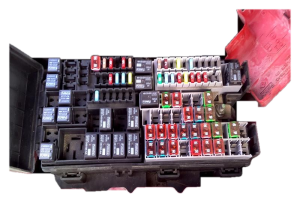
- The BCM is integrated with the interior fuse box; it is not a separate part.
- Replacing the BCM is not a simple DIY job. The new module must be professionally programmed to your vehicle's VIN for it to function correctly.
What's Unique About the 2011-2019 Ford Explorer
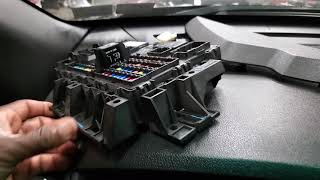
On the 5th generation Ford Explorer (2011-2019), the Body Control Module (BCM) is not a standalone black box; it is physically integrated into the interior fuse panel located under the driver's side dashboard, to the left of the steering column. 🎬 Watch: How to locate and access the BCM and fuse box. This platform is known to be susceptible to water intrusion from poorly sealed windshields or detached A-pillar trim, which can leak down the A-pillar and drip directly onto the BCM/fuse box assembly. This water damage causes corrosion and leads to communication failures that trigger the U0140 code. There is a recall (24S02) for the A-pillar trim detaching, which can exacerbate this leak.
Symptoms You May Notice
- Inoperative or erratic power windows, door locks, or mirrors
- Interior or exterior lights not working, flickering, or staying on
- Windshield wipers behaving erratically, not working, or turning on by themselves
- Multiple warning lights illuminated on the dashboard (ABS, Airbag, Traction Control, Wrench light)
- Vehicle will not start or cranks but won't start (due to anti-theft system involvement)
- Key fob not working for remote lock/unlock
- Battery draining overnight due to the BCM not entering 'sleep' mode
- "Service Power Steering Now" message may appear on the dash
- Replacing individual components like window motors, light switches, or the battery without first confirming the BCM is sending the command.
- Replacing the BCM without first fixing the water leak that caused it to fail, leading to a repeat failure of the new part.
Most Likely Causes
- Low Battery Voltage or Charging System Fault 🔴 High Probability → Shop Vehicle Battery Modern electronic modules require a stable voltage above 12.0V to communicate properly. A weak or failing battery is a very common trigger for network communication codes across all modern vehicles, including the Explorer.
How to confirm: Test the battery voltage with a multimeter with the engine off. It should be above 12.4V. Start the vehicle and test again; the voltage should be between 13.7V and 14.7V, indicating a healthy alternator. Ensure battery terminals are clean and tight.
Typical fix: Recharge or replace the battery. If replacing, a Battery Management System (BMS) reset procedure is recommended. If the charging voltage is low, diagnose and replace the alternator.
Est. part cost: $150-$400 - Water Intrusion into BCM/Fuse Box 🔴 High Probability The windshield seal on 2011-2019 Explorers can degrade or be improperly installed, allowing water to leak down the driver-side A-pillar directly onto the BCM. Detaching A-pillar trim (Recall 24S02) can create a path for water. Clogged sunroof drains are another potential source. 🎬 Watch: How to find and clean clogged sunroof drains.
How to confirm: Inspect the driver's side footwell carpet for dampness, especially after rain. Remove the lower kick panel and visually inspect the BCM/fuse box and its connectors (especially the large connectors at the bottom) for any signs of green or white corrosion or water stains.
Typical fix: If corrosion is minor, disconnecting the battery and cleaning the connectors with an electronic cleaner may work. If the module is damaged, it must be replaced. The source of the water leak (e.g., the windshield seal or A-pillar trim) must also be found and repaired to prevent repeat failure.
Est. part cost: $400-$800 - Internally Failed Body Control Module (BCM) 🟡 Medium Probability → Shop Body Control Module Besides water damage, internal electronic components can fail from vibration, age, or voltage spikes. This is often the conclusion after all other possibilities are ruled out.
How to confirm: This is diagnosed by exclusion. If the battery is good, there is no water damage, and power/ground/network wiring to the module tests okay, but a professional scan tool still cannot communicate with the BCM, the module itself has likely failed.
Typical fix: Replace the Body Control Module and have it programmed to the vehicle by a dealer or a qualified locksmith/mechanic with access to Ford's Integrated Diagnostic System (IDS).
Est. part cost: $400-$800 - Poor BCM Power or Ground Connection 🟡 Medium Probability
How to confirm: After locating the BCM, disconnect its connectors and use a multimeter and wiring diagram to check for battery voltage at the power pins and for low resistance (less than 0.1 ohm) on the ground pins to a known good chassis ground. Wiggle the harness while testing to check for intermittent connections.
Typical fix: Clean or repair the corroded or loose ground point (often located in the driver's kick panel area). Repair the damaged power wire or connector pin.
Est. part cost: $5-$100
Rare But Worth Checking
- CAN Bus Network Wiring Fault: A short or open in the CAN bus wiring harness can prevent modules from communicating. This is less common than a power/ground issue but can happen due to chafing, rodent damage, or previous improper repairs. A technician may need to run new communication wires as a bypass to test this theory.
- Interference from Aftermarket Electronics: A poorly installed remote starter, alarm, or stereo system tapped into the vehicle's network can disrupt communication and trigger U-codes.
Diagnosis Steps
- Check Battery Health: → Shop Vehicle Battery Start by testing the battery and charging system. A voltage below 12.4V (engine off) can cause communication modules to drop offline. Charge or replace the battery as needed. Perform a BMS reset if the battery is replaced.
- Scan for All Codes: Use a professional-grade scan tool (like FORScan or Ford's IDS) that can read codes from all modules (BCM, PCM, ABS, etc.). Note all U-codes present, as this helps determine if the problem is isolated to the BCM or is a network-wide issue.
- Inspect for Water Intrusion: Thoroughly check the driver's side footwell carpet and the area around the interior fuse box for any signs of moisture, staining, or corrosion. This is a known weak point on this platform. Check for detached A-pillar trim or clogged sunroof drains.
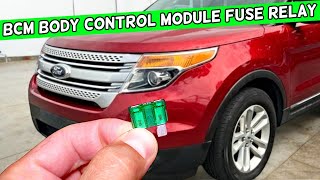
- Check BCM Fuses: The BCM has several fuses located in the very panel it's integrated with, as well as potentially in the under-hood fuse box. Consult the owner's manual for your specific year and check all fuses labeled 'BCM', 'Body Control Module', or related to its functions.
- Inspect BCM Connectors: Disconnect the battery. Access the BCM under the driver's side dash and unplug its large electrical connectors. Look carefully for bent pins, corrosion (especially green/white powder), or signs of water damage. Pay close attention to the bottom connectors where water would pool.
- Verify Power and Ground: With the connectors unplugged and battery reconnected, use a multimeter and a vehicle-specific wiring diagram to verify that the BCM's power wires have battery voltage and the ground wires have good continuity to the chassis (less than 0.1 ohm).
- Test CAN Bus Network: This is an advanced step. Measure the resistance between CAN High and CAN Low pins at the OBD-II port (should be ~60 ohms with the battery disconnected). Check for ~2.5V on each line with the key on. If readings are incorrect, a wiring fault exists.
- Condemn the BCM: If all wiring, power, and grounds are confirmed to be good, and the BCM still does not communicate with a professional scan tool, the module itself has failed and requires replacement and programming.
Parts You'll Likely Need
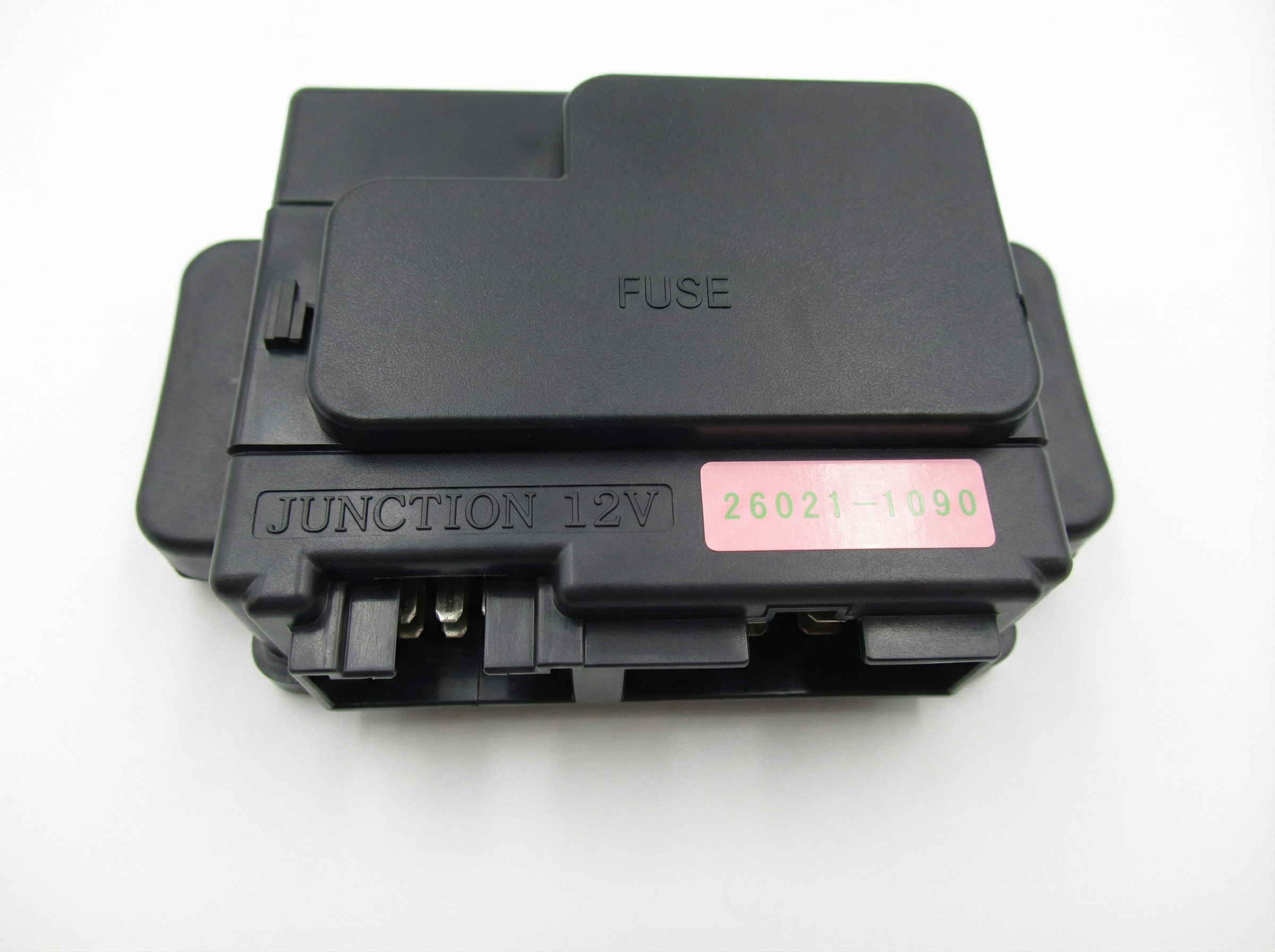
- Body Control Module (BCM) / Interior Fuse Box
(OEM #Varies by year/options. Examples: BU5T-14B561-AE (2011-14), LU5T-15604-KA (2012-13), FC3T-14B476-BB (2015). Always verify with VIN.)— This is the module that has lost communication. On the 2011-2019 Explorer, it is often damaged by water intrusion or internal electronic failure. It is also the interior fuse panel.
Trusted brands: Motorcraft (OEM), Dorman (Remanufactured)
OEM price range: $400-$800
Aftermarket price range: $300-$600 (Remanufactured)
Related Codes That Often Appear With This One
- U0073 — Control Module Communication Bus 'A' Off. This indicates a general network failure, whereas U0140 is specific to the BCM. Seeing both suggests a wider problem like a wiring short or gateway issue.
- U0155 — Lost Communication With Instrument Panel Cluster (IPC) Control Module. If the BCM acts as a gateway for other modules, its failure can cause communication loss with others, like the IPC.
- U0100 — Lost Communication with ECM/PCM. Seeing this with U0140 is a major red flag for a network-wide failure, not just a BCM-specific problem. This could point to a bad ground or a fault in the main CAN bus wiring.
Technical Service Bulletins (TSBs) & Recalls
- Recall 24S02 - A-Pillar Trim Detachment: While not directly for the U0140 code, this recall addresses a primary cause of the water leak that damages the BCM. It involves inspecting and securing the exterior A-pillar trim.
- Bulletin #SSM 48563: While issued for other Ford platforms, this bulletin notes that U0140 can be set in the Powertrain Control Module (PCM) or Instrument Panel Cluster (IPC) alongside other communication codes like U0101 and U0074, often accompanied by a malfunction indicator lamp (MIL).
Platform-Specific Known Issues
- A known issue on the 2011-2019 Ford Explorer is water leaking from a poorly sealed windshield. The water runs down the driver-side A-pillar and drips directly onto the BCM/interior fuse box assembly, causing corrosion and failure that leads to code U0140.
- Ford issued recall 24S02 for the A-pillar exterior trim detaching from the vehicle on 2011-2019 models. A loose or detached trim piece can create a direct path for water to enter the A-pillar and leak onto the BCM.
- Clogged sunroof drains can also cause water to back up and overflow, running down the A-pillars and into the footwell area, damaging the BCM.
Mechanic-Grade Diagnostic Values
- CAN Bus Resistance — expected: ~60 Ω (Ohms) across CAN High (Pin 6) and CAN Low (Pin 14) at the OBD-II port with the battery disconnected.. Failure: A reading of 120 Ω suggests an open circuit or a missing terminating resistor. A reading near 0 Ω indicates a short between the CAN H and CAN L wires.
- CAN Bus Voltage (Key On, Engine Off) — expected: Both CAN High and CAN Low lines should be at approximately 2.5V.. Failure: A line pulled to 0V or battery voltage indicates a short to ground or power.
- CAN Bus Active Signal Voltage — expected: During communication, CAN High should rise to ~3.5V and CAN Low should fall to ~1.5V.. Failure: Lack of this voltage differential indicates no communication is occurring on the bus.
- BCM Ground Circuit Resistance — expected: Less than 0.1 Ω between the BCM ground pins and a clean chassis ground point.. Failure: Higher resistance indicates a poor ground connection, which is a common cause of module communication issues.
Hidden / Shadow Codes Worth Checking
- U0140:00: Lost Communication With Body Control Module: No Sub Type Information. This is a general failure message set by modules like the ABS when no messages are received from the BCM for a set period (e.g., 5 seconds). (see via Ford IDS or FORScan.) NHTSA ODI #11693477 notes this specific code appearing alongside APIM malfunctions.
- U0140:87: Lost Communication With Body Control Module: Missing Message. This subtype is set by a module (like the TPMS module) when specific, expected data messages from the BCM are not received, even if the BCM is generally online. (see via Ford IDS or FORScan.)
Scan Tool Commands That Help
- Ford IDS (Integrated Diagnostic System): Programmable Module Installation (PMI) — This function is required when replacing the BCM. It downloads configuration data from the old module (if possible) or from Ford's As-Built database and uploads it to the new BCM to ensure all vehicle options work correctly.
- Ford IDS (Integrated Diagnostic System): Network Test — This is a primary diagnostic step to check the communication status of all modules on the network. It helps determine if only the BCM is offline or if there is a wider network fault.
- Ford IDS (Integrated Diagnostic System): CEI Lock Configuration (PATS) — After replacing and programming a BCM, this security function is used to program the vehicle's keys to the new module. The vehicle will not start until this is completed.
- FORScan: BCM Module Reset — Can be used as a first step to try and re-establish communication with the BCM if it has become unresponsive due to a software glitch. It is less invasive than a full reprogram.
- FORScan: Load BCM As-Built Data — Advanced users can use FORScan to manually program a replacement BCM by loading the vehicle's original As-Built data file, which can be obtained from Ford's database using the VIN. This is a complex alternative to using IDS for programming.
Wiring & Ground Locations
- BCM (Body Control Module) — Integrated into the interior fuse panel, located under the driver's side dashboard, to the left of the steering column.. This is the module that has lost communication. Its location makes it highly susceptible to water damage from A-pillar or windshield leaks.
- BCM Connectors C2280A, C2280B, etc. — These are the main electrical connectors that plug into the BCM/fuse box assembly.. These connectors are the primary points for checking power, ground, and network signals. Corrosion from water intrusion is frequently found on the pins of these connectors, especially the lower ones.
- HS-CAN Bus Wires at OBD-II Port — Pins 6 (CAN-H) and 14 (CAN-L) at the vehicle's OBD-II diagnostic port.. This is the most accessible point to perform network-wide diagnostic tests, such as measuring bus resistance and voltage, to determine the overall health of the communication network.
- MS-CAN Bus Wires at BCM — On connector C2280B, Pin 40 is MS-CAN Low (Violet/Orange) and Pin 41 is MS-CAN High (Gray/Orange).. The BCM communicates with many body-related modules over the Medium Speed (MS) CAN bus. A fault on these specific wires can isolate the BCM. A scan tool with HS/MS CAN switching capability is needed to diagnose this bus directly.
- Main BCM Ground Point (e.g., G200/G201) — Typically located in the driver's side kick panel area, bolted to the chassis.. A loose or corroded main ground is a very common cause for intermittent communication and can mimic an internal BCM failure. Cleaning this ground point is a critical diagnostic step.
Real Owner Repair Stories
- ExplorerForum.com user report (2017 Ford Explorer) — Multiple warning lights on the dash, including ABS, traction control, and airbag warnings. Power steering assist fault message. Code U0140 present.
❌ Tried (didn't work) Initial diagnosis suspected a faulty ABS module or wheel speed sensor.
✅ What actually fixed it The Body Control Module (BCM) was found to have significant corrosion on one of its main connectors. The corrosion was caused by a water leak originating from a poorly sealed windshield. The final fix was to replace the BCM and reseal the windshield to prevent future water intrusion. - NHTSA ODI #11704877 — An owner reported that with the ignition on and engine off, multiple communication fault codes appeared, including U0100, U0131, U0140, and U0151. While the codes disappeared after starting the engine, a steering fault warning remained illuminated.
- NHTSA ODI #11604166 — A report involving a Ford vehicle noted that U0140 appeared alongside P07F7 (incorrect gear ratio) and U0253 (lost communication with accessory protocol interface module), leading to a diagnosis that the transmission required service.
- NHTSA ODI #11687721 — In a cross-manufacturer instance, an owner reported U0140 appearing with engine codes P0302 and P0316, where the dealership ultimately recommended a full long block replacement due to coolant leaking into the engine.
Model Year Variations Within This Range
- 2016-2019: The 2016 model year introduced a significant facelift with updated electronics, including the move to SYNC 3. While the BCM's location and function are similar, part numbers are often different from the 2011-2015 models. When sourcing a replacement BCM, it is critical to match it to the correct year range and feature set (e.g., with or without push-to-start, specific lighting options).
- 2011-2019: Ford vehicles use both High-Speed (HS-CAN) and Medium-Speed (MS-CAN) networks. The BCM communicates on both. Diagnosing issues requires a scan tool (like a modified ELM327 or a professional tool) that can switch between HS-CAN (for powertrain/chassis modules) and MS-CAN (for body/convenience modules) to get a full picture of the network.
Diagnostic Flowchart
Other Known Issues on This Vehicle
Issues unrelated to this code that are worth knowing about as an owner of this generation:
- Internal Water Pump Failure (3.5L & 3.7L V6) 🔴 High — Common after 80,000 miles. A failure requires extensive labor as the pump is located inside the engine and driven by the timing chain. Coolant mixing with engine oil upon failure can lead to catastrophic engine damage.
- Power Transfer Unit (PTU) Overheating and Failure 🔴 High — Widespread on AWD models. The PTU is located near the hot exhaust with no drain plug and 'lifetime' fluid that breaks down from heat, leading to gear and bearing failure. Symptoms include a burning gear oil/sulfur smell and grinding noises.
- Exhaust Fumes / Carbon Monoxide in Cabin 🔴 High — A well-documented issue, especially on 2011-2017 models, leading to a major NHTSA investigation. Caused by cracked exhaust manifolds or poor sealing in the rear of the vehicle, allowing fumes to enter the cabin. (Ref: Ford Customer Satisfaction Program 17N03; TSB 16-0166)
- Electronic Power Steering (EPAS) Rack Failure 🔴 High — Common on early models (2011-2013), leading to a recall. The EPAS unit can fail suddenly, causing a complete loss of power steering assist and displaying a 'Power Steering Assist Fault' message. (Ref: Ford Safety Recall 14S06)
- Cracked Rear Applique Panel 🟡 Low — The black or body-colored trim panel across the liftgate is prone to cracking, especially on 2011-2017 models. This is a cosmetic issue but is very common.
- A-Pillar Exterior Trim Detachment 🟠 Medium — Affects all 2011-2019 models. The clips holding the exterior trim on both sides of the windshield fail, causing the trim to become loose or detach completely while driving, creating a road hazard. This can also worsen water leaks. (Ref: Ford Safety Recall 24S02)
Used vs. New Parts: Buying Guide for This Vehicle
When a used part is the smart pick: A used BCM from a junkyard is a potential cost-saving option ONLY if you have access to a technician with Ford's IDS software and the expertise to perform a Programmable Module Installation (PMI). It is not a plug-and-play part. Given the high labor and programming complexity, the savings may be minimal compared to the risk.
Donor-vehicle mileage cap: roughly under 80000 miles for the part to have meaningful remaining life.
What to inspect on the donor part:
- Verify the donor vehicle's VIN to ensure it had the exact same options (e.g., keyless entry, lighting package, etc.).
- Thoroughly inspect the used BCM's connectors for any signs of green or white corrosion, water stains, or bent pins. Reject any module with visible damage.
- Ask for a warranty or return policy, as there is no way to test the module's internal electronics before installation and programming.
- Source from a vehicle in a dry climate to reduce the chances of pre-existing water damage.
OEM-only on this vehicle (don't cheap out):
- Body Control Module (BCM)
Aftermarket brands forum-validated for this vehicle:
- Motorcraft (OEM New)
- Dorman (Remanufactured - ensure it comes with programming support or instructions)
Brands owners have reported issues with on this vehicle:
- Unknown off-brand used modules from online marketplaces without a clear programming path or warranty. The complexity of PATS (Passive Anti-Theft System) integration makes programming critical, and many independent shops cannot program a used BCM.
Real Owner Stories
Aggregated from forums and TSBs cited above. Mileages and costs reflect what owners reported in those sources.
2013 Ford Explorer
Symptoms: Dead BCM caused by a water leak from the A-pillar; owner found corrosion on the module.
What fixed it: Identified water leak from the A-pillar and addressed BCM corrosion.
Source hint: https://www.explorerforum.com/forums/threads/2013-explorer-dead-bcm-water-leak.486242/
2012 Ford Explorer
Symptoms: Multiple electrical failures including a steering fault message ('Service Power Steering Now').
What fixed it: Diagnosed as BCM communication issues.
Source hint: https://www.reddit.com/r/FordExplorer/comments/13b355x/2012_ford_explorer_epas_failure/
Documented NHTSA Reports
NHTSA ODI #11693477
Symptoms: An owner reported that an OBD-II scan revealed U0140:00-08 (BCM missing communication) and U1A00:87-08 (APIM private communication network malfunction), noting these codes were more descriptive than the initial transmission concerns.
Related OBD-II Codes
Frequently Asked Questions
Is there a recall for the 2011-2019 Ford Explorer that causes the U0140 code?
Why is my 2011-2019 Explorer showing a 'Service Power Steering Now' message along with electrical issues?
Can a weak battery in my Explorer trigger a U0140 code?
Where is the BCM located on my 2011-2019 Explorer if I need to check for water damage?
Do I need to do anything special after replacing the battery to clear communication codes?
Can I just swap in a used BCM from another Explorer to fix U0140?
Helpful Videos
We Have This Part in Stock

The information in this article is provided for general reference and educational purposes only. Vehicle specifications, procedures, and part compatibility can vary by production date, trim level, and region. Always consult your vehicle's factory service manual and verify part numbers before purchasing or performing repairs. Safety-critical components such as airbags, seat belts, and braking systems should be installed by a qualified professional.
- Ford Explorer:
- 🧭 Diagnostic Flowchart
- 🎬 Helpful Videos
- 🛍️ Shop This Part
- What's Unique About the 2011-2019 Ford Explorer
- Symptoms You May Notice
- Most Likely Causes
- Rare But Worth Checking
- Diagnosis Steps
- Parts You'll Likely Need
- Related Codes That Often Appear With This One
- Technical Service Bulletins (TSBs) & Recalls
- Platform-Specific Known Issues
- Mechanic-Grade Diagnostic Values
- Hidden / Shadow Codes Worth Checking
- Scan Tool Commands That Help
- Wiring & Ground Locations
- Real Owner Repair Stories
- Model Year Variations Within This Range
- Other Known Issues on This Vehicle
- Used vs. New Parts: Buying Guide for This Vehicle
- Real Owner Stories
- 2013 Ford Explorer
- 2012 Ford Explorer
- Documented NHTSA Reports
- NHTSA ODI #11693477
- Related OBD-II Codes
- Frequently Asked Questions
- 🎟️ Get 5% Off