

U0140 on 2020-2024 Ford Explorer Hybrid: Lost Communication With Body Control Module Causes and Fixes
On a 2020-2024 Ford Explorer, code U0140 is most often caused by a weak 12V battery or a poor ground connection under the driver's seat. Before replacing any parts, fully charge and test the battery and inspect the main ground connections for corrosion or looseness. These simple power-related issues are the most common culprits for network communication failures on this platform.
- Always check the 12V battery first. A weak battery is the #1 cause of this code on modern Explorers.
- The second most likely cause is a bad ground connection. Inspect and clean the ground studs under the driver's seat before attempting any other repairs.
- Do not replace the Body Control Module (BCM) unless you are certain it has failed. It is an expensive part that requires professional programming.
- This code indicates a serious issue that can affect safety-critical systems like lights and wipers; have the vehicle inspected as soon as possible.
What's Unique About the 2020-2024 Ford Explorer Hybrid
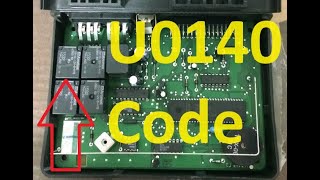
The sixth-generation Ford Explorer (U625) and its platform-mate, the Lincoln Aviator, are known for complex electrical systems where low battery voltage can cause widespread, intermittent communication faults. Owners have specifically documented that a poor ground connection under the driver's seat can cause a no-start condition accompanied by code U0140 🎬 Watch: Diagnosing and fixing the U0140 communication code and other communication codes. Additionally, some 2020 models have known issues with parasitic battery drain where modules, including the BCM, fail to go into 'sleep mode' correctly, leading to a dead battery and subsequent network codes. TSB 20-2363 was released to address various SYNC 3 and module software issues that could contribute to these problems. A separate Special Service Message (SSM 49410) for the 2020 Aviator also notes that a BCM software update can fix a no-crank/no-start condition.
Symptoms You May Notice
- Multiple warning lights on the dashboard, such as for ABS, AdvanceTrac, or Hill Start Assist.
- Interior or exterior lights flickering, staying on, or not working at all.
- Power windows, door locks, or remote keyless entry failing to operate.
- Windshield wipers behaving erratically or not functioning.
- Vehicle will not power up or start, with the instrument cluster remaining dark.
- Parasitic battery drain leading to a dead battery overnight or after a few days.
- SYNC screen may go blue or black, or infotainment system may act erratically.
- Inability to communicate with the BCM using a standard OBD-II scanner.
- Replacing the Body Control Module (BCM) first. The issue is far more likely to be a simple power, ground, or battery problem that is much cheaper and easier to fix.
Most Likely Causes
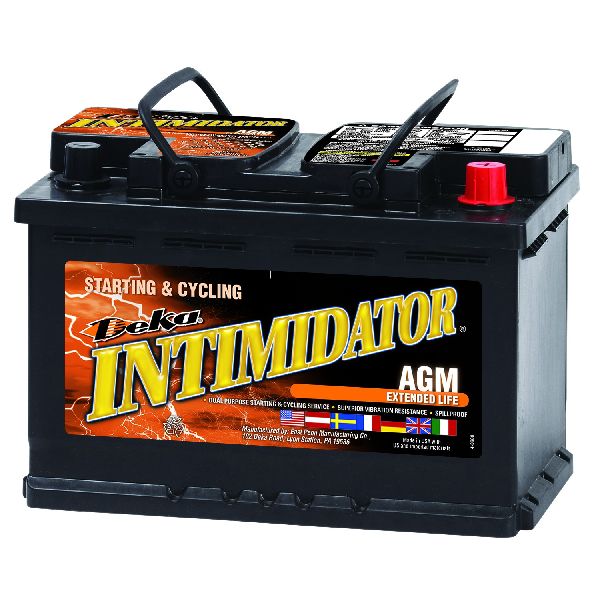
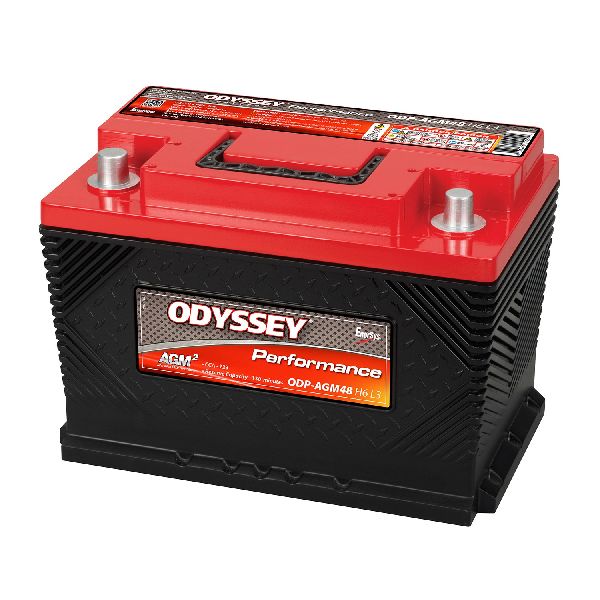
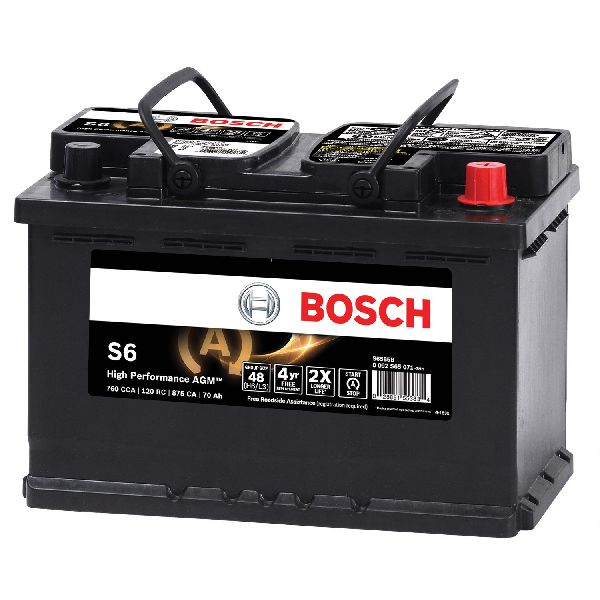
- Weak or Failing 12V Battery 🔴 High Probability → Shop Vehicle Battery Modern vehicles like the Explorer are highly sensitive to voltage. A battery that is even slightly low can cause modules to drop off the network, triggering communication codes. Parasitic drain issues on this platform can prematurely weaken the battery.
How to confirm: Test the 12V battery with a multimeter or a professional battery tester. A healthy, resting AGM battery should be above 12.4 volts. Check the voltage while cranking; if it drops below 10 volts, the battery is likely weak and lacks the capacity to power all modules during startup.
Typical fix: Recharge or replace the 12V battery. If a parasitic drain is suspected, a diagnostic test should be performed to find the source. The Motorcraft BAGM-48H6-760 is a common OEM replacement.
Est. part cost: $150-$350 - Poor Ground Connection Under Driver's Seat 🔴 High Probability There are documented cases for the 2020 Explorer where a loose or corroded ground stud under the driver's seat, which serves multiple modules including the BCM, causes a total loss of communication and power-up. These grounds are often referred to as G304 and G305 in service literature. Another known issue on this platform involves a poor ground for the AWD module in the same location.
How to confirm: With the battery disconnected, access the area under the driver's seat carpet. Locate the ground studs where multiple black wires are attached to the chassis. Visually inspect for looseness or corrosion. A diagnostic video for a 2020 Explorer showed that simply touching the ground connection restored power to the vehicle. A voltage drop test from the BCM ground pin to the battery negative terminal should show less than 0.2 volts.
Typical fix: Disconnect the ground wires, clean the terminals and the chassis contact point to bare metal using a wire brush, re-secure the connection tightly, and apply dielectric grease to prevent future corrosion.
Est. part cost: $0-$10 - Blown Fuse for the BCM 🟡 Medium Probability An electrical short or overload can blow the fuse that supplies power to the Body Control Module, taking it completely offline.
How to confirm: Consult the owner's manual to locate the fuse boxes (one in the engine bay and one in the passenger cabin/kick panel). Find the fuse(s) designated for the BCM (may be labeled 'Body Control Module' or 'Smart Junction Box') and visually inspect them or test for continuity with a multimeter.
Typical fix: Replace the blown fuse. If the fuse blows again immediately, it indicates a short circuit in the BCM's power supply wiring or an internal short in the BCM itself that requires further diagnosis.
Est. part cost: $1-$5 - Damaged Wiring or Corroded Connector ⚪ Low Probability Water intrusion in the passenger footwell area or A-pillar can lead to corrosion on the BCM connectors or other network splice points. Rodents have also been known to chew the soy-based wire coating used in modern Fords, causing opens or shorts.
How to confirm: Visually inspect the wiring harnesses connected to the BCM (typically located in the passenger side kick panel area) for any signs of damage, chafing, or corrosion. Check for any signs of water stains or dampness in the carpet near the BCM.
Typical fix: Repair the damaged section of wiring. Clean corroded connectors with an electrical contact cleaner and ensure a secure connection. Address the source of any water leaks.
Est. part cost: $10-$200
Rare But Worth Checking
- Faulty Body Control Module (BCM): → Shop Body Control Module This is rarely the root cause. All other possibilities, especially power and ground issues, should be exhausted before condemning the BCM. A replacement BCM is expensive and requires dealer programming. A common part number series for this generation is LB5T-14B476-xx.
- BCM Software/Firmware Glitch: Occasionally, communication issues can be caused by software bugs. A dealer may have an updated calibration for the BCM or related modules that can resolve the issue. TSB 20-2363 addresses various module software issues that can cause erratic behavior. This can sometimes be the cause of parasitic drain issues.
Diagnosis Steps
- Check Battery Health: Start with the simplest and most common cause. Ensure the 12V battery is fully charged and healthy. Test its voltage at rest (should be >12.4V) and during cranking (should not drop below 10V).
- Scan for All Codes: Use a quality OBD-II scanner that can read Ford-specific codes from all modules (like FORScan) to pull codes from all modules, not just the PCM. Note all communication codes (U-codes) present.
- Inspect BCM Fuses: Check the fuses related to the Body Control Module in both the interior and under-hood fuse boxes. Consult the owner's manual for exact locations. Replace if blown.
- Inspect Ground Connections: Disconnect the battery. The most critical step for this vehicle is to inspect the ground points under the driver's seat (G304/G305). Unbolt them, clean all contact surfaces to bare metal, and re-secure them tightly.
- Inspect BCM Connectors: Visually inspect the main electrical connectors at the Body Control Module (located behind the passenger kick panel) for signs of corrosion, water damage, or bent/loose pins.
- Check for TSBs and Recalls: Use the vehicle's VIN to check for open recalls or relevant Technical Service Bulletins (TSBs) on the NHTSA website or by contacting a Ford dealer. Pay attention to TSBs for software updates (like TSB 20-2363) or parasitic drains.
- Professional Diagnosis: If the above steps do not resolve the issue, the problem likely lies within the CAN bus wiring (requiring resistance and voltage checks) or the BCM itself, which requires advanced diagnostic tools and expertise.
Parts You'll Likely Need
- 12V AGM Battery
Related Codes That Often Appear With This One
- U0155 — Lost Communication with Instrument Panel Cluster (IPC). The IPC and BCM are on the same communication network (MS-CAN), so a network-wide issue like a bad ground will often cause both codes to appear together.
- U0073 — Control Module Communication Bus 'A' Off. This is a general network failure code for the High-Speed CAN bus. If you see this with U0140, it points towards a problem affecting the entire CAN bus system, such as a major wiring short, a bad ground, or a faulty gateway module, rather than an issue with just the BCM itself.
- U3003:16 / U3003:17 — Battery Voltage. These codes indicate the module has detected low system voltage (U3003:16) or high system voltage (U3003:17), which is a strong clue that the root cause of the U0140 is a weak battery or charging system issue.
Technical Service Bulletins (TSBs) & Recalls
- TSB 23-2176: Addresses delayed reverse engagement on 10R60 transmissions via a PCM reprogram.
- TSB 20-2363: Addresses a wide range of SYNC 3 and module communication issues with an APIM software update.
- TSB 20-2249: For 3.3L Hybrid models, addresses harsh shifting and engagement with a PCM reprogram.
- TSB 25-2071: Notes that some vehicles may exhibit U0140, U0100:00, U0121, and/or U0155 stored in the gear shift module (GSM) due to software issues.
- TSB 21-2405: Describes a condition where U0140 and other communication codes are stored in the gear shift module (GSM) due to software calibration.
- NHTSA Recall 23S55 / 22V255: Addresses rear axle bolt fractures that can lead to a loss of power or vehicle rollaway.
- NHTSA Recall 23S23: Addresses the 360-degree and rearview camera displaying a blue or black screen.
Platform-Specific Known Issues
- A poor ground connection under the driver's seat is a documented failure point on 2020 models that can cause U0140 and a no-start condition.
- Some 2020 models are known to have parasitic battery drain issues related to modules not entering 'sleep mode', which can cause the battery to die and trigger communication faults.
Mechanic-Grade Diagnostic Values
- MS-CAN Bus Resistance — expected: ~60 Ω (Ohms) ± 5 Ω. Failure: A reading of ~120 Ω indicates an open in the circuit or a missing termination resistor. A reading near 0 Ω indicates a short between the CAN High and CAN Low wires.
- HS-CAN Bus Resistance at DLC — expected: ~60 Ω (Ohms) ± 5 Ω. Failure: A reading of ~120 Ω indicates a lost terminating resistor in a primary module (like PCM or IPC). A reading near 0 Ω indicates a short between the wires.
- CAN Bus Voltage (Key On, Engine Off) — expected: ~2.5V on both CAN High and CAN Low lines relative to ground.. Failure: Significant deviation from 2.5V, or voltages that don't mirror each other during communication, indicates a bus fault or module issue.
- BCM Ground Circuit Voltage Drop — expected: < 0.2V (200mV). Failure: Voltage higher than 0.2V indicates excessive resistance in the ground circuit, which can cause the module to malfunction under load.
Hidden / Shadow Codes Worth Checking
- U0140:87: Lost Communication With Body Control Module: Missing Message. This sub-type indicates that other modules (like ABS, TPMS, etc.) have specifically timed out waiting for an expected message from the BCM. It's more specific than a generic U0140. (see via Ford-specific scan tools like FORScan or Ford's IDS/FDRS are required to see these extended DTCs.)
Scan Tool Commands That Help
- FORScan / Ford FDRS: BCM Self-Test — After verifying power and grounds are good, this command instructs the BCM to run an internal diagnostic routine to check for hardware or software faults within the module itself. It can help confirm if the BCM is faulty before replacement.
- FORScan / Ford FDRS: PATS Parameter Reset — This is a mandatory security procedure required AFTER installing a new BCM. It involves a 10-minute wait and requires two programmed keys to sync the new BCM with the PCM and immobilizer system. Failure to perform this step will result in a no-start condition.
- FORScan / Ford FDRS: Module Configuration (As-Built Data) — When replacing a BCM, the As-Built data from the original module (or downloaded from Ford's server using the VIN) must be written to the new BCM. This configures the module for the specific options on the vehicle (e.g., lighting type, security settings).
Wiring & Ground Locations
- G304 / G305 — Under the driver's seat, beneath the carpet. These are chassis ground studs where multiple wire harnesses connect.. These are the primary ground points for several modules in the driver's side of the cabin, including potentially the BCM and related systems. A loose or corroded connection here is a well-documented cause of U0140 and no-start conditions on this platform.
- G210 / G214 — Refer to the Workshop Manual wiring diagram for exact location, but these are other critical chassis grounds.. SSM 49329 specifically calls out checking these grounds for looseness on 2020-2021 Explorer/Aviator models experiencing intermittent no-crank issues, which often accompany BCM communication faults.
- BCM Connector C2280B — At the Body Control Module, typically located in the passenger side kick panel area.. This connector contains the MS-CAN network wires. Specifically, Pin 38 (Gray/Orange) is MS-CAN High and Pin 39 (Violet/Orange) is MS-CAN Low. These are the exact pins to test for network resistance and voltage when diagnosing a BCM communication failure.
Real Owner Repair Stories
- NHTSA Special Service Message (SSM) 49410 (2020 Lincoln Aviator (platform mate to Explorer)) — Inability to unlock doors with remote, passive entry, or Lincoln Way App. Also may exhibit a no-crank/no-start symptom.
❌ Tried (didn't work) Not specified, but implies that battery checks and fuse checks would not resolve the issue.
✅ What actually fixed it Reprogramming the Body Control Module (BCM) with an updated calibration using a Ford diagnostic scan tool. - NHTSA ODI #11330875 — An owner reported that their dealership had to clear a massive list of communication codes including U0140, U0100, U0155, and U0121 after the vehicle was in service for 5 days.
- NHTSA ODI #11715107 — A report describes a vehicle exhibiting U0140 "Lost communication with body control module" alongside U0155 and an Ethernet failure with the instrument panel cluster.
- NHTSA ODI #11693477 — An owner used an OBD-II scanner to find U0140:00-08 indicating BCM missing communication and U1A00:87-08 for an APIM private communication network malfunction.
OEM Part Supersession History
LB5T-14B476-xx→Potentially MB5T- or NB5T- series parts.— Part number prefixes often update with model years (L=2020, M=2021, N=2022). Suffixes change with hardware and software revisions.
Heads up: A BCM from a different vehicle, even with the same part number, will not work without being programmed to the new vehicle's VIN and security parameters (PATS). A used BCM is not plug-and-play.
Model Year Variations Within This Range
- 2020: Early production 2020 models were part of a new platform rollout and experienced more initial build quality issues and software glitches. Forum discussions suggest that vehicles with a later 2020 build date, and especially 2021+ models, had many of these early problems resolved. TSBs related to software updates and intermittent electrical issues are more common for the 2020 model year.
Diagnostic Flowchart
Other Known Issues on This Vehicle
Issues unrelated to this code that are worth knowing about as an owner of this generation:
- Rear Axle Bolt Fracture 🔴 High — Common enough to trigger multiple recalls (22S27, 23S55) affecting over 238,000 vehicles from 2020-2022. (Ref: Recall 23S55)
- 10-Speed (10R60) Automatic Transmission Faults 🔴 High → Shop Transmission Assembly — Widespread complaints of harsh/jerky shifting, delayed engagement, and premature failure, especially on 2020 models. (Ref: TSB 23-2176, TSB 20-2249)
- 360-Degree Camera Failure ('Blue Screen') 🟠 Medium — Very common across 2020-2023 models, affecting hundreds of thousands of Explorers and Aviators, leading to multiple recalls. (Ref: Recall 23S23)
- Parasitic Battery Drain 🟠 Medium → Shop Vehicle Battery — Often reported on 2020-2021 models, where modules fail to enter sleep mode, draining the 12V battery. Often linked to software glitches. (Ref: TSB 20-2363 (related))
- Cracked Catalytic Converters / Exhaust Leaks (3.0L EcoBoost) 🔴 High — Reported on 2020-2021 ST models, can allow exhaust gases into the cabin. (Ref: Recall available)
- Rodent Damage to Soy-Based Wiring 🟡 Low — A general issue for many modern Fords, but owners report rodents chewing on engine and body harnesses, causing various electrical failures.
Used vs. New Parts: Buying Guide for This Vehicle
When a used part is the smart pick: A used BCM is almost never a smart choice for this repair. While the initial cost is low ($50-$150), it absolutely requires dealer or specialist programming to match your vehicle's VIN and security system, which can cost $150-$300. There is a high risk the used module is faulty or incompatible, leading to wasted time and money. The only scenario where it might be considered is if you have access to advanced programming tools yourself and can accept the risk of the part being bad.
Donor-vehicle mileage cap: roughly under 100000 miles for the part to have meaningful remaining life.
What to inspect on the donor part:
- Verify the part number EXACTLY matches the original.
- Source from a vehicle with no reported electrical issues or water damage.
- Ensure the seller offers a warranty or return policy, as many junkyard electronics are sold 'as-is'.
OEM-only on this vehicle (don't cheap out):
- Body Control Module (BCM). Due to the complex programming and security integration (PATS), using an OEM Motorcraft part is strongly recommended. While remanufactured units from reputable suppliers who pre-program the module to your VIN are a viable alternative, a random used part is a significant gamble.
Aftermarket brands forum-validated for this vehicle:
- Motorcraft (OEM)
- Reputable remanufacturers that offer VIN programming service before shipping (e.g., ECU Maverick, Flagship One).
Brands owners have reported issues with on this vehicle:
- Unknown brands from online marketplaces that do not offer pre-programming or a warranty.
Real Owner Stories
Aggregated from forums and TSBs cited above. Mileages and costs reflect what owners reported in those sources.
2020 Ford Explorer
Symptoms: Vehicle would not power up or start, and the instrument cluster remained completely dark.
What fixed it: Locating the ground studs under the driver's seat carpet and touching the connection restored power; the permanent fix involved cleaning the terminals and chassis contact point to bare metal and re-securing them.
Source hint: Article Context - Diagnosis Steps / Vehicle Specific Issues
2020 Ford Explorer Hybrid 3.3L
Symptoms: Harsh shifting and engagement issues while driving.
What fixed it: A PCM reprogram as specified in TSB 20-2249.
Source hint: TSB 20-2249
Related OBD-II Codes
Frequently Asked Questions
My 2020 Explorer Hybrid's SYNC screen is going black and I have communication codes; does TSB 20-2363 apply?
I have a U0140 code and my 2020 Explorer won't start. Could it be a ground issue?
My 360-degree camera is showing a blue screen on my 2024 Explorer; is there a recall for this?
Could a weak 12V battery cause U0140 even if the hybrid high-voltage battery is fine?
Is there a TSB for harsh shifting on the 3.3L Hybrid Explorer?
Can a parasitic drain cause the U0140 code on this vehicle?
Helpful Videos
We Have This Part in Stock


The information in this article is provided for general reference and educational purposes only. Vehicle specifications, procedures, and part compatibility can vary by production date, trim level, and region. Always consult your vehicle's factory service manual and verify part numbers before purchasing or performing repairs. Safety-critical components such as airbags, seat belts, and braking systems should be installed by a qualified professional.
- Ford Explorer Hybrid:
- 🧭 Diagnostic Flowchart
- 🎬 Helpful Videos
- 🛍️ Shop This Part
- What's Unique About the 2020-2024 Ford Explorer Hybrid
- Symptoms You May Notice
- Most Likely Causes
- Rare But Worth Checking
- Diagnosis Steps
- Parts You'll Likely Need
- Related Codes That Often Appear With This One
- Technical Service Bulletins (TSBs) & Recalls
- Platform-Specific Known Issues
- Mechanic-Grade Diagnostic Values
- Hidden / Shadow Codes Worth Checking
- Scan Tool Commands That Help
- Wiring & Ground Locations
- Real Owner Repair Stories
- OEM Part Supersession History
- Model Year Variations Within This Range
- Other Known Issues on This Vehicle
- Used vs. New Parts: Buying Guide for This Vehicle
- Real Owner Stories
- 2020 Ford Explorer
- 2020 Ford Explorer Hybrid 3.3L
- Related OBD-II Codes
- Frequently Asked Questions
- 🎟️ Get 5% Off