

U0140 on 2010-2014 Hyundai Sonata: Lost Communication With Body Control Module Causes and Fixes
This code means the Body Control Module (BCM) has stopped communicating with other vehicle computers. The most common causes are simple electrical issues like a weak battery, blown fuses, a bad ground connection, or a faulty brake light switch. Always check these basics before replacing the BCM/SJB itself.
- U0140 means the Body Control Module (BCM), which controls most cabin electronics, has gone offline.
- Before suspecting a bad BCM, always test the battery, charging system, fuses, and ground connections first. These are the most common and cheapest fixes.
- Symptoms are widespread and electrical: lights, locks, windows, and wipers may act erratically or fail completely.
- Driving is not recommended as safety systems like headlights and wipers could fail without warning.
- Replacing the BCM (Smart Junction Box) is an advanced repair that requires programming the new part to the car.
What's Unique About the 2010-2014 Hyundai Sonata
For the 2010-2014 (YF generation) Sonata, the U0140 code often has a specific, non-obvious trigger: a faulty brake light switch. This inexpensive part was subject to a major recall (Hyundai Recall 110) and is known to cause a cascade of electrical issues, including CAN bus communication errors. Beyond that, the vehicle uses a 'Smart Junction Box' (SJB), which integrates the BCM and the interior fuse panel. A failure of this unit is another common cause, but diagnosis should always rule out the simpler switch, wiring, and power supply issues first.
Generation note: The 2010-2014 year range primarily covers the sixth generation (YF) Sonata. However, the 2010 model year was a transition, and some early 2010 models may be the fifth generation (NF). This guide focuses on the YF generation, which is known for the specific brake light switch and SJB issues.
Symptoms You May Notice
- Multiple dashboard warning lights illuminating, such as ABS, ESC (traction control), or airbag lights.
- Power windows, door locks, or mirrors not working or behaving erratically.
- Interior lights (dome, map) or exterior lights (headlights, turn signals) flickering, staying on, or not turning on at all.
- Windshield wipers activating on their own or not working when commanded.
- Key fob (remote entry) not working.
- Push-button start not working or vehicle not recognizing the key.
- Inability to shift the transmission out of Park.
- Parasitic battery drain leading to a dead battery overnight.
- Vehicle may not start if the BCM is part of the immobilizer/anti-theft system.
- Replacing the BCM/SJB without first thoroughly checking the battery, alternator, fuses, ground connections, and especially the brake light switch. These simpler issues are more common and much cheaper to fix.
Most Likely Causes
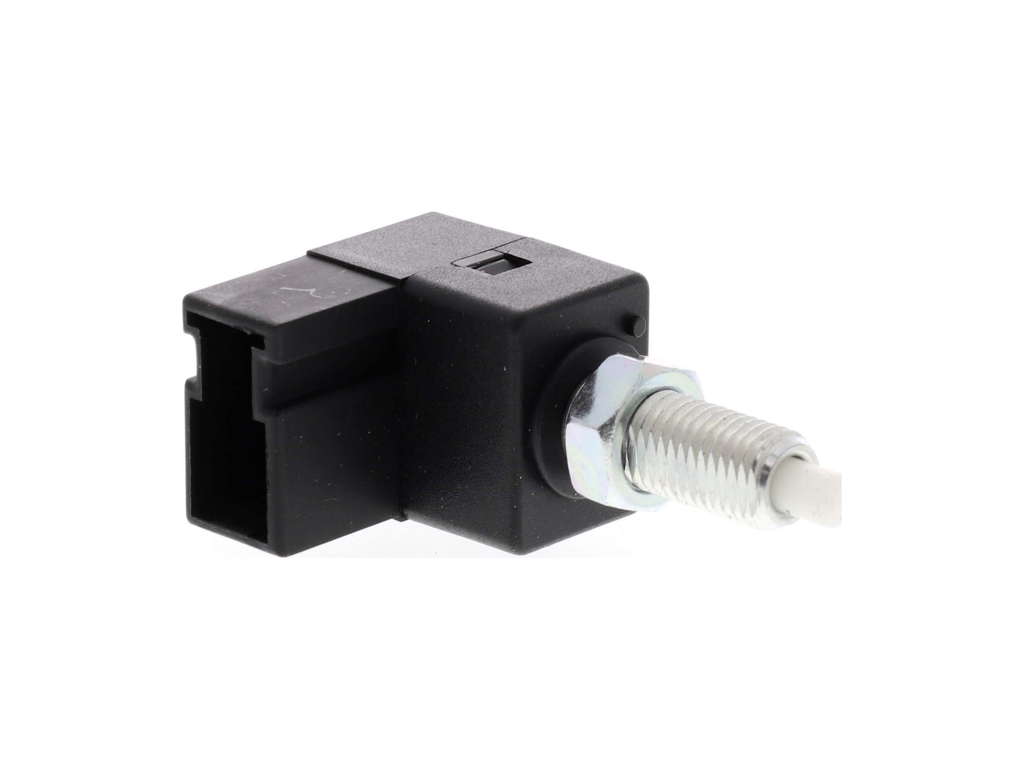
- Faulty Brake Light Switch (Stop Lamp Switch) 🔴 High Probability → Shop Brake Light Switch This specific part was subject to a massive safety recall (Hyundai #110, NHTSA 13V113000) on 2006-2011 Sonatas. A faulty switch can send erroneous signals on the CAN bus, causing widespread communication errors, including U0140, and triggering ESC/ABS lights.
How to confirm: Check if your brake lights work correctly. Check if the ESC light is on. The switch is located at the top of the brake pedal arm. A faulty switch is a very common and inexpensive fix that should be considered first.
Typical fix: Replace the brake light switch. This is a low-cost part and a relatively simple DIY job.
Est. part cost: $15-$30 - Low Battery Voltage or Charging System Fault 🔴 High Probability → Shop Vehicle Battery All modern electronic modules, including the BCM, are sensitive to voltage. A weak battery or failing alternator can cause modules to drop off the network, triggering communication codes.
How to confirm: Test the battery voltage with the car off (should be >12.4V). Test the alternator output with the car running (should be 13.5V-14.5V). Many auto parts stores offer free battery and alternator testing.
Typical fix: Charge or replace the battery. If the charging system is faulty, replace the alternator.
Est. part cost: $150-$400 - Blown Fuse or Faulty Relay 🟡 Medium Probability The BCM/SJB is powered by several fuses. An electrical short elsewhere can blow a fuse, cutting power to the module.
How to confirm: In the driver's side interior fuse panel (the SJB), inspect fuses labeled 'Module 1', 'Module 2', and 'Clock'. Also check related fuses in the under-hood box.
Typical fix: Replace the blown fuse. If the fuse blows again immediately, there is an underlying short circuit that must be diagnosed.
Est. part cost: $1-$10 - Poor BCM/SJB Ground Connection 🟡 Medium Probability Ground wires attached to the chassis can corrode or become loose over time, creating high resistance and causing intermittent module resets.
How to confirm: Locate the main ground points for the BCM/SJB. A key ground point (labeled G07 in diagrams) is located on the driver's side A-pillar, near the SJB. Check that the connection is clean, tight, and free of corrosion. Perform a voltage drop test on the ground circuit.
Typical fix: Clean the ground connection point and wire terminal with a wire brush and re-secure it tightly.
Est. part cost: $0-$5 - Faulty Body Control Module (BCM) / Smart Junction Box (SJB) ⚪ Low Probability → Shop Body Control Module Internal failure from component aging, water intrusion, or voltage spikes can cause the module to fail. It is often misdiagnosed when the actual problem is a simpler power, ground, or brake switch issue.
How to confirm: This is a process of elimination. If all power, ground, CAN bus network wiring, and the brake light switch test good, the module itself is the likely culprit. A professional scan tool may show the BCM as 'offline'.
Typical fix: Replace the BCM/SJB. The new module must be programmed or configured to the vehicle's specific options and VIN.
Est. part cost: $300-$700
Rare But Worth Checking
- CAN Bus Wiring Fault: A short or open in the CAN bus wiring harness can prevent modules from communicating. This can be caused by chafing against a bracket, rodent damage, or corrosion in a connector, particularly in the A-pillar or door harnesses. Diagnosis is complex and requires checking continuity and resistance of the network wires.
- Interference from Aftermarket Electronics: A poorly installed remote starter, alarm, or stereo system can introduce electrical noise onto the CAN bus, disrupting communication. If you have such devices, they should be professionally inspected or temporarily disconnected as a diagnostic step.
Diagnosis Steps
- Check Battery Health: Ensure the battery is fully charged (>12.4V) and the charging system is working correctly (13.5-14.5V when running). A weak battery is a very common cause of communication codes.
- Inspect Brake Light Switch: This is a critical, platform-specific step. Check for related codes (like C1513) and verify brake light function. Given its high failure rate and low cost, some owners replace it proactively.
- Scan for All Codes: Use a high-quality OBD-II scanner capable of reading manufacturer-specific 'U' and 'C' codes from all modules. Note all present codes to see if other modules are offline.
- Inspect Fuses: Check all fuses related to the BCM/SJB, especially those labeled 'Module 1', 'Module 2', and 'Clock' in the interior fuse panel.
- Inspect BCM/SJB Connections: Locate the Smart Junction Box (the interior fuse panel on the driver's side). Visually inspect its large electrical connectors for looseness, corrosion, backed-out pins, or any signs of water damage.
- Check Ground Connections: Locate and inspect the main chassis ground for the BCM/SJB (G07 on the driver's A-pillar). Ensure it is clean, tight, and free of rust.
- Test CAN Bus (Advanced): If the basics check out, the CAN bus network itself must be tested. This involves measuring resistance between the CAN High and CAN Low pins at the OBD-II port (should be ~60 ohms with the battery disconnected). This step is best left to a professional.
- Condemn the BCM/SJB: If all power, ground, network wiring, and the brake light switch test are good, the BCM/SJB itself has likely failed and requires replacement and programming.
Parts You'll Likely Need
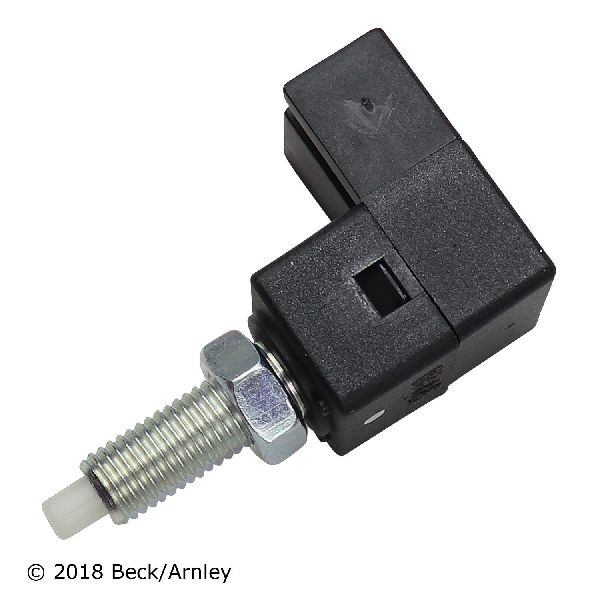
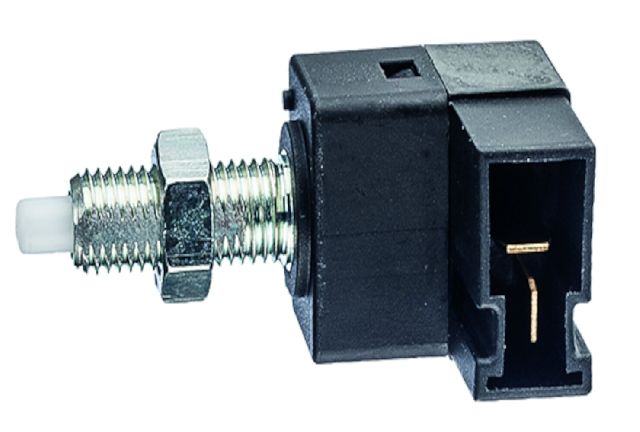
- Brake Light Switch (Stop Lamp Switch)
(OEM #93810-3S000)— A very common failure point on this platform and subject of a recall. Can cause CAN bus errors leading to U0140. It's an inexpensive first part to replace during diagnosis.
Trusted brands: Hyundai (OEM), Beck Arnley
OEM price range: $20-$35
Aftermarket price range: $15-$25 - Smart Junction Box (SJB) / Body Control Module (BCM)
(OEM #91950-3Qxxx (e.g., 91950-3Q010, 91950-3Q310). The exact part number is critical and must match the original based on VIN and vehicle options.)— If basic electrical issues are ruled out, the module itself is the likely culprit. It integrates the BCM and interior fuse panel. Replacement requires programming.
Trusted brands: Hyundai (OEM), Remanufactured OEM
OEM price range: $450-$700
Aftermarket price range: $300-$500 (Remanufactured)
Related Codes That Often Appear With This One
- U0073 — U0073 means 'Control Module Communication Bus A Off'. If you see this with U0140, it points to a wider network failure affecting multiple modules, not just the BCM. The problem is more likely a main power, ground, or network wiring issue.
- U0100 — 'Lost Communication with ECM/PCM'. Seeing this with U0140 is a major red flag for a network-wide problem, as both the engine and body modules are offline.
- C1513 — Brake Switch Error. This code is often seen alongside U0140 and strongly points to a faulty brake light switch as the root cause of the communication problem.
Technical Service Bulletins (TSBs) & Recalls
- Hyundai Recall 110 (NHTSA Campaign #13V113000): Addresses a faulty stop lamp switch that can lead to intermittent brake light operation, cruise control issues, and an inability to shift from park. This is a highly relevant recall when diagnosing U0140.
Platform-Specific Known Issues
- The faulty brake light switch is the most significant vehicle-specific issue. The contacts inside the switch can degrade, causing intermittent signals that disrupt the CAN bus network. This can manifest as a U0140 code even if the brake lights appear to work sometimes. The official fix was a replacement switch under Hyundai Recall 110.
- Water intrusion into the Smart Junction Box (SJB) is another known issue, often due to a leaking windshield seal or sunroof drain. Any sign of moisture or corrosion on the SJB connectors warrants a thorough inspection for the source of the leak.
Mechanic-Grade Diagnostic Values
- CAN Bus Network Resistance — expected: ~60 Ohms (Ω). Failure: A reading of ~120 Ohms indicates a break in the circuit or a missing terminating resistor. A reading significantly less than 60 Ohms (e.g., near 0) suggests a short between the CAN High and CAN Low wires.
- CAN Bus Voltage (Key On, Engine Off) — expected: CAN High (Pin 6): ~2.5V to 3.5V. CAN Low (Pin 14): ~1.5V to 2.5V. Both lines should mirror each other in a square wave pattern when viewed on an oscilloscope.. Failure: A voltage of 0V or a steady 12V on either line indicates a short to ground or a short to power, respectively. Voltages that don't change or don't mirror each other suggest a module or wiring fault.
- BCM/SJB Ground Circuit Voltage Drop — expected: < 0.1 Volts (100 millivolts). Failure: A reading higher than 0.1V indicates high resistance in the ground circuit, which can cause the module to reset or malfunction.
Scan Tool Commands That Help
- Hyundai GDS (Global Diagnostic System): Vehicle S/W Management (Special Function) — Used for programming a new or used BCM/SJB to the vehicle. This function is required to sync the module with the vehicle's VIN and immobilizer system.
- Hyundai GDS (Global Diagnostic System): Actuation Test — Allows the technician to command the BCM to activate specific outputs (e.g., turn on wipers, lock doors, flash lights). This is used to verify if the BCM is capable of sending commands, helping to isolate a faulty BCM from a problem in the component's wiring or the component itself.
- Hyundai GDS (Global Diagnostic System): Fault Code Searching (All Systems) — Performs a full network scan to identify which modules are communicating and which are not. This helps build a complete picture of the network's health and can reveal if other modules besides the BCM are offline.
- Hyundai GDS (Global Diagnostic System): Flight Record / Trigger Module — For intermittent communication issues, this function can record vehicle data during a drive cycle to capture network conditions when the fault occurs. This is an advanced feature for diagnosing hard-to-find problems.
Wiring & Ground Locations
- G07 — Located on the driver's side A-pillar, behind the kick panel, near the Smart Junction Box (SJB).. This is a primary ground point for the BCM/SJB. Corrosion or looseness at this multi-wire ground point is a well-documented cause of intermittent BCM resets and the U0140 code.
- SJB Connectors (e.g., I/P-E, I/P-F) — These are the large multi-pin connectors on the rear of the Smart Junction Box (the interior fuse panel).. All power, ground, and communication signals for the BCM pass through these connectors. Loose pins, corrosion from water intrusion (e.g., from a leaking windshield), or damage from previous repairs can directly cause a U0140 code.
- CAN Bus Wires (OBD-II Port) — Pin 6 (CAN High) and Pin 14 (CAN Low) on the 16-pin OBD-II diagnostic connector under the driver's side dashboard.. This is the most accessible point for testing the overall health of the main CAN bus network, including measuring resistance and voltage without having to access individual modules.
Real Owner Repair Stories
- Hyundai-Forums user (2011 Hyundai Sonata) — Multiple dash lights (ABS, ESC, etc.), intermittent power steering loss, and U0140 code.
❌ Tried (didn't work) Replacing the battery, Checking all fuses
✅ What actually fixed it The brake light switch was faulty. Even though the brake lights appeared to work, replacing the recalled switch resolved all communication errors and warning lights. - Reddit r/MechanicAdvice user (2012 Hyundai Sonata) — Car would not start, key fob not detected, wipers and lights acting erratically, U0140 and multiple other 'U' codes present.
❌ Tried (didn't work) Jump starting the car, Replacing the key fob battery
✅ What actually fixed it The main ground point for the BCM (G07) located behind the driver's side kick panel was loose and corroded. Cleaning the contact point and tightening the ground bolt restored all functions and cleared the codes. - YouTube comment section on a diagnostic video (2013 Hyundai Sonata) — Parasitic battery drain, random alarm activation, and U0140 that would return after being cleared.
❌ Tried (didn't work) Replacing the brake light switch, Checking grounds, Replacing the battery
✅ What actually fixed it The Smart Junction Box (SJB) itself had an internal failure. A replacement SJB (with a matching part number from a donor vehicle) was installed and programmed by a locksmith with a capable scan tool, which finally resolved the issue.
OEM Part Supersession History
Various (original fitment)→93810-3S000 or 93810-4DR0AQQH (Verify by VIN)— The original brake light switches were prone to premature failure, causing intermittent electrical signals. The recall (Hyundai #110) introduced a more robust switch design.
Heads up: Using an old-style or incorrect switch can cause the communication and ESC/ABS light issues to persist. It is critical to use the updated part number specified for the recall.e.g., 91950-3Q010→e.g., 91950-3Q011, etc.— Minor hardware revisions and software updates throughout the production run.
Heads up: Smart Junction Box part numbers are extremely specific to the vehicle's options (Smart Key, sunroof, etc.) and model year. A part from a 2011 may not work in a 2014. The part number must be matched EXACTLY from the original unit, or it must be a confirmed supersession from a Hyundai dealer. Failure to do so will result in non-functional features.
Model Year Variations Within This Range
- 2013-2014: The YF Sonata received a mid-cycle refresh for the 2013/2014 model years, which included updated infotainment and minor electronic changes. While the core architecture is similar, the Smart Junction Box (SJB) part numbers may differ from the 2010-2012 models. Always verify the part number on the original unit before ordering a replacement.
- 2010-2011: These model years were the primary focus of the brake light switch recall (#110). While later years could still have a faulty switch, the failure rate is highest on these earlier YF generation models.
Diagnostic Flowchart
Used vs. New Parts: Buying Guide for This Vehicle
When a used part is the smart pick: For the Smart Junction Box (SJB)/BCM, a used part from a reputable salvage yard is a very cost-effective option, often saving hundreds of dollars. Given that the failure is electronic, a part from a lower-mileage, collision-damaged vehicle is a good candidate.
Donor-vehicle mileage cap: roughly under 100000 miles for the part to have meaningful remaining life.
What to inspect on the donor part:
- Verify the part number on the used SJB EXACTLY matches your original unit.
- Inspect the connectors on the donor unit for any signs of corrosion, bent pins, or heat damage.
- Ask about the donor vehicle's history; avoid parts from flood-damaged cars.
- Ensure the seller offers a warranty or return policy in case the unit is also faulty.
OEM-only on this vehicle (don't cheap out):
- Brake Light Switch: Given the low cost and critical function, an OEM or OEM-equivalent (e.g., Beck Arnley) switch is strongly recommended to avoid repeat failures or compatibility issues from the recall.
- Smart Junction Box (SJB): While a used OEM part is a good option, new aftermarket SJBs are unproven and risky. Stick to new OEM or a used OEM part that matches your original part number.
Brands owners have reported issues with on this vehicle:
- Generic, unbranded brake light switches from online marketplaces.
- New, non-remanufactured aftermarket Smart Junction Boxes.
Related OBD-II Codes
Frequently Asked Questions
My 2011 Sonata has the ESC light on and won't shift out of park. Could this be related to the U0140 code?
I'm getting a U0140 code. Should I immediately replace the Body Control Module (BCM)?
Where is the BCM or Smart Junction Box (SJB) located on my 2010-2014 Sonata?
I found Hyundai Recall 110 for a brake light switch. Does this apply to my Sonata and could it cause code U0140?
My mechanic says the BCM is bad. Can I just buy a used one from a salvage yard and plug it in?
Besides the brake switch, what are some simple things I can check myself for a U0140 code?
My Sonata's interior lights are flickering and the key fob stopped working. Is this related to U0140?
Used OEM Parts in Stock
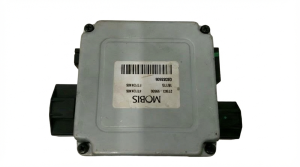
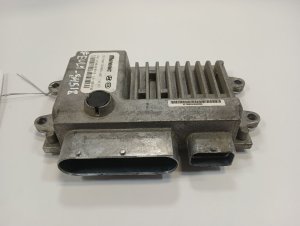
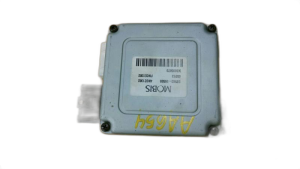
New Aftermarket Parts Available


The information in this article is provided for general reference and educational purposes only. Vehicle specifications, procedures, and part compatibility can vary by production date, trim level, and region. Always consult your vehicle's factory service manual and verify part numbers before purchasing or performing repairs. Safety-critical components such as airbags, seat belts, and braking systems should be installed by a qualified professional.
- Hyundai Sonata:
- 🧭 Diagnostic Flowchart
- 🛍️ Shop This Part
- What's Unique About the 2010-2014 Hyundai Sonata
- Symptoms You May Notice
- Most Likely Causes
- Rare But Worth Checking
- Diagnosis Steps
- Parts You'll Likely Need
- Related Codes That Often Appear With This One
- Technical Service Bulletins (TSBs) & Recalls
- Platform-Specific Known Issues
- Mechanic-Grade Diagnostic Values
- Scan Tool Commands That Help
- Wiring & Ground Locations
- Real Owner Repair Stories
- OEM Part Supersession History
- Model Year Variations Within This Range
- Used vs. New Parts: Buying Guide for This Vehicle
- Related OBD-II Codes
- Frequently Asked Questions
- 🎟️ Get 5% Off